Taurine

Taurine

If you want to live to a ripe old age, you should make sure you have a steady supply of taurine to guarantee it. Taurine is an amino acid which is found in large concentrations in the brain, heart, retina and platelets. This amazing amino acid protects against heart failure, detoxes the liver, maintains electrolyte balance in the body, supports the immune system, and promotes insulin sensitivity. If you consume a diet which incorporates meat and fish, your taurine levels may be normal, but if you are vegetarian or vegan, chances are that you don’t have adequate levels of taurine in your body. Another factor is the fact that as we age, we become less efficient at producing taurine.

Those of you who lift weights may already be aware of the energy boosting effects of taurine supplementation, and may be already taking it in the form of a preworkout mix which typically has taurine as part of the blend. Taurine also expands muscle cells, increasing the volume and contributing to the ever so familiar “pump” that comes from an intense lifts. But the additional health benefits of taurine supplementation make it almost impossible to pass up.

Taurine supplements are inexpensive and you don’t have to take high doses. A good dosage for most people is 1.5 grams, but you can double the dosage if you wish. You may notice a metabolic boost and significant weight loss as a result of taking taurine supplements. Taurine also causes a drop in serum triglyceride levels, making it an acceptable alternative to prescription lipid-lowering agents. Any excess is excreted by the kidneys.

Green Coffee Bean Extract

You may be wondering what green coffee extract is, especially when the roasted variety has such a characteristic mahogany brown color. “Green” coffee refers to the most pure and raw form of coffee before it is roasted and processed in other ways. When coffee beans are roasted, a powerful chemical called chlorogenic acid is leached out, and it is this chemical which is believed to slow absorption of fat and glucose from foods, resulting in less fat deposition and greater weight loss. Dr. Oz was a major factor in popularizing this supplement, and allegedly conducted his own study using the extract, demonstrating effectiveness in his subjects. There are several studies which have concluded that green coffee extract can have a modest effect on individuals looking to lose weight, even if all other factors (diet, physical activity) remain unchanged.

I am very much a skeptic when it comes to supplements with weight loss claims, but green coffee extract seems to have some validity. I am seeing more thermogenic formulas with green coffee extract as part of the formulation, and feel comfortable recommending it either alone or in combination. The recommended dosage of green coffee extract is 800 milligrams twice daily before meals.

green coffee

Calcium Pyruvate

Magic-Pill-300x152Calcium pyruvate has gotten a lot of attention lately, being touted as a fat blaster extraordinaire by Dr. Oz and by other medical and health professionals. Supposedly there has been research pointing to calcium pyruvate’s effectiveness in mobilizing storage fat as a fuel source. The general recommendation is to take 1000 milligrams before each meal for a period of one week to jump start the body’s utilization of fat.

Here’s the big problem with such a claim. It’s completely bogus. In order to reap the fat blasting benefits of calcium pyruvate, you would need to consume 30 grams per day. That’s a pretty massive dose, and pretty expensive to boot. It would be a rare person indeed who would be willing to spend the serious coin necessary and take the massive amounts of capsules each day just to gain such a fat torching benefit. I know I wouldn’t do it. Calcium pyruvate is also very poorly absorbed, so when you load your body with high doses, you can expect to spend a LOT of time in the restroom dealing with a very uncomfortable aftermath. Also, if you are crapping out most of the supplement, you are just wasting money and wreaking havoc on your digestive tract to boot.

The main reason why calcium pyruvate is a recent hot topic is because Dr. Oz made a big deal about it, proving that media hype can make just about ANY supplement appealing because people want to believe in anything that is offering promise as a magic weight loss pill. Magic wand in a supplement? I don’t think so. I recently was told by a client that she was going to begin taking this supplement, despite my very unenthusiastic review of it. All I can do in such a situation is throw my hands up and say, “Do what you want, but I’m not recommending or endorsing this.”

The take home lesson here is don’t believe the hype when a new supplement comes on the horizon, especially one that promises to zap storage fat.

Food Network: Food I Can Never Eat

Food Network LogoThe Food Network is my favorite television channel, and I watch it regularly. I appreciate the chemistry and creativity behind culinary efforts and enjoy the visual appeal of dishes that are prepared and served. Perhaps my favorite show on the Food Network is Guy Fieri’s “Diners, Drive-Ins, and Dives”, in which Guy travels all over the United States in pursuit of the best reasonably priced eats around. What is so sad is the fact that I can virtually never indulge in the featured dishes at the restaurants Guy visits, because they are so laden with everything I am NOT supposed to eat!

You would think that not being able to eat the foods that are featured on the Food Network would be enough to deter me from watching it regularly, but I get great pleasure from watching it. I must get some vicarious pleasure out of watching others eat forbidden dishes or something. My interest in this channel is so extreme that whenever I travel for IFBB Pro competitions (incidentally, I used to do this when I was an amateur in the NPC as well), I will turn the television on, find the Food Network, then leave it on 24/7 while staying at a hotel. This strange habit of keeping the t.v. on in a hotel room is one I have had for many years, but it wasn’t until 2011 when I began tuning into the Food Network while traveling. I have had fellow competitors come up to my room and remark on how tortuous it is to see shows about food on t.v, and only then does it hit me that this quirk of mine is a bit strange.

To a certain extent I miss the days when I was a foodie, indulging in gustatory delights with some frequency. However, on the rare occasions when I HAVE indulged, I usually pay the price for the next several days as my body tries to figure out what attacked it! The only thing my body can handle is a moderate cheat meal which does not consist of eating at more than one restaurant in an evening. Though this has only happened a handful of times over the years, I have had post-contest cheat meals in which I have visited one restaurant for a specific food craving, then another for a fellow competitor’s food craving, then a third place for dessert. After such gluttony, my belly is distended, my digestive tract is angry, and I pool subcutaneous water into the backs of my legs.

Since decadent foods make my body angry, I would much prefer to watch a television show which features those foods so that I can enjoy a calorie-free fantasy. This way I can indulge in hot fudge sundaes, mile-high burgers, heaping piles of pasta, and rich sauces without guilt!

Incrediwear Is Incredible!

downloadI have spent the last few days experiencing Incrediwear products, and I am blown away by them! The quality is exceptional and the technology is phenomenal. I give this company and its products my complete and enthusiastic endorsement, both as an athlete and as a physician.

Here is a great description of the technology, taken from the Incrediwear website:

Incrediwear Technology

What are anions?
Anions are negatively charged atoms that, when absorbed by the body, stimulates molecular vibration and circulation.

How does our product work?
When the body warms our unique carbonized charcoal and our carbonized charcoal/germanium products, they release anions.

What does this do for me?
Incredibraces and Incredisocks, due to the release of anions, are constantly therapeutic. Infrared anion technology has been used for years at medical clinics to address vascular and circulatory health, and professional athletes have slept in ionized environments since the 70s. The technology has been used by chiropractors and physical therapists to accelerate recovery—and it’s all thanks to anions.

How fast does it work?
Results have shown that most people who experience muscle or joint discomfort and try an Incredibrace feel a difference in 20 minutes, and sometimes sooner! Incredibraces have helped those with discomfort from sprains, arthritis, inflammation, cramps, and fatigue. Incredibrace wearers have reported a reduction in discomfort and an enhanced range of motion while walking, working, running, biking, dancing, competing in martial arts, lifting weights and even sleeping.

Do the socks work the same way?
Yes. The socks are also made from carbonized charcoal, and some have a mix of germanium in them. As your body heats the sock, it releases the therapeutic anions, resulting in increased circulation. Each garment is laser Doppler studied showing up to 17% increase in blood flow and blood speed. Increase blood flow can result in accelerated performance and recovery!

Is there anything else I should know?
The enhanced circulation results in more oxygen being supplied to local tissues. This, combined with the increase in blood flow, allows your body to regulate your temperature much easier, keeping you cool in warm weather and warm in cool weather, and even warm when the socks get wet! The natural fibers are antimicrobial and odor absorbing.

What does Germanium do?
Organic germanium is the subject of Dr. Asai’s book ‘Miracle Cure – Organic Germanium’—and for good reason. Germanium helps supply oxygen. Dr. Asai mentions that cells which are deficient in oxygen, in order to survive, begin glycolysis and turn anaerobic, meaning they no longer efficiently use oxygen. There are many factors which can lead to a reduced amount of oxygen in the blood including air pollution, food pollution, and the effects of stress. Dr. Asai states that germanium fuels a mechanism called the dehydrogenating reaction, which combines oxygen with hydrogen and supports cellular defenses

Benefits:
Increased blood flow and oxygen
Wick away moisture
Regulate temperature
Reduce swelling
Anti-microbial
Reduce pain
Supports improved range of motion
Accelerate muscle recovery with increase blood flow

Physical Properties:
High comfort 200 thread count (socks) 360 thread count (braces)
One-of-a-kind medical design
Patented technology
Quality 3D weave design
Anion emitting thread (braces)
Carbonized charcoal germanium thread (braces)

PLEASE MAKE SURE TO VISIT THE INCREDIWEAR WEBSITE:
http://www.buyincrediwear.com/

How Weekend Drinking Binges Make You Fat

young-people-in-club-or-bar-drinking-beer-out-of-a-beer-bottle-and-have-funOne of the reasons why people tend to look forward to the weekend so much, besides being away from work, is the ritualistic imbibing of alcohol and consumption of rich foods which many tend to engage in. I have clients who will follow a sensible and healthy meal plan during the week, only to abandon all self-control, put on party hats and eat and drink during the entire weekend.

I will explain to you why this practice is a sure way to keep you from attaining your fitness goals. When you drink large amounts of alcohol, say 3 drinks or more, your body gets a sudden influx of alcohol which puts your body’s metabolism of nutrients to a grinding halt. Why? Because the body cannot store alcohol and must use it immediately as a fuel source. What happens with nutrients is that they are converted to fat and then stored in fat tissue for later use, so alcohol essentially prevents the body from utilizing fat. High consumption of alcohol also impairs the cerebral function (specifically the prefrontal cortex), flattening inhibitions and increasing the appetite. That is why you will often crave greasy foods when you drink, because the body turns to rich foods to replenish nutrients. The combination of increased appetite and behavioral changes are enough to get you to eat a calorie laden, fatty meal which is then stored as fat.

I enjoy the occasional cocktail and as a result will never tell people to avoid drinking altogether. However, I have several recommendations which will minimize the fat deposition which alcohol consumption triggers.

1. Always eat a meal with PROTEIN, FIBER and HEALTHY FAT before you begin drinking to offset the surge in blood sugar which occurs with alcohol connsumption andto slow the absorption of alcohol once it is introduced to the gut.

2. Drink two glasses of water for every drink of alcohol. Alcohol is a diuretic, meaning that it will dry you out. Because of this, it is important to maintain a high level of hydration to offset the diuretic effect.

3. Limit consumption to 1 or 2 drinks in an evening. This will keep calorie consumption down.

Running On Empty – Progesterone And Stress

Stress meterWe all know that constant stress can play havoc with our health and well being. In this post I will focus on the effects of excessive stress on progesterone levels.

Progesterone is produced in the ovaries, the adrenal glands, and in the placentas of pregnant women. It has a calming effect, is a natural diuretic, regulates menstrual cycles, and prepares the body for conception and pregnancy. Some women can experience excessive levels of progesterone which usually produces symptoms of PMS, but in general, progesterone is a vital and beneficial hormone.

Let’s examine what happens to progesterone if you are under constant and chronic stress. When the body is pummeled with endless stress, the adrenal glands simply cannot keep up with the demand for more cortisol, so they turn to progesterone, converting it into cortisol to make up for the deficit. Eventually, however, not only do cortisol levels plummet, but progesterone levels also drop to precipitously low levels. So that calming, diuretic effect of progesterone falls away, and menstrual cycles become erratic or periods cease altogether. Sounds like fun, huh?

I cam tell you that running on an empty tank of progesterone is no fun at all. You retain water, you get irritable and cranky, and you lose your ability to navigate calmly through stressful situations. If you’re like me and you depend on a regular menstrual cycle as a reassurance that all is right with the world, then living with the mystery of whether or when you might have a period can be maddening. I found out that I actually WANT a period, and I thought I would never feel that way.

Though I had regular periods until very recently, I began retaining water like crazy after attaining IFBB Pro Status last July, and I knew something just wasn’t right. I didn’t feel like I was in my own body, as strange as it sounds. I began flailing, and went through a rebound which was disturbing and unexpected. My emotional barometer was all over the place, and I couldn’t get out of the funk that I was in. Gaining eight pounds (which is considerable for me), most of which was water weight, made me even more depressed.

Another completely irritating set of symptoms which suddenly popped up at the end of January and which persisted every single night is that I would wake up at around 4 a.m., completely drenched in sweat and with a sensation which could best be described as being lit on fire from the inside. I would throw the covers off and quickly disrobe, then rather quickly fall asleep, only to awaken about 30 minutes later, shivering and pulling the covers over me.

The nightmare finally subsided to a great extent once I began replenishing my body with bioidentical progesterone in late February. Though I still retain a bit of water, my weight is back to a reasonable 120 lbs. versus the 125 I had been at in the Fall, my hot and cold episodes have subsided, i feel much calmer and I feel more like myself.

Had I removed the stressors that I had some control over, I am firmly convinced I would not have bottomed out with my progesterone levels like I did. Even if I had engaged in meditation more regularly a couple of years ago, I think I could have saved my progesterone levels from bottoming out. Trust me when I say that progesterone depletion can be incredibly disruptive and upsetting. And don’t think for a second that this is only a problem which women past the age of 45 deal with. I have come across female patients as young as 32 who had almost no progesterone in their lab tests.

If you do one thing to improve your health, please reduce your stress! You can do this by removing the stressors that you have some control over, practice breathing exercises, tai chi, yoga, and meditation, enjoy time with friends, loved ones and pets more often, and let go of anxiety and worry.

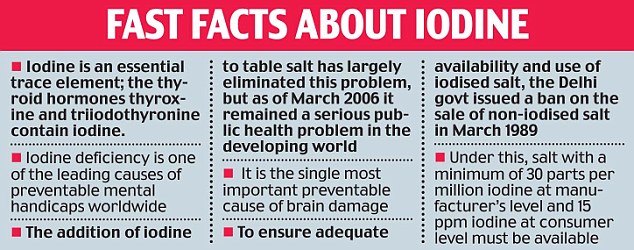
The Iodine Deficiency Epidemic

This is a GREAT article on iodine deficiency. I did NOT write this, but thought it was so well-written that I am displaying the entire article as it is found on T-nation.com Original post can be found here:

http://www.t-nation.com/readArticle.do?id=5559634

16Fir06.qxp

Few organs have been so misunderstood and mistreated as the human thyroid gland. Why, if it had any self-respect, it’d seek asylum in Russia along with Gerard Depardieu.

Unfortunately, the thyroid has chosen a more vengeful tactic – it’s wreaking havoc by playing a part in a silent epidemic that may be affecting the overall health of as much as 74% of U.S. adults.

When the thyroid is happy and functioning normally, it determines how your body uses energy (i.e., controls your metabolism), makes proteins affecting growth and development, plays a part in glucose consumption, helps regulate levels of blood lipids, and it even controls body temperature.

When you’re not giving it what it needs – when it’s not happy and functioning normally – it can cause fatigue and rampant weight gain, along with a host of problems including cancer.

It’s highly likely that you might have an unhappy thyroid, and if you do, it’s pathetic because the problem is oh-so-easy to remedy.

Before we get to the specific problem and the cure, though, let’s look at one of the fascinating stories that make up the medical history of this oft-ignored endocrine gland, one that shows that medicine is often myopic and causes other problems as bad or worse than the ones it was attempting to cure.

Shrink That Sucker With Radiation

In the 1920’s, doctors started focusing on the problem of Sudden Infant Death Syndrome, or SIDS. This is the phenomenon whereby infants suddenly die in their cribs for no readily apparent reason.

Doctors began doing autopsies on babies that had died of SIDS and compared the findings with anatomy-book drawings to see if there were any physiological discrepancies.

Lo and behold, the babies who’d died of SIDS had grossly enlarged thyroid glands. Doctors theorized that these humungous glands put pressure on the infants’ tracheas during sleep, resulting in suffocation.

Now it was known that radiation could shrink the thyroid gland, so doctors around the country leapt into action and began irradiating the thyroids of every infant that they could lure through their clinic door. It was easy because they employed the old guilt game – parents who ignored the warning were deemed irresponsible.

Enlarged thyroids were a thing of the past! Chalk one up for medical research! SIDS was conquered! No longer would parents lie awake at night fearing the worst. They could rest ea…huh? What’s that you say? They were wrong???

You bet.

To find out how they screwed up, we have to take the Hot Tub Time Machine back to Revolutionary War times, which was when doctors and scientists were starting to establish medical schools. Then, as is the case now, medical schools needed bodies for dissection, and there were plenty of bodies almost literally lying around for the picking, especially since poor people were buried close to the surface of the ground. (Rich people had nice waterproof, Tupperware-esque caskets that were buried six feet under.)

These dissections and the resultant descriptions and drawings, along with body parts stored in pickle jars, formed a huge database that served as the basis of medical knowledge for the next couple of hundred years.

Now there’s a particular thing you need to know about the thyroid before we can tie all these links together. Since it’s part of the body’s immune system, the thyroid is especially prone to stress, regardless of whether that stress be caused by financial problems or poor nutrition, both of which are things that pretty much define being poor.

As a result, these cadavers – these cadavers that served as the reference point for doctors in the early 20th century – had small, shrunken, stressed-out thyroids.

Are you starting to figure it out yet? When the doctors from the 1920’s were looking at the thyroid glands of the autopsied SIDS babies, they weren’t looking at enlarged glands at all! It was the opposite! For the first time, they were looking at normal, healthy thyroid glands! It’s only when they compared them to the Revolutionary War-era cadavers that they looked enlarged.

The atrophied glands of the long-dead cadavers were an anomaly, a direct result of stress and poor nutrition. As a result, doctors made the wrong assumption and began needlessly irradiating healthy thyroid glands in children to shrink them.

So what happened to the children who received radiation treatments?

Years later many of them developed thyroid cancer, most likely as a direct result of being irradiated by uranium ions during childhood. Over 30,000 of them died in young adulthood. Meanwhile, SIDS continues to be the major cause of death in infants between one month and one year old.

So it goes.

Right around the same time that docs began irradiating healthy thyroid glands, they began successfully treating another thyroid problem: goiters.

When it Rains it Pours

The thyroid does its magic through the production of thyroid hormones, the main ones being triiodothyronine (T3) and thyroxine (T4). These hormones are synthesized from the amino acid tyrosine and iodine.

Without iodine, which needs to be provided through the diet, the thyroid freaks out. It cries for help by signaling the pituitary to release Thyroid Stimulating Hormone (TSH), which tells the thyroid gland to get busy making more hormones.

However, if there’s no iodine in the diet, the thyroid gland either forms nodules or it just gets bigger and bigger, forming what’s known as a goiter. These growths ranged from barely visible to huge bulges that made victims look like some of those bullfrogs that are part of the background on TV’s Swamp People.

Unfortunately, iodine isn’t as ubiquitous as other minerals. The farther away you get from the sea (the source of most earthly iodine) and its bounty, the harder it is to get iodine. Soil contains some, but amounts vary hugely, so vegetables grown in that soil provide an iffy source of iodine.

Luckily for goiter-necked people everywhere, the Morton Salt Company, in 1924, got the brilliant idea of adding iodine to its salt. With the birth of iodized table salt, the age of the goiter disappeared almost overnight.

Zip forward to modern times, though, and we’re in the midst of another thyroid crisis, again, at least partially, brought about by myopic doctors who’d no doubt do poorly in games of 3D chess.

Enter the Damned Doctors… Again

Despite its importance, dietary intake of iodine has decreased by about 50% from 1971 to 2001, the latest dates for which I could find research.

Why did that happen?

Several reasons. For one, the other main source of dietary iodine (other than iodized salt) used to be wheat flour, as iodine was used in its processing. However, much of wheat is now processed with bromide, a chemical cousin of iodine.

However, bromide doesn’t function like iodine in the thyroid. What’s more, it actually block iodine’s activity. (Add to that the trend of food-phobics fearing all things gluten and you can pretty much scratch bread off as a source of iodine.)

Other chemicals block iodine, too, among them chlorine and fluoride, found in drinking water. Another chemical, perchlorate, which is found in ground water and food supplies (it’s even used as a flavor enhancer in certain foods), also interferes with iodine absorption.

Then there’s the lack of consistency in the iodized table salt industry itself. A 2008 study found that of 88 samples of iodized table salt, less than half contained sufficient amounts to thwart off iodine deficiencies.

And then came the doctors. They first advised heart patients to restrict their salt intake, and then in a classic case of what must be good for the goose with congestive heart failure must be good for the gander with a healthy ticker, they told everyone to cut down on salt.

People took heed of their warnings and the saltshaker and its iodine stayed in cupboards and gradually turned into crystallized blocks that could have been mistaken for Lot’s wife.

Then there’s the exercise factor – men and women who exercise a lot excrete precious iodine through their sweat.

What you’re left with is a society where, by some estimates, 74% of its adults are deficient in this vital mineral. You’re also seeing a concomitant rise in benign (and malignant) thyroid growths and nodules, just like in the old days.

(Paradoxically, these low-iodine manufactured nodules can actually give someone hyperthyroidism, as the nodules that grow overproduce thyroid hormones.)

Many of you no doubt think that you’re not included in this dire statistic. You think you’re fine because you don’t restrict your salt intake at all; you eat out at restaurants, eat canned foods without so much as considering the salt content, and you even eat Cheetos.

Well guess again, my orange-fingered friend, processed foods don’t generally use iodized salt. Neither do restaurants. And that pinkish Himalayan salt that some Whole Foods employee in Birkenstocks told you to use? It’s piss-poor in iodine. So is sea salt because a lot of the iodine is lost during crystallization.

Testing is Simple

Chances are you have an iodine deficiency.

How do you know, and why should you care?

The effects are sometimes subtle or insidious, but consider this statement by Dr. David Brownstein, author of Iodine – Why You Need It And Why You Can’t Live Without It:

“Iodine is the most misunderstood nutrient. After 12 years of practicing medicine, I can say that it is impossible to achieve your optimal health if you do not have adequate iodine levels. I have yet to see any item that is more important for promoting health than iodine.”

On one dry-skinned hand, you might have overt symptoms. You may have trouble staying lean, which might be a direct result of thyroid inefficiency. You might have mysterious fatigue. You may suffer from unexplained autoimmune diseases, or have the aforementioned dry skin, be constipated, or suffer from depression.

A malfunctioning thyroid, courtesy of a lack of iodine, might also play a role in heart disease, psychiatric disorders, and various forms of cancer, including breast cancer.

(Consider that Japanese women, who have very high intakes of iodine, have 65% fewer cases of breast cancer. Consider also that there are more centegenarians on the Japanese island of Okinawa than anywhere else, and their daily iodine intake – mostly through kelp-derived products – is very high.)

Or it could be that you’re functioning reasonably well, at least for the time being, while still being deficient.

If you have one or more of the above symptoms or suspicions, blood tests for TSH, fT3 and fT4 (the “free,” or unbound versions of the hormones) might be in order. However, there’s a lot we don’t understand about the thyroid. “Normal” ranges, like “normal” Testosterone ranges, are way too broad for any kind of accurate assessment.

A much easier way to test for thyroid function – one that would be advisable for anyone to take, even if you’re without overt symptoms – would be to take your temperature first thing in the morning before you get out of bed. The normal temp is 98.6 degrees, but you probably won’t see that unless you’re sticking the thermometer someplace else other than your mouth, you sick puppy.

The perfect body temp taken by mouth is right around 98.2 degrees. Consider too, that body temp drops at night and starts to warm up as the day progresses, with the peak occurring between 4 and 6 PM. A variance of about .9 degrees throughout the day is perfectly normal.

That means that a morning body temp of about 97.6 or 97.7 or above is ideal, and anything substantially less is probably a strong indicator that you have hypothyroidism.

Just to give yourself more data, though, it’d probably be a good idea to add a second thermometer reading later on in the day during those peak hours of between 4 and 6 PM to see if you’re even close to 98.2 degrees.

What To Do About It

Luckily, iodine, in the form of supplements, is pretty inexpensive. However, dosages per pill vary widely between manufacturers. Some companies supply the mineral in tiny, RDA-sized dosages of 150 micrograms, whereas others supply it in milligram-sized capsules. (The largest I found was 12.5 mg. per capsule.)

Unfortunately, it’s difficult to say how much you’d need to remedy a deficiency. Simply taking the RDA would be like refilling a bucket with water by adding one drop a day.

A more functional approach would be to take between 6 mg. and 12 mg. for a period of weeks or months (up to three). If and when your body temp returns to its normal 98.6, you would transition to smaller doses closer to the RDA.

While some experts recommend much higher doses to alleviate deficiencies, there are some risks. On the minor side are problems such as acne, loose stools, or iodine allergies. On the severe side are worsening of thyroid problems or atrial fibrillation.

As always, play it smart if you try the supplement approach.

Other, more conservative approaches include simply eating more seafood or seaweed products, eliminating soy products from the diet (if you haven’t already) as they can block iodine absorption, and getting a water filter to take fluoride and chlorine from your drinking water.

Of course, these small-bore remedies, if they even work, would take much, much longer to show results.

At the very least, check your morning body temp to see if you’ve got anything to be concerned about, you goiter-neck, you.

References
Griffin, James, Ojeda, Sergio, Textbook of Endocrine Physiology, Oxford University Press, 3rd edition, 1996

Luoma, TC, “Luoma’s Big Damn Book of Knowledge,” Harper Collins, 12th edition, 2012.

Piccone, Nancy, “The Silent Epidemic of Iodine Deficiency,” Life Extension Magazine, October 2011

Tellebaum, Jacob, M.D., “Iodine Deficiency – An Old Epidemic is Back,” Psychology Today, August 17, 2011

Clean Body, Clean Mind?

brain fogI am a huge proponent of eating clean year-round and practice it pretty faithfully. On the rare occasions when I have slipped a bit, I have noticed that my concentration, energy level and sense of well being take a major nosedive. I can actually feel my body winding down and my mental clarity sinking into a fog that makes it difficult to power through my to-do list.

Our bodies are machines, and like any machine, optimal fuel can make a huge difference in performance. Why fill your tank with junk foods when you can fill it with nutritious food options? I am willing to bet that you have felt very different when you have eaten a clean meal such as a skinless chicken breast, steamed vegetables and brown rice, versus a meal of fried chicken, coleslaw and mashed potatoes. Concentration and mental clarity diminish when fast food and junk food are consumed.

Skin-Power-Of-Selenium-Nutrient

Another important consideration with nutrient-poor foods is that they tend to be low in selenium, an important mineral and potent antioxidant. Signs of selenium deficiency include fatigue, poor concentration, and low immunity. However, if you consume more whole food sources, incorporating selenium rich foods like grass fed beef, free range chicken, shrimp, salmon, tuna, halibut, oats, brown rice, broccoli, asparagus, spinach or Brazil nuts, you can successfully fend off selenium deficiency.

You can also optimize brain function by making sure to eat regular, small meals throughout the day, instead of adopting a “feast or famine” approach in which you skip meals and then pig out on a large and unhealthy meal towards the end of the day. Small, frequent meals keep your metabolism at a steady hum and provide fuel and nutrients for cellular repair and essential bodily functions and activities. When protein is consumed, levels of tyrosine increase in the brain, which leads to the formation of norepinephrine and dopamine, both of which promote alertness and activity. The brain also uses glucose exclusively as a fuel source and cannot store it, so it relies on a constant supply from the bloodstream. When you skip meals, blood glucose levels can drop to precipitously low levels, compromising the fuel supply to your noggin, resulting in the familiar “brain fog” that creeps up.

If you haven’t begun eating clean, I strongly suggest that you do so in order to maximize body and brain function. You have only one body, so take care of it!