In a world where nearly everything is digital, I still use a check register to balance my checking account.
Yes, a check register.
It may sound old-fashioned, especially when banks and financial apps can show you your balance with the tap of a screen. But there is something valuable about knowing exactly where your money is—not simply relying on the number your bank happens to display.
I record my transactions and keep a running balance. Then I regularly reconcile my register with the bank’s records. That simple habit gives me a much clearer picture of my finances.
And I don’t stop with my checking account.
I Keep Track of My Credit Cards, Too
I also have a bookkeeping system for my credit card purchases. Every purchase is recorded, and I maintain a running balance for each card.
That means I know what I have charged, what payments I’ve made, and what my balance should be at any given time.
There is another important benefit to this system: I never carry a credit card balance.
Because I keep track of my spending throughout the month, I know what I’ve charged and can make sure the full balance is paid. Credit cards are simply a convenient way for me to make purchases and track expenses—not a way to borrow money from month to month.
There’s a Security Benefit, Too
Perhaps the biggest advantage of keeping such detailed records is that I know what belongs on my accounts.
That makes it much easier to spot something that doesn’t.
I’ve been able to catch fraudulent purchases because I know precisely what transactions should be appearing on my accounts. An unfamiliar charge doesn’t simply blend into a long list of transactions. It stands out.
That’s an important lesson: you can’t easily recognize something that doesn’t belong if you don’t know what does belong.
Checking an account balance occasionally isn’t necessarily the same thing as monitoring an account. A balance tells you how much money is there. A detailed record tells you why that money is there—and where it went.
Old-Fashioned Doesn’t Mean Outdated
Technology has made managing money easier in many ways. I appreciate online banking, electronic payments, and the convenience of being able to see my accounts from virtually anywhere.
But convenience shouldn’t replace awareness.
For me, maintaining a check register and keeping detailed credit card records creates a habit of paying attention. I don’t have to wonder whether a charge is legitimate or whether my account balance is correct. I have my own records to compare against the bank’s records.
It takes a little time.
But that time buys me something valuable: control, awareness, and confidence in my finances.
Sometimes the simplest financial habits are still worth keeping.
Learn how to manage stress and provide regular self-care successfully with the wonderful tips in this article by Camille Johnson of Bereaver.com,
Busy professionals, caregivers, and health-minded adults juggling work, family, and general readers wellness priorities often run into the same snag: wellness goal consistency breaks the moment life gets loud. The core tension is real, people want sustainable wellness habits, yet everyday self-care challenges like poor sleep, low energy, and shifting schedules collide with stress, and routines start to feel like all-or-nothing. When stress management strategies get treated as optional, even well-intended plans become easy to abandon and hard to restart. A steadier approach comes from treating wellness as small, repeatable choices that can flex with real life.
Build a Weekly Wellness Plan You’ll Actually Follow
This process helps you pick the right wellness goals and turn them into a simple weekly self-care plan you can repeat, even when your schedule shifts. It matters because consistency comes from planning for real life, not from having perfect motivation.
Choose one wellness goal that solves a real friction point Start with the problem that most often knocks you off track, such as low energy in the afternoon or scrolling late at night. Pick one goal you can influence this week with your current time, budget, and responsibilities. Keeping it to one goal reduces overwhelm and makes follow-through more likely.
Turn your goal into a measurable target Define what “done” looks like using a clear action, a frequency, and a time limit, such as “walk 20 minutes, 3 days this week.” Make it easy to track with a quick checkmark, note, or app since many wellness approaches now rely on utilisation of self-reporting tools. Measurable targets help you see progress early, which builds momentum.
Build two tiny routines that anchor the week Choose one morning or midday routine and one evening routine that both support your target, like packing sneakers by the door and setting a bedtime alarm. Create a short sequence you can repeat, since building sustainable routines reduces decision fatigue when life gets busy. Routines work best when they are small enough to do on your hardest day.
Schedule your actions like appointments, then add a backup option Put your routine and target into your calendar for specific days and times, and treat those blocks as non-negotiable when possible. Then choose a “minimum version” for hectic days, such as 5 minutes of stretching instead of a full workout. This keeps your plan flexible without turning it into all-or-nothing.
Review once a week and adjust one variable at a time Pick a consistent review moment, like Sunday evening or Monday morning, and ask: What worked, what got in the way, and what is the smallest tweak that would help? Adjust only one variable, such as lowering frequency, shifting the time, or simplifying the routine. Small edits protect consistency while your life changes around you.
Apply Consistency to Career Goals: A Flexible Back-to-School Example
Once you’ve mapped your week, the same kind of steady follow-through can support long-term career goals, too.bStaying true to a career direction often looks less like a single leap and more like repeated, intentional steps you keep showing up for, especially when progress is gradual and life gets busy. If you’re changing careers, going back to school for an online degree can make it possible to learn while you work, with details more explained here. Over time, earning a computer science degree can build your skills in IT, programming, and computer science theory, giving your commitment a clear, practical shape.
Keystone Habits for Steady Self-Care
When wellness habits are small, specific, and scheduled, you rely less on motivation and more on routine. These keystone practices help you stay consistent with your wellness and self-care goals by creating simple cues you can repeat, even on low-energy days.
Two-Minute Plan Check
What it is: Review today’s wellness plan and pick one non-negotiable action.
How often: Daily
Why it helps: Clear priorities prevent decision fatigue and keep momentum steady.
Habit Cue Pairing
What it is: Attach one wellness action to an existing routine like coffee or brushing teeth.
What it is: Do a brisk walk, stretch circuit, or bodyweight set for ten minutes.
How often: Daily
Why it helps: Short sessions reduce all-or-nothing thinking about exercise.
Screen-Off Wind-Down
What it is: Set a consistent screen-off time and do one calming activity.
How often: Nightly
Why it helps: A predictable pre-sleep routine supports better sleep quality.
Three-Line Mood Reset
What it is: Write one feeling, one need, and one next step.
How often: Weekly
Why it helps:1 in 8 people face mental health challenges, so check-ins normalize care.
Wellness Consistency Questions, Answered
Q: How do I stay consistent when my motivation disappears? A: Treat motivation as a bonus, not the engine. Choose one “minimum” action that still counts on rough days, like five minutes of stretching or a short journal note. Track it with a simple checkbox so you can see progress even when energy is low.
Q: What’s a realistic accountability method if I don’t want a strict program? A: Use gentle social accountability: text a friend your daily non-negotiable and confirm when it’s done. If that feels like too much, set a recurring calendar reminder that asks “What’s my one win today?” Consistency comes from noticing and finishing, not from intensity.
Q: Why does self-care feel selfish when I’m busy? A: The idea that self-care isn’t a luxury reframes it as maintenance, not indulgence. Pick one action that helps you show up better, like a brief walk, a protein-focused snack, or an earlier bedtime.
Q: When life gets chaotic, should I pause my wellness goals? A: Instead of pausing, shrink the goal until it fits your current capacity. Keep the habit “door open” with a tiny version you can repeat, then scale up when life steadies.
Q: How do I recover after I’ve fallen off for a week or more? A: Restart with a clean slate and one clear next step, not a full catch-up plan. Chronic overwhelm matters because chronic low-level stress can make it harder to unwind, so choose calming basics first: sleep, hydration, and one short movement session.
Build Consistent Wellness Habits With One Repeatable Weekly Step
Staying consistent with wellness and self-care goals can feel hard when motivation dips, routines change, or progress looks slower than hoped. A long-term wellness mindset helps by focusing on persistence in wellness, patience with progress, and self-compassion in self-care, using positive reinforcement to notice what’s already working. Over time, this approach turns setbacks into feedback and makes consistency feel steadier and more realistic. Consistency comes from returning kindly to a small practice, not from forcing perfect streaks.
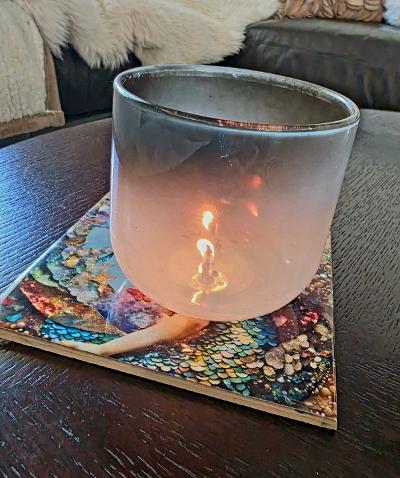
There’s nothing quite like the warm glow of a candle—until you notice a dark, smoky film coating the inside of the glass jar. Black soot can make a beautiful candle look dirty, but more importantly, it’s often a sign that the candle isn’t burning as cleanly as it could.
The good news? Soot buildup is usually preventable. Understanding what causes it and making a few simple changes to how you burn your candles can help keep the glass cleaner and the flame healthier.
What Causes Black Soot in a Candle Jar?
Black soot is primarily made up of tiny carbon particles produced when a candle’s wax doesn’t burn completely. Ideally, the wax vapor combines with oxygen and burns relatively cleanly. When combustion is incomplete, however, some of the carbon forms soot.
Several factors can contribute to this.
1. The Wick Is Too Long
One of the most common causes of soot is an oversized or excessively long wick. As a wick grows longer, the flame can become larger and less stable. A large, flickering flame may produce more carbon particles, which can then travel upward and settle on the glass.
Solution: Trim the wick to approximately 1/4 inch before each burn. This helps maintain a controlled flame and reduces unnecessary smoke and soot.
2. The Flame Is Flickering
A candle flame that constantly dances, leans, or flickers can produce more soot. Drafts from fans, air-conditioning vents, open windows, or people walking nearby can disturb the flame and interfere with consistent combustion.
Solution: Place candles away from drafts and high-traffic areas. A steady flame generally burns more cleanly than one that is constantly being disturbed.
3. The Wick Contains Too Much Carbon Buildup
During burning, a small amount of carbon can accumulate at the tip of the wick, sometimes forming a mushroom-shaped bulb. This buildup can make the flame larger and more prone to flickering and smoking.
Solution: Extinguish the candle, allow it to cool completely, and trim away the mushroom-shaped portion before the next burn.
4. The Candle Is Burning for Too Long
Long, uninterrupted burns can cause the melt pool to become very large and the wick to become increasingly hot. Depending on the candle’s design, this may contribute to an unstable flame and increased soot.
Solution: Follow the manufacturer’s recommended maximum burn time. As a general practice, avoid leaving a candle burning for many consecutive hours.
5. The Wick May Not Be Properly Matched to the Candle
Candle making is a careful balance between the wax, fragrance, wick, container, and other components. A wick that is too large for the candle can create an overly large flame and excessive soot.
This is primarily a candle-design issue rather than something the consumer can always correct through trimming.
Solution: Choose candles from manufacturers that conduct proper wick testing. If you make candles yourself, test wick sizes and combinations thoroughly rather than assuming one wick will work for every wax, fragrance, and container.
How to Prevent Soot From Building Up on the Glass
A few simple habits can make a noticeable difference.
Keep the Wick Trimmed
Before lighting your candle, trim the wick to about 1/4 inch. If the wick has developed a large carbon “mushroom,” remove it once the candle has cooled.
Keep Candles Away From Drafts
Avoid placing candles directly beneath ceiling fans, next to open windows, or near air vents. A calmer environment helps the flame remain stable.
Don’t Burn the Candle Excessively
Use the manufacturer’s recommended burn time and allow the candle to cool between burns. Avoid burning a candle when only a small amount of wax remains at the bottom of the container.
Don’t Move a Candle While It’s Burning
Moving a lit candle can disturb the flame and cause hot liquid wax to shift. Extinguish it first, allow it to cool, and then relocate it.
Choose Well-Made Candles
If soot repeatedly accumulates despite proper wick trimming and burning conditions, the candle itself may be contributing to the problem. Look for candles from reputable manufacturers that properly test their wick and wax combinations.
What If the Glass Is Already Covered in Soot?
Don’t worry—a sooty candle jar can often be cleaned.
First, extinguish the candle and allow it to cool completely. Wipe the exterior and accessible interior glass gently with a soft, dry cloth or paper towel to remove loose soot. For stubborn residue, use an appropriate glass-cleaning solution on a cloth, taking care not to contaminate the remaining wax or wick.
Never clean or handle the jar while the candle is hot.
The Bottom Line
Black soot on a glass candle jar is usually the result of incomplete combustion, and an overly long wick, a flickering flame, drafts, excessive burn times, or an improperly matched wick can all play a role.
The simplest prevention routine is easy: trim the wick, keep the candle away from drafts, burn it for reasonable periods, and follow the manufacturer’s care instructions.
A little candle maintenance goes a long way toward keeping that beautiful glass jar clear—and helping your candle burn more consistently from one use to the next.
Sometimes your home doesn’t need anything new—it just needs to be seen in a new way.
One of the easiest ways to refresh a room is to shift the decorative items you already own. Moving a vase from the dining table to a bookshelf, swapping artwork between rooms, or rearranging the objects on a coffee table can create a surprisingly different atmosphere without spending a dime.
Why a Little Rearranging Works
We naturally become accustomed to our surroundings. After seeing the same lamp in the same corner and the same collection of objects on a shelf day after day, we tend to stop noticing them. Rearranging interrupts that visual routine.
Even small changes can make a room feel more intentional and lively. A familiar space can suddenly appear brighter, more balanced, or simply more interesting.
There’s also something satisfying about rediscovering what you already have. Instead of constantly buying new accessories to create a sense of change, you can give your existing pieces a new role. That favorite bowl, framed print, candleholder, or decorative box may look completely different when paired with other objects or placed somewhere unexpected.
Start Small
You don’t have to completely redesign a room. In fact, small shifts are often the most effective.
Try choosing one surface—a mantel, entryway table, bookshelf, nightstand, or coffee table—and remove everything from it. Look at the pieces individually, then begin putting them back in a different arrangement.
You might:
Move taller objects toward the back and smaller pieces toward the front.
Group several small objects together instead of spreading them throughout the room.
Leave one area intentionally empty to give the arrangement some breathing room.
Change the orientation of framed artwork or decorative mirrors.
Swap accessories between rooms rather than simply moving them within the same space.
Think of it less as decorating from scratch and more as editing a composition.
Create “Décor Swaps”
A particularly easy approach is to create small groups of interchangeable accessories. For example, keep a few decorative objects in the living room, bedroom, and entryway that can easily trade places.
A ceramic vase might spend a few months in the bedroom before moving to the entryway. A stack of attractive books could shift from a coffee table to a console. A decorative tray could move from the kitchen counter to an ottoman.
These little exchanges can make your home feel refreshed without making it feel completely unfamiliar.
Work With What You Already Have
Before buying anything new, shop your own home.
Walk from room to room and look for pieces that could have a second life somewhere else. You may discover that an object you’ve grown tired of isn’t actually the problem—it simply needs a different setting.
Pay attention to color, texture, scale, and shape. Moving a warm-toned accessory into a room with similar colors can create a subtle connection between spaces. Likewise, placing a textured object among smoother surfaces can add visual interest.
Try a Seasonal Shift
You don’t need to wait until your home feels stale to rearrange it. Seasonal changes provide a natural opportunity.
In spring and summer, you might bring forward lighter fabrics, glass objects, fresh colors, and natural textures. In fall and winter, warmer tones, heavier textures, candles, and wood accents can make a room feel cozier.
The changes don’t have to be dramatic. A few carefully chosen swaps can be enough to signal a new season.
Don’t Forget the Unexpected Spots
When rearranging, look beyond the obvious decorating surfaces.
Consider a windowsill, kitchen shelf, bathroom counter, bedside table, or the top of a cabinet. Sometimes an overlooked corner becomes the most interesting part of a room once it receives a little attention.
Just remember that decorative items should still serve the space. Avoid filling areas that need to remain functional or creating arrangements that make everyday tasks inconvenient.
Make It a Regular Ritual
The beauty of shifting décor is that it doesn’t have to be a major project. Set aside 15 or 20 minutes every few weeks or whenever a room starts feeling too familiar.
Take a few things away. Move a few things around. Try combinations that you wouldn’t normally consider. Live with the new arrangement for a few days and see how it feels.
And if you don’t like it? Put it back and try something else.
Ultimately, refreshing your décor isn’t about achieving a perfect arrangement. It’s about allowing your home to evolve with you. A small change in position can give familiar objects a new presence—and sometimes that’s all it takes to make a well-loved space feel new again.
There is something deeply comforting about caring for another living thing.
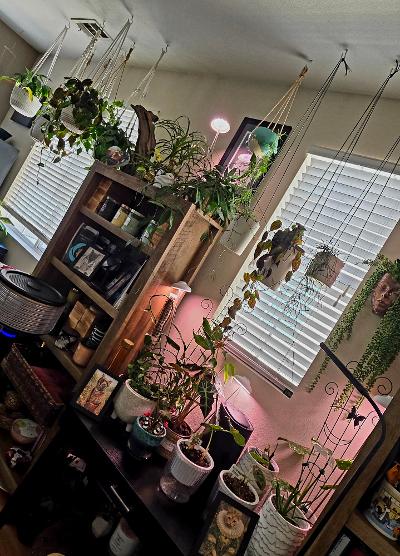
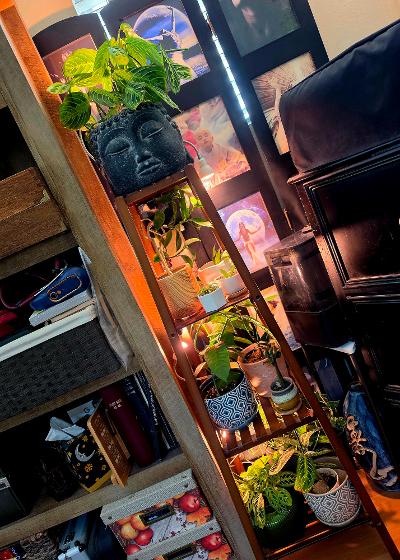
For me, that feeling has grown into a home filled with more than 140 indoor plants and another 130 or so outside. To some people, that may sound like a lot of work—and honestly, it is. There is watering, pruning, repotting, fertilizing, cleaning leaves, moving plants around, and paying attention to what each one needs.
But somewhere along the way, I realized that the care itself is part of the joy.
Plants Give Us a Reason to Slow Down
Life can be noisy. There are always messages to answer, errands to run, deadlines to meet, and things competing for our attention.
Plants don’t care about any of that.
When I’m taking care of them, I have to be present. I notice that a leaf is turning yellow. I see a new shoot emerging. I realize one plant needs more light while another has been happier in the shade. Even something as simple as watering becomes an opportunity to pause and pay attention.
Caring for plants pulls us out of our heads and into the moment.
And there is something therapeutic about that kind of quiet attention.
There Is Satisfaction in Watching Something Grow
One of the most rewarding things about having plants is witnessing progress that happens slowly.
A new leaf doesn’t appear overnight. A cutting may take weeks to root. A small plant can gradually become something much larger and more beautiful.
That slow growth can be a wonderful reminder that not everything has to happen immediately.
We live in a world that often celebrates instant results. Plants teach a different lesson: nurture something, give it the right conditions, be patient, and let time do its work.
Sometimes the reward is simply noticing that something is growing because you took the time to care for it.
Plants Give Care a Tangible Form
There is also something emotionally satisfying about care that produces visible results.
You water a thirsty plant, and its leaves perk up.
You remove damaged leaves, and the plant looks healthier.
You give a struggling plant better light, and eventually you see new growth.
These little moments can feel surprisingly meaningful.
Taking care of plants gives us opportunities to nurture without needing words. We can see that our attention matters. Even when the task is small, there is a tangible connection between what we do and what happens next.
A House Full of Plants Can Feel Alive
My plants have become much more than decorations.
They make my home feel alive.
There is always something happening. A new leaf is unfurling. A flower is blooming. A vine has suddenly reached across a shelf. A plant that seemed to be doing nothing for months decides it’s finally ready to grow.
With more than 140 plants indoors, there is almost always something to discover in my home.
And outside, with another 130 or so plants, that feeling continues. The garden changes with the seasons, the weather, and the plants themselves.
Instead of coming home to a static environment, I come home to a living one.
Caring for Plants Can Create a Sense of Purpose
Having a lot of plants means there is always something to do.
That might sound like a downside, but I find the opposite to be true.
There is comfort in having small responsibilities that matter. Water this one. Check that one. Move another closer to the window. Repot the plant that has outgrown its container.
These tasks may not seem significant in isolation, but together they create a rhythm.
And sometimes having a reason to get up and care for something is exactly what we need.
Plants Don’t Demand Perfection
One of the things I love most about plants is that they don’t require us to be perfect.
Despite all the care we give them, things still go wrong.
A leaf dies. A plant gets stressed. Something gets overwatered. A cutting doesn’t make it.
And that’s okay.
Plant care teaches us to respond rather than panic. We learn to observe, adjust, try again, and accept that not everything is within our control.
In that way, plants can teach patience not only with them, but with ourselves.
The Joy Is Bigger Than the Work
Yes, caring for more than 270 plants is work.
There are days when watering alone feels like an undertaking. There are unexpected problems to solve. There are moments when I wonder how I ended up with quite so many plants.
But then I notice a new leaf.
Or a flower opens.
Or I see a plant thriving that once looked like it wasn’t going to make it.
And suddenly, the work feels worthwhile.
That’s the beautiful thing about therapeutic hobbies: they don’t necessarily eliminate effort. Instead, they can make effort feel meaningful.
A Little More Green, A Little More Joy
I don’t think you need hundreds of plants to experience the benefits of caring for them.
One plant on a windowsill can be enough.
A small herb garden can be enough. A few houseplants can be enough. Even growing something from a seed and watching it develop can provide that same sense of connection.
For me, though, plants have become a significant part of how I experience home and everyday life.
My 140-plus indoor plants and 130-plus outdoor plants require plenty of care. But they give back in ways that are difficult to measure.
They give me moments of quiet.
They give me something to look forward to.
They give me opportunities to nurture, observe, learn, and be patient.
Most importantly, they give me joy.
And perhaps that’s the real reason caring for plants can be so therapeutic: we aren’t simply taking care of plants. We’re creating little moments of connection with something alive—and, in the process, taking a little better care of ourselves.
Television in the 1970s and 1980s was a very different experience from watching television today. There were far fewer channels, no streaming services, no DVRs, and no way to simply search for a program and watch it whenever you wanted. Watching television was often something the whole family planned around.
Television programming back in the day
In the 1970s and 1980s, most Americans received television through a handful of broadcast networks, particularly ABC, CBS, and NBC, with PBS providing educational and cultural programming. Later, FOX joined the major networks in 1986. Cable television also expanded dramatically during the 1980s.
Programming was organized around a schedule. There were morning shows, daytime game shows and soap operas, afternoon children’s programs, evening news, and prime-time programs. Prime time was especially important because networks competed for the largest possible audience.
People commonly talked about “Must See TV” before that phrase became associated with NBC in the 1980s and 1990s. If a favorite program came on at 8:00 p.m. on Thursday, for example, you had to be sitting in front of the television at 8:00 p.m. on Thursday.
There was also a strong sense of appointment television. Families might say, “Don’t forget, The Muppet Show is on tonight,” or “We’re watching Dallas.” Missing the episode could mean missing it permanently.
TV Guide
TV Guide was extremely important because it told people what was going to be on television and when. Today we can look at a program guide on the television or search the internet in seconds. Back then, viewers often bought or subscribed to the weekly magazine.
TV Guide contained the listings for programs by day and time, along with articles about television stars and upcoming programs. People would look through the listings and mark the programs they wanted to watch.
In many households, the TV Guide might sit on the coffee table next to the television. It was essentially the search engine and program guide of its time.
TV Times
On the West Coast, another familiar publication was TV Times, which was particularly associated with the Los Angeles television market. For people in Southern California, it was a useful way to see the local television schedule.
TV Times was especially relevant because television schedules could vary by market. What aired at a particular time in Los Angeles wasn’t necessarily identical to what viewers in New York or Chicago were watching.
Sitcoms
Sitcoms were a huge part of television during the 1970s, 1980s, and into the 1990s.
The 1970s produced shows such as All in the Family, The Jeffersons, Good Times, The Mary Tyler Moore Show, MASH*, Sanford and Son, The Brady Bunch, and One Day at a Time. Many sitcoms weren’t simply jokes from beginning to end; they also dealt with subjects such as racism, poverty, family problems, relationships, politics, and changing social attitudes.
The 1980s brought another generation of enormously popular sitcoms, including The Cosby Show, Family Ties, Cheers, Growing Pains, The Golden Girls, Night Court, Who’s the Boss?, and Roseanne.
By the 1990s, shows such as Seinfeld, Friends, The Fresh Prince of Bel-Air, Home Improvement, and Frasier became major television events.
One interesting thing about sitcoms was that the audience often had to wait an entire week for the next episode. There was no “next episode” button. If you really liked a show, you remembered the day and time it came on.
Commercials were part of the experience
Commercials were much more noticeable because viewers couldn’t simply fast-forward through them. A typical half-hour sitcom had commercial breaks throughout the program.
Some commercials became almost as memorable as the television programs themselves. Companies such as Coca-Cola, Pepsi, McDonald’s, Burger King, Kellogg’s, General Mills, Chevrolet, Ford, and many others created advertising campaigns that became part of popular culture.
Commercial jingles could get stuck in people’s heads. Children knew the commercials for their favorite cereals and toys, and commercials during Saturday-morning cartoons were especially important because they were aimed directly at young viewers.
The 1980s and 1990s also saw increasingly elaborate commercials for new technology, automobiles, fast food, toys, and consumer electronics.
How blockbuster films were aired on television
Going to the movie theater was one way to see a blockbuster, but eventually the movie would make its way to television.
The arrival of a major movie on television could be a big event. Networks would advertise the movie heavily beforehand, sometimes for days or weeks. A popular movie might receive a special presentation with a prominent introduction and additional commercial promotion.
There was something special about knowing that a major theatrical film was going to be shown on television that night. The family might plan the evening around it.
Movies could also be edited for television, particularly for language, violence, sexual content, and running time. The film might also be interrupted by commercials.
You had one shot to watch your show
This is probably one of the biggest differences between television then and television now.
If The A-Team came on at 8:00 p.m. and you weren’t home, you missed it.
There generally wasn’t a convenient way to watch it later. You couldn’t go online, open an app, or find the episode on demand.
This created a different relationship with television. People actually arranged their lives around television schedules. Someone might rush home from work, finish dinner early, or tell a friend, “I can’t go out tonight—my show is on.”
If you missed a particularly important episode, you might have to wait for a rerun. And sometimes you didn’t even know when that rerun would happen.
VHS changed everything
Then came the VCR and VHS tapes, and television viewing began to change dramatically.
A VCR allowed people to record a television program and watch it later. Suddenly, you didn’t necessarily have to be home when your favorite program aired.
You could put a blank VHS tape into the machine, program the VCR, and record a show. Later, you could rewind the tape and watch it.
Of course, programming a VCR wasn’t always easy. Many people remember struggling with the clock, recording times, and the infamous blinking 12:00 on the VCR display.
VHS also allowed people to build their own personal movie collections. Instead of waiting for a movie to appear on television, you could rent a movie from a video store and watch it at home. Blockbuster Video became one of the defining businesses of this era.
The VCR therefore represented a major transition: television was beginning to move from “watch it when the network broadcasts it” toward “watch it when you want.”
The biggest difference
The biggest difference between television then and television today is control.
In the 1970s, you watched what the networks decided to broadcast, when they decided to broadcast it. TV Guide or TV Times told you what was coming on. Commercials were part of the experience. If you missed something, you hoped for a rerun.
VHS gave viewers their first real taste of control. You could record a program, pause it, rewind it, and watch it later.
Today, streaming has taken that idea much further. We can watch thousands of programs whenever we want, pause them, skip commercials, watch entire seasons in a weekend, and even watch on a phone.
For people who grew up with television in the 1970s and 1980s, that makes the old experience seem almost unimaginable: you didn’t watch television whenever you wanted—you watched television when television was on.
There is a particular kind of exhaustion that comes from being the person who is responsible for everything. It isn’t just the physical work of running a household. It’s the mental load, the emotional responsibility, the constant decision-making, and the never-ending feeling that if something goes wrong, you are the person who has to figure it out. When you’re single and divorced, there isn’t necessarily a built-in partner to help pick up the slack. There isn’t someone standing beside you who can say, “I’ve got this. Go rest.” There isn’t someone who automatically steps in when you’re sick, overwhelmed, exhausted, or simply at the end of your rope. The responsibilities don’t disappear just because you’re doing them alone. If anything, they can feel even heavier because there is no one else in the household who can automatically share them.
Everything still has to get done. The bills have to be paid, groceries have to be bought, the house has to be cleaned, appointments have to be scheduled, errands have to be run, and decisions have to be made. When something breaks, you have to figure out whether you can fix it yourself, find someone who can fix it, or figure out how you’re going to pay for it. There are always things that need attention, and somehow, somewhere in the middle of all of that, you’re also supposed to take care of yourself. You’re supposed to prioritize your health, your finances, your career, your emotional well-being, your relationships, and your need for rest. It can feel like there simply aren’t enough hours in the day or enough energy left at the end of it to take care of yourself after you’ve spent so much time taking care of everything else.
One of the most frustrating parts of being the person in charge, though, is the assumptions people make. Once people see that you’ve managed to handle things on your own, they begin to assume that you can handle anything. You’ve fixed things before, so they assume you’ll fix the next thing. You’ve managed a difficult situation, so they assume the next difficult situation won’t bother you. You’re independent, so they assume you don’t need help. You’ve always figured things out, so they assume you’ll just figure this out too. What they don’t always see is that there is a huge difference between being capable of doing something and actually having the time, energy, physical ability, or desire to do it yourself.
Take my 7.5-foot Christmas tree, for example. It spends the majority of the year on a high shelf in my garage, and I cannot get it down or put it back by myself. I know, shocking, right? Apparently being a single woman who manages an entire household does not automatically come with the ability to magically retrieve a giant Christmas tree from a shelf 9 feet above my head. I am perfectly capable of handling a lot of things, but I’m also realistic enough to know when something requires another person. I need someone who is taller, stronger, or simply has an extra set of hands. And no, I am not going to risk climbing on my 6-foot ladder, wrestling a giant Christmas tree box down from a high shelf, and potentially ending up in the emergency room just to prove that I can do everything myself. I’m not Wonder Woman.
That may sound funny, but there is actually something bigger behind that Christmas tree. There is an expectation placed on women, especially women who have demonstrated that they are independent and capable, that we should somehow be able to handle everything. We become the people who organize, plan, remember, manage, repair, pay, schedule, coordinate, and care for everyone else. We become the person who knows when the bills are due, what needs to be repaired, what needs to be purchased, who needs a phone call, which appointment is coming up, and what problem needs to be dealt with next. It’s not just the work itself; it’s carrying the mental list of everything that needs to be done. Even when you’re sitting down, your mind is still going. Even when you’re supposed to be relaxing, you’re thinking about what you forgot, what needs to happen tomorrow, or what unexpected expense might be waiting around the corner.
I think people sometimes confuse necessity with ability. Just because I’ve had to learn how to do something doesn’t mean I should be expected to do everything. Just because I’ve managed a household on my own doesn’t mean every responsibility automatically belongs to me. And just because I’ve become good at solving problems doesn’t mean I don’t get tired of having to solve them. There are plenty of things I can do, and there are plenty of things I will continue to do because that’s life. But there are also things I shouldn’t have to do alone, and there is absolutely nothing wrong with admitting that.
Being independent can be empowering, but it can also be incredibly frustrating. The hardest part of being single isn’t necessarily being alone in the traditional sense. It’s not having another adult in the household who can step in when you can’t. It’s not having someone who sees that you’re exhausted and says, “I’ll take care of dinner tonight.” It’s not having someone who notices the problem before you have to explain it, handles an errand when you’re overwhelmed, takes care of the thing that’s been sitting on your to-do list for three weeks, or simply looks at you and says, “Don’t worry about it. I’ve got this.”
That’s what I think people sometimes misunderstand about being single after divorce. It’s not necessarily that you want someone to rescue you. I don’t. I’ve already learned how to rescue myself. I’ve learned how to make decisions, solve problems, pay bills, manage a home, deal with emergencies, and keep moving forward even when things are difficult. But there is a big difference between knowing that you can take care of yourself and wanting to have to take care of everything yourself. Sometimes you don’t want a rescuer. You just want a teammate.
And there is another layer to all of this that can be difficult to explain: caring for yourself while you’re busy caring for everyone and everything else. We’re constantly told that we need to practice self-care, set boundaries, get enough sleep, exercise, eat well, take time for ourselves, and protect our mental health. All of those things are important, but sometimes self-care feels like one more responsibility on an already overflowing list. When you’re responsible for so many other things, even resting can make you feel guilty because there is always something else that could be getting done. You can finally sit down, but instead of relaxing, you’re thinking about the laundry, the bills, the repairs, the grocery list, the upcoming appointment, or the thing you need to remember tomorrow.
The truth is that being capable doesn’t mean you aren’t exhausted. Being independent doesn’t mean you don’t need help. Being strong doesn’t mean you should have to be strong every minute of every day. And being the woman who keeps everything together doesn’t mean you should have to carry the entire weight of the household without ever asking anyone else to help.
I can be proud of the fact that I’ve built a life I can manage on my own and still admit that sometimes it’s really hard. I can appreciate my independence and still wish I had someone beside me to share the responsibilities. I can love and care for the people in my life and still need someone to care for me sometimes. Those things aren’t contradictory. They’re human.
So, if you’re a single woman who has suddenly found herself responsible for everything, I want you to know that you’re not failing because you’re tired. You’re not weak because you need help. And you certainly don’t have to prove your strength by doing things that were never meant to be done alone. Sometimes the strongest thing you can do is acknowledge that something is too much, ask for help, and let someone else carry part of the load.
And if someone looks at you and says, “Oh, you’ll figure it out,” remember that you are allowed to say, “Actually, I need help with this one.”
Because maybe you can figure it out. Maybe you have figured out a thousand things before. But that doesn’t mean you should have to figure out the next thousand things alone.
And as for that 7.5-foot Christmas tree sitting on the high shelf in my garage? Well, I will have to find someone who can safely get it down for me.
July 6th, 2013…the day I earned my IFBB Pro Card in Paramus, New Jersey
For years, bodybuilding was a huge part of my life. I trained hard, dieted harder, competed, and eventually accomplished something I was incredibly proud of: earning my IFBB Pro status.
So when people ask me why bodybuilding contests don’t excite me the way they once did, the answer isn’t that I regret competing. Quite the opposite. I am genuinely grateful for every year I spent in the sport, every contest I entered, every sacrifice I made, and every lesson I learned. If I could go back and do it all over again, I wouldn’t change that part of my life.
But I’ve also reached a point where I look at the competitive bodybuilding lifestyle differently.
When you’re competing at a high level, “being in shape” isn’t really the goal. Everything revolves around getting to that last fraction of a percent of body fat, squeezing every ounce of muscle out of your physique, and showing up on one particular day looking as close to perfect as humanly possible. On top of that, you repeatedly put yourself in front of a panel of judges who won’t hesitate to tell you if you’re even a tad below what they consider to be perfect.
That requires a regimen that most people would consider extreme—and, honestly, they should.
The training becomes a job. The food becomes a schedule. Your life gets organized around meals, cardio, workouts, recovery, posing, supplements and preparation. As a contest gets closer, the diet can become incredibly restrictive, the training becomes exhausting, and your entire world starts shrinking around the competition.
And it doesn’t stop with your body.
There is the financial side. Food, supplements, gym expenses, coaching, posing, tanning, travel, entry fees, competition suits and all the other costs can add up quickly. There is also the emotional cost. When your entire life is structured around preparation, it can put tremendous strain on relationships. Your spouse, family and friends may understand what you’re doing, but that doesn’t mean the lifestyle is easy for them to live alongside.
I’ve experienced enough of that world to understand exactly what it takes.
That’s probably why, today, I find myself appreciating something that I never appreciated quite as much when I was competing: being a normal person.
There is something incredibly freeing about being able to eat dinner without calculating every calorie. To go out with friends without wondering whether the meal fits perfectly into your diet. To miss a workout occasionally without feeling like you’ve committed some kind of crime. To have your day revolve around your life instead of having your life revolve around your physique.
And maybe most importantly, there’s something to be said for having the freedom to enjoy the people around you.
I still love training. I still appreciate muscular physiques and the incredible discipline required to build one. I still have tremendous respect for anyone who steps onstage and puts themselves through that process. I know firsthand how difficult it is.
But when I watch competitors today going through the brutal dieting, the endless cardio, the obsessive training, the mounting expenses and the stress that can spill over into their personal lives, I sometimes have to shake my head.
I understand why they’re doing it, because I was that person.
And I’m not judging them. I’m simply looking at it from the other side now.
There was a time when I needed that challenge. I needed to know how far I could push myself. Competing taught me discipline, persistence, sacrifice and what it means to commit completely to a goal. Earning my IFBB Pro status will always be one of the accomplishments I’m proudest of.
But life changes.
Eventually, you realize that there is more to being healthy than being stage-ready. There is more to strength than how much you can lift. And there is more to life than seeing how conditioned you can become for one day under bright lights.
Today, I’d rather have balance. I’d rather enjoy a meal with people I care about than worry about whether it fits into a contest diet. I’d rather have the freedom to live spontaneously than have every hour dictated by a bodybuilding schedule.
I don’t regret the years I spent chasing the stage.
I’m actually thankful I did it.
But I’m also thankful that I don’t have to do it anymore.
For me, being a “normal” person has become its own kind of victory. And after spending years learning how to push my body to its absolute limits, there is something pretty satisfying about finally learning how to simply enjoy living in it.
There is one thing I want to make clear, though: I will never be a “regular person” when it comes to fitness. That part of me isn’t going anywhere.
I still weight train an average of six days a week. I still eat clean the majority of the time. In fact, I have always genuinely craved clean food. It’s not something I force myself to do anymore; it’s simply how I prefer to eat. Training is still a major part of my life, and I don’t see that changing.
What’s changed is the reason behind it.
I’m no longer training because I have to look a certain way on a certain day. I’m not counting down to a contest, trying to squeeze out another pound of body fat, or structuring my entire existence around stepping onstage. I train for life.
And here’s the funny part: I’m actually several pounds lighter today than I was when I won my IFBB Pro Card, and just as lean.
So I haven’t become some sedentary person who abandoned bodybuilding and started eating whatever I wanted. Far from it. The discipline is still there. The work ethic is still there. The love of training is still there.
What I’ve gained is perspective.
I can train hard without destroying myself. I can eat clean without being consumed by dieting. I can stay muscular and lean without needing to reach an extreme condition for a competition. And I can take a day off, enjoy a meal, spend time with people I care about, or simply live my life without feeling guilty about it.
Maybe that’s the biggest difference between then and now. I still have the discipline of a bodybuilder. I just don’t live like a competitive bodybuilder anymore.
And honestly, I think that’s a pretty good place to be.
Do you work from home? If so, this excellent article by Camille Johnson of Bereaver.com will optimize work-life balance.
For remote workers balancing deadlines with real life at home, work from home wellness challenges often hide in plain sight. Home office stressors, noise, awkward setups, constant notifications, and the feeling of never fully “clocking out”, can quietly erode energy and focus. When work-life integration turns into work-life blur, mental health and productivity tend to slip in ways that feel personal but are often structural. With the right perspective, these patterns become easier to recognize and change.
Quick Summary: Boost Wellness When Working From Home
Build simple self-care routines that support your wellbeing throughout the workday.
Optimize your home office setup to improve comfort, focus, and daily energy.
Practice stress reduction techniques to feel calmer and more resilient while working remotely.
Choose healthy nutrition habits that keep you fueled and steady during work hours.
Digitize key documents to cut clutter and lighten mental load
Once you’ve picked a few quick wellness wins, clearing the small but persistent stressors, like paper piles, can make your workdays feel noticeably lighter. Consider digitizing the important documents tied to your work and career so they’re easy to find when you need them. When you scan or save paper records as PDFs, you keep the formatting consistent across devices, avoid hiccups between different operating systems, and make files simple to share and store. That consistency matters when you’re moving between a laptop, phone, and a home printer, or sending something to a colleague. To keep the process low-friction, use online PDF tools that handle common tasks in a browser: converting files to PDF, compressing large documents, editing, rotating pages, or reordering them so everything reads cleanly. With your paperwork condensed into a tidy digital format, it’s easier to support a short daily routine that keeps your space, and your mind, clear.
Daily Wellness Habits for Working from Home
When your home and work live in the same place, wellness improves fastest through small habits you can do even on busy days. Pick one or two practices, repeat them for a week, then add the next so healthy choices feel automatic.
Two-Minute Desk Reset
What it is: Clear your desktop, close extra tabs, and set one clear top task.
How often: Daily, before your first work block.
Why it helps: A clean start reduces mental load and decision fatigue.
Guided Mindfulness Pause
What it is: Use a short guided meditation to observe thoughts without chasing them.
How often: Daily, mid-morning or mid-afternoon.
Why it helps: It lowers stress and improves emotional steadiness.
Movement Micro-Breaks
What it is: Stand, stretch, and walk for three minutes between focused work sprints.
How often: Every 60 to 90 minutes.
Why it helps: It reduces stiffness and brings your attention back.
Hydration Anchor
What it is: Fill a bottle each morning and drink at every meeting start.
How often: Daily.
Why it helps: It supports energy and helps prevent mindless snacking.
Shutdown Ritual
What it is: Write tomorrow’s first task and power down work notifications.
How often: Daily, at your end time.
Why it helps: It protects recovery time and sleep readiness.
Wellness While Working From Home: Common Questions
Q: How can I manage stress when my calendar is nonstop? A: Aim for brief, frequent downshifts instead of waiting for a “free hour.” Try one minute of slow breathing before you unmute, or a 30-second shoulder release between tasks. If stress spikes daily, consider scheduling one protected buffer block like you would a meeting.
Q: What’s the simplest way to set work-life boundaries at home? A: Choose a clear start cue and a clear stop cue, then repeat them consistently. A hard sign-off time matters because many people struggle here, with 52 per cent rating work-life balance as average or poor. Keep the boundary visible by silencing work alerts after hours.
Q: What should I eat when I’m always near the kitchen? A: Build meals around protein and fiber first, then add a carb you enjoy for steady energy. Pre-portion two easy snacks so you are choosing on purpose, not grazing while stressed. Keep water within reach to reduce “hunger” that is really thirst.
Q: Can a small workspace still be ergonomic? A: Yes, comfort is about fit, not square footage. Start with the screen at eye level, elbows near 90 degrees, and feet supported on the floor or a sturdy box. Many people deal with aches, and 80% of remote workers report musculoskeletal discomfort, so a few adjustments can make a real difference.
Q: When should I take breaks so I don’t lose focus? A: Break before you feel fried. Try a quick reset after completing a task or every 60 to 90 minutes, even if it is just standing and looking across the room. Your concentration often returns faster when your body gets a tiny change of position.
Build Sustainable Wellness Habits That Support Remote Work
Working from home can blur boundaries and make self-care feel like one more task on an already full plate. A practical, evidence-based mindset, small changes, consistent cues, and self-compassion, turns wellness motivation into sustainable remote work habits you can actually maintain. Over time, these shifts support long-term mental health, protect focus, and create productivity through self-care rather than constant push-through. Small, consistent care beats occasional big resets. Choose one change this week and make it easy enough to repeat, then notice how it steadies your energy and decisions. That’s how a balanced home and work life becomes more resilient, week after week.
There was a time when the NPC understood a simple concept: a competitor only needs one IFBB Pro Card to become a professional.
Today, that common sense seems to have disappeared.
We’re now watching competitors collect multiple Pro Cards as if they’re trophies to stack on a shelf. While it’s undeniably impressive to dominate multiple national shows or divisions, the reality is this: once you’ve earned your IFBB Pro status, every additional Pro Card is redundant. You’re already a pro. There is no such thing as being “twice as professional.”
The real question is why the system continues to reward the same athlete over and over while denying another deserving competitor the opportunity to advance.
Years ago, the NPC had a better solution.
My 1st place finish in Bikini 40+. I also ended up winning the Overall title in Bikini 40+.
If a competitor who had already secured professional status won another Pro Card-qualifying class, that Pro Card didn’t simply stay with them. It rolled down to the second-place finisher. The winner still received the title, the recognition, and the prestige of winning the class—but another athlete earned the chance to become an IFBB Professional.
This actually happened on the day when I won IFBB Pro Status. I had taken the 1st place spot in my height class in Bikini 40+, securing my spot in the IFBB league. Then about 30 minutes later, I also won 1st place in Bikini 35+. The second-place finisher ended up getting the Pro card spot since I had already won a spot in 40+.
My 1st place finish in Bikini 35+. Competitor 636 placed 2nd and ended up being awarded a spot in the IFBB as well.
It was a system that rewarded excellence without wasting opportunity.
Somewhere along the way, that philosophy disappeared.
Now we’re celebrating athletes earning their second, third, and sometimes even fourth Pro Card, while competitors standing right beside them—who may have delivered the performance of a lifetime—leave empty-handed. That doesn’t strengthen bodybuilding. It bottlenecks it.
Let’s be clear: this isn’t criticism of the athletes. If the rules allow someone to compete for multiple Pro Cards, they’re simply playing by those rules. Most competitors would do exactly the same thing.
The issue is the rule itself.
Bodybuilding is already one of the most demanding and expensive sports in the world. Athletes spend years chasing this dream, investing thousands of dollars in coaching, food, supplements, travel, entry fees, posing instruction, and countless hours of sacrifice. For many, earning an IFBB Pro Card is the culmination of a decade of relentless work.
Why should that opportunity effectively disappear because someone who is already qualified wins again?
The old roll-down system recognized that bodybuilding isn’t just about identifying the best athlete in the room—it’s also about building the future of the professional ranks. Every available Pro Card represented a chance to introduce a new professional into the sport.
Today, too many of those opportunities are simply being absorbed by athletes who have already crossed the finish line.
Supporters of the current system argue that competitors should simply beat whoever shows up. Fair enough. But that misses the point entirely. The winner still wins. Nobody is taking away the class title, the overall title, or the accomplishment. The question is whether a second or third Pro Card has any meaningful value.
It doesn’t.
A Pro Card isn’t like winning another national championship. It’s a qualification. Once you’ve qualified, you’ve qualified.
Imagine if an Olympic Trials winner could keep claiming multiple spots on the Olympic team while everyone else stayed home. Or if a driver who had already qualified for the Daytona 500 continued occupying additional qualifying positions that could have gone to someone else. Every other major sport understands that once an athlete has secured qualification, additional qualifying positions move down the field.
Bodybuilding used to understand that too.
If the NPC wants to grow the IFBB Pro League and reward the athletes who dedicate their lives to this sport, it should revisit the system that worked for years. Keep recognizing dominant winners—but let duplicate Pro Card qualifications roll down to the next eligible competitor.
One competitor. One Pro Card.
That isn’t lowering the standard.
It’s making sure every Pro Card actually serves its purpose.






 120778843