A Couple Of Nuts

Most people love nuts, especially those of us in the fitness industry who will actually fantasize about the calorie dense morsels. Since I usually take a stance from the fitness end, I want to explore one very popular nut as well as another which had until recently been considered more forbidden. Meet the peanut and the cashew.

Peanut products
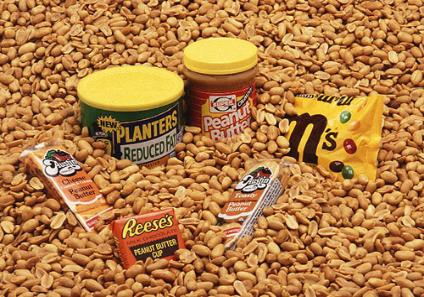
Peanuts have become popularized by baseball stands, candies which feature them, and clever labeling on peanut butter jars which, through their colorful and whimsical labels, have won great favor by children and adults alike. The problem with consumption of large amounts of peanuts and peanut products is that androgen dominance develops, which is closely tied to inflammation and insulin resistance. Individuals who are more sensitive may find that they have more acne breakouts when they consume peanuts, peanut oil, or peanut butter. So in a sense, peanuts can wreak some hormonal havoc on the body.

In contrast, cashews may be considered a hormonal ally. Cashews contain compounds referred to as anacardic acid which has a demonstrated anti-estrogen effect in which it blocks the activation of estrogen receptors once they have attached to estradiol. Anacardic acid also kills hormone sensitive breast cancer cells in vitro and may have a beneficial effect in human subjects. If you consume one half cup of cashews, you will ingest approximately 20 milligrams of anacardic acid. The jury is still out on how much of an impact the anti-estrogen effect has, but it certainly won’t hurt either.
cashews
By no means am I suggesting that you eliminate peanuts or peanut products from your diet (provided you aren’t allergic to them). But if you consume excessive amounts of peanuts and are noticing that you are suffering from acne breakouts, the peanuts may be the culprit. You might want to stop eating peanuts for a couple of weeks to see if your skin clears up. If you simply cannot live without a nut butter, you can consume almond butter or cashew butter as an alternative. If you have any interest in blocking estrogen through consumption of key foods, adding cashews to your meal plan may be just the boost you need to balance estrogen levels.

Whey And Casein In Lactose Intolerant Individuals

cows
If you are lactose intolerant, then you are quite accustomed to checking to see if dishes contain dairy. You might also be wary of whey and casein protein powders due to their derivation from milk. However, if you have only a mild lactose intolerance, you may not have an issue with whey and casein. Why is this?

Many individuals with a mild lactose intolerance are fine with whey protein isolate as well as with casein. Both whey and casein are separated from the lactose during processing. There are small concentrations of lactose which bypass the separation, but usually this is not enough to mount a reaction in a mildly lactose intolerant individual. Only the most sensitive individuals will have a problem with these forms of protein. Bear in mind that whey concentrate is not the same as whey isolate, and that individuals who are more lactose intolerant or who have other gut issues might not tolerate the concentrate form of whey.

You may be asking what the big deal is with whey and casein, and whether they are better than other forms of protein. Why take a chance of mounting a reaction in the belly when there are other forms of protein?
whey scoop
Whey is a complete protein, meaning that it provides all the amino acids the body requires. It is also relatively cheap. Casein protein is also a complete protein, and is digested very slowly, making it a great option for bedtime.

While soy is also a complete protein, it undergoes considerable processing, and it contains phytoestrogens which are estrogen mimics. I am definitely not a fan of soy protein and will not advocate its use. Rice, hemp and pea proteins are good alternatives for the vegan or vegetarian crowd, but since they are not complete proteins, they must be combined to fill out the amino acid profile. Rice protein is very easily digested, while pea protein has glutamic acid, which helps convert carbs into energy instead of being stored as fat. Hemp protein is rich in omega-6 fatty acids and has a high fiber content.

As long as you mix plant based proteins to get a complete profile, you will not be at a disadvantage if you cannot tolerate whey or casein. However, when it comes to cost, nutrition profile, and convenience, whey will always win the prize for being the king of protein powders.

Why I Love My Slow Cooker

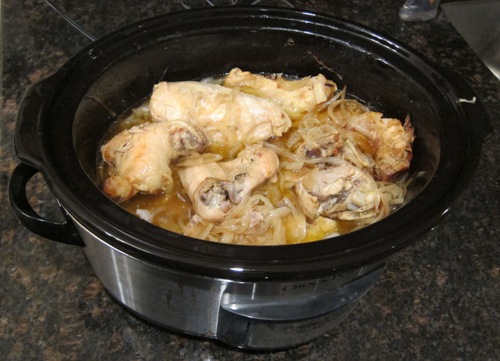
My chicken comes out drier than this which is what I prefer.

My chicken comes out drier than this which is what I prefer.


Slow cookers are incredible time savers, but I have always struggled with the texture of foods which results from this method of cooking. Red meat cooks incredibly well, but the cuts which work best are higher in fat and tend not to fit into my meal plans. That isn’t much of an issue since I tend to buy 90% lean ground beef patties and just broil them when I need them.

Chicken and yams are another story entirely. I consume both of these food items regularly, and find prepping them to be incredibly tedious. My favorite method of cooking chicken is to grill them outside, so that I get that crispy char, but the intense summer heat has discouraged me from doing this. I was tempted to use my slow cooker but I didn’t like the mealy texture that slow cooking imparted to chicken, so I decided to experiment a bit, and finally hit a winning prep method that works for me. Until the mercury drops to acceptable levels, I will use my slow cooker to cook chicken, employing an incredibly simple prep method.

Here’s what I do: I take about 8 pounds of boneless, skinless chicken breast and place it in the slow cooker, then I season HEAVILY with salt free seasoning and lots of black pepper, white pepper and parsley. I then add two to three coarsely chopped onions (usually a mix of red and yellow) and a few cloves of garlic. Sometimes I will also add a few stalks of chopped celery. I DO NOT ADD WATER. I used to add water and never liked the almost mealy consistency which resulted, but then I read Ashley Kaltwasser’s tip about not adding water and tried it, with great results. I allow this mixture to cook for 10 hours on low. The only issue I have with slow cooker chicken is that I need to add a LOT of seasonings to make it tasty, but then again, I like stronger flavors in my meats.

Once I had my chicken slow cooker method down I was pretty happy, but I wanted to figure out a way to make yams with the same marinade I usually use, but in the slow cooker. Typically I will marinate my yams, then throw them on a cookie sheet and bake them, but the summer heat once again got me thinking about cooking methods that didn’t require me to stand near a strong heat source. I turned to my slow cooker once again, but added only a small amount of liquid (contrary to what the manufacturer recommends), resulting in yams which had the perfect degree of softness.

Here’s my slow cooker yam recipe: I wash about ten pounds of yams, then cut them into large cubes. Then I place them in a clean plastic bag. In a bowl, I combine about 1/4 cup olive oil, 1/4 cup pomegranate vinegar, 1/4 cup balsamic vinegar, 1 tablespoon pure vanilla extract, 1 tablespoon pumpkin pie spice, 1 teaspoon cinnamon, 1 teaspoon ground cloves, and 1 teaspoon ground nutmeg. I mix this well, then toss into the bag with the yams and shake vigorously until the yams are completely coated. I let this sit overnight. Then the next morning, I simply place the yam mixture into the slow cooker, add 1/2 cup water. I set cooker to 10 hours and let it do its thing. I LOVE the flavor in my yams because it is highly seasoned, and the yams are soft yet not mushy.

Try these recipes and let me know if you like them!

My Nutrition Coach Certification

NAFC-Logo-05
Despite the fact that I am a fully licensed and board-certified physician, and also hold a Bachelor’s Degree in Exercise Science, I realize that some people get hung up on specific certifications. My education covered nutrition in exhausting detail, which is why I am able to customize meal plans for clients and patients based on a myriad of factors. However, I also obtained a Nutrition Coach certification from NAFC to fortify the credentials I already had.

For those of you who are curious about the course, here are some details:

NAFC’s Nutrition Coach Foundations delivers scientifically-based nutrition education so health and fitness professionals can better serve their clients.

Develop the skills, knowledge and abilities to successfully work with clients seeking goal-based nutritional guidance.
Gain an occupational advantage with enhanced education and a credential to differentiate you from your competition!

NAFC’s Certified Health & Fitness Coaching course blends sound basic science with the latest in nutritional science along with proven coaching skills to help you successfully guide your clients toward better health, better performance, and a better body!

In Section I of this course, you’ll get a strong introduction to the basic sciences; in Section II you’ll become immersed in the field of nutritional science; in Section III you’ll learn about the art & science of being an effective coach; and finally in Section IV you’ll go through a step-by-step set of instructions on how to implement nutritional coaching competently & profitably (including over 30 pages of questionnaires and assessment tools to use with your clients).

No other nutrition certification puts all of these components together. No other nutrition certification was written by a physician with over 35 years of experience in the areas of nutrition, fitness, personal training, anti-aging medicine, and performance enhancement.

The National Association for Fitness Certification was established in 1992 to provide scientifically-based, standards-focused education and training for Group Fitness Instructors, Personal Trainers, and Wellness Consultants. The NAFC’s combination of demanding standards, practical application of scientific principles, and affordable program pricing have defined it as the most rapidly-expanding certifying organization in the industry today.

The NAFC was established by a forward-thinking group of fitness professionals, representing expertise in fields including Exercise Physiology, Adaptive Physical Education, Medicine and Nursing, and Professional Coaching. Their desire was to enhance current fitness certification standards by providing access to convenient and comprehensive – yet practical and affordable – education and skills.

The NAFC follows guidelines established by the American College of Sports Medicine, emphasizing practical information with respect to a comprehensive knowledge base.

Royal Sport Ltd. Ultra Clean 100 Whey Protein

royalwhey
From the makers of Cellucor comes Royal Sport Ltd., a sports supplement line which is sold exclusively through GNC. Royal Sport Ltd. has a number of products in their lineup, but the newest product is the Ultra Clean 100 Whey Protein. Ultra Clean 100 is gluten free, and contains NO Yeast, NO Wheat, NO Preservatives, NO Added Sugars, NO Hydrogenated Oil, and NO Artificial Colors, Dyes, or Fillers. One scoop of this clean whey protein delivers 20 grams of protein and 100 calories per scoop. This protein mixes so beautifully well that I have NEVER had an issue with shaking it up in a mixer cup. You will never need to use a blender with this protein!

I have tried all of the flavors and truly love them all. They are:

Chocolate Cupcake – This is a very rich chocolate, and I absolutely love it. All you chocolate fiends out there will be very happy with this flavor!

Cinnamon Bun – I love the subtle hint of cinnamon which comes forth in this flavor. It’s not over the top, but you will definitely be able to taste the cinnamon as you drink this.

Vanilla Cream – This is a great vanilla, very creamy with excellent and true vanilla flavor.

Ice Cream Sandwich – This is my favorite flavor in the lineup. It reminds me exactly of the slow churned, super creamy, almost frothy consistency of the ice cream which is found in a really good, old-fashioned style ice cream sandwich. The mouth feel on this one is outstanding and definitely tricks your palate into believing that this is a decadent, fat laden ice cream shake.

I encourage you to try this fantastic protein!

I Finally Tried Quest Pasta

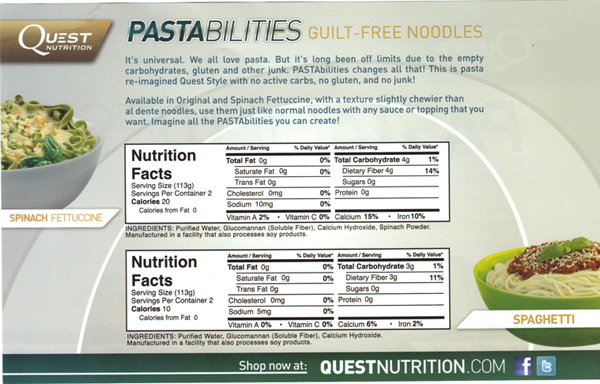
When I heard about the new pasta from Quest Nutrition, I became quite excited because I love everything this company comes out with. It took me a while to get my hands on a package of these guilt-free noodles, but I finally did a couple of months ago.
I was given the spinach fettucine variety, which contains 20 calories per serving (2 servings in a bag). The noodles are very low carb and gluten free, comprised of 100% soluble fiber from the Konjac root, which is also known as glucomannan. I kept waiting for a time when I would finally feel compelled to try it, and that time coincided with a day in which I was constantly ravenous. I walked into the kitchen and figured that consuming Quest noodles would be an excellent way to fill me up and would also give me an opportunity to finally try them.

I hadn’t heard about the odor imparted by the alkaline water that is used to pack the noodles in, so I was a bit alarmed when I opened the package and was assaulted by a strong, SALTY (weird how it actually smelled salty!), ocean smell, kind of like strong seaweed. I thought maybe the noodles had already gone bad! My cream Burmese Kazu, who by the way is a FREAK for seaweed, jogged into the kitchen to investigate and was convinced that I had opened a package of seaweed, so we did a little dance in which she kept jumping on the counter and I kept removing her from it. Once I rinsed the noodles, the smell went away and so did my little seaweed fanatic.

The noodles are very slippery, and have a chewy, slightly rubbery consistency when you eat them, but they hold sauces very well, and they cook up lightning fast. A minute in the microwave does the trick. I added shredded chicken breast, fresh garlic, black pepper, onions and 2 tablespoons of spaghetti sauce and was very happy with the outcome. I honestly tried to restrain myself and have one serving, but these noodles are so guilt free that I had 2 servings and was satisfied for over two hours. After trying these noodles, I think I might have to keep a supply on hand for those times when I am starving and need to throw some food bulk into a meal. Thank goodness for Quest Pastabilities!

You can order direct from Quest Nutrition:

Quest_pasta

http://www.questnutrition.com/quest-pasta/quest-pasta-spinach-fettuccine-12-pack/?type=box

Traveling Is Hard For Fitness People

flex gym
Ever since I began competing in 2009, I have become a high maintenance traveler. It’s almost impossible to avoid becoming high maintenance when things like finding a gym and locating clean food are foremost in one’s mind. I’m not saying that it’s not possible to stay on track with workouts and food while traveling, but foraging for certain “fitness” resources becomes an essential part of prepping for a trip in a fitness person’s life.

I honestly believe that it is always possible to create intense workouts in any location by performing plyometrics, calisthenics, climbing stairs, running on the beach, etc. However, I also know that those of us who love lifting weights go through iron withdrawals when a gym is not available during travels. My first question when a trip is being booked is, “Where is the closest gym, and how is it equipped?”, rather than what sights there are to check out. No hotel room routine or outdoor workout will ever feel as good to me as weightlifting.

Road trips are the easiest since a car can be loaded up with meals and water, but I am always concerned about whether there is a refrigerator in the hotel room at my destination. Though I am resourceful and can put my food on ice, food spoilage is almost inevitable after a couple of days. Packing food when traveling by plane is much trickier since certain food items either travel poorly or are not allowed by TSA. If you need to bring a lot of food and decide to check in your food bag, be prepared for the possibility of lost luggage. My food bag was lost for 24 hours on one trip when I was traveling to a national contest, all because the airline had cancelled a flight, yet had neglected to reroute my food after they booked me on a replacement flight! I also had to spend the night in a freezing cold airport terminal during that trip, so by the time I got to my final destination, I was exhausted and frustrated. When I discovered that my food had been lost, I literally began crying. Eventually my bag was found and delivered to me, but 7 pounds of chicken and beef were on the verge of spoiling by the time the bag was back in my possession.
OLYMPUS DIGITAL CAMERA
Traveling abroad holds even more challenges for the fitness person, since many countries don’t offer clean meal prep services. Even if a local market is located, how will food be prepped if your hotel room lacks a kitchen? I am currently facing this challenge as I prepare for a trip to Hungary. I will make sure to pack a bunch of whey protein, Quest bars and nuts to at least ensure that I meet my body’s daily protein needs. I have also looked into purchasing prepped meals and having them shipped to the hotel on the day of my arrival. Thank goodness I will be staying in a room with a kitchenette when I travel to Sydney, and can cook up a bunch of fish and chicken once I arrive there.

I know that those of you who are not involved in the fitness industry must be reading this and thinking that I am nuts, while those of you in fitness will be able to relate to what I have been saying in this article. The thing is, I don’t want my body to rebel from radically different eating habits or food choices, so I will uphold my high maintenance perspective and do everything in my power to eat clean. Most countries tend to consume whole foods and aren’t in the habit of eating copious amounts of fast foods, a fact which I am thankful for. I look forward to consuming the local produce and trying new foods while staying clean.

The Mind Of A Competitor

Oh, to be a competitor in the world of bodybuilding. It is empowering, exhilarating, inspiring, stressful, challenging and at times heartbreaking. A fascinating psychology exists in this world which can best be described by listing some of the quirks competitors have.

Ripped versus “Fat”:

First of all, competitors develop a bizarre love-hate relationship with their bodies in which they marvel at their bodies when they are lean and muscular and in contest shape, but will curse their bodies when they are the slightest bit mushy or fluffy. Competitors live in a world in which the bar is set VERY high. Competitors will see themselves as fat when others see an amazing body and will say so. Competitors will always believe that the more ripped and lean they are, the better they are. While this is a necessary component of contest prep, it plays games with a person’s self-esteem because it is a constant battle to reach or remain at the pinnacle of leanness and muscularity.

2012 North American
Overtraining:

Some competitors will overtrain in an effort to get their bodies dialed in, without considering the inevitable damage they are doing to their bodies. Yes, we are warriors, and yes, it can be a great thing to push through, but with too much training, the law of diminishing returns kicks in. I completely relate to the principle of training constantly for a big contest because I have done it many times. I have endured double training and double cardio sessions which at times had me in the gym for five hours at a time. I have sustained injuries in my foot, ankle, knee, shoulder and forearm and continued my training because a big event was looming around the corner. Was it smart to train through injuries? No, but at the time I couldn’t imagine slowing down or stopping just because of a silly injury. This is the very thing I now scold clients about. No contest is worth hurting yourself!

“A judge told me I suck!”

Another thing that competitors have a habit of doing is worrying about what judges say and taking criticism hard. Competitors need to remember that bodybuilding, to a considerable degree, is a subjective sport, and if you are going to allow a judge to rip you apart and kill your spirit, then you probably shouldn’t be competing at all. The word of one judge is exactly that. Now if you speak to a bunch of judges and people in the sport who know what the ideal for the division you compete in is, and they all tell you the same thing, then you can probably assume that what they are all telling you is constructive criticism which you can then use as a reference when you make adjustments to your training program. That way, you will address certain weaknesses without throwing in the towel.

Money drain:

Bodybuilding is a VERY expensive sport. When you tally up the cost of food, supplements, coaching, competition apparel, spray tanning, accessories, hair styling and makeup application, travel expenses, and entry fees, the financial load can be immense. Competitors will often go broke, scraping up whatever money they have to make the dream of competing happen. This is not a poor man’s sport! That is why I tell competitors to establish a budget and be judicious about which events they want to do and what they can afford to do. I also advise competitors to seek out sponsors to help out with the enormous costs of competing. It is not unusual to see competitors forgo other hobbies and vacations in an effort to gather enough funds to support their competing habit.

Food Porn:

As a competitor who used to dream about food, I completely understand the fantasizing which occurs in competitors when on a contest prep meal plan. Contest prep meals are usually bland as a result of how clean they are, and some meal plans are so restrictive that one may eat only two food items throughout the day, such as chicken and asparagus. It’s only human nature to rebel against this type of meal plan after a while, because it is quite a chore to adhere to it every single day with no treats and no cheats. It is a normal occurrence for competitors to discuss what foods they plan to eat post-contest. What’s also interesting is that some competitors will become so rigid and so fearful of backlash from their coaches that they will only have a quasi-cheat meal post contest, then return to the same rigid eating plan they were on before. Other competitors may go off the deep end, eating everything in sight for days or weeks, only to deal with considerable rebound.

Conclusion:

Those of us who compete are indeed a strange breed. We are disciplined, driven and focused. I am fine with our quirks and accept them as part of the sport.

A Fun Stage Shot After Bikini Open D Awards At Team Universe 2013

Chatting Onstage TU

I have no recollection of what Denita Clark and I were chatting about, but I have a strong suspicion that we were talking about what foods we were planning to eat since Finals were over for us! It’s a fun shot! You can also see Stephanie Mahoe reaching for the 1st place trophy which got her a Pro Card win, and the lovely Justine Moore.