Overcoming The Daily Grind: How Women Can Focus On Their Health

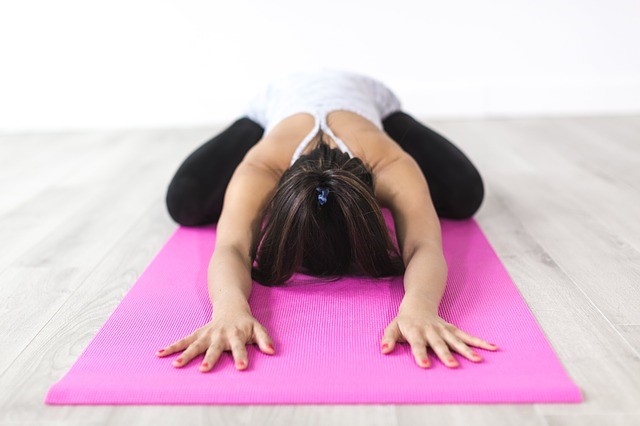
Photo via Pixabay by Stocksnap

Attention ladies…how can you focus on yourself in the midst of a hectic lifestyle? Read on to see what Sheila Olson of fitsheila.com has to say!

– By Sheila Olson

For many women, finding the time to focus on their overall well-being can be a challenge. Busy work schedules, spending time with family, and personal projects can sometimes prevent us from taking the time we need to take care of our bodies and minds, leaving us feeling exhausted and without the defenses we need to stay healthy. While having a routine can be a great thing, it can also become monotonous, leaving you with the feeling of being stuck in that “daily grind” everyone talks about.

Fortunately, there are several things you can do to boost your health and overall well-being without sacrificing the time you need to spend on other things. Making small changes to your lifestyle and routine will help you boost your energy, immune system and self-esteem, all while ensuring that you stay efficient and productive.

Keep reading for some great tips on how to get started.

Ask for help

No matter how productive you are, there’s just no way you can do everything by yourself, so don’t even try! Ask for help now and then, especially when it comes to managing your time. Not only will this help you get everything done, it will reduce stress at the same time. Think about the small things that will have a big impact, such as delegating chores to the kids or hiring a dogwalker to take care of your pup while you focus on other things.


Get in a daily workout

It may seem easier said than done, but it’s actually not that hard to fit in a workout if you know where to look. Many people think that their exercise routine needs to be done in a gym, for at least an hour at a time, with fancy equipment and gear, but the truth is, you can break up your workout into two fifteen-minute increments and get some nice results. You can also try yoga or simply use the tools you have around you including stairs instead of heading to the gym.

Eat well-balanced meals

Eating healthy isn’t always easy when you have a packed schedule; many women find themselves settling for fast food or even finishing what’s left on their child’s plate rather than making something good for themselves. If time is an issue, consider preparing some healthy meals ahead of time such as on a Sunday night and freezing them for the week. It will also help to keep quick, easy foods like pre-mixed salad, fruit, granola and oatmeal at the ready so you can make a healthy meal even when you don’t have much time.

Fuel up at work

When you spend long hours at the office, it can be hard to focus on your needs. Schedule breaks in which you can meditate, read a good book, go for a walk around the block, or eat a healthy snack. This will not only help you stay physically healthy, but mentally as well.

Getting over the daily grind and focusing on yourself is a must in today’s busy world. No matter what kind of job you have, or what responsibilities await you at home, it’s important to remember that your health matters. Find small ways to reduce stress as much as possible, and don’t forget to ask for help! Learn to say no if it takes away from some much-needed self-care; you’ll thank yourself later.

Sex After 40

By: Dr. Stacey Naito – Physician and IFBB Pro

The Shifting Tide

Those of you about to turn the corner and enter the 40 and over zone may be concerned about the impact that getting older will have on your sex life. You may have questions about whether you must resign yourself to becoming a dried-up old lady, with no fun to be had in the bedroom. Thankfully, the reality is that you can have more fulfilling and enjoyable sex than you had in your 20’s or 30’s.

What’s more, society has gotten wind of the idea that people want to live completely fulfilled lives into their advanced years. It’s true that 40 has become the new 20, and the concept is supported by empowered celebrities like J. Lo proclaiming their eternal youth and sexual vitality without shame. So instead of allowing the aging process to shut you down, it’s time to look forward to a new and more sexually fulfilling chapter in your life.

Why Getting Older Is Great For Your Sex Life

I don’t know about you, but I wouldn’t trade the knowledge and life experience I obtained over my 52 years on the planet to return to my 20’s, because aging has positively impacted every aspect of my life, including what happens behind closed doors. With age comes acceptance of who we are, body flaws and all. Let’s face it, we accumulate stretch marks, cellulite, scars, etc. over time, all of which could send us into a meltdown if we stressed out about them. We have become more comfortable with who we are, which translates to greater body confidence. That body confidence works to our advantage in the bedroom, because we no longer feel uneasy or ashamed of how we look sans clothing. When we are comfortable naked, we can finally relax and enjoy intimate encounters to the fullest.

A woman in her 40’s or 50’s is less likely to take desperate measures to entice her man, such as dressing up in sexy but uncomfortable lingerie, or wearing a pair of high heels guaranteed to aggravate her plantar fasciitis or her bad back. In contrast, it seems there are plenty of women in younger age brackets who follow ridiculous wardrobe guidelines to garner the attention of potential sex partners or followers on social media channels. A woman in her 40’s of beyond doesn’t have the inclination to make a fool out of herself to guarantee a romp in the bedroom. She is older, wiser, and doesn’t have time for such nonsense. She doesn’t feel like she needs to try so hard to win her partner’s favor. Her attitude tends to be more along the lines of, “This is what I got, take it or leave it.” Besides, I am willing to bet that such an attitude is far sexier to a man these days. In addition, most men tend to be more excited about the notion of getting you naked, and once you are in the buff, they aren’t scrutinizing your body for flaws.

Older women are also less selfish in bed, and bolder about declaring what they want. They know their bodies, their likes and dislikes. If single, they are more discerning about how they procure partners, so they are less likely to engage in risky activities which expose them to sexually transmitted diseases. For older women in a relationship, there is a greater likelihood that they have been with the same partner for many years, and have developed a level of intimacy which only comes from a longer term committed relationship. A 40-something woman is usually confident enough to turn to her partner and say, “I really like it when you use your hands on me more”, and not fret about whether her partner will accept her sexual preferences.

Chances are that for older women, there are far fewer household distractions which can impede the natural progression of an afternoon of flirting into a full-blown lovemaking session. Such interludes are pretty much impossible if a baby is crying, or young children are demanding attention. Once children have become old enough to be relatively independent, say from pre-teens on, there may be more opportunities to roll around in the sheets with your partner without any interruptions. That kind of freedom can result in more spontaneous sexual encounters and greater satisfaction.

For those past menopause, Aunt Flo’s monthly visit no longer interferes with any amorous advances. Furthermore, there is no concern about getting pregnant and having an unplanned family addition. It’s incredibly liberating.

Sexual Issues and Aging

Though I have painted a rosy picture of the sex life of older women, there are some issues which can interfere with optimal sexual activity. However, this doesn’t mean that all women over 40 will experience sexual dysfunction. As geriatric psychiatrist and Caring.com senior editor Ken Robbins states, “Impaired sexuality and sexual function aren’t normal consequences of aging.” (https://www.caring.com/articles/sexless-after-40).

Women can experience symptoms of perimenopause as early as 35, and the diminishing estrogen and progesterone levels can result in vaginal dryness and thinning of the vaginal mucosa, both of which can make intercourse painful. If this occurs, make sure to obtain a pelvic exam with a physician who can diagnose and treat the condition. In many cases, a lubricant is sufficient, but hormone replacement therapy may be offered as an option as well.

Some women may experience a decrease in sexual desire as they age, but many others experience a surge in libido from the increased testosterone to estrogen ratio, which increases as estrogen levels continue to diminish. The sexual benefits of testosterone are also enhanced by regular weight training, which naturally boosts testosterone levels in the body. However, the ebb and flow of sexual desire often fluctuates more in women over the age of 40, a result of associated dips and surges in hormonal levels. In addition, the hot flashes, night sweats, and mood swings associated with plummeting progesterone levels don’t exactly make a woman feel amorous.

If you are a woman over 40 who is experiencing symptoms of perimenopause, such as hot flashes, and they are frequent enough to disrupt your daily life, seek the advice of a physician. During your visit, you may ask if the addition of hormonal support supplements like maca or dihydroepiandrosterone (DHEA) would be helpful in decreasing the symptoms you are experiencing.
Most importantly, reduce stress in your daily life, get plenty of rest, and communicate with your partner about any sexual concerns you may have.

People Who Say These 5 Words Have Very Low Emotional Intelligence

Please check out the post at:

https://www.msn.com/en-us/lifestyle/mind-and-soul/people-who-say-these-5-words-have-very-low-emotional-intelligence/ar-AAyz0K5?ocid=spartanntp

I have copied and pasted the article here for you for convenience.

Who agrees with Bill Murphy’s assessment? Who disagrees?

Most people would probably agree with both Bill Murphy and Justin Bariso, and bristle when someone makes the statement, “I know how you feel.” No one truly knows how you feel, because your experience is unique and important. Such a statement does nothing to communicate empathy, but instead alienates the listener. Remember that sharing your particular experience in an effort to comfort the other person detracts from his or her own experience. It’s best to either keep your mouth shut, or just say, “I’m sorry that happened.” Be an ear to bend, not a barometer by which the other person must measure his or her own troubling experience.

By Bill Murphy Jr. of Inc.

They mean the exact opposite of what you think. But only emotionally intelligent people understand why.

The words hit me like a hurricane: “I know how you feel.”

They’re right there on pages 80 and 81 of my colleague Justin Bariso’s new book about emotional intelligence. They’re simple words, and real–and yet as Justin writes, they’re also absolutely the wrong thing to say to those who confide in you with their problems or fears.

These situations are tough, sometimes. You’ve been trusted. You want to develop rapport. You want to act the way somebody with real emotional intelligence would act.

You want to help.

Yet, rather than creating a connection, “I know how you feel” and other phrases like it build a wall between you and the other person.

The phrase suggests that you don’t truly understand what the other person feels at all. (Really, how could you?) It suggests that you feel the need to turn the conversation toward your experience, not his or hers, and that ultimately you don’t really care about that person’s concerns after all.

In other words, this five-word phrase sends a message that’s 100 percent the opposite of what you intend.

So don’t say, “I know how you feel.” Here’s what to do instead.

Shift vs. support

If you’ve read this far, I suspect you really do care about people. But like me perhaps, you don’t always realize the true effects of your words.

The solution, as sociologist Charles Derber suggests, and Celeste Headlee summarizes, is to gauge your responses in real time, and ask yourself whether you’re offering a “shift response” or a “support response.”

What’s the difference?

A shift response involves an attempt to guide the conversation toward your life experiences, and away from the experiences of the person you’re ostensibly listening to and perhaps even trying to help.

A support response sets aside your ego, and instead keeps the focus on the other person’s feelings and experience.

Conversational narcissism

A few examples will make this very clear. In each case below, just imagine that a friend or colleague opens a conversation with the highlighted statement. Then think about how each response would make him or her feel.

1. “My boss doesn’t respect me.”

Shift response: “I went through the exact same thing last year. I wound up leaving and finding a better job.”

Support response: “I’m sorry to hear that. What makes you feel that way?”

2. “If I could just get organized, I’d have the world on a string.”

Shift response: “I know–I have the same problem.”

Support response: “What do you think stops you from being organized?”

3. “I’m so sad since my breakup.”

Shift response: “You just need to get back out there and start dating again.”

Support response: “What do you think stops you from being able to move forward?”

Derber calls the whole phenomenon, at least the part in which well-meaning people shift the discussion to their own experience, “conversational narcissism.”

Is that a $20 phrase to describe a $1 problem? Maybe. But it does make it clear.

“I can imagine…”

As Justin puts it in his book, the successful strategy to communicate effectively and leverage emotional intelligence requires avoiding phrases like these:

“I know exactly how you feel.”

“I’ve been through this before.”

“I completely understand; or, I get it.”

And replacing them instead with things like the following:

“I’m sorry that happened.”

“I can imagine how you may feel.”

“Thanks for sharing this. Tell me more.”

Actually, I might take issue even with “I can imagine how you may feel.” But we’ll leave it in.

Just remember that the whole point here is to acknowledge how hard it is to really put yourself in someone else’s shoes, and instead make clear that you have empathy.

You’re trying to understand–even as you acknowledge that full success might not ever be possible. The true connection that you’re both looking for comes with the well-communicated attempt.

What If It All Shuts Down?

Ever since we hit the era of Google and the information superhighway, we have become as spoiled as fattened swine on the plethora of technology which swarms around us constantly. It’s been an interesting study in contrasts for me, because I spent my childhood without any of the fancy technological bells and whistles which earmark the new millennium. I remember making and receiving phone calls on a beige rotary dial phone, and if I didn’t want to talk to someone, I just left the receiver off the cradle. Now THAT was call blocking! We didn’t even have the luxury of answering machines back in those days. And tooling around on personal computers wasn’t part of our daily routine either.

Now we have personal computers which are so handy that we carry them around in the form of laptops, tablets, and cell phones. We navigate via global satellite, search for factoids via Google or Bing, and pretty much have the world quite literally in the palms of our hands.

Yet what happens when a phone runs out of battery power, or if a power outage threatens to shut us down? The thought honestly makes me shudder, and is part of the reason why I will never take the advice of my sister and digitize all of the photos from my photo albums (I have 39 photo albums, mostly from my mother’s photo collection), then destroy the original photos to save space in my home. Yes, a fire could destroy those photos, but I am not too keen on the idea of storing images on a disk or hard drive and relying on a computer whenever I want to view those images.

Today’s society is so image-driven, yet who is bothering to save these captures in a precious archive? Though I have a habit of printing out images from important events (like birthdays and holidays), I’m sure I am in the minority. I have also noticed that there are some online searches I have conducted which are later deleted or moved, so the information is forever lost. Maybe I’m old school, but there’s something to be said about holding onto an item, whether it be a printed photo, a printout of a Google search, or financial documents.

Another Annual Orphan Thanksgiving

This year I am upholding my own Thanksgiving tradition with what I refer to as Orphan Thanksgiving. It is a cozy and enjoyable event for the people who share in this wonderful celebration. I invite friends who don’t have a place to go for the holiday, usually because their relatives live far away.

Though there is a considerable amount of food prep involved, I get a kick out of making each dish and roasting and carving the turkey. You might think that this desire to cook huge holiday meals and have people over is something that was handed down to me from my mother, but my mom never entertained guests in our home, and she never considered herself a cook. My mother’s idea of cooking was to heat up Stouffer’s entrees or throw a piece of meat on the broiler, and when the holidays arrived, she made restaurant reservations instead of spending time in the kitchen. Somehow I had a natural affinity for cooking and baking, and I also quickly discovered how much I enjoyed hosting events. I am certain that my desire to host parties evolved from my tendency to nurture others.

Thanksgiving-Dinner-New-York-CityWhat’s on the table this year? Turkey, stuffing, sweet potato casserole (a HUGE hit), mashed potatoes, and green bean casserole. I’m letting my guests bring dessert to ease the cooking and baking load, since I make these feasts by myself. Since I fully believe in enjoying “normal” foods during the holidays, provided they are enjoyed in moderation, I have no problem featuring a few “forbidden” foods on the holiday table.

Happy Thanksgiving, everyone!

Don’t Blame Los Angeles

Sometimes you just have to rewrite your list and rid yourself of toxic people.

Within the past year, I have separated myself from the few toxic people in my life who used me for their personal gain. One by one, several fair-weather friends had become so opportunistic, jaded, and filled with an exaggerated sense of self entitlement, that it was sheer torture to be around any of them.

It blows my mind that a couple of these people have chosen to act “Hollywood” recently, prompting their expulsion from my life. That’s definitely not cool, especially if you aren’t from Hollywood! I was actually BORN in Hollywood and spent the first five months of my life there, then my mom moved to the suburbs of Los Angeles. It turns out that none of the people I have chosen to push out of my life are originally from Southern California.

I’m not prejudiced against people who aren’t from L.A., but I am not joking when I say that every single Los Angeles native I know is incredibly humble and genuine. We L.A. natives just get a bad rap because of all the transplants who come here seeking fame and fortune, and who become bitter when their dreams don’t come true.

For those of you who are not from Los Angeles, who want to blame the city because you didn’t find your golden ticket there, I strongly suggest you go back to wherever you came from. Quit blaming the city for your failures. Instead, look at your life choices and the possible reasons why things didn’t work out.

I will always support my true friends, in whatever endeavor they choose. However, I will not put up with being used, and then cast aside in preference for the “bigger, better deal”. I have news for those of you who are in the habit of doing such a thing. Before long, you will very likely be cast into the dump pile for the exact reason, most likely by someone with power and influence who can see through your ulterior motives.

When “Nice” Just Covers Up True Meanness

Have you ever known someone who could throw on the charm when the need arose, while the rest of the time, the person had a strong tendency to behave as though he or she hated the entire world? Did this person’s behavior weave between the two extremes of sweet and mean? Were you at the receiving end of this bizarre pattern?

Psychopaths manufacture a bizarre cycle of alternating meanness and sweetness as a safeguard against you seeing their true colors and leaving them. The meanness can surface through an insult, a threat or a verbal attack. The next day, the psychopath will act as if the verbal assault never occurred, and a pattern of attack and sweep-under-the-rug ensues. All the partner wants is for the psychopath to be NICE, but this is impossible for the psychopath to maintain, because his inner self is mean and nasty.

When you are at the receiving end of a “mean attack” as I like to call it, you’ll think to yourself, “Wow, this person acts like he/she hates me.” That’s because, deep down, the psychopath DOES hate you. The sweetness is just an act to keep you engaged enough so you don’t see the person’s true colors and are kept guessing.
It’s FUN for them to upset you, to get a rise out of you. They won’t think twice about saying hurtful things to you, because they lack what you have: a conscience.

One unfortunate thing about psychopaths is that they are forever locked into their sweet to mean patterns because their personality traits are indelible parts of their personalities. What’s worse, they fail to recognize how broken they truly are. Their tempers are wicked, but they will never acknowledge their outbursts. Instead, they will push you into crazytown by egging you on until you finally explode. Why? So they can blame you for the shit they started in the first place.

If you find yourself entangled in the cycle of sweet and mean with someone, do yourself a favor and end the relationship. It will save your self-esteem.

Bullshitters

I am getting incredibly tired of people who open up their mouths and declare that they will do something, then when push comes to shove, they back out of their promises. This sort of thing happens both in business as well as in my personal life, and I am completely fed up. Whatever happened to the days when a person’s word meant something? Is our society failing so much that people no longer hold themselves accountable when they make promises to others?

I maintain that if a person has no intention of following through with something, then nothing should ever be said, regardless of how “spontaneous” or “imaginative” that person is. If I hear, “Let’s do this!” or “I’m gonna take you to this place”, then I believe that it will come to fruition. Whenever I state that I will do something, I ALWAYS come through, even if my enthusiasm for the task has waned.

Remember, your actions are far more telling than your words are.

I Had A Quick And Easy Divorce

written by Ed Sherman

Many of your probably don’t know that I was married once. Back when I was about to start my second year of medical school, I met and was charmed by a guy who was about to start his first year of medical school at the same institution. He signed up to be one of my subjects for a study I was conducting on lumbar somatic dysfunction (I later found out that the main reason why he signed up was because he thought I was hot).

After I gathered scientific data from the portion of the study which involved him, he began asking me questions. Which mnemonic guides were the best for gross anatomy? Which professors were my favorite? Where did I typically study for exams? He then went in for the kill, taking me by surprise by asking me out. I liked him, and noticed he was different in a way that really grabbed my interest, so I said yes.

To make a long story short, that date progressed into a romance which was so intense that we were married a year later. In general, I loved being married, and though we had our difficulties, we made our marriage work for a while. Then it stopped working, and after three years, I asked for a divorce.

After the initial emotional anguish subsided, my husband and I spent close to a year trying to determine if divorce was the best option. Inevitably, we both agreed that being apart was actually much better for us both. Since we were both rather rational about our impending divorce, and retained a level of mutual respect which is quite rare among couples at the demise of their marriage, we agreed that we could probably bypass legal counsel and file the paperwork ourselves. I ended up purchasing a book called, How To Do Your Own Divorce In California, by Ed Sherman, and printed off the legal forms which were included on the CD in the back of the book.

I filed the initial paperwork and braced myself for the paper storm to follow. It was a bit of a hassle to complete all of the forms myself, but I saved a ton on legal fees. The total amount which I spent on the book and all the filings came to under $300, and I was happy to pay it. My husband and I were also able to complete the Marital Settlement Agreement without much difficulty, and we were able to reach a mutually beneficial arrangement.

Six months and one day from the day I filed, I received the final Divorce Decree in the mail. My divorce was honestly easier than some breakups in my life. And to this day, my ex-husband and I are on good terms. He remarried in November of last year (thirteen years after our divorce was finalized), and I can honestly say that I truly wish the best for him and his bride.

In case you are in the unfortunate predicament of a looming divorce, but feel confident that you and your estranged spouse can divorce without any drama or irrational behavior, you may want to consider the easy divorce route we took. The newest version of the book I used is now 20 bucks on Amazon. However, I am by no means endorsing this route, so you should explore other options if need be. If you are facing an ugly battle, you should definitely seek top notch legal counsel to aid you in the divorce process.

The newest edition of Ed Sherman’s valuable reference guide for divorce in California

A Couple Of Excellent Videos About Narcissistic Abuse By Angie Atkinson

The following two videos are incredibly informative, and detail the tactics which narcissists employ to manipulate and control their victims. If you are in a relationship with a narcissist (romantic, family, work), please subscribe to Angie Atkinson’s YouTube channel, watch her videos, and start the healing process.

Narcissistic Deflection: A Hidden Torture Tactic Narcissists Use to Abuse You

10 Steps to Become Immune to Narcissistic Hoovering