Body Bacteria and Brain Health

body bacteria

You can find my original post at:

http://xactmind.com/xc/articles/body-bacteria-and-brain-health/

By: Dr. Stacey Naito – Physician and IFBB Pro

We Need Microbes

The cells in our bodies are far outnumbered by the microbes which also take up residence there, but these organisms are beneficial to us in many ways. For example, we rely on beneficial bacteria to fortify our immune systems and aid in the breakdown and absorption of food particles in the gut. Scientists have recently discovered that the microbes which are found throughout our bodies also play a vital role in keeping the blood-brain barrier intact.

The Blood-Brain Barrier

The blood-brain barrier is a vital physical blockade which prevents harmful chemicals and pathogens from passing into the brain. Scientists in Stockholm discovered that the blood-brain barrier relies on the presence of gap junction proteins, which are similar to the gap junction proteins which are important for building the intestinal wall. They tested the integrity of the blood-brain barrier in developing and adult mice by raising mice in a sterile environment to ensure that they were germ-free.

The scientists then injected antibodies (which are too large to pass through the blood-brain barrier) into embryos developing within germ-free mothers, as well as embryos developing within mothers who harbored normal germs. While the embryos from the normal germ-containing mothers had intact blood-brain barriers which formed a tight seal by day 17 of development, the embryos which developed in germ-free mothers displayed antibodies in their brains, proving that the blood-brain barrier had not formed properly. The embryos from germ-free mothers also had far fewer intact gap junction proteins in the blood-brain barrier.

Microbes and Multiple Sclerosis

These findings suggest that microbes are essential for normal development of the blood-brain barrier. If antibiotics, or food items which have antibiotics, are taken while a woman is pregnant, they could result in defective blood-brain barrier formation in the child. Further research into the link between microbes and normal blood-brain barrier development could lead to possible cures for diseases such as multiple sclerosis, which involves unexplained mechanisms that make the brain more vulnerable to damage.

Tired Body, Active Brain

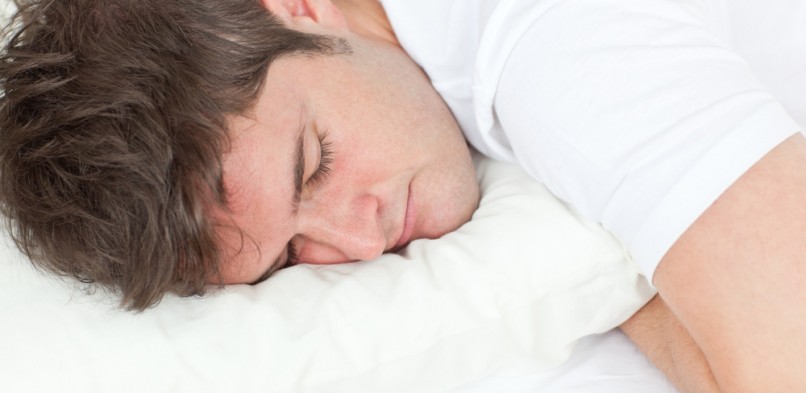
Improve-Your-Sleep-806x393

Original post can be found at:

http://xactmind.com/xc/articles/tired-body-active-brain/

By: Dr. Stacey Naito – Physician and IFBB Pro

Where Is The Off Switch?

Have you ever been so wound up with thoughts or concerns that your brain refused to allow you to fall into blissful sleep? As long as your emotions are influenced by excessive amounts of stress, the pressure will continue to spark anxiety which will continue to rob you of sleep, even if your body is completely wiped out. A vicious cycle of insomnia not only prevents the body from getting the restorative sleep it needs, it can contribute to depression or panic disorder.

People are so busy these days that it can be a challenge to check off everything on to-do lists, so it is rather common to see folks working right up until bedtime. However, if you are having problems turning off your thoughts at night, you must break this habit and allow yourself to calm your mind in preparation for sleep. That means you need to avoid activities like housework, checking emails, paying bills, or any other activity which keeps your mind active, for at least an hour before your usual bedtime.

Anxiety and Sleep

What fuels the mind and makes it work overtime in the majority of cases is anxiety. The bed is supposed to be a place for sleep, yet many individuals lie in bed with thoughts spilling over, and are unable to get the thoughts to cease because they provoke anxiety. The chances of solving any problems while trying to fall asleep are slim, so the constant worrying only serves to interrupt much-needed sleep. Honestly, how often have you been able to solve an issue you were worried about, after you crawled in bed? Your mind will be better equipped to solve any issues which plague you if you shut off your thoughts and allow the restorative benefits of sleep to take over.

Go To Paradise

Try redirecting your thoughts by practicing guided imagery. While lying in bed, close your eyes and imagine a beautiful place, such as a tropical paradise. Breathe slowly and evenly, while imagining hearing the waves crash on the beach, and feeling the sand and the warmth of the sun. You can even play ambient sounds of the ocean to help you visualize the scene. This relaxation technique can be extremely effective in not only shutting off the endless chatter in your brain, but also in getting you to fall asleep.

If you are concerned that ideas or concerns will pop into your head in the middle of the night, keep a notebook and a pen next to your bed. Once you write something down, put the notebook away and let it go. Remember that it really can wait until tomorrow.

Learn a Foreign Tongue To Protect Your Brain

o-KID-LEARNING-LANGUAGE-facebook-806x393

Please read my original post at:

http://xactmind.com/xc/articles/learn-a-foreign-tongue-to-protect-your-brain/

By: Dr. Stacey Naito – Physician and IFBB Pro

Bilingual Brains

Numerous research studies have revealed that people who speak two or more languages possess greater skill in multitasking and paying attention than those who only speak one language. In addition, a 2013 study discovered that individuals who spoke two languages developed the signs of dementia more than four years later than people who only spoke one language, which strongly suggests that being bilingual may help to delay the onset of dementia.

Never Too Late

Scientists have determined that the earlier one learns a second language, the greater the protective benefits against dementia, but it is never too late to learn a foreign tongue, even if you only learn a bit of the language. Be ready for a challenge, though, because most aspects of learning a foreign language later in life will be more difficult.

One clear benefit which older individuals have over youngsters when learning a foreign language is that they have much larger vocabularies which are often as large as those of native speakers. However, the challenges which exist for older people learning a foreign tongue are numerous. First of all, phonemes, or sounds, of a language are very easily picked up by children, but are much more difficult for adults to learn. Secondly, adults automatically hear a foreign language through the filter of their native language, which is not the case in toddlers. As a result, the older learner may have issues with pronunciation.

A toddler’s brain has about fifty percent more neuron connections than an adult brain. The extra connections are a safeguard against potential early trauma, but are also critical for early language acquisition. After a child reaches six years of age, adaptability declines as a result of the brain’s need to acquire other skills during development. This adaptability, also known as neuroplasticity, continues to plummet throughout the years, making it more difficult to obtain new language skills.

Several studies have suggested that learning a foreign language later in life can delay age-related cognitive decline, as well as delay the onset of dementia. In addition, the mental challenge of learning a new language during later years improves executive function, which is important for mental flexibility.

Put Your Phone Down!

o-TALKING-ON-CELL-PHONE-facebook-806x393

Please read my original post at:

http://xactmind.com/xc/articles/put-your-phone-down/

By: Dr. Stacey Naito – Physician and IFBB Pro

Cell phones are a necessary evil these days, but if you think about how much of your day you spend looking into a mobile device, you might realize that you have become overly dependent on it. Why is this such a bad thing? Well, for starters, our reliance on cellular technology makes us less productive and less attentive to tasks which we perform throughout the day. Whether you are cooking an omelet, driving to work, or drafting a letter, chances are that your cell phone is close by, and that every time it makes a notification sound, you stop what you are doing to attend to your phone, which draws attention away from what you should be focused on.

Cell phones are so distracting that scientists discovered that texting or engaging in conversation on a cell phone while walking can interfere with your ability to walk enough to cause accidents. This is because working memory and executive functioning are required during cell phone use, which distracts the user from the motor function of walking.

Another disturbing reality about our attachment to cell phones is the false sense of community we feel as a result of social media notifications and texts. The perception is that we are part of a vast network, but the ironic thing is that we tend to access our cell phones while alone. This isolation from actual interaction can actually trigger loneliness and depression. From the moment we wake up until we rest our heads to sleep, our cell phones are always on. They even serve as our alarm clocks now!

If you want to be more productive, leave your cell phone alone when you first wake up in the morning, and avoid using it while eating, driving, or performing other tasks. The messages and emails aren’t going anywhere, and neither are social media updates.

References:

Lamberg EM, Muratori LM. Cell phones change the way we talk. Gait Posture 2012 Apr:35(4):688-90.

Skipping Meals Does NOT Work For Weight Loss

skipping-meals

Yes, you read that title correctly. If you have been on one diet after another in an effort to try to lose those last 5, 10, 15, or however many pounds, perhaps losing some weight only to gain all of it back plus some bonus weight, then it is highly likely that you have damaged your metabolism via severe calorie restriction. There is a very good reason why the weight loss industry is so successful and why certain well-known weight loss programs keep their customers coming back. The reason has everything to do with severe caloric restriction which squashes metabolism.

Another common practice among those trying to lose weight is to skip meals in an effort to cut calories. As stated before, you wreak havoc on your metabolism when you skip meals by causing it to slow down. Why does this happen? When there is no food to break down, the body’s furnace slows down and becomes so sluggish that when you actually do eat something, your body is less equipped to break down the food quickly, so much of it is stored as fat. Depriving yourself of food also causes sharp drops in blood sugar, robbing you of energy and increasing insulin resistance. Increased insulin resistance over time can precipitate the development of diabetes.

Other consequences of skipping meals include the following:

• Malnutrition – If you do not feed your body regular, balanced meals, it is highly likely that you are depriving it of essential nutrients. Malnourished states can lead to weight gain, poor health and progression of disease over time.

• Poor concentration – This is due to the depletion of glycogen stores which occurs. The brain simply does not have enough fuel to run on, resulting in fogginess.

• Hunger pangs – When you skip meals, you may experience intense feelings of hunger along with anxiety, dizziness or nausea. In addition, such feeling may lead to overeating when you finally sit down to eat something. Loading the body with a large meal is overkill, and leads to poor digestion and absorption as well as increased storage in body fat stores.

Do yourself a favor and practice the following guidelines. If you do, you will be rewarded with a healthy weight for a lifetime.

1. Don’t skip meals.
2. Make sure to eat enough protein to sustain your energy levels and satisfy your hunger.
3. EAT BREAKFAST.
4. Commit to healthy meals.
5. When you turn to snacks, make sure healthy alternatives are available so you aren’t tempted to reach for a nutrient-poor convenience food.

How Technology Is Making Us Stupid

cell-phone-driving-660-806x393

Please check out my original post at:

http://xactmind.com/xc/articles/how-technology-is-making-us-stupid/

By: Dr. Stacey Naito – Physician and IFBB Pro

Global Positioning Satellite (GPS) navigation has become one of modern society’s necessary evils, making printed maps such as Thomas Guides pretty worthless these days. People with a poor sense of direction consider GPS to be a godsend, but even people like me with strong directional skills have been grateful for GPS navigation. As a matter of fact, I can no longer imagine having a car without navigation built into it (thankfully, many car manufacturers are making this feature standard in some car models), and when I travel, I make good use of the navigation application on my smartphone.

However, GPS navigation threatens our ability to mentally map our surroundings, enough to make us quite blind to our surroundings. Basically, by getting comfortable with the convenience of GPS, we have become drones as we follow the directions on the screen, and the virtual roads become more imprinted in our memories than the actual terrain on which we have traveled. This means that we never fully experience the mental mapping that usually occurs when we are fully aware of our surroundings. In addition, if we make a wrong turn, GPS systems simply recalculate, so we never learn to re-map, and instead just follow the adjusted prompts.

According to neuroscientist Veronique Bohbot, not only does the convenience of GPS decrease one’s ability to adjust or improvise an alternate route, it results in a decrease in gray matter in the seat of spatial learning known as the hippocampus. Accordingly, people who practice mental mapping on a daily basis, like taxi drivers, have more gray matter in the hippocampus than those who are not regularly engaged in mental mapping.

The virtual world which a satellite navigation system relies on also robs us of the richness of experience which comes with pausing to notice our surroundings. We should pay more attention to the real world in front of us instead of allowing technology to turn us into idiots.

Go ahead and use GPS, but try to remain aware of your surroundings as you travel around. Your brain will benefit.

The BEST Health Insurance Policy – REPOST

Health apple

With the recent upheaval in the world of health insurance coverage, I thought it would be a perfect time to talk about ways that we can safeguard against the need to access insurance benefits and keep our out-of-pocket costs to a minimum. If you have a predisposition towards conditions such as high blood pressure, diabetes, high cholesterol, joint issues, depression or anxiety, a little self-nurturing can go a long way in keeping those issues at bay. Though there is no absolute guarantee that being proactive about your health will completely prevent disease from manifesting in your body, you can minimize the chances by following sensible guidelines.

1. Get Regular Exercise: If you have yet to take part in regular exercise, here are a bunch of reasons why you should. First of all, regular exercise supports and encourages healthy circulation, lowers blood pressure and reduces cholesterol levels. It also reduces your risk of developing type 2 diabetes and some types of cancer. When you strengthen your muscles with resistance training, you protect your bone density and improve your mobility. There are also mood-elevating benefits which exercise confers which can push away depression and anxiety. Lastly, exercise keeps your mind and memory sharp as you age. A good plan is to exercise 30 minutes a day, 4 to 5 days per week at a moderate intensity. Now, if you aren’t quite at that point, or you ae nowhere near that point, don’t get discouraged. The important thing is to start. You can work up to the 30 minutes a day, 4 to 5 times per week regimen gradually, as long as you remain committed to the program. Make sure to schedule exercise sessions into your day, and STICK TO THEM!

2. Reduce Stress: You may be thinking that reducing stress may be next to impossible in this hectic society, but it is absolutely essential for your physical, emotional and spiritual well-being. When you go through life at top speed, anxiously rushing through in an effort to meet deadlines, you not only miss out on special moments, but you also overtax every major organ in the body, including adrenals, heart, pancreas, liver, colon, brain and skin. Similar to over-revving an engine, you cannot expect to keep going at a gallop constantly without burning out the engine. Have you ever noticed that you are more prone to catching colds when you burn the candle at both ends? Simple things, such as practicing breathing techniques when anxiety creeps in, or truly allowing yourself to BE IN THE MOMENT when you take a break, can be very helpful in reducing stress. Pay attention to the times when you feel overwhelmed, when you feel like you are unraveling or are at that point in which you are either going to explode or give up and hide under a rock. It’s during those times that stepping outside the bubble is crucial. And once you understand not only that you CAN step away, you may relish that escape when it feels like the walls are closing in on you.

3. Practice Sound Nutrition: Proper nutrition is critical to supporting optimal health. This means eating meals throughout the day instead of starving yourself, and turning to whole food sources as much as possible. By incorporating leafy green vegetables, fresh fruit, whole grains, lean meats and healthy fats, you will equip your body with the fuel it needs to function properly and to repair itself optimally. Without proper nutrition, inflammation and free radicals can wreak havoc on an already challenged body, culminating in disease and illness. It is important to stay away from fast foods at all costs.

4. Get Sufficient Sleep: Slumber enables our bodies to repair cells and tissues so that we can function during our waking hours. It supports a healthy metabolism and also reinforces learning and memory from the day’s activities. When you don’t get enough sleep, your body cannot adequately repair itself. If sleep deprivation occurs regularly, the metabolism becomes sluggish, inflammation accumulates, and the risk for diseases of all kinds becomes significant. Make sure to get a solid eight hours of sleep each night, and try to go to sleep at around the same time each night.

5. Laugh: I listed this as a separate topic from stress reduction because I honestly believe that laughter as a daily medicine can do wonders for one’s health. Over the past several years, I have resorted to listening to comedy when I am in my car instead of listening to music, literally adding comic relief to the commutes I make around the Los Angeles area. Laughter truly is the best medicine!

I’m sure some of you are completely on board with what I am advocating, and are implementing some or all of these healthy habits in your daily regimen. Then there are those of you who believe the advice is sound, but haven’t found the motivation to make the necessary life changes which can have a profound positive impact on your health. Lastly, there’s a group of you who stubbornly refuse to listen to advice, who will keep practicing unhealthy habits as a rebellion to everyone around you. I’ve got a message for the last group. Every single person I have EVER met who threw caution to the wind like that, and pretended not to care about the health impact of habits like poor nutrition, alcohol and drug use, lack of exercise, smoking, and reckless lifestyles, somehow got it in the end. Whether it was a cancer diagnosis, high blood pressure, obesity, or some other illness, every single one of them was forced to change their tune. Don’t be one of those individuals who is forced by illness to finally wake up!

You have the power to transform your life. Don’t forget that!

Whaddya Mean, I Need Reading Glasses?

reading glasses

I have struggled for the past several years with my reading vision. Reading things like menus in dark restaurants, and the small print on supplement bottles, has become extremely challenging. It is very frustrating for me, because I used to be able to read the smallest print better than most other people were able to. Of course, that was because I had myopia and astigmatism which robbed me of crisp distance vision from the time I was a child, up until I got Lasik at the age of 41.

When I had the Lasik procedure done, I went from having 20/400 distance vision to having 20/30 distance vision in my right eye and 20/25 distance vision in my left eye. The reason why the distance vision in my right eye is slightly worse is because the right eye was corrected for reading vision.

For about 4 years after I had Lasik, my reading vision sat at about 20/25, which was a sacrifice for me, since I had enjoyed 20/10 reading vision for decades. However, I have spent the past few years noticing my close-up vision dwindle. At this point I am at a 20/35 on a good day, and 20/40 in dimly lit conditions or first thing in the morning. This is all due to presbyopia, the age-related stiffening of the lens of the eye, which makes it more difficult for the eyes to accommodate the way they need to for crisp reading vision.

You would think that I would wear reading glasses whenever I needed them, but I am SO stubborn that I very rarely reach for them. Part of the reason is that I always hated wearing glasses before I had Lasik (I almost exclusively wore contact lenses whenever I was out and about). The notion of whipping out reading glasses and having them perched on the edge of my nose is not appealing to me at all! In addition, I have a small nose, so reading glasses tend to slip off my nose while I am wearing them. I think I also have a natural resistance to reading glasses because I used to look at people wearing reading glasses, and think, “wow, that person is OLD.” I know that’s terrible and short-sighted (pun intended), but I just can’t help it! I’d rather grab a magnifying lens than my glasses!

For those of you who might be scratching your heads, wondering what all the numbers above mean, read the explanation which the American Optometric Association has on their website:

20/20 vision is a term used to express normal visual acuity (the clarity or sharpness of vision) measured at a distance of 20 feet. If you have 20/20 vision, you can see clearly at 20 feet what should normally be seen at that distance. If you have 20/100 vision, it means that you must be as close as 20 feet to see what a person with normal vision can see at 100 feet.

20/20 does not necessarily mean perfect vision. 20/20 vision only indicates the sharpness or clarity of vision at a distance. There are other important vision skills, including peripheral awareness or side vision, eye coordination, depth perception, focusing ability and color vision that contribute to your overall visual ability.

Some people can see well at a distance, but are unable to bring nearer objects into focus. This condition can be caused by hyperopia (farsightedness) or presbyopia (loss of focusing ability). Others can see items that are close, but cannot see those far away. This condition may be caused by myopia (nearsightedness).

A comprehensive eye examination by a doctor of optometry can diagnose those causes, if any, that are affecting your ability to see well. In most cases, your optometrist can prescribe glasses, contact lenses or a vision therapy program that will help improve your vision. If the reduced vision is due to an eye disease, the use of ocular medication or other treatment may be used.

What’s All That Noise?

woman-covering-her-ears-12001518

There are very rare instances when the slightest noise will set me off. Even if it is something as benign as one of my roommates opening the refrigerator door, it can sound like a thousand spoons clattering to the floor to me if I am in this state. For whatever reason, I didn’t think much of it until about three weeks ago when EVERY little noise I heard was painful for me, and I was in complete agony the entire night. Lucky me…I have been experiencing misphonia, and have had this condition since childhood.

What freaks me out the most is that my dislike of sounds when I am caught up in this nightmare can send me into so much anxiety that I must hide away until things return to normal. It was a tremendous problem for me during medical school, when I found that I had to wear earplugs while studying in public places or when taking exams. The mere sound of someone coughing would send me into such distress that it would take a massive effort for me to concentrate on my studies or an exam.

Misphonia, also called selective sound sensitivity syndrome, is usually set off by a small repetitive noise, causing the sufferer to become agitated, disgusted, panicky, and angry. Those who suffer from misphonia may seem to react excessively to soft sounds, such as the sounds of a person eating, or a dog barking in the background. This is considered a lifelong condition which is more common in females than males, and usually appears between the ages of 9 and 13. It is aggravated by emotional exhaustion, so those of you ladies who might have noticed that noises which would be considered normal can suddenly become jarring when you are in the middle of an emotional and stressful situation.

This is a very real condition, so if you think you might have it, talk to your doctor about getting tested to see if you have it. If you don’t want to go that route, you might want to read this very amusing article by Wendy Aron on how she handled her own case of misphonia:

https://www.psychologytoday.com/blog/sounds-awful/201405/how-my-shrink-cured-my-misophonia-free

MAW Nutrition Update!

10616069_539099929570111_936223131860086575_n

MAW Nutrition Inc. now has meals available! You can select 3, 4, 6, 8, or 10 ounce portions of cooked chicken, then customize the rest of the meal by choosing any one of the carb sources, and any one of the vegetable sources.

Check it out here: http://www.mawnutritioninc.com/category-s/1866.htm

As always, you can order a la carte selections as well. Be sure to use my discount code, NAITO10, for 10% off your order!