Skipping Meals Does NOT Work For Weight Loss

skipping-meals

Yes, you read that title correctly. If you have been on one diet after another in an effort to try to lose those last 5, 10, 15, or however many pounds, perhaps losing some weight only to gain all of it back plus some bonus weight, then it is highly likely that you have damaged your metabolism via severe calorie restriction. There is a very good reason why the weight loss industry is so successful and why certain well-known weight loss programs keep their customers coming back. The reason has everything to do with severe caloric restriction which squashes metabolism.

Another common practice among those trying to lose weight is to skip meals in an effort to cut calories. As stated before, you wreak havoc on your metabolism when you skip meals by causing it to slow down. Why does this happen? When there is no food to break down, the body’s furnace slows down and becomes so sluggish that when you actually do eat something, your body is less equipped to break down the food quickly, so much of it is stored as fat. Depriving yourself of food also causes sharp drops in blood sugar, robbing you of energy and increasing insulin resistance. Increased insulin resistance over time can precipitate the development of diabetes.

Other consequences of skipping meals include the following:

• Malnutrition – If you do not feed your body regular, balanced meals, it is highly likely that you are depriving it of essential nutrients. Malnourished states can lead to weight gain, poor health and progression of disease over time.

• Poor concentration – This is due to the depletion of glycogen stores which occurs. The brain simply does not have enough fuel to run on, resulting in fogginess.

• Hunger pangs – When you skip meals, you may experience intense feelings of hunger along with anxiety, dizziness or nausea. In addition, such feeling may lead to overeating when you finally sit down to eat something. Loading the body with a large meal is overkill, and leads to poor digestion and absorption as well as increased storage in body fat stores.

Do yourself a favor and practice the following guidelines. If you do, you will be rewarded with a healthy weight for a lifetime.

1. Don’t skip meals.
2. Make sure to eat enough protein to sustain your energy levels and satisfy your hunger.
3. EAT BREAKFAST.
4. Commit to healthy meals.
5. When you turn to snacks, make sure healthy alternatives are available so you aren’t tempted to reach for a nutrient-poor convenience food.

How Technology Is Making Us Stupid

cell-phone-driving-660-806x393

Please check out my original post at:

http://xactmind.com/xc/articles/how-technology-is-making-us-stupid/

By: Dr. Stacey Naito – Physician and IFBB Pro

Global Positioning Satellite (GPS) navigation has become one of modern society’s necessary evils, making printed maps such as Thomas Guides pretty worthless these days. People with a poor sense of direction consider GPS to be a godsend, but even people like me with strong directional skills have been grateful for GPS navigation. As a matter of fact, I can no longer imagine having a car without navigation built into it (thankfully, many car manufacturers are making this feature standard in some car models), and when I travel, I make good use of the navigation application on my smartphone.

However, GPS navigation threatens our ability to mentally map our surroundings, enough to make us quite blind to our surroundings. Basically, by getting comfortable with the convenience of GPS, we have become drones as we follow the directions on the screen, and the virtual roads become more imprinted in our memories than the actual terrain on which we have traveled. This means that we never fully experience the mental mapping that usually occurs when we are fully aware of our surroundings. In addition, if we make a wrong turn, GPS systems simply recalculate, so we never learn to re-map, and instead just follow the adjusted prompts.

According to neuroscientist Veronique Bohbot, not only does the convenience of GPS decrease one’s ability to adjust or improvise an alternate route, it results in a decrease in gray matter in the seat of spatial learning known as the hippocampus. Accordingly, people who practice mental mapping on a daily basis, like taxi drivers, have more gray matter in the hippocampus than those who are not regularly engaged in mental mapping.

The virtual world which a satellite navigation system relies on also robs us of the richness of experience which comes with pausing to notice our surroundings. We should pay more attention to the real world in front of us instead of allowing technology to turn us into idiots.

Go ahead and use GPS, but try to remain aware of your surroundings as you travel around. Your brain will benefit.

The BEST Health Insurance Policy – REPOST

Health apple

With the recent upheaval in the world of health insurance coverage, I thought it would be a perfect time to talk about ways that we can safeguard against the need to access insurance benefits and keep our out-of-pocket costs to a minimum. If you have a predisposition towards conditions such as high blood pressure, diabetes, high cholesterol, joint issues, depression or anxiety, a little self-nurturing can go a long way in keeping those issues at bay. Though there is no absolute guarantee that being proactive about your health will completely prevent disease from manifesting in your body, you can minimize the chances by following sensible guidelines.

1. Get Regular Exercise: If you have yet to take part in regular exercise, here are a bunch of reasons why you should. First of all, regular exercise supports and encourages healthy circulation, lowers blood pressure and reduces cholesterol levels. It also reduces your risk of developing type 2 diabetes and some types of cancer. When you strengthen your muscles with resistance training, you protect your bone density and improve your mobility. There are also mood-elevating benefits which exercise confers which can push away depression and anxiety. Lastly, exercise keeps your mind and memory sharp as you age. A good plan is to exercise 30 minutes a day, 4 to 5 days per week at a moderate intensity. Now, if you aren’t quite at that point, or you ae nowhere near that point, don’t get discouraged. The important thing is to start. You can work up to the 30 minutes a day, 4 to 5 times per week regimen gradually, as long as you remain committed to the program. Make sure to schedule exercise sessions into your day, and STICK TO THEM!

2. Reduce Stress: You may be thinking that reducing stress may be next to impossible in this hectic society, but it is absolutely essential for your physical, emotional and spiritual well-being. When you go through life at top speed, anxiously rushing through in an effort to meet deadlines, you not only miss out on special moments, but you also overtax every major organ in the body, including adrenals, heart, pancreas, liver, colon, brain and skin. Similar to over-revving an engine, you cannot expect to keep going at a gallop constantly without burning out the engine. Have you ever noticed that you are more prone to catching colds when you burn the candle at both ends? Simple things, such as practicing breathing techniques when anxiety creeps in, or truly allowing yourself to BE IN THE MOMENT when you take a break, can be very helpful in reducing stress. Pay attention to the times when you feel overwhelmed, when you feel like you are unraveling or are at that point in which you are either going to explode or give up and hide under a rock. It’s during those times that stepping outside the bubble is crucial. And once you understand not only that you CAN step away, you may relish that escape when it feels like the walls are closing in on you.

3. Practice Sound Nutrition: Proper nutrition is critical to supporting optimal health. This means eating meals throughout the day instead of starving yourself, and turning to whole food sources as much as possible. By incorporating leafy green vegetables, fresh fruit, whole grains, lean meats and healthy fats, you will equip your body with the fuel it needs to function properly and to repair itself optimally. Without proper nutrition, inflammation and free radicals can wreak havoc on an already challenged body, culminating in disease and illness. It is important to stay away from fast foods at all costs.

4. Get Sufficient Sleep: Slumber enables our bodies to repair cells and tissues so that we can function during our waking hours. It supports a healthy metabolism and also reinforces learning and memory from the day’s activities. When you don’t get enough sleep, your body cannot adequately repair itself. If sleep deprivation occurs regularly, the metabolism becomes sluggish, inflammation accumulates, and the risk for diseases of all kinds becomes significant. Make sure to get a solid eight hours of sleep each night, and try to go to sleep at around the same time each night.

5. Laugh: I listed this as a separate topic from stress reduction because I honestly believe that laughter as a daily medicine can do wonders for one’s health. Over the past several years, I have resorted to listening to comedy when I am in my car instead of listening to music, literally adding comic relief to the commutes I make around the Los Angeles area. Laughter truly is the best medicine!

I’m sure some of you are completely on board with what I am advocating, and are implementing some or all of these healthy habits in your daily regimen. Then there are those of you who believe the advice is sound, but haven’t found the motivation to make the necessary life changes which can have a profound positive impact on your health. Lastly, there’s a group of you who stubbornly refuse to listen to advice, who will keep practicing unhealthy habits as a rebellion to everyone around you. I’ve got a message for the last group. Every single person I have EVER met who threw caution to the wind like that, and pretended not to care about the health impact of habits like poor nutrition, alcohol and drug use, lack of exercise, smoking, and reckless lifestyles, somehow got it in the end. Whether it was a cancer diagnosis, high blood pressure, obesity, or some other illness, every single one of them was forced to change their tune. Don’t be one of those individuals who is forced by illness to finally wake up!

You have the power to transform your life. Don’t forget that!

Whaddya Mean, I Need Reading Glasses?

reading glasses

I have struggled for the past several years with my reading vision. Reading things like menus in dark restaurants, and the small print on supplement bottles, has become extremely challenging. It is very frustrating for me, because I used to be able to read the smallest print better than most other people were able to. Of course, that was because I had myopia and astigmatism which robbed me of crisp distance vision from the time I was a child, up until I got Lasik at the age of 41.

When I had the Lasik procedure done, I went from having 20/400 distance vision to having 20/30 distance vision in my right eye and 20/25 distance vision in my left eye. The reason why the distance vision in my right eye is slightly worse is because the right eye was corrected for reading vision.

For about 4 years after I had Lasik, my reading vision sat at about 20/25, which was a sacrifice for me, since I had enjoyed 20/10 reading vision for decades. However, I have spent the past few years noticing my close-up vision dwindle. At this point I am at a 20/35 on a good day, and 20/40 in dimly lit conditions or first thing in the morning. This is all due to presbyopia, the age-related stiffening of the lens of the eye, which makes it more difficult for the eyes to accommodate the way they need to for crisp reading vision.

You would think that I would wear reading glasses whenever I needed them, but I am SO stubborn that I very rarely reach for them. Part of the reason is that I always hated wearing glasses before I had Lasik (I almost exclusively wore contact lenses whenever I was out and about). The notion of whipping out reading glasses and having them perched on the edge of my nose is not appealing to me at all! In addition, I have a small nose, so reading glasses tend to slip off my nose while I am wearing them. I think I also have a natural resistance to reading glasses because I used to look at people wearing reading glasses, and think, “wow, that person is OLD.” I know that’s terrible and short-sighted (pun intended), but I just can’t help it! I’d rather grab a magnifying lens than my glasses!

For those of you who might be scratching your heads, wondering what all the numbers above mean, read the explanation which the American Optometric Association has on their website:

20/20 vision is a term used to express normal visual acuity (the clarity or sharpness of vision) measured at a distance of 20 feet. If you have 20/20 vision, you can see clearly at 20 feet what should normally be seen at that distance. If you have 20/100 vision, it means that you must be as close as 20 feet to see what a person with normal vision can see at 100 feet.

20/20 does not necessarily mean perfect vision. 20/20 vision only indicates the sharpness or clarity of vision at a distance. There are other important vision skills, including peripheral awareness or side vision, eye coordination, depth perception, focusing ability and color vision that contribute to your overall visual ability.

Some people can see well at a distance, but are unable to bring nearer objects into focus. This condition can be caused by hyperopia (farsightedness) or presbyopia (loss of focusing ability). Others can see items that are close, but cannot see those far away. This condition may be caused by myopia (nearsightedness).

A comprehensive eye examination by a doctor of optometry can diagnose those causes, if any, that are affecting your ability to see well. In most cases, your optometrist can prescribe glasses, contact lenses or a vision therapy program that will help improve your vision. If the reduced vision is due to an eye disease, the use of ocular medication or other treatment may be used.

What’s All That Noise?

woman-covering-her-ears-12001518

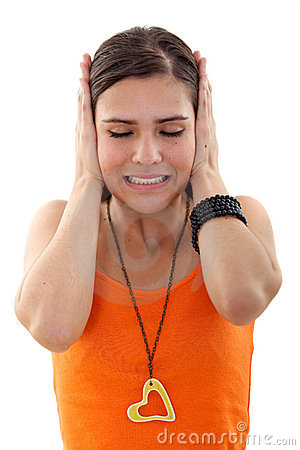
There are very rare instances when the slightest noise will set me off. Even if it is something as benign as one of my roommates opening the refrigerator door, it can sound like a thousand spoons clattering to the floor to me if I am in this state. For whatever reason, I didn’t think much of it until about three weeks ago when EVERY little noise I heard was painful for me, and I was in complete agony the entire night. Lucky me…I have been experiencing misphonia, and have had this condition since childhood.

What freaks me out the most is that my dislike of sounds when I am caught up in this nightmare can send me into so much anxiety that I must hide away until things return to normal. It was a tremendous problem for me during medical school, when I found that I had to wear earplugs while studying in public places or when taking exams. The mere sound of someone coughing would send me into such distress that it would take a massive effort for me to concentrate on my studies or an exam.

Misphonia, also called selective sound sensitivity syndrome, is usually set off by a small repetitive noise, causing the sufferer to become agitated, disgusted, panicky, and angry. Those who suffer from misphonia may seem to react excessively to soft sounds, such as the sounds of a person eating, or a dog barking in the background. This is considered a lifelong condition which is more common in females than males, and usually appears between the ages of 9 and 13. It is aggravated by emotional exhaustion, so those of you ladies who might have noticed that noises which would be considered normal can suddenly become jarring when you are in the middle of an emotional and stressful situation.

This is a very real condition, so if you think you might have it, talk to your doctor about getting tested to see if you have it. If you don’t want to go that route, you might want to read this very amusing article by Wendy Aron on how she handled her own case of misphonia:

https://www.psychologytoday.com/blog/sounds-awful/201405/how-my-shrink-cured-my-misophonia-free

MAW Nutrition Update!

10616069_539099929570111_936223131860086575_n

MAW Nutrition Inc. now has meals available! You can select 3, 4, 6, 8, or 10 ounce portions of cooked chicken, then customize the rest of the meal by choosing any one of the carb sources, and any one of the vegetable sources.

Check it out here: http://www.mawnutritioninc.com/category-s/1866.htm

As always, you can order a la carte selections as well. Be sure to use my discount code, NAITO10, for 10% off your order!

30 Actual Sentences Found In Patients Hospital Charts

Shocked-Doctor-26695685_l

I recently saw this post on a friend’s Facebook timeline, and was compelled to write a response to it. The thing is, most of these chart notes ARE funny, but some are taken out of context. In addition, the language used in several of the notes are completely appropriate when spoken within the medical world, so I clarified those notes in a comment which I posted. Here is the original list of chart comments, followed by my clarifying remarks.

http://www.tickld.com/x/jaw/30-actual-sentences-found-in-patients-hospital-charts

1. She has no rigors or shaking chills, but her husband states she was very hot in bed last night.
2. Examination of genitalia reveals that he is circus sized.
3. Since she can’t get pregnant with her husband, I thought you might like to work her up.
4. The patient is tearful and crying constantly. She also appears to be depressed.
5. The patient has been depressed since she began seeing me in 1993.
6. Discharge status: Alive but without my permission.
7. Healthy appearing decrepit 69 year-old male, mentally alert but forgetful.
8. The patient refused autopsy.
9. The patient has no previous history of suicides.
10. Patient has left white blood cells at another hospital.
11. Patient’s medical history has been remarkably insignificant with only a 40 pound weight gain in the past three days.
12. Patient had waffles for breakfast and anorexia for lunch.
13. Between you and me, we ought to be able to get this lady pregnant.
14. On the second day the knee was better, and on the third day it disappeared.
15. She is numb from her toes down.
16. While in ER, she was examined, X-rated and sent home.
17. The skin was moist and dry.
18. Occasional, constant, infrequent headaches.
19. Patient was alert and unresponsive.
20. Rectal examination revealed a normal size thyroid.
21. She stated that she had been constipated for most of her life, until she got a divorce.
22. I saw your patient today, who is still under our car for physical therapy.
23. Both breasts are equal and reactive to light and accommodation.
24. Patient has chest pain if she lies on her left side for over a year.
25. The lab test indicated abnormal lover function.
26. The patient was to have a bowel resection. However, he took a job as a stock broker instead.
27. Skin: somewhat pale but present.
28. The pelvic exam will be done later on the floor.
29. Patient was seen in consultation by DR. Blank, who felt we should sit on the abdomen and I agree.
30. Patient has two teenage children, but no other abnormalities.

As a physician, I know that some of these chart notes actually make perfect sense to those who work in the medical field and who are on the hospital wards.

For example, “Since she can’t get pregnant with her husband, I thought you might like to work her up.” refers to a physician referring a patient to a fertility specialist who would be able to “work up” a patients to see what the issue might be with respect to difficulty getting pregnant.

Here’s another one: “The patient is tearful and crying constantly. She also appears to be depressed.” Crying “constantly” does not automatically infer that someone is depressed. Ostensibly the patient is distressed over something, but the clinical diagnosis of depression has a set of criteria which must be met on evaluation of the patient.

“The patient has been depressed since she began seeing me in 1993.” Really, just stupid. This patient had depression beginning at the very latest in 1993, and this clinician had begun seeing the patient at that time. So snicker all you want, but the clinician’s presence in the patient’s life is NOT the causative factor in her depression.

“The patient was to have a bowel resection. However, he took a job as a stock broker instead.” If I could count the number of times a patient was advised to have a surgical procedure, only to evade medical advice, I’d be a millionaire by now.

“The pelvic exam will be done later on the floor.” The “floor” refers to a hospital ward. This patient was most likely evaluated in the emergency room, so the plan was to do a full work-up, including a pelvic exam, once the patient was transferred to a regular bed in the appropriate ward or section of the hospital.

“Patient was seen in consultation by DR. Blank, who felt we should sit on the abdomen and I agree.” The phrase, “sit on the abdomen” means that the clinicians who were evaluating the patient had decided to hold off on any interventions with respect to the abdomen, most likely because they were confident that there was no imminent danger, and no need for surgical intervention.

The remaining chart notes ARE funny, and I could see why lay people find them amusing.
Hope this clears up some of the confusion regarding some of the notes which were perfectly sound within the medical world.

Stress And Your Skin

stressed out woman

Did you know that stress can do a number on your skin? You are probably familiar with the stress-induced breakout, but prolonged, chronic stress can also prematurely age the skin. Stressful situations trigger the release of cortisol, adrenaline, pro-inflammatory cytokines, and angiotensin, all of which rob your skin of collagen and weaken its cellular repairing capabilities. Circulation is diverted away from the skin during stressful situations, which explains the dull, pale appearance of the skin in people who deal with constant stress.

Cortisol in particular inhibits the growth of fibroblasts which are responsible for making collagen, so they can’t keep up with the constant breakdown of old tissue. The result is skin which is collagen deficient, resulting in thinner, more wrinkled skin. Free radicals are formed in response to stress, which then damages skin cells and adversely affects the condition of the skin.

beautiful-look-without-makeup
So how can you fight the effects of stress on the skin? There are three keys:

1. Exercise:

Every cell in the body benefits from exercise, including skin cells The pores of the skin dilate during exercise, and when you work up a sweat, trapped dirt particles are released. In addition, the increased circulation which results from exercise delivers more oxygen and other nutrients to skin cells, as well as carries away waste products and free radicals.

2. Relax:

We all know how frustrating it can be to have a big event looming, only to have an acne breakout right before the big day. The fact is that the stress associated with preparing for the event can trigger excess oil production in the skin, which clogs pores and sets up the perfect environment for an acne flareup. Even other skin issues, like psoriasis, are linked to stress. However, by practicing relaxation techniques, you can increase blood flow to the skin and offset any triggering factors (such as buildup of oil or free radicals) which contribute to skin maladies.

3. Use topicals:

Some of the best friends for your skin are topical agents such as antioxidants and retinoids. I am a big fan of vitamin C, not only because of its general antioxidant benefits, but also because it has a tendency to lighten up brown spots and impart a brighter appearance to the complexion. Retinoids are great for increasing cell turnover, and are potent anti-aging compounds.

Uncompromised

Breaking stereotypes!

Breaking stereotypes!

I am always being challenged to pick one career that defines me, and it drives me nuts. When people find out that I am a medical doctor, they struggle with the stereotype of what they expect doctors to be like, in other words, very conservative in dress and demeanor, and without any flavor or personality. Well, I’ve got news for you. I will NEVER be a typical doctor. And please don’t doubt my credentials or schooling. I am NOT a nurse (not that there is anything wrong with this highly respected profession), I am a fully licensed and board certified physician.

A huge project came my way recently, and I was selected for it, only to have the decision-maker flip out over my fitness and modeling images and reverse the decision. I was stunned and dejected, but after reflecting on the whole incident, I began to get angry. Part of the problem was that the decision-maker was a complete hypocrite, pretending to be squeaky clean, but who openly praised one of the dirtiest human beings to ever alight on the entertainment scene. To coin an analogy, at the root of this was a case of the bride being upstaged by another lady wearing white. Mind you, I never intentionally wore white, but hey, my doctor’s coat is white.

I am every bit as much about fitness as I am about medicine, and I shouldn’t have to choose one over the other. I am damned proud of what I have accomplished in fitness, especially because I took things to the next level in my forties, not when I was a young whipper-snapper. If people are confused by the sampler plate philosophy by which I live, too bad. Yes, I am a board certified physician AND a degreed fitness professional, IFBB Pro, certified nutrition coach, writer, sponsored athlete and contest prep coach. I know it’s unusual, but why is that so hard for people to grasp? I mean, here I am, doing all of that, sending a message to the world that no one should have to be one-dimensional and boring.
1538624_10202090935769442_1829315007_n
I don’t hide from myself. I am honest. I have sass, and I speak my mind. I am proud of what I have achieved in my life, and I will NOT hide parts of myself which some overly judgmental people may have a problem with. I am NOT going to apologize for having a sense of humor, for using cuss words here and there (though I don’t use them while seeing patients). I am not going to paint a false picture of who I am. If you don’t like what I am doing, no worries. Move on.

If you find that you are compromising your own vision, dreams, or goals, perhaps you need to re-examine why you are allowing that to occur. If you subscribe to the no limits philosophy, then you would never even consider pulling the reins back. I will always encourage driven people to go for whatever they want, and if it doesn’t fit in with the conventions of one of their chosen careers or hobbies, even better. Break stereotypes and show people what you are made of! Don’t hide all the facets which make you who you are!

Minimalist Footwear

minimalist footwear

Please check out my latest article for American Fitness Educators which discusses minimalist footwear! Original post can be found at:

http://www.fitnesseducators.com/blog/minimalist-footwear/

Merrell-Road-Glove-Barefoot-Shoe
Less Is More

Are there benefits to training in minimalist footwear? Studies have demonstrated that training while wearing minimalist shoes results in enhanced performance due to greater foot pliability and a closer approximation to a barefoot stance. Since our feet adjust to wearing raised heels over time, it can be incredibly challenging to keep our heels on the ground while performing exercises like deep squats. Proponents of minimalist footwear may even argue that barefoot is best for heavy weightlifting, but the risks of exposure to microbes or hazardous fragments of glass, metal, or rocks, make minimalist shoes a much more feasible choice while at the gym.

Dysfunctional movement patterns become established throughout the body over time. Conventional athletic shoes can often contribute to ankle and foot dysfunction because they inhibit natural foot action. If you don’t believe it, then try to perform some of your physical activities barefoot and see how well, or poorly, you perform. Chances are that the impaired mechanics in the feet and ankles will make it difficult at best to perform those activities. By gradually switching over to minimalist footwear, an athlete can essentially correct improper foot mechanics and optimize kinetic feedback throughout the body during movement.

Benefits Of Minimalist Shoes

Conventional athletic footwear features a cushioned heel which also can compromise power. In contrast, minimalist footwear features little to no heel, and the soles are very thin and malleable, so they allow the joints in the foot to move and adjust to weight loading movements. In addition, the heels and midfoot make solid contact with the floor, causing more activation in the glutes and hamstrings. Studies have demonstrated that people who wear minimalist footwear develop greater strength in their legs and feet, since more power is transferred from the working muscles, through the feet, and into the movement. Plyometric movements and sprint power will also be enhanced while wearing minimalist shoes.

A 2011 study by Squadrone and Gallozzi assessed the ability of experienced runners to estimate the degree of inversion, eversion, dorsiflexion, and plantarflexion, of a slope surface board placed under their right foot while standing. They found that the degree of proprioceptive feedback which subjects received while wearing Vibram Five Fingers® was much more accurate than in subjects who wore a standard running shoe. In conclusion, cushioned shoes conferred a distinct disadvantage when compared to minimalist shoes during assessment of foot position awareness.

How To Transition Into Minimalist Shoes

Anyone who is transitioning from conventional athletic shoes to minimalist footwear needs to do so gradually, since the body has to adjust to radically different proprioceptive input. There have been cases of metatarsal stress which developed after converting too quickly to minimalist shoes. However, once the transition is made, noticeable strength gains should occur. Try spending about 15 to 30 minutes, twice a day, wearing minimalist shoes around the house. After about a week or two, you can try them out at the gym one to two days a week until you become accustomed to the feel of the shoes. Be aware that your gait and foot stance will probably change as you acclimate to this type of shoe.

REFERENCES:

Squadrone R, Gallozzi C (2011) Effect of a five-toed minimal protection shoe on static and dynamic ankle position sense. J Sports Med Phys Fitness Sep;51(3): 401-8.