How To Interpret Genetic Ancestry Reports

Source: 123rf.com
Image ID : 111916745
Copyright : Ioulia Bolchakova

If you’re curious about your genetic makeup, and you are considering obtaining a DNA kit, don’t be surprised if there are some inconsistencies, especially if you order kits from more than one company.  Variations in sample populations are quite common, resulting from closely related genetic populations which may be lumped into one broad category.

The first kit I ordered was from 23andme, and the results were consistent with what I expected to find on my report.  It confirmed that I was pretty much 50% (49.6%, to be precise) Japanese, and the other 50% was mostly Hungarian, 5.6% Greek, 2.3% Italian, and1.8% German and French.  Several years later, I ordered kits from Ancestry and MyHeritage, which only served to complicate the picture.  Ancestry’s report was the most simplified, with 50% Japanese, 45% Hungarian/Eastern European, and the remainder scattered among Italian, Greek, and English.  MyHeritage reported 46% Japanese, 36.8% Eastern European (no breakdown for Hungary specifically), and the remainder broadly European with no breakdown for Greece, Italy, Germany or France.  Once I sifted through all three reports simultaneously, I was able to interpret my genetic background, but I could definitely see how some people might be thrown off by a genetic report which was too general or broad.

Genealogy Strand Genes DNA Research Genealogist Word 3d Illustration

One important and confounding factor to consider is that we don’t express all 50% of the DNA we get from each parent, which skews the DNA analysis even further.  The best thing to do when interpreting a genetic analysis is to take it all with a grain of salt.  The science behind genetic analysis, while mostly accurate, also has a margin of error.

If you are trying to decide on a company to use for your genetic testing, it really depends on whether your primary objective is to uncover your genetic makeup for your family’s genealogy, obtain health information, or to connect with lost family and relatives.  For those more interested in genetic health markers, 23andme constantly expands its testing, so you will get regular reports as new genetic markers are added to the list.  Ancestry and MyHeritage are both fantastic for exploring your genealogical tree, and both offer multiple resources and archived records to members.

Lastly, in case you are concerned about protecting your privacy when obtaining genetic testing, please click here.  The link will lead you to an excellent article written by Victoria McIntosh from Comparitech regarding this subject.

Genetic Ancestry Tests And The Rabbit Hole

Image ID : 62594744
Source: 123rf.com

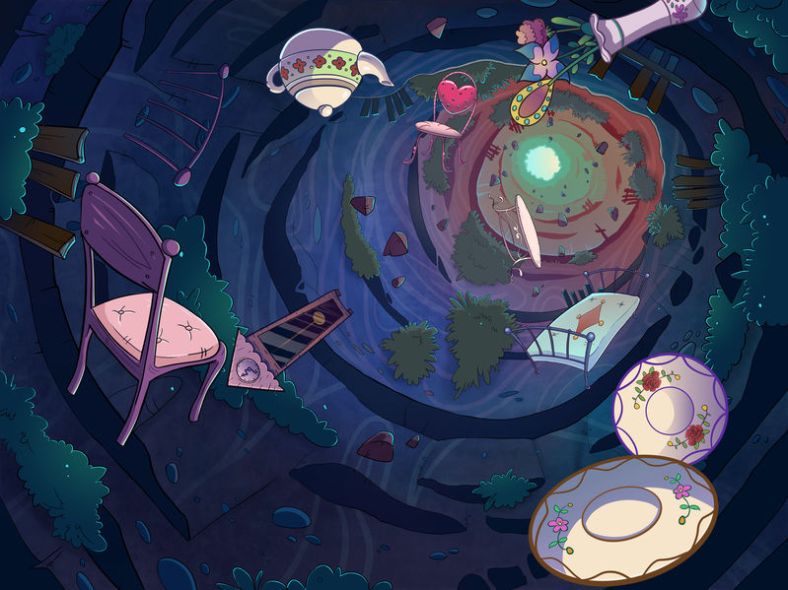
If you are considering ordering and completing one of those genetic ancestry tests (popular ones are 23andme, Ancestry, and MyHeritage, all of which I have now completed), be prepared for the possibility that you might be on the crest of a journey down into the rabbit hole.  I’ve heard far too many stories of people who made startling discoveries relating to their genetic background and genealogy which at times resulted in conflict within the family.  Mysteries may unfold which leave you with more questions than you may have ever had about your family members or your ethnic makeup.

If we consider the phrase, going down the rabbit hole, we can enter said rabbit hole without thinking that the journey will be as long or as confounding as it can be.  That’s how it was for me initially, and now I find myself searching more than ever before for the puzzle pieces which could solve the many mysteries my biological father left when he died. Although I knew the circumstances surrounding my conception were akin to a soap opera, I never in my wildest imagination expected my story to unfold the way it has.

Before I dive into my own story, and wiggle through the proverbial rabbit hole, I’m going to share this passage from Lewis Carroll’s “Alice In Wonderland”:

“In another moment down went Alice after it, never once considering how in the world she was to get out again.

The rabbit-hole went straight on like a tunnel for some way, and then dipped suddenly down, so suddenly that Alice had not a moment to think about stopping herself before she found herself falling down a very deep well.

Either the well was very deep, or she fell very slowly, for she had plenty of time as she went down to look about her and to wonder what was going to happen next. First, she tried to look down and make out what she was coming to, but it was too dark to see anything; then she looked at the sides of the well, and noticed that they were filled with cupboards and book-shelves; here and there she saw maps and pictures hung upon pegs. She took down a jar from one of the shelves as she passed; it was labelled `ORANGE MARMALADE’, but to her great disappointment it was empty: she did not like to drop the jar for fear of killing somebody, so managed to put it into one of the cupboards as she fell past it.

`Well!’ thought Alice to herself, `after such a fall as this, I shall think nothing of tumbling down stairs! How brave they’ll all think me at home! Why, I wouldn’t say anything about it, even if I fell off the top of the house!’ (Which was very likely true.)

Down, down, down. Would the fall never come to an end! `I wonder how many miles I’ve fallen by this time?’ she said aloud. `I must be getting somewhere near the centre of the earth. Let me see: that would be four thousand miles down, I think–‘ (for, you see, Alice had learnt several things of this sort in her lessons in the schoolroom, and though this was not a very good opportunity for showing off her knowledge, as there was no one to listen to her, still it was good practice to say it over) `–yes, that’s about the right distance–but then I wonder what Latitude or Longitude I’ve got to?’ (Alice had no idea what Latitude was, or Longitude either, but thought they were nice grand words to say.)”

Source: 123rf.com
Image ID : 42904359
Copyright : Eugeniu Frimu


Thanks to 23andme, a half sister I had never known about contacted me at the end of January with the startling news that we were indeed siblings.  Three days after our initial contact, another half sister surfaced on the site, and we slid down the rabbit hole even farther.

It took some time for the other half sister to respond to our connection requests, but we three are all now in communication with each other.  I have met one half sister and was even able to help her celebrate her latest birthday in February.  The other half sister is lining up a visit so that we can all three see each other face to face and forge the bond we never got a chance to develop as children.

We also have a half brother whom we are trying to locate, but there are numerous barriers, including the fact that we don’t know his name or birthdate, are unaware of which country he currently resides in, and the fact that he evidently is the type of person who would not welcome the news that he has three half sisters.  I have known about this half brother since our father’s death in 1997, but he never signed up for genetic testing analysis, which means we don’t have the convenience of a genetic testing service to do make the connection for us.

We want to find out more about our family tree, but it will be difficult at best to ferret out such information because I have limited knowledge of our father’s mother tongue (Hungarian), and I have no idea who would be privy to such information.  Our father’s place of death is also a mystery, which also means that it will be challenging to discover where he was interred.

Curiouser and curiouser, indeed.

A Great Solution For Hot Flashes

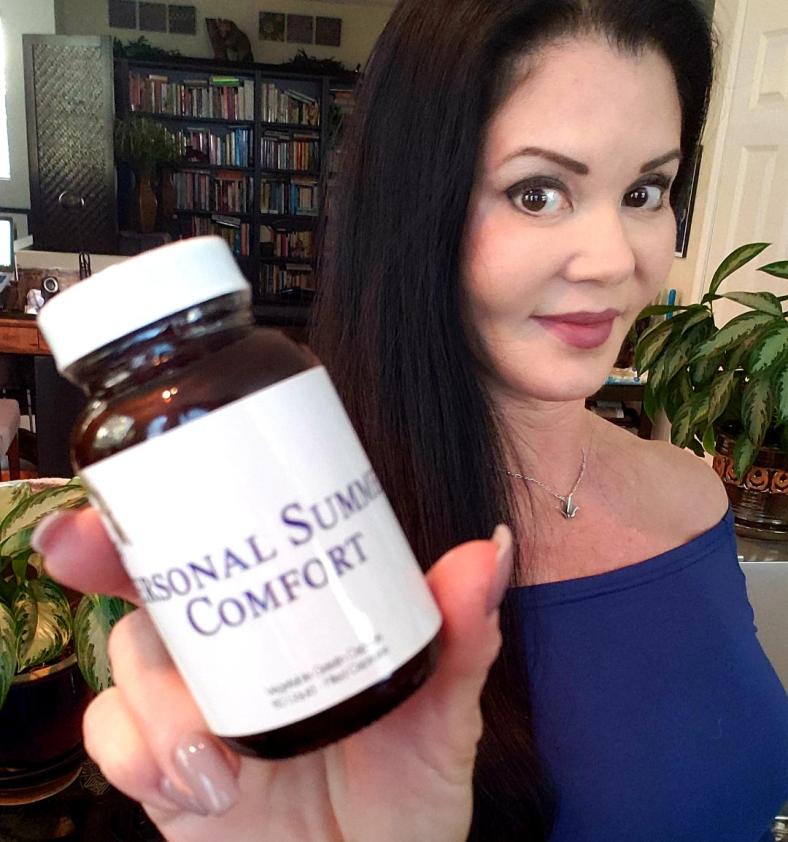
Several months ago, I began using a product called Personal Summer Comfort®, an all natural supplement designed to treat hot flashes in perimenopausal and postmenopausal women.  I went through menopause several years ago, but my thermostat is constantly set on high, and there are times, especially when the mercury climbs outside, when I burn up like the Mojave Desert.  I know you ladies who suffer from hot flashes are well acquainted with that sudden burst of intense heat which is guaranteed to make its sufferer completely miserable.

Personal Summer Comfort® is a high potency formula featuring a combination of herbs which work in tandem to support the nervous system and alleviate those dreaded hot flashes.  Rosemary has proven effects on estrogen balance by its ability to flush the liver of estrogen while also promoting the formation of 2-hydroxy estrogens, supports thyroid function, and  lowers cortisol levels. Sage, oat straw, sarsparilla, spirulina, and kelp, substances which are known for their effectiveness in treating hot flashes and night sweats, are used in this formula as well.

I opted to try Personal Summer Comfort® in the gel-caps, but for women who have trouble swallowing capsules, there is also a liquid formulation.  About a week after I began taking this supplement, I noticed that I was able to sleep at night without fighting a strong urge to throw the covers off my body.  I also noticed that I could comfortably cruise through my day without so much as a warning mini-hot flash.  I have even been able to run a flat iron through my hair on a hot day, a task which was absolute torture before I began taking Personal Summer Comfort®.

I always use myself as a guinea pig for supplements and other products which I endorse, because I have to believe in the product in order to promote it.  Well, I can honestly say that I am a big fan of Personal Summer Comfort®, and I’m thrilled that I can now recommend a product to my menopausal patients and friends which is completely natural, safe and highly effective. 

This is also a great time to start taking Personal Summer Comfort® if you have been suffering from hot flashes, night sweats and irritability.  With summer just around the corner, we ladies need all the help we can get to stay cool and calm!

Check out Personal Summer Comfort® at:

Personal Summer Comfort Homepage

Enter code big20off for 20% off your order.


6 Interesting Benefits of Yoga for Seniors

Photo credit: Rawpixel


By Karen Weeks

Karen Weeks – Elderwellness.net

karen@elderwellness.net

Yoga can be practiced by anyone at any point in their life. Participation in yoga has nearly doubled in just a couple of years as people have realized the powerful health benefits that it provides. If you’re a senior who is considering getting started in yoga, here are some benefits you may enjoy from your practice.


  1. Better dental health


There is a well-defined link between mental health problems, like stress and depression, and poor dental health. When you’re stressed out, your immune system is weakened and your gums are more prone to bacterial invasion. Antidepressants can also dry out your mouth, which can make it harder to wash food away from your teeth and gums. If you tend to grind your teeth when you’re stressed out, you can also have problems with your jaw. 


Yoga is an excellent activity to help relax you. You learn better breathing patterns as well as how to soothe your mind and body. These are good stress-reducing activities that have long-term effects. Despite yoga’s benefits for oral health, you should still find a dentist to visit if you have problems with tooth or jaw pain.


  1. Improved gut health


Changing diet and age can reduce the overall diversity of microbes in the gut, and this lack of diversity can make the body less healthy and responsive. Hyperbiotics explains that exercise can boost gut health by improving the gut microbiome. The gut microbiome is the collection of microbes that naturally live in our bodies and help us digest. Yoga is one easy exercise you can start, even if you haven’t exercised in a while. This physical activity will help you achieve a happier gut, which will help you feel happier overall.


  1. Healthier joints


Yoga can improve flexibility and joint health. When it’s paired with meditation, it can reduce stiffness. Part of this comes from learning proper alignment of the body, as well as learning how to modify poses that can help minimize pain in your body. Meditation helps you develop a greater awareness of the stiffness in your body and work on relaxing whatever might get stiff.


  1. Reduced blood pressure


Research has suggested that yoga and meditation as a possible way to alleviate mild problems with blood pressure. Yoga can be a light-intensity activity, which is great if you’re a beginner. Physical activity is recommended for people who have high blood pressure, and yoga can be a big part of that. It can also help your stress response which can impact your blood pressure. Yoga is a good combination of getting your heart rate up while also relaxing your body and mind.


  1. Better balance


Research has demonstrated that yoga can be a powerful way to improve balance and mobility in older populations. This is especially important in arming you against potential falls and bone breaks. Yoga has all sorts of poses that can help you gain strength and balance within yourself, such as “tree pose.” It will also help you improve your core strength, which helps your balance as well.


  1. Strong bones


A critical part of bone health is getting physical activity. Some activities are better than others when it comes to building and maintaining strong bones. Yoga is one of these activities, as you build greater strength in your muscles and bones, and you can do it all in a low-impact way. However, if you have low bone density, make sure you do alternatives to specific poses or avoid them outright, such as forward folds and spinal twists. Listen to your body, and avoid any pose that feels painful.


Where to Do Yoga


Now that you’ve learned all about yoga’s benefits, you may be interested in how to get started on your own yoga practice. The beauty of yoga is that it can be practiced in the comfort of your own home. You can access fitness apps on a fitness tracker or other device to learn yoga poses, or refer to YouTube exercise videos that are geared toward seniors. You may also find that during your at-home practice, you’ll want to enhance your yoga routine with additional exercises like stretches, chair exercises, and resistance training. Mixing up your exercises can help you stay motivated and improve workout performance.


If you’d prefer to practice yoga outside of the home, you can learn from a professional yoga instructor who can teach you how to do each pose properly. You can check out some yoga studios in your neighborhood; some may even offer classes specially suited for seniors. 


An important part of starting your yoga practice is modifying it to fit your individual circumstances. Start slowly, and focus on poses that you’re comfortable with. As long as you’re careful and comfortable with your progress, yoga is worth giving a try in your senior years.

6 things to DO during CoronaVirus

Want to know how to survive the current global pandemic? Then read on!

The world has been isolated, stunned, more than we’ve seen, more than a jubilee, since WWII. This villain is different, this is a villain we can’t see, reason with, hear, and no nation in the world can build an army against. This is an epidemic that does not care about religion, race, creed, origin, or color.

Everyone has been touched, from the sanitation worker to neurosurgeons.


The silver lining?


For the first time in history, everyone is on the same level. This is an amazing chance to get ahead while the world is in the twilight zone. 

Fortunately, a big advantage between now and any previous plague is that we have the connection of the internet to learn, fuel, earn, communicate, and live.

Especially in Canada and the USA, NOW is when to get ready for when the world wakes up once again. Now is the time to learn and improve your skills.  It is the best way to protect yourself and your future. 

Remember, the world may be very very different post corona and the internet may become more of a mainstay, even for low tech companies. 


Do you like internet marketing? Learn  SEO, PPC, Email Marketing.


Are you attracted to content? Learn how to create engaging and impactful content.


Are you interested in art? Learn how to bring amazing creations to life, even digitally.


This is not an affiliated promotion (I just write articles) , there are tons of amazing training sites offering hand holding guides. Our favorite is Udemy.com,  a world renowned course site where you can learn everything from marketing to woodcrafts.   


Let’s be super clear: 


GET OFF NETFLIX – IMPROVE YOUR FUTURE


This is the time for action. 


Check it out: https://www.udemy.com/


You can also check out our digital marketing consulting opportunities here

So what will happen post virus?


Impossible to know, we don’t know the timeline, how depleted resources will be or what ongoing new laws will have to be taken on. 

However, people don’t change, you, your family, community, and the globe as a whole. 

85% of businesses are now in peril, and it’s not going to see improvement until the pandemic passes. The worse it gets, the more panicky the response will be as human survival instinct kicks in. 

This is why you need to be ready, educated, and ready to be at the top of the hiring list when its all over.  Now is the time to learn and start using those skills online for yourself or companies looking to work virtually for now. 

Key is to have a post virus, have an education, online experience, and business under your belt, your keys to success in turning this difficult time into a life changing opportunity.


Think positive!


“Ok, I’ll do it  – but I need money now too!”


Yes, this is why you gotta get online and start working as well. If there was no web, there would be chaos, BUT, fortunately we’re all just as connected as we were before (maybe a little more cabin fever). The funny quip in the business world is that “Now we can see how many of those meetings could have been emails after all”. 

Translating that, it means  that a significant percentage of jobs can be done from anywhere, and at the moment, the best option for millions.

So – to survive this, for your physical, spiritual health, and overall wellness, do the following:

  1. Update your Resume (especially with remote work)
  2. Apply to jobs on Monster.ca,  LinkedIn etc, and go freelance online, sites like https://www.upwork.com/ 
  3. Search in your local community groups
  4. Start a blog (like this one!)
  5. Creative? Try Etsy!

Everyone  has something to provide another, it’s the wonderment of the person, the miracle of the internet allows you to make yourself known. 


DOUBLE Your Conversions in 90 Days | Conversion Rate Optimization Agency

My Perfect Asswhole

I love this fantastic and hilarious piece which was written by a friend and fellow medical colleague who has requested anonymity.  Enjoy!

**************************************************************

Source: 123rf.com
Image ID : 126524897
Copyright : Richard Villalon


I knew a guy who was simply an unequivocally reliable asshole. From day to day, his demeanor varied depending on what he intended to leach out of those around him, but, over the long-haul, he was consistent. Given enough time (and toilet paper), he always proved his assholedness. Some described him as a narcissist—he undoubtedly was—but he was also a class-A (and you can imagine what that A stands for) asshole. 

A friend listened once as I described my acquaintance to another person. I called him a narcissist. My friend, who knew the big brown eye, said, “Nah. He’s just an asshole.” How refreshing is that? Not that one’s ass should be an air freshener; but it’s refreshing when a person just calls something—or someone—as it is. No apologies or feigned political correctness: just unabashed candor. 

Sometimes I think of certain people as having an asshole titer. A titer is an objective measure of concentration. An antibody titer, for example, quantifies the concentration of antibodies in a person’s blood: the higher the titer, the higher the concentration. It’s not speculation or guessing; it’s a measurement, free of judgment. 

A titer might express a person’s exposure to a certain trigger, like hepatitis; or their immunity to an infection, such as mumps. In a broader sense, among those comfortable with the lingo, the word is used more casually. A woman with a high granola titer, for example, has Brillo Pads in her armpits and a particular propensity for tree-huggedness. 

Wouldn’t it be nice if we could measure a person’s asshole titer—an objective measure, that is, of one’s assholery. At present, calling someone an asshole implies judgment: as if we can’t make an objective, unbiased observation. One isn’t questioned or scrutinized for saying Dolly Parton has big breasts, or that Kareem Abdul-Jabbar is tall. They’re just observable facts. One might be judged if they said Gary Coleman was short, but that depends on context and tone. If we’re not being pejorative, it’s just an observation. That’s the way it should be with assholes. We should be able to call them what they are without accusations of being judgmental. And doing so would be a lot easier if we could simply measure one’s asshole titer. 

If we could measure asshole titers, we’d remove guesswork and tiptoeing. We wouldn’t have to pretend everybody’s nice while waiting to find out otherwise. We wouldn’t have to ignore that little warning itch on our ass when we meet someone we know is malevolent, even if they haven’t yet proven it to us. (Believe me, they’ve proven it to others.) A good friend might have an asshole titer of five, but a ninety-five could be kept at arm’s length when sober and avoided altogether on weekends. 

As an aside, for the sake of completeness, we should note that titers are not percentages; they are measures of concentration by way of dilution. They do not stop at one hundred. They can soar into the thousands. We all know a person whose asshole titer rivals the national debt. But, for this discussion, let’s just say that a titer of one hundred is a complete and total asshole—also known as an asswhole (a homonymous designation that only works in print). Notice I didn’t say big asshole, as if size mattered. No. It’s the quality that matters. Over the years, the asshole in my life has proven that repeatedly. He is consistent and accomplished at it. 

Even better than just measuring an asshole titer, what if the number were tattooed on a few foreheads? Just think how much frustration and angst we could avoid. We could enter a room, instantly assess the asses—or the average assholedness of the gathering—and head for the door. Maybe we’d rescue the poor seven at the bar on our way out, but we wouldn’t waste time trying to be nice to the eighty-and-above crowd. They could massage one another’s egos (and wipe one another’s butts, for that matter) while we move on. We’d know up front where to spend our time and what to expect. Wouldn’t that be sweet? 

Some titers are good. Some are bad. It’s not fun, for example, to have an unusually high titer of rheumatoid factor. There’s a cadre of titers one would rather not have at all, like an HIV viral titer. On the other hand, it’s nice to have a high antibody titer against polio, especially in some areas of the world where polio is making a comeback. 

Titers change over time. When I get the measles, my titer shoots up as my immune system pumps out more antibodies. Ten years later, my titer may wane. That’s why the ER doc asks about my tetanus shot. I need a high titer to step on rusty nails and still avoid the lockjaw. The same is true with rabies. 

And that brings us to another idea. Wouldn’t it be great if we could generate an anti-asshole antibody? Now that would be a valuable titer, though the immunization might be a shitty experience. Antibodies gobble stuff up, bind things together, inactivate them, and get rid of them. Perhaps the rabid, rusty assholes would be more tolerable if we just had enough anti-asshole antibodies. 

There are all kinds of assholes. Everybody knows the run-of-the-mill asshole: irascible, obnoxious and temperamental. But there are also specialty assholes: the ones with particularly ironic twists. There are the assholistic health-food nuts, preaching the benefits of sprouts and antioxidants in between their cigarettes. There are the asswholesome hypocrites—mostly politicians and preachers—who are closely related to the assholier-than-thou crowd. They have a penchant for placing themselves on pedestals; so proud of their own humility, they often stumble while patting themselves on their own ass (or, more often, patting someone else’s younger, shapelier ass). 

Twenty years ago, Dennis Leary sang the Asshole Song. It went like this: “I drive really slow in the ultrafast lane | While people behind me are going insane | I’m an asshole | I’m an asshole | I use public toilets and piss on the seat | I walk around in the summertime saying, ‘How about this heat?’ | I’m an asshole | I’m an asshole | Sometimes I park in handicapped spaces | While handicapped people make handicapped faces | I’m an asshole | I’m an asshole.” 

You may not like the words, but you have to admire a guy who owns his assholedness. At least that gives you a chance to acknowledge and avoid. 

Be careful, though. If you avoid polio and its vaccine altogether, you’re vulnerable. You have to be exposed to be immune. That’s why an asshole immunization stinks. On the other hand, you don’t want too many antibodies, or antibodies of the wrong kind. That’s the problem with Lupus, anaphylaxis and multiple myeloma. One needs a balanced exposure to assholes, but the burden of maintaining that balance falls on you. One not-so-endearing quality of assholes is their lack of moderation. Given enough time, they’ll shit on everything. 

Here’s the rub: If we have too many anti-asshole antibodies, we could end up with an assholeless life—and that could be a problem as well. (An imperforate anus is a serious medical problem, but that’s not my point.) I’m talking about the color, texture and variety the assholes bring us, if only to remind us how much we hate them. Yes, assholes are people too—unwiped, perhaps, smelly and pimpled, but people nonetheless. My asshole—a person, separate and distinct from my anus—has brought me a few things; like caution, mistrust, self-preservation and, ironically, a healthy dose of CYA (cover-your-ass). And those, my asshole-hating friends, are necessary elements to surviving and thriving in a world of assholes. 

Perhaps the day will come, as with small pox, when we won’t need anti- asshole antibodies because all the assholes will have been eradicated. Until then, we need to be prepared. We may never be able to measure an asshole titer, but we all have a gestalt about these things. You know when something stinks. Trust your nose. And be grateful for the shit in your life that prepares you to deal with the assholes.


I’m A Jasmin Influencer!

I am so thrilled to be a Jasmin Influencer!  I have been with them since early December, and I have a blast creating highlights for the site and posting every day.  Yes that’s right, every single day, even on holidays and weekends!

Please follow me at www.Jasmin.com/staceynaito  and check out my highlights and daily story elements!  You can also direct message me anytime through the site, and I also make myself available for Video Calls for a pocket of time every day.

Topics I cover include:

Dating

Relationship

Soul Mate

Fitness

Flirt Advice

Beauty

Lifestyle

Travel

Fashion

I haven’t posted anything on Dance, but who knows?  I may talk about my three year stint with salsa dancing on the Jasmin platform!

You can sign up for FREE and get 15 FREE CREDITS!


I am also always open to suggestions on topics which you would like to have me cover.  Want more nutrition tips?  Beauty hacks?  Travel deals? Relaxation techniques?  On the go workouts?  You tell me, I’m open!

Finally Going to Japan

source: 123rf
Image ID : 75553096
copyright : Sasin Tipchai


Next week I will be in Japan for two weeks, and though it hasn’t quite sunken in yet, I will finally see the country which is responsible for 50% of my DNA makeup and many of the  sensibilities and habits which were instilled in me when I was little.

For over 50 years, my desire to visit Japan was coupled with remorse over even wanting to visit without my mother, since she has never once visited the country from which her parents came.  Even more guilt-inducing was thinking about how in the world I could believe that my diluted, half-Japanese self had any right to visit Japan if my mother never got a chance.   For those of you who are wondering why I am not taking my mother on this trip, she is 87 years old, wheelchair-bound, incontinent, and actually refuses to take any trips anywhere due to her weary, broken state.  I know that she will live vicariously through me, as I retell the stories and experiences which I am about to create on this journey to the motherland.

Over the course of 14 days, I will visit Sapporo, Sendai, Kyoto/Osaka, Nara, Nagoya, Hiroshima, Fukuoka (the prefecture which my grandfather was from), Kumamoto (the prefecture my grandmother was from), Okayama, and Tokyo.  Most of my destinations within the land of the rising sun will be reached via Shinkansen, also known as the bullet train.

Because samurai blood runs deep on my grandfather’s side (we are also ultimately descended from the Imperial Family of Japan), I look forward to seeing the older architecture in some areas, and also plan to visit the cemetery in Fukuoka where some of my ancestors are buried.  But what I look forward to more than anything else while I am in Japan is the FOOD.

Many Japanese foods, like chawanmushi, mochi, takuan, sukiyaki, agedashi, ramen, sashimi, anpan, and manju, are my comfort foods, and since I will have all types of Japanese cuisine available to me to sample for two weeks, I have a feeling my taste buds will be very happy.  I also absolutely adore seafood (perhaps I was a cat in a past life), and will probably be eating it every single day while out there, which is why I will also continue to take chlorella daily to control the mercury levels in my body.

Once I return home, I look forward to creating a blog post in which I discuss my adventures in Japan.  It will truly be a blessing to visit the exquisitely beautiful country within which my family’s roots sit.

5 Fun Facts About Kentucky

Image Credit: Pixabay

When thinking of American states, the traditionally large and populous ones are the first to come to mind. States like New York, California, Florida, Pennsylvania, and Illinois are typically the first ones people think of. One of the commonly overlooked states is Kentucky. Often associated with southern culture and located near the heart of the U.S, the state of Kentucky has a lot to offer residents and visitors alike. So if you’re looking for Louisville houses for sale or Lexington real estate then it would probably behoove you to learn some facts and history about the Bluegrass state. So here’s five fun facts about Kentucky.

Horse Capital of the World
If there’s one thing you should know about Kentucky, it’s that they love their horse racing. There are many tracks in Kentucky, and even more horse breeders and jockeys. In fact, the state has been dubbed the horse racing capital of the world since the sport is so prominent in the area. One of the biggest reasons for horse racing’s local popularity is the Kentucky Derby. The Kentucky Derby is the oldest and most popular horse race in the country, held at Churchill Downs in Louisville. Thousands of people visit the state each year to see the Kentucky Derby, and millions more watch the event on T.V. However, Kentucky horse racing goes well beyond the Kentucky Derby, as the sport is ingrained into the local culture.

Celebrities and Politicians
Like many states, Kentucky is home to a handful of celebrities and famous politicians. Many people associate Abraham Lincoln with the state of Illinois, but the man who couldn’t tell a lie was actually originally born in the Bluegrass state. Ironically, Abraham Lincoln’s archrival, Jefferson Davis, was also born in Kentucky. Kentucky also has a smattering of celebrities born in-state as well. This includes Billy Ray Cyrus, Johnny Depp, Muhammad Ali, Jennifer Lawrence, and George Clooney.

Holidays and Celebrations
Kentucky has also had a handful of contributions to the holidays and celebrations that we hold in America. When it comes to birthday celebrations, they wouldn’t be the same without Kentucky. Two Kentucky residents coined the famous “Happy Birthday Song”, and now it is sung at nearly every birthday celebration across the country. In addition, a resident of the state is credited with creating the holiday of Mother’s Day. According to the story, Mary Wilson was the first to recognize her mother on this holiday before it caught on. Over time more and more people began adopting the holiday. In 1916, Mother’s Day was officially made a federal holiday, however, its origins still trace back to Kentucky.

Food and Beverage
Several famous food and beverages are claimed to have originated in the state of Kentucky. For example, there is a claim that the cheeseburger originated in Kentucky in 1934. Also, the famous restaurant chain, Kentucky Fried Chicken, is true to its name and originated in Kentucky. Kentucky Fried Chicken started out as a small restaurant in Kentucky, but quickly grew to one of the world’s largest fast-food chains. In addition, the popular alcoholic beverage bourbon gets its name from Bourbon County, a county in Kentucky. The name comes from the fact that the county is where the beverage was first distilled.

Fort Knox
One of the most interesting locations in Kentucky is Fort Knox. Fort Knox is one of the most famous Army posts in the entire country. This stems from the fact that the U.S keeps a large portion of its gold reserves at this location. It is said that over half of the U.S gold reserves are stored in this location, totaling several millions of dollars in value. All of this gold in one location means that there is a need for high security. That’s why Fort Knox is one of the most well-guarded places in the world, spawning a saying that spans the entire country. If you’ve ever heard that something is “as secure as Fort Knox”, then now you know why.

Healthy Living Tips for Seniors on a Fixed Income

Please check out this fantastic article, written by Karen Weeks, which is full of tips on how to live healthy and strong as a senior on a fixed income!

by Karen Weeks – Elderwellness.net
karen@elderwellness.net


Image by Xevi Casanovas via Unsplash

As you get older, it’s more important than ever to make your health a priority. Unfortunately for seniors living on fixed incomes, a healthy lifestyle can seem financially impossible. Nutritious ingredients, fitness classes, and other healthy living resources don’t come cheap. When money is limited, it’s hard to find room in your budget.

Forgoing healthy habits may save money in the short-term, but it costs seniors in the long-run. A healthy lifestyle is one of the best ways to prevent chronic illness, and if you don’t take care of yourself, you’re more likely to develop health problems that are costly to manage.

That’s why it’s so important to adopt healthy habits now, no matter your budget. If you’re a senior living on a fixed income, these tips will help you stay healthy without spending a lot.

Eating Well

Learn how to grocery shop on a budget
If you look at the price of packaged organic goods, healthy foods can seem out of reach. Instead of worrying about organics, focus on eating a diet high in vegetables of any (and every!) type. If fresh vegetables are too expensive, frozen vegetables are just as nutritious without the sodium content of canned goods. Dried beans, whole grains, frozen fruit, canned fish, and eggs are more cheap and healthy foods. Avoid frozen meals. While they seem like a good value, most frozen dinners are high in sodium and saturated fat.

Make use of food assistance programs
If you find yourself skipping meals or eating poorly to save money, look into food assistance programs like the Supplemental Nutrition Assistance Program, the Senior Farmers Market Nutrition Program, and Meals on Wheels. Meals on Wheels is an especially helpful resource if you live alone and have trouble leaving your home.

Staying Active

Get cleared for exercise
It’s safe for most older adults to exercise, but it’s still wise to talk to your doctor. Your annual wellness visit is a good time to ask if you should take precautions before starting an exercise program. Keep in mind, however, that Medicare’s annual wellness visit doesn’t include a full physical. You may owe a copay if your doctor recommends bloodwork or other tests to clear you for exercise.

Exercise at home
There’s a lot of exercise seniors can do in the comfort of their homes. Basic strength and balance exercises, important for senior fall prevention, require minimal space and no special equipment. Use these 14 exercises from Philips Lifeline to get started.

Join a senior center
Do you prefer the camaraderie of group exercise? Senior centers offer tons of activities for older adults, including exercise classes like tai chi, yoga, and Zumba. Not only that, but all of a senior center’s services are available free or low-cost. No matter where you live, there’s likely a senior center in your neighborhood.

Getting Help at Home

Apply for the Assisted Living Waiver Program
If you need caregiving but don’t want to move into a nursing facility, consider assisted living. Under the Assisted Living Waiver Program, California seniors receiving Medi-Cal benefits can receive a reduced rate for assisted living. With facilities in California having a median cost of $54,000 annually, that’s a valuable benefit. However, not all facilities participate, so it’s important that seniors understand how to research assisted living facilities. Online search tools are a good place to start looking for a facility that meets your needs, but once you find one you like, you’ll need to check if it participates in the waiver program.

Get a roommate
Unfortunately, not every senior who needs help affording care qualifies for a waiver. If you could use help at home but don’t need nursing home-level care, consider a roommate. A roommate can be a housemate who splits the bills or someone who provides housekeeping and companionship in exchange for reduced rent.

Living on a fixed income forces you to get creative with your money, but it shouldn’t stop you from living well. If you’re having trouble affording the things you need to stay healthy, reach out to your Department of Aging and Adult Services to learn what resources are available to you.