A Guide to Maintaining Your Wellness and Self-Care Habits for Lasting Success

Image via Pexels

Learn how to manage stress and provide regular self-care successfully with the wonderful tips in this article by Camille Johnson of Bereaver.com,

Busy professionals, caregivers, and health-minded adults juggling work, family, and general readers wellness priorities often run into the same snag: wellness goal consistency breaks the moment life gets loud. The core tension is real, people want sustainable wellness habits, yet everyday self-care challenges like poor sleep, low energy, and shifting schedules collide with stress, and routines start to feel like all-or-nothing. When stress management strategies get treated as optional, even well-intended plans become easy to abandon and hard to restart. A steadier approach comes from treating wellness as small, repeatable choices that can flex with real life.

Build a Weekly Wellness Plan You’ll Actually Follow

This process helps you pick the right wellness goals and turn them into a simple weekly self-care plan you can repeat, even when your schedule shifts. It matters because consistency comes from planning for real life, not from having perfect motivation.

  1. Choose one wellness goal that solves a real friction point
    Start with the problem that most often knocks you off track, such as low energy in the afternoon or scrolling late at night. Pick one goal you can influence this week with your current time, budget, and responsibilities. Keeping it to one goal reduces overwhelm and makes follow-through more likely.
  2. Turn your goal into a measurable target
    Define what “done” looks like using a clear action, a frequency, and a time limit, such as “walk 20 minutes, 3 days this week.” Make it easy to track with a quick checkmark, note, or app since many wellness approaches now rely on utilisation of self-reporting tools. Measurable targets help you see progress early, which builds momentum.
  3. Build two tiny routines that anchor the week
    Choose one morning or midday routine and one evening routine that both support your target, like packing sneakers by the door and setting a bedtime alarm. Create a short sequence you can repeat, since building sustainable routines reduces decision fatigue when life gets busy. Routines work best when they are small enough to do on your hardest day.
  4. Schedule your actions like appointments, then add a backup option
    Put your routine and target into your calendar for specific days and times, and treat those blocks as non-negotiable when possible. Then choose a “minimum version” for hectic days, such as 5 minutes of stretching instead of a full workout. This keeps your plan flexible without turning it into all-or-nothing.
  5. Review once a week and adjust one variable at a time
    Pick a consistent review moment, like Sunday evening or Monday morning, and ask: What worked, what got in the way, and what is the smallest tweak that would help? Adjust only one variable, such as lowering frequency, shifting the time, or simplifying the routine. Small edits protect consistency while your life changes around you.

Apply Consistency to Career Goals: A Flexible Back-to-School Example

Once you’ve mapped your week, the same kind of steady follow-through can support long-term career goals, too.bStaying true to a career direction often looks less like a single leap and more like repeated, intentional steps you keep showing up for, especially when progress is gradual and life gets busy. If you’re changing careers, going back to school for an online degree can make it possible to learn while you work, with details more explained here. Over time, earning a computer science degree can build your skills in IT, programming, and computer science theory, giving your commitment a clear, practical shape.

Keystone Habits for Steady Self-Care

When wellness habits are small, specific, and scheduled, you rely less on motivation and more on routine. These keystone practices help you stay consistent with your wellness and self-care goals by creating simple cues you can repeat, even on low-energy days.

Two-Minute Plan Check
  • What it is: Review today’s wellness plan and pick one non-negotiable action.
  • How often: Daily
  • Why it helps: Clear priorities prevent decision fatigue and keep momentum steady.
Habit Cue Pairing
  • What it is: Attach one wellness action to an existing routine like coffee or brushing teeth.
  • How often: Daily
  • Why it helps: Habit formation interventions can strengthen follow-through by building automaticity.
Ten-Minute Movement Block
  • What it is: Do a brisk walk, stretch circuit, or bodyweight set for ten minutes.
  • How often: Daily
  • Why it helps: Short sessions reduce all-or-nothing thinking about exercise.
Screen-Off Wind-Down
  • What it is: Set a consistent screen-off time and do one calming activity.
  • How often: Nightly
  • Why it helps: A predictable pre-sleep routine supports better sleep quality.
Three-Line Mood Reset
  • What it is: Write one feeling, one need, and one next step.
  • How often: Weekly
  • Why it helps: 1 in 8 people face mental health challenges, so check-ins normalize care.

Wellness Consistency Questions, Answered

Q: How do I stay consistent when my motivation disappears?
A: Treat motivation as a bonus, not the engine. Choose one “minimum” action that still counts on rough days, like five minutes of stretching or a short journal note. Track it with a simple checkbox so you can see progress even when energy is low.

Q: What’s a realistic accountability method if I don’t want a strict program?
A: Use gentle social accountability: text a friend your daily non-negotiable and confirm when it’s done. If that feels like too much, set a recurring calendar reminder that asks “What’s my one win today?” Consistency comes from noticing and finishing, not from intensity.

Q: Why does self-care feel selfish when I’m busy?
A: The idea that self-care isn’t a luxury reframes it as maintenance, not indulgence. Pick one action that helps you show up better, like a brief walk, a protein-focused snack, or an earlier bedtime.

Q: When life gets chaotic, should I pause my wellness goals?
A: Instead of pausing, shrink the goal until it fits your current capacity. Keep the habit “door open” with a tiny version you can repeat, then scale up when life steadies.

Q: How do I recover after I’ve fallen off for a week or more?
A: Restart with a clean slate and one clear next step, not a full catch-up plan. Chronic overwhelm matters because chronic low-level stress can make it harder to unwind, so choose calming basics first: sleep, hydration, and one short movement session.

Build Consistent Wellness Habits With One Repeatable Weekly Step

Staying consistent with wellness and self-care goals can feel hard when motivation dips, routines change, or progress looks slower than hoped. A long-term wellness mindset helps by focusing on persistence in wellness, patience with progress, and self-compassion in self-care, using positive reinforcement to notice what’s already working. Over time, this approach turns setbacks into feedback and makes consistency feel steadier and more realistic. Consistency comes from returning kindly to a small practice, not from forcing perfect streaks.

Momentum Over Motivation: A Realistic Guide to Starting the Year Strong

Image via Freepik

Camille Johnson of Bereaver.com does it again, with an inspiring article to get you on track for a fantastic new year!

January has a way of putting everything under a spotlight. Energy levels, habits, ambitions—suddenly they all feel negotiable again. This guide is for anyone who wants to reset without burning out, aiming for momentum instead of perfection. The goal is simple: start the year with clarity, practical action, and a sense that you’re moving forward on purpose.

A Quick Orientation Before You Begin

This is not about radical overnight change. It’s about stacking small, intentional decisions that compound over weeks and months. Focus on direction first, intensity second. When you know where you’re going, effort feels lighter.

Step One: Reclaim Your Daily Energy

Energy is the foundation of self-improvement. Without it, even the best plans collapse.

Start with the basics:

  • Sleep consistency beats sleep perfection. Aim for the same bedtime and wake-up time most days.
  • Hydration before caffeine. A glass of water in the morning can reduce that groggy haze.
  • Light movement early. A short walk or stretch signals your body to wake up.

These aren’t flashy habits, but they’re reliable. Once your baseline energy improves, everything else becomes easier.

A Simple How-To Reset Checklist

Use this checklist over one weekend to reset your personal systems:

  1. Write down your top three priorities for the next 90 days.
  2. Remove one recurring commitment that drains more than it gives.
  3. Organize one physical space you use daily.
  4. Choose one habit to add and one to pause.
  5. Schedule a weekly 20-minute reflection block.

Print it. Check it off. Done is better than optimized.

Using Structure to Build Momentum

Many people fail not because of laziness, but because they rely on motivation alone. Structure carries you when motivation dips.

A structured approach to health can be especially powerful. Stacey Naito’s nutrition and fitness plans offer a clear, goal-oriented framework for people who want to rebuild energy and consistency at the start of the year. Her programs are designed to support realistic habits, physical strength, and long-term lifestyle changes, helping participants stay focused and empowered as they work toward better health and personal growth. For those who prefer guidance over guesswork, this kind of structure can make all the difference.

Investing in Your Future Self Through Learning

Personal growth isn’t only about habits—it’s also about expanding your options. Education can play a major role here, especially when it’s flexible. Earning an online degree can be a practical way to move your career forward while balancing real life. For example, pursuing a graduate-level nursing degree opens doors to roles in education, informatics, leadership, and advanced practice. 

Online programs allow you to study while working full-time, making it easier to grow without pressing pause on income or responsibilities. If professional advancement is part of your reset, you can enhance your career options with an MSN by choosing a path that fits around your current commitments.

Habits That Actually Stick

Not all habits are created equal. The ones that stick usually share three traits: they’re visible, small, and tied to identity.

  • Prepare tomorrow’s clothes or work items the night before
  • Read five pages instead of aiming for an hour
  • Attach a new habit to an existing routine
  • Track progress in the simplest way possible

If it feels almost too easy, you’re doing it right.

A 30-Day Reset Table

Here’s a lightweight way to pace your first month:

WeekFocus AreaOne Action to Try
1EnergyFixed wake-up time
2FocusDaily priority list (3 items)
3EnvironmentDeclutter one room or workspace
4ReflectionWeekly review and adjustment

This structure keeps change manageable while still meaningful.

A Resource Worth Bookmarking

Sometimes motivation comes from outside your own head. For mental clarity and stress reduction, the Mindful organization offers free, research-backed articles and guided practices on mindfulness and well-being. Their content is approachable and practical, making it a useful companion during periods of change.

Frequently Asked Questions

How long does it take to feel real change?
Most people notice small shifts within two weeks, especially in energy and focus. Bigger results often appear after 60–90 days.

What if I fall off track?
That’s normal. Resume at the next possible moment without overcorrecting.

Should I work on everything at once?
No. One or two focused changes at a time leads to better long-term results.

Closing Thoughts

A new year doesn’t require a new personality—just a clearer direction and a few supportive systems. Start small, stay consistent, and let momentum do the heavy lifting. Progress that feels calm and sustainable is far more powerful than change driven by pressure. Give yourself permission to build, not rush.

Revitalize Your Routine: Wellness Hacks for the Modern Career Woman

Image: Freepik

This fantastic post, written by Camille Johnson of Bereaver.com, highlights the most important steps which career women should take in order to maintain balance and optimal well-being.

In the hustle and bustle of professional life, working women often find themselves caught in a relentless grind, juggling multiple responsibilities while striving for success. However, prioritizing well-being amid this chaos is essential for sustainable growth and fulfillment. Here, Dr. Stacey Naito delves into empowering strategies tailored to help women transcend the grind and elevate their overall well-being.

Harness the Power of Reflection

Take time to introspect and evaluate your priorities, goals, and values. Reflection allows you to gain clarity on what truly matters to you, enabling you to make informed decisions aligned with your aspirations. Embracing moments of solitude provides an opportunity for self-discovery and introspection, fostering a deeper understanding of your emotions and motivations. Regularly assessing your progress empowers you to course-correct when necessary, ensuring that your actions remain congruent with your long-term objectives.

Pursue a Degree Online

Earning a degree online is a great option if you’re looking to change your job and advance in your career. For instance, pursuing a degree in psychology can provide insights into cognitive and affective processes, equipping you to better support those in need. Online degree programs offer the flexibility to study while working full-time, streamlining, well, everything, from managing your schedule to accessing course materials. This approach allows you to gain new skills and knowledge without disrupting your current responsibilities.

Build Power with Resistance Training

Resistance training offers numerous benefits, including increased muscle strength, improved bone density, and enhanced metabolic rate, which collectively contribute to better overall health and fitness. Additionally, it can aid in weight management and improve posture, reducing the risk of chronic conditions. To maximize these benefits, consider a monthly customized exercise plan from Dr. Stacey Naito. Her tailored approach ensures that each workout aligns with your personal fitness goals and abilities, providing expert guidance for optimal results.

Set Achievable Milestones

Define clear and attainable objectives that inspire progress and keep you focused. Setting specific and measurable goals provides a roadmap for success, guiding your actions and decisions along the way. Breaking down large goals into smaller, manageable tasks prevents overwhelm and enhances productivity. Celebrating milestones, no matter how small, reinforces your sense of accomplishment and motivates you to continue making strides toward your ultimate vision.

Nurture Positive Self-Talk

Cultivate a nurturing inner dialogue that uplifts and empowers you. Positive self-talk involves consciously replacing negative thoughts with affirmations of your capabilities and worthiness. By practicing self-compassion and kindness toward yourself, you cultivate a resilient mindset that enables you to bounce back from setbacks with grace and determination. Embracing optimism as a guiding principle empowers you to see challenges as opportunities for growth and development, fostering a sense of hope and possibility.

Embrace Forgiveness

Release yourself from the burden of resentment by embracing forgiveness. Forgiveness is not about condoning the actions of others but about freeing yourself from the emotional weight of past grievances. By extending compassion to yourself and others, you create space for healing and transformation to occur. Letting go of resentment opens the door to inner peace and liberation, allowing you to move forward with clarity and purpose. 

In the pursuit of professional success, prioritizing well-being is not a luxury but a necessity. By incorporating these empowering strategies into your daily life, you can transcend the grind and cultivate a sense of balance, purpose, and fulfillment. Remember, empowerment begins with a conscious choice to prioritize your well-being and invest in your growth. Embrace the journey, and watch yourself soar to new heights of success and happiness.

For customized nutrition and training plans, as well as contest prep coaching, contact Dr. Stacey Naito today!

Simple Yet Effective Self-Care Tips for Entrepreneurs — And Why It’s So Important You Make Time for Them

Check out this very informative article by Jason Lewis, targeted towards entrepreneurs to help them learn how to practice self-care.

Jason Lewis is a personal trainer, who specializes in helping senior citizens stay fit and healthy. He is also the primary caretaker of his mom after her surgery. He created StrongWell.org and enjoys curating fitness programs that cater to the needs of people over 65.

Most entrepreneurs are of the notion that they have to clock an inhuman number of hours each week to obtain some semblance of success. This is the only explanation for the fact that 33% of small business owners put in an average of 50 hours per week and another 25% clock 60 or more. Yet, while many of the world’s most successful business owners agree that a nine-to-five workweek just won’t cut it, most also concede that self-care is an integral component of long-term success. If you have plans to make it big in your industry, take time out of your busy schedule to treat yourself.

The Case for Self-Care

According to Psychology Today, self-care is a key driver of leadership and workplace success. Below are a few benefits of self-care that back this assertion:

  • The most effective self-care activities, which include eating healthy, working out, getting enough sleep, and spending quality time with the people you love, are all known workplace performance enhancers.
  • Self-care keeps you from working more, which actually helps your productivity. Research shows that working more than 50 hours a week produces zero productivity gain.
  • Self-care activities boost your creativity and confidence and decrease your stress and anxiety.
  • Self-care prevents career-crippling crises from occurring.

Now that you understand the importance of self-care, explore ways you can incorporate it into your schedule for the most impact.

Get Plenty of ZZs

Successful people may burn the midnight oil or wake up at the crack of dawn, but rest assured, they sleep. According to a CNBC report, some of the most successful people — including Jeff Bezos, Tobias Lutke, Bill Gates, and Lebron James — get seven to eight hours of sleep per night. So, wake up or go to bed at whatever time you want, but be sure you clock your eight hours.

Hit the Gym

Exercise is important regardless of how you choose to make a living. However, if you won’t rest until you find success as an entrepreneur, then get moving. Per one survey, 76% of some of the most incredibly successful business leaders workout for at least 30 minutes each day. Research shows that exercise releases brain chemicals that improve memory, boost concentration and increase mental awareness.

Exercise does not have to be your typical weightlifting and running routine. Richard Branson plays tennis and kitesurfs. Jessica Alba does yoga and Krav Maga. Oprah averages at least 10,000 steps per day.

Remember to Breathe

Though relaxation seems like the opposite of productivity, you need to take a breather if you want to have more energy to put toward your business. Relaxation techniques will vary for everyone, but a few of the more effective ones include listening to music, writing, walking, and simply breathing. It also doesn’t hurt to say no to tasks that add a lot of stress and little benefit to your life.

Another way to relieve stress is by choosing to structure your business as an LLC. An LLC comes with numerous tax advantages, limited personal liability, minimal amounts of paperwork, and ample flexibility. They are easy to form on your own or via an online formation service — call the Zen Business phone number for assistance.

Find Ways to Save Time

As an entrepreneur, you may feel like you have to do it all, but know that you really don’t. In fact, by outsourcing menial but still important tasks, you can save time, money, and energy — all of which you can put toward the growth of your startup.

Self-care is crucial to your success as an entrepreneur. Start showing yourself some compassion today by doing any of the above. Reach out to Stacey for the fitness and nutrition guidance you need to be your best self! 

Image via Unsplash

5 Healthy Habits Seniors Can Adopt in the New Year

Please check out this excellent article written by Karen Weeks, which covers healthy habits which seniors can adopt in 2021.

Image via Pexels

By Karen Weeks of elderwellness.net

A brand new year is ahead of us, making it the perfect time to adopt healthy habits like eating nutritiously, exercising regularly, and spending time with loved ones (whether in-person or virtually). Below, Dr. Stacey Naito offers five senior-friendly habits that can be adopted in the new year — and how seniors can go about incorporating them in their lives.

1. Eat Nutritiously

According to the Academy of Nutrition and Dietetics, seniors need adequate amounts of calcium and vitamin D, B12, dietary fiber, healthy fats, and potassium in order to lead long and healthy lives. And fortunately, seniors can get all the nutrients they need by consuming plenty of fresh leafy greens, lean meats, beans, and healthy fats like avocados and fish. Supplementation may also be necessary if calcium, B12, B6, or vitamin D levels are low.


If you’re looking for some ways to eat better this year, try buying a new cookbook or two, purchasing a grocery delivery service, or visiting your local health foods store to stock up on fresh fruits and veggies, healthy grains, and lean proteins. If you’re thinking of paying for a grocery delivery service, some of the best options for produce include Imperfect Foods, Misfits Market, and Farmbox.

2. Exercise Often

Like good nutrition, seniors need plenty of physical activity — including strength training activities, exercises for balance and flexibility, and aerobic activities such as walking, biking, swimming, or dancing. And fortunately, there are several things seniors can do to increase their physical activity in the year ahead:


  • Following along to exercise DVDs or online fitness classes.

  • Walking or biking alone or with friends (while practicing social distancing, of course).

  • Parking further away from store entrances when shopping.

  • Purchasing an elliptical machine, exercise bike, or treadmill.

  • Starting and maintaining a garden.


If you have a medical condition or you’re experiencing body aches or pains, a physical therapist can help you to select the best exercises for you. Plus, many physical therapists are offering virtual services amidst COVID-19.

3. Socialize With Loved Ones

Socializing is tough in the age of the coronavirus, but it isn’t impossible! With senior-friendly video chat software, online multiplayer games and apps, and safe in-person gatherings (like outdoor activities and walks with loved ones), seniors can safely spend more time with their friends and family members in the new year. Regular socialization keeps seniors physically, mentally, and emotionally well — and reduces their risk of cognitive decline and depression.

4. Keep the Mind Sharp

Speaking of cognitive decline, seniors should also make time for brain games and activities in the new year. Brain games keep the mind young and healthy, fight boredom, and improve overall mental well-being. A few brain training activities for seniors include:


  • Jigsaw puzzles, crosswords, and word finds.

  • Classes on cooking, foreign languages, dance, or music.

  • Arts and crafts like knitting, scrapbooking, and upcycling.

  • Reading, coloring, and drawing.

5. Clean and Declutter

Clutter is harmful for a number of reasons. Not only does it create tripping hazards at home, but excess clutter often triggers anxiety, concentration issues, irritability, and even depression. So, if you’ve been feeling especially negative or depressed as of late, the new year is the perfect time to freshen up your living space by cleaning, decluttering, and letting in as much fresh air as possible. Redfin shares a checklist with some ideas for cleansing your home and creating a happier and healthier living space.

New Year, New You

It’s never too late to adopt healthier habits and take steps to improve your life, and these five tips will help you to tackle everything from changing your diet to eliminating excess clutter at home. No matter your age, the start of a new year is the perfect time to reinvent yourself and improve various areas of your life.


Looking for more health tips and advice? Visit Dr. Stacey Naito’s blog at staceynaitoblog.com.

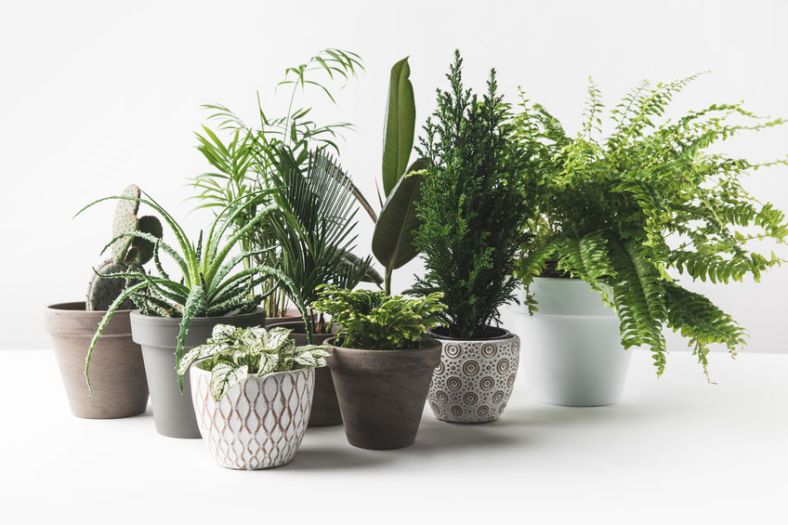
Are Your Plants Making You Crazy?

Source: 123rf.com
Image ID : 100542878
Copyright : lightfieldstudios


I know there must be a whole slew of you who have jumped aboard the plant-obsessed bandwagon, and who treasure your new jungles as much as if they were your children.  Trust me, I can relate, though this isn’t the first time in my life that I have gone plant crazy and filled my home with living green things.

The first time I went overboard with buying and maintaining plants was back in 2000, when I amassed a collection of over 70 indoor plants in a 2 bedroom cottage-style apartment, and I loved it.  The idea of being surrounded by lush greenery was incredibly appealing, and I was swept off my feet until I went through a divorce which shifted my priorities and pulled me away from my plant hobby.

I took such a sharp about-face that I only had six indoor plants for many, many years, leading into the spring of 2020.  Then shortly after lockdown hit, I found myself at a plant nursery in May and purchased three lovely plants.  Little did I know that I was about to fall deep into plant obsession.  By July, I had over 40 indoor plants, and now, I have about 60 indoor plants.  Some were purchased through Etsy, many were purchased from a local supplier (@Brandontheplantguy on IG), and I even bought some from eBay and Amazon.

Source:123rf.com
Image ID : 126788177
Copyright : Olga Yastremska


Though I feel a certain amount of embarrassment over the fact that my home now declares to everyone that I am a crazy plant lady, I take great comfort in knowing that such an obsession is almost trendy these days.  The truth is, houseplants are more popular than ever, especially in millennials who are pushing against the idea of having children, and who are instead opting for a collection of Hoya or Senecio plants which will never demand that the plant parent pony up for a college education.  That being said, having a plant habit can set one back quite a bit, not only in the cost of the plants, but also the planters, spring water, plant food, insecticides, etc.

Those of you who aren’t captured by the idea of collecting a bunch of potted living things might be scratching your heads and wondering why people have suddenly gone plant crazy.  The COVID-19 restrictions and lockdowns forced us all to stay at home, which meant that suddenly, our home environments took on a greater significance.  This is why there was a surge in home improvement projects which kept the big box home improvement stores packed during a time when many other businesses were floundering.  Plants certainly can beautify a home, and they also clean the air, but probably the most compelling feature about houseplants which appeals to most folks is the fact that they are living things, and with a bit of nurturing, they will grow and thrive.

That being said, plants don’t always thrive, and when they start to droop or otherwise show that they aren’t happy, plant owners may find themselves dealing with a lot of frustration.  Another thing I have noticed about now being responsible for a brood of 60 indoor plants is that I often get pissy when a plant decides to become finicky.  It can make a plant parent downright neurotic to try to determine what a failing plant needs. Maybe there’s too much sunlight and the leaves are getting scorched.  Or maybe there isn’t enough sunlight.  Could it be that the plant needs more/less humidity?  Is the plant getting too much/not enough water? Are there pests on the plant which need to be eradicated? What, what, WHAT does this plant want or need?

Even the task of taking care of the plants which are doing well (thankfully, 99% of my plants are doing extremely well) is a daunting one.  The one day per week when I look at all my plants and determine which need to be watered is a day I have begun to dread, because it takes a full hour or more for me to complete the task, all the while lugging jugs of spring water, plant fertilizer, orchid plant food spray, neem oil, my watering can, my plant log, and a stepladder all throughout the second and third floors of my home.  It’s exhausting.

I know that plant people can relate to what I am about to say regarding plants which stubbornly refuse to do well despite everything, especially popular plants which are supposedly “easy care” plants.  When a plant begins to show that it isn’t happy, I honestly feel like I have failed the plant.  I get frustrated and want to figure out the solution to the plant’s woes.  If the plant refuses to rebound, and is close to its demise, I adopt a very “fed up” attitude, and will very abruptly dump a plant in the trash or banish it outside.  It’s the best way for me to disconnect from that irksome creature and get on with my life.

I now have a trusted list of plants I gravitate towards so that I don’t tear my hair out in frustration.  Here are the plants which I truly do enjoy, because they are all doing well in my home:

  • all my Zamioculcas zamiifolias (including zenzi, raven)
  • all but one of my Hoyas (incuding shepherdii, pubicalyx, retusa, australis, multiflora, tricolor, carnosa compacta, lacunosa, and obovata)
  • my Monstera adansoniis
  • my Philodendron brasils
  • the one Scindapsus pictus which didn’t die
  • my Sansevieria starfish
  • my Pachira aquatica
  • my Beaucarnea recurvata
  • my large Senecio rowleyanus, my Senecio herrianus, and my Senecio radicans

In stark contrast, there are plants which I have had little to no success with despite all my efforts.  The plants which have stirred up a great deal of frustration include ALL peperomias, n’joy pothos, Tradescantia multiflora (quite possibly the messiest plant ever), Othonna capensis (tried two of these plants and finally gave up), and Begonia maculata.  I now avoid those plants in the same way I would avoid a person I didn’t like, and certainly would never welcome them into my home again.

In conclusion, the healthiest way to approach plant ownership is to educate yourself on the particular needs of the plants you have, and if a plant begins to falter, just let it go instead of beating yourself up for not being able to save it.  I actually found out that many nurseries will keep stocking certain plants because they know that the plants will be fussy.  Since many people are stubborn about trying to succeed in nurturing a plant, they will often purchase the same type of plant repeatedly in hopes of somehow figuring out its needs.  I know I did this with Scindapsus, Begonia maculata, Pilea peperomioides, Hoya wayettii, and every time one of these plants would die, I would take the loss personally, as if I was totally responsible.  I’ve learned that it is not worth the heartache, not to mention the financial expense, to keep buying those plants.


My Songbird Fantasy

source: 123rf.com
Image ID : 16616006
Copyright : Sergey Nivens

From the time I was a little girl, I fantasized about having a beautiful singing voice, but I wasn’t destined to be blessed with such talent.  Though I am not tone deaf, and can carry a tune, the quality of my singing voice is very basic and certainly not worthy of any type of showcase.  At least I was realistic at an early age (eight years old to be exact) about my utterly ordinary voice, and never attempted to delve into some delusional idea that I might someday develop pipes which would rival Mariah Carey.  Instead, I happily lived vicariously through my favorite singers, imagining what it must be like to have such sweet melodies emanate from one’s vocal cords.

Of course, like most of you, I’m not afraid to belt out a tune while driving my car or taking a shower.  There is something so cathartic about being able to let loose like that, so I allow myself to indulge in it frequently.  Why not?  It’s not like I’m going to try out for American Idol or The Voice.

It’s pretty sobering to think that the majority of singers never really get a chance to fully live out their dreams of stardom, despite having massive talent. I recently watched “Twenty Feet From Stardom” which follows several prominent backup singers from the 1960’s to present time. In one portion of the documentary, Merry Clayton describes her experience recording the vocals for the 1969 song “Gimme Shelter” by the Rolling Stones.

In an excerpt from an article on openculture.com, Merry describes the evening:

Well, I’m at home at about 12–I’d say about 11:30, almost 12 o’clock at night. And I’m hunkered down in my bed with my husband, very pregnant, and we got a call from a dear friend of mine and producer named Jack Nitzsche. Jack Nitzsche called and said you know, Merry, are you busy? I said No, I’m in bed. he says, well, you know, There are some guys in town from England. And they need someone to come and sing a duet with them, but I can’t get anybody to do it. Could you come? He said I really think this would be something good for you.

I said, Well, play the track. It’s late. I’d love to get back home. So they play the track and tell me that I’m going to sing–this is what you’re going to sing: Oh, children, it’s just a shot away. It had the lyrics for me. I said, Well, that’s cool. So  I did the first part, and we got down to the rape, murder part. And I said, Why am I singing rape, murder? …So they told me the gist of what the lyrics were, and I said Oh, okay, that’s cool. So then I had to sit on a stool because I was a little heavy in my belly. I mean, it was a sight to behold. And we got through it. And then we went in the booth to listen, and I saw them hooting and hollering while I was singing, but I didn’t know what they were hooting and hollering about. And when I got back in the booth and listened, I said, Ooh, that’s really nice. They said, well, You want to do another?  I said, well, I’ll do one more, I said and then I’m going to have to say thank you and good night. I did one more, and then I did one more. So it was three times I did it, and then I was gone. The next thing I know, that’s history.

Now listen to her raw vocals.  You’ll get the chills from her energy and passion:

Now that’s magical talent!

Diet Myths = Diet Lies

I wrote the following article in 2013, and it was published on RXGirl.com 

Source: 123rf
Image ID : 68123600
Copyright : Nipon Temsakun

MYTH: You should avoid eating fat.

FACT: Despite the fact that fat carries more than twice the amount of calories per gram when compared with carbohydrates and protein, fat takes longer to empty from the stomach and thus keeps you feeling fuller for a longer period of time. Fat also adds flavor to foods and heightens the dining experience. In addition, you must consume some fat in order to maintain proper cellular health. Omega fatty acids, monounsaturated and polyunsaturated fats, all of which are healthy forms of dietary fat, actually lower LDL cholesterols in the blood.


MYTH: Healthy foods are more expensive.

FACT: Many unprocessed foods such as grains, fresh vegetables and fruit are extremely cheap. Think about it. You can purchase a five pound bag of potatoes for a couple of dollars, or you can buy a bag of potato chips for $3.49 or more. And I don’t need to tell you that the bag of potatoes will provide sound nutrition and far more food bulk than the chips. I am not a big fan of certain natural food markets because they are grossly overpriced, so I visit other markets which have very reasonable prices on their unprocessed foods. Processed and fast foods may be more convenient, but they are more costly over time, especially if you eat them frequently.


MYTH: Late night meals will make you fat.

FACT: Your body doesn’t process food differently once the sun comes down. The problem that many people have is that they restrict their caloric intake too much during the day, usually by skipping meals. By the time they get home from a busy day, they are starving, and will eat an excessive amount of calories to satisfy their hunger. Another issue is the mindless munching on snack foods which people often do while watching TV or sitting at the computer.
As long as you eat a reasonably sized, healthy meal, nighttime eating shouldn’t result in weight gain.


MYTH: You can eat any foods you want as long as you do it in moderation.

FACT: It’s okay to indulge in a calorie dense or unhealthy food item once in a while, but if you make it a regular practice to eat junk foods every day, you are doing your body and your health a huge disservice. Trust me, a chiseled physique can never be built on a pizza diet (I know, wishful thinking, right?). Your body requires high quality protein, healthy fats, and unprocessed or minimally processed carbohydrates to function optimally and to support a healthy metabolism.


MYTH: Skipping meals is a good way to lose weight.

FACT: Spacing your meals throughout the day will keep your metabolism running in high gear. It is true that breakfast is an important meal because it provides essential nourishment, regulates mood and energy levels and boosts mental clarity. People who skip meals are notorious for eating excessive amounts of food when they actually do eat, and those meals are usually unhealthy and of poor nutritional value. If you are prone to skipping meals, try keeping a food journal to monitor your meal consumption throughout the day.


MYTH: Carbohydrates will make you fat.

The truth is, carbohydrates are usually consumed in excess by many people. What this does is cause a sharp increase in blood glucose, which triggers insulin release so that the glucose can be converted to glycogen for storage in the liver and muscles. Only a certain amount of this glycogen can be stored, with the excess being stored as body fat. Once the blood glucose level falls below normal, carbohydrate cravings are triggered which many individuals succumb to.

When you cut carbohydrate intake, you will experience a rapid weight loss initially as the body drains glycogen stores for energy. What also occurs is that water is released as the glycogen is utilized, resulting in weight loss from the increased urination which results. But after about two weeks, the increased urination ends, and along with it, the rapid weight loss.

The Men Who Built America – Financial Titans

When I was a child, American history was taught in a very static manner.  We were expected to memorize important dates and factoids, to the point where epic points in history like the Industrial Revolution, though pivotal and vital to the development of America, seemed dull and uninteresting.  It took imaginative historical books which I have read over recent years, and shows such as “The Men Who Built America”, for a keen interest in American history to ignite within me.

Most recently, I stumbled upon “The Men Who Built America” right around Halloween when I was searching on Amazon Prime Video for an entertaining show to watch. What caught my eye was the fact that the television series was described on IMDB as a miniseries which “shines a spotlight on the influential builders, dreamers and believers whose feats transformed the United States, a nation decaying from the inside after the Civil War, into the greatest economic and technological superpower the world had ever seen. The Men Who Built America is the story of a nation at the crossroads and of the people who catapulted it to prosperity.”  Those words were enough to draw me in.

The focus of this series centers around the lives of Cornelius Vanderbilt, John D. Rockefeller, Andrew Carnegie, J. P. Morgan, and Henry Ford.

Check out these descriptions of the episodes:

1 “A New War Begins” Ruán Magan David C. White, Keith Palmer October 16, 2012
Cornelius Vanderbilt grows from a steamboat entrepreneur to the head of a railroad empire, and gets into a heated rivalry with James Fisk and Jay Gould; the up and coming John D. Rockefeller founds Standard Oil. Many business owners lay their own rail lines which leads to the Panic of 1873. Later, Rockefeller starts to expand his wealth by diverting his business from the railroads to a new innovation, oil pipelines.
2 “Bloody Battles” Patrick Reams David C. White, Keith Palmer October 23, 2012
Andrew Carnegie builds an empire around steel, but finds himself struggling to save face after the ruthless tactics of his business partner, Henry Clay Frick, result in both the Johnstown Flood as well as the bloody 1892 strike at the Homestead Steel Works.
3 “Changing the Game” Patrick Reams David C. White, Patrick Reams, Keith Palmer October 30, 2012
J. P. Morgan proceeds to banish the dark with the direct current electric light of Thomas Edison, but the two soon face serious competition from the alternating current of George Westinghouse and Nikola Tesla. As the 19th century comes to a close, the titans of industry must try to work together to stop a new threat in budding politician William Jennings Bryan, who threatens to dissolve monopolies in America.
4 “When One Ends, Another Begins” Patrick Reams David C. White, Keith Palmer November 11, 2012
Rockefeller, Carnegie and Morgan team up to help elect William McKinley to the U.S. presidency by paying for his 1896 campaign, to avoid a possible attack on monopolies. However, fate intervenes when McKinley is suddenly assassinated, and Vice President Theodore Roosevelt assumes the presidency and promptly begins dissolving monopolies and trusts in America. Meanwhile, Morgan buys out Carnegie Steel to make Carnegie the richest man in the world, and Henry Ford designs an affordable automobile with his Model T and starts his own business, Ford Motor Company, which sets a new business model for companies to follow.

It was mostly my interest in finance which locked me into this series, but I also truly enjoyed learning about the historical impact which these great men had on a sophomore nation.  If you’re looking for a great series which is relatively short (you could binge watch this over a weekend), then this is for you.

The Great Gym Equipment Shortage of 2020

Source: 123rf
Image ID : 35796318
Copyright : ramain


If you’re into fitness, then you probably have encountered elements of the exercise equipment shortage which emerged from the coronavirus lockdown.  People began scrambling to pick up all sorts of exercise equipment as soon as lockdown went into effect, and suddenly, dumbbells, kettlebells, weight benches, resistance bands, etc. became as scarce as a 12-pack of Charmin.  It turns out that weight training, as an e-commerce category, is the eighth-fastest growing category, even more in demand than toilet paper, paper towels, and hand sanitizer.  Interest in fitness gear is up over 500% this year.

Part of the shortage is due to the fact that a large percentage of the iron used for exercise equipment is forged in China.  In fact, every single piece of exercise equipment I have ordered online since March has been made in China.  Many factories in China have been shut down as a result of the pandemic, causing production to plummet, and forcing distributors to find other ways to manufacture items like dumbbells, kettlebells, weight plates, multi gyms, and barbells.

Hence the shortage and the inflated prices we have been seeing all over the internet.  Bowflex Selecttech Dumbbells have been selling on eBay for grossly inflated prices, jumping from as little as $200 for a pair last fall to as much as $1,500 during the peak of the equipment buying panic a couple of months ago.  I have had a Bowflex Selecttech 552 set with the stand for eleven years, and I am so grateful to have it.  Never once did I think about jumping on the opportunity to make a ridiculous amount of money by selling the set, because I was using the set every single day, and my fitness and sanity mean far more to me than making a quick buck.  Plus, they’re pretty awesome, enabling me to select any weight from 5 to 52.5 pounds, in increments of 2.5 pounds.

There were other purchases I made which were a test of my patience.  I ordered a hyperextension bench which took two months to arrive, and I went through so many sites and online searches and apps before I found items like the Marcy Diamond Elite MD-9010G Smith Multi Gym through OfferUp.  I also had to pay more than the original sticker price because the demand for such items is so high.  However, I swooped in on this item before prices went through the roof.  The current lowest price on Amazon for this multi gym is now $2,700.99 and arrives September 25th – October 13th!


If you happen to see a piece of equipment which you want, you had better snap it up immediately, since the demand will not abate any time soon.  Gyms have been shuttered, and there’s no telling how long it will be before they will reopen, so we all need to get comfortable with assembling the best home gyms possible.

Marcy Diamond Elite MD-9010G