Relationships Aren’t What They Used To Be – REPOST

angry-man-and-woman

I wrote this in early 2014, but it’s worth a repost. I am posting near the day which SHOULD have been a six year anniversary for me. C’est la vie.

Relationships take some work to keep them humming along, and some couples are actually fortunate enough to find a formula which nurtures their interaction and enables them to beat the odds. Sadly, though, it just seems like most people these days are too quick to jump ship. Perhaps it has something to do with the promise of the bigger, better deal which multiple dating sites proffer, but I believe the restlessness and discontent are largely due to laziness. Our society is so rapid fire, with the convenience of social media ironically causing a veritable breakdown of true communication and intimacy, that as soon as conflict arises with someone, the instinct to flee seems to rear its ugly head. Gone are the days of working issues out over many decades, staying the course and serving as an example of everlasting love. The art of compromise seems to be lost, and people often will cohabitate or marry with separation or divorce viewed as an easy escape route. It’s no wonder that breakups seem to be happening more frequently now.

Love and relationships are almost treated like fast food, and the sad thing is that through the common lack of willingness to constructively work through conflict, many relationships become disposable. Like fast food, weak or unstable relationships begin to resemble fast food, full of empty calories and ultimately bad for the system. Also like fast food, weak unions may cause cravings for more of the same, and a vicious pattern may ensue. If you ask yourself why you keep picking the same type of person, it is time to look at the reasons why you are drawn to that type of person and do whatever personal work you need to do in order to break such patterns. Otherwise, you will find yourself in the same situation with the next person.

I have talked to couples who have been together for four, five, six decades and they have all said the same thing about weathering the storm through the years and enjoying a lasting union. It seems to boil down to two very important guidelines:

1. ALWAYS RESPECT EACH OTHER. Psychologists say that a clear sign of impending demise for a relationship is when partners fail to respect each other. Insulting, name calling and blaming are the clearest signs, but there are other indications of a lack of respect, such as lack of emotional support for a partner when major life events occur. This doesn’t mean that successful couples never fight, they just argue in a constructive fashion and allow each other the opportunity to vent all frustrations and concerns without interrupting or attacking.

2. DON’T SWEAT THE SMALL STUFF. Rather than nitpicking about little things, successful couples let them go. If irritating issues arise, calmly discussing the issue is far more successful than bickering about minor incidents like the trash not being thrown out, or the toothpaste cap being left off. However, both partners must be receptive to active and constructive communication. If one partner is hostile and unyielding, the petty issues will erode intimacy and affection.

How To Visualize Your Body Transformation Goal

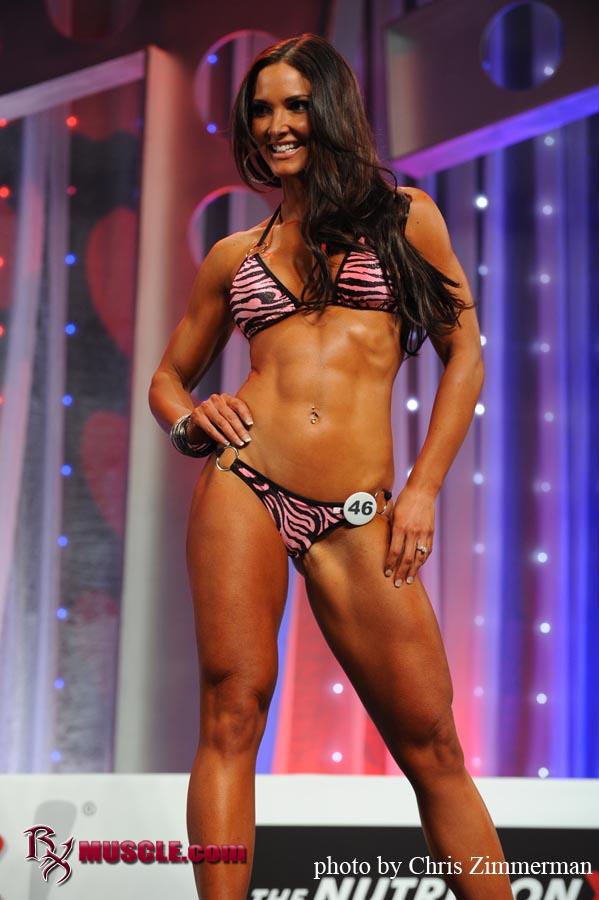
Body B&AWhenever I do initial consultations with weight management patients I make sure to ask them what their ultimate weight loss goals are.  Invariably my patients will mention a friend or relative who has the physique they desire, or they will mention a time in their lives at which they considered their own bodies to be ideal for them.  At the end of the evaluation, I instruct my patients to find at least one picture of that ideal body and post it in a prominent place, either on a desk, bathroom mirror, refrigerator, or car dashboard.  The whole point is to create a visual representation of the patient’s goal so that it becomes more tangible over time.

Another tip which I give to weight management patients is to take weekly progress pics so that they can monitor the subtle changes in their bodies over an interval period of time.  What they might not see from week to week can be very dramatic when they compare their baseline photos to photos taken many weeks or months later.  Over time it becomes easier to take these progress pictures.  Trust me, I used to do it regularly myself when I was competing. These days, though, I have hit a certain rhythm in which I stay at a specific set point.

Lori HarderThe tips I have just mentioned also work EXTREMELY well for people in the midst of contest prep.  I typically advise contest prep clients to take weekly progress pictures, because they provide a great way to monitor subtle changes week by week, as well as yield information which I can use in order to make small changes in a prep plan.  

When I first began competing in 2009, I quite randomly picked a couple of images of female competitors whose physiques I really admired, printed them, and placed them on my bathroom mirror.  I saw these images daily, and was able to visualize my goal on a consistent basis.  I did not remove these images from my mirror until I moved in October of 2012, and when I did so, I moved the images to bulletin boards in our den.

What is amazing now is that I have images of myself right next to the images of the ladies I had so admired, and you know what?  I achieved my goal of attaining IFBB Pro Status and the best physique of my life, at the ripe age of 47.    These days, I no longer look at the images of these ladies as something to aspire to, but instead look at them as peers.

In summary, there are two things you can do to visualize your goal:

1. FIND AN IMAGE OF THE BODY YOU WANT AND POST IT IN A PROMINENT PLACE.

2. TAKE WEEKLY PROGRESS PICTURES OF YOURSELF.

Visualize and make your goal materialize!

Don’t Bully Your Coach – REPOST

personal-training-clientBefore I dive into this topic, I want to make sure that everyone understands that this is meant to be general, and is not directed at anyone in particular. But because I have had numerous conversations with other coaches and trainers recently who have described behavior in their clients which I find unacceptable, I thought this was a good topic to cover in my blog.

First of all, when you hire a coach or trainer, you are hiring that person for his or her knowledge, education and experience. When you challenge fee schedules that are in place, and expect the coach to give you bargain basement pricing just because you are short on funds, or because you don’t see why you should pay that much for someone else’s time, it is insulting to the coach. In addition, coaches and trainers are trying to run businesses and have expenses which need to be covered. I recently saw a quote on Instagram which I loved: “If you think a professional is expensive, wait until you hire an amateur.” Please keep this in mind when you are selecting a coach, and have respect for what he or she offers.

If a coach is designing a customized plan for you, do not expect the plan to be ready within minutes. It takes time to create a customized plan for a client, so please be patient. Once you get your plan, please do not ask incessant questions, especially if they are presented in the middle of the night. Since I am a physician, I understand what it means to be on call all the time, but I will not put up with a 2 am text asking me whether it’s okay to substitute swing lunges with seated leg curls!

Another sure way to aggravate your coach is to be non-compliant, whiny, and intent on changing every aspect of a well designed plan. Why even hire a professional to help you if you are dead set on being a person who uses the word CAN’T all the time? If you trust, admire and respect your coach, then let your coach work his or her magic and help you to reach your goals. Otherwise, you are wasting both your time and energy and those of your coach. Allow your coach to guide you and be your motivator, and speak up if you are faltering in your efforts or if your self-confidence is flagging. Let your coach be truly that: a coach.

Progesterone and Stress

We all know that constant stress can play havoc with our health and well being. In this post I will focus on the effects of excessive stress on progesterone levels.

Progesterone is produced in the ovaries, the adrenal glands, and in the placentas of pregnant women. It has a calming effect, is a natural diuretic, regulates menstrual cycles, and prepares the body for conception and pregnancy. Some women can experience excessive levels of progesterone, which usually produces symptoms of PMS, but in general, progesterone is a vital and beneficial hormone.

Let’s examine what happens to progesterone if you are a woman under constant and chronic stress. When the body is pummeled with endless stress, the adrenal glands simply cannot keep up with the demand for more cortisol, so they convert more pregnenolone into cortisol to make up for the deficit. However, this has devastating effects on progesterone levels, since progesterone is also synthesized from pregnenolone. Basically, a woman who deals with excessive amounts of stress not only overtaxes her adrenal glands, but progesterone concentration also drops to a precipitously low level. So that calming, diuretic effect of progesterone falls away, and menstrual cycles become erratic or periods cease altogether. Sounds like fun, huh?

I cam tell you that running on an empty tank of progesterone is no fun at all. You retain water, you get irritable and cranky, and you lose your ability to navigate calmly through stressful situations. If you depend on a regular menstrual cycle as a reassurance that all is right with the world, then living with the mystery of whether or when you might have a period can be maddening. I found out during perimenopause that I actually WANTED a period, and I thought I would never feel that way.

I began retaining water like crazy after attaining IFBB Pro Status last July, and I knew something just wasn’t right. I didn’t feel like I was in my own body, as strange as it sounds. I began flailing, and went through a rebound which was disturbing and unexpected. My emotional barometer was all over the place, and I couldn’t get out of the funk that I was in. Gaining eight pounds (which is considerable for me), most of which was water weight, made me even more depressed.

Another completely irritating set of symptoms which suddenly popped up at the end of January 2015, and which persisted every single night is that I would wake up at around 4 a.m., completely drenched in sweat and with a sensation which could best be described as being lit on fire from the inside. I would throw the covers off and quickly disrobe, then rather quickly fall asleep, only to awaken about 30 minutes later, shivering and pulling the covers over me.

The nightmare finally subsided to a great extent once I began replenishing my body with bioidentical progesterone in late February 2015. Though I still retained a bit of water for several months, my weight returned to a reasonable 120 pounds, versus the 125 I had been at in the Fall of 2014, my hot and cold episodes subsided, I felt much calmer, and more like myself. Now that I have been on bioidentical progesterone for two years, I have maintained balance and feel infinitely better.

Had I removed the stressors that I had some control over, I am firmly convinced I would not have bottomed out with my progesterone levels like I did. Even if I had engaged in meditation more regularly a couple of years ago, I think I could have saved my progesterone levels from bottoming out. Trust me when I say that progesterone depletion can be incredibly disruptive and upsetting. And don’t think for a second that this is only a problem which women past the age of 45 deal with. I have come across female patients as young as 32 who had almost no progesterone in their lab tests.

If you do one thing to improve your health, please reduce your stress! You can do this by removing the stressors that you have some control over, performing breathing exercises, tai chi, yoga, and meditation, enjoy time with friends, loved ones and pets more often, and letting go of anxiety and worry.

Love Scenes

Depending on the typecasting which exists for an actor, kissing scenes or sex scenes may be a regular part of the mix. This can throw a wrench in relationships, and in some cases, result in their demise.

Performance kissing and lovemaking (or straight up nasty fucking, excuse the expression) has to look convincing and appealing. Many actors have stated that kissing and sex scenes for the film camera, television camera, or stage are rather different from regular intimate interactions. However, the intimate acts which actors must perform are still exactly that, intimate. It’s important for actors to build up some sort of relationship with their fellow actors prior to such scenes. And though the intimate act (be it a kiss, a fondle, or a full-on sexual act) must be performed in front of the entire crew, it’s still a shared moment which would make most people blush and squirm from the awkwardness.

I am also aware of the fact that actors might not be attracted to the other actor (s) in the scene, and that they might not even be the gender to which the actor finds him or herself attracted. Yet, as the saying goes, the show must go on. Then again, they may indeed be physically attracted to their co-stars. I have heard actors admit that they get an enjoyment, a charge, out of performing an intimate scene, because there is an exchange of energy between the actors, and the artistic process is in full force.

In addition, the actors must make the scene believable, which means the passion, the lust, the hunger, must all be generated from the actors’ past experiences. It’s all part of getting into character. So in that sense, the feelings are genuine. The question I have, though, is how fair is it to say that the character is the one in the midst of the embrace, and not the actor who is performing it? To me, that sounds like a cop-out. As someone who has had to endure a partner performing such scenes, I cannot accept the rationale that the actor is not the one engaged in the activity, and that because it’s acting, it’s perfectly acceptable. Call me a prude, call me narrow-minded, but the thought of my man swapping spit, grabbing an actress by the breast or ass, or grinding up against another human in the act of feigned copulation, quite frankly makes me sick to my stomach.

Actors will often offer this rebuttal: “It’s ACTING, it’s my job. It’s what I have to do. It’s my normal.”

It’s just work? Yeah, so is stripping. And porn. And prostitution.

And what about the feelings of insecurity and jealousy which I believe would and should naturally spark in an actor’s mate? If a partner cannot seem to adjust or accept the intimate performances which an actor may be called on to perform, is that partner being unfair? What about how the actor approaches his or her partner with the news that a liplock, a bump and grind, or nudity will be required for a scene? Does an actor have the right to wave the flag of “creative license” in the face of his or her boyfriend/girlfriend/spouse?

I’ll tell you this much: the idea of my man’s lips, tongue, hands, body on another actor bugs me to no end. Such activities are private, intimate interactions, and my strong belief is that they should NOT be shared with anyone else, even during an acting scene which is supposedly an artistic expression and completely make-believe. Pheromones are released during a romantic kiss, and can’t be avoided. And quite frankly, there have been enough stories about actors hooking up off the set because they discovered that there was a sexual or romantic connection, one that might be worth jeopardizing an existing relationship for.

The only other industries which require intimate encounters between humans are stripping, porn and prostitution. Perhaps the actions don’t have the same meaning as they do when the working individual is with his or her real-life love interest, but the activities are still very much occurring. Yes, I know those of you who are actors want to debate this, especially since you only feign sexual encounters. However, no other industry besides the ones I have previously mentioned even approaches the compromising positions and intimate encounters which acting does. For actors to be called upon to kiss, fondle and grind up against others, and to expect their mates to be completely okay with it just seems like the ultimate double standard, and I am not afraid to say that I find the whole thing rather unreasonable.

Here are a few admissions from actors which I found online:

“And when I kiss a woman, in my head, I WANT HER. I committed to whatever I was playing fully. This doesn’t mean I wasn’t professional and respectful, but as a young man making out with a young women (sic), I was thinking, THIS IS AWESOME!”

“Most of the answers here are very much along the lines of ‘it’s just a job’
However, I am what is often described as a method actress. I will look at my scene partner and think about what it would be like to kiss him, touch him, what he would look like naked, what he would do to me if we were alone, those sorts of sexy things. And also if we are working together for more than a day or so, I do tend to get a bit of a crush on my scene partner for a while. It goes away and I’ve never acted on those feelings.”

“It’s like running in the rain. There’s a certain point when you go, ‘[Expletive] it, I’m already wet. I’m not going to get any less wet, so I might as well just enjoy how this feels.’ I mean, sure, there’s awkwardness about being in a weird flesh-colored thong, bouncing on top of an actress. I am not a small human being. I weigh at least 200 pounds and I’m six-foot-two. And Wiig is a twig; she’s a skinny little thing. It’s weird and uncomfortable at first, but then all the awkwardness melts away and you think, All right, we’re doing this, so let’s have fun with it. You know what I mean? You’re in that moment and it’s happening and it’s not going to get any better, so you might as well enjoy it.” — Jon Hamm, on Bridesmaids

For more interesting quotes from celebrities regarding filming sex scenes, you can click on the link here:

http://www.cosmopolitan.com/entertainment/celebs/a31833/celebrity-quotes-about-filming-sex-scenes/

Kick A Foot Or Leg Out

Many of you are already aware of the “one leg out” sleeping position, in which one leg is hooked over the covers, while the other leg remains nestled under them. This clever approach to cooling the body down during sleep actually has a scientific basis.
The body prepares for sleep by dropping its core temperature, and in the deepest stages of sleep, body temperature actually dips a couple of degrees below normal. This is part of the natural physiology of slumber. Even some of the pre-bedtime rituals which some people adopt, such as taking a warm bath or drinking a cup of hot herbal tea, cause the body temperature to cool rapidly, priming it for sleep.

When we uncover our feet but keep the rest of our bodies snug under the bedclothes, or we swing one leg over the covers, we enable the blood vessels of the feet to dissipate body heat and keep us cool, which further supports restful sleep. Besides, who enjoys sweating while trying to sleep?

Some scientists even recommend keeping feet uncovered while sleeping at night, especially if you are sleeping next to a partner or pets (those of you who have pets know that they often sleep ON you). Another tip is to keep your bedroom temperature between 60 and 68 degrees, so if you are in the habit of cranking up the heat to keep your home warm and cozy, you might want to drop the thermostat setting at night while you sleep.

What Do You Take For Granted?

_cpr0320

Chances are that you probably take many things in your life for granted. For example, you probably take for granted that you will wake up to face another morning. You may take for granted that you have job security or financial security. You may take your good health for granted, or you may have resigned yourself to sub-optimal health while taking for granted that you will somehow overcome the inevitable consequence of poorly managed illness. You may take your relationship or marriage for granted, assuming that because you have a partner whom you love and who presumably loves you back, you will never be alone or have to struggle with being single again. You may take for granted that your home is completely safe from violence, thieves, or natural disasters.

Never, EVER take anything you have in your life for granted. Anything can be stripped away from you in a heartbeat. The saying, “hope for the best, but prepare for the worst” has some utility in reminding us to pay attention and take steps to ensure our comfort, our safety, our health, our sanity. Nothing we have is permanent. It’s all on loan until we move on from this physical realm.

I know this sounds depressing, but it isn’t meant to be. It is simply a reminder to pay attention to what you are blessed with, to appreciate it, and to realize that just because you enjoy it and it has given you comfort or joy, doesn’t mean that it will last. Don’t count on it. Live every day as if it was your last.

Waves In My Hair

3t6a4898-ex-web

From the time I was an infant, I always had very straight hair, and like many girls with straight locks, I always longed for waves. My desire for beachy waves was so pronounced that I spent my twenties and thirties habitually swirling my hair into an up-do with a clip while it dried in hopes that waves would form and remain there. However, because my hair is so thick and heavy, the sheer heft would uncoil my attempt at making soft curls, leaving me with the straight hair my DNA locked me into.

My hair became even thicker after I began competing in 2009. While many other women my age were lamenting the loss of their locks, I experienced such a surge in fullness that for about a year, I shaved the nape of my neck to lessen the mass of hair I had. A lot of it had to do with the increased protein intake (up to 180 grams a day at one point) which I had to incorporate into my regimen while I prepped for competitions. My hair also grew much more rapidly, and in 2010, my hair grew ten inches in eleven months. How do I know this? Because the area I had shaven grew a full eleven inches in that span of time, and the overall length of my hair kept me visiting my hairstylist for trims every six weeks.

Then I entered peri-menopause. What a joyous time, when a commercial can send you into a fit of tears, layering clothing becomes essential because of the hot flashes and night sweats, and your skin decides that it no longer wants to fight against the pull of gravity. About a year after I began sailing on the rocky seas of menopause, I had a haircut by an amazing stylist who remains my regular stylist to this day.

By some very odd coincidence, I noticed a pronounced wave throughout my hair when I washed my hair several days later. I thought perhaps I hadn’t washed out the styling products completely, but my hair began to look wavier and wavier with every subsequent wash. This persisted for over a year, and continued to perplex and annoy me. I went from never styling my hair, to developing a blow-drying and flat-ironing regimen which I still haven’t perfected, even to this day.

The rogue waves in my hair don’t seem to have rhyme or reason either. The waves on the right side of my head which frame my face are much wavier than on the left side, and for whatever bizarre reason, the right side is resistant to my efforts to obliterate the kinks with a flat-iron, even if I treat small sections and repeatedly iron the sections.

The sudden nature of the change in my hair texture was alarming. I remember hearing women tell tales, which I figured were tall tales, about how the texture of their hair changed overnight. And here I experienced the exact thing.

While hormones play a large role in hair texture (thyroid, progesterone, estrogen, testosterone), it can be rather strange to wake up with waves you never had, or to go from uber-curly hair to arrow straight hair overnight. It’s like the hormone fairy has a special hair wand which she uses to transform a woman’s strands like magic. The other funny thing is that hair follicles may return to their original state after a few years. My hair is starting to calm down somewhat, and there are times when my hair will be almost arrow straight after drying naturally.

I love the theory which Jonathan Torch, the founder of Toronto’s Curly Hair Institute, has devised. He maintains that changes in the tone of the muscles at the base of the hair follicles are the culprits in hair texture changes over time.

All I know is that my hair seems to have a mind of its own now!

Essential Oil Diffusers

Spamist Ultrasonic Diffuser

Spamist Ultrasonic Diffuser

I recently purchased a Spamist Ultrasonic Diffuser, and I love it! I use it every night before I retire, and the soothing aromatherapy vapors relax me and help me fall asleep. This particular unit was only $19.99, so I thought it might not work very well, but so far, I have been very pleased with its performance. The auto-shutoff feature kicks in after about three hours, but I am always asleep by then. You can set this diffuser to display a rotating rainbow of colors, one color only, or you can shut off the light. It’s easy to fill and easy to clean.

Here’s the description of the Spamist unit which I purchased:

“Create the ultimate spa experience—anytime, anywhere.

SpaMist instantly converts normal tap water to a healthy streaming  mist with the latest ultrasonic technology.

The sleek modern design fits any decor and is simple to use. Just add less than one cup of water and a few drops of your favorite essential oil. Enjoy more than 3 hours of continuous aromatherapy.

For a pleasant lighting effect, either select the rotating  rainbow spectrum or one of the 6 soothing LED colors. Lights may also be completely turned off during the diffusing process. SpaMist completely powers down when the level of water falls below the minimum fill line.

Cleaning is easy, just wipe wipe the inside out with a soft cloth before duplicating the above process.

Unit Weight  =  .60 lbs 
Unit Dimensions  = 4.5″L x 4.5″W x 7.5″H         
Case pack Weight =  7 lbs 
Case pack Dimensions = 15″L x 10″W x 8.5″H”

Though I usually use lavender essential oil in my diffuser, I also love Serenity aromatherapy oil by doTERRA. If you have trouble winding down from long, stressful days, or you simply want to enjoy the calming effects of essential oils, I would HIGHLY recommend purchasing a diffuser unit and placing it near your bed.

Physicians Are Therapists Too (Repost)

doc and patientThe scientific nature of medicine often tricks people into believing that doctors are so cerebral that they spend all day diagnosing and treating, without much regard for social factors which patients may bring into an appointment. However, it has been my experience that medicine is deeply rooted in connecting with others emotionally, mentally and spiritually. I realize that my personal journey as a physician is colored by the fact that I chose primary care as my post-graduate foundation, as well as the fact that I truly enjoy getting to know my patients. It is relatively common for me to discover that the “chief complaint” which brings a patient into the office is not the main concern the patient has. For example, I may have a patient come to me for evaluation of right shoulder pain and after 10 minutes of speaking with the patient find out that the patient hates her job, is suffering from insomnia and is exhausted from also caring for two small children and an ailing father. What ends up happening is that I will evaluate the shoulder, but will also discuss sleep hygiene and the importance of putting the oxygen mask on herself instead of giving all of her energy to her job, her children and her father. She certainly still has all those responsiblities, but when she neglects herself she drains herself of the potential energy she could be carrying to sustain herself and those she cares for.

Another common scenario is the patient who has gotten out of shape over the years and wants to make a change. These patients may come in for weight management, but in most cases they present to the office with a completely unrelated medical complaint. Almost invariably, I find out that the patient is overloaded, and also has difficulty committing to a specific regimen. This is yet another example of putting the oxygen mask over oneself, and is also a situation in which the patient needs to break the cycle of making excuses which serve as blockades to reaching ANY goals. The too-tired, too-busy, too-old excuses don’t fly with me at all. There is NO EXCUSE which justifies making regular visits to fast food restaurants, skipping meals regularly, and leading a sedentary lifestyle. It is important to realize that such habits are also rituals which the person has chosen to hang onto because they are familiar. It can be quite intimidating to manifest a major lifestyle shift because it requires a person to abandon old habits and patterns and undergo a complete change of mindset.

I honestly love helping people and take my role as an educator and healer very seriously. I also know that I can be a motivator, but only if I can successfully ferret out the psychological issues which hold people back from gaining true fulfillment in their lives.