The Incredible Egg

(Original post can be found at: http://www.rxmuscle.com/blogs/the-kitchen-eating-strategies/7870-the-incredible-edible.html)
eggs
If you haven’t already incorporated eggs into your regular meal plan, you should. Eggs are an excellent source of protein, and also provide all eight essential amino acids which are necessary for optimal muscle gains. Eggs are also packed with the following nutrients:

· Vitamin A
· Vitamin E
· Vitamin K
· Vitamin B12
· Riboflavin
· Folic acid
· Iron
· Zinc
· Calcium
· Selenium
· Choline

You may have been duped into believing that eggs should not be eaten due to the fat content in the yolks. However, there are only 2 grams of saturated fat and a total of 5 grams of fat in an average egg. The body actually requires a certain amount of saturated fat for proper function, which translates to about 20 grams of saturated fat on a 2,000 calorie per day diet. If you add only four whole large eggs to your daily diet, you will get 20 grams of quality protein with only 8 grams of saturated fat. As for the cholesterol content in egg yolks, it has been determined that dietary cholesterol does not raise blood cholesterol levels. In fact, consumption of eggs can improve blood lipid panels.

Here is a macronutrient breakdown of one large egg:

· 71 calories
· 6 grams protein
· 5 grams fat
· Zero carbohydrates
· 211 milligrams cholesterol
· 70 milligrams sodium
· 37 milligrams Omega 3 fatty acids
· 574 milligrams Omega 6 fatty acids

As a general rule, we purchase large or extra-large eggs for our household so that we can get the most protein possible. The larger eggs cost only a bit more than small or medium eggs and are a very cheap and high quality protein source which can be consumed during contest prep.

Individuals who want to gain muscle, especially during a bulking phase, should incorporate egg yolks in order to meet the high energy requirements that such a phase demands. Eggs are very easily digested and absorbed and can help to ensure a balanced diet. They are also quite versatile and can be eaten with other foods in omelets and high protein pancakes. If you want a quick snack which provides a good amount of protein, you can hard-boil eggs, making them a portable food source which can easily be packed in a food cooler for the day.
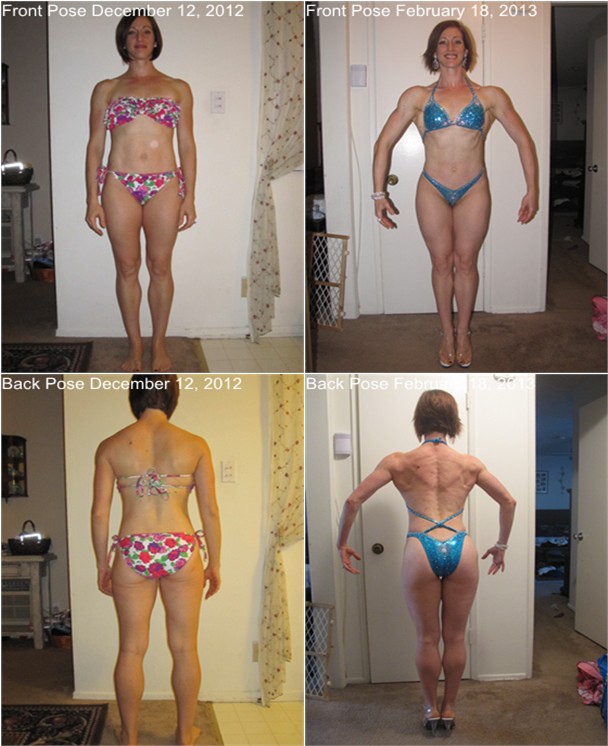
So Very Proud Of My Client Alli Salibian – This Is After 8 Weeks Of Prep With Me

Alli

My client Alli began training with me on December 17th, 2012 for an NPC contest which will be held on April 13th, 2013. These images show her one week before she began contest prep and how she looked on February 18th after 8 weeks of dedicated training and prep. She will compete in both Open and Masters Figure. This woman is tremendous and I am so very proud of her! She has stuck with her meal plan and training despite having two small children and a very full life. Talk about inspiring!

Thin Hair? Eat More Protein!

Hair PicIt is normal to lose some hair each day since hair loss is part of the normal growth cycle.  A normal rate of loss is 50 to 100 strands each day, so a loss of more than this range could signal health issues which must be investigated by a physician.  Common causes of hair loss include surgery, medications, illness or trauma and are often temporary.
However, I know that many people don’t suffer from excessive hair loss but simply lament the fact that they have thin, limp, lifeless hair.  For these people I always advise them to practice proper nutrition which supplies all the vitamins and minerals they may be lacking in.  I also advise them to avoid overstyling hair and to use hair treatments which replenish dry, brittle, and overprocessed hair.  But the number one most important recommendation I have is to EAT MORE PROTEIN!

When you consume insufficient amounts of protein, your body shifts hair growth into the resting phase which halts growth.  Basically, low protein intake equals starving your hair (not to mention your entire body).  I have had patients approach me for advice on what to do about their thin hair and I always tell them to crank up their protein intake.  Every patient who has heeded my advice has returned to me two to four months later ecstatic because they have noticed that their hair is growing faster, has become thicker and appears healthier.

Though I have always been blessed with a mane of thick, straight hair I also experienced a surge in hair growth right after I began competing four years ago.  In August of 2009 I went from ingesting about 70 grams of protein a day to a range of 120 to 170 grams per day.  Then in January of 2010 I did a stupid thing and shaved off too much hair from my neckline, leaving a one inch arc of shorn hair around the nape of my neck.  I figured I had to wait forever for it to grow out.  By July of 2010 the area I had mistakenly shaven had grown EIGHT INCHES.  That’s more than one inch per month, while a human’s average monthly hair growth is one-half inch.  It was amazing to me and proof of protein’s effects on cell growth.  Of course I did sort of feel like a freak of nature over this insanely rapid rate of hair growth!

My hair growth has stabilized somewhat since then and now grows at about an inch per month with a daily protein intake of 120 to 140 grams of protein per day.  My hair is thicker, shinier, and has become even more of a pain to deal with than ever before (and I have always had long hair).  The color has even deepened (with the exception of those evil gray hairs that lurk on the crown of my head) and I have developed more of a natural wave.

In summary, I attribute the health of my hair to the following:

  • High Protein Intake
  • Balanced diet
  • Biotin supplementation
  • Fish oil and flaxseed oil
  • CLA
  • Minimal heat styling (I always let my hair air-dry and only style it for photo shoots and competitions)
  • Regular conditioning treatments
  • Regular trims (now I have no choice but to get regular trims because my stylist layered my hair, which I LOVE)


Boost your protein intake and you will soon reap the rewards of thick, luscious hair!

“Healthy” Sandwiches

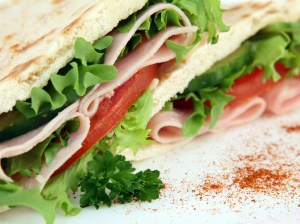
When Jared catapulted Subway Sandwiches into mega success as a result of the ad campaign which featured his weight loss, people became even more enamored of the convenient meal option which has come to define lunch for many people.  However, it makes a HUGE difference what bread, meats and condiments are used.  On the very, very rare occasion when I have to get a Subway sandwich (I think the last time I had one was 5 years ago), I will ONLY get the oven roasted chicken breast.  Why?  Because I avoid cold cuts like the plague.  Cold cuts have been deceptively packaged in grocery stores with labels like “fresh”, “oven roasted”, “99% fat free”, etc.  But the fact remains that cold cuts are extremely high in sodium, usually in the form of sodium nitrate which prolongs the shelf life of these meats.  The problem is that the body breaks down the sodium nitrate in such a way that can become carcinogenic.

Even with use of such preservatives, cold cuts can still harbor dangerous bacteria, the most common of which is Listeria.  Listeria infection is characterized by fever and chills, abdominal pain and vomiting.  I don’t know about you, but I don’t want to touch a food item which has a high risk of causing such symptoms.  Pregnant women and infants are particularly susceptible to such infection and should avoid consuming processed meats entirely.

Add to this a couple of slices of bread made with processed flour and a dollop of mayonnaise, and you have created a meal that is full of carcinogens, sodium and saturated fat and seriously lacking in nutrition.

A healthier choice is to make your own sandwich with Ezekiel Bread, gluten-free whole grain bread, or P28 Bread (www.highproteinbred.com), a dollop of pure organic mustard, Romaine lettuce, and a nicely grilled portion of skinless chick breast.  sandwich

“Healthy” Foods – Don’t Be Fooled!

When my patients and clients insist that they eat healthy foods, I am always curious to find out what they consider to be healthy. Usually I hear them list off restaurant salads, sushi, turkey sandwiches, whole grain cold cereals and cereal bars as their healthy foods.  Others will mention low fat versions of many foods, such as crackers, chips, frozen dinners, yogurts, cheese, cold cuts, cereals, etc. and state that they are proud of the fact that they have such foods nestled in their cupboards and refrigerator shelves.

I have news for you who think these are supremely healthy choices: they are not as healthy as you think they are!  In an effort to educate readers on what the nutritional breakdown is for these foods, I am dedicating a separate blog post for each food item which is in bold and italicized in this post.  In addition, whenever possible, I will provide a healthy option for each dish. By no means do I expect everyone to make healthy choices all the time, but I hope to equip them with the tools to make the healthiest and most informed decisions on what foods to eat whenever possible.

STAY TUNED TOMORROW FOR MY FIRST MEAL BREAKDOWN TOMORROW!

Sorting Through Protein Powder Types

Patients, clients and strangers ask me constantly what protein powders are the best, from the type to the brand and flavor.  The difficulty I have in giving a definitive answer is because different types of protein are better suited for different times of the day.  Another issue lies in the fact that I do not suffer from lactase deficiency or food allergies, so what works for me might not work for someone else.  In keeping with this challenge, I am going to discuss the different types of protein powder that are available with a small amount of advice on which protein to turn to for different tasks.


Keep in mind that protein powders can be derived from animal sources (whey, casein, egg white) or vegetable sources (soy, rice, hemp).  Generally speaking, animal proteins are nutritionally superior, so they should be chosen over vegetable sources unless someone follows a vegetarian or vegan diet.


WHEY PROTEIN:  When whole milk is broken down, 20% consists of whey protein and the remainder is casein protein.  Whey protein is the most reasonably priced protein and is very high in quality.  It also has the best flavor and mixes relatively well.  Whey protein is absorbed in the digestive system quickly, so it is the preferred protein source post-workout or whenever a rapidly available protein source is needed.


There are two types of whey protein available:

  1. Whey Concentrate – This is the cheaper version and is also low enough in lactose that even lactose-sensitive people can tolerate it.  It is also low in fat and carbohydrates, making it an excellent protein source for the majority of the population.
  2. Whey Isolate – This form is almost completely fat free and is also lactose free.

Some whey protein formulas have a blend of the two types, and may also have casein protein blended in as well (see description below for casein).


CASEIN PROTEIN:  This is also referred to as milk protein, and is absorbed much more slowly than whey protein.  Because of this, casein protein is commonly the protein of choice in bodybuilders before bedtime since the slow absorption is optimal for maximum muscle growth during sleep.  There are two types of casein protein:

  1. Micellar Casein – This is the superior form and is made by separating the casein portion of milk from lactose, whey and fat via microfiltration.  Microfiltration does not involve heat so micellar casein is not denatured like other forms of protein.
  2. Calcium Caseinate – This is the most soluble form of casein and mixes easily in fluid, but tends to contain high amounts of sodium (often MSG as the form of sodium).


EGG WHITE PROTEIN:  This protein source is naturally low in fat and calories but is more expensive than mild-derived proteins.  It is a good choice for individuals with milk allergies and is also considered a perfect protein because it contains all the building blocks of life.  Egg white protein is easily digested and absorbed so it is a good source of protein right after a workout.


SOY PROTEIN:  Soy protein supplies the body with all eight essential amino acids and is comparable in digestibility to animal protein sources.  It is best used as a meal replacement powder.  However, I am always concerned about the estrogenic effects of American soy products and tend to discourage the use of soy protein in my patients.


HEMP PROTEIN:  This protein has a lower bioavailability than other protein powders and is also lowest in protein.  It is slightly higher in fat than other sources but is high in fiber.  My advice is to choose other types of protein unless you have dietary restrictions or food allergies.


RICE PROTEIN:  This protein powder may be a good choice for people with milk allergies, but its bioavailability is also lower than the animal based proteins.  It is created by isolating the protein portion from brown rice.

My Favorite Clean Snacks

I will start out by saying that I rarely allow myself to snack on foods that are not on my meal plan.  However, every once in a while I will get a hankering for something different, and will allow myself to indulge in small yet healthy food items.

Here are some of my favorite snacks:

  • 1 cup of Fage nonfat Greek yogurt with 1 tablespoon agave nectar, 1/4 cup fresh blueberries or dried cranberries, and 1/4 cup high protein granola
  • Lundberg Sesame Tamari rice cake with 1 tablespoon of spicy hummus
  • low carb wrap (if I use the P28 wrap I will use 1/2 wrap) with 1 tablespoon of spicy hummus, 3 ounces of shredded chicken, dash of hot sauce and 1/2 cup mixed greens
  • low carb wrap with 1-1/2 tablespoons of raw almond butter and 1/2 sliced banana
  • 1/2 apple and 1/4 cup raw almonds or raw walnuts
  • 1 slice of toasted P28 Bread with 1 tablespoon of raw almond butter
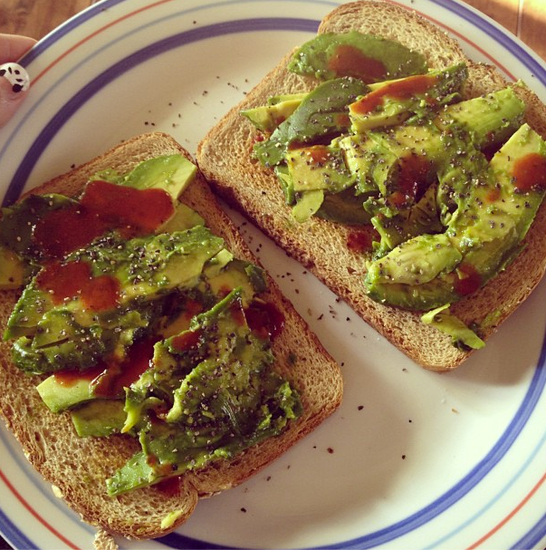
  • 1 slice of toasted P28 bread with 1/2 sliced avocado, hot sauce, garlic powder and fresh black pepper
  • 1 sliced tomato with several slices of buffalo mozarella and a drizzle of olive oil with fresh black pepper
  • Quest Bar
  • Protein shake made with unsweetened almond milk and 3-4 ice cubes (EvoPro Chocolate is my favorite)
  • pancake made with 1 scoop vanilla protein powder, 1/4 cup dry rolled oats, dash unsweetened almond milk and 3 egg whites
  • 4 ounces Hinoichi Firm Tofu scrambled with 3 egg whites, 1/2 cup brown rice, dash of low sodium soy sauce
  • 1 inch slice of vegan banana bread (one of these days I will share my secret recipe which I developed and which is moist and DELICIOUS!


The general guideline I use, besides selecting foods I truly love, is to make sure I get a decent amount of protein in each snack.  I also make sure that the fat in my meal comes from a healthy source.

I hope this dispels the rumor that snacks cannot be healthy, nutritious or filling.