Sit Up Straight!

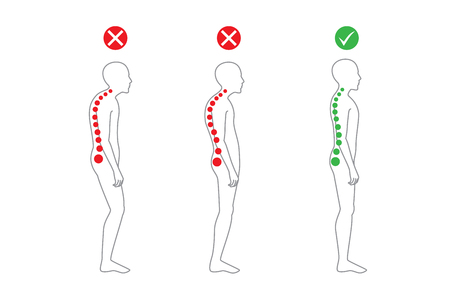
If you have a tendency to slouch in your seat, you need to pay attention! Poor posture has detrimental effects not only on the body, but also on one’s mood and general attitude.

Poor posture causes muscles in our neck and upper back to become overstretched, while causing other neck muscles and muscles in our torso and between our ribs to become cramped and overstimulated. The muscles in our chest become dominant, and pull our shoulders and upper arms inward and forward when we habitually adopt a stooped posture. This position puts a tremendous load on the diaphragm, and respiration suffers as a result. Even digestion becomes sluggish because the body cannot properly oxygenate and blood cannot circulate as well.

Poor posture can negatively impact your emotional state and confidence, not to mention how others perceive you. If you’re slouching right now, think of how you feel emotionally, mentally. Are you down, depressed? Now sit up straight and take a couple of nice, deep breaths. You should notice an immediate shift in attitude and mood.

Proper spinal alignment also has a positive effect on hormone levels. One Harvard study revealed that an erect posture, with shoulders back and spines nice and straight correlated with a 20 percent increase in testosterone levels and a 25 percent decrease in cortisol levels, while subjects who slouched experienced a 10 percent decrease in circulating testosterone levels and a 15 increase in cortisol.

Lastly, the way you carry yourself has immense bearing on how others perceive you. If you meet someone whose shoulders are pulled forward, your impression may be that the person isn’t the most motivated or energetic you’ve met. Yet if that person had a nice upright stance, with shoulders pulled down and back, your impression would probably be very different.

With some conscious effort, you can correct a hunched posture. Try this stretch at least a couple of times each day, and you will slowly begin to notice a correction in your posture. This is great for resetting the brain and creating more awareness of how you carry your body throughout the day.


AGAINST THE WALL

Stand with your back to a wall, feet together with heels touching wall, and arms hanging at your sides. Relax your shoulders, then pull them back so that they make contact with the wall. Stand in this position for 30 to 60 seconds, taking slow, deep breaths.
When you are ready to step away from the wall, keep your shoulders in the same position. Be aware of how you are breathing, and how your back feels when your shoulders are kept back
.

poor-posture

Nuzest

nuzest1

I was recently introduced to a company called Nuzest, which is committed to developing nutritional products which optimize people’s diets and put them on the right track to feeling their best.

The Clean Lean Protein is pea protein-based, allergen free, and a complete protein. It mixes beautifully, tastes great, and is highly digestible and absorbable, which sets it apart from the majority of proteins out there. Another outstanding feature of the Clean Lean Protein is the fact that it is one of the few alkaline proteins on the market, with a pH of 7.8. It’s paleo friendly too.

If you are looking for a top-notch plant-based protein, look no further than Clean Lean Protein!

Nuzest also has a greens product called Good Green Stuff which features over 75 ingredients for comprehensive nutritional support.

Go to nuzest.com to order these great products, and be on the lookout for my video review of Clean Lean Protein on YouTube later this month!

The Five Keys To Optimal Brain Health

Sharpens-Your-Brain

By: Dr. Stacey Naito – Physician and IFBB Pro

Even if your genetics put you at risk for developing dementia, there are numerous lifestyle and behavior adjustments which you can make in order to protect brain function and fight dementia. The five keys listed below are proven to improve brain health and keep your mind vital and sharp for decades.

1. MOVE YOUR BODY

Scientific research has proven that overall physical health is closely linked to brain health. Regular exercise aids in the maintenance of a healthy weight range, normal cholesterol levels, while also optimizing blood flow throughout the body and the brain and supporting the growth of new brain cells.

The benefits of physical health stem not only from regular exercise, but also from other good health practices. Support your brain’s health by doing the following:

• Exercise at least 30 minutes daily to relieve stress.
• Make sure to get between seven to eight hours of sleep each night.
• Refrain from using tobacco.
• See your doctor regularly.
• Maintain a healthy weight.

2. YOU ARE WHAT YOU EAT

Research studies indicate that diets which are low in saturated fats and cholesterol, and rich in polyunsaturated omega-3 fatty acids and nutrients like lutein and vitamin E, may have a protective effect on brain cells and overall brain health.

Brain-healthy dietary changes:

• Opt for healthy fats which are found in olive oil and fatty fish like salmon. Avoid saturated and trans fats.
• Consume a diet which incorporates milk, eggs, vegetable oils, nuts, whole grains, and dark leafy greens like spinach, all of which are rich in vitamin E. Vitamin E is an important nutrient which supports brain health. If you can’t get vitamin E from foods, you can take it in supplement form.
• Eat plenty of fresh fruits and vegetables, aiming for nine fist-sized servings each day. Select colorful fruits like cranberries, blueberries and tomatoes which are packed with powerful anti-inflammatory compounds known as polyphenols. Keep the skin on fruits and vegetables to maximize their nutritional benefits.
• Add lutein. Lutein is a potent antioxidant which is critical for eye and brain health. Foods which are rich in lutein include spinach, kale, turnip greens, collard greens, egg yolks, corn, and peas. You can also take lutein in supplement form.

3. EXERCISE YOUR BRAIN

Extensive research has proven that the brain continues to learn new skills and information throughout life, and benefits from frequent intellectual stimulation. Make sure to pursue new activities, education and games to challenge your mind. Read books to elevate your knowledge base.

How to stimulate your brain:

• Engage in regular sessions of a mental activity you enjoy, such as reading, word games such as crossword puzzles, or learning a foreign language.
• Get into a daily habit of learning a new word or fact.
• Master a new skill or subject each year.
• Manage stress and balance your energy by meditating. Meditation may help to reduce stress and body inflammation by soothing the vagus nerve, an important nerve which controls the body’s immune response.

4. NURTURE RELATIONSHIPS

Though we know that relationships with family and friends are key factors in a person’s happiness, regular social interaction promotes the formation of new brain cells and aids in brain repair. One study revealed that men and women who had the most social interaction had less than half the rate of memory loss as those who were the least socially involved. By visiting friends and family and being involved in community activities, you will protect brain health.

Social brain boosters:

• Spend time with your family and friends regularly, and make them a priority.
• Volunteer for an organization which surrounds a cause which you are passionate about.
• Work for as long as you can, and for as long as you feel motivated to do so.
• Join clubs and become involved in religious or spiritual activities which resonate with you.

5. BALANCE YOUR NEUROTRANSMITTERS

Brain function relies on important molecules known as neurotransmitters. Neurotransmitter levels affect mood, behavior, cognitive function, social function, digestion, sleep, weight regulation, and many other processes.

The problem with current society is that the vast majority of people have overly stimulated sympathetic nervous systems, which over time can drain the body of serotonin. The excitatory part of the nervous system dominates once the inhibitory neurotransmitters are depleted, resulting in anxiety and an inability to “wind down”. Eventually, even the excitatory neurotransmitters such as serotonin, epinephrine, norepinephrine and GABA are also depleted, and severe depression or chronic fatigue usually develop.

Conventional drugs cannot replenish these neurotransmitters, and in fact, tend to cause depletion of the neurotransmitters. This is the reason why some depression medications do not work on some individuals. The good news is that supplementation with amino acids can help to replenish deficient neurotransmitters.
How To Nourish Neurotransmitters:
• Eat a healthy diet. Neurotransmitter imbalance is aggravated by poor diet. Diets high in protein supply the brain with the amino acids it needs to replenish neurotransmitter levels.
• Consume branched chain amino acids to ensure a rich supply of neurotransmitter precursors.

REFERENCES
Neurotransmitter Assessment Brings Light to Management of Psychiatric Problems
Monday, 15 August 2005 00:59By Erik L. Goldman | Editor in Chief – Vol. 6, No. 3. Fall, 2005

Sugar And Cognitive Decline

hero-cookie-candy-bars
How can sugar be such a bad thing when it tastes so wonderful? Well, you might want to consider the consequences of indulging in sweet treats on a regular basis. Consume a diet high in processed sugar and you can almost count on experiencing a pronounced cognitive decline with advancing years. Numerous studies have revealed a decline in cognitive function after consuming processed carbohydrates. A 2011 study published in the British Journal of Nutrition examined habitual sugar intake in over 700 nondiabetic middle-aged subjects of Puerto Rican descent. The results showed that consumption of sugary beverages resulted in lower MMSE scores, while a higher total sugar consumption resulted in lower word list learning scores. Numerous other studies have shown a strong correlation between insulin resistance and lowered cognitive function.

sugary-drinks

As it is, cognitive function begins to decrease by our late 20’s with memory problems surfacing about ten years after that. Some individuals are already doomed to develop insulin resistance with increasing age, and this is magnified dramatically when processed carbohydrates are consumed on a regular basis. Processed carbohydrates such as refined sugar are absorbed more rapidly, causing a surge in insulin release. When this occurs frequently, the result is an increase in insulin resistance. Another consequence of increased blood sugar is decreased blood flow, which also inhibits cognitive function.

By no means am I saying that you have to COMPLETELY eliminate all sugar from your diet all the time (though it isn’t a bad idea). If you allow yourself the RARE indulgence, such as birthday cake, that is fine. The more insidious culprits are the sugary sodas, flavored yogurts and packaged crackers which tend to creep into regular diets. They may be tasty to many people, but they carry a heavy consequence. Knowing all of this, why would you risk “dumbing down” and increasing your dementia risk by eating sugary foods all the time? Now, that is just stupid.

Eliminating sugar from your diet is a great step towards improved health and mental clarity, but you should also make sure to get vital nutrients in on a daily basis. I recommend taking a multivitamin several times a day to optimize absorption, but most of the large brand multivitamin formulations out there are dosed once daily. In addition, the bigger brands do not have high bioavailability. What I love about SWAT Fuel’s .40 Caliber Multivitamin is that the nutrients in the formulation are highly bioavailable, and the supplement is taken three times daily. This is my personal choice of multivitamin, and yes, I do take it three times daily. This formulation is very clean and doesn’t cause the intestinal upset that some multivitamins can cause.

You can order .40 Caliber directly from the website: http://swatfuel.com/products.aspx
References:

Br J Nutr 2011 Nov; 106(9):1423-32.