What The Hell Is “If It Fits Your Macros” Anyway?

You have probably heard about the “If It Fits Your Macros” (or IIFYM) trend which has been increasing in popularity within the fitness and bodybuilding world. It’s not surprising that the concept was embraced and developed by people within the industry who were sick and tired of adhering to monotonous, restrictive meal plans in which the vast majority of foods were labeled as evil and forbidden. On a personal note, I jumped on the IIFYM bandwagon as well because I was fed up with avoiding certain so-called “bad” foods and also dealing with metabolic burnout from years of caloric restriction. What surprised me was the positive manner in which my body responded to taking in maintenance calories as opposed to constantly functioning at a caloric deficit which only served to slow down my metabolism.

The term macro refers to the principal nutrients which the body requires: protein, fat, carbohydrates. IIFYM dictates that as long as you fulfill the energy needs of your body, you can obtain calories from any food source. Let’s face it: your body needs a certain amount of protein, carbohydrate and fat, along with fiber and micronutrients such as vitamins and minerals in order to function optimally, but it doesn’t scrutinize every macronutrient gram as it is thrown into the body. On the other side of the coin, it is also important to bear in mind that most proponents of IIFYM do not consume large amounts of junk food either. As long as quality protein is consumed in adequate amounts to contribute to muscle growth and repair, along with micronutrients and dietary fiber to support normal digestion, it shouldn’t matter if a small percentage of caloric daily intake is obtained from discretionary or junk food items.

My personal opinion is that the quality of carbs still should come into play if you are employing an IIFYM approach. However, if the majority of carbs comes from quality sources such as oats, sweet potatoes and brown rice, a small amount of junk carbs (cookies, Pop Tarts) shouldn’t tip the balance too much. I am a fan of carb BACKloading and believe the largest insulin spike should come at night before you sleep, since you will be fasting for several hours.

I know some of you are still reading this with great skepticism and want to hold onto your six boring meals of tilapia and green beans every day, refusing to accept the concept of loosening the reins a bit and actually enjoying a variety of foods. IIFYM doesn’t mean that you lose control and eat whatever you want, whenever you want. What it DOES mean is that foods will no longer be forbidden or “bad”, and that you can actually consume them on a fairly regular basis as long as you keep track of your daily nutrient intake.

The main drawback of IIFYM is that you must track your food intake, which in a sense is another form of food fixation. However, there is a greater chance that you will meet your body’s nutrient needs than if you follow a cookie cutter, calorie restricted, orthorexia lover’s contest prep meal plan. When clean eating is followed 100% and the majority of food sources are banned, caloric restriction is almost inevitable. Such caloric restriction, when practiced for an extended period of time, will cause fat loss to stall and metabolism to slow down.

How about if you met your macronutrient needs without having to banish most foods from your diet? So many people in the world of fitness suffer from orthorexia, a psychopathological condition in which foods are labeled as “good” or “bad”, and in which individuals become socially isolated over their need to eat “correctly”. I have seen so many competitors struggle with an increasing difficulty in losing fat, so their coaches restrict their calories even more and ban more foods from their meal plans. Fruit, healthy fats, and healthy carbs are stripped away in an effort to lean the competitor out. Another thing to consider is what food deprivation does to people. If a food is “bad”, suddenly the temptation to indulge in that bad food is intensified.

You might want to consider trying IIFYM if you are in a slump with your current meal plan. You may feel like a hamster on a very boring and restrictive “clean eating” wheel in which you are only allowed to eat very specific foods in certain combinations. For some of you who have been doing this incessantly for years, you may have noticed over time that it has become more and more difficult to lose weight. Your meal plan is probably VERY rigid and VERY boring, consisting of foods you are probably so sick of that if you never had to eat them ever again, you would rejoice in the streets for days. Give IIFYM a try. You might be pleasantly surprised at how your body responds.
Weight Training Won’t Make You Big, Ladies!

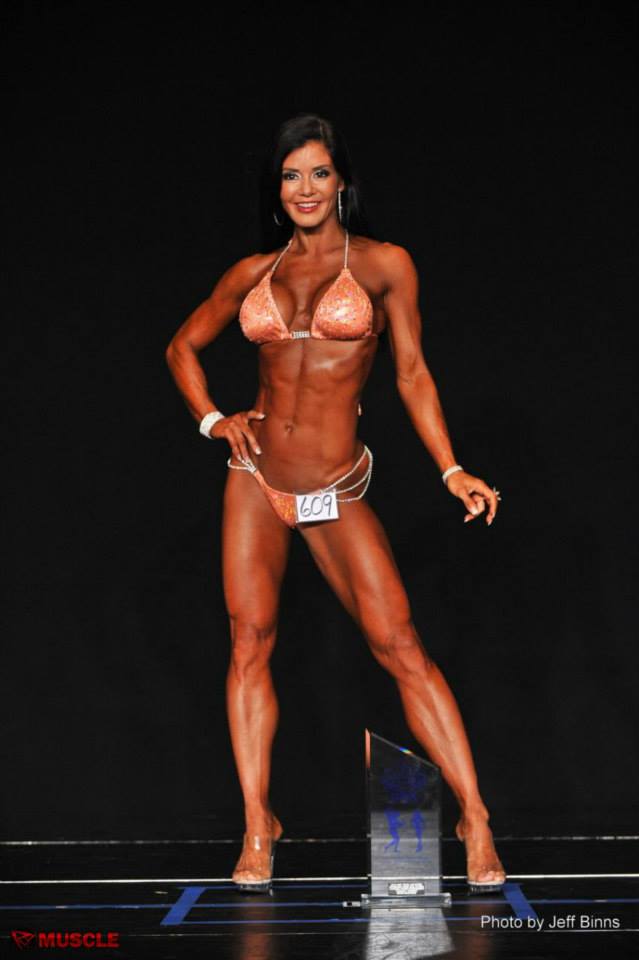
This was taken the day I won my IFBB Pro Card. I was training 4-5 hours a day at the gym, lifting heavy. I never got bigger than this, nor did I want to.

It still boggles my mind how many women are afraid to lift weights for fear that they will become huge and look like big, hulking men. How wrong they are! I will tell you right now that the answer to the question which serves as the title of this feature is, completely, unequivocally, NO. I often speak with female clients and patients of all ages who lament the fact that they cannot get the sculpted, lean bodies they covet, despite working out regularly. The problem stems from a couple of things:

1. They do not feed their bodies properly.
2. They do not lift weights, or if they do, they do not practice a lifting regimen that would bring about the physical changes they want.

I see ladies at the gym who will jump on a cardio machine for 20 to 30 minutes of easy cardio, then, if they had an indulgent night of eating or partying, they may extend their cardio sessions for a longer period of time at the same intensity. Before or after this, they may hit a few sets of uninspired exercises with light weights. These women barely break a sweat, yet they expect their bodies to transform. I’ve got news for you: that type of workout will ensure that you remain at the same level of fitness, and over time, you will see what little conditioning you may have plummet despite all your consistency.

It is a gross misconception that by lifting light weights and taking it easy at the gym, they will avoid getting bulky and will tone their muscles. Women are built differently than men, and simply do not have the testosterone levels necessary to build significant, bulky muscle mass. You need to challenge your body and create the muscle microtears necessary to build shapely, lean muscle. That means you need to lift heavier weights and break a sweat!

There are a multitude of benefits to lifting heavier weights, which I detail below.

CURVY, LEAN MUSCLE:

When you lift heavier weights, you will be rewarded with better muscle definition. Lifting very light weights will never challenge the muscles, so the muscles will never grow. I know I have scared some ladies, but think about a woman who has great muscle tone, but is still lean and feminine. A woman like that lifts weights that are heavy enough to spark muscle growth. If you follow suit, you will end up lean and more defined without being bulky.

GREATER OVERALL STRENGTH:

By lifting heavier weights, you will become stronger, and everyday activities will become easier to perform. You will also gain more structural stability from the greater muscle density which can protect your back and your joints.

IMPROVED BALANCE, COORDINATION AND POSTURE:

By improving muscle tone through weight training, you will enjoy better balance, greater overall coordination, and better posture.

IMPROVED BONE DENSITY:

Resistance training improves bone density by stressing the bones, thus triggering bone growth. This confers a protective effect against development of osteoporosis, especially in petite women.

HIGHER METABOLISM:

When you work out with heavier weights, you create tears in the muscles worked. When you do this, you expend a greater number of calories in order to repair those microtears.

LOWER BODY FAT:

Your body fat stores, particularly in the midsection, will be better utilized when you perform weight training with heavier weights.

PREVENTION OF MAJOR DISEASES:

Challenging weight training with heavier weights will reduce your risk of high blood pressure and heart disease. It will also lower LDL cholesterol while raising HDL cholesterol. In addition, your risk of diabetes and breast cancer will drop significantly.

BETTER IMMUNE SYSTEM FUNCTION:

Moderate exercise reduces stress, and by doing so, enables your body to produce more white blood cells to combat infection. In addition, the shift in attention from the troubles of the day while you are weight training will reduce the stress which can suppress your immune system.

GREATER WELL-BEING:

Vigorous resistance training boosts endorphin (natural opiates produced in the brain) levels, which create a sense of well-being. It will also stave off depression and produce a more restful sleep.

REDUCED PMS SYMPTOMS:

As stated previously, weight training is a terrific mood elevator and regulator. It also has a positive impact on hormone levels, increasing blood levels of estrogen, growth hormone, and testosterone. This counteracts the drop in estrogen and rise in progesterone which occurs right around the time before menstruation.

How To Be As Prepared As You Can Be for Your Big Run

Those of you who enjoy running should definitely read this article!

I am delighted to share the following article which was written by Jason Lewis. Jason Lewis is passionate about helping seniors stay healthy and injury-free. He created StrongWell.org to share his tips on senior fitness.

Mike Tyson once said “everyone has a plan until they get punched in mouth.” For those about to compete in a major race, the logic still applies. Everyone has a plan for their run until they come face to face with some of the harsh realities of race running. It can be hard, and you may face what feels like insurmountable obstacles. But if you prepare yourself properly, you can make sure you have the best chance possible to beat whatever punch – metaphorically speaking of course – comes your way. Here are some tips.

Know how to properly hydrate

If there’s one thing that any runner must know, it’s proper hydration. Dehydration lowers your blood volume and when you have lower blood volume your heart has to work extra hard to get blood (oxygen) to your muscles. Long story short, you can’t run your best when dehydrated. So, drink as much water as you can before, during, and after your runs?

Not exactly. Overconsumption can be an issue. For the most part, you should drink when you’re thirsty – no more, no less. Don’t overcomplicate things. Here’s a good resource on how to properly hydrate for certain types of runs.

One big question is whether water is good enough, or should you hydrate with sports drinks. Both are true, actually. Water is fine, but there are some benefits to Gatorade. Sports drinks contain carbs (in the form of sugars) and electrolytes (which you lose when you sweat) – two things your body needs when participating in demanding physical activity.

Find a routine and stick to it

You should develop a routine surrounding your runs and keep it the same through training and through race day. Eat the same thing before, during, and after runs. Wear the same shoes and clothing. Get the same amount of sleep the night before. Listen to the same music. This routine, if you keep to it, will help your body and mind stay strong through the tough stretches.

Know how to treat common running injuries

Running puts a good amount of stress on your body – whether it’s trail running, city running, or even practicing in a gym or on a treadmill. If you run a lot, you’re going to get hurt at some point. There’s no getting around it. It’s vital that you know how to deal with sprains, scrapes, blisters, and more. The shorthand guide is to always ice a sprain, stretch a cramp, pressure a wound, and leave a blister intact. For more on this, check here.

Know why you’re running

Sure, you’re running for the exercise and the feelings of personal accomplishment. The runner’s high isn’t an unwelcome byproduct. But in the end, running is about a mentality – even a spirituality for some. Focus on how running gives you a mental boost and makes you a stronger person: push yourself to achieve goals you never thought possible; give yourself a chance to find a stronger you through self-discovery; heal from a broken past; overcome seemingly impossible obstacles. As Jim Friedrich says in the article The Spirituality of Running, “What we do with our bodies manifests and expresses inner states, the sacred ground of our being. But bodily practices can also induce inner states.”

Whether you’re running for fun, a charity 5K, or a marathon – the principles of proper running preparation are pretty much the same. If you know how to hydrate, deal with inevitable injuries, and stick to what you know works, you will have a good chance at succeeding in whatever you do. “Success” is whatever you want it to be – only you can decide your own criteria.

Photo Credit: Pixabay.com

Proposed Event and Shoot Schedule For 2017

It looks like the remainder of 2017 will be very busy indeed. Here is my tentative event and shoot schedule for those of you who are interested. My work schedule as a physician is steady, so whenever I am in Los Angeles, I work Tuesdays and Wednesdays. Please go to http://www.drstaceynaito.com to schedule a medical appointment.

July 29th-30th: San Jose Fit Expo

early August: Shoot in San Francisco
mid August: Shoot in Tahoe
August 26th-27th: Anaheim Fit Expo

Monday, September 4th: Joe Wheatley’s Muscle Beach in Venice
second week of September: Shoot in Calgary
September 14th-17th: Olympia in Las Vegas
September 22nd-27th: Shoot in Utah

early October: Shoot in Indianapolis
mid October: Shoot in Reno
October 21st-22nd: Fort Lauderdale Fit Expo
late October: Shoot in Las Vegas

early November: Body Painting/Shoot in Phoenix
November 18th-19th: Ferrigno Legacy in Rancho Mirage

Weightlifting And Aerial Arts: A Winning Combo

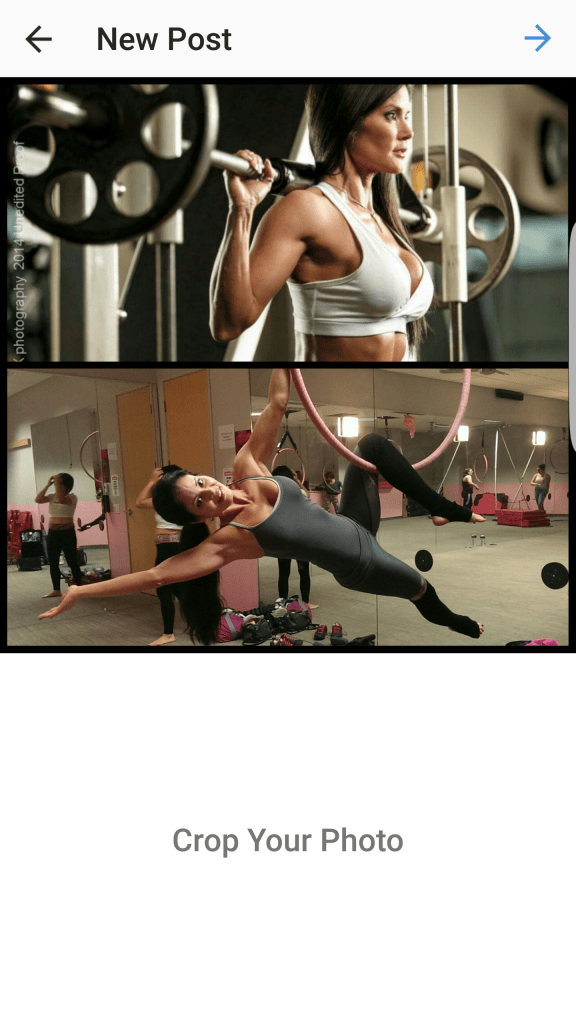
I am approaching the two year mark for my foray into aerial arts, and not only have I stuck with it, I have stepped up my game by taking classes several times weekly. After taking classes at a local aerial studio (www.PinkPoleParty.org) two to three days per week, I recently increased my frequency to four to five days weekly by adding other studios into the mix. Thanks to Classpass, I now have the opportunity to visit facilities all over the Los Angeles area and take classes with other instructors.

I have learned that my body prefers the rigidity of hardware, like lyra and aerial cube, over software like silks and hammocks, so I now confine my aerial activities to lyra, pole flight (a combination of silks and pole), and aerial cube. I am by no means an expert in any of my aerial activities, and I wish I had the incredible flexibility which I see in other aerialists. Yet I think I do decently well, and my upper body strength serves me well whenever I am up in the air.

I honestly think it’s a good idea to experience other studios and other instructors as a means to infuse variety into the regimen. Though I at times think I must be nuts to inflict such challenges on my poor joints and tendons, the overall physical and mental benefits of aerial movements make it all worthwhile. The conditioning aspects of aerial arts have enhanced the v-taper in my back, and have developed my delts nicely. My abdominal muscles are far stronger than they were before I began taking aerial classes, and I am also enjoying enhanced flexibility, balance and coordination from my airborne pursuits.

Weight training is still, and always will be, a staple for me. I faithfully hit the weights five to six days per week, and cannot imagine ever wavering from that schedule. At this point, I truly feel that weightlifting and aerial pursuits complement each other. Bodybuilding imparts strength, aids in preservation of muscle mass, guards against bone loss, and allows me to go into beast mode, while aerial arts provide an outlet for creative expression, challenge my body to become more elongated and flexible, and increase core strength.

If you are in a rut with weight training, why not consider adding aerial arts to your regimen? They are challenging, inspiring, and fun!

Afraid You’ll Succeed?

This is a reposted article which I wrote a while back.

Have you ever considered the possibility that you are standing in your own way when it comes to achieving success in your life? Yes, you heard me right. You might not have even known that there was such a thing as a fear of success, and if not, you probably aren’t aware of how a fear of success can sabotage your efforts at getting ahead and put you on a short course to failure.

Though we may crave success deeply and feel driven to set specific goals to get us there, we may cripple ourselves by harboring a feeling that we don’t deserve to have success, or we may question our own abilities. Self-defeating thoughts like, “What if I fail?”, or “Maybe I don’t deserve to be successful” may fester in one’s mind. However, some people entertain an even more frightening thought which is “What if I succeed?” and may be so paralyzed by that fear that they talk themselves out of pursuing a goal which gives them purpose, joy and passion. Suddenly, the lure of success sours in the face of one’s own fears.

The fear of success is more powerful than the fear of failure because the former can trap individuals into established patterns which are comfortable and which prevent the movement and growth necessary to achieve success. The road to success, after all, is unpredictable and forces people out of their comfort zones. It demands tireless efforts which at times may be stalled by roadblocks, and those obstacles may stack up or appear at critical times when the temptation to give up is immense. As daunting as such challenges are in the pursuit of success, they must be overcome if the goal is to be attained.

A fear of success can manifest as procrastination, whereupon projects may be put on hold and excuses made about why there is no time to complete them. Feelings of guilt may take hold if you happen to attain a certain level of success which eludes your peers, friends or family. You may worry that success will in some ways change you and your environment. Though you may lament your current situation and crave big changes that would serve as markers of success, you might find the idea of all those changes incredibly distressing.

The road to success is also often a lonely one in which you may feel lost, perhaps because others may not understand your journey, or because you may be traveling in uncharted waters with no one to lead the way or guide you. There may be haters who try to derail you from your master plan, which is usually a good sign since it is an indication that you are doing something which is perceived as a threat to your competition. You might also think that once you become successful, somehow that success won’t be sustainable and that the proverbial coach will turn back into a pumpkin.

Success will usually put a spotlight on you and you will get attention. Some of you may believe that the attention is great, but when all eyes are on you, scrutinizing every move you make, you may find that it is incredibly distressing. Success comes with responsibilities which may frighten and intimidate you, and you may feel incredible pressure to prove your worth as a result of that boost in visibility. Contrast that with being ensconced in a comfortable pattern which provides a predictable environment, and you can see why so many people chicken out and drop their big goals. Once you achieve your goal and become a success, the goal you were chasing after becomes irrelevant because the beast has been vanquished. The taste of victory may be sweet, but life may lose its meaning and purpose in the aftermath of such an accomplishment.

There are a number of things you can do to maintain your enthusiasm and focus while carving a path to success:

Keep sight of your goals and purpose – Not only is it important to write down specific goals so that you have a blueprint of how you will achieve success, it is also essential to review those goals regularly to make sure that you stay on track and remember the purpose which drives your efforts. I recommend reviewing your master goals list at least once a week.

Gain knowledge – If you sense that your knowledge base is lagging, invest in educational pursuits which will add credibility and push you towards your goals faster. For example, talk to experts in the field you are trying to excel in, read books on pertinent subjects and take courses. Remember that your heroes can eventually become your rivals if you learn from them and pattern your behavior after them.

Become inspired by the people who believe in you – Chances are that you have people around you (spouse, family members, coworkers, fans) who completely believe in you, are inspired by you, and want to see you succeed. Though you may feel pressure to succeed and a sense of obligation as a result of this, you can focus on the enthusiasm which they have for you and allow it to wash over you and motivate you.

Keep a gratitude journal – It can be so easy to complain about one’s situation and play the victim when things aren’t going as planned, but such behavior only does harm when trying to stay motivated in achieving goals. Shift the focus instead onto all the wonderful things, people and other blessings you have in your life and allow them to fortify your resolve to move forward.

“How Come You Still Work Out?”

Last month, I ran into a fellow aerial arts classmate whom I hadn’t seen for a while. She and I engaged in pleasant chat for a couple of minutes, and she revealed to me that she had to take some time off from aerial due to adhesive capsulitis (frozen shoulder). I told her that the rest would serve her well, and that if she did gentle stretching and range of motion work, that she would be able to ease back into aerial before too long.

Then she asked me if I was still lifting weights at the gym, to which I replied that I was indeed still lifting 5 to 6 days per week. She reacted with surprise and stated, “Why do you still work out at the gym when you don’t compete anymore? I don’t understand! You don’t need to exercise at the gym!” It was so strange for me to hear her reaction, because she had just finished telling me about her desire to return to a form of exercise which she loved. Well, I too love lifting weights. I work out because I love it. I train with weights to maintain bone density and muscle mass. I lift so that I can have escape from the stressors in my life. And though I don’t do the crazy double workouts I used to perform right before an event, I still faithfully show up to the gym five to six days per week, every week.

Working out at the gym isn’t something I do to achieve a certain goal, but rather, to maintain what I already have, to combat the aging process, and to provide ME time. I’ve lifted weights for THIRTY YEARS and I will not stop until I am six feet under. In addition to weightlifting, my love of aerial arts isn’t likely to dissipate anytime soon either.