How To Remove Self-Tanner After A Shoot Or Show

http://www.rxmuscle.com/blogs/the-look-skin-attitude-attire-and-persona/3216-how-to-remove-self-tanner-after-a-shoot-or-show.html

Originally published on mensphysique.com on Monday, 23 May 2011

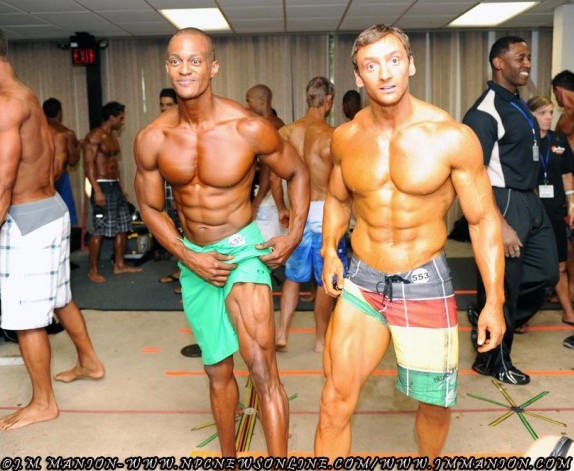
Many competitors and models ask me how to best remove self-tanner. Perhaps they must be re-sprayed for another show or shoot, or they are tired of the blotchy manner in which the self-tanner is wearing off and would rather remove it completely. The most effective means I have found to remove self-tanner of any type (Mystic, Jan Tana, Pro Tan, LiquidSunRayz) is a method that Trae Kidd passed onto me last year.

You will need a terry washcloth, a bar of soap (this doesn’t work with liquid soap), and about ½ cup to 1 cup of baking soda. Wet the washcloth and suds up the bar of soap to create a nice lather. Then sprinkle about a tablespoon or so of baking soda onto the washcloth, work it into the terry a bit, then start scrubbing your body with this mixture. Pay special attention to the back of the neck, the underarms and wings of the lats, crosscuts on the abs, elbows, gluteal folds, fronts and backs of knees, ankles and feet. You will definitely need to repeat this sudsing technique on the washcloth, adding more soap and baking soda each time.

With this method I usually manage to remove a good 80% or more of the product with one washing. This method also serves as a decent prep for the next spray tan since it is an effective exfoliator.

The Hair Issue: Getting To The Root Of The Problem

http://www.rxmuscle.com/blogs/the-look-skin-attitude-attire-and-persona/3174-the-hair-issuegetting-to-the-root-of-the-problem.html

(Originally published on mensphysique.com on Monday, 16 May 2011)

Most competitors will resort to some form of hair reduction or removal in order to enhance muscle definition. But if this is new territory for you, you may be wondering which method works best for you. Let’s review some popular hair removal methods:

· Shaving – This is probably the most common form of hair removal since it is cheap and easy to do. However, if you are embarking on this form of hair eradication on your body, you may not be prepared for the possible nicks, ingrown hairs and razor rash you may develop. And unless you have a fancy long-handled razor, you can forget about shaving your back without some assistance from an often reluctant assistant.

· Depilatories – These creams are relatively easy to use, simply requiring application, a few minutes for the chemicals to dissolve the hair, and wiping or rinsing off the product. However, they can be messy, and some people can get severe irritation from the chemicals, especially when applied to the nether regions.

· Waxing – This is an extremely effective form of hair removal, but the hair must be long enough (usually about 3/16” or more) for the wax to grab onto. When hair regrowth occurs, the hairs are much finer. However, waxing can make you writhe and scream like a schoolgirl, as those of you who saw the famous waxing scene in “40-Year-Old Virgin” may recall.

· Electrolysis – This is a permanent form of hair reduction in which individual hairs are treated. This can be time consuming and expensive, especially when large surface areas are involved.

· Lasers – Another form of permanent hair removal, lasers derange actively growing hair follicles. This can be costly, and requires several treatments (usually 6 to 8 in a specific time interval) in order to achieve complete results. But remember folks, results are permanent. Keep in mind that certain areas of the body are much more sensitive to laser energy, leaving you squirming in a manner similar to waxing.

· Clipping – This is the easiest means by which to reduce the amount of body hair but can look a bit strange on men who have very dense patches or hair growth with very dark hair in said areas.

I hope this summary of hair removal techniques will be helpful for those of you who are trying to figure out the best method.

Links To All My MensPhysique.com articles

It has been an honor and a blessing to write articles for MensPhysique.com! I have written 44 articles between April 2011 and December 2014. Check all of them out via the links which I have provided here:

What Do You Bring To The Table? Know Your Worth
http://www.rxmuscle.com/blogs/the-business-fitness-modeling-and-showbiz/11909-what-do-you-bring-to-the-table-know-your-worth.html

Are You A Sponsored Athlete Or An Unpaid Salesperson?
http://www.rxmuscle.com/blogs/the-business-fitness-modeling-and-showbiz/11790-are-you-a-sponsored-athlete-or-an-unpaid-salesperson.html

The If-It-Fits-Your-Macros Trend
http://www.rxmuscle.com/blogs/the-kitchen-eating-strategies/11653-the-if-it-fits-your-macros-trend.html

Supplements You Should Be Taking Based On Your Age
http://www.rxmuscle.com/blogs/the-lab-supplement-school/11503-supplements-you-should-be-taking-based-on-your-age.html

Of Crossfit Boxes And Boxy Midsections
http://www.rxmuscle.com/blogs/the-training-room-workouts-and-tips/11345-of-crossfit-boxes-and-boxy-midsections.html

Misconceptions About The Men’s Physique Division
http://www.rxmuscle.com/blogs/the-news-the-newest-in-mp/11258-misconceptions-about-the-men-s-physique-division.html

Creatine-Rich Foods Or Creatine Supplements?
http://www.rxmuscle.com/blogs/the-lab-supplement-school/11157-creatine-rich-foods-or-creatine-supplements.html

Worth Your Weight In Salt: Why Some Dietary Salt Is Good
http://www.rxmuscle.com/blogs/the-kitchen-eating-strategies/10971-worth-your-weight-in-salt-why-some-dietary-salt-is-good.html

One Step Forward Two Steps Back: Fighting Muscle Loss As You Age
http://www.rxmuscle.com/blogs/the-news-the-newest-in-mp/10590-one-step-forward-two-steps-back-fighting-muscle-loss-as-you-age.html

Sleep Deficit And Muscle Loss
http://www.rxmuscle.com/blogs/the-news-the-newest-in-mp/10329-sleep-deficit-and-muscle-loss.html

What To Do After You Have Slayed The Dragon
http://www.rxmuscle.com/blogs/the-life-inspiration-and-dedication/10154-what-to-do-after-you-have-slayed-the-dragon.html

How To Avoid Post-Contest Rebound
http://www.rxmuscle.com/blogs/the-training-room-workouts-and-tips/10049-how-to-avoid-post-contest-rebound.html

Social Media: A Double-Edged Sword
http://www.rxmuscle.com/blogs/the-business-fitness-modeling-and-showbiz/9773-social-media-a-double-edged-sword.html

Fit For Stage: There Is A Difference
http://www.rxmuscle.com/blogs/the-life-inspiration-and-dedication/9699-fit-for-stage-there-is-a-difference.html

Slow Cooker Sweet Potatoes
http://www.rxmuscle.com/blogs/the-kitchen-eating-strategies/9393-slow-cooker-sweet-potatoes.html

That Ever-Elusive Pro Card
http://www.rxmuscle.com/blogs/the-life-inspiration-and-dedication/8988-that-ever-elusive-pro-card.html

Natural Libido Enhancers
http://www.rxmuscle.com/blogs/the-lab-supplement-school/8399-natural-libido-enhancers.html

The Incredible Edible…
http://www.rxmuscle.com/blogs/the-kitchen-eating-strategies/7870-the-incredible-edible.html

The Many Benefits Of Cinnamon
http://www.rxmuscle.com/blogs/the-kitchen-eating-strategies/7644-the-many-benefits-of-cinnamon.html

What Is 7-Keto?
http://www.rxmuscle.com/blogs/the-lab-supplement-school/7523-what-is-7-keto.html

The Importance Of Digestive Enzymes
http://www.rxmuscle.com/blogs/the-lab-supplement-school/7476-the-importance-of-digestive-enzymes.html

Fenugreek Enhances Performance
http://www.rxmuscle.com/blogs/the-lab-supplement-school/7362-fenugreek-enhances-performance.html

Why Zinc Is So Important
http://www.rxmuscle.com/blogs/the-lab-supplement-school/7294-why-zinc-is-so-important.html

Why You Should Add Curcumin To Your Diet
http://www.rxmuscle.com/blogs/the-lab-supplement-school/7143-why-you-should-add-curcumin-to-your-diet.html

Should You Block Cortisol Production?
http://www.rxmuscle.com/blogs/the-lab-supplement-school/6894-should-you-block-cortisol-production.html

High Fructose Corn Syrup
http://www.rxmuscle.com/blogs/the-lab-supplement-school/6661-high-fructose-corn-syrup.html

Protein Denaturing And What It Means For You
http://www.rxmuscle.com/blogs/the-lab-supplement-school/6456-protein-denaturing-and-what-it-means-for-you.html

Collagen Controversy: Is This Protein For You?
http://www.rxmuscle.com/blogs/the-lab-supplement-school/6215-collagen-controversy-is-this-protein-for-you.html

Should You Be Afraid Of Water Bottles And Cans?
http://www.rxmuscle.com/blogs/the-lab-supplement-school/6078-should-you-be-afraid-of-water-bottles-and-cans.html

What To Bring To Your First National Show Besides Your Physique
http://www.rxmuscle.com/blogs/the-news-the-newest-in-mp/5580-what-to-bring-to-your-first-national-show-besides-your-physique.html

The Fledgling
http://www.rxmuscle.com/blogs/the-news-the-newest-in-mp/5364-the-fledgling.html

To The New Model On The Block
http://www.rxmuscle.com/blogs/the-business-fitness-modeling-and-showbiz/5254-to-the-new-model-on-the-block.html

Picture Perfect With The Ladies: How To Model With A Female
http://www.rxmuscle.com/blogs/the-business-fitness-modeling-and-showbiz/4796-picture-perfect-with-the-ladies-%E2%80%93-how-to-model-with-a-female.html

Selecting Board Shorts For The Stage
http://www.rxmuscle.com/blogs/the-look-skin-attitude-attire-and-persona/4343-selecting-board-shorts-for-the-stage.html

Why You Should Build A Show Strategy
http://www.rxmuscle.com/blogs/the-life-inspiration-and-dedication/4258-why-you-should-build-a-show-strategy.html

Dry Skin Is Not Sexy
http://www.rxmuscle.com/blogs/the-look-skin-attitude-attire-and-persona/4101-dry-skin-is-not-sexy.html

Shaving Basics
http://www.rxmuscle.com/blogs/the-look-skin-attitude-attire-and-persona/3995-shaving-basics.html

Ingrown Hairs – Ouch!
http://www.rxmuscle.com/blogs/the-look-skin-attitude-attire-and-persona/3426-ingrown-hairsouch.html

Taming Of The Brow
http://www.rxmuscle.com/blogs/the-look-skin-attitude-attire-and-persona/3329-the-taming-of-the-brow.html

Holding Onto That Faux Bronzed Glow
http://www.rxmuscle.com/blogs/the-look-skin-attitude-attire-and-persona/3217-holding-onto-that-faux-bronzed-glow.html

How To Remove Self-Tanner After A Shoot Or Show
http://www.rxmuscle.com/blogs/the-look-skin-attitude-attire-and-persona/3216-how-to-remove-self-tanner-after-a-shoot-or-show.html

The Hair Issue: Getting To The Root Of The Problem
http://www.rxmuscle.com/blogs/the-look-skin-attitude-attire-and-persona/3174-the-hair-issuegetting-to-the-root-of-the-problem.html

My Bio
http://www.rxmuscle.com/contibutors/3032-stacey-naito-do-aobfp-mensphysiquecom-blogger.html

Are You A Sponsored Athlete Or An Unpaid Salesperson?

Original post can be found here:

http://www.rxmuscle.com/blogs/the-business-fitness-modeling-and-showbiz/11790-are-you-a-sponsored-athlete-or-an-unpaid-salesperson.html

Are you an athlete
Most sports supplement companies and other fitness related companies aggressively promote their products through athletes who can sing the praises of their benefits. Who could be better at describing the efficacy of a product and how it enhances training or recovery than an athlete who not only already uses those types of products, but someone who has a following and who can convince new customers to purchase from the company which they represent?

Here’s where things get problematic. The pool of bodybuilding and fitness athletes is pretty massive, and the waters are teeming with athletes who are anxious to get their so-called “big break”. As a result of this, savvy marketing teams from fitness related companies often sweep up these individuals because they are enthusiastic and can propel a brand’s exposure. All the company needs to do is to offer some free product to the athlete and provide instructions on how to use social media to get the word out that these products exist. Then the athletes post images of themselves holding or using products, and add affiliate codes so that any orders which are generated through that athlete’s post are credited to the athlete. This can be a great way for an athlete to make some extra money while competing or chasing down fitness related gigs and projects.

It is important to bear in mind that such athletes really aren’t sponsored, but are instead unpaid salespeople who provide free advertising and generate sales via social media posts which direct followers to product websites. Yes, they get commissions if they have affiliate codes, but such commissions are nothing to write home about unless someone is really blowing the roof off in sales. This is in stark contrast to a true athlete sponsorship, in which an athlete is paid to represent the brand as a brand ambassador. The sponsored athlete is chosen for his or her physique, performance history and awards, facial good looks, charisma, enthusiasm, and often the size of his or her social media following. Usually a sponsored athlete signs a contract which stipulates that he or she will receive a certain amount of free product, and in most cases will also receive financial compensation which is either paid via a monthly salary or via a contest stipend. Though the athlete usually agrees to a set requirement or recommendation to provide social media posts for the company at regular intervals, the company pays the athlete for his or her trouble. Personal appearances and events are also part of the sponsored athlete agreement and clearly described in the written contract. The sponsored athlete is compensated for use of his or her likeness on advertising materials as well.

Obviously it is a far better deal to become an official sponsored athlete for a company. Otherwise, you are just providing free advertising and cheap labor in exchange for products which are sold at a significant markup from what they are manufactured at. If you post a selfie with product that somehow goes viral, the company will certainly love the boost, but I doubt you will ever see any type of compensation if you aren’t a sponsored athlete, which means you provided your likeness for free. The truth of the matter is that there are only a handful of athlete sponsorships to go around, with a massive surplus of athletes vying for those spots. The athletes who end up getting sponsorships stand out from the crowd in some way, or fit a brand’s look and philosophy so well that it makes sense to bring them on board to represent a brand. The rest of the athletes must navigate through all the companies out there to try to find an arrangement which benefits them in some way. Sometimes it is easy to sell a product, usually because the athlete enjoys using it so much that he or she doesn’t mind providing free advertising or labor.

Sometimes a supplement company will launch a contest which is based on social media posts. One company, which shall remain unnamed, launched a huge campaign this year that was patterned on this idea, and decided to award 5 of the entrants $10,000. Sure, that sounds like a good chunk of change, but if there were 8,000 entrants, then 7,995 walked away with nothing. At the end of the campaign, the company got tons of free advertising and all those hashtags they requested for “tracking” purposes also propelled their brand in a huge way. To be honest, this is a brilliant marketing tactic, but not the best move for the majority of athletes who participated. I have also seen companies launch contests in which entrants must purchase a product, then post on social media with hashtags to enter the contest. This is another form of free advertising for the company, a great way to generate sales, a brilliant means for them to boost exposure, and yet another way for athletes to be suckered into doing free advertising. I don’t see much harm in taking part in such a contest if you truly love a product and want to proclaim it, but just remember that it works wonders as an advertising tool for the company without any benefit for you.

One thing I will never advocate is purchasing products, even at a steep discount, while also representing a brand as one of its “sponsored” athletes. If you are asked to pay for a product while also providing free advertising on social media channels, run quickly in the other direction! Basically you are dealing with a company which doesn’t value you enough as an athlete to provide compensation for your advertising efforts. This isn’t the same as purchasing a product, finding out you like it, THEN posting something on social media which lets people know how much you like it. I know of several athletes who had done this, which sparked the attention of the company which manufactured the product, eventually leading to a sponsorship deal. But do not, I repeat, DO NOT PAY for products as a way to get false sponsorship for a company.

It isn’t a bad thing to work as an unpaid salesperson in the fitness industry as long as you know your place and value. Once your following builds, the smart thing to do is to leverage your visibility into getting an athlete sponsorship. The main thing is to make sure that you don’t get taken advantage of in the process.
Misconceptions About The Men’s Physique Division

Please read my latest article for MensPhysique.com! Original post can be found by clicking on this link:

http://www.rxmuscle.com/blogs/the-news-the-newest-in-mp/11258-misconceptions-about-the-men-s-physique-division.html

The Men’s Physique Division has stirred up tremendous interest and a decent amount of controversy within the IFBB and NPC, with a plethora of fans as well as a camp of haters. Perhaps the most exciting thing about the inception of this division was the door of opportunity which opened for men who were interested in competing on a bodybuilding stage but who did not want to sign up for the rigors of a competitive bodybuilder’s regimen. As expected, the floodgates opened and the Men’s Physique Division became wildly popular, not just among competitors within the division, but also among its ever-growing fan base worldwide. Sadly, there have been naysayers who have popped up with scathing criticism of the division which echoes the main misconceptions about the division.
Here is a breakdown of the three main misconceptions which have been circulating since the division was established in 2011.

“The Men’s Physique Division should be renamed Men’s Bikini.”

Ever since the Men’s Physique Division (MPD) was established, insults began flying about how it had no business sharing the stage with Bodybuilding. The ideal Men’s Physique body is supposed to be distinctive from a bodybuilder’s body, balanced with a pronounced v-taper, and without the excessive muscularity that is so celebrated in Bodybuilding. The more abbreviated posing which characterizes the MPD, along with the specific poses, the beach god look, and the model type good looks which many competitors possess have prompted many bodybuilders and fans of old school bodybuilding to compare MPD to a beauty pageant. I will admit that there have been rare instances in which I have seen MPD competitors exaggerate their posing in such a way that it becomes a bit comical and somewhat pageant-like, but such instances are isolated. I think it’s important to remember that MPD competitors train HARD, and the best in the industry are very well respected athletes. It is outrageously rude to make comparisons of these tremendous athletes to pageant contestants.

“Men’s Physique (MP) guys don’t have wheels.”

MP Quads
The regulation garment which was chosen for the MPD, the board short, was selected primarily to evoke the idea that the competitors were supposed to look like they had just walked off the beach, embodying the ideal buff beach body. However, this particular short style is cut in such a way that it always hides the quads and hams, so it is often impossible to tell whether a competitor has well developed legs or is hiding toothpick legs under all that fabric. My experience has been that I have seen quads on many MP competitors which rival the wheels of seasoned bodybuilders, blowing the idea that MP guys have stick legs completely out of the water. Many MP guys lift heavy, and they certainly do train legs! Every once in a while you might see an MP guy with spindly legs, but the division certainly does not deserve to be picked on about leg development. It has in fact been suggested by many to implement a shorter cut onstage in order to reveal the quads and hams. Perhaps once that occurs, MP competitors will finally be able to dispel this rumor.

“All Men’s Physique guys are divas or gay.”

First of all, anyone who is narrow-minded enough to make a blanket assessment of the sexual orientation of an entire division of competitors simply because many of them are visually very appealing is completely ignorant. It seems like the haters who make such comments are mostly envious because the MP guys are the ones who usually turn heads and make the ladies swoon. As a matter of fact, many women, including me, were ecstatic when the MPD was established because we as spectators finally had our eye candy. Many MP competitors easily fit the expression “pretty boy” due to their Abercrombie & Fitch boyish good looks. Honestly, I don’t see how that is a bad thing! Though I have observed a high maintenance and diva-esque attitude in some MP competitors, that type of attitude by no means pervades the division. Let’s face it: the world of competitive bodybuilding can sometimes spark up a picky, persnickety attitude in competitors regardless of gender or division, and that certainly includes competitive male bodybuilders, who can be the biggest pains in the ass because their regimens are so extreme.

It has been exciting to watch the MPD grow from the new kid on the block who got picked on, to now being a well-respected division which has enhanced the sport of competitive bodybuilding. Not only has the MPD brought in massive revenue for the NPC and IFBB, it has brought competitive bodybuilding to the mainstream with its more attainable body silhouette.

Creatine-Rich Foods or Creatine Supplements?

Original post can be found here:

http://www.rxmuscle.com/blogs/the-lab-supplement-school/11157-creatine-rich-foods-or-creatine-supplements.html

Creatine has been established as an important component of maximal muscle growth, strength and energy in the world of weightlifting, hence its almost ubiquitous presence in pre-workout formulations. Though creatine can be formed in the kidneys and liver from arginine, glycine and methionine, weightlifters should supplement this production, either by taking powdered creatine supplements such as creatine monohydrate, or by consuming large amounts of creatine-rich foods.

Beef is hands down the richest food source of creatine, with two grams per pound of meat. If you are opposed to the idea of eating red meat, alternative sources of creatine are found in poultry and in fish such as salmon and tuna. Those of you who are vegetarian or vegan will be hard pressed to pull sufficient creatine from foods and will have to supplement via synthetic forms such as creatine monohydrate, micronized creatine, or creatine citrate.

You may be able to consume massive amounts of meat and supply your body with the 3 to 5 grams of creatine which are considered the norm in bodybuilding circles, especially if you are adamant about obtaining all of your performance substances from whole food sources, but that would require massive dedication and a lot of meat chewing! However, if you are in a building phase, then I truly believe that you are doing yourself a disservice if you are trying to get all your extra creatine solely from food sources.
muscle guy
The original form of creatine which was used by bodybuilders and which is still very much in use today is creatine monohydrate. This is the cheapest form of creatine, but it is poorly absorbed, which explains its tendency to cause bloating and digestive upset. Another negative aspect of creatine monohydrate is that some people don’t respond at all to it. If this is the case for you, then you might want to explore the different forms of creatine which are out on the market. The two best forms of creatine, in my humble opinion, are:

1. Micronized creatine – The micronized form of creatine features smaller molecules, so absorption is significantly better, eliminating the issus of bloating and diarrhea which are often caused by ingesting the non-micronized form of creatine monohydrate.

2. Creatine ethyl ester – This is by far the most absorbable form of creatine, but more expensive than the monohydrate form. You can find this substance in capsule form.

Another form of creatine which is at times used in some of the more popular pre-workout formulas is creatine nitrate. The extra NO2 makes creatine water soluble and also lends a decent pump to workouts. However, when purchased alone, creatine nitrate is costly and thus is not one of my recommendations.

If you want to enhance your creatine intake, consider food sources in combination with supplement sources so that you can obtain an optimal amount which your body is able to utilize.

One Step Forward, Two Steps Back: Fighting Muscle Loss As You Age

Original post can be found at:

http://www.rxmuscle.com/blogs/the-news-the-newest-in-mp/10590-one-step-forward-two-steps-back-fighting-muscle-loss-as-you-age.html?hitcount=0

The sad truth about getting older is that it becomes more and more difficult to hold onto the plentiful lean muscle mass and low body fat we tend to take for granted during our younger years. An inevitable consequence of growing older is the increasing struggle to maintain lean muscle mass as the years pass. Even if you have been blessed with a genetic propensity for the optimal balance of lean tissue and body fat, be prepared to work harder over time to keep what you have. This also means that master’s competitors usually have to train harder to build muscle mass, and are also more sensitive to dietary fluctuations and digressions than their younger counterparts.

The good news is that there are steps which can be taken to combat the unfavorable shift in body composition which makes its appearance after one’s mid-thirties. Perhaps the MOST important intervention which the vast majority of you are already practicing is weight training. You can continue to challenge yourself and lift heavy, but you might want to consider adding glucosamine and turmeric to your supplement regimen to protect the joints and minimize inflammation. Another adaptation in the weight room which older athletes respond especially well to is unilateral training. Unilateral movements improve balance and coordination and make it impossible to correct strength imbalances.

Another way to naturally boost the body’s ability to combat aging which you are most likely already practicing is to consume adequate protein. When protein is consumed, a steady stream of glucose is released via glucagon without spiking insulin levels in the body. Conversely, a diet low in protein but high in carbohydrates results in high levels of insulin, which over the course of time can result in widespread inflammation, diabetes, and obesity. Surprisingly, the protein needs of people from middle age on (40’s and over) increase as a result of diminished protein synthesis in the aging body. Protein intake must be increased in order to offset the deficiency. If you are already weight lifting regularly and taking in sufficient protein, you may want to consider boosting your intake of glutamine and branched chain amino acids, particularly leucine. These building blocks help to optimize the body’s ability to utilize dietary protein to build new muscle and repair damaged muscle fibers.

Though animal sources of protein are excellent options for people of any age, whey protein in particular is a remarkable protein source in older people. It is highly absorbable, contains all 18 amino acids, immunoglobulins and lactoferrin, and all the building blocks for a powerful antioxidant called glutathione. Glutathione deficiency is linked to Alzheimer’s disease, cardiovascular disease, arthritis, asthma and cancer, and because of this, it is considered a key substance in combating the process of aging. Natural glutathione production in the body declines with age, but with whey protein on board, the amino acids necessary for glutathione production are supplied to the body and optimal levels can be attained as a result.

Though athletes and competitors are aware of the health and muscle building benefits of whey protein, I am astonished by how it is not utilized nearly enough by the average person. All too often I see patients who regularly skip meals and eat fast foods and other processed foods, and who assume that whey protein is only for athletes. If you are an average person who wants to change poor eating habits and optimize cellular function, then you need to boost protein intake and add whey as one of your protein sources. You are doing yourself a disservice if you insist on eating junk carbs like simple sugars and processed foods, skipping meals, and consuming insufficient protein, especially if you are over the age of 35 and trying to fend off disease and aging.

If you are proactive and consistent about taking the necessary steps to battle age-related muscle loss, you will reap the benefits of better health and vitality and will rival those half your age with a muscular physique to be envied.