Naturally Gray

123rf.com image
yaroslavastakhov Image ID158276168

When the COVID-19 pandemic swept across the world in early 2020, it disrupted nearly every aspect of daily life—including personal grooming routines. For many women, the closure of hair salons meant they could no longer maintain their regular appointments for root touch-ups or color treatments. Suddenly, the choice to hide gray hair was taken out of their hands. For some, this was initially a distressing situation, especially in a society that has long associated gray hair in women with aging, invisibility, or a lack of vitality.

However, something unexpected happened. As the weeks turned into months, and the pandemic dragged on, many women began to embrace the gray. What started out as a necessity slowly evolved into a movement. Social media played a huge role, with women posting photos of their “silver linings” and sharing their journeys of going gray—roots growing out, transitions in color, and emotional realizations along the way. Hashtags like #grombre (gray + ombré), #grayhairdontcare, and #silversisters began trending, creating a virtual support network that celebrated authenticity over convention.

For many women, going gray became symbolic of something much bigger. It represented a rejection of unrealistic beauty standards and the freedom to age on their own terms. It was an act of self-acceptance and empowerment. Some women shared how liberating it felt to stop covering something that was natural and beautiful. Others described how they felt more themselves than they had in years—bold, honest, and unfiltered.

This shift was about more than hair color; it was about autonomy. In a time of uncertainty, women reclaimed control over something deeply personal. They no longer felt pressured to hide a part of themselves just to conform to societal norms. As a result, what started as a temporary break from salon visits became, for many, a permanent transformation—not just in appearance, but in mindset.

As for my personal hair color journey during the pandemic, I was already so accustomed to coloring my gray roots at home every two weeks that it did not bother me one bit that I wasn’t able to visit a salon. In addition, the hairdresser who had been doing my hair during that time worked out of her home, so the interruption in professional hair care services was very brief for me. However, I was so inspired by the women who were daring enough to go naturally gray that I briefly considered traveling down the same path.

What stopped me was the realization that any lighter hair color looks truly bizarre on me, whether it be blonde, gray or white. I have verified this over the years by donning blonde and platinum white wigs, only to cringe in horror. Last month, I applied a gray hair color paste on my hair and took photos, then washed the stuff away. One friend thought it looked cool and suggested that I sort of resembled Storm, but that certainly wasn’t enough for me to consider leaving the temporary color in my hair for more than a few minutes.

Here I am with a temporary gray hair paste

If you have ever considered going naturally gray, I have listed pros and cons of such a decision below.


🌟 Pros of Going Naturally Gray

1. Authenticity and Self-Acceptance
Allowing gray hair to come in can be a bold statement of self-acceptance and confidence. It signals a refusal to conform to ageist beauty standards and an embrace of one’s natural evolution.

2. Healthier Hair
Frequent coloring, especially with harsh dyes, can damage hair over time. Going gray allows the hair to recover its natural texture, strength, and integrity.

3. Financial Savings
Salon visits for color treatments can be costly. Eliminating this routine saves both money and time—no more constant root touch-ups.

4. Time and Convenience
Gray hair maintenance often requires less frequent upkeep compared to colored hair. Once the transition is complete, you’re no longer on a schedule.

5. It Can Look Stunning
Natural gray or silver hair can be incredibly striking. When properly cared for, it can be glossy, elegant, and eye-catching. Many women find that it enhances their features and gives a sophisticated, modern edge.

6. Social Shifting
There’s a growing movement encouraging women to defy beauty norms. Embracing gray can connect you to a supportive community and help challenge outdated societal expectations.


⚠️ Cons of Going Naturally Gray

1. Societal Judgment and Ageism
Women are often judged more harshly than men for visible signs of aging. Going gray can provoke unsolicited comments or subtle discrimination, especially in professional environments.

2. Confidence Rollercoaster
The transition period—when roots are growing in—can be tough. Many women feel awkward or less attractive during this in-between phase.

3. Maintenance Doesn’t Disappear Entirely
While you’re not dyeing your hair anymore, gray hair often has a different texture and can be more coarse, wiry, or dry. It may require new types of products to look its best, including purple shampoos to combat yellowing.

4. Perceived Loss of Youthfulness
Some women feel that gray hair makes them look or feel older than they are, and may worry about losing their youthful edge or romantic appeal.

5. Not All Grays Are Created Equal
Gray hair doesn’t always come in beautifully silver. It may be patchy, dull, or uneven, and not everyone ends up with that sleek silver fox look.


Today, the visibility of gray-haired women in media, fashion, and public life continues to grow. The pandemic may have forced the change, but what followed was a grassroots movement of women stepping into their power, embracing their natural beauty, and redefining what it means to age gracefully.

Final Thought:

Going gray is not about “giving up”—it’s often about reclaiming control. For some women, coloring their hair helps them feel vibrant and polished. For others, letting it go natural is a power move toward freedom and authenticity. Neither path is superior—it’s about what makes you feel most confident in your skin.

Still A Hermit? Break Out Of Your Shell!

123rf.com free inspirestock Image 26194925

The lockdown of 2020 still hasn’t worn off for some people who have continued the habit of staying home all the time. After developing patterns of behavior which caused us to focus on home-based activities, the idea of becoming more socially active can be daunting to say the least. Here are some ways people can ease into becoming more social, and venture out of their homes:

1. Start with Small Steps

  • Go for Short Walks: Start with simple outdoor activities like going for a walk in a nearby park or just around your neighborhood. Gradually increase the time you spend outdoors.
  • Errands or Short Trips: Instead of staying inside, you can plan a trip to the grocery store, library, or café. Doing errands can help get you out of the house while feeling like it’s part of a regular routine.

2. Set Achievable Social Goals

  • Meet with One Person: Instead of jumping into large social events, try meeting one friend or family member for coffee or a meal. Even if it’s a short interaction, it can help build your confidence in socializing again.
  • Join a Group Activity: Consider joining a small group or class, such as a book club, fitness class, or hobby-based meetup. Being part of a structured group gives you a reason to leave home and offers opportunities to interact in a low-pressure setting.

3. Create a Routine

  • Schedule Outings: Put specific events or activities on your calendar, like going to a museum or attending a community event. Having these planned in advance can make it easier to commit and can help you stick to a routine of leaving the house.
  • Set Time for Socializing: Block out time in your schedule for social activities, whether it’s a phone call with a friend or joining a social gathering. Having these moments planned helps combat the urge to isolate yourself.

4. Focus on Enjoyable Activities

  • Pursue Interests Outside: Think of activities that you genuinely enjoy that happen outside your home—maybe hiking, seeing a movie, or attending a concert. The more enjoyable the activity, the more likely you are to make it a habit.
  • Volunteer: Volunteering for causes you care about is a great way to break the hermit cycle. It’s a positive way to interact with others and can help you feel connected to your community.

5. Challenge Negative Thoughts

  • Address Social Anxiety: If fear of judgment or social anxiety is keeping you at home, consider working on these feelings. Sometimes, it helps to remind yourself that people are often more focused on their own lives than on scrutinizing others.
  • Shift Your Perspective: If you’re accustomed to staying home, you may have developed thoughts that reinforce this habit (e.g., “I’m more comfortable alone” or “There’s nothing for me outside”). Challenge these thoughts by reminding yourself of past positive experiences or new opportunities.

6. Use Technology as a Bridge

  • Start with Virtual Socializing: If leaving home feels overwhelming, begin by engaging in virtual social activities like online classes, group video chats, or forums. It can serve as a way to ease into in-person interactions.
  • Track Progress: Consider using a tracking app or journal to keep a record of your efforts to leave the house. Tracking your progress can help you celebrate small victories and motivate you to keep going.

7. Get an Accountability Buddy

  • Find a Supportive Friend: Find someone who understands your struggle and can encourage you to get out more. They might help by inviting you to do things or checking in on your progress, making the transition easier.
  • Join a Fitness Challenge: Participating in a fitness challenge or committing to a workout buddy can motivate you to leave the house regularly for exercise or outdoor activities.

8. Redesign Your Space

  • Create a Comfortable Environment Outside: Sometimes, creating a space outside of your home that feels inviting can help make the transition easier. If you enjoy reading, consider sitting at a park or café instead of at home. If you’re into photography, explore new outdoor spots for photo opportunities.

9. Address Underlying Causes

  • Reflect on Why You Stay Home: It’s important to look deeper into why you prefer being a hermit. Are there emotional or mental health factors that are keeping you isolated? Addressing things like loneliness, anxiety, or depression with the help of a therapist can be crucial in breaking this habit.
  • Practice Self-Compassion: Don’t be hard on yourself. Moving out of isolation takes time and it’s okay to take gradual steps. Celebrate any progress, even if it feels small.

10. Engage in Group or Public Activities

  • Attend Public Events: Participate in community events, such as fairs, farmers’ markets, or outdoor festivals. These events offer a casual atmosphere where you can interact with people without pressure.
  • Take a Class: Whether it’s a cooking class, pottery, or a dance lesson, learning something new in a group setting provides both a reason to leave your home and a chance to meet new people.

By combining these strategies, it’s possible to break the cycle of isolation while respecting your pace. Each step taken, no matter how small, can lead to a greater sense of connection, improved mental well-being, and a healthier balance between solitude and socializing.

Stop Saying, “It Is What It Is”! (repost)

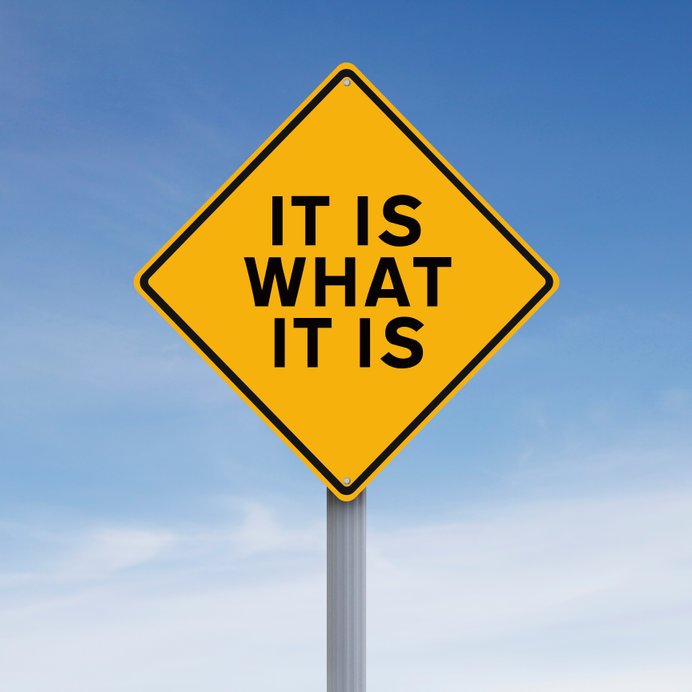
“It is what it is.”

I cannot understand why this phrase has become so popular, because it is incredibly stupid and redundant. I cringe every single time I hear someone utter it, and am dismayed by the number of people I know who have adopted this into their current communication behaviors. Why has it suddenly become so trendy to state the obvious in this manner? I can’t help but think that everyone who utters this string of words either hasn’t given much thought to the circular reasoning buried in it, or has developed a pathological and resigned attitude towards life in which circumstances are shrugged off. Come on guys, take a little responsibility, would you?

Copyright: rnl

If we look at res ipsa loquitur logic, this legal term indicates that someone is presumed to be negligent if that individual had control over what caused the injury. But since I took two years of Latin in high school, I am more intrigued by the original semantics and logic of this particular phrase. If we apply this idea of negligence to the statement, “it is what it is”, does that mean that people are blaming fate, or the lockdown, for the unraveling of society which has occurred in the past three years, or are they simply resigning themselves to fate when they utter that? All I know is that I have heard it far too often in the past couple of years, and it is raising my ire.

I truly enjoy and appreciate what Ethan Ryan from The Fiddleback has to say about this idiotic statement:

“It is what it is” is a waste of words, a waste of breath. I mean, sure, I get it. It expresses the same sentiment as the French “C’est la vie!” But still, it irks me. It’s just a repetitive series of defeatist monosyllables. Why not just say “It is,” or for that matter, “It’s”?

Of course it is what it is! How could it be anything but it?

The only context in which that phrase would be appropriate would be if somebody asked “Is it what it is?” and you said, “Yes, it is what it is.” Presumably you’d have this conversation in an assisted living home with a demented loved one attempting to categorize an ice cream cone.

When you write “It is what it is” as a mathematical algorithm it looks like this:

it = it

In logic, this is called the law of identity, which states that an object is the same as itself. “A is A” is a tautology. Here are some more:

1 = 1

pineapple = pineapple

J = J

☺ = ☺

poop = poop

X = X

Those are analytical facts, verified by their consistency within the rules of a symbol system. But they’re also stupid and irrelevant. They’re true under all possible circumstances, and they demand little of the world for their truth. You don’t need evidence to back up the claim “Poop is what poop is.”

Here’s another tautology:

Formula_Ryan

Seems logical, right? I don’t know, I’m not a logician.

What concerns me are rhetorical tautologies such as:

“I am what I am.” ~ God talking to Moses

“I yam what I yam.” ~ Popeye talking to Olive Oyl

“Rose is a rose is a rose is a rose.” ~ Gertrude Stein

“A horse is a horse, of course, of course.” ~ the Mr. Ed theme song

“It is what it is what it is what it is what it is what it is what it is.” ~ this essay

It is it. A is A. But redundancies are redundant, aren’t they? Be succinct. Next time your umbrella breaks, or your toilet gets clogged, or your house burns down, just shrug and say “It’s.”

That’s obnoxious advice, I know. Defeatism gets us nowhere. Life is hard, but that’s no excuse to spout meaningless clichés. There are so many fantastic adjectives and nouns and verbs out there, humming in a deep pocket of your brain. Use your words. Don’t just say “It is what it is.” We already know that.

Wittgenstein said philosophy is the headache you get from banging your head up against the limits of language. When I came across that line I decided I was done studying philosophy. Years later, my head is still hurting. Philosophy is dangerous.

Whatever.

It’s.

——–
Ethan Ryan

Goals to Give You the Confidence to Return to the World

Image: Pixabay

Check out this inspiring and motivating article written by Camille Johnson on how to get back in gear after being on lockdown for so long.

Do you lack the confidence to re-enter the world after being indoors for an extended period of time? Maybe you lost your job due to the pandemic and are just now going back to work. Or maybe you were affected by lockdowns and are just now finding it safe to socialize again. Whatever the reason, it’s important to make sure you are confident enough to get back into the swing of things. Employ the tips below to help you build the confidence you need to overcome your fears.

Build your confidence and fitness with customized nutrition and fitness programs from Stacey Naito!

The Importance of Setting Goals

Setting goals is one of the most important parts of any lifestyle change. With just a few small changes, it’s possible to dramatically improve your life.

Many people have trouble setting and achieving their goals. This is because they don’t have a clear idea of what they want or need in their lives.

To avoid this, create a list of goals to give yourself the confidence you need to take on the world again. You could create lists with short-term, mid-term, and long-term goals that will help you reach your ultimate goal: happiness!

Reduce Debt, Reduce Stress

Debt is a major source of stress for many people, with 47% of Americans feeling overwhelmed by their debt. While there are a number of factors contributing to the level of debt Americans hold, one major factor is student loans.

Some people might believe that they are not able to take on more debt as they try to pay off existing balances. However, there are ways you can reduce your debt while still saving money, such as refinancing your home.

Refinancing allows qualified homeowners to decrease the equity in their homes and free up cash or reduce their monthly mortgage payments. Additionally, refinancing can be beneficial if you’re looking to take out a different type of loan. For instance, some people refinance a low-interest mortgage for one with an even lower rate.

Go Back to School

Oftentimes, people stop going to school when they get married and have children or they simply start to feel overwhelmed with life. But if you’re interested in progressing in your career, then why not consider going back to school?

Back in the day, it was common for people to care for their kids as a stay-at-home mom. In today’s society, women and men work outside the home. That said, being a working parent can be extremely difficult, and sometimes it might seem like there isn’t an alternative.

Fortunately, there is hope! Going back for an online degree in business, criminal justice, or nursing allows you to complete your education in a more flexible way. It also offers a lot of perks, such as:

  • The ability to balance work, family, and school
  • Not having to commute every day
  • Learning at your own pace
  • No dorm fees

If you’re considering going back to school for a degree or certificate program, now is the perfect time. It’s an investment that can pay off for years to come in higher wages and better job prospects.

In Closing

Setting goals, both short and long term, is not only a great way to stay on track, but it gives you the confidence to return to the world. When you are clear about what you are trying to accomplish, it’s easier to plan a course of action.

Why I Hate The Phrase, “It Is What It Is”

“It is what it is.’

I cannot understand why this phrase has become so popular, because it is incredibly stupid and redundant. I cringe every single time I hear someone utter it, and am dismayed by the number of people I know who have adopted this into their current communication behaviors. Why has it suddenly become so trendy to state the obvious in this manner? I can’t help but think that everyone who utters this string of words either hasn’t given much thought to the circular reasoning buried in it, or has developed a pathological and resigned attitude towards life in which circumstances are shrugged off. Come on guys, take a little responsibility, would you?

Copyright: rnl

If we look at res ipsa loquitur logic, this legal term indicates that someone is presumed to be negligent if that individual had control over what caused the injury. But since I took two years of Latin in high school, I am more intrigued by the original semantics and logic of this particular phrase. If we apply this idea of negligence to the statement, “it is what it is”, does that mean that people are blaming fate, or the lockdown, for the unraveling of society which has occurred in the past year and a half, or are they simply resigning themselves to fate when they utter that? All I know is that I have heard it far too often since spring of last year, and it is raising my ire.

I truly enjoy and appreciate what Ethan Ryan from The Fiddleback has to say about this idiotic statement:

“It is what it is” is a waste of words, a waste of breath. I mean, sure, I get it. It expresses the same sentiment as the French “C’est la vie!” But still, it irks me. It’s just a repetitive series of defeatist monosyllables. Why not just say “It is,” or for that matter, “It’s”?

Of course it is what it is! How could it be anything but it?

The only context in which that phrase would be appropriate would be if somebody asked “Is it what it is?” and you said, “Yes, it is what it is.” Presumably you’d have this conversation in an assisted living home with a demented loved one attempting to categorize an ice cream cone.

When you write “It is what it is” as a mathematical algorithm it looks like this:

it = it

In logic, this is called the law of identity, which states that an object is the same as itself. “A is A” is a tautology. Here are some more:

1 = 1

pineapple = pineapple

J = J

☺ = ☺

poop = poop

X = X

Those are analytical facts, verified by their consistency within the rules of a symbol system. But they’re also stupid and irrelevant. They’re true under all possible circumstances, and they demand little of the world for their truth. You don’t need evidence to back up the claim “Poop is what poop is.”

Here’s another tautology:

Formula_Ryan

Seems logical, right? I don’t know, I’m not a logician.

What concerns me are rhetorical tautologies such as:

“I am what I am.” ~ God talking to Moses

“I yam what I yam.” ~ Popeye talking to Olive Oyl

“Rose is a rose is a rose is a rose.” ~ Gertrude Stein

“A horse is a horse, of course, of course.” ~ the Mr. Ed theme song

“It is what it is what it is what it is what it is what it is what it is.” ~ this essay

It is it. A is A. But redundancies are redundant, aren’t they? Be succinct. Next time your umbrella breaks, or your toilet gets clogged, or your house burns down, just shrug and say “It’s.”

That’s obnoxious advice, I know. Defeatism gets us nowhere. Life is hard, but that’s no excuse to spout meaningless clichés. There are so many fantastic adjectives and nouns and verbs out there, humming in a deep pocket of your brain. Use your words. Don’t just say “It is what it is.” We already know that.

Wittgenstein said philosophy is the headache you get from banging your head up against the limits of language. When I came across that line I decided I was done studying philosophy. Years later, my head is still hurting. Philosophy is dangerous.

Whatever.

It’s.

——–
Ethan Ryan

How the Pandemic Made Wine O’Clock Acceptable

Copyright: iridi

Shortly after COVID-19 caused a global lockdown in early 2020, many of us began to regard having a cocktail before 5 pm as acceptable. Conventional rules about how most people used to live were thrown out the window when we were suddenly trapped inside our homes, bored, stressed out, and uncertain about our futures. I don’t doubt for a second that many people turned to booze as a coping mechanism, to quell concerns over the mysterious virus which froze the world in trepidation, and to soothe anxiety over job security and financial wellness. Perhaps some individuals also turned to libations to manage the aggravation which resulted from the constant close proximity to family members from whom they used to be able to escape when they were able to leave the house for work. I suspect boredom has triggered a fair amount of drinking as well.

Copyright: ajlber

During full lockdown, alcohol merchants made it easy for people stuck at home craving a glass of cabernet sauvignon to order online or through apps and have ethanol elixirs delivered to their residences. Even now, with restrictions largely lifted, restaurants and other food-centered businesses have come up with cheeky suggestions on how alcohol can calm spirits ravaged by the chaotic and confusing events which COVID-19 created. It’s surprising to me how so many people who never drank on a regular basis admitted to drinking on a daily basis during full lockdown, because it smoothed the rough edges of a tumultuous and frightening time in history.

Work Logs During COVID

Image ID : 123934574
Source: 123rf.com
Copyright : Dmitrii Shironosov 

Ever since the pandemic began, many of us have become accustomed to working from home. For some, the shift to a home office environment may have enhanced productivity, while for those who struggle with self-motivation, a home work environment may have served as nothing but a challenge. Suddenly, work environments became riddled with completely new potential distractions, such as pets, children, package deliveries, and household chores. We have had to take more responsibility over our accountability and work ethic, while also working at a pace which doesn’t burn us out. I have a hunch that while some people have slacked off while working from home, more have probably worked harder while trapped at home than they ordinarily would while in a traditional work environment. I know that I have stayed up incredibly late at night to perform asynchronous telemedicine visits from home, something I would never be willing to do if I was working in a traditional clinic or medical office.

One thing I hadn’t given much thought to, despite the fact that my telemedicine productivity is monitored online, is that some employers have required employees to fill out work logs which itemize every single task an employee performs while on the clock. Given the fact that home distractions are quite different from work distractions, I wonder how much reported work activities have conflicted with what someone actually did during a work shift. On the other side of the coin, should quick bathroom breaks and trips to the kitchen for a snack be reported as scheduled breaks?

Image ID : 134010584
Source: 123rf.com
Copyright : lightfieldstudios

Work/life balance is critically important for us all. We aren’t slaves, nor should we be treated as such. I truly believe that if an employee performs all required tasks for a given day, then the employer has no right to monitor every single second of that employee’s time, whether it is spent in the office/shop or at a home office. Another consideration is that while some would consider the presence of a pet in the home work environment to be a distraction, having a beloved pet around would reduce stress, lower blood pressure, and enhance mood. I know that when I have one of my cats sitting on my lap while I am working on the computer, I am much more at ease. As a matter of fact, I have my rescue cat Shima sitting on my lap while I write this blog post, and I honestly feel that she enhances the flow of ideas and gives me so much love and comfort, thus enhancing my work.

Image ID : 145851688
Source: 123rf.com
Copyright : lacheev

There are a multitude of benefits I can come up with for working from home:

  • No need to battle traffic or spend extra time sitting in a car or other mode of transportation as a means of traveling to and from a work site
  • Ability to perform relaxation breathing, rant, etc. while working especially long or frustrating hours without getting berated for it
  • You can work in your skivvies if you so choose

I’m curious to know who prefers working from home, and who is actually looking forward to returning to their regular work environment.

Are Your Plants Making You Crazy?

Source: 123rf.com
Image ID : 100542878
Copyright : lightfieldstudios


I know there must be a whole slew of you who have jumped aboard the plant-obsessed bandwagon, and who treasure your new jungles as much as if they were your children.  Trust me, I can relate, though this isn’t the first time in my life that I have gone plant crazy and filled my home with living green things.

The first time I went overboard with buying and maintaining plants was back in 2000, when I amassed a collection of over 70 indoor plants in a 2 bedroom cottage-style apartment, and I loved it.  The idea of being surrounded by lush greenery was incredibly appealing, and I was swept off my feet until I went through a divorce which shifted my priorities and pulled me away from my plant hobby.

I took such a sharp about-face that I only had six indoor plants for many, many years, leading into the spring of 2020.  Then shortly after lockdown hit, I found myself at a plant nursery in May and purchased three lovely plants.  Little did I know that I was about to fall deep into plant obsession.  By July, I had over 40 indoor plants, and now, I have about 60 indoor plants.  Some were purchased through Etsy, many were purchased from a local supplier (@Brandontheplantguy on IG), and I even bought some from eBay and Amazon.

Source:123rf.com
Image ID : 126788177
Copyright : Olga Yastremska


Though I feel a certain amount of embarrassment over the fact that my home now declares to everyone that I am a crazy plant lady, I take great comfort in knowing that such an obsession is almost trendy these days.  The truth is, houseplants are more popular than ever, especially in millennials who are pushing against the idea of having children, and who are instead opting for a collection of Hoya or Senecio plants which will never demand that the plant parent pony up for a college education.  That being said, having a plant habit can set one back quite a bit, not only in the cost of the plants, but also the planters, spring water, plant food, insecticides, etc.

Those of you who aren’t captured by the idea of collecting a bunch of potted living things might be scratching your heads and wondering why people have suddenly gone plant crazy.  The COVID-19 restrictions and lockdowns forced us all to stay at home, which meant that suddenly, our home environments took on a greater significance.  This is why there was a surge in home improvement projects which kept the big box home improvement stores packed during a time when many other businesses were floundering.  Plants certainly can beautify a home, and they also clean the air, but probably the most compelling feature about houseplants which appeals to most folks is the fact that they are living things, and with a bit of nurturing, they will grow and thrive.

That being said, plants don’t always thrive, and when they start to droop or otherwise show that they aren’t happy, plant owners may find themselves dealing with a lot of frustration.  Another thing I have noticed about now being responsible for a brood of 60 indoor plants is that I often get pissy when a plant decides to become finicky.  It can make a plant parent downright neurotic to try to determine what a failing plant needs. Maybe there’s too much sunlight and the leaves are getting scorched.  Or maybe there isn’t enough sunlight.  Could it be that the plant needs more/less humidity?  Is the plant getting too much/not enough water? Are there pests on the plant which need to be eradicated? What, what, WHAT does this plant want or need?

Even the task of taking care of the plants which are doing well (thankfully, 99% of my plants are doing extremely well) is a daunting one.  The one day per week when I look at all my plants and determine which need to be watered is a day I have begun to dread, because it takes a full hour or more for me to complete the task, all the while lugging jugs of spring water, plant fertilizer, orchid plant food spray, neem oil, my watering can, my plant log, and a stepladder all throughout the second and third floors of my home.  It’s exhausting.

I know that plant people can relate to what I am about to say regarding plants which stubbornly refuse to do well despite everything, especially popular plants which are supposedly “easy care” plants.  When a plant begins to show that it isn’t happy, I honestly feel like I have failed the plant.  I get frustrated and want to figure out the solution to the plant’s woes.  If the plant refuses to rebound, and is close to its demise, I adopt a very “fed up” attitude, and will very abruptly dump a plant in the trash or banish it outside.  It’s the best way for me to disconnect from that irksome creature and get on with my life.

I now have a trusted list of plants I gravitate towards so that I don’t tear my hair out in frustration.  Here are the plants which I truly do enjoy, because they are all doing well in my home:

  • all my Zamioculcas zamiifolias (including zenzi, raven)
  • all but one of my Hoyas (incuding shepherdii, pubicalyx, retusa, australis, multiflora, tricolor, carnosa compacta, lacunosa, and obovata)
  • my Monstera adansoniis
  • my Philodendron brasils
  • the one Scindapsus pictus which didn’t die
  • my Sansevieria starfish
  • my Pachira aquatica
  • my Beaucarnea recurvata
  • my large Senecio rowleyanus, my Senecio herrianus, and my Senecio radicans

In stark contrast, there are plants which I have had little to no success with despite all my efforts.  The plants which have stirred up a great deal of frustration include ALL peperomias, n’joy pothos, Tradescantia multiflora (quite possibly the messiest plant ever), Othonna capensis (tried two of these plants and finally gave up), and Begonia maculata.  I now avoid those plants in the same way I would avoid a person I didn’t like, and certainly would never welcome them into my home again.

In conclusion, the healthiest way to approach plant ownership is to educate yourself on the particular needs of the plants you have, and if a plant begins to falter, just let it go instead of beating yourself up for not being able to save it.  I actually found out that many nurseries will keep stocking certain plants because they know that the plants will be fussy.  Since many people are stubborn about trying to succeed in nurturing a plant, they will often purchase the same type of plant repeatedly in hopes of somehow figuring out its needs.  I know I did this with Scindapsus, Begonia maculata, Pilea peperomioides, Hoya wayettii, and every time one of these plants would die, I would take the loss personally, as if I was totally responsible.  I’ve learned that it is not worth the heartache, not to mention the financial expense, to keep buying those plants.


Do Your Finances Need A Tune-Up?

Source: 123rf.com
Image ID : 111332213
Copyright : Tom Baker


This year has certainly been full of surprises, partially from the fear surrounding COVID-19, and partially from the economic upturns which have wracked the entire globe. From long furloughs to unemployment, people everywhere are feeling the financial effects.  We are officially in a recession, which makes it even more important for everyone to review their finances and find ways to protect themselves during the financial downturn.

There are general financial guidelines which should always be followed, such as paying down debt, establishing an emergency fund, finding other means to generate income, and continuing to contribute to retirement accounts.  Another vital component in good financial health is establishing a budget and really examining your spending habits.  Almost invariably, people find out after they create a budget that they are spending money needlessly on frills that they don’t need.  By eliminating those hidden money drains, it becomes easier to cover living expenses, thus reducing some of the stress involved in getting by financially.

I have had a budget in place for over 30 years, and I have seen the power it wields.  By following a budget, I was able to pay down all credit card debt, pay off a car, establish an emergency fund, and put money aside for retirement, so I know it can all be done.  Even at this point, with zero debt, I am acutely aware of my budget, and I review it on an almost weekly basis to make sure I am on track.

Source: pigly.com


If you need help in establishing a budget, you can use a budget calculator. I found a wonderful budget calculator on Pigly.com which is very easy to use, and extremely thorough.  It helps you break down all expenses, from the essentials to debts and savings so you can target all your goals and ensure that your income is allocated optimally. All you have to do is plug in your income, and the calculator will automatically generate a low end and high end for all the categories.  So even if you have never established a budget before, you can set one up instantly.

When budgeting, don’t be afraid to contribute to your retirement accounts right now, as long as you have your debts paid down and you have an emergency fund in place.  I am a big proponent of Dave Ramsey’s investing philosophy, and I am grateful that I educated myself on financial wellness and dug myself out of what once seemed like a desperate situation.  It was only after I had paid off all of my credit cards and established an emergency fund back in 2013 that I began aggressively started putting money aside for retirement.

Source: 123rf.com
Image ID : 129764462
Copyright : Romolo Tavani


The fact is, we are living in uncertain times and need to be prepared for whatever hits.  By buttressing our financial health, getting creative with income streams, and following a budget, we will be better equipped to survive the ebb and flow of the current economy.

How Coronavirus Has Changed Our Shopping Habits

Source: 123rf
Image ID : 143775383
Copyright : mailhamdi

Shopping habits have changed dramatically since the appearance of COVID-19 and the subsequent scramble to socially distance and protect ourselves.  Grocery stores and retail pharmacies now have plexiglass shields at the checkout stands, and there are shoe stickers on the floors as visual reminders of the six foot distance we are urged to keep from each other.

Malls are nearly empty, and many merchants haven’t even dared open their doors.  The days when you could just hop over to a local store and pick up a couple of items have been replaced with long lines of people waiting to get in, and staple items which are perpetually low in stock or completely depleted.  Let’s not forget about all that toilet paper hoarding which defined the earlier part of 2020.

Source: 123rf
Image ID : 146199996
Copyright : Ida Åkerblom


The new normal when it comes to consumer spending is largely confined to purchasing only the essentials, but there has also been a peculiar yet predictable surge in what can reasonably be described as online retail therapy.  Since we’ve basically been forced to become homebodies, our shopping preferences have changed to reflect this lifestyle shift.  Online streaming services have increased dramatically in popularity, as people search for shows and films to chew up some of their time at home.

Industries which have seen an uptick in their sales since the global pandemic hit include food delivery and takeout services, alcohol, exercise equipment, health supplies such as masks and hand sanitizer, and beauty and wellness products.

Some people have been compelled to stock up on bundles of essentials like pasta, toilet paper and the like, while others have fallen into the habit of purchasing unnecessary items, perhaps a long coveted item which was purchased with the attitude, life is short, might as well buy it.

The following excerpt from an article by Leanne Italie is an excellent description of the purchasing habits which many of us might find ourselves falling into as this lockdown continues:

“Shopping as therapy has been shown to reduce negative moods and boost overall happiness,” he said. “The big downside, however, is that such relief is very short-lived. That good feeling very quickly dissipates.”

Mr. Galak said some research points to “shopping while bored” as a variation with less emotional payout.

“Browsing for things that one doesn’t need fills the time and then clicking `buy now’ just naturally follows,” he said. “Consumers may find themselves on page 20 of a search result for a new pair of shoes, a place that when engaged and not bored, they would never reach.”

Jennifer Salgado, 42 of Bloomfield, N.J., is a shopper with many heads these days.

“Resourceful me has purchased: a pasta roller and drying rack, because now I’m Ina Garten; stuff to make hand sanitizer, because I’m now a chemist; and dog nail clippers that my 76-pound bulldog noped out of real fast and is now looking like Snooki from the ‘Jersey Shore,’” she said.

There’s also “luxurious me,” Ms. Salgado said, snapping up 96 macarons from a bulk-buying store, along with the Jennifer who needed 24 pounds of frozen peas.

“Most of the time, I forget what’s coming,” she said, echoing others who accepted long delivery dates out of fear. “And most of the time, I realize I never really needed these things in the first place.”

Kellie Flor-Robinson of Silver Spring, Md., just may be a combination of all of the above.

“I ordered a case of Moet,” she said. “I’m not sure that it was an accident, though — this thing has me buggy.”