Uncompromised

Breaking stereotypes!

Breaking stereotypes!

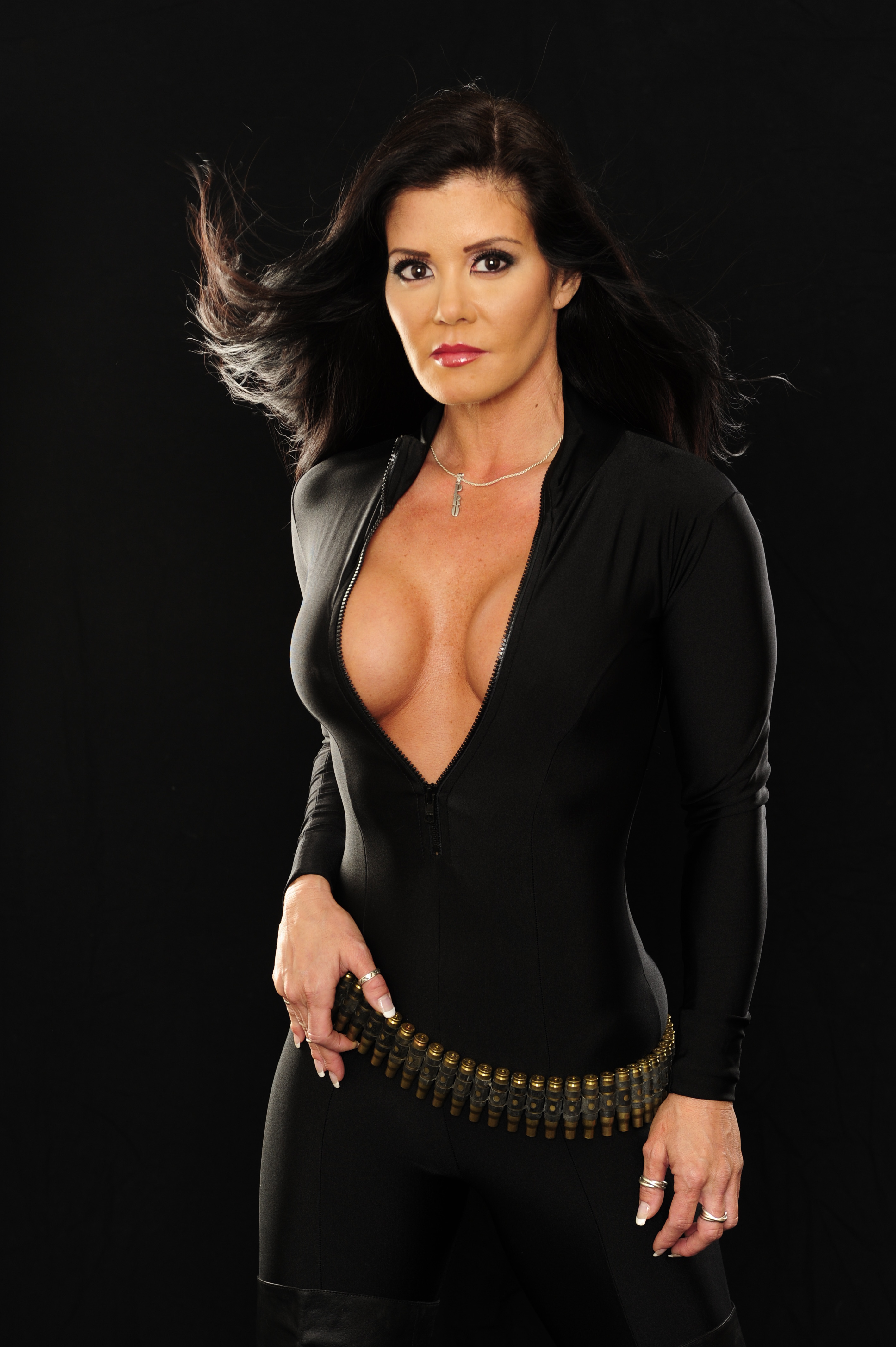
I am always being challenged to pick one career that defines me, and it drives me nuts. When people find out that I am a medical doctor, they struggle with the stereotype of what they expect doctors to be like, in other words, very conservative in dress and demeanor, and without any flavor or personality. Well, I’ve got news for you. I will NEVER be a typical doctor. And please don’t doubt my credentials or schooling. I am NOT a nurse (not that there is anything wrong with this highly respected profession), I am a fully licensed and board certified physician.

A huge project came my way recently, and I was selected for it, only to have the decision-maker flip out over my fitness and modeling images and reverse the decision. I was stunned and dejected, but after reflecting on the whole incident, I began to get angry. Part of the problem was that the decision-maker was a complete hypocrite, pretending to be squeaky clean, but who openly praised one of the dirtiest human beings to ever alight on the entertainment scene. To coin an analogy, at the root of this was a case of the bride being upstaged by another lady wearing white. Mind you, I never intentionally wore white, but hey, my doctor’s coat is white.

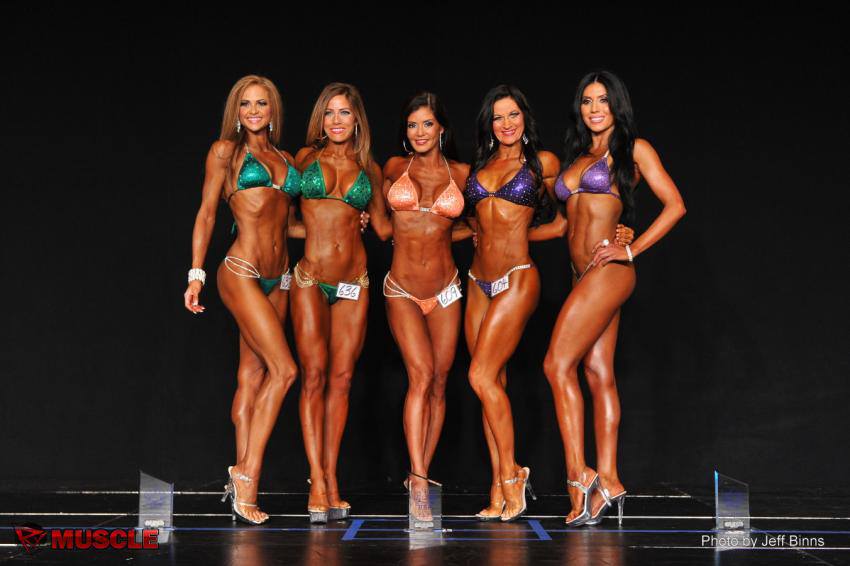
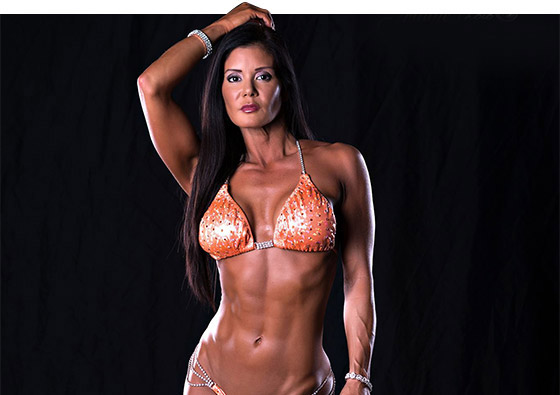
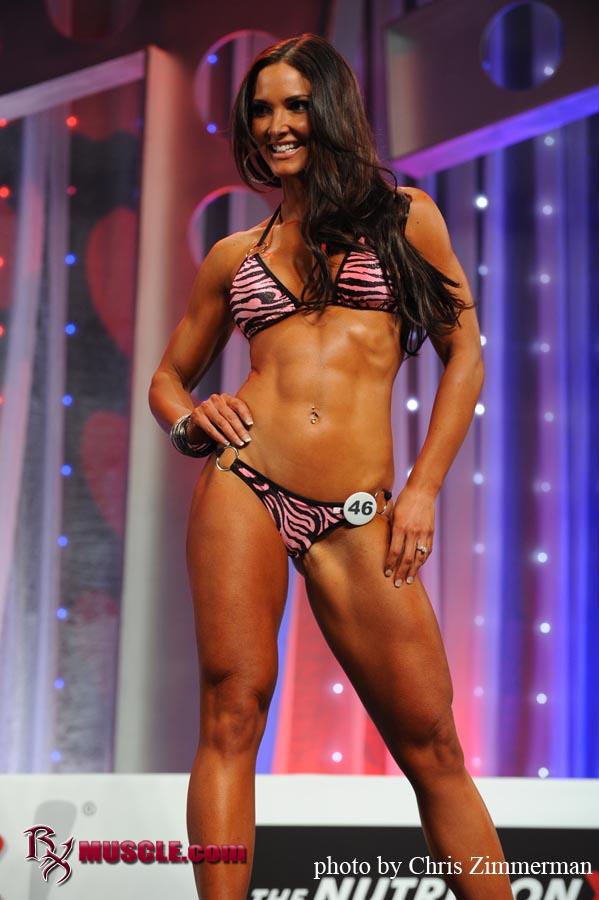
I am every bit as much about fitness as I am about medicine, and I shouldn’t have to choose one over the other. I am damned proud of what I have accomplished in fitness, especially because I took things to the next level in my forties, not when I was a young whipper-snapper. If people are confused by the sampler plate philosophy by which I live, too bad. Yes, I am a board certified physician AND a degreed fitness professional, IFBB Pro, certified nutrition coach, writer, sponsored athlete and contest prep coach. I know it’s unusual, but why is that so hard for people to grasp? I mean, here I am, doing all of that, sending a message to the world that no one should have to be one-dimensional and boring.
1538624_10202090935769442_1829315007_n
I don’t hide from myself. I am honest. I have sass, and I speak my mind. I am proud of what I have achieved in my life, and I will NOT hide parts of myself which some overly judgmental people may have a problem with. I am NOT going to apologize for having a sense of humor, for using cuss words here and there (though I don’t use them while seeing patients). I am not going to paint a false picture of who I am. If you don’t like what I am doing, no worries. Move on.

If you find that you are compromising your own vision, dreams, or goals, perhaps you need to re-examine why you are allowing that to occur. If you subscribe to the no limits philosophy, then you would never even consider pulling the reins back. I will always encourage driven people to go for whatever they want, and if it doesn’t fit in with the conventions of one of their chosen careers or hobbies, even better. Break stereotypes and show people what you are made of! Don’t hide all the facets which make you who you are!

A Centenarian Who Broke World Records

Tom Lane

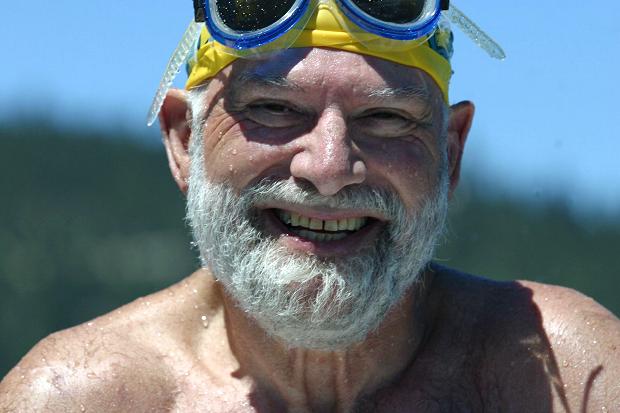
Tom Lane broke records as one of the nation’s oldest Masters swimmers. He exercised every single day, shot golf regularly, but his favorite physical activity, and the one which won him gold medals in Masters divisions, was swimming. a former patent lawyer, Tom Lane set Masters records in the backstroke, breaststroke, and freestyle in three age groups. He went on record stating that his life’s philosophy was, ‘If you can’t beat ’em, outlive ’em.’”

Tom Lane proved to younger people that old age was never an excuse to become lazy and sedentary. He went on record saying that for many people, retirement is when an active life can begin. He didn’t even allow blindness to stop him. When glaucoma robbed him of his sight at the age of 92, he began to have problems with turning at the end of laps in the pool, and would bump his head on the edge of the pool. Instead of quitting, he attached a sponge to his forehead to cushion the blow when he reached the edge..

Tom Lane died at the age of 103 from complications of pneumonia in his home in San Diego in August of 1997, but not before leaving an inspiring legacy and breaking world records in Masters swimming.

Bravo!

The Joy of Old Age. (No Kidding.)

Oliver Sacks swimmer
I am sharing this essay which was written by the late Dr. Oliver Sacks for the New York Times. It is a delightful essay which honors old age.

Original post can be found at:
http://www.nytimes.com/2013/07/07/opinion/sunday/the-joy-of-old-age-no-kidding.html

LAST night I dreamed about mercury — huge, shining globules of quicksilver rising and falling. Mercury is element number 80, and my dream is a reminder that on Tuesday, I will be 80 myself.

Elements and birthdays have been intertwined for me since boyhood, when I learned about atomic numbers. At 11, I could say “I am sodium” (Element 11), and now at 79, I am gold. A few years ago, when I gave a friend a bottle of mercury for his 80th birthday — a special bottle that could neither leak nor break — he gave me a peculiar look, but later sent me a charming letter in which he joked, “I take a little every morning for my health.”

Eighty! I can hardly believe it. I often feel that life is about to begin, only to realize it is almost over. My mother was the 16th of 18 children; I was the youngest of her four sons, and almost the youngest of the vast cousinhood on her side of the family. I was always the youngest boy in my class at high school. I have retained this feeling of being the youngest, even though now I am almost the oldest person I know.

I thought I would die at 41, when I had a bad fall and broke a leg while mountaineering alone. I splinted the leg as best I could and started to lever myself down the mountain, clumsily, with my arms. In the long hours that followed, I was assailed by memories, both good and bad. Most were in a mode of gratitude — gratitude for what I had been given by others, gratitude, too, that I had been able to give something back. “Awakenings” had been published the previous year.

At nearly 80, with a scattering of medical and surgical problems, none disabling, I feel glad to be alive — “I’m glad I’m not dead!” sometimes bursts out of me when the weather is perfect. (This is in contrast to a story I heard from a friend who, walking with Samuel Beckett in Paris on a perfect spring morning, said to him, “Doesn’t a day like this make you glad to be alive?” to which Beckett answered, “I wouldn’t go as far as that.”) I am grateful that I have experienced many things — some wonderful, some horrible — and that I have been able to write a dozen books, to receive innumerable letters from friends, colleagues and readers, and to enjoy what Nathaniel Hawthorne called “an intercourse with the world.”

I am sorry I have wasted (and still waste) so much time; I am sorry to be as agonizingly shy at 80 as I was at 20; I am sorry that I speak no languages but my mother tongue and that I have not traveled or experienced other cultures as widely as I should have done.

I feel I should be trying to complete my life, whatever “completing a life” means. Some of my patients in their 90s or 100s say nunc dimittis — “I have had a full life, and now I am ready to go.” For some of them, this means going to heaven — it is always heaven rather than hell, though Samuel Johnson and James Boswell both quaked at the thought of going to hell and got furious with David Hume, who entertained no such beliefs. I have no belief in (or desire for) any post-mortem existence, other than in the memories of friends and the hope that some of my books may still “speak” to people after my death.

W. H. Auden often told me he thought he would live to 80 and then “bugger off” (he lived only to 67). Though it is 40 years since his death, I often dream of him, and of my parents and of former patients — all long gone but loved and important in my life.

At 80, the specter of dementia or stroke looms. A third of one’s contemporaries are dead, and many more, with profound mental or physical damage, are trapped in a tragic and minimal existence. At 80 the marks of decay are all too visible. One’s reactions are a little slower, names more frequently elude one, and one’s energies must be husbanded, but even so, one may often feel full of energy and life and not at all “old.” Perhaps, with luck, I will make it, more or less intact, for another few years and be granted the liberty to continue to love and work, the two most important things, Freud insisted, in life.

When my time comes, I hope I can die in harness, as Francis Crick did. When he was told that his colon cancer had returned, at first he said nothing; he simply looked into the distance for a minute and then resumed his previous train of thought. When pressed about his diagnosis a few weeks later, he said, “Whatever has a beginning must have an ending.” When he died, at 88, he was still fully engaged in his most creative work.

My father, who lived to 94, often said that the 80s had been one of the most enjoyable decades of his life. He felt, as I begin to feel, not a shrinking but an enlargement of mental life and perspective. One has had a long experience of life, not only one’s own life, but others’, too. One has seen triumphs and tragedies, booms and busts, revolutions and wars, great achievements and deep ambiguities, too. One has seen grand theories rise, only to be toppled by stubborn facts. One is more conscious of transience and, perhaps, of beauty. At 80, one can take a long view and have a vivid, lived sense of history not possible at an earlier age. I can imagine, feel in my bones, what a century is like, which I could not do when I was 40 or 60. I do not think of old age as an ever grimmer time that one must somehow endure and make the best of, but as a time of leisure and freedom, freed from the factitious urgencies of earlier days, free to explore whatever I wish, and to bind the thoughts and feelings of a lifetime together.

I am looking forward to being 80.

R.I.P. Dr. Oliver Sacks

Oliver Sacks

Dr. Oliver Sacks, eminent neurologist and brilliant author who explored strange neurological aberrations in books such as “The Man Who Mistook His Wife for a Hat,” died on August 30th at his home in Manhattan at the age of 82.

I was stunned when I read his post on Facebook in February which revealed that he had terminal liver cancer. The original source of the cancer was a melanoma in his eye which had been treated nine years ago.

Dr. Sacks was not only a highly respected neurologist and researcher, he was a prolific and incredibly gifted writer. More than a million copies of his books are in print in the United States, though the book he was most well known for was “Awakenings,” which was made into a movie starring Robin Williams. He was so popular that he received about 10,000 letters a year. Regarding the plethora of letters he received, he stated, “I invariably reply to people under 10, over 90 or in prison.”

I first met Dr. Sacks in 1986 during a book reading of “The Man Who Mistook His Wife For A Hat.” Though I had known for years that I wanted to become a physician, and that I had a specific passion for neurology, my meeting with Dr. Sacks re-ignited that passion. I devoured that book, and from that point on was a devoted fan, not only of his writing, but of him as a clinician and humanitarian. I have every book which Dr. Sacks wrote and thoroughly enjoyed reading them (I have yet to read “Hallucinations” and “On The Move” which were his most recent tomes). I was thrilled when Dr. Sacks had a book signing for “Oaxaca Journal” in 2002, and I made sure to attend that signing, speak with him, and have him sign my copy. I was a physician by then, and in the middle of residency training. Though I had ended up in family practice rather than neurology, my fascination for neurological cases was very much intact, and my admiration for Dr. Sacks only increased over the years.

In tribute to one of my medical idols, I am posting an essay which Dr. Sacks wrote in February of this year for the New York Times.

Original post can be found at:
http://www.nytimes.com/2015/02/19/opinion/oliver-sacks-on-learning-he-has-terminal-cancer.html

A MONTH ago, I felt that I was in good health, even robust health. At 81, I still swim a mile a day. But my luck has run out — a few weeks ago I learned that I have multiple metastases in the liver. Nine years ago it was discovered that I had a rare tumor of the eye, an ocular melanoma. The radiation and lasering to remove the tumor ultimately left me blind in that eye. But though ocular melanomas metastasize in perhaps 50 percent of cases, given the particulars of my own case, the likelihood was much smaller. I am among the unlucky ones.

I feel grateful that I have been granted nine years of good health and productivity since the original diagnosis, but now I am face to face with dying. The cancer occupies a third of my liver, and though its advance may be slowed, this particular sort of cancer cannot be halted.

It is up to me now to choose how to live out the months that remain to me. I have to live in the richest, deepest, most productive way I can. In this I am encouraged by the words of one of my favorite philosophers, David Hume, who, upon learning that he was mortally ill at age 65, wrote a short autobiography in a single day in April of 1776. He titled it “My Own Life.”

“I now reckon upon a speedy dissolution,” he wrote. “I have suffered very little pain from my disorder; and what is more strange, have, notwithstanding the great decline of my person, never suffered a moment’s abatement of my spirits. I possess the same ardour as ever in study, and the same gaiety in company.”

I have been lucky enough to live past 80, and the 15 years allotted to me beyond Hume’s three score and five have been equally rich in work and love. In that time, I have published five books and completed an autobiography (rather longer than Hume’s few pages) to be published this spring; I have several other books nearly finished.

Hume continued, “I am … a man of mild dispositions, of command of temper, of an open, social, and cheerful humour, capable of attachment, but little susceptible of enmity, and of great moderation in all my passions.”

Here I depart from Hume. While I have enjoyed loving relationships and friendships and have no real enmities, I cannot say (nor would anyone who knows me say) that I am a man of mild dispositions. On the contrary, I am a man of vehement disposition, with violent enthusiasms, and extreme immoderation in all my passions.

And yet, one line from Hume’s essay strikes me as especially true: “It is difficult,” he wrote, “to be more detached from life than I am at present.”

Over the last few days, I have been able to see my life as from a great altitude, as a sort of landscape, and with a deepening sense of the connection of all its parts. This does not mean I am finished with life.

On the contrary, I feel intensely alive, and I want and hope in the time that remains to deepen my friendships, to say farewell to those I love, to write more, to travel if I have the strength, to achieve new levels of understanding and insight.

This will involve audacity, clarity and plain speaking; trying to straighten my accounts with the world. But there will be time, too, for some fun (and even some silliness, as well).

I feel a sudden clear focus and perspective. There is no time for anything inessential. I must focus on myself, my work and my friends. I shall no longer look at “NewsHour” every night. I shall no longer pay any attention to politics or arguments about global warming.

This is not indifference but detachment — I still care deeply about the Middle East, about global warming, about growing inequality, but these are no longer my business; they belong to the future. I rejoice when I meet gifted young people — even the one who biopsied and diagnosed my metastases. I feel the future is in good hands.

I have been increasingly conscious, for the last 10 years or so, of deaths among my contemporaries. My generation is on the way out, and each death I have felt as an abruption, a tearing away of part of myself. There will be no one like us when we are gone, but then there is no one like anyone else, ever. When people die, they cannot be replaced. They leave holes that cannot be filled, for it is the fate — the genetic and neural fate — of every human being to be a unique individual, to find his own path, to live his own life, to die his own death.

I cannot pretend I am without fear. But my predominant feeling is one of gratitude. I have loved and been loved; I have been given much and I have given something in return; I have read and traveled and thought and written. I have had an intercourse with the world, the special intercourse of writers and readers.

Above all, I have been a sentient being, a thinking animal, on this beautiful planet, and that in itself has been an enormous privilege and adventure.

Correction: February 26, 2015
Because of an editing error, Oliver Sacks’s Op-Ed essay last Thursday misstated the proportion of cases in which the rare eye cancer he has — ocular melanoma — metastasizes. It is around 50 percent, not 2 percent, or “only in very rare cases.” When Dr. Sacks wrote, “I am among the unlucky 2 percent,” he was referring to the particulars of his case. (The likelihood of the cancer’s metastasizing is based on factors like the size and molecular features of the tumor, the patient’s age and the amount of time since the original diagnosis.)

Running Out Of Steam

can't think woman and laptop

The frenetic pace at which most of us live these days has us lamenting the fact that it doesn’t seem like there are enough hours in the day to get everything done. It is exceedingly rare for me to get to the end of a day and think, wow, I got everything done that I wanted to get done, because somehow, the crazy pace of each day seems to derail me from checking off everything on my to-do list. Do I have too much on my list? Yes, absolutely. Do I have unreasonable expectations of myself that I will get everything done? Yes. However, I am pretty efficient and organized, and on most days, I take care of all the things which must be done on that particular day.

Here’s where I tend to fall flat on my face. I do a considerable amount of writing for my own blog and for a number of health, wellness, fitness and bodybuilding entities, so I ALWAYS have writing assignments on my plate. Occasionally, a day will open up schedule-wise, in which I don’t have to see patients or clients, and I always foolishly think that because of the so-called open schedule, I will have plenty of time to sit at my computer and write articles and posts. Invariably, some schedule destroyer will knock that idea completely out of the water, leaving me only a sliver of time in the late evening to write. The problem with late evening for me is that I have very little energy to write, and the creative thoughts fail to flow through my weary brain. I stare at my computer screen, hoping for some inspiration to hit me, but instead of being blessed with one great idea after another, I can feel the gears in my mind moving more slowly. Every once in a while, an idea might come to me, but as I begin to write on the topic, my interest wanes and I end up deleting the entry. Clearly I am NOT a night owl!

The Bottleneck: From National Amateur To Pro

969690_10200146729927197_3160119_n

Every single year I watch nationally qualified competitors duke it out onstage in hopes of finally making it through the bottleneck and achieving Pro status. Some competitors get smacked down repeatedly, yet keep hitting the national circuit for so long that they must compete against new blood, further limiting their chances. There are times when I shake my head in wonder over the outcome of a national or Pro event when individuals who clearly should have been in first callouts were neglected. I know that feeling all too well because it has happened to me a number of times. Every year the national level events get bigger, which results in even more pressure and more competition to get through that level and into the big wide world of Pro status. When a competitor finally gets pushed out of the bottle and glides into Pro waters, he or she will bask in it, enjoying the victory, but the majority of Pro competitors soon discover that becoming a Pro doesn’t mean that life will become any easier. If anything, it becomes more difficult, because the bar is set much higher.

Those of us who compete live in a bubble. In fact, I will go as far as to say that when we escape the bottle, we end up in a fishbowl instead of open water. Please don’t interpret this to mean that I lack appreciation for being a Pro, because it is indeed a great honor. But the world at large is a vast ocean which bodybuilding leagues really don’t connect to, similar to the artificial environment which a bowl provides for a pet fish. Bodybuilding is its own world, and though I may love it, I also know that it won’t make me a superstar. Even the biggest bodybuilding legends (except for Arnold) don’t have the full global recognition which they deserve, because bodybuilding is such a niche industry. The only bodybuilders who are household names are the ones who became thespians.

I will admit that when I finally got my Pro Card (after 14 Pro qualifiers), I was relieved and ecstatic because I had finally reached a goal I had set for myself. However, I also fully realize that it wasn’t entirely up to me when or if I would ever get that card, so I always tried my best not to berate myself when I fell short of that Pro card goal. A number of competitors who have been on the national circuit for a very long time have built up a tremendous following on social media channels and have so much power and influence, yet they sell themselves short because they focus on the Pro Card chase as a singular goal. These are precious gems whose shine is only dulled by the disappointment they experience when the sport of bodybuilding edges them out of the winners’ circle.

If you have been competing for a very long time and are getting weary from slipping in national placings or just missing that Pro card too many times, it’s time to take a good look at where your passion truly lies. If your true passion lies directly in the experience of stepping onstage, then by all means continue. However, if you are broke, exhausted, sore and dejected, and you have a true passion beyond the stage for inspiring others to reach fitness goals, then why not BREAK the bottle and swim into the wide ocean? If you build a name, a brand, and a following, you can establish a presence in the real world which will enable you to impact others in the truest sense. In addition, you might stand to make some decent money from nurturing your passion for fitness. Honestly, how much money have you made from competing? Just saying.

A Note To Pro Card Chasers

I had to step on the national stage fourteen times before I won my IFBB Pro Card, so I know first hand how frustrating it can be to ALMOST get that Pro Card, and how irresistible the Pro Card hunt can be. This post is for all of you who are chasing down that Pro Card, and is meant to remind you of what you represent and what you have accomplished.

You are AMAZING. You have already won in the eyes of your co-workers, spouse, children, friends, fans, etc. There is no need to feel validated by the contest judges. Just because you hit the stage and you aren’t selected for the glittering top prize does NOT mean you have failed. You are WOW. You are among the best bodybuilders in the world, and are just stuck in that bottleneck with other elite athletes who are vying for the top rung. So don’t take your placing personally. It really ISN’T about the Pro Card.
You already ARE a champion!

Make Your Fitness Goals Tangible With Photos!

Whenever I do initial consultations with weight management patients, I make sure to ask them what their ultimate weight loss goals are.  Invariably my patients will mention a friend or relative who has the type of physique they desire, or they will mention a time in their lives at which they considered their own bodies to be ideal for them.  At the end of the evaluation, I instruct my patients to find at least one picture of that ideal body and post it in a prominent place, either on a desk, bathroom mirror, refrigerator, or car dashboard.  The whole point is to create a visual representation of the patient’s goal so that it becomes more tangible over time.

Lori Harder

When I first began competing in 2009, I quite randomly picked a couple of images of female competitors whom I really admired, printed them, and placed them on my bathroom mirror.  I saw these images daily and was able to visualize my goal on a consistent basis.  I did not remove these images from my mirror until I moved in October of 2012, and when I did so, I moved the images to bulletin boards in our trophy room. By that time, I had collected five First Place national titles, and now regard the two competitors in those photos as peers. I had achieved my goal of attaining a level of fitness and exposure which was right in step with these ladies.

Another tip which I give to weight management patients is to take weekly progress pics so that they can monitor the subtle changes in their bodies over an interval period of time.  What they might not see from week to week can be very dramatic when they compare their baseline photos to photos taken many weeks or months later.  Over time it becomes easier to take these progress pictures.  Getting into the habit of taking photos regularly also works EXTREMELY well for people in the midst of contest prep.  I require my contest prep clients to take weekly progress pictures, which reveal subtle changes week by week and provide information which I can use in order to make changes in a prep plan. To this day I still take weekly progress pictures myself because I know the ritual keeps me on track with my goals.
peacock
In summary, there are two things you can do to visualize your goal:

1. FIND AN IMAGE OF THE BODY YOU WANT AND POST IT IN A PROMINENT PLACE.

2. TAKE WEEKLY PROGRESS PICTURES OF YOURSELF.

Visualize and make your goal materialize!

FOOTNOTE: If you are looking for a supplement which will boost fat loss, consider trying SWAT Fuel’s 9mm or 9mm+P, both of which deliver sustained energy with no jitters or crash. These thermogenic capsules were formulated with military personnel and law enforcement offers in mind, who must remain razor sharp through long vigils and who must also wield weapons which require precision aim. A case of the jitters in these individuals could be disastrous, so it is reassuring to know that 9mm and 9mm+P deliver on their promise of steady and long lasting energy. The 9mm+P formula contains an appetite suppressant which is extremely effective in halting cravings and preventing overeating. Both of these products are also excellent for anyone who wants more energy, whether it be for a workout or for work.