Weight Training Splits: Three Day Full Body Split Routine

1103-lat-pulldownWhen you incorporate a full body weight training regimen in a three day per week schedule, you will be able to lift heavier since you are only performing one or two exercises per body part. In addition, with your one day of rest, you will have sufficient time to repair the microtears in your muscles before you embark on your next workout. Here is a sample routine which you can follow. If you are absolutely new to weight training, start with lower weights until you become comfortable with the movements, then increase the weight used so that you are challenging yourself. Rest 30 to 45 seconds between sets.

Monday – Full Body
Tuesday – OFF
Wednesday – Full Body
Thursday – OFF
Friday – Full Body
Saturday – OFF
Sunday – OFF

The following is a sample three day full body routine which you can try. There are countless variations possible, but this routine will work all major muscle groups adequately and is a good plan for beginners.

Full Body Weight Training Routine – Beginner

Wide grip lat pulldowns – 2 sets of 12 repetitions
Incline dumbbell chest presses – 2 sets of 12 repetitions
Leg extensions – 3 sets of 12 repetitions
Walking lunges with overhead shoulder presses (using dumbbells) – 2 sets of 15 repetitions
Seated leg curls – 2 sets of 12 repetitions
Barbell bicep curls – 2 sets of 12 repetitions
Seated dip machine – 2 sets of 15 repetitions
Hyperextension machine – 3 sets of 15 repetitions
Seated calf presses – 3 sets of 12 repetitions
Stability ball abdominal crunches – 2 sets of 20 repetitions

Full Body Weight Training Routine – Intermediate

Wide grip lat pulldowns – 3 sets of 12 repetitions
Barbell flat bench chest presses – 3 sets of 10 repetitions
Leg presses – 3 sets of 10 repetitions
Walking lunges with overhead shoulder presses (using dumbbells) – 3 sets of 15 repetitions
Prone (lying down) leg curla – 3 sets of 10 repetitions
Dumbbell bicep curls – 3 sets of 10 repetitions
Tricep cable pushdowns – 2 sets of 12 repetitions
Hyperextension machine – 3 sets of 15 repetitions
Standing calf presses – 3 sets of 12 repetitions
Stability ball abdominal crunches – 3 sets of 25 repetitions

You Don’t Eat ENOUGH To Lose Weight – Why Diets Don’t Work

Lettuce supersizeYes, you read that title correctly. If you have been on one diet after another in an effort to try to lose those last 5, 10, 15, or however many pounds, perhaps losing some weight only to gain all of it back plus some bonus weight, then it is highly likely that you have damaged your metabolism via severe calorie restriction. There is a very good reason why the weight loss industry is so successful and why certain well-known weight loss programs keep their customers coming back. The reason has everything to do with not eating enough, skipping meals, eating the wrong foods, and binging when food is finally available.

When you skip meals, you wreak havoc on your metabolism by causing it to slow down. Why does this happen? When there is no food to break down, the body’s furnace slows down and becomes so sluggish that when you actually do eat something, your body is less equipped to break down the food quickly, so much of it is stored as fat. Depriving yourself of food also causes sharp drops in blood sugar, robbing you of energy and increasing insulin resistance. Increased insulin resistance over time can precipitate the development of diabetes.

Other consequences of skipping meals include the following:

• Malnutrition – If you do not feed your body regular, balanced meals, it is highly likely that you are depriving it of essential nutrients. Malnourished states can lead to weight gain, poor health and progression of disease over time.

• Poor concentration – This is due to the depletion of glycogen stores which occurs. The brain simply does not have enough fuel to run on, resulting in fogginess.

• Hunger pangs – When you skip meals, you may experience intense feelings of hunger along with anxiety, dizziness or nausea. In addition, such feeling may lead to overeating when you finally sit down to eat something. Loading the body with a large meal is overkill, and leads to poor digestion and absorption as well as increased storage in body fat stores.

Do yourself a favor and practice the following guidelines. If you do, you will be rewarded with a healthy weight for a lifetime.

1. Don’t skip meals.
2. Make sure to eat enough protein to sustain your energy levels and satisfy your hunger.
3. EAT BREAKFAST.
4. Commit to healthy meals.
5. When you turn to snacks, make sure healthy alternatives are available so you aren’t tempted to reach for a nutrient-poor convenience food.

B-Complex Vitamins

vitamin-b-complexVitamin B Complex is a combination of the essential B vitamins: B1, B2, B3, B5, B6, B9 and B12. This complex also contains biotin, choline and inositol. These nutrients are important for normal body function and are used to aid in the treatment of numerous conditions. B Complex vitamins are effective in treating anxiety, depression, fatigue, premenstrual syndrome, and heart disease. In addition, B vitamins have the following vital functions in the body:

Nervous System Function:

Vitamin B5 is required for normal nerve regulation as well as normal adrenal gland function, while vitamins B1, B6, and B12 are essential for normal brain and nervous system function. Vitamin B9, also known as folic acid, has a protective effect against fetal neural tube defects during pregnancy and has also been shown to prevent the development of high blood pressure in women.

Digestion:

Vitamins B1, B2, B3 and B6 are essential for proper breakdown of nutrients and production of hydrochloric acid in the stomach.

Energy Production:

Vitamin B1 assists in conversion of carbohydrates into glucose, while vitamins B2, B3, B5, B6 and biotin are essential for conversion of glucose into energy.

Healthy Skin, Hair and Nails:

B complex vitamins are essential for normal RNA and DNA synthesis and cell reproduction. Deficiencies in B Vitamins often result in dry skin, dermatitis, wrinkles, acne, hair loss and weak nails.

If you are interested in boosting your intake of B complex vitamins via natural food sources, increase your intake of the following:
• Leafy green vegetables
• Cereals and whole grains
• Eggs
• Chicken
• Nuts
• Citrus fruits
• Bananas
• Kidney beans

If you are not getting enough B vitamins from food, you may opt to take a B complex supplement. Once you start supplementing with B complex, you may notice increased energy, a greater sense of well-being, better digestion, and healthier skin. Since B vitamins are water soluble, they are excreted through the urine (with the exception of vitamin B12). For this reason, B vitamins need to be taken daily.

Cranberries for Urinary Tract Health

cranberryCranberries have been used for centuries among Native American Indian tribes for treating urinary conditions and are currently a popular remedy for urinary tract infections (UTI’s). Research shows that cranberries are effective in preventing UTI’s by introducing chemicals into the bladder which keep bacteria from adhering to it. However, cranberries had no effect on bacteria which are already stuck to the bladder lining, making cranberries ineffective once someone is already suffering from a UTI. Cranberries have additional benefits in the urinary tract, including deodorizing of urine in those who suffer from urinary incontinence and treatment of neurogenic bladder.

Another interesting feature of cranberries is the high levels of salicylic acid they contain. Salicylic acid can reduce inflammation in the body, reduce the risk of blood clots, and protect the body against development of certain types of cancer.

If you are interested in supplementing with cranberry extract, take 300 to 400 milligrams one to three times per day. I had taken 400 milligrams daily for years with not a single UTI. Then I suddenly ran out and decided to take a month off to see if it would make a difference. Two weeks later, I was struck with a wicked UTI which completely flattened me out for two days. Needless to say, I resumed the daily cranberry extract supplementation and have recommended it to my female patients more heartily than ever.

Two cautionary points:

1) Cranberries contain large amounts of oxalates which collect in the urine. Since kidney stones are primarily composed of oxalate combined with calcium, those at risk should avoid drinking cranberry juice or taking cranberry extract.
2) Cranberries interact with warfarin (Coumadin) so individuals who are taking this medication should avoid them.

Gamma-Aminobutyric Acid

GABAGamma-aminobutyric Acid (GABA) is used by many to treat depression, anxiety and insomnia. It is a neurotransmitter found in the brain which stimulates serotonin production, thereby creating a sense of relaxation in the body. It also triggers human growth hormone production. Many people take this supplement in the evening as a sleep aid, and some individuals take it to relieve anxiety. Another reported benefit of GABA is its ability to metabolize fat.

Side effects of GABA are minimal and may include tingling and itchiness. I have taken 750 milligrams of GABA in one dose daily and haven’t experienced any of these side effects.

If you decide to take this supplement, you may want to boost its relaxation benefits by also taking tryptophan, valerian, kava, and 5-HTP.

Recommended dosage is 250 milligrams three to four times daily, taken on an empty stomach. One caution is that if GABA makes you groggy, take 500 milligrams twice daily, one in mid evening and once before bed.

Healthy Substitutions – A Good Start For Beginners

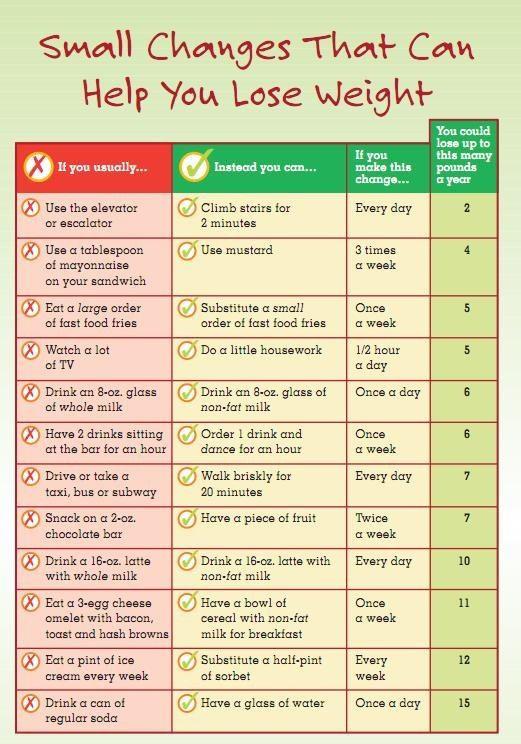
Healthy SubstitutionsI think this chart is a decent one.  However, these substitutions should serve as the BEGINNING of a full lifestyle overhaul.  Many of the substitutions listed here are not considered healthy enough for the long term, such as the small order of fast food fries.  If you are ordering fries three days a week, substituting a large order with a small one is NOT a truly healthy change.  As far as I am concerned, fries should be avoided with the exception of the RARE indulgence.  As an example, I am a huge fan of french fries and have absolutely no self-control around them.  Because of this, I only allow myself to eat french fries a couple of times per YEAR.

I am also not a huge fan of most dairy products (Greek yogurt excluded) because of the way such products are processed.  So a substitution with nonfat milk is not the best over the long haul.

The key with following the suggestions in this chart is to move in a progressively health-conscious direction so that it becomes easier over time to adopt truly healthy habits.

Don’t Ban Fruit!

Basket of FruitFruit has gotten a bad rap recently in people’s efforts to eradicate sugar from their diets.  However, I strongly believe that this is a big mistake.  Fruits are low-calorie and (with the exception of avocados) low in fat, and are plentiful in vitamins and soluble fiber.  Soluble fiber aids the body in ridding fats and cholesterol from the body as well as ensuring regular transit of food particles in excretion.  In addition, fruits offer antioxidants which protect the  body from oxidant stress and many diseases, as well as boost our immune response.

I especially love blueberries as they contain a special type of antioxidant known as anthocyanins.  In fact, all “blue” fruits (blackberries, acai, mulberries and black grapes contain these powerful antioxidants just underneath their skins.

Here is a list of some of the most popular fruits along with their associated health benefits:

APPLE:  Apples are packed with soluble fiber and are high in vitamins.  Due to their high fiber content they can be excellent aids for individuals who suffer from constipation.

BANANA:  This fruit is well known for its high potassium content.  Those who have issues with high blood pressure might want to make bananas a regular part of their meal plans in order to manage their pressure issues.

BLUEBERRIES:  As stated before, blueberries are one of my favorite fruits because they offer so many health benefits.  This fruit is ranked number one in antioxidant activity and may help to lower the risk of developing neurological disorders such as Alzheimer’s and Parkinson’s.  They also freeze very well.  In fact, not too long ago I was in the habit of purchasing large batches of blueberries, then freezing them for use in my morning oatmeal.

CRANBERRY:  This extraordinary fruit prevents bacteria from adhering to the bladder wall and in so doing can be very effective in preventing urinary tract infections from developing.  I recommend the extract or juice to women who are prone to frequent urinary tract infections as it minimizes the chance of developing infections.  Cranberries have a strong antioxidant effect as well.

PINK GRAPEFRUIT:  This fruit is very high in a form of soluble fiber known as pectin, which can help to lower cholesterol.  It also is rich in lycopene and flavonoids, which may have a protective effect against certain types of cancer.  Beware of this fruit if you take cholesterol-lowering statins or some other medications, as grapefruit can interfere with some medications.

KIWI:  This strange, beautiful, tart fruit is packed with vitamins C and E, has 3 grams of fiber in one fruit, and is also rich in potassium and magnesium.  In fact, kiwi has more vitamin C than oranges do. 

MANGO:  This fruit has ample amounts of lutein and zeaxanthin, which have a protective effect on vision and can reduce the risk of age-related macular degeneration, which is the leading cause of blindness in adults.

ORANGE:  Oranges are rich in folate, an essential substance which helps to prevent neural tube defects in unborn infants and which also has a protective effect against the development of high blood pressure in women.  It is also rich in vitamin C and fiber.

PEAR:  Pears contain a lot of soluble fiber and for this reason can be very effective in relieving constipation.

PINEAPPLE:  This tropical fruit, besides containing large amounts of vitamin C, contains an enzyme known as bromelain which assists in breaking down protein and facilitating digestion.  Bromelain also has wound healing properties, helps to prevent blood clots and inhibits cancer cell growth.  Pineapples also have anti-inflammatory properties which can help to alleviate arthritis pain.

POMEGRANATE:  This fruit is rich in antioxidant tannins which have a demonstrated protective effect on the heart.  Individuals with high blood pressure or risk of heart attack will benefit from ingesting this fruit on a daily basis.

PRUNE:  Prunes are very high in sorbitol which has a mild laxative effect, so the old wive’s remedy of drinking prune juice for constipation was extremely valid.  This fruit is also very rich in boron, a mineral which may help prevent osteoporosis.

RASPBERRY:  Raspberries are rich in folate, magnesium and ellagic acid, an antioxidant which may help to prevent cervical, esophageal and colon cancer.  They also provide large amounts of fiber, as well as vitamins A and C.

STRAWBERRY:  Strawberries are packed with vitamin C, fiber, folic acid and potassium.  They also have a protective effect against carcinogens.

I realize that many people are not able to locate the fresh varieties of fruits throughout the year, so I want to call attention to the varieties of fruits which are available frozen.  Dole offers the following fruits in frozen versions:

  • Apples
  • Bananas
  • Blackberries
  • Blueberries
  • Cherries
  • Cranberries
  • Mangos
  • Mixed berries
  • Papaya
  • Peaches
  • Pineapple
  • Raspberries
  • Strawberries

Frozen fruit is picked, washed, peeled, cut and frozen immediately in order to retain the bulk of its nutritional value.  When you are ready to use the fruit, you can either thaw it at room temperature or lightly defrost it in the microwave, though I strongly prefer room temperature thawing.

People who compete may have adopted the attitude that fruit is a big no-no, as they believe the fructose in fruit will potentiate fat retention.  However, if you consume small portions with meals, especially with your post-training meal, there is no way that you would consume enough to create such an issue.  I strongly disagree with the mindset that fruit consumption should be eliminated during contest prep, as this robs the body of powerful antioxidants and deprives a competitor of natural sweetness, which could result in strong cravings for sweet items which are made with sucrose or artificial sweeteners.  If you are extremely concerned about consuming too much fruit, try a small portion (1/4 to 1/3 cup of fruit in the morning with your first meal, and the same portion size with your post-workout meal. 

Premenstrual Woes and Natural Remedies

PMS“That time of the month” is often met with dread by women because of its inconvenience and also because it is also frequently preceded by annoying symptoms such as irritability, fatigue, acne and bloating. Some unlucky women experience a constellation of symptoms which are severe enough to disrupt daily function. These women are said to have premenstrual syndrome (PMS).

What are the symptoms of PMS? Though they can vary greatly among women and even from cycle to cycle, and can range in severity, there are common symptoms which characterize this syndrome.

Common Symptoms of PMS:

• Bloating
• Breast tenderness
• Acne
• Changes in bowel habits
• Fatigue
• Insomnia
• Back pain
• headaches
• Decreased libido
• Irritability
• Depression
• Anxiety
• Mood swings
• Inability to concentrate

Sounds like fun, doesn’t it? However, there are a number of measures which women can take to decrease symptoms. I will confine my recommendations to the most widely documented and readily available aids.

FOOD:
• Eat small, frequent meals to stabilize blood sugar
• Avoid alcohol
• Decrease intake of fatty foods
• Decrease red meat intake
• Increase intake of fruits, vegetables, beans, nuts, seeds and fish
• Reduce sugar and salt intake
• Eliminate or decrease caffeine

EXERCISE:
Women who exercise regularly experience fewer and less intense PMS symptoms than those who do not engage in regular exercise.

RELAXATION:
There are a number of methods women can employ to promote relaxation, such as meditation, yoga, and breathing exercises. By reducing stress this can help to level out the erratic emotions which can strike before your period.

MAGNESIUM:
Magnesium has a beneficial effect on mood changes that are associated with PMS, and also reduces the swelling, breast tenderness and bloating which commonly occur in women before their periods. Take 400 milligrams daily.

CALCIUM:
Women who suffer from PMS tend to have lower calcium levels, and those who take calcium supplements experience less severe symptoms than those who do not. Calcium supplementation can reduce bloating, mood swings, food cravings and pain. Take 400 milligrams three times daily.

VITAMIN B-6: Take 50 to 100 milligrams daily to ease PMS symptoms.

VITAMIN E: Vitamin E reduces the production of prostaglandins which are responsible for cramps and breast tenderness. Take 400 international units daily.

CHROMIUM: Chromium regulates insulin and blood sugar which in turn controls food cravings and appetite. Take 25 micrograms daily.

CoQ10’s Benefits

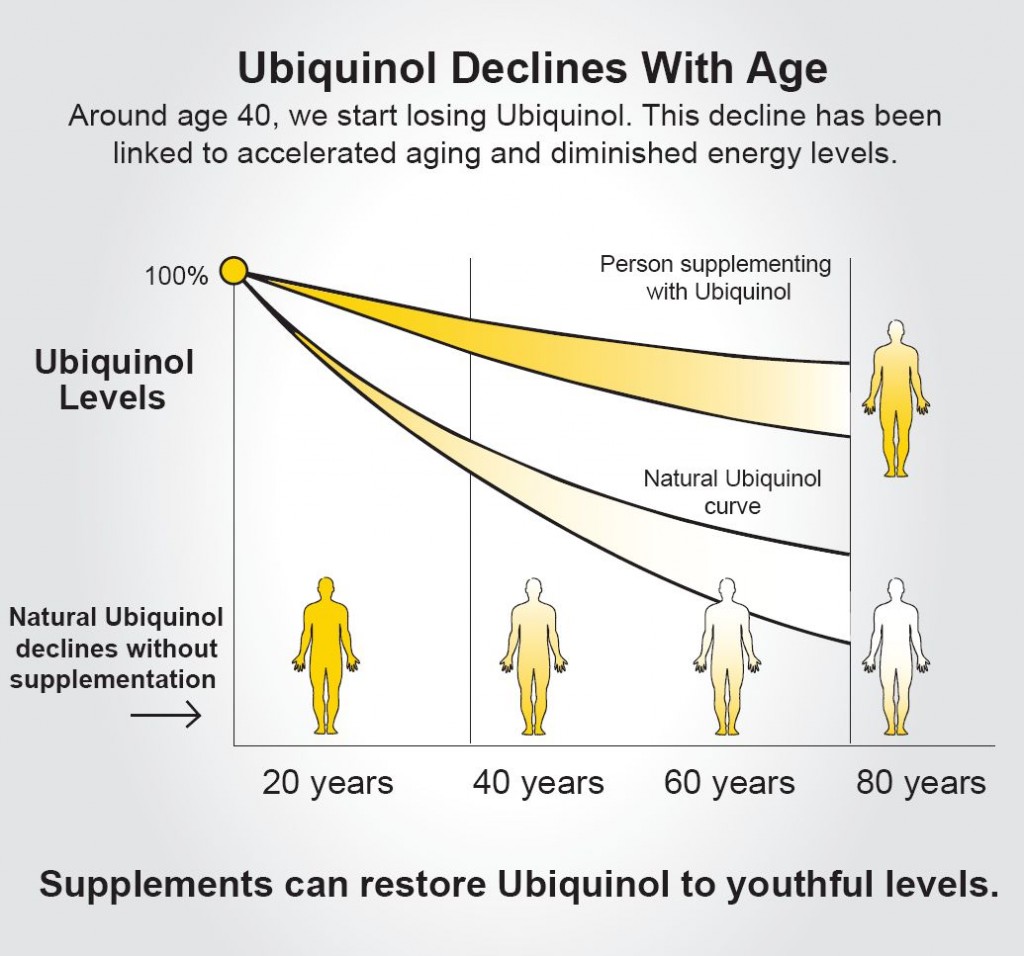
CoQ10 ChartCoenzyme Q10 is an essential nutrient found in every cell of the body which is involved in cellular energy production. It confers a protective effect against damage from free radicals, thus also classifying it as an antioxidant. CoQ10 can be found in a multitude of foods, but is especially high in beef, peanuts, sardines, mackerel and organ meats.

CoQ10 has demonstrable effects against cardiovascular disease, cancer, and periodontal disease, and is also said to boost recovery from exercise. However, the most documented effect on health which CoQ10 has is its beneficial effect on treating hypertension. People with hypertension have CoQ10 levels which are below normal, and these same individuals have shown a reduction in blood pressure when supplemented with CoQ10.

Another strong benefit of CoQ10 supplementation is treatment of periodontal disease. CoQ10 can reduce the swelling, bleeding, pain and gum recession which characterize the disease. However, pairing this supplement with vitamin C would yield stronger benefits.

Some individuals take CoQ10 to reverse skin damage and preserve the collagen and elastin in skin. Levels of CoQ10 decrease with advancing age, resulting in decreased ability to produce collagen and elastin, so taking CoQ10 orally or applying it topically may boost skin repair.

Most individuals should supplement with 100 milligrams of CoQ10, but if insomnia occurs, take half the dose and only take it in the morning. Side effects at high doses (300 milligrams or more per day) include rashes, abdominal pain, nausea, dizziness, headache, fatigue and sensitivity to light. Individuals who are taking warfarin may experience a diminished response to the blood thinner when taking CoQ10. Diabetics will experience decreased insulin requirements when taking CoQ10.