Home Sweat Home

Image ID : 45950016
Copyright : Katarzyna Białasiewicz


When I first decided to write a blog post on this topic, it was a couple of years ago, and I sat on it, procrastinating. What finally prompted me to complete this post was the inevitable, terrifying lockdown which washed across the globe in response to the COVID-19 pandemic.  Times have certainly changed in a heartbeat, and many of us find ourselves in unfamiliar territory, being forced to remain within the confines of our homes, socially isolated, concerned about a very uncertain financial and economic future.   Gym rats like me everywhere have been banned from alighting daily upon gyms and fitness facilities which have provided much needed iron therapy, daily “me” time, and a chance to clear up all the mental clutter which our frenetic society has thrust upon us.

Whether you are stuck indoors without much more than a list of streaming shows to check off, or you have had the good fortune to remain gainfully employed during this difficult time, you might be interested in some exercises which can keep you lean and mean.

Image ID : 22284944
Copyright : Marcin Balcerzak


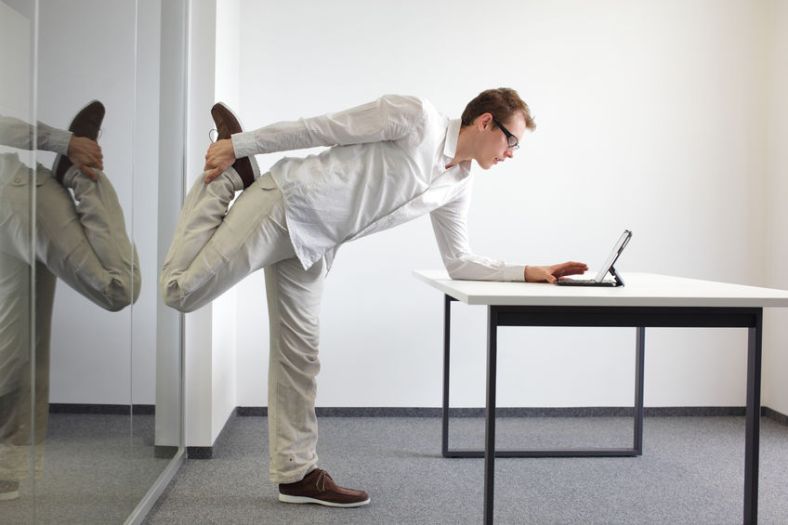
Throw in a few quad stretches during your day to keep soft tissues limber!


It may seem to be a daunting task to devise a workout routine outside of a gym or health club, but it is absolutely possible to get decent workouts in on a daily basis whether you are at home, or away from home with limited equipment. Whether you take a few minutes to exercise at your desk while at work (just remember the safe distance rule), throw together a calisthenics routine in an open outdoor area, use your living room floor to eke out a workout, or use furnishings in a home office area to crank out a sweat-inducing regimen, you honestly have ZERO excuses to avoid a workout. Contrary to popular belief, you don’t need fancy gym equipment to move and challenge your body.

If you truly are new to exercising on the fly, here are some suggested workouts which can get you going.

Image ID : 45461087
Copyright : Andriy Popov


Got a stability ball chair?  It’s great for balancing on while you get a good rib stretch!


SUGGESTED EXERCISES:

CALISTHENICS/PLYOS for full-body:

Star Jacks:  These are similar to a jumping jack, but you flair your arms and legs out, while jump explosively from the ground. To make it more challenging, touch the ground at the beginning of the move.

Try 3 to 5 sets of 10 to 12 reps.


Jump Squats:  Start in a crouched squat position with feet shoulder width apart.  Then jump up quickly Upon landing, return to squat position again.

3 to 5 sets of 10 to 12 reps.


UPPER BODY BLAST:

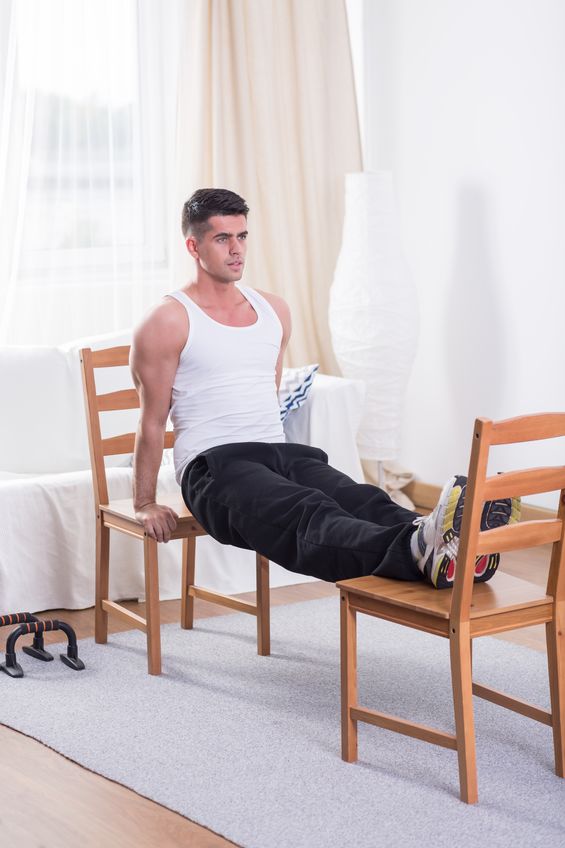
Tricep Dining Room Chair Dips:

You can perform these triceps burners on the edge of a chair or a firm bed, or a bathtub.

  1. Place your hands at the edge of the bed with palms facing down so you are supporting your upper body.
  2. Bend your knees at 90 degrees so that your thighs are parallel to the floor.
  3. Dip down slowly, keeping elbows in line with your shoulders.
  4. Push down against the support to raise yourself back up to the starting position.


3 sets of 8 to 10 reps


Incline Push Ups (use the floor or chair):

  1. Place your hands on the bed or a chair with your feet on the floor behind you in a push-up position.
  2. Slowly lower yourself down to the bed while keeping your abdominal region tight and squeezing your glutes.  Don’t round out your back!
  3. Push back up to the starting position and repeat.


3 sets of 10 to 12 reps


Decline Push Ups:

When you are ready to get more of a challenge from your push ups, move to this exercise.


  1. Start with your feet on the bed and your hands on the ground. Keep your body in a straight line and your abdominals tucked in.
  2. Slowly lower your chest down to the ground while keeping your elbows in close to your body.
  3. Push back up to the starting position and repeat.


One Arm Milk Jug Rows:

Use a milk jug or similar weighted item for this exercise.

  1. Start bent forward at the waist, placing opposite hand on low table, chair, or sofa.
  2. With other arm, bend at elbow and bring weight up near ribcage, squeezing muscles in mid back to bring weight up.  Return to start.

3 sets of 10 to 12 reps


LEG BLAST:

Wall Squats:

  1. With your back to the wall, lower down so that your legs create a 90-degree angle.
  2. Hold this position for as long as you can.

3 sets of 30 to 60 seconds


Bodyweight Squats:

  1. Start in squat position.
  2. Squeeze glutes and backs of legs to raise up halfaway.
  3. Return to start.

4 sets of 12 to 15 reps


Front Lunges:

  1. Start standing with feet shoulder width apart.
  2. Step forward with right foot into lunge position, knee bent at 90 degrees, with right thigh parallel to ground.  Make sure knee does NOT extend past your toes!
  3. Return to start position by pushing off right foot and squeezing left glute.
  4. Repeat on other leg.

4 sets of 10 reps each leg


Walking Lunges:

  1. Start standing with feet shoulder width apart.
  2. Step forward with right foot into lunge position, knee bent at 90 degrees, with right thigh parallel to ground.  Make sure knee does NOT extend past your toes!
  3. Now advance by stepping forward with left foot into lunge position, knee bent at 90 degrees, with left thigh parallel to ground.  Make sure knee does NOT extend past your toes!
  4. Keep moving forward, alternating legs.

3 sets of 10 reps each leg


Diagonal Lunges:

  1. Start standing with feet shoulder width apart.
  2. Step forward with right foot out at a 45 degree angle from the center line into lunge position, knee bent at 90 degrees, with right thigh parallel to ground.  Make sure knee does NOT extend past your toes!
  3. Now advance by stepping forward with left foot out at a 45 degree angle from the center line into lunge position, knee bent at 90 degrees, with left thigh parallel to ground.  Make sure knee does NOT extend past your toes!
  4. Keep moving forward, alternating legs.

3 sets of 10 reps each leg


Single Leg Deadlifts:

  1. Stand with feet shoulder width apart.
  2. Lean forward at the hips and shift your weight onto right leg while extending left leg straight behind you.
  3. Lift your extended left leg while leaning your upper body forward until your body is almost parallel with ground, arms hanging down or with hands at hips.  Slowly return your extended leg to starting position.
  4. Repeat with other leg.

3 sets of 10 reps each leg


Assisted Pistol Squats:

  1. Start by balancing on right leg, toes pointed forward.
  2. Straighten out left leg in front of you while you crouch down.  Lightly lean on chair back with your right hand as you crouch down to assist with movement, until your extended leg is parallel with ground.
  3. Press back up by engaging muscles in your right leg, pressing away from the floor to return to start.
  4. Repeat for designated number of repetitions, then switch legs.

3 sets of 6 to 8 reps per leg


Leg Kickbacks:

  1. Get down on all fours on the floor with an exercise mat or towel under you for cushion.  Align your wrists under your shoulders and your knees under your hips.
  2. Without changing the angle of your knee, extend your right leg back and up until your thigh is parallel with the ground with the sole of your right foot facing the ceiling.
  3. Contract your glute at the top of the movement and hold for a count of 1-2.
  4. Return to your starting position without touching your knee to the ground and repeat.
  5. Do 12 to 20 repetitions, then switch sides.

4 to 5 sets of 12 to 20 reps per leg


Hip Bridge:

  1. Lie flat on your back, with knees bent and arms by your hips, palms down, and feet hip distance apart with heels a few inches from your glutes.
  2. Push through your HEELS and squeeze your glutes to lift your hips up so that they are in line with your torso.
  3. Pause at top for a count of 2 to 3, then lower back down.

3 to 4 sets of 10 to 12 reps


ABDOMINAL STABILIZERS:

Basic Plank:

  1. Place forearms on the floor with elbows aligned below shoulders and arms parallel to your body at about shoulder width.
  2. Feet are about 6-8 inches apart, with toes ground into floor.
  3. Squeeze glutes and make sure your entire body makes one long line.
  4. Neutralize your neck and spine by looking at a spot on the floor about a foot beyond your hands. Make sure your head is in line with your back.
  5. Hold the position for at least 30 seconds.

One Hundreds:

  1. Lie on back with knees bent at 90 degrees and hips at 90 degrees from floor.
  2. Reach arms down along torso parallel to floor, then lift head and engage your abdominal muscles with shoulder blades off the mat.
  3. Move your hands in a repetitive percussive motion about an inch or so off the floor then down while you inhale for a count of 5.
  4. Exhale for a count of 5 while continuing the same percussive hand motion.
  5. Repeat for 9 more full breaths with same cadence.

V-Ups:

  1. Lie on your back and extend your arms above your head. Keep your feet together with toes pointed.
  2. With legs straight, lift them up as you simultaneously raise your upper body off the floor. Keep your core tight as you reach for your toes with your hands. Slowly lower yourself back down to the starting position.

How To Do V-Ups

Why Some Millennials Aren’t Smiling: Bad Teeth Hinder 28% In Job Search

Source: 123rf.com
Image ID: 110903258
Copyright: Dean Drobot

I am sharing this very interesting article written by Diana Hembree which explores the issue of tooth decay in the millennial population.  What in the world is happening with the millennial generation?  It seems the focus is changing, from quality care, to what is more convenient for the consumer.   What a shame.

The other issue I see here is a glaring lack of motivation on the part of millennials to correct issues which may interfere with their ability to secure gainful employment.  I can’t help but think of descriptors for this crop of young adults such as lazy, entitled, and doomed.

Here is the link to the original article:

https://www.forbes.com/sites/dianahembree/2017/03/28/why-some-millennials-arent-smiling-bad-teeth-hinder-28-in-job-search/#4db0d74c59c6

by Diana Hembree

Decaying teeth and gum problems make one in three young adults aged 18 to 34 (33%) reluctant to smile, the ADA found. About one in five have cut back on socializing as a result of dental problems. And 28% say the appearance of their teeth and mouth undermines their ability to interview for a job.

The ADA study also found that:

— More than 30% of young adults have untreated tooth decay (the highest of any age group)

— 35% have trouble biting and chewing

— Some 38% of this age group find life in general “less satisfying” due to teeth and mouth problems.

— They are three times more likely than children to lack dental care due to financial reasons, with only 30% of millennials visiting the dentist each year.

The dental system is going to have to change to appeal to millennials “who are all about convenience,” periodontist and consultant to dental practitioners Marc Cooper writes on his website, masterycompany.com.

Millennials aren’t tied to the idea of a personal relationship with one dental practitioner; they are used to comparing service and costs and ordering on their smart phones — rather like calling up an Uber or Lyft — and they likely won’t tolerate inefficiency or long waits for appointments, Cooper added.

This may mean some major changes for dental providers. Today, approximately 92% of professionally active dentists work in a private practice, according to the ADA. In 2016, the ADA’s Health Policy Institute researchers surveyed millennials to gauge their interest in getting dental care in a retail setting, such as a CVS, Target or Walmart store. Overall, nearly 4 in 10 indicated that they were somewhat or very interested, including nearly half of Hispanics (47%) and African Americans (45%) surveyed.

“Millennials are not the same type of patient as a baby boomer,” says Vujicic. “We know millennials demand transparent cost and quality information when it comes to health care services. We know they place a premium on convenience.

“Health care is slow to adjust,” he added, “but the dental care system in particular is just starting to feel this wave of intensified consumerism.”

Change is already brewing: Beam Dental, a young tech company operating in about eight states with 100,000 dentists, focuses on prevention and online tools for “tech-savvy clients.” It offers coverage discounted by about 10 to 25% based partly on how well you practice good dental hygiene – which the company can monitor, with permission, through an internet-connected toothbrush that reports how often and how well you brush.

So far Beam Dental is available only through small and medium sized businesses who pay all or part of employee premiums, with a strong following among startups and millennial-oriented organizations, says Alex Frommeyer, co-founder and CEO.

“We knew that the dental industry was broken because there were over 100 million Americans without coverage,” Frommeyer says. He adds that he wants to offer affordable dental care while using online-based services “to incentivize people to invest in their own dental health.”

In the meantime, if you’re a cash-strapped millennial who needs dental care and lacks dental insurance, you may want to:

  • Check out dental schools in your area, where dental care costs much less than services from private dentists
  • Check out community college dental hygienist training programs for free or low-cost preventive care
  • Ask your dentist about a payment plan for more expensive treatments such as fillings and crowns
  • Charge your treatment to a low- or zero-interest credit card and pay it off before the interest rate goes up
  • Apply for a healthcare financing credit card from CareCredit
  • Look for a dental health fair in your area in which practitioners provide free dental screenings and care
  • See whether your community health care center offers free or low-cost dental care
  • Get treatment at the first sign of tooth pain, before it turns into something requiring a crown, root canal or emergency dental care.

MoneyGeek writer Judith Horstman contributed to this report. Horstman is a former Washington correspondent for Gannett and has written four books for Scientific American.
Take Care Of Your Teeth!

source: 123rf
Image ID : 39646768
Copyright : dolgachov

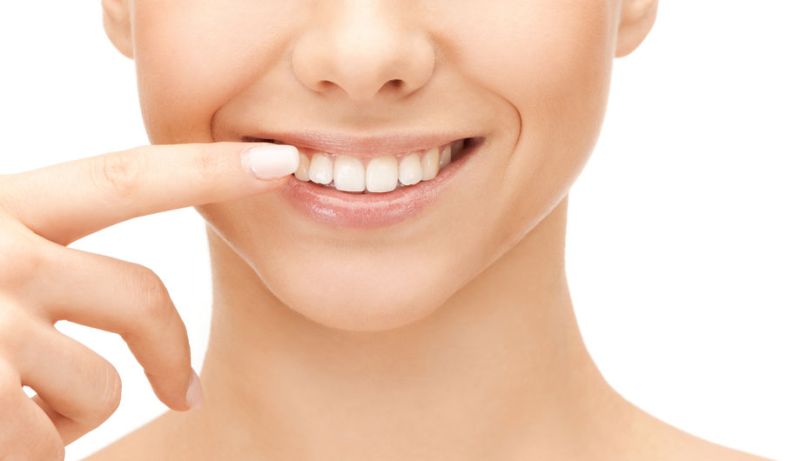
Have you ever spoken with someone who had such bad breath that you were tempted to turn away or shield your nose from the olfactory onslaught? If a person has such bad breath that it is very noticeable to others, his or her oral health is very poor, with excessive levels of oral bacteria. When oral bacteria levels are left unchecked, the most obvious conditions which develop are gum disease and tooth decay.

Your mouth is a veritable breeding ground for bacteria, and though most of the microbes which take up residence in your mouth are harmless, some species can also enter your lungs and digestive tract and wreak havoc on them. In addition, bacteria which enter the bloodstream from inflamed gums can travel to arteries in the heart, causing them to harden, which then causes plaque to develop on the arterial walls and impede blood flow. In plain terms, bacteria from your mouth can increase your risk of stroke or heart attack. Another vital organ in which oral bacteria can accumulate is the brain, increasing the risk of development of Alzheimer’s dementia.

So how do you most effectively control the amount of bacteria in your mouth and protect yourself against development of major diseases? The most obvious advice is to brush and floss daily, but there are also a number of other guidelines which you should follow for the healthiest teeth and gums.

FOR OPTIMAL ORAL HEALTH, DO THE FOLLOWING:
* brush teeth at least twice daily
* floss daily
* brush your tongue daily
* don’t brush too vigorously
* go for professional dental cleaning every six months
* reduce sugar intake
* get cavities filled as soon as you discover them

I know that many people get very lazy about flossing in particular, complaining that it is tedious and not worth the time. Admittedly, I used to be one of those people until about 15 years ago, when I made a concerted effort to floss daily, and I can tell you that it has made a difference. How do I know? Because when I go for my regular dental exam and cleaning every six months (and I go like clockwork), the dentist or hygienist doesn’t have much to scrape off my teeth. The trick with flossing is to curve the floss and run it along the tooth to remove any stubborn plaque and food items which may be hugging the curves and the spaces between each tooth. Once you get the hang of it, it’s a snap to do.

I also prefer an electric toothbrush with soft bristles. For those of you who use a heavy hand when you brush your teeth, bear in mind that you are wearing down your enamel when you brush vigorously. Allow the oscillation of the brush bristles to do the work. It’s also better for your hand and wrist.

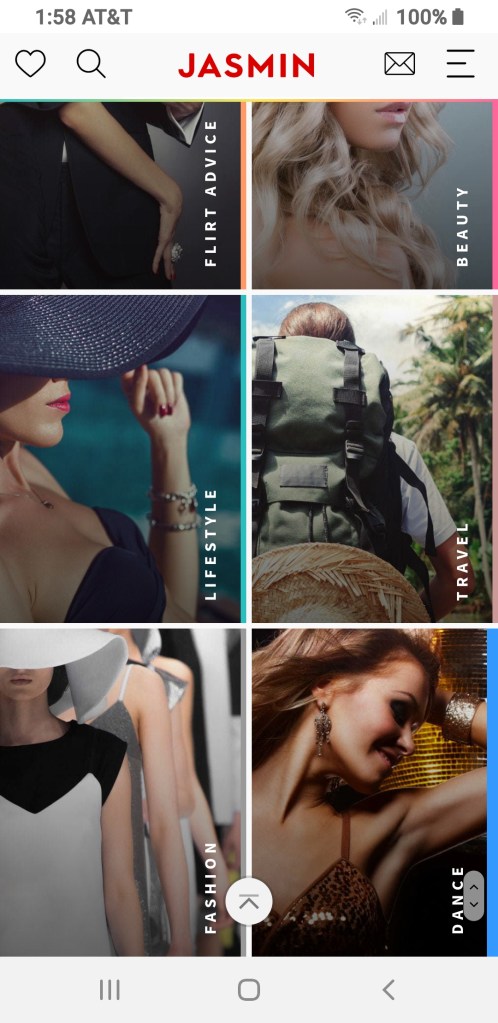
I’m A Jasmin Influencer!

I am so thrilled to be a Jasmin Influencer!  I have been with them since early December, and I have a blast creating highlights for the site and posting every day.  Yes that’s right, every single day, even on holidays and weekends!

Please follow me at www.Jasmin.com/staceynaito  and check out my highlights and daily story elements!  You can also direct message me anytime through the site, and I also make myself available for Video Calls for a pocket of time every day.

Topics I cover include:

Dating

Relationship

Soul Mate

Fitness

Flirt Advice

Beauty

Lifestyle

Travel

Fashion

I haven’t posted anything on Dance, but who knows?  I may talk about my three year stint with salsa dancing on the Jasmin platform!

You can sign up for FREE and get 15 FREE CREDITS!


I am also always open to suggestions on topics which you would like to have me cover.  Want more nutrition tips?  Beauty hacks?  Travel deals? Relaxation techniques?  On the go workouts?  You tell me, I’m open!

Tips for Seniors Who Want to Burn Body Fat and Get Better Sleep

Image via Rawpixel

Please check out this fantastic article by Karen Weeks of Elderwellness.net on optimizing sleep in older individuals.

By Karen Weeks

karen@elderwellness.net

It’s a well-known fact that we burn calories while we sleep. Therefore, the higher the quality of our sleep, the more fat we will burn throughout the night. But sleep and body fat are even more intertwined than that. Lack of sleep, which is common among seniors, can lead to weight gain, and excess body fat can impede your quality of sleep. It’s a vicious cycle.

If you’re a senior, there are steps you can take to maximize the calories you burn during sleep, and there are also practical things you can do throughout the day that will help you reduce body fat and get better sleep. Here’s what you need to know.

Eat Better

Eating well is a cornerstone of healthy living. And yes, it can even help you sleep more soundly.  If you’re super busy and fast food is a part of your normal routine, consider getting an electric pressure cooker. That way, you can cook fast, healthy meals at home and avoid the consequences of fast food. Before you buy anything, check out reviews of various pressure cookers to compare quality, prices, and ease of use.

It’s also worth considering that there are certain foods you can eat late at night that will give your metabolism a boost, which will help you burn more calories in your sleep. Protein shakes, pistachios, plain yogurt, strawberries, and cheese are just a few examples of healthy late-nightsnacks. Just be sure to keep the portions under control so that your body isn’t working too hard to digest, which can keep you from falling asleep.

Get a Move on It

Exercise is another thing that can help you lose body fat and get better sleep. Not only that, but it also comes with a number of mental health benefits, such as improved self-confidence and reduced stress, anxiety, and depression.

There are many types of exercise that are safe and beneficial for seniors. Many older adults opt for low-impact movements like swimming, cycling, brisk walking, and using the elliptical. The important thing is that you find something you enjoy and that you do it for at least 30 minutes a day, even if you need to break it into 10- or 15-minute segments.

When you have a solid exercise routine, you will have more energy throughout the day and it will help you feel more tired by bedtime. Morning and afternoon routines tend to work best for improving sleep, as exercising in the evening can make it difficult to fall asleep.

Establish a Killer Bedtime Routine

If you want to get better sleep and burn off more calories, you need a bedtime routine. This can include anything that helps you fall and stay asleep. Try to go to bed and wake up at the same time each day (even on weekends). Also, try a variety of activities that help you wind down and get ready for sleep. Taking a warm bath, listening to soft music, practicing yoga, meditating, and reading a book are all things that can put you in the right frame of mind to drift off.

Make Your Bedroom Dark, Quiet, and Cool

Your bedroom is also important when it comes to healthy sleep, so make sure this space promotes relaxation by keeping it dark and quiet leading up to bedtime and throughout the night.

Keeping the temperature a little cooler can improve sleep as well. Moreover, consider removingthe use of electronic devices (e.g., smartphones, tablets, TVs, etc.) from your bedtime routine, as the blue light emitted from the screens can be a sleep disrupter.

If you want to reduce your body fat and get better sleep, make sure you’re following a healthy diet and exercise routine. Also, create a good bedtime routine and turn your bedroom into a sleep haven. Just because poor sleep is common among seniors doesn’t mean you have to accept it as your fate. Making little changes like these might be all it takes to help you improve your overall health and well-being.

Treating Low Testosterone In Women With DHEA

123rf.com
Image ID : 60343150
Copyright : Sasin Tipchai

Many women who have low serum levels of testosterone (normal total levels range between 15–70 nanograms per deciliter) are often wrongly convinced by their doctors, loved ones or coworkers that they are suffering from depression or stress. Low testosterone in women commonly causes fatigue, low libido and sleep disturbances, symptoms which are also found in mood disorders. The fact of the matter is, like men, women become deficient in testosterone as they age, and may manifest a whole host of symptoms.

Here are some common symptoms of low testosterone which women may experience:

muscle loss
muscle weakness
weight gain
increase in fat stores
reduced libido
decreased sexual satisfaction
vaginal dryness
low fertility
irregular periods
dry skin
thinning hair
bone loss
development of cardiovascular disease

Image ID : 15314531
Copyright : alphaspirit

While some women will agree to boost their testosterone levels by using testosterone supplements (either injected or in topical form), there are numerous side effects which may emerge from such therapy. These side effects, some of which are irreversible, include hair loss (male-pattern baldness), weight gain, insulin resistance, acne, excess facial hair, hirsutism, deepening of voice, aggression, enlarged clitoris, and smaller breast size. If a woman is concerned about these side effects, she can turn to DHEA, regular exercise, and certain foods to increase testosterone levels.

A significant increase in serum testosterone levels has been consistently demonstrated during the hours following exercise, so a regular exercise regimen will naturally and safely increase testosterone levels in women. There are also numerous foods which boost testosterone levels in the body. They are:
Bananas
Pomegranate
Ginger
Asparagus
Onions
Tuna
Salmon
Oysters
Eggs
Beans
Nuts

Image ID : 86626652
Copyright : annyart

What if exercise and the introduction of testosterone-raising foods isn’t enough for a woman to create normal testosterone levels in the blood? A hormone which is secreted in the bloodstream by the adrenal glands known as dihydroepiandosterone, or DHEA, can be taken as an oral supplement. DHEA is converted in the body into DHEA sulfate, then androstenedione, then ultimately to testosterone and estrogens. DHEA reaches its highest levels in the body in one’s twenties, when undergoes a slow and steady decline (about 10% for each decade of life). Oh the joys of aging, right? Probably the most concerning aspect of DHEA’s decline is the potential development of major diseases such as heart disease and cancer, but another confounding aspect is the decline in the sex hormones, with a corresponding drop in muscle mass, increase in visceral fat, skin changes, and all the other symptoms associated with perimenopause and menopause.

It is widely believed that DHEA is a key hormone which can be administered as an anti-aging treatment for older individuals. One key study followed 30 male and female subjects ranging between 40-70 years of age for six months, during which time they were given 50 mg of DHEA per day for 3 months, then 3 months of placebo, in random order. It only took two weeks for patients taking DHEA to reach the serum DHEA levels of young adults, and after 3 months on DHEA therapy, the majority of subjects reported improved sleep, more energy, and less anxiety. Another study which examined women between the ages of 45-55 found that the subjects who were given 50 mg daily of DHEA had significantly higher testosterone levels than women who were in the placebo group.

If you are a woman considering boosting your blood testosterone levels with DHEA, please make sure to get a full workup and bloodwork from physician who is well-versed in hormone replacement therapy to determine whether you are indeed deficient in testosterone. I always advise starting with DHEA as opposed to testosterone, since the side effect profile of DHEA is much more tolerable than that of testosterone. I also recommend getting your DHEA supplementation compounded with pregnenolone from a well-respected compounding pharmacy for the best purity and quality. You may still experience some side effects from DHEA supplementation, especially at higher doses (in excess of 25 mg daily). These side effects include oily skin and acne, skin thickening, hair loss, stomach upset, headache, insomnia, high blood pressure, changes in menstrual cycle, facial hair in women, deepening of the voice, and fatigue.

REFERENCES
Morales AJ, Nolan JJ, Nelson JC, Yen SS. Effects of replacement dose of dehydroepiandrosterone in men and women of advancing age. J Clin Endocrinol Metab. 1994 Jun;78(6):1360-7.

Do You Need Probiotics?

source: 123rf.com
Image ID : 55340645
Copyright : illustrator

Probiotics supplements have become so ubiquitous that it can be confusing to try to determine which ones you should take. You may even be asking yourself if there is any point to taking probiotics, especially if you are already taking a handful of nutritional supplements.

So What Are Probiotics Anyway?

Our digestive tracts serve as the home for many billions of bacteria, viruses, yeasts, and fungi which are actually beneficial to us and essential for normal function. These living organisms, collectively known as the micro biome, are consumed either in foods or in a probiotic supplement, and are vital to not only gut health, but to our immunity and overall health.

Probiotics were discovered by Elie Metchnikoff, who is known as the father of probiotics. He noticed that inhabitants of rural sections of Bulgaria would live to ripe old ages despite living in extreme poverty. When he discovered that they consumed sour milk, he encountered the gut-friendly bacteria which are now known as probiotics.

Another interesting manner in which humans acquire beneficial bacteria is through the birth canal, where a newborn will be exposed to Bacteroides, Lactobacillus, Escherichia coli, and Bifidobacterium. This is the main reason why infants who are born via C-section have weaker immune systems and are more susceptible to allergies.

What exactly do probiotics do? They are believed to protect us in two ways. The first is the role that they play in our digestion. We know that our digestive tract needs a healthy balance between the good and bad gut bacteria, so what gets in the way of this? It looks like our lifestyle is both the problem and the solution. Poor food choices, emotional stress, lack of sleep, antibiotic overuse, other drugs, and environmental influences can all shift the balance in favor of the bad bacteria.

Since our immune response protects us from germs, and also since beneficial bacteria in our digestive tracts are vital to optimal immunity, it makes sense to replenish our guts with probiotics. If our digestive tracts are deficient in probiotics, we are more susceptible to infections, autoimmune disorders, and allergic reactions.

In order for a microbe to be designated as a probiotic, it must meet the following criteria:
1. It must have a documented health benefit,
2. It must be alive when taken, and
3. It must be administered at levels to offer a health benefit.

You should take at least one billion colony forming units (CFU’s) each day.

If you would like to supplement your diet with foods which contain probiotic bacteria, you can incorporate the following foods into your regimen:
Sauerkraut
Pickles
Kimchi
Kombucha
Yogurt
Goat cheese
Miso soup

What In The World Are Prebiotics, And Why Do You Need Them In Your Life?

Source: 123rf.com
Image ID : 92298348
Copyright : Iryna Timonina

Prebiotics are quite different from probiotics, but they work in tandem with probiotics to have a synergistic effect. For this reason, prebiotics and probiotics are known as synbiotics.

While probiotics are live microbes, prebiotics are a type of insoluble fiber which probiotic organisms use as food. When you take prebiotics, you supply the probiotics you ingest with nutrients they need in order to thrive. These fiber sources (inulin and oligosaccharides) pass through the human stomach and small intestine without being broken down. When they reach the colon, they are fermented, producing short-chain fatty acids which are then consumed by the beneficial microbes which have set up house there.

Prebiotics are found naturally in the following foods:
– Asparagus
– Lentils
– Garlic
– Onions
– Leeks
– Oats
– Artichokes
– Bamboo shoots
– Bananas
– Honey
– Milk
– Mustard
– Rye
– Soybean
– Barley
– Wheat
– Tomatoes
– Sugarcane juice
– Sugar beet

Since the probiotics rely on the prebiotics for food, prebiotics must be taken prior to the probiotics.

Experts are now stating that by taking prebiotics, individuals can treat constipation and irritable bowel disease, immune deficiencies, and even prevent and treat different types of cancer. Other research has proven that consuming prebiotic-containing foods increases calcium absorption and bone mineral density in adolescents as well as post-menopausal women. Other studies suggest that probiotics can promote healthy body weight and optimize energy homeostasis.

Conclusion? It’s a great idea to incorporate either prebiotic supplements or prebiotic-containing foods in your daily regimen, along with probiotics, to ensure optimal gut health, support immunity, and protect against a myriad of disease processes.