Keeping Pace With A Crazy Schedule

George Kontaxis shoot

The last few weeks have been NUTS. I am talking about day after day of so many shifts in my schedule and demands on my time, that I am torn in many different directions, and cannot focus on a darned thing. When this kind of chaos ensues, I begin to lose items, certain basic vocabulary terms escape me, and I feel like I am rushing by everything and everyone, like a bullet train zooming through a bustling cityscape.

For the life of me, I can’t find a gray tank top which I had recently purchased and put…somewhere. I honestly can’t remember where. This isn’t like me, because I am VERY organized, to the point of having all of my clothing organized by color, sleeve length, etc. So why can’t I find that gray top?

I literally run around in my bedroom, grabbing for clothes, rushing, trying to keep up with the stressful demands of being in so many places all the time. It’s starting to get old. Forget about having time to read a book, or watch a TV show, because by the time the dust settles from the crazy days I have been flying through, the notion of blissful sleep is so seductive that I don’t want to do anything else.

What keeps me from unraveling is the consistency I demand with my eating habits and my workouts. I am not joking about this. Despite the insane schedule I have been juggling lately, I still weight train six mornings each week. I attend lyra class one to two evenings during the week. My meals consist of clean foods like chicken breast, salmon, tilapia, green beans, asparagus, brown rice, quinoa, avocado, almonds, oats, and Greek yogurt. I have been drinking plenty of alkaline water. I have also been consistent about consuming MitoXcell every morning (I LOVE this supplement and intend to post more about it when I get a chance to breathe!), and I also take my regular supplements (like turmeric, CoQ10, folic acid, etc.) daily. My energy levels have been decent, and my mood has been generally great, with only a couple of stark exceptions.

There are two days next week which I have designated as clean up and organization days, and I desperately need them. During those days, I will perform the deep cleaning throughout most of the house which the housekeeper always neglects, I will reorganize cabinets and drawers, clean up the garage and patio, and find that gray top!

How Weekend Drinking Binges Make You Fat (Repost)

One of the reasons why people tend to look forward to the weekend so much, besides being away from work, is the ritualistic imbibing of alcohol and consumption of rich foods which many tend to engage in. I have clients who will follow a sensible and healthy meal plan during the week, only to abandon all self-control, put on party hats and eat and drink during the entire weekend.

I will explain to you why this practice is a sure way to keep you from attaining your fitness goals. When you drink large amounts of alcohol, say 3 drinks or more, your body gets a sudden influx of alcohol which puts your body’s metabolism of nutrients to a grinding halt. Why? Because the body cannot store alcohol and must use it immediately as a fuel source. What happens with nutrients is that they are converted to fat and then stored in fat tissue for later use, so alcohol essentially prevents the body from utilizing fat. High consumption of alcohol also impairs the cerebral function (specifically the prefrontal cortex), flattening inhibitions and increasing the appetite. That is why you will often crave greasy foods when you drink, because the body turns to rich foods to replenish nutrients. The combination of increased appetite and behavioral changes are enough to get you to eat a calorie laden, fatty meal which is then stored as fat.

I enjoy the occasional cocktail and as a result will never tell people to avoid drinking altogether. However, I have several recommendations which will minimize the fat deposition which alcohol consumption triggers.

1. Always eat a meal with PROTEIN, FIBER and HEALTHY FAT before you begin drinking to offset the surge in blood sugar which occurs with alcohol consumption and to slow the absorption of alcohol once it is introduced to the gut.

2. Drink two glasses of water for every drink of alcohol. Alcohol is a diuretic, meaning that it will dry you out. Because of this, it is important to maintain a high level of hydration to offset the diuretic effect.

3. Limit consumption to 1 or 2 drinks in an evening. This will keep calorie consumption down.people at party

White Rice

white rice
Anyone who grew up in a household which was managed on a shoestring budget can relate to the concept of adding an inexpensive, bulky carbohydrate to meals to increase their volume. My entire childhood was punctuated by the ubiquitous presence of glutinous Japanese sticky rice. In fact, the only times I did not consume white rice with dinner were when my mom decided to heat up Stouffer’s Macaroni and Cheese, Stouffer’s Lasagna, or pot pies (Swanson and Banquet were the two brands she bought…she ended up purhcasing whatever was on sale). When we had the mac and cheese or the lasagna, we would split the dinner, and she would serve frozen veggies on the side.

All of our other meals featured a mound of white rice which occupied the majority of the plate’s surface. If we had broiled hot dogs, there was rice. Scrambled eggs and rice. Broiled chicken and rice. Vienna sausage and rice. Pan fried SPAM and rice. The occasional steak or lamb chop treat and rice. Sukiyaki (one of only two dishes my mother knew how to cook) and rice. Meatloaf (the other dish my mom could make from scratch) and rice. I even had Campbell’s soup with rice, and was so accustomed to eating soup with rice, that I was always thrown off when I would go to a classmate’s house and encounter soup being served as a precursor to the main course, not the actual main course, and sans rice.

Despite the fact that I was raised in a very low income household, and ate processed foods almost constantly, I was a very happy child and never felt that I was being deprived. I was more astonished and disgusted by the ultra wealthy children I went to school with, because I thought they lived in a false world, one which was based almost exclusively on possessions and financial wealth. A number of my classmates were pretentious, unpleasant brats who were so brainwashed with a sense of entitlement that they probably got kicked around by life when they had to navigate through it on their own.

White rice was such an important part of my life that once I moved out of my mom’s as an adult, I quickly got a rice cooker. I was so unhappy with the small Hitachi cooker I got, that I almost ran cartwheels when someone gifted me with an 8-cup National cooker (that cooker is still with me, almost 30 years later). For those of you who are Japanese, you can probably relate to that need to have a National, Tiger, or Zojirushi cooker! The nicest Zojirushi rice cookers are quite fancy now, as you can see here:

zojirushi fancy

And yes, I still covet a Zojirushi rice cooker!

Now that I am very carb conscious, I avoid white rice on most days, but there are carb spike days in which I allow myself to indulge in jasmine white rice. Why? Because white rice is one of my main comfort foods. It ties me to my Japanese heritage, and it reminds me of my humble upbringing.

Minimalist Footwear (repost)

minimalist-shoes-5

I wrote this article for AFE last year, and am reposting it for you to enjoy.

Less Is More

Are there benefits to training in minimalist footwear? Studies have demonstrated that training while wearing minimalist shoes results in enhanced performance, due to greater foot pliability and a closer approximation to a barefoot stance. Since our feet adjust to wearing raised heels over time, it can be incredibly challenging to keep our heels on the ground while performing exercises like deep squats. Proponents of minimalist footwear may even argue that barefoot is best for heavy weightlifting, but the risks of exposure to microbes or hazardous fragments of glass, metal, or rocks, make minimalist shoes a much more feasible choice while at the gym.

Dysfunctional movement patterns become established throughout the body over time. Conventional athletic shoes can often contribute to ankle and foot dysfunction because they inhibit natural foot action. If you don’t believe it, then try to perform some of your physical activities barefoot and see how well, or poorly, you perform. Chances are that the impaired mechanics in the feet and ankles will make it difficult at best to perform those activities. By gradually switching over to minimalist footwear, an athlete can essentially correct improper foot mechanics and optimize kinetic feedback throughout the body during movement.

Benefits Of Minimalist Shoes

Conventional athletic footwear features a cushioned heel which also can compromise power. In contrast, minimalist footwear features little to no heel, and the soles are very thin and malleable, so they allow the joints in the foot to move and adjust to weight loading movements. In addition, the heels and midfoot make solid contact with the floor, causing more activation in the glutes and hamstrings. Studies have demonstrated that people who wear minimalist footwear develop greater strength in their legs and feet, since more power is transferred from the working muscles, through the feet, and into the movement. Plyometric movements and sprint power will also be enhanced while wearing minimalist shoes.

A 2011 study by Squadrone and Gallozzi assessed the ability of experienced runners to estimate the degree of inversion, eversion, dorsiflexion, and plantarflexion, of a slope surface board placed under their right foot while standing. They found that the degree of proprioceptive feedback which subjects received while wearing Vibram Five Fingers® was much more accurate than in subjects who wore a standard running shoe. In conclusion, cushioned shoes conferred a distinct disadvantage when compared to minimalist shoes during assessment of foot position awareness.

How To Transition Into Minimalist Shoes

Anyone who is transitioning from conventional athletic shoes to minimalist footwear needs to do so gradually, since the body has to adjust to radically different proprioceptive input. There have been cases of metatarsal stress which developed after converting too quickly to minimalist shoes. However, once the transition is made, noticeable strength gains should occur. Try spending about 15 to 30 minutes, twice a day, wearing minimalist shoes around the house. After about a week or two, you can try them out at the gym one to two days a week until you become accustomed to the feel of the shoes. Be aware that your gait and foot stance will probably change as you acclimate to this type of shoe.

REFERENCES:

1. Squadrone R, Gallozzi C (2011) Effect of a five-toed minimal protection shoe on static and dynamic ankle position sense. J Sports Med Phys Fitness Sep;51(3): 401-8.

The Unmotivated Client

lazy client

If you have been working as a trainer for a while, you know that motivating some clients can be as challenging as pulling teeth. You know the type of clients I am talking about, who moan and complain about the training regimen, who lean heavily upon the phrase “I can’t”, and who make you want to rip your hair out in frustration. You became a fitness professional partially due to your passion for fitness and partially out of a deep need to inspire others and to guide them towards reaching their fitness goals, right? So why would some people resist your efforts to help them when it should be obvious that you have created a career around getting people fit? Sometimes clients can be so highly resistant that no trainer or coach will ever be able to get through to them, but sometimes the trainer may have a hand in the breakdown in communication.

One of the biggest rifts which can occur between a trainer and a client is one in which the trainer has forgotten how to relate to the average person. While a trainer’s immersion in the world of gyms and exercise equipment is a natural outgrowth of his interest in fitness, that immersion might cause him to forget somewhere along the way that fitness newbies might not understand or be able to relate to the “gym is life” mindset. Non-fitness people are often extremely intimidated by health club or gym environments for a multitude of reasons. They may find the experience of navigating through a plethora of exercise equipment completely terrifying. They may question their ability to perform exercises with the proper degree of coordination, balance and strength. Though clients hire trainers for their expertise and their ability to motivate, some of them are so reliant on their self-defeatist thoughts, simply because the pattern is familiar, that they often sabotage the trainers’ efforts. Such clients may even hold onto the notion that asking their trainers too many questions may be embarrassing, and if the trainers aren’t very perceptive, breakdowns in communication can easily occur.

The most successful trainers and coaches understand that there is a great deal of psychology behind personal training. For every gung-ho client who is ready to give 100%, there is a client who is indecisive and non-committal. You will have the best chance of building a rewarding trainer-client relationship with the latter type of client if you make an effort to address his or her concerns. Instead of focusing solely on the physical component of training, you will become far better as a trainer if you tap into the mental and spiritual components of your client’s transformation. Another important skill which you should develop is the willingness to adapt a client’s training regimen so that it accommodates any true physical limitations. If you practice a militant approach with all of your clients without taking into account valid physical restrictions, you run the risk of not only injuring your clients, but also of losing your clients’ interest and respect. Make sure to clearly define goals with your clients which are congruent with what they hope to achieve, not what you think they want to achieve.

Working For Free

bloggers-working-free

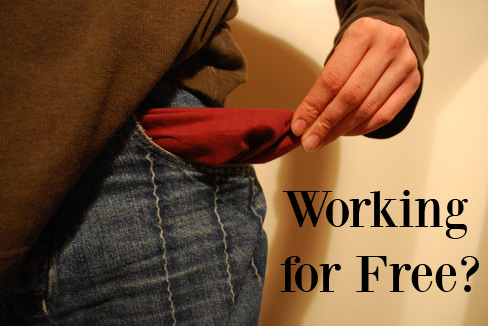
Have you ever completed a work project which offered no compensation except for a pat on the back? If so, did it bother you? It should have. By agreeing to slave away (pun definitely intended here) at an assignment with full awareness that you would receive absolutely no monetary compensation, you just devalued yourself.

I am not talking about volunteer work, or favors which you offer to do for a family member or friend. I am also not talking about getting your feet wet by taking on a task in an unfamiliar area so that you can gain valuable experience. I am instead referring to situations in which you are asked to provide your knowledge, expertise and service in an area in which you excel, and are coaxed into it with the promise that it’s a one-time favor, or that there will be compensation sometime in the future.

As a result of my abiding loyalty to companies, friends, family, and pets, I am the type of person who never leaves. You can count on me, and I honor my word. One of my faults is that I assume that other people are the same way, and even when I can plainly see that I am being taken advantage of, I often still hang on. This type of behavior spilled over into the world of medicine, wellness and fitness for a while, but I have recently done a 180 and have cut off all of the companies and individuals who got too much of a good thing for too long.

In one situation, one company asked me to provide professional services on a monthly basis, stating that it would be unpaid to start out with, but that compensation would be given after a few months. Next thing I knew, I had provided those services free of charge for eighteen months! When I fired a warning shot, essentially stating that I no longer wanted to work for free, the company responded by inferring that the “exposure” I was receiving from them was payment enough. The funny thing is, I didn’t need the exposure, nor was this company in a position to help me. I merely agreed to the arrangement as a temporary favor to them, sort of a good faith move. All it ended up doing was getting me stuck in a monthly obligation which I got zero benefit from doing.

I am not trying to toot my horn, but time is money, and because I hold two degrees, am a board certified physician and have worked in the fitness industry for three decades, I have value which deserves proper compensation. Would you like to work for free, especially if it is in an area in which you have expertise? Let’s face it, we all need to find a way to bring money in. We have skills, we have knowledge, and we deserve to get a financial return for services rendered in our chosen work environment.

As a result of my decision to rid myself of any unpaid assignments or other elements in my life which were eroding my sense of self-worth, I finally severed the ties with the company I mentioned above. Though I used very professional and polite language, it felt so good to tell them that I was done being an indentured servant. No longer did I have to put their assignments in my calendar, or resent the fact that each one of those assignments chewed up a good hour or two of my time.

If you are the type of person who has a tendency to take on more than your schedule can handle, perhaps it’s time to evaluate your obligations and see if any of them are a threat to your self-worth. If they are unpaid, uncontracted, require your skills in an area in which you are considered an expert, and are contributing to a decline in your quality of life because they are a time burden, then you should consider dropping those obligations.

Eating Clean Makes All The Difference

This abdominal definition truly comes from eating clean 98% of the time.  There are no tricks to this.  I also train abs only one day per week and keep my routine down to about 7 minutes.

This abdominal definition truly comes from eating clean 98% of the time. There are no tricks to this. I also train abs only one day per week and keep my routine down to about 7 minutes.

Last week a guy at the gym approached me and asked me a question I hear frequently, which was “What exercises would you recommend for me to get six-pack abs?”. My response didn’t have anything to do with specific abdominal exercises, but centered around nutrition. I asked the guy what his diet was like, and he revealed that he was of Italian descent and just HAD to have pasta several times per week. He also admitted that he spent many of his evenings drinking an appreciable amount of alcohol. So I told him that his eating and drinking habits guaranteed that he would never see a washboard across his midsection, no matter how many crunches or planks he did. He was so intent on finding a way to get a toned midsection without changing his eating habits that he repeated his question a second time, which made me shake my head and wish him luck as I walked away.

If you are committed to getting a lean midriff, you MUST change your eating habits! You simply cannot have your cake and eat it too when it comes to coaxing those lovely abdominal lines and cross cuts out of hiding. Don’t kid yourself into thinking that you can somehow get a quick fix by doing a cleanse to repair the damage of a poor diet, or that you can perform a plethora of abdominal moves to somehow melt all the fat that is sitting around your waist. The only effective way to etch those abs is to consume whole foods with minimal to no processing, such as lean meats, grains such as quinoa, rice, and oats, fresh vegetables, fruits, nuts, and eggs. If you are worried that these foods lack the flavor you crave from consuming processed foods, check out the various seasonings, flavored mustards, hot sauces, and other condiments which can add a new dimension to your food.

Once you make the switch to a healthy food regimen, you will probably notice a lot of subtle changes in your overall well-being, such as more energy and clearer skin. After a while, you might even notice your abs peeking out!

Why Bikinis Are So Threatening To Women

black bikinia

Men have it pretty easy when it comes to pool and beach attire. All they have to do is throw on a pair of swim trunks or board shorts, and they can hide underdeveloped quads or a case of no-ass-at-all without too much effort. Yes, men must display their chests and backs, but at least they don’t have to expose a wide expanse of skin during the summer.

It’s a completely different story with women. A standard bikini covers the strategic parts of a woman and, barring a wardrobe malfunction from a rogue wave or bold body movement, honors the rules of public decency. There are other bikinis, known as micro bikinis (they are also often referred to as dental floss bikinis), which leave very little to the imagination, and which only the most daring of women tend to wear. But let’s get back to the standard bikini, shall we?

A bikini still reveals everything about a woman’s shape, so she can’t hide any flaws. Unlike swim trunks which are loose enough to cover the groin, butt and thighs, a bikini nestles into all of a woman’s nooks and crannies and puts her entire body on full display. No wonder men are fans of bikini season! As if that isn’t enough, modern society has shamed women’s bodies for many decades and has enforced an ideal bikini body type which is intimidating to say the least. How many women can boast physiques which rival those of Sports Illustrated swimsuit models? That’s a lot of pressure. As a response to the newer perspective on women’s body image, Sports Illustrated boldly featured a plus size model on their 2016 Swimsuit issue, which ostensibly created controversy.

bikinis-and-body-shaming-in-all-shapes-and-sizes-21822008

2016 SI Swimsuit

I understand the threat of wearing a bikini, because it doesn’t hide extra winter fluff, pregnancy battle scars, or lack of exercise. But I honestly don’t think a woman should EVER feel ashamed of her body, whether she is in shape or not. There are so many flattering suit cuts available these days that women of all shapes and sizes can find something that fits her particular proportions the best and makes her feel confident and great.