How and Why Do People Develop Histamine Dysregulation?

Image 123rf.comImage ID193375641

Histamine dysregulation happens when the production, release, or breakdown of histamine is thrown out of balance. That can happen in a few ways, and it’s usually multifactorial, meaning more than one trigger is involved. As someone who suffers from this, I can definitely tell you that it’s not a fun experience! This condition is one I developed during perimenopause, and I still struggle with it, more than 10 years later.

Here are some of the factors which are involved in the development of histamine intolerance or dysregulation:


1. 🧪 Impaired Histamine Breakdown

🔧 Main Enzyme: DAO (Diamine Oxidase)

DAO is responsible for breaking down histamine in the gut before it’s absorbed into the bloodstream.

🔬 Causes of Low DAO Activity:

  • Gut inflammation (e.g., from IBS, IBD, leaky gut, or SIBO)
  • Certain medications (like NSAIDs, antibiotics, antihistamines, antidepressants, and PPIs)
  • Alcohol (especially wine) inhibits DAO
  • Genetic mutations (SNPs) in the AOC1 gene, which affect DAO enzyme function
  • Nutrient deficiencies (copper, B6, vitamin C)—these are co-factors needed for DAO

2. 🔥 Overproduction or Release of Histamine

Histamine is stored in mast cells, which are part of your immune system. When triggered, these cells release histamine—sometimes inappropriately or excessively.

🧨 Triggers for Histamine Release:

  • Food sensitivities or allergies
  • Chronic infections (like Lyme, Epstein-Barr, Candida, parasites)
  • Mold exposure or environmental toxins
  • SIBO or gut dysbiosis (bacteria can produce histamine)
  • Stress (triggers mast cell activation through the nervous system)
  • Hormonal shifts (especially in women—estrogen can increase histamine)

In some cases, people develop mast cell activation syndrome (MCAS), where mast cells release histamine too easily and too often, even to non-threatening stimuli.


3. 🧬 Genetic Predisposition

Certain gene variants can impair your body’s ability to break down or regulate histamine. Key genes include:

  • AOC1 – codes for DAO enzyme
  • HNMT – breaks down histamine inside cells
  • MAO, COMT – involved in neurotransmitter and histamine metabolism
  • MTHFR – affects methylation, which indirectly impacts histamine clearance

People with these genetic variants may have a lower tolerance threshold and be more prone to symptoms from even normal histamine levels.


4. 💊 Medication-Induced Histamine Issues

Some drugs can either block DAO or promote histamine release. Examples:

  • NSAIDs (ibuprofen, aspirin)
  • Antidepressants (especially MAOIs)
  • Antibiotics (like clavulanic acid or sulfonamides)
  • Muscle relaxants
  • Opioids
  • Benzodiazepines
  • Beta blockers

These don’t necessarily cause histamine intolerance permanently, but they can tip someone over the edge if they already have a compromised system.


5. 🧠 Chronic Stress and Nervous System Imbalance

Chronic stress can:

  • Increase mast cell activation
  • Promote intestinal permeability (leaky gut)
  • Suppress DAO enzyme production
  • Alter gut microbiota

Basically, long-term stress can create a perfect storm for histamine dysregulation.


6. 🦠 Gut Health Imbalances

Histamine and the gut are tightly linked.

  • Dysbiosis: Some gut bacteria (like Lactobacillus casei or Klebsiella) produce histamine.
  • SIBO: Overgrowth in the small intestine can lead to bacterial production of histamine.
  • Leaky gut: Inflammation in the gut lining reduces DAO production and allows histamine to be absorbed more easily into the bloodstream.

If the gut lining is damaged or the microbiome is imbalanced, histamine clearance drops—while histamine production increases. Bad combo.


🧩 Summary: Why Histamine Dysregulation Happens

Root CauseHow It Contributes
Gut inflammationReduces DAO production
Genetic mutationsImpair histamine breakdown
Chronic stressActivates mast cells, weakens gut
Infections or toxinsTrigger immune and mast cell response
Hormonal imbalancesEstrogen boosts histamine levels
MedicationsBlock DAO or trigger histamine release
Dysbiosis/SIBOIncreases histamine production in gut

🔄 The Vicious Cycle

Histamine overload can damage the gut, and a damaged gut can’t break down histamine—so the cycle continues unless addressed.


✅ What to Do About It

If you’re dealing with symptoms and suspect histamine dysregulation, steps to consider:

  • Support DAO function (supplements, gut healing)
  • Avoid high-histamine foods (especially temporarily)
  • Reduce triggers (toxins, stress, allergens)
  • Test for underlying causes (SIBO, mold, infections)
  • Work with a knowledgeable practitioner

There’s No Such Thing As Blue Eyes

Portrait of a beautiful little girl with blue eyes. Close-up.

© pixander, 123RF Free Images

Please check out this interesting article which was posted on the American Academy of Ophthalmology website, explaining the science behind eye color. I have copied and pasted it here so that you can easily read it.

By Dan T. Gudgel

Reviewed By Ivan R Schwab, MD, FACS

Jun. 16, 2023

Brown and hazel eyes get their color from melanin, the same pigment that colors your skin. The more melanin in the eye, the darker your eye color will appear. But blue eyes don’t have any blue pigment in them. Blue eyes get their color the same way water and the sky get their blue color. They scatter light so that more blue light reflects back out.

How do eyes get their color?

Eye color depends on the iris, the colored part of the eye. It’s a structure that contains muscle and other kinds of cells. You can see the iris in action when it squeezes or relaxes to let in more or less light through the pupil. The iris is made up of two layers. For almost everyone — even people with blue eyes — the back layer (called the pigment epithelium) has brown pigment in it.The front layer of the iris (called the stroma) can make eyes appear brown, hazel, blue or green. 

  • People with blue eyes have no pigment at all in this front layer, causing the fibers to scatter and absorb some of the longer wavelengths of light that come in. More blue light gets back out and the eyes appear to be blue.
  • For people with green or hazel eyes, one or both of the layers of the iris contains light brown pigment. The light brown pigment interacts with the blue light and the eye can look green or speckled.
  • Many people have variations in the color of their irises, often with one color near the pupil and another at the edge. This variation happens when different parts of the iris have different amounts of pigment in them.

Is there a way to predict a baby’s eye color?

The genetics of eye color are very complicated. You can’t predict a child’s eye color just from looking at the parents’ eyes. Even parents who have the same color eyes as each other could have a child with different colored irises.

Babies often do not have much pigment in their irises when they are born. This is why their eyes can look very blue. More pigment accumulates in the iris over the first few months of a child’s life and blue eyes can become less blue or even turn completely brown. For most children, eye color stops changing after the first year, but for some kids the color can continue to change for several more years.

Genetic research has shown that blue eyes probably only appeared in the last 6,000 to 10,000 years. Before then, everyone had brown eyes. Blue eyes have probably spread through the population just because some people like how they look and chose to have children with blue-eyed people.

Why do some eyes change colors in different lighting?

People with hazel or green eyes might notice that their eye color changes depending on surrounding light. Green and hazel eyes are a mixture of pigment color and color from scattered light, so they can look different in different lighting conditions.

Since blue eyes get their color from the light that’s coming in and being reflected back out, they also can appear as different colors depending on the lighting conditions. 

What is the rarest eye color?

The Academy surveyed more than 2,000 Americans to determine what color eyes they have. Below are the results of that 2014 Harris Poll survey, weighted to reflect the United States population at that time:

  • 45% have brown eyes
  • 27% have blue eyes
  • 18% have hazel eyes
  • 9% have green eyes
  • 1% have eyes a color not listed above

Let Your Heritage Lead You To Travel Destinations

Source: 123rf
Image ID : 35177538
Copyright : Borislav Marinic


Though I thoroughly enjoy international travel for a multitude of reasons, the most meaningful trips I have taken have admittedly been the ones I took in an effort to learn about my ancestral roots.  The first time I went on a heritage trip was in September of 2014, exactly six months after I had ordered genotype testing through 23andme.  Despite the fact that I already pretty much knew the bulk of my heritage (Japanese and Hungarian), I was even more determined to visit Japan and Hungary after I received the test results.  It took me a full six years to visit Japan, but I was able to do so in March of this year, and made a point of visiting both prefectures which my grandparents were from.

Source: 123rf
Image ID : 8705805
Copyright: ginasanders Budapest, castle hill and castle. city view


It turns out that my determination to visit my ancestral countries, occurred right at the beginning of the surge in heritage travel which has swept the globe.  One of the driving forces behind this boost in travel to ancestral lands has been the popularity of genetic testing kits such as the ones offered by 23andme. From personal experience, I can definitely tell you that a trip which is taken in an effort to learn about one’s heritage is definitely different from a trip which is taken for vacation purposes.

Source: 123rf
Image ID : 121655857
Copyright : pitinan
Beautiful morning at Yasaka Pagoda and Sannen Zaka Street in summer, Kyoto, Japan. Yasaka Pagoda is the famous landmark and travel attraction of Kyoto.


Thanks to AirBnB, people can stay in dwellings which are more reflective of the culture which they are visiting, and thus more authentic and rich.  According to AirBnB, there has been a 500% increase since 2014 in travelers who use the AirBnB service to book accommodations and experiences.  Close to 80% of these trips are taken either with one travel partner or alone, which suggests that these treks are indeed meant to establish connection with mother cultures.

It’s no surprise that AirBnB and 23andme have joined forces and are offering services specific to heritage travel on their websites.  On 23andMe, customers who receive new ancestry reports, are now able to click through to their ancestral populations and find Airbnb Homes and Experiences in their countries of origin. Correspondingly,  Airbnb has dedicated pages which correspond with 23andMe’s genetic populations, making it a breeze for customers to book accommodations in the countries which emerge on their reports.

If you’re thinking of booking a heritage trip but are hesitant, take it from someone who has not only visited her two main countries of origin, but who has also visited the other countries (Italy, Greece, Germany, France) which had popped up on the genetic testing report, and just GO.

The Fifty-Something Zone


Today I transition from being a 50 year old to being a 50-something.  It’s such a strange reality for me to move past the half-century mark, despite the fact that my joints ache more, my skin is losing its firmness, and rogue gray hairs threaten to disrupt the mass of dark brown hair on my head.  My mind and spirit are stuck in an early 30’s zone, so I am constantly in a strange disconnect between how I feel mentally and where my body is chronologically.

Since my 50th birthday last July, I have received promotional mail from AARP and Forest Lawn Mortuary, which is extremely disconcerting.   In valiant protest, I have increased my involvement in aerial arts, dabbled in other pursuits like fencing, and have maintained a 5 to 6 day weightlifting schedule each week.

To be honest, turning 50 caused me to fret a bit about my overall health, so I decided to obtain a full medical workup, including bloodwork, MRI’s of my injured left shoulder and neck, a mammogram and colonoscopy.


These were the results:

  1. Bloodwork results were completely normal, and as always, my HDL was over 70 and my LDL was under 100.
  2. MRI of my left shoulder revealed moderate bursitis, widespread inflammation, severe biceps tendinitis, and widespread tendinopathy.  The good news is that my shoulder issues don’t warrant surgical intervention.
  3. MRI of my cervical spine revealed dessication of multiple intervertebral discs and osteophytes at multiple levels.  Basically, my neck reveals that I am a dried up old bitch.
  4. Screening mammogram revealed a suspicious 5mm mass on my right breast, which was further evaluated with more views.  It turned out to be a small cyst.
  5. The colonoscopy prep was definitely not enjoyable, but my days of water loading for contests made drinking the vile electolyte prep solution (bastards gave me the unflavored version…blech) a bit more tolerable.  Aside from a small polyp, my colonoscopy was unremarkable.

Evidently, my body is doing a pretty good job of fending off aging.  With a clean bill of health, I will continue to engage in my physical pursuits, eat clean food, meditate daily, and be thankful.


When Your Booty Keeps Trailing Behind You

Saggy butt

Have you been dealing with a stubbornly saggy rump which refuses to respond to all of your exercise efforts? Many of us have to constantly deal with the threat of no-ass-at-all, and we have our genetic ancestors largely to thank for that struggle. Since I am 50% Japanese, I am not exactly naturally blessed with the type of posterior which someone can rest a drink on, and if I don’t aggressively fight it through targeted exercise, I am sure that my booty would closely resemble what my flat-bummed predecessors had.

If you truly want to lift up that sad mound of flesh that you sit upon, you need to commit to a consistent booty shaping program. Compound moves like deep barbell squats or heavy barbell deadlifts can really round out the gluteal region and make it pop, but if you have low back issues, chances are that heavy squats are difficult to perform. That’s when focused, more isolated moves can come to the rescue.

Try to hit the glutes THREE days per week, with a day in between each session. The glutes tend to respond well to volume training, which is why I generally recommend many different moves in one session. Here is a modified glute day for a client who cannot do barbell squats:

Bodyweight squats for warm-up 3×30
Walking lunges 5×20,18,15,12,20
Hip thruster pulses (small range of motion at top of movement) on leg extension machine 5×20,18,15,12,20
One-legged dumbbell deadlifts 5×20,18,15,12,20
Prone leg curls 5×20,18,15,12,20
cable kickbacks kicking out to side at a 30 degree angle 5×15
cable bent leg donkey kicks 5×15
butt blaster 5×20,18,15,12,20

If you follow this routine three days per week and work out with intensity, your tush should look rounder and more gravity-defying after 3-4 weeks.

B-House purple

Widow’s Peaks

I have a widow’s peak which has become more prominent in recent years. Most people don’t even realize that I have one until I point it out. However, I tend to part my hair on the side, as do many women who have widow’s peaks, so in general, they are much less noticeable on women than they are on men. Though the expression “widow’s peak” has a negative connotation which refers to the belief that it was a sign of early widowhood, I like the notion which has circulated in more recent decades that it is a sign of beauty. Another thing I like about my widow’s peak is that it comes from my Japanese grandfather, who had a prominent widow’s peak.

You can see in the image above that even with my hair parted to the side, you can still see my widow's peak.

You can see in the image above that even with my hair parted to the side, you can still see my widow’s peak.

I think my widow's peak lends itself well to the look pictured here (yes, it's me)

I think my widow’s peak lends itself well to the look pictured here (yes, it’s me)

I also adore the fact that Grace Kelly, a classic beauty, had a widow's peak. American actress Grace Kelly (1929 - 1982), circa 1955.  (Photo by Pictorial Parade/Hulton Archive/Getty Images)

I also adore the fact that Grace Kelly, a classic beauty, had a widow’s peak.
American actress Grace Kelly (1929 – 1982), circa 1955. (Photo by Pictorial Parade/Hulton Archive/Getty Images)

Being A Lefty

Simpsons leftyI am part of the ten percent of the human population which is left handed. Simply by virtue of me being a southpaw, I am more prone to accidents and immune deficiencies, but the left and right hemispheres of my brain exchange information more readily, and I am naturally more creative due to right brain dominance. What is interesting, though, is that I am not left-handed across the board. I do many things right handed, but more on that later.

Studies have discovered that elevated testosterone levels in the womb are often what cause left-handedness to occur. Apparently the higher testosterone level slows the development of neurons in the left hemisphere of the brain, causing more development in the right hemisphere and a corresponding left sided body dominance. One gene (LRRTM1) has also been linked to left-handedness. Some left-handers like me have a cross-dominance, in which one hand is favored for certain tasks while the other hand is favored for other tasks. This is in contrast to a true ambidexterity, in which neither hand is favored over the other.

Here is how my particular hand dominance breaks down:

Write with left hand

Draw and paint with left hand

Perform injections with left hand

Eat with left hand (but can hold utensils with right hand)

Brush teeth with left hand (but can use right hand too)

Tweezers with left hand

Flatiron with left hand

Brush hair with either hand

Throw a ball with right hand (can’t do it with my left at all)

Use computer mouse with right hand

Play(ed) guitar right handed

Play pool right handed

Bowl right handed

Play darts with right hand

Kick with right foot
left handed
I am still not completely sure what this all means, despite having considerable training in science and medicine. It’s pretty fascinating to me, though. I would love to hear from people who might have a little cross-dominance.

My Wish To Compete At Prague Pro

Prague Castle

Prague Castle

Every year I have mapped out a contest strategy, but 2014 is the first year that I am doing it fully as an IFBB Bikini Pro. My priorities and interests have shifted dramatically as a result of my Pro status, with my focus centered on having fun onstage and not concerning myself with my placings. This doesn’t mean that I intend to do poorly at contests, but I am not going to expend ridiculous amounts of energy trying to get a top placing at an event.

One of the most exciting things about the Pro contest schedule is that there are international events added to the mix. There is one international event I have been keenly interested in doing this year, and that is EVLS Prague Pro on October 4th in Prague, Czech Republic. One reason why I am so intent on competing at this event is because I have heard that it is beautiful in Prague. Another reason is that I have not been outside of the United States since 1992. I also have not had a bona fide vacation since 2007, which is part of the reason why I have every intention of spending a few days in Hungary after the contest.

This is Buda Castle...

This is Buda Castle…


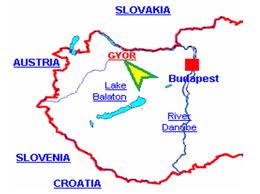
But perhaps the most compelling reason for me to compete in Prague is that I have strong genetic roots in Eastern Europe, particularly Hungary. My direct paternal stock came by way of Hungary, specifically Gyor on the Buda side of Budapest, Hungary. However, when I recently did a 23andme analysis, I discovered that though most of that Eastern European stock came mostly from Hungary, there was some genetic input from the Czech Republic. Basically, I would be competing on land that my ancestors stood on, which is incredibly meaningful for me.
Gyor map
I have put the intention out there and will continue to nurture it so that my wish to compete at Prague Pro comes to fruition.

How to Avoid Stretch Marks From Workouts

Stretch marks form as a result of rapid  stretching from growth by muscle gain, fat gain, or pregnancy.  The most common areas in which they develop are the abdomen, buttocks, arms, hips, thighs, breasts and calves.  There is a strong genetic component, which means if you are predisposed to forming stretch marks, the more apt you are to develop them if a rapid gain in mass occurs.

However, even if your genetic blueprint dictates that you are more prone to getting these pesky marks, there are a number of things which you can do to minimze their formation.

1.  Drink plenty of water daily.  Aim for at least eight 8-ounce cups of water each day to ensure adequate hydration.

2.  Increase protein intake to optimize collagen formation.

3.  Decrease the amount of weight lifted at the gym to prevent very rapid increases in muscle mass.  A 12-15 rep range is advised.  I can already sense some readers balking at this, but there is a tradeoff:  either have a more modest increase in mass over a longer period of time or gain mass rapidly and run the risk of developing stretch marks.

4.  Take certain supplements.  Make sure to take fish oil, flaxseed oil, zinc, and vitamins A, C, and D.= on a daily basis.

5.  Eliminate sugar from your diet!  Refined sugar breaks down the elastin in your skin, making you more vulnerable to stretch marks, early aging, and increased risk of scar formation from cuts.

6.  Exfoliate your skin regularly.  This sloughs off the dead skin cells, thus minimizing the appearance of stretch marks which may already exist.

7.  Moisturize skin thoroughly and regularly.  For many years cocoa butter cream has been used by pregnant women to prevent stretch marks, but there is no final verdict on whether it has any benefit. However, I love cocoa butter’s emollient effects and believe it should be added to an anti-stretch mark regimen.  Vitamin E oil is another excellent moisturizer which can be applied to stretch marks or areas which are the most prone to their formation.

8.  If you develop new stretch marks, you can use prescription tretinoin on a once daily basis with decent results.  Just make sure that the stretch marks you are treating are less than six weeks old. Other topicals such as Tri-Luma and Stri-Vectin also may be used with some benefit.

9.  As a last resort for existing lesions, you may consider laser skin resurfacing or micro-needling.