 I LOVE Peet’s Coffee and consider it our favorite brand. Over the past few months I picked a favorite blend too, which is pictured here. The flavor and freshness of this brand are unparalleled, and I found out why. One day when I was in the grocery store picking out coffee, I started chatting with the Peet’s Coffee supplier who was stocking the shelves. He told me that Peet’s Coffee is always fresh, unlike other brands which can sit on the store shelves for months. I really do notice a pronounced difference in the flavor and the balance of Peet’s over all other brands.
Tag food
Why I Am Against Instant Oatmeal
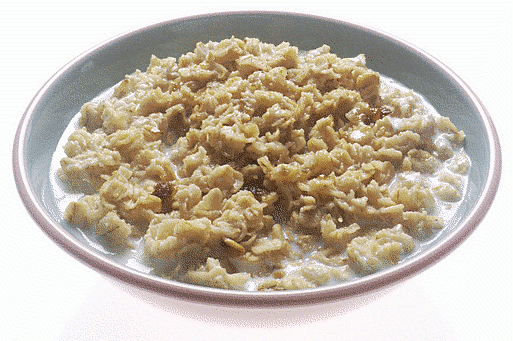 I know people lead very hectic lifestyles these days, and believe me, I can relate. Work, training, meetings, appointments, chores, errands, modeling, fitness and bodybuilding events, writing, shooting videos, and managing websites and social media keep me going at a frenetic pace every day. Yet I make sure I have a few minutes to prepare a nutritious morning meal every single day. I become very irritated when I hear patients and clients say that they have ZERO time to prepare a nutritious breakfast. Are you serious about not having even five minutes in the morning to take care of your own health? Come on.
Patients often proudly tell me that they are eating oatmeal every day, but when I ask them what type, they tell me they grab the instant variety. This irritates me to no end. You still have to put the oatmeal in a bowl, boil the water which takes about three minutes, then mix. When I make my old-fashioned oats, I combine them in a saucepan with water and a dash of cinnamon, then let the mixture cook for three minutes. So what if I take an extra 30 seconds to transfer the cooked oatmeal into a bowl?
Another thing I think is disgusting about instant oats is that the oat and water mixture often does not mix well, so you have a gloppy, soupy mixture which has to set for at least a minute so that it will thicken. Halfway through that extra minute in which you are waiting for your instant oatmeal to thicken, I am already eating my old-fashioned oatmeal.
You may wonder what the big deal is about eating the plain oats versus the instant variety. There are artificial flavors, thickening agents, sugar, and salt in the instant packs which lowers the nutrient density of the oatmeal. In addition, since there is so much processing which occurs in the manufacture of the instant variety of this food item, vitamins and minerals are added to replace what has been stripped from the original oats. Why go through all this when you can choose the least processed version which is the most nutritious?
Bear in mind that the cereal industry is counting on you grabbing the instant variety because of its attractive packaging. Guess what? The instant oatmeal is far more expensive than the old fashioned oats which have one item on their ingredient list: “OATS”. Just because a food item comes in a single serving envelope and only requires you to add hot water does NOT mean it will shave off significant time from your morning meal prep. Remember what I mentioned earlier about total prep time? Here’s a reminder:
INSTANT OATMEAL PREP:
Tear packet and pour oatmeal into bowl (5 seconds)
Boil water (3 minutes)
Pour water over oat mixture and stir (20 seconds)
Let sit for 1 minute to thicken (1 minute)
TOTAL PREP TIME = 4 minutes, 25 seconds
OLD-FASHIONED OATMEAL PREP:
Combine oats and water in a saucepan with a dash of cinnamon (10 seconds)
Cook mixture on medium heat for three minutes, stirring occasionally (3 minutes)
Remove from heat and pour into bowl (10 seconds)
TOTAL PREP TIME = 3 minutes, 20 seconds
If you insist on eating instant oatmeal, at least go for the healthier versions. The best out there is Trader Joe’s Organic Oats and Flax Instant Oatmeal, which contains: organic rolled oats, organic dehydrated cane juice solids, organic flax seed, sea salt.
Emotional Eating
Find original post at: http://www.rxmuscle.com/rx-girl-articles/6941-emotional-eating.html
Rather than discuss well-known emotional eating disorders such as bulimia, I will concentrate on binge eating which many women engage in from time to time. It is important to recognize this behavior if it becomes a regular pattern, because frequent emotional eating warrants a diagnosis of binge eating disorder and requires treatment and intervention.
Binge eating is characterized by eating compulsively to cope with negative emotions and stressful situations. A binge eater is rarely hungry when she begins to eat and will continue to eat well after she is full. Such episodes can last for up to two hours or can occur off and on throughout the day. The binger feels guilty both during and after the episode, but will not attempt to counteract it by fasting, taking laxatives, vomiting, fasting or over-exercising. A strong lack of self-control as well as feelings of shame will accompany this behavior pattern. There is a strong association between binge eating and depression. Binge eating is also driven by social components such as social pressure to be thin, emotional and sexual abuse, parental criticism of a child’s weight, and the use of food as reward or punishment.
Food cravings are usually the strongest when you are in emotional crisis. You may reach for food for comfort or to serve as a distraction. Consider the following highly stressful events and think about whether you reached for comfort foods during such times:
- Financial problems
- Health problems
- Work issues
- Relationship issues
- Fatigue
- Family issues
Though some people will lose their appetites when stressed and will refrain from eating, many others will engage in impulsive eating in an effort to deal with negative emotions. This may be relatively harmless if such emotional eating occurs on a very rare occasion, but becomes a serious problem when it is used as the only coping mechanism for stressful situations or negative emotions. Just bear in mind that if you have a rare moment of weakness, it is important to recognize it as just that and to prevent yourself from spiraling into excessive feelings of guilt over the incident. If you engage in an episode of emotional eating, learn to forgive yourself and have a fresh start the following day.
Why We Engage in Emotional Eating
What occurs almost invariably when we eat emotionally is that we turn to cookies, cakes, candy, fried foods and breads rather than to healthy foods. There is a biochemical basis for such behavior. Carbohydrates which are high in sugar or fat release dopamine in our brains which in turn stimulates the brain’s pleasure center, creating a sense of euphoria. These foods are usually associated with pleasurable memories, such as cake which you may have looked forward to on your birthday, or macaroni and cheese as a treat after school when you were a child.
Food can also serve as a happy distraction from conflict or stressful events by stimulating the aforementioned pleasure centers. What will frequently occur is that an excessive amount of these foods will be consumed. However, if you remain aware of such automatic connections between food and mood and realize when you are eating for reasons other than hunger, you can break this cycle and get back on track with healthy eating habits which are associated with true hunger.
How To Combat Emotional Eating
- Keep a food diary. Get in the habit of writing down everything you eat and drink, including the quantity, the times at which you eat, your emotional state while eating the meal, and your level of hunger. By doing this you may see patterns which will reveal your emotional relationship with food.
- Remove tempting foods. Avoid stocking comfort foods in your home if you find that they are difficult to resist. And by all means avoid making trips to the grocery store if your emotions are spiraling out of control!
- Practice stress management. Yoga, meditation, and relaxation techniques are effective methods of managing your stress.
- Determine whether you are truly hungry. Many times people may believe they are hungry when in reality they are actually emotionally distraught and desperately searching for a way to defuse such emotions.
- Make sure you consume adequate calories. Individuals who are trying to lose weight will often restrict their calorie intake too much, and will turn to the same foods in an effort to remain on track without rewarding themselves with an occasional treat. Adding variety to your meal plan will also help to keep you on track.
- Distract yourself. If you get an urge to snack when you aren’t truly hungry, distract yourself by watching a movie, calling a friend, reading, listening to music, or taking a walk.
- Consume healthy snacks. If an urge to snack between meals strikes, choose a low-calorie snack such as vegetables with seasoned nonfat Greek yogurt, fresh fruit, low fat cottage cheese or rice cakes.
- Get enough sleep. Getting enough sleep is an important component in decreasing cravings for comfort foods.
- Eat at regular intervals. Consume smaller meals every three to four hours to keep you from feeling hungry or deprived.
- Focus on the experience of eating. Learn to eat in a mindful manner, in which you pay attention to your meal and only your meal. Become aware of the sensations associated with eating.
- Reward yourself. It is both physically and emotionally unhealthy to practice excessive calorie restriction for prolonged periods. Allow yourself to have a favorite food or meal once each week.
- Connect with your emotions. When a food craving hits during an emotional time, write down the emotions you are experiencing, such as sadness, loneliness or anger.
- Seek professional help if emotional eating is frequent. There are countless support groups which you can join which will help you to develop insight as well as the skills to avoid engaging in such behavior.
YouTube Video Props To P28 Foods!
Caffeine Pros and Cons
 Caffeine certainly gets a lot of love in our society, found in coffee, energy drinks, soft drinks, energy pills, fat burners, and even foods like yogurt. There is a ton of controversy surrounding caffeine consumption, with some camps celebrating its benefits while others are quite anti-caffeine. Here is a short list of pros and cons of caffeine.
PROS:
Boosts memory
Improves concentration
Decreases fatigue
Speeds up reaction times
May lower risk of Alzheimer’s disease
CONS:
May trigger high blood pressure in susceptible individuals
May cause jitters
May decrease bone density
May produce dependence
Dehydrating due to its diuretic effect
I know many of you may be wondering what is considered an acceptable level of caffeine consumption. According to researchers from the Linus Pauling Institute at Oregon State University, a daily intake of 300 to 400 milligrams per day (which is equivalent to 3 to 4 six-ounce cups of coffee) is acceptable and carries minimal health risks. However, if you consume caffeine daily and choose to decrease your caffeine consumption, make sure to do it gradually. Abrupt drops in caffeine consumption can cause withdrawal symptoms such as headache to occur. On the flip side, excessive caffeine consumption can also cause symptoms which include insomnia, heart palpitations, nausea, vomiting and tremors. Bear in mind that caffeine is considered a drug with the power to create dependence in those who consume it regularly and in large amounts.
Foods Which Boost a Sluggish Thyroid
Though I am trained in traditional Western medicine, I strongly believe in the power of foods and recommend dietary changes as much as possible when treating a whole spectrum of diseases. Since thyroid dysfunction is relatively common, I am providing a list of foods which can be beneficial with an underactive thryroid gland, as well as foods to avoid.
Try to incorporate the following foods into your regular meal regimen to boost thyroid function naturally:
Eggs
Turkey
Beef
Saltwater fish such as tuna or halibut
Shellfish
Seaweed
Coconut oil
Sunflower seeds
Walnuts
Pecans
Mushrooms
There area some foods which you should limit or even eliminate from your diet due to their tendency to interfere with thyroid function. They are:
Soy
Cabbage, broccoli, cauliflower, Brussels sprouts, kale
Spinach
Peanuts
Almonds
Cheat Meals
If you ask a competitor about favorite cheat meals, you had better expect the person’s eyes to glaze over as he or she lovingly describes his or her most beloved foods. You may wonder if cheat meals are only incorporated into the lives of fitness people, but they actually serve a purpose for anyone who is committed to healthy eating. Perhaps you have just embarked on a healthy food regimen and are struggling a bit with it. When you incorporate one or two cheat meals into your plan each week you will boost your metabolism and foster a more balanced relationship with food.
Let’s face it. We are only human, and we carry our emotional relationship with food with us throughout our lives. If we were to practice a rigid adherence to a healthy meal plan without any fun meals, we would feel guilty if we were to ever indulge in a bad food in a moment of weakness. If we know that we are allowed such a fun meal (I prefer this terminology over “cheat” meal), we can rest in the comfort that it is acceptable and that there is no reason to feel guilty about consuming it. This also works nicely if you tend to go to events on the weekends and don’t want to be the stick-in-the-mud who can’t eat anything that is being served.
When you eat a more calorie controlled meal plan during the rest of the week, a fun meal will speed up your metabolism and satisfy cravings that have been accumulating during the week. I believe it is important to eat something you truly crave instead of doing a small cheat like a dinner roll with a chicken spinach salad. Have the two slices of pizza or the burger! Just make sure to eat an acceptable amount of food and don’t gorge yourself.
I am often asked by weight management patients if a cheat day or a cheat weekend is acceptable. My response is no, for the simple reason that this creates a slippery slope which causes many individuals to lose self-control and spiral into a guilt-ridden “I messed up so why stop now?” mentality. If it is too difficult to do one fun meal per week, incorporate two fun meals spaced by at least one day so that your body can recover.
You Don’t Eat ENOUGH To Lose Weight – Why Diets Don’t Work
 Yes, you read that title correctly. If you have been on one diet after another in an effort to try to lose those last 5, 10, 15, or however many pounds, perhaps losing some weight only to gain all of it back plus some bonus weight, then it is highly likely that you have damaged your metabolism via severe calorie restriction. There is a very good reason why the weight loss industry is so successful and why certain well-known weight loss programs keep their customers coming back. The reason has everything to do with not eating enough, skipping meals, eating the wrong foods, and binging when food is finally available.
When you skip meals, you wreak havoc on your metabolism by causing it to slow down. Why does this happen? When there is no food to break down, the body’s furnace slows down and becomes so sluggish that when you actually do eat something, your body is less equipped to break down the food quickly, so much of it is stored as fat. Depriving yourself of food also causes sharp drops in blood sugar, robbing you of energy and increasing insulin resistance. Increased insulin resistance over time can precipitate the development of diabetes.
Other consequences of skipping meals include the following:
• Malnutrition – If you do not feed your body regular, balanced meals, it is highly likely that you are depriving it of essential nutrients. Malnourished states can lead to weight gain, poor health and progression of disease over time.
• Poor concentration – This is due to the depletion of glycogen stores which occurs. The brain simply does not have enough fuel to run on, resulting in fogginess.
• Hunger pangs – When you skip meals, you may experience intense feelings of hunger along with anxiety, dizziness or nausea. In addition, such feeling may lead to overeating when you finally sit down to eat something. Loading the body with a large meal is overkill, and leads to poor digestion and absorption as well as increased storage in body fat stores.
Do yourself a favor and practice the following guidelines. If you do, you will be rewarded with a healthy weight for a lifetime.
1. Don’t skip meals.
2. Make sure to eat enough protein to sustain your energy levels and satisfy your hunger.
3. EAT BREAKFAST.
4. Commit to healthy meals.
5. When you turn to snacks, make sure healthy alternatives are available so you aren’t tempted to reach for a nutrient-poor convenience food.
Cranberries for Urinary Tract Health
 Cranberries have been used for centuries among Native American Indian tribes for treating urinary conditions and are currently a popular remedy for urinary tract infections (UTI’s). Research shows that cranberries are effective in preventing UTI’s by introducing chemicals into the bladder which keep bacteria from adhering to it. However, cranberries had no effect on bacteria which are already stuck to the bladder lining, making cranberries ineffective once someone is already suffering from a UTI. Cranberries have additional benefits in the urinary tract, including deodorizing of urine in those who suffer from urinary incontinence and treatment of neurogenic bladder.
Another interesting feature of cranberries is the high levels of salicylic acid they contain. Salicylic acid can reduce inflammation in the body, reduce the risk of blood clots, and protect the body against development of certain types of cancer.
If you are interested in supplementing with cranberry extract, take 300 to 400 milligrams one to three times per day. I had taken 400 milligrams daily for years with not a single UTI. Then I suddenly ran out and decided to take a month off to see if it would make a difference. Two weeks later, I was struck with a wicked UTI which completely flattened me out for two days. Needless to say, I resumed the daily cranberry extract supplementation and have recommended it to my female patients more heartily than ever.
Two cautionary points:
1) Cranberries contain large amounts of oxalates which collect in the urine. Since kidney stones are primarily composed of oxalate combined with calcium, those at risk should avoid drinking cranberry juice or taking cranberry extract.
2) Cranberries interact with warfarin (Coumadin) so individuals who are taking this medication should avoid them.
Healthy Substitutions – A Good Start For Beginners
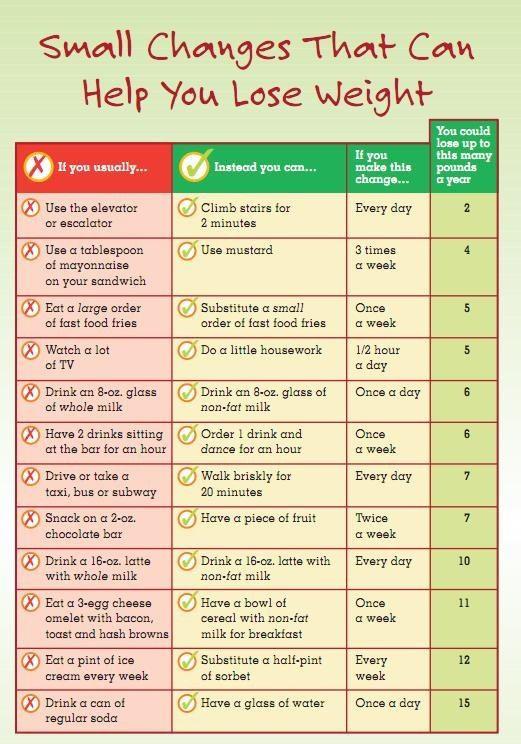 I think this chart is a decent one. However, these substitutions should serve as the BEGINNING of a full lifestyle overhaul. Many of the substitutions listed here are not considered healthy enough for the long term, such as the small order of fast food fries. If you are ordering fries three days a week, substituting a large order with a small one is NOT a truly healthy change. As far as I am concerned, fries should be avoided with the exception of the RARE indulgence. As an example, I am a huge fan of french fries and have absolutely no self-control around them. Because of this, I only allow myself to eat french fries a couple of times per YEAR.
I am also not a huge fan of most dairy products (Greek yogurt excluded) because of the way such products are processed. So a substitution with nonfat milk is not the best over the long haul.
The key with following the suggestions in this chart is to move in a progressively health-conscious direction so that it becomes easier over time to adopt truly healthy habits.
 dr. stacey naito's blog