Making Stress Manageable: How Creative Work Quietly Changes Everything

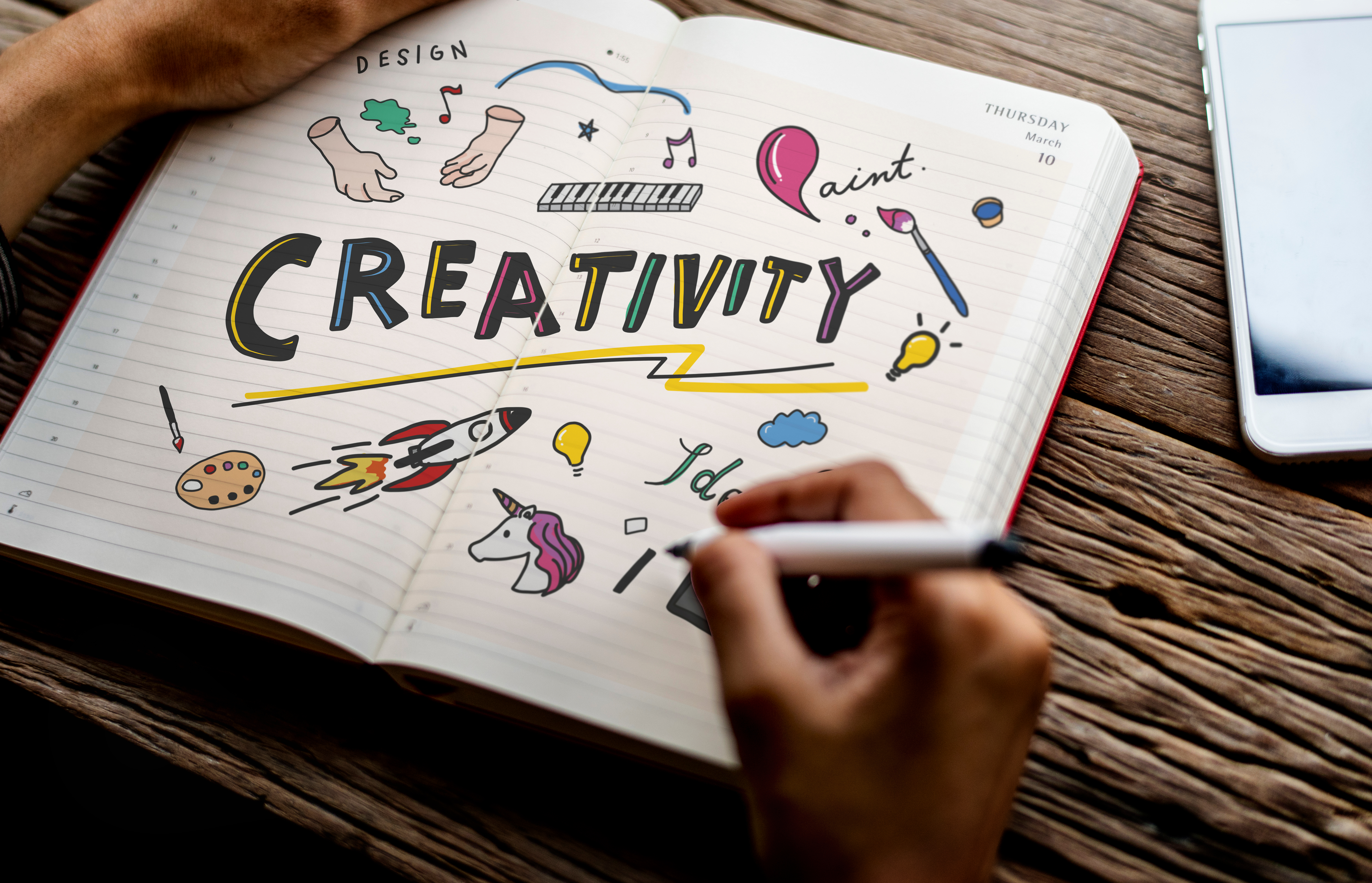
rawpixel image, 123rf.com
Image ID111779031

I hope you all enjoy reading this wonderful article, written by Julia Merrill of befriendyourdoc.org! It’s all about keeping those creative juices flowing and dampening stress.

There’s a kind of pressure no app fixes—mental static that clings to your thoughts, your sleep, your body. You carry it until it becomes background noise. But creativity can cut through that. Not as escape, but as reset. Drawing, dancing, scribbling a thought—these aren’t luxuries. They’re ways your brain reclaims rhythm. You don’t need to be good. You just need to begin. Creative work interrupts stress. That’s where everything starts to shift.

Creativity quiets mental noise

There’s something remarkable about what happens when your brain turns toward a tactile, expressive task. Paintbrush to paper. Fingers to clay. Even organizing a shelf with intention. These acts redirect your attention away from loops of rumination into a space of sensory input and focused decision-making. Creative activities ease emotional overwhelm by helping the brain regulate its own threat response system. In other words, your mind stops screaming and starts listening. This isn’t a distraction. It’s a biological rebalancing—an internal volume knob finally turning down.

Routine creativity builds resilience

When creative work stops being occasional and starts becoming habitual, it stops functioning as a band-aid and starts acting like armor. That doesn’t mean routine kills the spark. It means the spark has a place to land. Daily journaling, weekly collage-making, or recording your dreams each morning—these routines gently wire the brain to process, not suppress. Repetition turns expression into integration. And that’s where regular creativity strengthens emotional resilience. It trains the body to trust itself. Over time, that’s the difference between managing stress and becoming it.

When study supports the practice

Understanding why creativity works can deepen your relationship to it. Learning the mechanics of cognitive load, stress responses, or emotional regulation through psychology doesn’t make creativity clinical—it makes it sustainable. Formal study helps you notice patterns, name blocks, and recognize when you’re shifting states. For some, exploring online learning and psychology degrees becomes a tool for understanding not only their own minds but also the behaviors they witness in others. It’s not about credentials—it’s about access to frameworks that clarify what’s happening beneath the surface. And with that clarity comes choice. The kind that helps you move differently in moments of pressure.

Hobbies as emotional outlets

You don’t need a masterpiece to feel better. You need a release valve. That’s where simple hobbies come in. When you take time to sketch a flower, stitch a pattern, or write a few unedited sentences, you’re doing more than making art—you’re giving shape to what doesn’t have language yet. Stress lives in the body, and the body is trying to tell you something. The act of using creative hobbies to offer mindful emotional outlet allows expression and processing before the pressure converts to tension or collapse. The emotional load lightens because it’s no longer stuck. You moved it.

Structured play resets mood

It helps to have structure when you’re rebuilding your sense of ease. That might mean taking a community ceramics class, joining a songwriting group, or learning photography basics online. It doesn’t need to be expensive or public—just rhythmic. Consistency changes how you metabolize stress. Not because you’re “productive,” but because repetition builds neural reliability. One way people access this rhythm is by engaging in creative expression to release tension, which nudges the brain out of survival mode and into flow. You can’t force your mind to relax—but you can make it feel safe enough to try.

Shared art builds connection

Solitude has its place. But there’s also something restorative about making things around others—especially when no one’s competing or performing. A group paint night. A community mural project. Even virtual writing sprints. By joining creative groups to deepen social support, people experience something more profound than distraction—they rebuild nervous system safety through shared rhythm. Creativity, shared, becomes its own kind of nervous system. You co-regulate without even trying.

Short bursts still benefit

You don’t need a weekend retreat or an artist residency to feel the effects. Some of the most potent shifts happen in short, imperfect, ordinary moments. Ten minutes of watercolor. Two lines of a song. A voice memo idea whispered between errands. People often discover that short creative efforts still reduce stress in measurable ways—dopamine up, cortisol down—even if the work is scrappy and incomplete. Think of these not as projects but as pressure valves. Moments that matter because they add up.

Stress is your body asking for a new rhythm. Creativity answers without needing permission or polish. It softens the edges, slows the breath, and builds a pattern your nervous system can trust. A sketch, a song, a list of words—they all count. Not because they solve things. But because they steady you long enough to try again.

Discover a wealth of health insights and lifestyle tips with Dr. Stacey Naito and start your journey to a healthier, more vibrant you today!

Cool Glasses Project

Back in early July, I attended a music festival with a few friends. We noticed that there were numerous vendors with booths set up along the entry corridor, so we decided to take a look at what was being sold. At one point, we found a booth which sold accessories like body chains and sunglasses, and zoomed in on one particular pair of shades. My friend tried them on and absolutely loved them, so she asked the vendor how much they cost. They were $100, and though my friend hesitated over the lofty price, I could tell she was thinking about purchasing them, despite the fact that she couldn’t afford them.

I have to admit that I also liked the glasses, so much so that I took a picture of them for reference (see image above). I then told my friend that we should keep walking, and once we were out of earshot of the salesperson, I informed her that all of the styles of sunglasses at the booth, sans embellishment, were available through Amazon. I also stated that we could probably duplicate the look for a fraction of the price, and that it would be foolish for my friend to purchase the cool spectacles from the booth we had just visited.

A couple of days after the event, I decided to look on Amazon to see if I could find the glasses, and also figured that I could look for the aqua fabric, the rhinestones, and cool eyeglass chains. By some stretch of luck and a willingness to search for appropriate accessories, I quickly found everything I needed, and ordered them. Once the materials arrived, I printed out the image of the shades we both loved, and set up my workstation so that I could make two pairs of duplicates. Despite the fact that I did a fair amount of cursing while figuring out the sizing of the fabric segments and also while gluing the rhinestones, I was able to complete the project.

The reference photo with the two finished pairs of sunglasses

The best part of the project was that I made each pair for $32.77 ($38.76 after I added cases), and had a nice creative challenge. The next time I saw my friend, I asked her if she remembered those glasses from the event we had attended, then handed her one of the pairs. She was speechless. I then told her that I hadn’t purchased the glasses from the vendor, but that I had made them, along with a second pair which I kept for myself. She was truly blown away, especially after I told her how much I had spent on materials.

One Thousand Cranes

Copyright: olegdudko

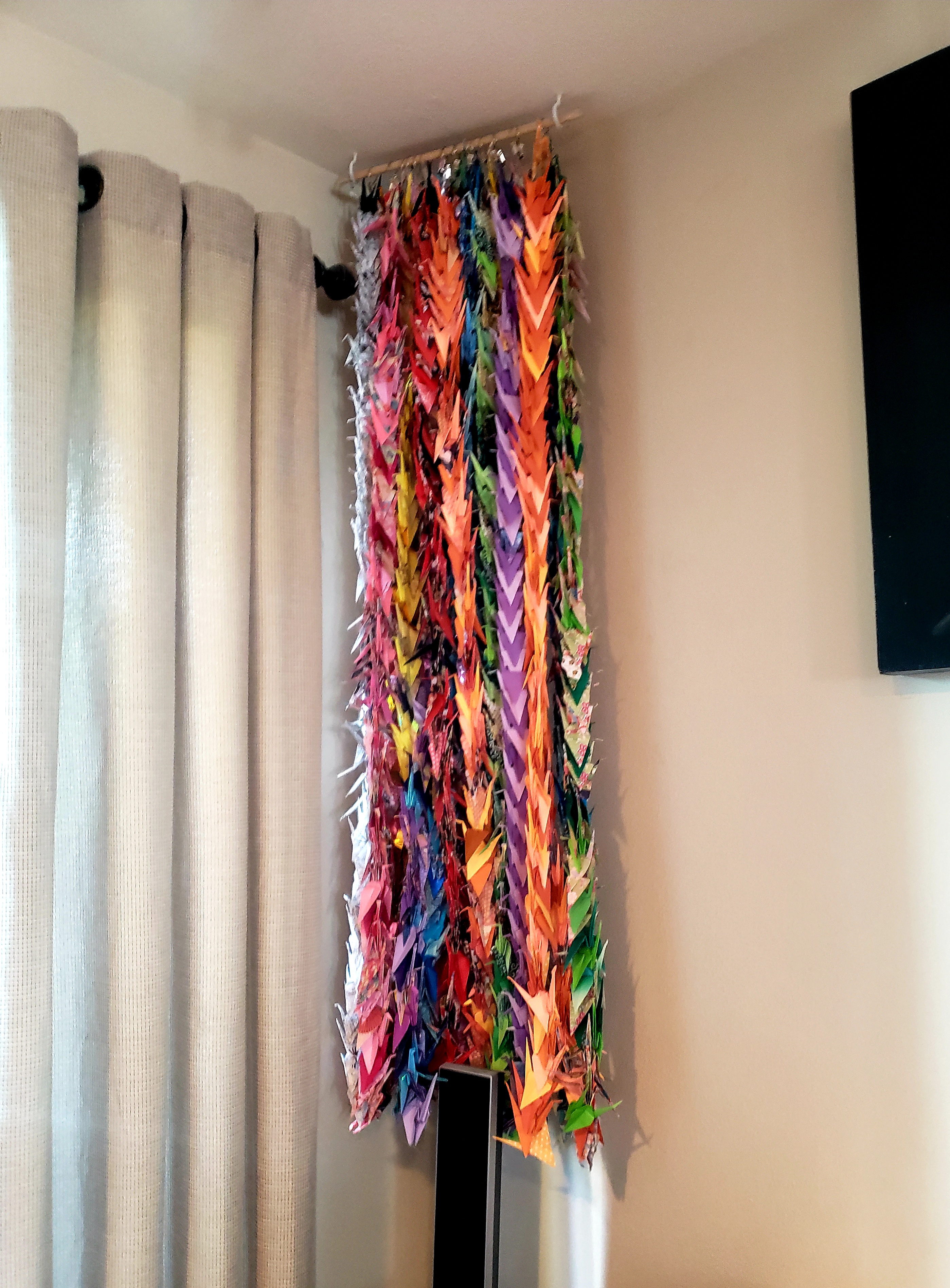
Last year right around Christmas, I taught my dear friend Karla how to make origami cranes, and though she struggled at first, she began to get the hang of making them. She thought they were pretty neat, and asked if they were ever made for a specific purpose, so I told her about the tradition of making one thousand cranes and stringing them up to hang for a number of different occasions, including making a wish for an ill person’s recovery, the birth of a child, wedding blessings, or to grant good luck within a home. Senbazuru (a thousand cranes) is the Japanese way to make a wish and bless it so that it might come true.

Emma Taggert offers an explanation of how the origami crane emerged in Japanese culture:

“The tradition of the Japanese orizuru (ori– “folded,” tsuru “crane”), or paper crane, began in feudal Japan (1185–1603 CE), when people gifted each other the paper figures as symbols of honor and loyalty. However, it wasn’t until the 16th century that the art of the origami crane was officially recorded. Hiden Senbazuru Orikata (“Secret to Folding One-thousand Cranes”), published in Japan in 1797, is the first known book on origami. It features the earliest known instructions on how to make origami cranes, along with countless examples of different kinds.”

Since I grew up making origami cranes, I can quite literally make them with my eyes closed, but I understand that for someone who is unfamiliar with origami, making that first crane can be a challenge. Here is a video tutorial for those of you who want to learn how to make one:

For those of you who already know how to make origami cranes, you might want to challenge yourself with renzuru, a form of origami in which multiple forms are made from a single piece of paper:

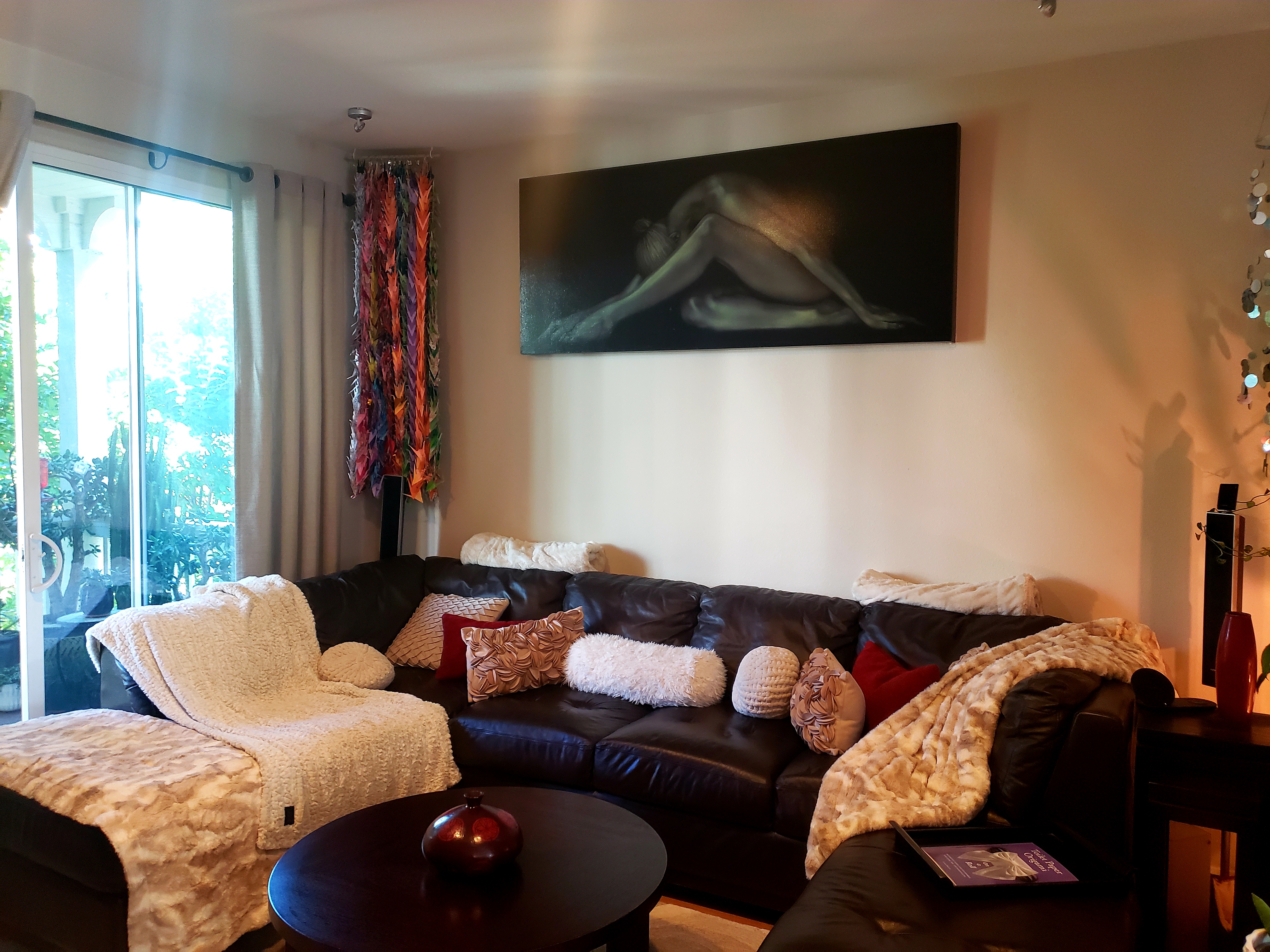
Getting back to my friend Karla, she amazed me in July when she gifted me with a thousand cranes for my birthday. I wasted no time in gettting a dowel and hooks for the cranes so that I could display them in my living room. Once they were hung, I realize I had chosen a great spot because during the day, the cranes catch the sunlight, and in the evening, the uplights which I have behind my sofa impart a lovely glow on them.

Knit Knack

69123108_s

Image ID : 69123108
Copyright : sebboy12


There was something about knitting that always appealed to me as a child.  I was enchanted by women who were in the midst of knitting something, and would watch them as they wielded their handiwork on a skein of yarn.   By the time I was eight years old, I was dead set on learning the art of knitting, and since my mother did not know how to knit, I ended up going to the library and borrowing a book on knitting.  I then asked my mom to take me to the local hobby shop, where I purchased three skeins of acrylic yarn: one pale yellow, one ivory, and one navy blue.
I remember studying the illustrations which accompanied the instructions for casting on stitches, knitting, and purling, and I caught on quickly.  And since I was reading a book with right-handed instructions, I learned to knit right-handed even though I am left-hand dominant with crocheting, writing, drawing, painting and eating.  To this day, I knit right-handed.
When I was in my teens and 20’s, I knitted scarves, afghans and a sweater which I proudly wore until the oppressively hot 100% acrylic yarn made wearing it next to impossible.  I didn’t pick up knitting needles again until February of this year.  For whatever reason, I suddenly missed the meditative, repetitive motion of knitting, and decided to tackle a project.  I purchased yarn and circular knitting needles, downloaded a knitting pattern for a cardigan sweater, and started knitting.
I had my heart set on a long sweater duster, so I extended the lower body pattern to accommodate the longer length.  I used the exact brand and weight of yarn which was used in the pattern, but because the extra length was so heavy, the panel stretched out so much that it looked warped.  My hopes dashed for a long sweater coat, I stared at the panel, trying to figure out how I was going to salvage it.  Was I going to use it as a throw blanket?  No, it was slightly too small for that.  I draped the panel over my shoulders and toyed with the idea of a poncho, when I came up with an idea.  What if I fashioned the corners into sleeves?  I began pinning and measuring, and once I figured out a design, I sewed up the panel, creating sort of a kimono sleeve coat.
thumbnail
thumbnail-2.jpeg
thumbnail-3
What do you guys think?

Shut Up, I’m Trying to Concentrate! (Revised Repost)

I-like-the-sound-you-make-when-you-shut-up

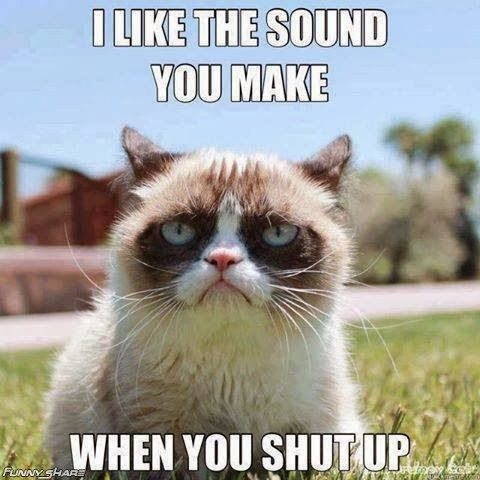
There are times when I need absolute silence in order to concentrate. Since I spend a lot of time at home writing, I deal with the constant challenges of coming up with new material, and allowing the creative process of writing to develop. Perhaps the most distracting thing I face when I am trying to focus is NOISE. Whether the noise is from people talking to each other, exercise equipment banging against the floor, car horns blaring, cats playing, doors opening or closing, or people constantly trying to talk to me, any noise except music will get me to the point where I get close to losing it. I am well aware of the fact that I suffer from misophonia, and have dealt with it since med school days, when I had to wear earbuds whenever I sat for exams.

I recently read that a group of psychologists at Northwestern University discovered that highly creative people tend to be more sensitive to noise than the average person. I digested this information with relish, since I certainly hope the fact that I can be easily annoyed by noise when I am in a creative mode is indicative of creative genius, or at least something close! The assertion that creative types are more easily distracted by noise is demonstrated by great novelists like Proust, who apparently would sequester himself in his small apartment, donning earplugs and drawing the blinds while he wrote.

Cat shutting dog up

Basically, I think the general rule of thumb should be that if someone tells you to pipe down, and the person is clearly trying to focus, then SHUT UP!

Get Creative To Stump Cyber Criminals

password_1

There has been a precipitous rise in cybercrime over the past several years, which has caused many companies and individuals to tighten up their security measures. According to information on the Norton website (http://us.norton.com/cybercrime-definition), cybercrime has surpassed drug trafficking as a criminal moneymaker. A person’s identity is stolen EVERY THREE SECONDS these days. Cybercrimes include identity theft, fraud, bullying, pornography, and cyberstalking. Though there are distinct advantages to having greater connectivity across massive sea of computers and other electronic communication devices, we are more at risk of cybercrime than ever before.

Though changing our passwords constantly can be a nuisance, doing so can confer a bit more security. Many of us are getting far more creative and cryptic with our passwords, but there are people who apparently still use common passwords which are easy to guess. I saw this article on Yahoo! today and want to share the list of most common passwords for 2015. Thank you, Daniel Bean, for posting this information!

Here’s the link: https://www.yahoo.com/tech/123456-tops-yearly-list-of-most-common-passwords-073731649.html

And here’s the list:

Splash Data's list of most common passwords for 2015

Splash Data’s list of most common passwords for 2015

Splash Data has some tips for password selection:

1. Use passwords of eight characters or more with mixed types of characters.
2. Avoid using the same username/password combination for multiple websites.
3. Use a password manager such as SplashID to organize and protect passwords, generate random passwords, and automatically log into websites.

Just think of it. You can get truly creative with numbers, letters, and special characters. How nice of all those cyber criminals to drum up all those creative juices in your noggin! The only real problem with coming up with unique and cryptic passwords for countless websites is that you may forget your password. There are password managers such as SplashID which keep your passwords nice and safe, and which also generate passwords for you, but what if someone hacks into the password manager? Yikes.

I’m not trying to be cynical, but it almost seems impossible to generate a password which stumps experienced hackers. A frightening article by Dan Goodin, entitled “Anatomy of a hack: even your ‘complicated’ password is easy to crack”, was posted on wired.co.uk (link is: http://www.wired.co.uk/news/archive/2013-05/28/password-cracking/viewall). The article reveals that even when we create long, complex passwords, most of them can be cracked.

If you think you’re being cute by typing patterns on the keyboard (qwertyuiop for example), just be aware that those types of passwords are embarrassingly easy to crack. If you make things personal, you are also setting yourself up for attack. So you might want to avoid using the name of your first dog when creating a crack-resistant password. Create something without rhyme or reason, try to remember it, and hope and pray that expert hackers don’t crack your code.

Music Performance and Cognitive Function

piano

Please check out my original post at:

http://xactmind.com/xc/articles/music-performance-and-cognitive-function/

By: Dr. Stacey Naito – Physician and IFBB Pro

Play For Your Brain

Not all of us are able to play musical instruments well, but the challenge of learning to play one can be a fun hobby. Recent research suggests that people who play a musical instrument regularly, even if they aren’t musically gifted per se, are reinforcing their brain’s function at the same time.

Musical training is thought to increase neural connections in the brain which are associated with decision making, complex memory, and creativity. Musical education can even boost cognitive function in people who have suffered from strokes, and equip the brain to adapt by using intact brain regions.

Musical Brains

Numerous studies have proven that the brains of musicians differ functionally and structurally from the brains of non-musicians. Skilled musicians are like athletes, because they need to coordinate multiple senses, and focus on complex elements like melody and tempo, while performing a piece.

There is also research which suggests that the areas used in musical performance are closely linked with other important cognitive functions. One study by Schaug discovered that musical disorders such as tone deafness affect about 4 to 10 percent of the population, which is the same percentage range seen with disabilities such as dyslexia and dyscalculia (math difficulties).

Another study, performed by Wang, examined the brains of 48 young adults who had studied music for at least one year between the ages of 3 and 15. The subjects who had begun musical training before the age of 7 had greater development in the areas of the brain associated with language and executive function.

Shut Up, I’m Trying To Concentrate!

I-like-the-sound-you-make-when-you-shut-up

There are times when I need absolute silence in order to concentrate. Now that I write content almost daily, I deal with the constant challenges of coming up with new material, and allowing the creative process of writing to develop. Perhaps the most distracting thing I face when I am trying to focus is NOISE. Whether the noise is from people talking to each other, exercise equipment banging against the floor, car horns blaring, cats playing, doors opening or closing, or people constantly trying to talk to me, any noise except music (which I listen to through earbuds) will get me to the point where I get close to losing it.

I recently read that a group of psychologists at Northwestern University discovered that highly creative people tend to be more sensitive to noise than the average person. I digested this information with relish, since I certainly hope the fact that I can be easily annoyed by noise when I am in a creative mode is indicative of creative genius, or at least something close! The assertion that creative types are more easily distracted by noise is demonstrated by great novelists like Proust, who apparently would sequester himself in his small apartment, donning earplugs and drawing the blinds while he wrote.

Cat shutting dog up

Basically, I think the general rule of thumb should be that if someone tells you to pipe down, and the person is clearly trying to focus, then SHUT UP!