A Guide to Using Technology to Restore Your Emotional and Mental Balance

Camille Johnson of Bereaver.com has compiled this wonderful resource, which teaches us how to use technology in a mindful manner.

For adults juggling work, family, and serious self-care goals like diet planning, consistent training, and competition prep, technology overuse can quietly become another source of strain. The core tension is wanting to feel disciplined and present, while constant notifications, tracking, scrolling, and comparing leave the mind scattered and the body tense. Over time, this can show up as emotional disconnection (numbness or irritability), mental fatigue (decision overload), and a subtle spiritual disconnection that makes rest feel unearned and progress feel hollow. Naming these patterns helps busy, health-focused adults reconnect with what actually matters.

Understanding Mindful Technology Use

Mindful technology use means using your devices with awareness and intention, instead of reacting on autopilot. It is a quick inner check: why am I opening this app, and what do I want to feel or accomplish? The goal is not less tech by default, but steadier attention that supports emotional balance, clearer thinking, and a deeper sense of meaning.

This matters when you are trying to follow a training plan, stay consistent with meals, and manage stress without burning out. When your attention is intentional, you make fewer impulse choices, recover better, and stop turning every pause into a comparison spiral. That mental space can also make gratitude, prayer, or reflection feel natural again.

Think of your phone like a food scale: useful when you choose it, noisy when it runs your day. You might open your tracker to log a meal, then close it before the feed pulls you into anxiety. That single pause is mindful technology use in action.

Build a Mindful Tech Plan You Can Stick With

This process helps you set simple tech boundaries and use your devices on purpose so your energy goes to training, meals, recovery, and real self-connection. For adults prepping for better health or contest readiness, it reduces decision fatigue and keeps tracking tools helpful without letting scrolling steal sleep or consistency.

  1. Define your “why” before you unlock
    Start each day by writing one sentence: “I’m using my phone today to ___,” such as log meals, follow a lifting plan, or text your coach. Use checking in with yourself to name what you want more of today, like calm, focus, or patience, before any app opens.
  2. Set two non-negotiable boundaries
    Choose one time boundary and one place boundary that protect recovery, like “no phone the first 20 minutes after waking” and “no phone where I eat.” Keep the rules small enough to win on hard days, because consistency beats perfection when stress is high.
  3. Choose intentional device sessions
    Batch your tech tasks into short windows: one check for messages, one check for training info, one check for food logging, then you close the device. Use a timer and end the session immediately when the timer ends so “quick check” does not turn into a mood shift.
  4. Add a light digital detox practice
    Pick one low-friction tool that makes boundaries easier, like app limits or screen-time tracking, since many digital detox apps include features to track use and set limits. Start with a 30 to 60 minute “offline block” each day, ideally before bed or during meal prep.
  5. Reconnect on purpose when you log off
    Replace the habit loop with a short reconnection cue: three deep breaths, a 5-minute walk, a quick gratitude list, or a brief prayer or reflection. Tie it to your fitness goals by asking, “What choice supports tomorrow’s workout?” then do one small action like filling your water bottle or planning your next meal.

Habits That Keep Tech Serving Your Goals

Habits make mindful tech use feel automatic instead of effortful, especially when you are juggling training, nutrition, and recovery. Give yourself a runway, since habit formation ranging from 59-66 days can be a realistic window for changes to stick.

Phone-Down Morning Start
  • What it is: Keep your phone out of reach until you finish water and a quiet minute.
  • How often: Daily.
  • Why it helps: You start the day from your body, not other people’s demands.
One-Minute Pre-Meal Check-In
  • What it is: Pause before eating and rate hunger, stress, and cravings from 1 to 10.
  • How often: Daily.
  • Why it helps: It protects mindful portions and reduces reactive snacking.
Batch Log and Leave
  • What it is: Log meals and training in one short session, then close the apps.
  • How often: Daily.
  • Why it helps: Tracking stays useful without turning into constant monitoring.
Screen-Free Wind-Down Timer
  • What it is: Set a nightly offline alarm and switch to stretching, reading, or breathwork.
  • How often: Daily.
  • Why it helps: Better sleep supports recovery and next-day workout quality.
Weekly Notification Reset
  • What it is: Review notifications and keep only coach, calendar, and urgent family messages.
  • How often: Weekly.
  • Why it helps: Fewer pings means fewer impulse checks and mood swings.

Common Questions About Mindful Tech Use

Q: How can I use technology to reduce stress and feel more emotionally balanced?
A: Use your phone as a cue to return to your body, not as an escape hatch. A simple step is turning off nonessential alerts and adding one short daily check-in note: “What am I feeling right now?” Mindfulness is an inherent capacity to notice with an open attitude, so you do not need to “clear your mind” to do it well.

Q: What apps or digital tools help me maintain a mindful mental routine?
A: Choose tools that create fewer decisions: a timer for breathing, a notes app for quick reflections, and a calendar block for decompression. Keep them on your first screen and move everything else off it. The goal is consistency, not finding the perfect platform.

Q: In what ways can technology support spiritual growth without causing overwhelm?
A: Pick one digital input per day, like a short reading or guided reflection, then stop there. Silence badges and set a clear end time so practice feels nourishing, not endless. If you want a creative option, use a simple three-minute prompt in a visual tool such as Adobe Firefly’s AI drawing generator to depict a value you are building, then journal one sentence about what you notice.

Q: How do I prevent feeling stuck or distracted when using digital devices to reconnect with myself?
A: Start with boundaries first: one focus mode, one purpose, one tab. If you drift, name the urge, close the app, and do a 60-second reset: breathe, sip water, look outside. This is not a willpower issue, it is a design issue you can redesign.

Q: How can nutrition and fitness apps assist me in improving my health mindfully while preparing for a competition?
A: Use apps for clarity, not control: plan meals once, log in batches, and check trends weekly instead of chasing perfection daily. Turn off streaks and “burn” comparisons if they spike anxiety, and pair data with an internal cue like hunger, energy, or sleep quality. Your body is the dashboard, the app is only a tool.

Build Self-Connection With One Mindful Tech Habit This Week

It’s easy to reach for a screen for relief and then feel oddly more scattered, even when the content is “helpful.” The way forward is a gentle, evidence-based mindset: treat technology as a tool you use on purpose, with reflective digital habits that bring attention back to your body, needs, and values. Over time, long-term mindful technology supports sustained tech mindfulness and builds self-connection motivation instead of draining it. Mindful tech isn’t about quitting screens; it’s about coming back to yourself. Choose one small tech shift to practice for 7 days, like a brief pause before opening an app or a simple end-of-day check-in note, and let repetition do the work. This matters because steadier attention strengthens resilience, health decisions, and performance in training and daily life.
When You Don’t Have Your Phone

© captainvector, 123RF Free Images

We now live in an age in which we are so reliant on our cell phones that when they are misplaced, lost or stolen, it can be paralyzing. I know this feeling all too well now because my phone was stolen earlier this year, and I was without a phone for three days. I found myself reaching for my cell phone completely out of habit for the first few hours, then I began to resign myself to the fact that I didn’t have a mini-computer. I was forced to figure out other ways to navigate through my day, and it made me realize how much our phones provide for us. There was a 50th birthday celebration I had to attend the day after my phone was stolen, and luckily I had added the location which had been texted to me onto my Google calendar, so I was able to enter the address on my car navigation and get to the party without any issue. Otherwise, I would have had a devil of a time trying to reach my friend to get the address of the birthday venue.

Social media and other apps were a bit trickier for me to adapt to without a phone, since some apps only function through the mobile version and not the desktop version. I was also unable to post on Instagram Stories during the period in which I had no phone. As a result of being sans mobile phone, I spent an oddly peaceful and quiet weekend, uninterrupted by text messages, notifications from apps, or phone calls.

When I received my replacement phone, I was able to recover about 70% of the images and videos which were on my previous phone, mainly because I had a habit of uploading content onto my Dropbox account for backup. It was a completely different situation with my contacts, of which there were over 3,000. I discovered that Google drive had NOT backed up any of my contacts, so I was forced to look through email servers to recover some of the information and enter all of it manually onto my new device. Sadly, I was only able to recover just under 300 contacts.

It still surprises me how someone like me who grew up in an era before answering machines could be so dependent on a cell phone, as if it was a lifeline. I’m so old school that we had only one phone, a beige rotary dial phone, and I accepted the fact that if I called someone and there was no answer, the only thing I could do was call back at a later time. With a single phone line, and no call waiting back then, a friend calling in while my mom was blabbing with one of her work buddies would hear an annoying BEEP BEEP BEEP to indicate that the line was busy. Life was far less complicated back then.

Now that I am back up and running with a new cell phone, I have already settled into the feeling of security which having my phone around confers. Everything from ordering food to be delivered, to checking emails, to making mobile banking deposits, has become reestablished as my day-to-day pattern. People can call and leave a voicemail message if I am on the other line. These little computers have certainly become a necessity in this era!

Technology And The Elderly Don’t Mix Well

Image ID: 129610434
Copyright: fizkes

I have always considered my mother’s lack of understanding of anything electronic rather interesting, especially since I don’t struggle with operating basic electronic devices such as TV’s, stereos and cell phones. I know that older generations (my mother was born in 1932) tend to have difficulties operating electronic equipment, but my mother is at an extreme. It surprised me when my mother requested a VCR back in the 80’s, because I assumed that using it would present a challenge for her. So I gave her one for Christmas, despite the fact that I doubted she would feel comfortable using it. She proved me right by immediately revealing to me that she did not comprehend the different control buttons, which then prompted me to patiently run through every function with her. When I would say, “Okay Mom, how about if you try to play a videotape?”, she would become frustrated and state that it was just too confusing to her.

The next thing I did was to write out detailed and numbered operation instructions on a large Post-It note which I then affixed to the top of the VCR. A week went by, and then I came over for a visit, during which I asked my mother how she was enjoying the VCR. She stated that she had not used it, that it was “too confusing” for her, and that she would just wait until I came over so that I could operate the VCR and we could watch movies together. My mom held onto that VCR for 20 years, and she never once used it on her own.

Shortly after my mother entered an assisted living facility in 2013, I was trying to figure out what type of phone to get her, and thought it would be cheaper and more convenient for her if I purchased a pre-paid cell phone as opposed to installing a land line in her room. After purchasing her first cell phone (two have stopped working over the years, and she is on her third phone), I braced myself for the cell phone training which I knew I had to put my mom through. Just as I had predicted, she had problems from day one with basic operations on the phone, and as a consequence, rarely, if ever, answers incoming calls or makes outbound calls.

Has anyone else dealt with elderly people who don’t seem to have any aptitude for electronic devices?

How Sleep Can Revitalize Your Body and Mind

Sheila Olson of fitsheila.com has done it again with another informative article!  Check it out here.

sleep

Image courtesy of Pixabay

When we lose out on restful sleep, our bodies tend to age before their time. If you’re tired or feeling run down and a bit haggard, it might be due to lack of proper rest. After all, nothing replenishes us the way a good night’s slumber does.


Why Sleep Keeps Us Youthful

How do you feel after a night of no sleep? Is your thinking slowed and your energy nonexistent, and do you notice new lines beneath your eyes? If so, you’re not alone, as poor sleep can make us feel and look older than we are. Our cortisol levels shoot up, our brains can’t properly restore themselves, and we look as haggard as we feel. Your mind and body both need this time to reset themselves and flush out toxins, which helps us stay healthy and energetic. Unfortunately, trying to force ourselves to slumber through sheer will alone seldom works. Instead, we need to be proactive about our patterns to change our sleep habits.


Transform Your Bedroom

If your room is uncomfortable, stressful, or too stimulating, you may not be sleeping as well as you could. If you have a television where you can watch from bed, a lumpy mattress, or curtains that let in every stream of light, then it’s definitely time for a change. Have good bedding, including both linens and your mattress, and add blackout curtains to extend your rests. Every change adds up, so transform your bedroom into a paradise today.


Best Sleep Position

Sleeping on your back is the best way to avoid the development of premature wrinkles, but there are options for side sleepers to overcome this problem. Adding a body pillow to take some of your weight, or using a silk pillowcase, can greatly cut down the strain your skin experiences at night. Supplements, meanwhile, can provide vitamins and collagen that our skin needs to stay youthful, which allows us to continue side sleeping without fear. Even a good moisturizer can go a long way to helping your skin fill in lines created from the pull of a pillow.


Banishing Tech

Many of us use smartphones into the late hours, but that can deprive us of restful sleep. The light from our phones and tablets signals to our brains that it is daytime, and thereby prevents us from beginning the sleep process. It can be hard to put your phone down at a certain time each night, as tech addiction is very real in today’s society, but we must learn how. Start by removing notifications from your phone, taking off tempting apps and cutting back in increments. All in all, do what you can to eliminate your tech usage before bed.


Eat for Good Rest

What we eat can impact the quality of our rest. When we eat poorly or consume foods that cause indigestion, our sleep is interrupted, and we may wake throughout the night. Even drinking coffee in the afternoon can negatively influence how well we slumber. To give yourself the boost you need, reach for healthy carbs over empty ones, and don’t overeat before bed. Cherries, milk, and poultry are also good options to ease you into a refreshingly restful night.


Keep a Routine

When you go to bed at different hours, and when you wake up irregularly too, you’re setting your body up for failure. It has no ability to learn when it should get sleepy or when it will awaken. That’s why setting a nighttime routine and sticking to it even when you don’t work the next day is beneficial. By teaching your body to rest at a specific hour, you give yourself a higher possibility of falling asleep when you lie down.


To keep your complexion flawless and to have more energy during the day, get the sleep your body craves. It may take some training, and you may need to rearrange your bedroom, but you can get more rest. Each and every one of us deserves a good night of slumber.


What If It All Shuts Down?

Ever since we hit the era of Google and the information superhighway, we have become as spoiled as fattened swine on the plethora of technology which swarms around us constantly. It’s been an interesting study in contrasts for me, because I spent my childhood without any of the fancy technological bells and whistles which earmark the new millennium. I remember making and receiving phone calls on a beige rotary dial phone, and if I didn’t want to talk to someone, I just left the receiver off the cradle. Now THAT was call blocking! We didn’t even have the luxury of answering machines back in those days. And tooling around on personal computers wasn’t part of our daily routine either.

Now we have personal computers which are so handy that we carry them around in the form of laptops, tablets, and cell phones. We navigate via global satellite, search for factoids via Google or Bing, and pretty much have the world quite literally in the palms of our hands.

Yet what happens when a phone runs out of battery power, or if a power outage threatens to shut us down? The thought honestly makes me shudder, and is part of the reason why I will never take the advice of my sister and digitize all of the photos from my photo albums (I have 39 photo albums, mostly from my mother’s photo collection), then destroy the original photos to save space in my home. Yes, a fire could destroy those photos, but I am not too keen on the idea of storing images on a disk or hard drive and relying on a computer whenever I want to view those images.

Today’s society is so image-driven, yet who is bothering to save these captures in a precious archive? Though I have a habit of printing out images from important events (like birthdays and holidays), I’m sure I am in the minority. I have also noticed that there are some online searches I have conducted which are later deleted or moved, so the information is forever lost. Maybe I’m old school, but there’s something to be said about holding onto an item, whether it be a printed photo, a printout of a Google search, or financial documents.

Our New Security Blanket

Think about the one thing which is constantly at your side, namely, your phone.

You rely on that small, handheld computer to keep your life in order, so much so that misplacing it sends you into an instant panic. Your LIFE is on that phone, dammit, and if you were to lose it, you would hate to imagine how much its loss would disrupt your life. I am willing to bet that you carry your cell phone everywhere, even into the restroom, which is why cell phones harbor some of the nastiest germs which are found on inanimate objects these days.

Your thumbs assert their special evolutionary spot in the animal kingdom by constantly texting, liking posts, scrolling, and sweeping to the left or right. Unfortunately, that also means gamekeeper’s thumb, an injury to a tendinitis in thumb ligaments is all to common now.

Your relationship with your phone is so tight that you will stare into it even while at dinner with friends, and it will tempt you to fuss with it while driving, despite the dangers associated with driving and texting.

I have a suggestion for you if you are so attached to your phone that it has become a security blanket. Why not leave it at home while you run to the gym? How about leaving it on your desk at work while you use the restroom? Leave it face down on the table when you are having dinner with friends. Avoid looking at it once you have crawled into bed. It won’t be the end of the world if you put your phone down every once in a while.

How Social Media Has Messed Us Up

The majority of us can’t even imagine being without our cell phones. The relatively tiny devices we carry around with us now function as GPS devices, marvelous computers which connect us to every part of the world, tie us into a massive information network which we have become entirely reliant on, and also happen to function as the basic communication aids which were originally invented by Italian inventor Antonio Meucci in 1849 (Alexander Graham Bell won the credit in 1876 as a result of winning the first U.S. patent).

Cell phones have become a necessity in modern society, but they have also caused us to develop compulsive behaviors which feed into the irresistible distraction which they present. Though you may deny it, I am willing to bet that you experience a certain level of anxiety if your cell phone battery power winds down, if you lose reception, if you lose a Wifi signal, or are somehow locked out of a website you need to access immediately. We have become so reliant on the immediate gratification which comes with doing a Google search on our Smartphones or iPhones that we have turned into petulant children when glitches occur. We are so dependent on our cellular devices that they have become security blankets.

Whether we like it or not, our reliance on cellular technology makes us less productive and less attentive to ordinary daily tasks. We could be sitting at work, cooking a meal, walking our dogs, or driving to work, while still concerned about what supposedly vital information we are missing by not staring at our phones. God forbid we miss our friends’ Facebook updates or allow our email inboxes to pile up as we try to navigate through a typical day! We are accustomed to having our phones close by at all times, and every time it makes a notification sound, we stop what we are doing to attend to our phones, which draws attention away from what we should really be focused on. Time ticks by, and suddenly, we are distracted from viewing a beautiful sunset. Even if we view that beautiful sunset, we tend to feel a compulsion to record the sunset by taking a picture of it with those confounded phones.

Even when we aren’t at work, our brains must sort through an enormous amount of information from our phones and computers. One 2011 study stated that we take in the equivalent of about 174 newspapers’ worth of information every single day. And since the brain’s ability to process information is limited, we often end up feeling overwhelmed and anxious as we try to power through all the information being thrown at us. Though the age of social media has enabled us to connect in novel and far-reaching ways, it also robs us of our attention and distracts us from other tasks.

It’s no wonder that the incidence of anxiety in our society has increased dramatically.

There should be a limit on the frequency with which we view social media sites. Be sure to set aside a brief designated time each day to check emails and peruse social media, then PUT YOUR PHONE AWAY. Leave the bulk of each day to relaxing, sightseeing, engaging in outdoor activities, and enjoying life. Trust me, your brain needs a break from the constant influx of technology.

Another disturbing reality about our attachment to cell phones is the false sense of community we feel as a result of social media notifications and texts. The perception is that we are part of a vast network, but the ironic thing is that we tend to access our cell phones while alone. This isolation from actual interaction can actually trigger loneliness and depression. From the moment we wake up until we rest our heads to sleep, our cell phones are always on. They even serve as our alarm clocks now!

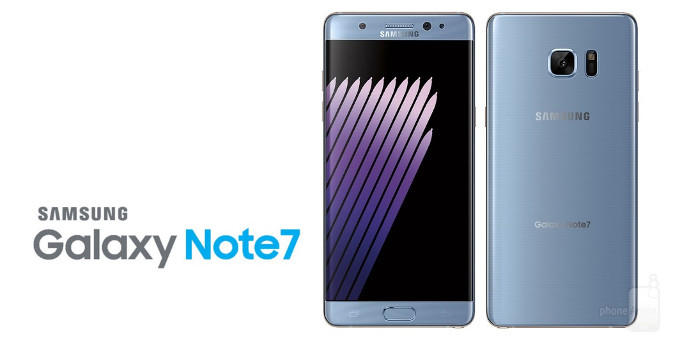
Love At First Sight…With A Galaxy Note 7

note7

I purchased a Galaxy Note 7 in August because my HTC One was in its final days, and I had to replace it. While at the kiosk looking at phones, I was persuaded by the salesman to purchase a Note 7 because he believed it was the very best phone available, and that it would best handle my social media and business requirements nicely. Upon his suggestion, I ordered a Galaxy Note 7, which I received on August 12th.

Though the Note 7 was larger than any other cell phone I had ever had, it was love at first sight for me. The operating system, the screen size, the slim profile, the stylus functions, and all the other fun features made my heart sing. And that iris scanner? Pure genius. I happily and quickly got to know my Note 7, equipped it with a cool case and screen protector, and babied it, wiping it down daily with a soft cloth. It was like finding the perfect man.

I then got an alarming email from Samsung on September 2nd, informing me that 35 Note 7 units worldwide had either caught on fire or exploded. What…? Oh no, I guess it was too good to be true, having a perfect, awesome phone. Instead of a great phone, my Note 7 was being accused of being the incredible exploding phone.

I continued to get emails, then texts, informing me that my phone was an explosive device and was putting me and everyone in my path in danger. I finally gave in and turned in my beloved Note 7 on September 15th for a Galaxy S7 Edge. What is so infuriating is that mere days after transferring everything over from the Note 7 to the S7 Edge, I got a text (on the new S7 Edge) that Samsung was issuing replacement Note 7’s in the coming weeks. Oh yes, gotta love Murphy’s Law.

I really like the S7 Edge. But I ADORED the Note 7. It was just like the perfect man. Perfect in every way. And perhaps just a little too hot! Even the replacement Note 7’s are still catching on fire:

http://www.bbc.com/news/world-us-canada-37600014

I Hate Taking Selfies

IMAG0894

Both of my parents used to put me in front of cameras all the time, which largely explains why I am so comfortable in front of them. I am very much at ease before a still camera, and am usually fine in front of a moving one, even if I have to improvise or read cold. I have never really shied away from the camera lens like some people tend to do, and am usually happy to join in a group picture when asked to do so.

All bets are off when I have to take a selfie. I have stubbornly remained on the Android boat and refuse to cross over to the iPhone world, and as a result I have to deal with a camera which, quite frankly, sucks, especially when in selfie mode. I have an oval face, but my phone camera wants to make me look like I have a long, weird horse face! My phone camera is also completely incapable of capturing ideal lighting conditions. Since I want people to see me in my natural, everyday state, and am very reluctant to use filters on my social media posts, I realize that many of my social media posts which feature a selfie don’t exactly make me look my best.

As if that wasn’t enough to discourage me from taking selfies, I also don’t enjoy the process of looking at myself and trying to line up a picture. When someone else is photographing or filming me, I allow myself to relax and trust the person who is capturing my likeness. When I take selfies with my phone, I become easily and quickly bored with the activity. It’s not like me to spend massive amounts of time in front of a mirror, fussing and primping, so I certainly don’t enjoy spending additional time taking pictures of myself.

Here’s my M.O. for taking selfies: I think of a good setup for the shot, then I take between two and eight selfies. I know you selfie experts are probably horrified by the paltry amount of selfies I take, and are ready to tell me, “No wonder you don’t get good selfies!” I know that the most dedicated Instagram selfie takers will often take over a hundred versions of a selfie and sift through them to find the most flattering images, but I don’t have that kind of time!

I have spoken with branding people who say that it is worth taking time to snap the perfect selfie, but I have careers and a life outside of social media, and in that real world, time is money. If I don’t get my work done, I don’t get paid. And no one will have sympathy for me if I tell them I need a couple of hours each day to take the perfect batch of selfies. Since I also apply a five-minute face each day (concealer, brow pencil, eyeliner, mascara, blush, translucent powder and lipstick…NO foundation, bronzer, eyeshadow, lipgloss for my daily look!), I am not prepping for selfies all the time.

Who else out there hates taking selfies? IMAG0893