Supplements You Should Be Taking Based On Your Age

Originally published on mensphysique.com on Saturday, 06 September 2014

http://www.rxmuscle.com/blogs/the-lab-supplement-school/11503-supplements-you-should-be-taking-based-on-your-age.html
supplements4
Most of you who are reading this article are probably already taking certain nutritional supplements which are popular among bodybuilding folk, such as conjugated linoleic acid, glutamine, fish oil, whey protein, and glutamine. However, there are basic nutritional demands in everyone which competitors might not be addressing in their daily regimens. In addition, those demands change as we age, as do the supplements which confer optimal health. In an effort to address those demands, I have compiled a list of supplements which you should consider adding to your regimen.

The following supplements serve as core nutrients which people of all ages require:

Multivitamin – I realize that there is some controversy regarding multivitamins, but I happen to be in the camp that is pro-multivitamin. Contest prep meal plans are notorious for being deficient in a multitude of nutrients, underscoring the need for a high quality multivitamin/multimineral supplement.

Vitamin C – This miracle nutrient is a potent antioxidant, assists in wound healing, aids in the absorption of iron from foods, and is critical for the development of collagen. Recommended daily dosages of this important vitamin are anywhere from 1,000 milligrams to 5,000 milligrams, split into 2 to 4 doses.

Zinc – One reason why this mineral is so important for men of all ages is because it is required for sperm production. Zinc is also a potent aromatase inhibitor, but only in doses of 100 milligrams or more per day. If you choose to take high doses of zinc, be sure to also take copper supplementation.

Alpha-Lipoic Acid (ALA) – This is a potent antioxidant which also aids with glycogen uptake. Basically what that means is that ALA will assist your body in metabolizing dietary sugars more efficiently. ALA is also great for brain and liver health. Recommended dosage is 100 milligrams to 300 milligrams daily.

Probiotics – These beneficial bacteria promote intestinal heath and a stronger immune system. The general population can obtain probiotics from milk, yogurt, tempeh and other products, but those who compete may opt for a supplement which will keep one’s diet contest-friendly. Look for formulations which have at least 20 billion live bacteria.

Vitamin D3 – This vitamin has gotten a lot of attention in recent years as a result of research which determined that the vast majority of the human population is deficient. This deficiency is largely the result of wide use of sunblock (thus turning off the body’s production of vitamin D3), and a drop in milk consumption. Why is Vitamin D3 so important? Vitamin D3 is associated with bone health, but may also play a role in the prevention of diabetes, cancer and multiple sclerosis. If you are like a vampire and remain indoors all day, take at least 1,000 international units (IU) daily. I personally take 5,000 IU daily to get the most of its ability to absorb calcium. I also recommend getting vitamin D3 from dietary sources like whole eggs or fatty fish like salmon.

Calcium – Calcium supplementation is essential for individuals who don’t consume lots of dairy or calcium fortified foods. Ironically, calcium supplements are absorbed more readily in the presence of lactose and protein. However, if dairy products are forbidden due to lactose intolerance or contest prep diets, consuming protein when calcium is taken will enhance absorption. Make sure to take vitamin D3 with calcium supplements to further enhance absorption. Recommended dosage is 1,000 milligrams per day, split into two doses.

Add these to your regimen if you are in your 30’s:
Glucosamine – This supplement is especially important for those who lift weights since it can ameliorate pain from joint inflammation. A good daily dosage is 1,500 milligrams. I tend to recommend formulations which contain MSM and NO chondroitin, because I have had too many patients complain of gastrointestinal upset with the chondroitin formulas.

Vitamin B12 – Vitamin B12 is found in animal protein, but the body cannot access it well, and this impairment becomes worse as we age. Because of this, taking a B12 supplement should become a part of your daily regimen if you are over 30.

DHEA – This is a controversial supplement because it has a considerable side effect profile, but I am including it here because so many people who compete can benefit from it as they age. DHEA is a sex hormone precursor which is secreted mainly by the adrenal glands and which is usually abundant in people who are in their 20’s. However, production begins to decline in one’s 30’s, and continues to drop significantly over the decades. It is a key player in maintenance and building of muscle, fat loss, and slowing the aging process. Side effects include heart palpitations, elevated blood pressure, breast enlargement, testicular atrophy, and interactions which certain medications. For this reason, you should consult with a physician to determine if your DHEA levels are low and if you may benefit from DHEA supplementation.

Individuals over 40 should add the following:
Leucine – This is probably the most important supplement you can add to your regimen as you age, especially if you are a competitor, because it helps to offset age-related muscle loss. One of the branched-chain amino acids, leucine is unique in this regard. Add 2 grams of leucine to a couple of your protein-containing meals. Leucine powder is VERY bitter, so make sure to mix it with a tasty protein powder, or take it in capsule form with your whole food meals.

Coenzyme Q10 – This antioxidant aids in ATP production, especially in the heart. It’s a good idea to take at least 30 milligrams per day, but I personally take 100 milligrams daily for the cardiac benefits.

Saw Palmetto – If your bathroom visits in the middle of the night are frequent and are not confined to your water-loading evenings, then you are probably experiencing prostatic enlargement. If this is the case, you might want to consider taking saw palmetto at a recommended dosage of 160 milligrams per day.

Over 50? Stack this supplement onto the above regimens:
Phosphatidylserine – This nutrient is important for optimal brain health. Take 200 milligrams per day.

One More Thought On Muscle Loss And Aging

I posted an article several days ago which discussed the interventions which can be practiced by older individuals to maintain muscle mass. In that article I discussed the importance of weight training, consuming adequate protein, and adding certain supplements which can reduce inflammation. A critical component in maintaining optimal function of the body at the cellular level is ensuring that micro-nutrient needs are met, i.e., meeting the body’s vitamin and mineral requirements. Given the fact that numerous nutrient deficiencies are increasingly common (such as magnesium, vitamin D3, calcium), supplementation with high quality products can often make the difference between a healthy state and one riddled with illness.

One sure way to meet micro-nutrient needs each day is to take a multivitamin/mineral supplement. I recommend taking a multivitamin which is dosed several times a day because the chance of optimal absorption is much greater than once-daily dosing. My favorite is SWAT Fuel’s .40 Caliber, because it delivers high bioavailability on a three time dosing regimen each day and is suitable for everyone, but it is especially great for individuals who tend to experience intestinal discomfort from multivitamin formulas.

You can order .40 Caliber directly from the website: http://swatfuel.com/products.aspx

40cal_small

One Step Forward Two Steps Back: Fighting Muscle Loss As You Age

Originally published on mensphysique.com on Monday, 07 April 2014
fit at older age
http://www.rxmuscle.com/blogs/the-news-the-newest-in-mp/10590-one-step-forward-two-steps-back-fighting-muscle-loss-as-you-age.html

The sad truth about getting older is that it becomes more and more difficult to hold onto the plentiful lean muscle mass and low body fat we tend to take for granted during our younger years. An inevitable consequence of growing older is the increasing struggle to maintain lean muscle mass as the years pass. Even if you have been blessed with a genetic propensity for the optimal balance of lean tissue and body fat, be prepared to work harder over time to keep what you have. This also means that master’s competitors usually have to train harder to build muscle mass, and are also more sensitive to dietary fluctuations and digressions than their younger counterparts.

The good news is that there are steps which can be taken to combat the unfavorable shift in body composition which makes its appearance after one’s mid-thirties. Perhaps the MOST important intervention which the vast majority of you are already practicing is weight training. You can continue to challenge yourself and lift heavy, but you might want to consider adding glucosamine and turmeric to your supplement regimen to protect the joints and minimize inflammation. Another adaptation in the weight room which older athletes respond especially well to is unilateral training. Unilateral movements improve balance and coordination and make it possible to correct strength imbalances.

Another way to naturally boost the body’s ability to combat aging which you are most likely already practicing is to consume adequate protein. When protein is consumed, a steady stream of glucose is released via glucagon without spiking insulin levels in the body. Conversely, a diet low in protein but high in carbohydrates results in high levels of insulin, which over the course of time can result in widespread inflammation, diabetes, and obesity. Surprisingly, the protein needs of people from middle age on (40’s and over) increase as a result of diminished protein synthesis in the aging body. Protein intake must be increased in order to offset the deficiency.

If you are already weight lifting regularly and taking in sufficient protein, you may want to consider boosting your intake of glutamine and branched-chain amino acids, particularly leucine. These building blocks help to optimize the body’s ability to utilize dietary protein to build new muscle and repair damaged muscle fibers.

Though animal sources of protein are excellent options for people of any age, whey protein in particular is a remarkable protein source in older people. It is highly absorbable, contains all 18 amino acids, immunoglobulins and lactoferrin, and all the building blocks for a powerful antioxidant called glutathione. Glutathione deficiency is linked to Alzheimer’s disease, cardiovascular disease, arthritis, asthma and cancer, and because of this, it is considered a key substance in combating the process of aging. Natural glutathione production in the body declines with age, but with whey protein on board, the amino acids necessary for glutathione production are supplied to the body and optimal levels can be attained as a result.

Though athletes and competitors are aware of the health and muscle building benefits of whey protein, I am astonished by how it is not utilized nearly enough by the average person. All too often I see patients who regularly skip meals and eat fast foods and other processed foods, and who assume that whey protein is only for athletes. If you are an average person who wants to change poor eating habits and optimize cellular function, then you need to boost protein intake and add whey as one of your protein sources. You are doing yourself a disservice if you insist on eating junk carbs like simple sugars and processed foods, skipping meals, and consuming insufficient protein, especially if you are over the age of 35 and trying to fend off disease and aging.

If you are proactive and consistent about taking the necessary steps to battle age-related muscle loss, you will reap the benefits of better health and vitality and will rival those half your age with a muscular physique to be envied.

What Is 7-Keto?

Originally published on mensphysique.com on Sunday, 17 February 2013

http://www.rxmuscle.com/blogs/the-lab-supplement-school/7523-what-is-7-keto.html
keto7
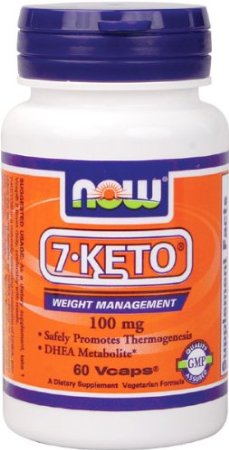
For those of you who do not know what 7-Keto is, it is a metabolite of the hormone dehydroepiandrosterone (DHEA), which has gained popularity among those who are interested in battling the aging process. Keto-7 boosts immune function and helps to reduce body fat without the risk of conversion to estrogen and testosterone which characterizes DHEA.

Keto-7 (or 7-Keto) is a brand name for the chemical 3-acetyl-7-oxo-dehydroepiandros-terone which is a metabolite mainly produced in the adrenal glands and skin as well as the brain. Levels of this compound rise in the body until about age 20, then start to drop after age 30, declining by 50% by age 50. When Keto-7 levels drop, body fat and total body weight tend to increase, and immune function drops as well. In addition, since the decline in Keto-7 is more pronounced than that of cortisol, cortisol becomes dominant and further challenges the strength of the immune system. So it certainly makes sense to supplement the body with Keto-7 as we age.

Probably the best features of Keto-7 are that it carries no negative side effects, is rapidly absorbed and does not accumulate in the body over time. It counteracts the effect of circulating glucocorticoids such as cortisol, thereby conferring a protective effect on the body’s immune function. For those of you who are asking how it can enhance your health and performance, consider the fact that Keto-7 is a powerful thermogenic and can cause an appreciable increase in the body’s metabolic rate. The process by which Keto-7 does this is by enhancing the activity of three thermogenic enzymes which stimulate fatty acid oxidation. These enzymes drive liver cells to burn fatty acids for energy, resulting in lowered triglycerides. In addition, Keto-7 causes a surge in thyroid hormone activity which further stimulates fat oxidation. Another encouraging effect of Keto-7 on the body is that it improves the blood cholesterol profile. Though Keto-7 only has a slight effect on decreasing LDL cholesterol, it causes a significant increase in HDL levels, thus shifting the total cholesterol profile. Keto-7 also causes a significant rise in apolipo-protein A-1 which has a protective effect on cardiovascular health.

Many proponents of Keto-7 supplementation suggest combination therapy with both Keto-7 and DHEA. Both of these substances can work in tandem to boost estrogen and testosterone levels to optimum range. DHEA can cause facial hair growth and oily skin in women who take large amounts of DHEA, so the use of Keto-7 with a smaller dose of DHEA can eliminate this problem. DHEA cannot be administered to individuals with prostate cancer or breast cancer, which makes Keto-7 an acceptable alternative.

Make sure to supplement with Keto-7 in the morning when the body’s natural production is at its peak. I take my dose with my first meal in the morning, but you can also take this supplement on an empty stomach. Some proponents advise taking two doses daily, but I believe a 100 mg dose once daily in the morning suffices for most individuals. Avoid taking it in the evening, as it may stimulate brain activity and result in insomnia.

Keto-7 should be taken by anyone who wants to combat the aging process and improve body composition without adversely affecting natural hormonal levels of estrogen and testosterone.

Botox Treatments Are NOT An Urgent Issue

injectables and faceWhile I appreciate the aesthetic benefits and self-confidence boost that injectables treatments confer upon the people who undergo them, I get very annoyed by the sense of urgency which some people adopt when it’s time to get treated again. I am not kidding you when I say I have had patients contact me asking for Botox, Dysport, Xeomin, Juvederm, Restylane, Perlane, Belotero, or Radiesse with a hint of desperation in their voices, as if it was a matter of life or death in getting a treatment lined up immediately.

In a way it makes perfect sense because these non-surgical fixes are a cost-effective way to smooth lines and furrows and restore lost volume. When the clock is turned back the first time and a new patient sees the results of injectables treatments, it’s a wonderful reveal which causes the patient to see himself or herself differently. The neurotoxins (Botox, Dysport and Xeomin) yield effects which last from 3 to 6 months, with muscle function gradually returning over time, along with the corresponding lines and wrinkles. Fillers have greater longevity and dissipate from 6 months to two years after the treatment is performed. The dissipation tends to be gradual, not sudden.

So when I have patients calling the office, calling me or texting me, insisting that they MUST come in IMMEDIATELY for treatment, I almost want to ask, “Where’s the fire?” Sometimes the request is on such short notice that I cannot accommodate it, which sometimes upsets the patient greatly. The response from the patient goes something like, “But I need it NOW! You need to do this for me. I’m sure you can find time in your schedule to stay late or somehow accommodate me.”

Such treatments are NEVER an emergency, and your face isn’t going to fall if you don’t get shot up with neurotoxin or filler immediately. Trust me on this!

One Step Forward, Two Steps Back: Fighting Muscle Loss As You Age

Original post can be found at:

http://www.rxmuscle.com/blogs/the-news-the-newest-in-mp/10590-one-step-forward-two-steps-back-fighting-muscle-loss-as-you-age.html?hitcount=0

The sad truth about getting older is that it becomes more and more difficult to hold onto the plentiful lean muscle mass and low body fat we tend to take for granted during our younger years. An inevitable consequence of growing older is the increasing struggle to maintain lean muscle mass as the years pass. Even if you have been blessed with a genetic propensity for the optimal balance of lean tissue and body fat, be prepared to work harder over time to keep what you have. This also means that master’s competitors usually have to train harder to build muscle mass, and are also more sensitive to dietary fluctuations and digressions than their younger counterparts.

The good news is that there are steps which can be taken to combat the unfavorable shift in body composition which makes its appearance after one’s mid-thirties. Perhaps the MOST important intervention which the vast majority of you are already practicing is weight training. You can continue to challenge yourself and lift heavy, but you might want to consider adding glucosamine and turmeric to your supplement regimen to protect the joints and minimize inflammation. Another adaptation in the weight room which older athletes respond especially well to is unilateral training. Unilateral movements improve balance and coordination and make it impossible to correct strength imbalances.

Another way to naturally boost the body’s ability to combat aging which you are most likely already practicing is to consume adequate protein. When protein is consumed, a steady stream of glucose is released via glucagon without spiking insulin levels in the body. Conversely, a diet low in protein but high in carbohydrates results in high levels of insulin, which over the course of time can result in widespread inflammation, diabetes, and obesity. Surprisingly, the protein needs of people from middle age on (40’s and over) increase as a result of diminished protein synthesis in the aging body. Protein intake must be increased in order to offset the deficiency. If you are already weight lifting regularly and taking in sufficient protein, you may want to consider boosting your intake of glutamine and branched chain amino acids, particularly leucine. These building blocks help to optimize the body’s ability to utilize dietary protein to build new muscle and repair damaged muscle fibers.

Though animal sources of protein are excellent options for people of any age, whey protein in particular is a remarkable protein source in older people. It is highly absorbable, contains all 18 amino acids, immunoglobulins and lactoferrin, and all the building blocks for a powerful antioxidant called glutathione. Glutathione deficiency is linked to Alzheimer’s disease, cardiovascular disease, arthritis, asthma and cancer, and because of this, it is considered a key substance in combating the process of aging. Natural glutathione production in the body declines with age, but with whey protein on board, the amino acids necessary for glutathione production are supplied to the body and optimal levels can be attained as a result.

Though athletes and competitors are aware of the health and muscle building benefits of whey protein, I am astonished by how it is not utilized nearly enough by the average person. All too often I see patients who regularly skip meals and eat fast foods and other processed foods, and who assume that whey protein is only for athletes. If you are an average person who wants to change poor eating habits and optimize cellular function, then you need to boost protein intake and add whey as one of your protein sources. You are doing yourself a disservice if you insist on eating junk carbs like simple sugars and processed foods, skipping meals, and consuming insufficient protein, especially if you are over the age of 35 and trying to fend off disease and aging.

If you are proactive and consistent about taking the necessary steps to battle age-related muscle loss, you will reap the benefits of better health and vitality and will rival those half your age with a muscular physique to be envied.