Joints That Snap, Crackle, and Pop

joint-popping

You’re sitting with friends, and you reach for something next to you, when you hear a pop in your shoulder. There’s no pain, yet that popping sound has you concerned that something is wrong. Should you worry?

Popping or cracking sensations and sounds can occur just about anywhere in the body and, if they aren’t expected or commonplace for an individual, can be alarming. Scientists can’t agree on what it is exactly that causes all those strange noises, but one theory is that as tendons and ligaments tighten around or move over a joint, the result is snapping, popping or cracking. As for popping knuckles, one popular idea is that air bubbles within joint fluid escape, causing a popping sound, while another belief is that a vacuum is formed when the joint is adjusted, causing synovial fluid to rush into the space. It’s a different scenario with arthritic joints, which may creak and grind as a result of bone moving across bone.

Just because your body might make those strange sounds when you move, such noises and movements don’t necessarily mean bad news. However, any time those noises or movements are accompanied by pain or restriction of movement in the body part moved, it’s time to have it evaluated by a physician.

Who Is That Old Person In The Mirror?

young-vs-old

This post is dedicated to every single patient and client who has admitted to me that at some point after they began their descent into middle age, they looked in the mirror and no longer recognized the reflection staring back. The aging process can be terribly cruel, and when hormonal levels plummet, the physical changes can appear almost overnight. Taut, supple skin is replaced with saggy skin. A full, thick head of hair is reduced to a thin, lifeless mass. Joints begin to creak and resist natural movement. Brilliant white teeth begin to look dingy. Once full cheeks and lips become deflated. Grey and white hairs sprout and take over the scalp. Back fat and belly fat obliterate a once trim waistline. I could go on, but you get the idea.

wrinkled face

None of the changes associated with aging are fun, especially the physical changes which end up making us feel frustrated by a rapidly changing physical landscape. While some folks begrudgingly accept the aging process without considering any interventions, a growing segment of the aging population has turned to everything from adrenal support supplements, to hair dye, to dermal injectable fillers, to surgery, in an effort to fight the aging process every step of the way.

The good news is that there are more anti-aging options than ever before. In addition, there is a greater awareness of the importance of proper nutrition and regular exercise in fighting the aging process. But let’s face it. Many people still want a magic pill or an instant fix, and that is where cosmetic interventions such as fillers and surgery come into play.

Is it cheating to have treatments which make you feel more like yourself? I certainly don’t think so, nor do my patients. Unless you are on a mission to pump your face so full of fillers that you look like a Barbie doll, you can turn to fillers to restore volume which has been lost over the years and STILL LOOK LIKE YOU.

I offer the following injectable facial medical treatments:
Botox
Juvederm
Voluma
Kybella
Radiesse
Bellafill
Restylane

In addition, I also perform medical grade chemical peels, surgical skin tag and mole removal, and bioidentical hormone replacement.

For those of you in the Los Angeles area who are interested in any of the treatments or services I offer, please check out my medical site: http://www.drstaceynaito.com/#!procedures/c1pna

How To Assess A Client For Body Asymmetries (repost)

Asymmetric Musculature

I originally wrote this piece for AFE and am reposting it here.

Fitness pre-testing is a valuable tool for evaluating movement patterns and assessing a client’s strengths and weaknesses. The information gathered from such testing can then be utilized to develop a customized program which addresses and corrects functional abnormalities. The more thorough the pre-testing, the better equipped a trainer is to help the client reach optimal potential within the training program, while also guarding against injuries which the client might be predisposed to as a result of compensatory patterns.

Many people have developed compensatory patterns over time. Sometimes structural abnormalities exist from birth, or develop in childhood, and often throw surrounding soft tissues and joints out of alignment. In other cases, injuries from sports or other activities can cause a person to begin favoring one side of the body in an effort to reduce the stress load on the injured side. The problem with these compensatory patterns is that they allow the weak or restricted side to become even worse over time. Because of this, functional weight training should always address these patterns in an effort to correct them.

How To Determine Asymmetry

One of the most valuable early tests for determining structural asymmetry is the single leg stance, in which the client’s ability to stabilize the trunk over the supporting leg is determined. Misalignments of the hips, knees, or ankles/feet can be detected easily with this screening tool. For example, if one hip joint is restricted or otherwise unstable, the client will shift weight in an effort to maintain balance. A trainer can then utilize the information gathered from the single leg stance test to focus on compromised function in a joint or extremity.

Clients will frequently exhibit asymmetries in strength, range of motion, or muscle recruitment which can easily be overlooked if a trainer doesn’t have a practiced eye. Because of this, a thorough assessment of the client’s posture, range of motion, and form should be implemented before training begins so that the trainer can identify and properly address compensatory movement patterns.

Let’s say a client exhibits poor movement while performing a basic bodyweight squat, the source of the dysfunction must be determined so that the trainer can correct it. Is the limitation is coming from the foot, the knee, the hip joint, the pelvis, or the sacrum? Is the issue one of limited mobility, muscle weakness, joint instability, or of poor muscle activation? The origin and the nature of the dysfunction will determine which corrective exercises should be added to the client’s program.

Sports and Compensatory Patterns

Asymmetries are especially common in people who engage in sports such as baseball, golf, soccer, football, and tennis, which rely heavily on one side of the body. Because of this, it is important to ask clients if they currently play sports or have played them in the past. It is also important to ask clients about any past injuries which may be contributing to current compensatory patterns. Compensation results from a number of factors, including muscle weakness, impaired joint mobility, musculoskeletal asymmetry, leg length discrepancy, previous injury, and even joint stress from obesity. Joints can become lax and unstable, forcing contralateral muscles to take the brunt of the movement in order to stabilize the dysfunction. What often results is overuse in the compensating region, which in turn adversely affects the client’s training, and also reinforces the asymmetry.

Minimalist Footwear (repost)

minimalist-shoes-5

I wrote this article for AFE last year, and am reposting it for you to enjoy.

Less Is More

Are there benefits to training in minimalist footwear? Studies have demonstrated that training while wearing minimalist shoes results in enhanced performance, due to greater foot pliability and a closer approximation to a barefoot stance. Since our feet adjust to wearing raised heels over time, it can be incredibly challenging to keep our heels on the ground while performing exercises like deep squats. Proponents of minimalist footwear may even argue that barefoot is best for heavy weightlifting, but the risks of exposure to microbes or hazardous fragments of glass, metal, or rocks, make minimalist shoes a much more feasible choice while at the gym.

Dysfunctional movement patterns become established throughout the body over time. Conventional athletic shoes can often contribute to ankle and foot dysfunction because they inhibit natural foot action. If you don’t believe it, then try to perform some of your physical activities barefoot and see how well, or poorly, you perform. Chances are that the impaired mechanics in the feet and ankles will make it difficult at best to perform those activities. By gradually switching over to minimalist footwear, an athlete can essentially correct improper foot mechanics and optimize kinetic feedback throughout the body during movement.

Benefits Of Minimalist Shoes

Conventional athletic footwear features a cushioned heel which also can compromise power. In contrast, minimalist footwear features little to no heel, and the soles are very thin and malleable, so they allow the joints in the foot to move and adjust to weight loading movements. In addition, the heels and midfoot make solid contact with the floor, causing more activation in the glutes and hamstrings. Studies have demonstrated that people who wear minimalist footwear develop greater strength in their legs and feet, since more power is transferred from the working muscles, through the feet, and into the movement. Plyometric movements and sprint power will also be enhanced while wearing minimalist shoes.

A 2011 study by Squadrone and Gallozzi assessed the ability of experienced runners to estimate the degree of inversion, eversion, dorsiflexion, and plantarflexion, of a slope surface board placed under their right foot while standing. They found that the degree of proprioceptive feedback which subjects received while wearing Vibram Five Fingers® was much more accurate than in subjects who wore a standard running shoe. In conclusion, cushioned shoes conferred a distinct disadvantage when compared to minimalist shoes during assessment of foot position awareness.

How To Transition Into Minimalist Shoes

Anyone who is transitioning from conventional athletic shoes to minimalist footwear needs to do so gradually, since the body has to adjust to radically different proprioceptive input. There have been cases of metatarsal stress which developed after converting too quickly to minimalist shoes. However, once the transition is made, noticeable strength gains should occur. Try spending about 15 to 30 minutes, twice a day, wearing minimalist shoes around the house. After about a week or two, you can try them out at the gym one to two days a week until you become accustomed to the feel of the shoes. Be aware that your gait and foot stance will probably change as you acclimate to this type of shoe.

REFERENCES:

1. Squadrone R, Gallozzi C (2011) Effect of a five-toed minimal protection shoe on static and dynamic ankle position sense. J Sports Med Phys Fitness Sep;51(3): 401-8.

The Magic Of Meditation

meditation-cognitive-bias

Meditation is something I have engaged in regularly for over ten years, but my practice had dwindled in the past two years to a session every few months. This was partially due to the fact that the death of my meditation teacher had rattled me so deeply that I was unable to sit in a meditation without being distracted at some point by my own grief.

It took a major life event from early April to wake me up and make me realize that by neglecting my meditation practice, I had made my spirit weary and unbalanced, Since the cadence of my life had changed rather dramatically and suddenly, I decided that adopting regular habits like meditating would be good for me. I have been able to carve out time in my schedule to meditate daily over the last few weeks, and the effects have been profound and positive. On some days, I only have a few minutes to set up my zafu (meditation cushion), light incense and the candles on my meditation altar, and sit in the moment for mindfulness meditation, but I still make sure I meditate before crawling in bed each night. I am not joking when I say I think more clearly, feel more calm, and experience less anxiety after meditating daily over the last few weeks. I now look at my daily meditation sessions as important daily workouts for my mind and spirit. I swear that even my gym workouts are better as a result of meditation, because I am more focused and calm during gym time than I used to be. Things which used to irritate me sort of glide off me now.

Regular meditation has made a tremendous difference in my general demeanor and my outlook on life, and now I honestly look forward to my sessions. I strongly encourage everyone to meditate regularly, especially anyone who feels beaten down by life or who deals with constant stress. Meditation provides an excellent outlet for stress, and can lessen symptoms of depression, reduce blood pressure and boost immunity.

Before you say that there’s no time to meditate, I am willing to bet you that there are a few minutes each day you can spare to nurture your spirit. You can either take a few minutes first thing in the morning to sit and meditate, or do it right before you go to sleep. If you feel intimidated by the idea of sitting on a meditation cushion, you can simply sit on the floor comfortably, close your eyes, and focus on your breathing. Each time you inhale, allow your chest to expand, and pull your shoulders back. When you exhale, imagine pushing away all of the stress of the day, out of your body, and into the air. Keep breathing slowly and deeply with your eyes closed, and try to empty your mind of any random thoughts or feelings which may come up.

For a more detailed description of a great breathing meditation, read on. The original link can be found here: http://www.mindful.org/a-five-minute-breathing-meditation/

A 5-Minute Breathing Meditation To Cultivate Mindfulness

Reduce stress, anxiety, and negative emotions, cool yourself down when your temper flares, and sharpen your concentration skills.

By Greater Good Science Center | February 26, 2016

How do you cultivate mindfulness? One way is to meditate. A basic method is to focus your attention on your own breathing—a practice simply called “mindful breathing.” After setting aside time to practice mindful breathing, you’ll find it easier to focus attention on your breath in your daily life—an important skill to help you deal with stress, anxiety, and negative emotions, cool yourself down when your temper flares, and sharpen your ability to concentrate.

Time required:

15 minutes daily for at least a week (though evidence suggests that mindfulness increases the more you practice it).

How to do it

The most basic way to do mindful breathing is simply to focus your attention on your breath, the inhale and exhale. You can do this while standing, but ideally you’ll be sitting or even lying in a comfortable position. Your eyes may be open or closed, but you may find it easier to maintain your focus if you close your eyes. It can help to set aside a designated time for this exercise, but it can also help to practice it when you’re feeling particularly stressed or anxious. Experts believe a regular practice of mindful breathing can make it easier to do it in difficult situations.

Sometimes, especially when trying to calm yourself in a stressful moment, it might help to start by taking an exaggerated breath: a deep inhale through your nostrils (3 seconds), hold your breath (2 seconds), and a long exhale through your mouth (4 seconds). Otherwise, simply observe each breath without trying to adjust it; it may help to focus on the rise and fall of your chest or the sensation through your nostrils. As you do so, you may find that your mind wanders, distracted by thoughts or bodily sensations. That’s OK. Just notice that this is happening and gently bring your attention back to your breath.

Find a relaxed, comfortable position. You could be seated on a chair or on the floor on a cushion. Keep your back upright, but not too tight. Hands resting wherever they’re comfortable. Tongue on the roof of your mouth or wherever it’s comfortable.

Notice and relax your body. Try to notice the shape of your body, its weight. Let yourself relax and become curious about your body seated here—the sensations it experiences, the touch, the connection with the floor or the chair. Relax any areas of tightness or tension. Just breathe.

Tune into your breath. Feel the natural flow of breath—in, out. You don’t need to do anything to your breath. Not long, not short, just natural. Notice where you feel your breath in your body. It might be in your abdomen. It may be in your chest or throat or in your nostrils. See if you can feel the sensations of breath, one breath at a time. When one breath ends, the next breath begins.
Be kind to your wandering mind. Now as you do this, you might notice that your mind may start to wander. You may start thinking about other things. If this happens, it is not a problem. It’s very natural. Just notice that your mind has wandered. You can say “thinking” or “wandering” in your head softly. And then gently redirect your attention right back to the breathing.
Stay here for five to seven minutes. Notice your breath, in silence. From time to time, you’ll get lost in thought, then return to your breath.
Check in before you check out. After a few minutes, once again notice your body, your whole body, seated here. Let yourself relax even more deeply and then offer yourself some appreciation for doing this practice today.

One of the most beautiful things about meditation is that you can be fully in the moment, without holding onto the trappings of your day. Work obligations, chores, errands, and any other mundane distraction can wait. It’s a wonderful escape from the physical world and the ultimate way to attain balance and peace. Plus it’s free!

Yes You Are Shrinking

PJ-BC783_HEALTH_G_20110919201613

Have you ever noticed that people tend to shrink as they get older? This phenomenon is pretty much unavoidable, but at least we can take steps to minimize the amount of height loss over time.

On a personal note, I hit 5 feet, 5-1/2 inches at my tallest when I was 17, and remained there until I reached the age of 40. Then I noticed a loss of 1/4 inch, putting me at 5 feet, 5-1/4 inches. By the time I began competing in NPC bodybuilding events, I was at 5 feet, 5 inches. Now, at the age of 49, I stand at 5 feet, 4-1/2 inches. Though I will never be as short as my 4 foot 8 inch Japanese grandmother was, I am definitely losing height as I get older.

Numerous research studies have demonstrated that the process of shrinking stature begins as early as our 30’s, with men losing about an inch between the ages of 30 and 70, and women losing twice that amount. The shrinkage continues into our 70’s and 80’s too. There are a number of reasons why we lose height over time:

1. Cartilage which cushions the joints begins to compress and wear down, and in weight-bearing joints like the spine, hips, knees and ankles, results in a loss of stature.
2. The ratio of bone formation versus bone absorption decreases, and the bones become more weak. In women, the loss of estrogen after menopause further decreases the rate of bone formation.
3. Over time, muscle mass gradually decreases, a process known as sarcopenia. This results in a decrease in postural strength and stability.

How can we minimize the rate of shrinkage in height as we age? Here are some guidelines to follow:

– Perform weight-bearing exercise at least three days per week.
– Consume foods rich in calcium and vitamin D.
– Sit up straight!
– Quit smoking.
– Avoid excessive intake of alcohol and caffeine.
– Don’t starve yourself or practice perpetual dieting.

When you visit your primary care provider for your annual checkup, make sure that your height is measured. If you avoid regular checkups, get into the habit of checking your height once a year, either on your birthday or at the beginning of the year so that you have a standard time of year to measure it. According to numerous studies, a loss of 1 to 2 inches within a year correlates with a higher risk of hip and non-vertebral fractures, and should be investigated by a physician.

What Do You Want To See On My Blog?

Noel Denim

Hey everyone! I wanted to check in with you to see what you would like to see on my blog. Since I have been posting every single day, it can be a real challenge to come up with content to post. For that reason, I am not as prone to write lengthy posts.

I have also decided to change my posting frequency to three days per week from now on. I will post every Tuesday, Thursday and Saturday or Sunday.

Here is a list of topics which I typically cover:

Preventative health
Optimal health
Brain health
Medical conditions
Anti-aging
Nutrition
Healthy recipes
Supplements
Weightlifting
Exercise
Fitness
Bodybuilding
Sports
Cosmetic Dermatology
Skincare
Makeup
Personal grooming
Empowerment
Modeling
Branding
Fashion
Bodybuilding contests and prep
Music
Pets
Relationships
Travel
Comedy
Entertainment

I welcome suggestions from you! Please reply to this post and let me know how I can best accommodate your interests.

Thanks so much for following my blog!

Antibiotic Resistance

antibiotic resistance

I cringe every single time I hear people say that they stopped taking an antibiotic after a day or two because they felt better. Those of you who are not trained in medicine, who flippantly decide that you won’t continue to take an antibiotic because you “feel much better”, should be aware that by engaging in this habit, you are making the issue of antibiotic resistance even worse.

Bacteria are quite crafty, because they constantly find ways to neutralize or block the effects of antibiotics. Most of the time, they acquire genetic mutations from the bacteria which have become resistant. So even if some of the more susceptible bacteria die, even one resistant bacterium can multiply rapidly and thus replace all the bacteria which were killed. Those new bacteria also have the same resistance which the original stubborn bacterium has. This is how things can get pretty ugly pretty quickly in the face of bacterial resistance.
it is a virus
Antibiotic resistance can occur even when patients follow instructions and take the full course of antibiotic therapy, but the chances are far greater when patients miss doses or stop taking the medication because a smaller proportion of the bacteria are killed or inhibited. Another situation in which antibiotic resistance can run rampant is when antibiotics are taken for viral infections such as the common cold. Specific antibiotics are used for specific types and strains of bacteria, and are not one-size-fits-all medications. Yet people continue to foolishly turn to an antibiotic (usually one which was prescribed for a bacterial infection, and which was abandoned before the full course was taken) when they have symptoms which they believe to be from a bacterial source. I have even heard friends freely admit that they took their child’s or spouse’s leftover antibiotic in hopes that it would make them feel better.

Please don’t be one of those people who contributes to antibiotic resistance by being irresponsible about antibiotic use!

Those Days When Your Engine Stalls

l168233564

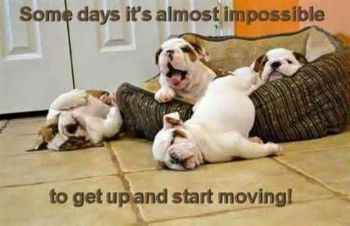
No, I’m not talking about your car. I am referring to your get-up-and-go, your energy, your motivation to do anything on a given day. We all have those days when we lack the pep to charge through the day, when the bed seems unusually cozy and warm, and when our ability to rationalize our way out of everything on our to-do list for the day is particularly strong.

On the more serious end of the spectrum, a lack of initiative can be indicative of depression, especially when it is recurrent. In other instances, fatigue could be a sign of stress, sleep deficit, over-training, dehydration, malnutrition, or hormonal imbalance. Some people will even notice a change in energy from weather fluctuations.

For the past three months, I have slept so deeply that I will remain in slumber, despite my alarm’s alerts, with no recollection of the device ever triggering. My dreams have been intense, complex, apocalyptic at times, and truly bizarre, causing me to wonder why my subconscious has meandered so much while I was in dreamland. The many months I spent battling night sweats and insomnia suddenly shifted to feeling (appropriately) very cold at night and sleeping like a rock, both of which I have welcomed. The only real problem now is convincing myself to get out of bed in the morning!

When I eventually begin to wake up, it is an agonizingly slow process in which I can barely move or open my eyes. The sudden dry eye condition I have been experiencing recently hasn’t exactly motivated me to open my eyes up quickly either. The bed is so cozy and so warm, especially because my cats have gotten into the habit of using me as a convenient heater during the night. They also pin me into a small space in the bed so that I have to shimmy my body out of the tunnel they create around me. It seems to be such a waste that I have a Cal King bed, because I never get to spread out on it!

When I absolutely MUST get out of bed at a specific time, I will change the alarm alert, and set more than one alarm, usually with one alarm in my bathroom. In order to shut off the alarm in the bathroom, I must get out of bed, but I have gotten so good at walking to the bathroom with my eyes barely open that I can shut off the alarm, crawl back in bed, and go right back to sleep.

These are the reasons which I have been using to remain in bed:

– The bed is nice and warm and the ambient temperature is cold (upper 60’s)
– The cats are warm too
– The cats are very affectionate and cuddly in the morning
– My bonding time with the cats can be considered a meditative exercise
– My bed is high off the ground and it is hazardous for me to jump down from it (it truly is high off the ground)
– My dry eye condition is a sign that I need to keep my eyes shut
– I need to make up for lost time when I had night sweats and insomnia (it was quite a sleep deficit!)
– I am most efficient at my morning social media posts when in a supine position in bed
– I want to make sure that I spend one third of my life in bed
– If I get out of bed, then I probably have to deal with people

At any rate, I have every intention of relishing the feeling of being in an insanely comfortable and warm bed. I’m sleeping in!

Give Your Brain A Vacation!

o-STRESSED-OUT-PERSON-facebook-806x393

Please check out my original post at:

http://xactmind.com/xc/articles/give-your-brain-a-vacation/

By: Dr. Stacey Naito, Physician and IFBB Pro

Leaving Work Behind

Americans have a bad habit of skipping much needed vacations, either because they cannot catch up with their workloads, or because they can’t afford the travel expenses. However, everyone needs to press the reset button and allow their bodies, spirits and minds to relax. The brain in particular needs a break from all the factoids and sensory input which assault it on a daily basis. Yet we often feel the urge to check emails and social media while on vacation in an effort to keep up with the hectic and exhausting to-do list which seems to always hang over our heads. Guilt sets in over being away from work, even though we truly deserve to a have a little time off. The problem with tending to emails and other work-related items is that the break is eradicated, with the only distinction being that we have taken our work with us.

Information Overload

Even when we aren’t at work, our brains must sort through an enormous amount of information from our phones and computers. One 2011 study stated that we take in the equivalent of about 174 newspapers’ worth of information every single day. And since the brain’s ability to process information is limited, we often end up feeling overwhelmed and anxious as we try to power through all the information being thrown at us. Though the age of social media has enabled us to connect in novel and far-reaching ways, it also robs us of our attention and distracts us from other tasks.

So when we go on vacation, there should be a limit on the frequency with which we view social media sites. The best tactic while on vacation is to completely avoid electronic devices, but if you aren’t able to do that, set aside a brief designated time each day to check emails and peruse social media.

Leave the bulk of each day to relaxing, sightseeing, engaging in outdoor activities, and enjoying life. This way, your brain will enjoy the fruits of the vacation as well.