Tossing And Turning? Cures For Insomnia

man-sleepingIt can be incredibly frustrating to toss and turn in bed when the thing you want the most is to slip into blessed slumber. Insomnia is often aggravated by the chronic use of medications and an erratic schedule. Here are some tips which should help people with insomnia.

1. Establish a regular sleep schedule. Try to go to sleep at the same time each night and wake up at the same time each morning.
2. Create a relaxing bedroom environment. Your bedroom should be quiet and relaxing.
3. Remove electronics from the bedroom. TVs and computers should not be in your bedroom.
4. Use your bed only for sleep. Do not read or watch TV while you are in bed.
5. Avoid eating a large meal before bedtime.
6. If you can’t fall asleep after ten minutes, get out of bed and do something in another room until you feel sleepy again.
7. Use relaxation techniques when you lie down to sleep. Here is a great technique which promotes deep relaxation:

Lie on your back in bed. In this exercise you will imagine that parts of your body feel warm and heavy. Once that body part feels warm and heavy, you will move onto the next body part.

“My head feels warm and heavy.”
“My shoulders feel warm and heavy.”
“My chest feels warm and heavy.”
“My arms feel warm and heavy.”
“My hands feel warm and heavy.”
“My belly feels warm and heavy.”
“My hips feel warm and heavy.”
“My legs feel warm and heavy.”
“My feet feel warm and heavy.”

Overcaffeinated

Coffee-JittersI enjoy drinking coffee and I also take thermogenic fat burners from time to time which have caffeine in them. However, I am well aware of the fact that caffeine is a drug with considerable potential to cause dependence. In light of this, I will play devil’s advocate and present an argument against regular caffeine consumption.

Caffeine is a powerful stimulant which signals your pituitary gland to trigger the adrenal glands to make stress hormones epinephrine and norepinephrine. These hormones cause vasoconstriction, increased pulse and increased respiratory rate which impart a feeling of alertness. The concern with such a cascade is that chronic daily intake of caffeine in amounts as low as 300 milligrams per day may cause your adrenal glands to burn out. If adrenal function starts to plummet, you may turn to more caffeine to get the same energy boosting results. Caffeine also reduces serotonin levels, increasing the tendency towards insomnia and the jitters. The typical image of the person who has had too much coffee and is hypervigilant is a prime example of this.

Energy drinks pack at least twice the amount of caffeine that a cup of coffee does, and with the surge in popularity of such drinks, it is no surprise that adrenal exhaustion is becoming more prevalent. Another concern with high intake caffeine is the depletion of vitamin C and the B-complex vitamins. There is less concern with individuals who supplement properly and practice balanced nutrition, but such depletion can be disastrous for an overly stressed individual who skips meals and fails to replenish depleted nutrient stores.

Ladies, Lift Those Heavier Weights!

Lift Heavy WeightsIt still boggles my mind how many women are afraid to lift weights for fear that they will become huge and look like big, hulking men. How wrong they are! I often speak with female patients of all ages who lament the fact that they cannot get the sculpted, lean bodies they covet despite working out regularly. The problem stems from a couple of things:

1. They do not feed their bodies properly.
2. They do not lift weights, or if they do, they do not practice a lifting regimen that would bring about the physical changes they want.

I see ladies at the gym who will jump on a cardio machine for 20 to 30 minutes of easy cardio, then, if they had an indulgent night of eating or partying, they may extend their cardio sessions for a longer period of time at the same intensity. Before or after this, they may hit a few sets of uninspired exercises with light weights. These women barely break a sweat, yet they expect their bodies to transform. I’ve got news for you: that type of workout will ensure that you remain at the same level of fitness, and over time, you will see what little conditioning you may have plummet despite all your consistency.

It is a gross misconception that by lifting light weights and taking it easy at the gym, they will avoid getting bulky and will tone their muscles. Women are built differently than men, and simply do not have the testosterone levels necessary to build significant, bulky muscle mass. You need to challenge your body and create the muscle microtears necessary to build shapely, lean muscle. That means you need to lift heavier weights and break a sweat!

There are a multitude of benefits to lifting heavier weights, which I detail below.

CURVY, LEAN MUSCLE:

When you lift heavier weights, you will be rewarded with better muscle definition. Lifting very light weights will never challenge the muscles, so the muscles will never grow. I know I have scared some ladies, but think about a woman who has great muscle tone, but is still lean and feminine. A woman like that lifts weights that are heavy enough to spark muscle growth. If you follow suit, you will end up lean and more defined without being bulky.

GREATER OVERALL STRENGTH:

By lifting heavier weights, you will become stronger, and everyday activities will become easier to perform. You will also gain more structural stability from the greater muscle density which can protect your back and your joints.

IMPROVED BALANCE, COORDINATION AND POSTURE:

By improving muscle tone through weight training, you will enjoy better balance, greater overall coordination, and better posture.

IMPROVED BONE DENSITY:

Resistance training improves bone density by stressing the bones, thus triggering bone growth. This confers a protective effect against development of osteoporosis, especially in petite women.

HIGHER METABOLISM:

When you work out with heavier weights, you create tears in the muscles worked. When you do this, you expend a greater number of calories in order to repair those microtears.

LOWER BODY FAT:

Your body fat stores, particularly in the midsection, will be better utilized when you perform weight training with heavier weights.

PREVENTION OF MAJOR DISEASES:

Challenging weight training with heavier weights will reduce your risk of high blood pressure and heart disease. It will also lower LDL cholesterol while raising HDL cholesterol. In addition, your risk of diabetes and breast cancer will drop significantly.

BETTER IMMUNE SYSTEM FUNCTION:

Moderate exercise reduces stress, and by doing so, enables your body to produce more white blood cells to combat infection. In addition, the shift in attention from the troubles of the day while you are weight training will reduce the stress which can suppress your immune system.

GREATER WELL-BEING:

Vigorous resistance training boosts endorphin (natural opiates produced in the brain) levels, which create a sense of well-being. It will also stave off depression and produce a more restful sleep.

REDUCED PMS SYMPTOMS:

As stated previously, weight training is a terrific mood elevator and regulator. It also has a positive impact on hormone levels, increasing blood levels of estrogen, growth hormone, and testosterone. This counteracts the drop in estrogen and rise in progesterone which occurs right around the time before menstruation.

DHEA To Reduce Aging and Build Muscle

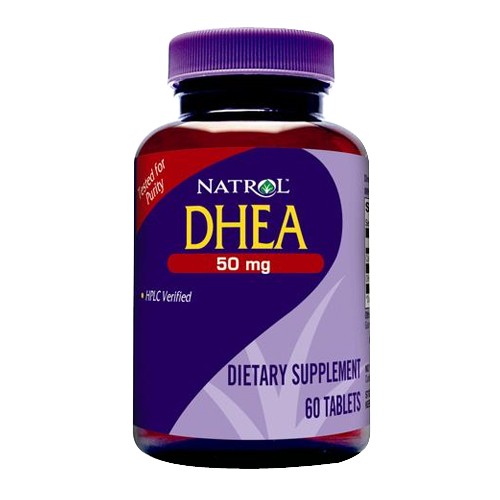
DHEADehydroepiandosterone (DHEA) is a weak androgen produced in the adrenal glands that is a precursor for testosterone. It is converted in the body into androstenedione, which is then converted into testosterone. DHEA levels are highest when we are in our 20’s, then decline significantly as we age.

DHEA has been used to treat depression, adrenal sufficiency, obesity, vaginal atrophy, and erectile dysfunction, but it is most commonly used to reverse the aging process and build muscle. It is especially effective in men with flagging testosterone levels who do not wish to take testosterone directly.

Men can benefit from taking 25 to 50 milligrams or more per day. If men decide to supplement with higher doses, guidance from their primary care physicians is advised beforehand. If DHEA dosing is too high, men can develop breast tissue and high blood pressure.

Women have a much trickier time with DHEA, and many can only tolerate 5 to 10 milligrams without experiencing side effects. Side effects in women include abnormal periods, oily skin, facial hair, and mood changes.

Usually side effects are mild, such as fatigue and headache. Another relatively common side effect is insomnia, so it is a good idea to take DHEA in the morning. Do not take DHEA if you have heart disease, liver disease, diabetes, high cholesterol, thyroid problems, polycystic ovary syndrome, or blood clotting disorders.

Physicians Are Therapists Too

doc and patientThe scientific nature of medicine often tricks people into believing that doctors are so cerebral that they spend all day diagnosing and treating, without much regard for social factors which patients may bring into an appointment. However, it has been my experience that medicine is deeply rooted in connecting with others emotionally, mentally and spiritually. I realize that my personal journey as a physician is colored by the fact that I chose primary care as my post-graduate foundation, as well as the fact that I truly enjoy getting to know my patients. It is relatively common for me to discover that the “chief complaint” which brings a patient into the office is not the main concern the patient has. For example, I may have a patient come to me for evaluation of right shoulder pain and after 10 minutes of speaking with the patient find out that the patient hates her job, is suffering from insomnia and is exhausted from also caring for two small children and an ailing father. What ends up happening is that I will evaluate the shoulder, but will also discuss sleep hygiene and the importance of putting the oxygen mask on herself instead of giving all of her energy to her job, her children and her father. She certainly still has all those responsiblities, but when she neglects herself she drains herself of the potential energy she could be carrying to sustain herself and those she cares for.

Another common scenario is the patient who has gotten out of shape over the years and wants to make a change. These patients may come in for weight management, but in most cases they present to the office with a completely unrelated medical complaint. Almost invariably, I find out that the patient is overloaded, and also has difficulty committing to a specific regimen. This is yet another example of putting the oxygen mask over oneself, and is also a situation in which the patient needs to break the cycle of making excuses which serve as blockades to reaching ANY goals. The too-tired, too-busy, too-old excuses don’t fly with me at all. There is NO EXCUSE which justifies making regular visits to fast food restaurants, skipping meals regularly, and leading a sedentary lifestyle. It is important to realize that such habits are also rituals which the person has chosen to hang onto because they are familiar. It can be quite intimidating to manifest a major lifestyle shift because it requires a person to abandon old habits and patterns and undergo a complete change of mindset.

I honestly love helping people and take my role as an educator and healer very seriously. I also know that I can be a motivator, but only if I can successfully ferret out the psychological issues which hold people back from gaining true fulfillment in their lives.

Supplements Which Support an Underactive Thyroid

Normal thyroid function is dependent on a multitude of nutrients, so a deficiency in any of them can send an individual into diminished active thryoid hormone levels and a spectrum of symptoms. The best way to support thyroid function is to take the following natural supplements.

Vitamin B complex: People with underactive thyroids commonly suffer from vitamin B12 deficiency.

Vitamin D – This is another vitamin which is commonly deficient in the majority of the population. Vitamin D is necessary for thyroid hormone production, so take 800 to 1,000 International Units (IU’s) to protect thyroid function.

Vitamin E – Vitamin E aids in converting T4, which is the inactive form of thyroid hormone, into active T3. Recommended daily dosage is 400 to 800 IU’s.

Zinc – Zinc is involved in the signal to produce thyroid hormone. Take 10 milligrams (mg) or more daily. It is also important to take copper along with the zinc. You need to take 1 to 2 mg copper for every 10 mg zinc taken.

Omegas – Omega fatty acids have a protective effect on the thyroid gland and decrease inflammation.

Selenium – Selenium is critical for promoting conversion of T4 into T3. Take 200 micrograms daily.

Vitamin C – Vitamin C is a strong antioxidant and should be part of any regimen that is targeted at protecting the thyroid. A reasonable daily dose of vitamin C is 2000 mg.

Foods Which Boost a Sluggish Thyroid

Though I am trained in traditional Western medicine, I strongly believe in the power of foods and recommend dietary changes as much as possible when treating a whole spectrum of diseases. Since thyroid dysfunction is relatively common, I am providing a list of foods which can be beneficial with an underactive thryroid gland, as well as foods to avoid.

Try to incorporate the following foods into your regular meal regimen to boost thyroid function naturally:

Eggs
Turkey
Beef
Saltwater fish such as tuna or halibut
Shellfish
Seaweed
Coconut oil
Sunflower seeds
Walnuts
Pecans
Mushrooms

There area some foods which you should limit or even eliminate from your diet due to their tendency to interfere with thyroid function. They are:

Soy
Cabbage, broccoli, cauliflower, Brussels sprouts, kale
Spinach
Peanuts
Almonds