Are Diet Sodas Really That Bad?

no-diet-soda

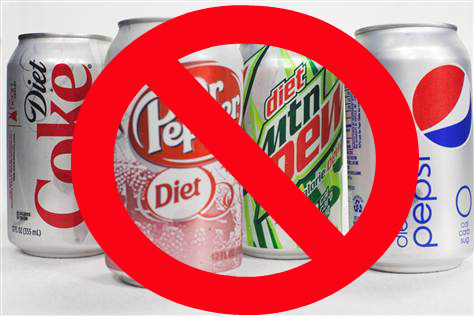
Diet soda is often consumed by people who either want to lose weight, or maintain a normal weight. The ironic thing is that diet sodas actually increase a person’s chances of becoming overweight, by tricking the body into thinking it’s actually consuming sugar, which increases food cravings. A study conducted at the University of Texas discovered that consumption of two or more cans of diet soda daily caused increased waistline girth in subjects studied.

The main reason why diet sodas have damaging effects on the body is because they contain artificial sweeteners. The vast majority of diet sodas on the market contain either aspartame or sucralose. Aspartame has been linked to cognitive decline, mood swings, depression, dizziness and migraines, while sucralose has a negative impact on insulin sensitivity and gut health.

Even just drinking one can of diet soda each day can increase the risk of metabolic syndrome (diabetes, heart disease, and risk for stroke) by close to 40 percent. Diet soda also impairs kidney function. A Harvard study followed 3,000 female subjects who drank diet sodas, and found that those who drank more than two sodas each day had impaired kidney function.

As if that wasn’t enough, diet sodas cause damage at the cellular level, as well as erode tooth enamel. This is due to the very acidic nature of diet soda, which has a pH of 3.2. Chemicals such as sodium benzoate and potassium benzoate are added to inhibit the acidic quality of the soft drink, but these chemicals cause damage in mitochondrial DNA in our cells, and have been linked to numerous allergies and asthma in some subjects.

Lastly, most cans which house diet sodas are coated with bisphenol-A (BPA), which has a strong correlation with development of heart disease and reproductive issues.

If you absolutely can’t give up diet sodas entirely, wean yourself off of them gradually. After you have kicked the daily diet soda habit, you can incorporate a diet soda called Zevia, which does not contain aspartame or sucralose, into your diet.

Kick A Foot Or Leg Out

Many of you are already aware of the “one leg out” sleeping position, in which one leg is hooked over the covers, while the other leg remains nestled under them. This clever approach to cooling the body down during sleep actually has a scientific basis.
The body prepares for sleep by dropping its core temperature, and in the deepest stages of sleep, body temperature actually dips a couple of degrees below normal. This is part of the natural physiology of slumber. Even some of the pre-bedtime rituals which some people adopt, such as taking a warm bath or drinking a cup of hot herbal tea, cause the body temperature to cool rapidly, priming it for sleep.

When we uncover our feet but keep the rest of our bodies snug under the bedclothes, or we swing one leg over the covers, we enable the blood vessels of the feet to dissipate body heat and keep us cool, which further supports restful sleep. Besides, who enjoys sweating while trying to sleep?

Some scientists even recommend keeping feet uncovered while sleeping at night, especially if you are sleeping next to a partner or pets (those of you who have pets know that they often sleep ON you). Another tip is to keep your bedroom temperature between 60 and 68 degrees, so if you are in the habit of cranking up the heat to keep your home warm and cozy, you might want to drop the thermostat setting at night while you sleep.

What Do You Take For Granted?

_cpr0320

Chances are that you probably take many things in your life for granted. For example, you probably take for granted that you will wake up to face another morning. You may take for granted that you have job security or financial security. You may take your good health for granted, or you may have resigned yourself to sub-optimal health while taking for granted that you will somehow overcome the inevitable consequence of poorly managed illness. You may take your relationship or marriage for granted, assuming that because you have a partner whom you love and who presumably loves you back, you will never be alone or have to struggle with being single again. You may take for granted that your home is completely safe from violence, thieves, or natural disasters.

Never, EVER take anything you have in your life for granted. Anything can be stripped away from you in a heartbeat. The saying, “hope for the best, but prepare for the worst” has some utility in reminding us to pay attention and take steps to ensure our comfort, our safety, our health, our sanity. Nothing we have is permanent. It’s all on loan until we move on from this physical realm.

I know this sounds depressing, but it isn’t meant to be. It is simply a reminder to pay attention to what you are blessed with, to appreciate it, and to realize that just because you enjoy it and it has given you comfort or joy, doesn’t mean that it will last. Don’t count on it. Live every day as if it was your last.

Why The Gym Is Essential For Me

imgl0080-2-1

Though I consider myself blessed to have a full plate, my schedule requires me to move at a frenetic pace every single day, switching gears constantly, and trying to pack as much as I can into each day. My determination, organization and just plain stubbornness usually ensure that every single item on my to-do list gets done, and that certainly includes my workout regimen. I work out five to six days per week, and I also take 1 to 3 aerial classes each week. It’s downright challenging, fitting all of my workouts in, while also attending to my career, family, and personal responsibilities. So why not just abandon the crazy gym schedule? Not a chance!

When I go to the gym, I have a perfect opportunity to recharge my body. I push myself to train harder and heavier with each day, and I love getting to that point where I may question whether I have the energy or strength to complete the entire routine (I always do though). The time I spend in the gym is my personal time, ME time, and allows me to take care of myself without worrying about anyone or anything else in my life during that small pocket of time. It’s like putting the oxygen mask on myself to ensure that I will be able to help others. My daily workouts keep me on a consistent schedule and provide structure to my day.

Another wonderful benefit of training as hard as I do is that I get to beat the aging process. Instead of wishing for a magic pill to keep me young, I rely on regular exercise to do the job. One of the joke statements I often make is that I am aging like a fine wine. What amazes and inspires me is the fact that there are many people in the fitness industry who are doing the very same thing. The population may be aging, but the newer crop of people over 40 who have embraced clean eating and regular resistance training looks better than ever and enjoys better vitality and health than the over 40 crowd from previous decades. It can be quite a guessing game to accurately determine someone’s age by looks alone these days!

Waves In My Hair

3t6a4898-ex-web

From the time I was an infant, I always had very straight hair, and like many girls with straight locks, I always longed for waves. My desire for beachy waves was so pronounced that I spent my twenties and thirties habitually swirling my hair into an up-do with a clip while it dried in hopes that waves would form and remain there. However, because my hair is so thick and heavy, the sheer heft would uncoil my attempt at making soft curls, leaving me with the straight hair my DNA locked me into.

My hair became even thicker after I began competing in 2009. While many other women my age were lamenting the loss of their locks, I experienced such a surge in fullness that for about a year, I shaved the nape of my neck to lessen the mass of hair I had. A lot of it had to do with the increased protein intake (up to 180 grams a day at one point) which I had to incorporate into my regimen while I prepped for competitions. My hair also grew much more rapidly, and in 2010, my hair grew ten inches in eleven months. How do I know this? Because the area I had shaven grew a full eleven inches in that span of time, and the overall length of my hair kept me visiting my hairstylist for trims every six weeks.

Then I entered peri-menopause. What a joyous time, when a commercial can send you into a fit of tears, layering clothing becomes essential because of the hot flashes and night sweats, and your skin decides that it no longer wants to fight against the pull of gravity. About a year after I began sailing on the rocky seas of menopause, I had a haircut by an amazing stylist who remains my regular stylist to this day.

By some very odd coincidence, I noticed a pronounced wave throughout my hair when I washed my hair several days later. I thought perhaps I hadn’t washed out the styling products completely, but my hair began to look wavier and wavier with every subsequent wash. This persisted for over a year, and continued to perplex and annoy me. I went from never styling my hair, to developing a blow-drying and flat-ironing regimen which I still haven’t perfected, even to this day.

The rogue waves in my hair don’t seem to have rhyme or reason either. The waves on the right side of my head which frame my face are much wavier than on the left side, and for whatever bizarre reason, the right side is resistant to my efforts to obliterate the kinks with a flat-iron, even if I treat small sections and repeatedly iron the sections.

The sudden nature of the change in my hair texture was alarming. I remember hearing women tell tales, which I figured were tall tales, about how the texture of their hair changed overnight. And here I experienced the exact thing.

While hormones play a large role in hair texture (thyroid, progesterone, estrogen, testosterone), it can be rather strange to wake up with waves you never had, or to go from uber-curly hair to arrow straight hair overnight. It’s like the hormone fairy has a special hair wand which she uses to transform a woman’s strands like magic. The other funny thing is that hair follicles may return to their original state after a few years. My hair is starting to calm down somewhat, and there are times when my hair will be almost arrow straight after drying naturally.

I love the theory which Jonathan Torch, the founder of Toronto’s Curly Hair Institute, has devised. He maintains that changes in the tone of the muscles at the base of the hair follicles are the culprits in hair texture changes over time.

All I know is that my hair seems to have a mind of its own now!

Physicians Are Therapists Too (Repost)

doc and patientThe scientific nature of medicine often tricks people into believing that doctors are so cerebral that they spend all day diagnosing and treating, without much regard for social factors which patients may bring into an appointment. However, it has been my experience that medicine is deeply rooted in connecting with others emotionally, mentally and spiritually. I realize that my personal journey as a physician is colored by the fact that I chose primary care as my post-graduate foundation, as well as the fact that I truly enjoy getting to know my patients. It is relatively common for me to discover that the “chief complaint” which brings a patient into the office is not the main concern the patient has. For example, I may have a patient come to me for evaluation of right shoulder pain and after 10 minutes of speaking with the patient find out that the patient hates her job, is suffering from insomnia and is exhausted from also caring for two small children and an ailing father. What ends up happening is that I will evaluate the shoulder, but will also discuss sleep hygiene and the importance of putting the oxygen mask on herself instead of giving all of her energy to her job, her children and her father. She certainly still has all those responsiblities, but when she neglects herself she drains herself of the potential energy she could be carrying to sustain herself and those she cares for.

Another common scenario is the patient who has gotten out of shape over the years and wants to make a change. These patients may come in for weight management, but in most cases they present to the office with a completely unrelated medical complaint. Almost invariably, I find out that the patient is overloaded, and also has difficulty committing to a specific regimen. This is yet another example of putting the oxygen mask over oneself, and is also a situation in which the patient needs to break the cycle of making excuses which serve as blockades to reaching ANY goals. The too-tired, too-busy, too-old excuses don’t fly with me at all. There is NO EXCUSE which justifies making regular visits to fast food restaurants, skipping meals regularly, and leading a sedentary lifestyle. It is important to realize that such habits are also rituals which the person has chosen to hang onto because they are familiar. It can be quite intimidating to manifest a major lifestyle shift because it requires a person to abandon old habits and patterns and undergo a complete change of mindset.

I honestly love helping people and take my role as an educator and healer very seriously. I also know that I can be a motivator, but only if I can successfully ferret out the psychological issues which hold people back from gaining true fulfillment in their lives.

Why Zinc Is So Important

zinc-image

Here is an article which I wrote a few years ago and which still applies to general health:

Zinc is a vital mineral which is found in every tissue in the body due to its involvement in cell division. In the world of fitness and bodybuilding, zinc has a number of roles, including maintenance of normal hormonal levels, proper endocrine function, body composition, energy levels, optimal physical performance and protein synthesis. Thus it is crucial to maintain normal levels of zinc in the body when training or prepping for a competition.

Zinc is highly concentrated in meat, dairy and some seafood. This is why vegetarians most commonly suffer from zinc deficiency. So how can you tell if you suffer from a zinc deficiency? Common symptoms include an altered sense of taste which leads to cravings for sweets and salty foods. Other symptoms of zinc deficiency include low energy, infertility, low libido, memory problems, poor immunity and diarrhea.

A relatively easy way to test yourself to see if you are deficient in zinc is to do a taste test. Take 1 to 2 teaspoons of zinc sulfate (you can get this at health food stores) and add to a cup of water. If it tastes just like water, you are very zinc deficient. If you experience a slightly metallic taste, you are moderately zinc deficient. If it is strongly metallic and unpleasant, you most likely have normal zinc levels. Please bear in mind that this test is never as accurate as a blood test, but at least it will give you an idea of what your levels are.

For those of you who want to know the specific health benefits of zinc, here is a list of benefits.

Enhances Strength and Athletic Performance:

Zinc plays a major role in anabolic hormone production which makes it a key player in optimizing athletic performance and strength. When zinc levels in the body are normal, more growth hormone and insulin-like growth factor-1 is released, which result in enhanced muscle growth and performance. Researchers have also noted that zinc enhances the conversion rate of androstenedione to testosterone, which improve strength gains during the recovery phase.

Enhances Reproductive Health and Fertility in Both Men and Women:

The cells of the male prostate require an extremely high concentration of zinc for proper function. To give you an idea of how much zinc is necessary in the prostate, male prostate tissue requires ten times more zinc than other cells in the body for normal function. There is a correlation between low zinc levels in men and increased risk of developing prostate cancer and infertility. There is also evidence to support the link between low zinc levels and low libido. Another implication with low zinc levels is its importance in maintaining optimal testosterone levels. Men with low zinc also tend to have low testosterone, which puts them at greater risk of andropausal symptoms.

In women, proper levels of zinc are essential for egg maturation and ovulation. Zinc also optimizes utilization of estrogen and progesterone and regulates their levels. During pregnancy, zinc plays a vital role in ensuring proper cell division in the growing fetus and helps to prevent premature delivery.

Essential For Taste, Smell and Appetite:

Zinc activates areas in the brain that process information from taste buds in the mouth and olfactory cells in the nasal passages. In addition, levels of zinc in the plasma influence taste preference and appetite. Many programs which treat anorexics use zinc to revive taste and appetite.

Makes Skin, Hair and Nails Healthy:

Zinc accelerates skin cell renewal which is why it is commonly used in diaper rash creams, acne treatments and creams which are used to treat dermatitis. It has strong anti-inflammatory properties and has a soothing effect on rashes, burns and blisters. Some shampoos contain zinc to help prevent dandruff. What you may not know is that zinc is important for healthy hair and that low zinc levels can cause hair loss, dull and thin hair, and loss of pigmentation.

Essential For Vision:

Zinc is found in high concentrations in the retina, but this level declines with advancing age, precipitating age-related macular degeneration which is characterized by a partial or complete loss of vision. Zinc also has a protective effect against the development of cataracts and night blindness.

Supports Cardiovascular Health:

Zinc is vital to normal cardiovascular function. When levels of zinc are low, the endothelial layer in blood vessels becomes inflamed and accumulates cholesterol deposits, both of which increase one’s risk of heart disease. Low levels of zinc can amplify the negative cardiovascular effects of diets which are high in fat and cholesterol, whereas adequate levels of zinc will inhibit the progression of heart disease.

Increases Insulin Sensitivity:

The presence of zinc is essential for normal function of most hormones, including insulin. Zinc binds to insulin and aids in storage in the pancreas as well as release of insulin in the presence of serum glucose. In addition, zinc is found in the enzymes which enable insulin to bind to cells so that glucose can be utilized for fuel, a process better known as insulin sensitivity. Why is this important? If zinc levels are low, enzyme levels drop, insulin sercretion drops and glucose remains in the bloodstream, a process which can lead to diabetes if it is chronic.

Improves Mood:

Dopamine, a chemical in the brain which boosts mood and energy, is partially regulated by zinc, so zinc once again plays an important role in the body. There is also evidence to support the theory that the presence of zinc boosts serotonin levels in the brain.

Supports Immune Function:

Zinc supports T cell function and is thus strongly tied with combating inflammation. T cells are responsible for mounting an immune response to invaders such as bacteria or viruses.

Has Potent Antioxidant Effect:

Zinc can remove toxins from the body and prevent accumulation of harmful compounds in tissues. This mechanism has a protective effect against the development of cancers, especially in the prostate, ovaries, pancreas, breast and colon. In addition, zinc prevents the buildup of heavy metals in the brain such as aluminum, which has been closely linked with Alzheimer’s disease.

If you suspect that you are deficient in zinc, you can supplement daily with 20 to 30 milligrams.

(Original post can be found here: http://www.rxmuscle.com/blogs/the-lab-supplement-school/7294-why-zinc-is-so-important.html?hitcount=0)
Neurological Disorders and My Loved Ones

It seems like neurological disorders abound with my loved ones. My aunty Alice developed cerebral palsy after contracting an infection during infancy. My uncle Katsutoshi fell into a persistent vegetative state after an unlocked construction crane fell on his head and back. My uncle Harumi experienced several strokes, as did my aunty Carol and my dad. My mother sustained a subarachnoid hemorrhage (aneurysm rupture) along with senile dementia. My dear friend and meditation teacher Rob was diagnosed with an aggressive brain tumor, a glioblastoma multiforme, which took his life within five months.

My favorite aunt Jean was diagnosed with the sporadic form of amyotropic lateral sclerosis (ALS) in early 2016, adding yet another neurological illness to an already large list. The disease was so aggressive that by October, she was unable to speak, so my calls consisted of me making awkward small talk while she grunted in response.

Considering the fact that I had a keen interest in neuroscience since childhood and believed that I would become a neurologist even in my final year of medical school, I find it ironic that so many people who have been near and dear to me have fallen victim to so many neurological maladies, ranging from cerebrovascular events, to neuromuscular disorders, to traumatic brain injury, to neoplasm. Despite this, my fascination for the neurosensory system has not abated. I just hope my favorite people don’t keep getting struck by ailments which afflict this system.

Come See Me At The SWAT Fuel Booth At The L.A. Fit Expo This Weekend!

SWAT Fuel

It is always an honor to represent SWAT Fuel! Come visit me at their booth this weekend at the Los Angeles Fit Expo. I’ll be there all day Saturday and Sunday, handing out samples of 9mm Plus P which is a fantastic thermogenic/energy formula/pre-workout formula. We will also have full size products for sale.

For any of you who are interested in signed 8×10’s, I will have those on hand as well. To see the selection I have available, please check out this link: http://www.cutcurves.com/stuff-to-buy.html

See you this weekend!