Please check out my video review of Gallon Gear fitness hydration covers. Stay hydrated, my friends!
Category Preventative Health
What’s The Difference Between Cocoa and Cacao?
Copyright: andriigorulko / 123RF Stock Photo
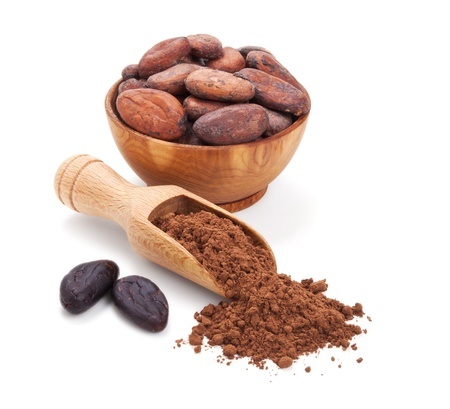
Some of you might believe that cocoa and cacao are the same thing, but that’s definitely not the case. Here’s the deal: if your chocolate bar is made with cacao, you’re about to dive into a true antioxidant-rich superfood. However, if it’s made with cocoa, you’re not getting nearly the amount of health benefits you would with the cacao-derived treat.
The big difference lies in the processing of the cacao bean. If the bean is high-heat roasted, then you have cocoa, NOT cacao. Cacao is never roasted, but kept in its raw state, then cold-pressed to extract its healthy goodness and preserve its nutrients. In addition, the intense dark brown color of cacao is quite distinctive from its much lighter cousin, cocoa.
Another reason why cocoa-based products get a poor nutritional score is because the big chocolate manufacturers throw in substances like soy lecithin, high fructose corn syrup, and vegetable oil. Candy bars are notorious for this, and as a result they should be avoided like the plague. Your best bet is dark chocolate, because it has a high cacao content. The higher the cacao percentage, the healthier it is. Make sure you look for CACAO and not cocoa on the wrapper!
Flossing
Copyright: luckybusiness / 123RF Stock Photo
No, I’m not talking about the urban meaning, i.e., showing off. I’m talking about flossing your pearly whites.
I’m willing to bet that many of you neglect to perform this important task on a regular basis. I am not lying when I tell you that I floss NIGHTLY, and have been doing so for the last two years. Yes, that’s right, not for the last several decades like you might have thought. I got lazy, as many people do, and my gum health suffered as a result. So when my dentist implored me to floss regularly during one visit in June of 2015, I actually heeded his advice and forced myself to re-learn the habit which my mother had gotten me into when I was a child, one which I would follow somewhat erratically as an adult.
Now, before you go thinking that I never flossed, let me just set the record straight by saying that though I wasn’t good about doing it every single day, I still flossed. I would typically be diligent about flossing daily about a week before each dental visit, and for about a month after those visits, but then I’d slack off, perhaps flossing once or twice a week when I remembered to do so. So it wasn’t a surprise that my gums would bleed every time I had my teeth professionally cleaned, and that my dentist would berate me.
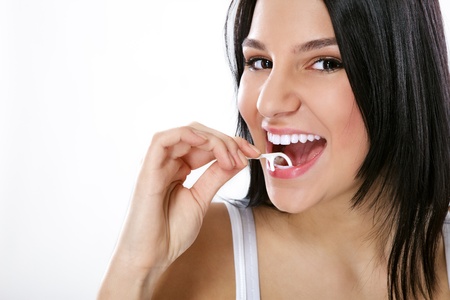
Now I will not allow myself to go to sleep before flossing. I won’t even allow myself to brush my teeth at night before grabbing a pre-threaded flosser and going to town on those dental crevices. According to the American Dental Association, we all should clean between our teeth once a day. Why? Because interdental cleaning removes plaque, which is the main causative agent for formation of cavities and development of gum disease.
I personally can’t stand the idea of winding floss around my fingers. The thought of food-laden floss wrapped around my digits makes me squirm. In addition, I contend with forearm tendinitis, carpal tunnel syndrome, and arthritis in my dominant (left) hand, and as a result find it very challenging to wield a rope of dental floss. My solution is to purchase the pre-threaded flossers which are available. They’re easy to use and just as effective, provided you use them correctly. When flossing between teeth, gently arc around the column of the tooth to remove any plaque which has built up there.
Happy flossing! Your teeth and gums will thank you for it.
EatSmart Digital Kitchen Scale Review
Check out my review of the EatSmart Precision Digital Kitchen Scale! You can purchase this new item directly from https://eatsmartproducts.com/
A Couple Of Excellent Videos About Narcissistic Abuse By Angie Atkinson
The following two videos are incredibly informative, and detail the tactics which narcissists employ to manipulate and control their victims. If you are in a relationship with a narcissist (romantic, family, work), please subscribe to Angie Atkinson’s YouTube channel, watch her videos, and start the healing process.
Narcissistic Deflection: A Hidden Torture Tactic Narcissists Use to Abuse You
10 Steps to Become Immune to Narcissistic Hoovering
Living With a Narcissist on the Weekend: Your Private Codependent Hell
I am sharing this video from Angie Atkinson to reveal to you all that this was how my weekends were for years, all because I was under the spell of a narcissist. I’ve actually been in TWO relationships with narcissists who made sure that every weekend was torture, filled with emotional land mines. I would relish the advent of a new week so that I could immerse myself in my own life, and have limited exposure to the narcissist. Even at the tail end of my most recent relationship with a narcissist, my heart would sink when he would unexpectedly show up during the week, because that meant that I could not relax, I couldn’t be myself, and I had to walk on eggshells, never knowing when he would cause me to trip and fall into his web of craziness.
For those of you who are in a relationship with a narcissist, and who can relate to this video from Angie Atkinson, pay attention! You can also subscribe to her fantastic channel, which has helped me tremendously in my own healing and recovery. She’s @Angie Atkinson on YouTube.
“How Come You Still Work Out?”

Last month, I ran into a fellow aerial arts classmate whom I hadn’t seen for a while. She and I engaged in pleasant chat for a couple of minutes, and she revealed to me that she had to take some time off from aerial due to adhesive capsulitis (frozen shoulder). I told her that the rest would serve her well, and that if she did gentle stretching and range of motion work, that she would be able to ease back into aerial before too long.
Then she asked me if I was still lifting weights at the gym, to which I replied that I was indeed still lifting 5 to 6 days per week. She reacted with surprise and stated, “Why do you still work out at the gym when you don’t compete anymore? I don’t understand! You don’t need to exercise at the gym!” It was so strange for me to hear her reaction, because she had just finished telling me about her desire to return to a form of exercise which she loved. Well, I too love lifting weights. I work out because I love it. I train with weights to maintain bone density and muscle mass. I lift so that I can have escape from the stressors in my life. And though I don’t do the crazy double workouts I used to perform right before an event, I still faithfully show up to the gym five to six days per week, every week.
Working out at the gym isn’t something I do to achieve a certain goal, but rather, to maintain what I already have, to combat the aging process, and to provide ME time. I’ve lifted weights for THIRTY YEARS and I will not stop until I am six feet under. In addition to weightlifting, my love of aerial arts isn’t likely to dissipate anytime soon either.
Why Long-Term Care Coverage Is Vital
Copyright: robwilson39 / 123RF Stock Photo
The chances of you being in a position in which you can no longer take care of yourself are staggering. Seventy percent of people over the age of 5 will need some type of long-term care at some point, with 20 percent of them requiring it for a period of more than five years. If you have disability insurance, that doesn’t cover long-term care. I have heard some people grumble about the cost of long-term care insurance, which averages about $2,000 for a healthy, single 55-year old. The policy I have had in place since 2004 has premiums which will total $2,700 for 2017, and the premiums will increase to almost $2,900 next year. However, that’s a fraction of what I would have to pay if I didn’t have the insurance. The Genworth (the company I have my policy under) 2016 Cost of Care Survey reported that median annual cost of an assisted living facility is almost $44,000, and the median monthly cost of a private nursing home room is over $90,000.
I signed up for my policy shortly after my mother suffered from, and survived, a brain aneurysm in 2004. She was in a skilled nursing facility from 2006 until 2013, then was transferred into an assisted living facility. In a way, luck was on her side, because she had no financial resources and qualified for Medicaid and Medicare. She is now a participant in the ALW program. However, the bulk of her monthly Social Security benefit (less than $1,200) goes to the facility in which she resides. In no way was I willing to take the chance of relying on a government agency to rescue me in my elderly years if I find myself in need of long-term care.
I HIGHLY recommend securing long-term care insurance if you are over the age of 30. You cannot rely on the government to come to your aid if you end up requiring long-term care, and it’s unfair of you to expect loved ones to carry the financial burden of your care.
Those Filthy Beards
According to a recent New Mexico study in which beards were swabbed for cultures, it was determined that beards contain just as much fecal matter as a toilet. To be fair, some beards had normal amounts and strains of bacteria which were consistent with what a microbiologist would expect from swabbing facial hair, but a few had
enough enteric bacteria (bacteria found in excrement) to cause illness in humans.
Ewwwwwwwwww.
Do yourself and others a favor and make sure to wash your hands frequently, scrub your beard clean at least once a day, and avoid touching your beard.
“Where’s The Restroom?” – Overactive Bladder
Copyright: artitcom / 123RF Stock Photo
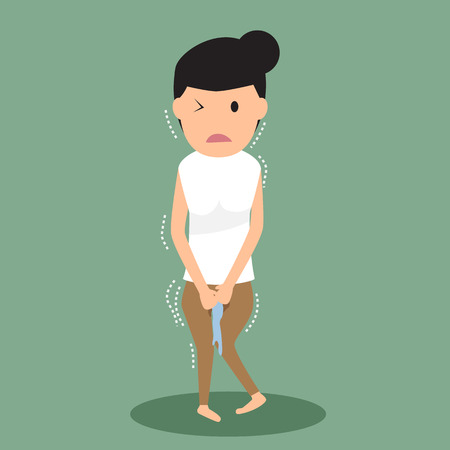
I’m sure you know that feeling when a very full bladder prompts you to secure the nearest restroom facility so that you can relieve yourself from the pressure. Now imagine having that feeling throughout the day, every day. People with overactive bladder have to use the restroom constantly, and at times may have urine leakage. They deal with signals from the brain which erroneously tell the bladder to empty itself when the bladder isn’t even full. The result is that the bladder contracts, creating a strong urge to urinate.
People who suffer from overactive bladder urinate much more than normal (which is up to 8 times per day), and may urinate up to 30 or more times per day. Even when a sufferer urinates, he or she may feel as if the bladder still has urine in it. Restroom visits may be stacked together, sometimes within 10 to 15 minutes of each other.
Two-thirds of people who have overactive bladder experience the dry type, while the remaining third have the wet variety, which is characterized by leakage of urine. Advancing age is a primary risk factor for development of this condition, but the following also play a role:
Presence of urinary tract infection
Nerve damage from surgery
Trauma
Neurological diseases such as multiple sclerosis, Parkinson’s or stroke
History of bladder stones
History of bladder or prostate cancer
Post-menopausal
Consumption of spicy foods, caffeine and alcohol
If you have any of the following symptoms, you should seek medical evaluation and treatment:
Use the restroom more than eight times a day
Cannot sleep through the night without waking up at least 1 or 2 times to urinate
A sudden and intense urge to urinate
Urine leakage
Some lifestyle modifications can lessen the symptoms of overactive bladder. They include maintaining a normal weight, drinking less fluid in the evening, smoking cessation, and limiting the consumption of alcohol and caffeine. Pelvic floor exercises can be incorporated to strengthen the supporting muscles and provide some relief. As a last resort, a number of prescription medications exist to treat overactive bladder.
 dr. stacey naito's blog