New B-Up Bar Flavor: Chocolate Chip Cookie Dough

11892063_1613205672281220_2102313643111894982_n

There’s a new flavor in the B-Up Bar lineup! Chocolate Chip Cookie Dough has lots of tasty chunks of chocolate, and tastes just like chocolate chip cookie dough! These bars have ZERO artificial sweeteners, are gluten free, are loaded with fiber, and deliver 20 grams of protein.

Go to Yupbrands.com to order any of the amazing flavors of B-Up Bars or B-Jammin Bars.

When ordering single boxes (no bundle packs or samples), you can use my discount code amstacey29 to get 12% off your order!

Please Check Out My Profile at Sports Nutrition Supplement Guide Website!

I have had the good fortune to be one of the Authoritative Experts on Sportsnutritionsupplementguide.com for the past year. Please check out their site, which is chock-full of information and inspiration! The link below will take you to my profile on the site:

http://www.sportsnutritionsupplementguide.com/get-certified/brand-specific/itemlist/user/486-drstaceynaito

dr-stacy-naito-left-banner

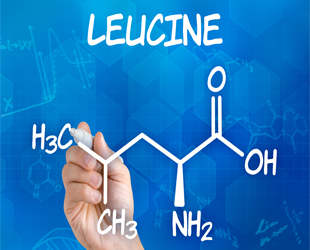
The Power Of Leucine

Original post can be found at:

http://www.sportsnutritionsupplementguide.com/supplementation/item/1528-the-power-of-leucine

Leucine310x250
Leucine could be considered the most important supplement you should add to your regimen as you age, especially if you are a competitor. Leucine breaks down much faster during exercise than the other two branched-chain amino acids (isoleucine and valine), and is also unique in that it plays a critical role in intramuscular protein production through anabolic signaling and mediation of insulin secretion, so it certainly makes sense to ensure that you are getting sufficient amounts of leucine in your diet.

If you are over the age of 35 or 40, leucine is depleted even more rapidly, so replenishing this amino acid through leucine rich food or through leucine supplements can be an insurance policy to guard against age-related muscle loss.

Leucine crosses the blood-brain barrier, and once in the brain, it sends satiety signals to the hypothalamus, thus guarding against overeating.1 It also promotes glucose tolerance and insulin sensitivity by optimizing glucose metabolism. Another important function which leucine has in the brain is the stimulation of glutamate production and release. Since glutamate is an important neurotransmitter in the brain which is involved in memory and learning, the presence of leucine exerts protective effects on cognitive function.

One study by Donato et al discovered that leucine supplementation while on a calorie restricted diet resulted in more fat loss overall, as well as increased protein synthesis in muscle tissue and the liver. 2 The human requirement for leucine is the highest of all the essential amino acids, at approximately 40 milligrams per kilogram of body weight in sedentary adults. However, this requirement does not take into account the muscle preserving needs of individuals who are engaged in intense resistance training. Such individuals benefit greatly from supplementing with up to 200 milligrams of leucine per kilogram of body weight. 3

If you are considering adding leucine to your regimen, be sure to time it so that you ingest it when you take in a protein-rich meal. If you prefer actual food sources of leucine, you can consume turkey breast (over 2 grams of leucine in a 3 ounce serving), fish, dairy products, seeds, soy or nuts. Leucine powder is VERY bitter, so make sure to mix it with a tasty protein powder, or take it in capsule form with your whole food meals. This will optimize protein synthesis in muscle tissue and enhance the anabolic effect.

REFERENCES

1. Potier M, Darcel N, Tome (2009) Protein, amino acids and the control of food intake. Curr Opin Clin Nutr Metab Care 12(1):54-58.

2. Donato J Jr, Pedrosa RG, Cruzat VF, Pires IS, Tirapegui J (2006) Effects of leucine supplementation on the body composition and protein status of rats submitted to food restriction. Nutrition 22 : 520 –527,2006

3. WHO/FAO/UNU (2007) Protein and amino acid requirements in human nutrition. Report of a joint WHO/FAO/UNU expert consultation. World Health Organ Tech Rep Ser. 1–265.

To Compete, Or Not Compete…That Is The Question

389009

The experience of being onstage at an NPC or IFBB bodybuilding contest is unique and exhilarating, and I miss it. What I don’t miss, though, is the maddening prep which precedes the event, and the constant self-scrutiny which always surfaces during prep. I remember when I couldn’t wait to step onstage again, and would always make sure that I had a contest lined up to prep for, but my priorities have shifted dramatically over the past year. One thing I grew tired of with prepping for contest after contest is that I had to be so disciplined all the time, and was unable to ever let loose and have fun for fear of messing up my prep. A few of my closest friends even remarked that I no longer knew how to have fun, and they were absolutely right. Though I understand that the sacrifice is essential for success onstage, I don’t want to live in a constant state of physical and spiritual deprivation. Life is short, and I certainly don’t want to look at my life and think, look at all that fun stuff I missed!

last Fall, I visited Hungary, Sydney, and Bali, and quickly realized during these trips that despite all my efforts to maintain clean eating and regular exercise, there was no way that I would be able to hold onto a goal of competing once I returned home. I had been struggling with significant metabolic issues, and though I ate relatively clean during my travels, I didn’t follow the seven daily meal regimen I had been accustomed to. Here’s another shocker: I had wine while in Hungary because that country is known for its wine, and I am a wine lover. I wasn’t about to deprive myself because of some orthorexic thought process which in previous years would have had me convinced that the fermented libation was evil. I also had little to no access to weight equipment, and though I made every effort to use exercise equipment whenever it was available to me, I didn’t follow the six-day workout regimen which I follow when at home. Was that a bad thing? I think not. I was able to see parts of the world which I had always wanted to see, and I had an amazing time. Thank goodness I didn’t obsess over what I was supposed to do and complain about the lack of resources in these countries.

arrival
Though I always want to win, I am not going to have a nervous breakdown over the fact that my placings as a Pro have been underwhelming. I don’t feel pressured to step onstage, and I honestly wouldn’t have a problem with retiring completely from competing if that is what I decide to do. Yet I still get that question, “When’s your next show?” One person (NOT a competitor) went so far as to say, “Hey girl, you need to step up your game!”, which I thought was extremely rude and presumptuous. I am tired of trying to balance a very busy schedule with two-a-day cardio sessions and double training. At the peak of my contest prep, I was training FIVE HOURS daily, six to seven days per week. Every part of my body hurt. I did plyometrics with a foot strain, and trained nonstop with hip bursitis, sciatica, a rotator cuff tear, tennis elbow, carpal tunnel, and a wicked skin reaction to the latex corsets which I would wear. I have been through the paces and have paid my dues. I AM good enough, I just choose to focus my efforts on showing off my brain now. So please don’t tell me that I need to keep running in the race when I already won.

In case you are wondering if working towards a personal best and finally winning my Pro Card was worth all the sacrifice, I can say without hesitation that it absolutely was worth it. Would I do it again? Absolutely. But I will no longer sacrifice balance in my life for the sake of getting to the next level. I have come to terms with the fact that I won’t ever qualify for Olympia, and to be honest, I wouldn’t want that pressure anyway. Life is good, and I have settled into a really nice groove.

Some very well-meaning people in the industry have warned me that the competition in the Pro ranks is getting even stiffer, and I have seen proof of that with my own eyes. Let me be very clear: I am NOT going to get myself all worked up and feel self-conscious because other Pros have raised the stakes. I am quite content to avoid the stage if need be. To be honest, the vast majority of IFBB Pros don’t even compete, so I feel no remorse over my casual attitude towards competing in future events.

Life is about balance, and the way I choose to maintain balance now is by working on my careers, passions and talents fully, without being distracted by notions of returning to the stage. Yes, I love the bodybuilding stage. But I also love my life and the freedom which I reclaimed after shifting my priorities.

What Happens When You Skip Meals

skipping-meals1-e1349463891760-300x274

You might be under the impression that skipping meals benefits you since you aren’t taking in calories constantly. Well, I’ve got news for you. By skipping meals, you are putting the brakes on your metabolism. Think of it this way. When a fire is burning in a fireplace, the intensity of the fire dies down dramatically when there are only embers and no logs on the pile. Skipping meals has the same effect. What makes it even worse is that, since the metabolism is now extremely sluggish, when you finally DO eat something, your body can’t break down the food as efficiently, and more of it ends up being stored as fat.

If you skip meals, you probably suffer to some extent from malnutrition, since you aren’t consuming sufficient nutrients throughout the course of the day. Chronic malnutrition can trigger the development and progression of a multitude of diseases. The sharp drops in blood sugar which occur as a result of skipped meals cause an increase in insulin resistance, which can result in the development of diabetes.

When you consider how much of a negative health impact skipping meals has, why would you ever do it?

Glutagest

495668065_640

This supplement is truly amazing! It contains a probiotic which breaks down gluten, thus allowing you to consume gluten-containing foods. I decided to give this supplement the ultimate test with a pepperoni pizza and wine cheat meal, and for the first time ever, I had no digestive issues whatsoever. I got none of the abdominal pain or bloating I always get after a meal like that, nor was I tortured by excessive bathroom sessions the next day. This supplement is excellent and enables me to eat some of my favorite foods which I had been avoiding for the last six months since discovering that I had a severe gluten intolerance.

You can order directly from the website too: http://glutagest.com/products/glutagest

The Costs Of Competing

Overall Team U Pic 2

A number of competitors have asked me recently how much they should expect to spend on competing, which prompted me to write this post. Competitive bodybuilding can get pretty expensive, so you should be prepared to invest some coin in your prep and contests. When I calculated the total amount which was spent by my sponsors and me on all associated costs (coaching, suits, tanning, entry fees, flight, hotel, rental car, supplements, food, shoes, makeup, etc.) which got me to the seven national qualifiers and fourteen pro qualifiers I competed in during the amateur portion of my contest history (2009 through 2013), I was shocked. The total came to over $100,000! Thank goodness my sponsors paid for the majority of those expenses, because otherwise, I wouldn’t have been able to hit the national stage the way I did. Obviously the drive to compete took over me, and demanded a tremendous amount of financial and personal sacrifice which I was willing to make.

Over the years I have spoken with other competitors who have had the same drive to compete who have done stupid and risky things in order to keep competing. Though I took financial risks during my Pro Card chase, I didn’t have children or a spouse to worry about, so my behavior didn’t put anyone else at risk. I admit I had foolishly pushed myself to the limit in the past, knowing that as a consequence I would not be able to afford more basic living expenses, but I got wiser as I continued to compete. I have heard of others who have done similar things, with some competitors risking all they owned for the chance to continue competing. Let me be very clear: Pro status will never help you to cushion a nest egg, so if you are risking financial security for the sake of competing, you had better take a good, long look at the reasons why your obsession with competing is pushing the need for basic survival into the corner. It’s time for a reality check.

Be sensible about the money you spend on competing and set a competition budget which doesn’t put undue strain on your finances. Before I went Pro, I established a separate “show fund” in which I set aside money for competitions, so I was always aware of what I could and could not afford. Once a budget is set, it is important to limit oneself to the number of competitions which will keep one within budget. This can be challenging, especially when one is on a mad quest to chase a national qualification or Pro status.

I always advise competitors who frequently compete to search for potential sponsors. I have had competitors ask me how to obtain sponsorship and who also lament the fact that it is exceedingly difficult to land sponsorship from a supplement company. My response to this is that sponsors can come in all forms! Here are some suggestions for potential sponsors:

Fans
Friends and family
Business associates
Smaller supplement companies

The trick to asking for sponsorship is to graciously ask for assistance in paying for an event. Remember that even a small amount will help. I have competed at events which have been sponsored by a number of entities, with the tan covered by one, entry fee covered by another, flight by yet another, etc.

If your budget is really tight, stick to nearby contests so you don’t have to pay outrageous travel expenses. If you are nationally qualified, you will be somewhat stuck since there are only seven national level events each year, and they place in very specific geographic areas. You might have to limit the number of Pro qualifying events you enter if your budget is very limited. However, I know the feeling of having to hit all the national events in a year in order to maximize one’s chances at a Pro Card. Even when I was sure I would not be able to afford doing a bunch of national events back to back, I somehow managed to to it because I wanted that Pro Card SO badly. I will be quite blunt and tell you that if you are a nationally qualified master’s competitor, you are probably better off confining your stage time to Pro qualifiers which have master’s divisions. That means that there are three chances at a Pro Card each year for you: NPC Team Universe, Master’s Nationals, and IFBB North American.

Other ways you can keep costs down while still hunting for that Pro Card are to stay with friends or family when you travel to Pro-qualifiers, or share a hotel room with one or more competitors. I strongly advise you to avoid sharing a room with people who are in your height or weight class, though, because it can be torture if you face off against each other onstage, and one of you does well while the other doesn’t. It could get uncomfortable or even ugly.

Even if you don’t have far to travel (those of you who live in the tri-state area are in a good spot geographically for several national events), you still need to pay for coaching, competition suits, spray tanning, supplements, food, shoes, makeup and stage accessories. The stream of contest related expenses is exhaustive, so you need to be prepared. There are ways to cut costs down, but whatever you do, don’t scrimp on quality. You still need to bring a polished and well-conditioned package to the stage.

Question On My Fan Page About Food Additives

Some guy wrote in on my Facebook Fan Page on June 14 at 1:13am with the following question:

“Why is their Xanthan Gum and Sucralose in Whey 100 Ultra Clean when that will make it harmfull to the body how can you loose weight and build lean muscle with those types of harmfull ingredients put in whey?”

I hadn’t seen the question until now, so I wanted to make sure I posted a response. Here it is:

Xanthan gum is a plant based thickening agent which may cause some digestive issues in those who already suffer from digestive maladies, in which case they probably wouldn’t be ingesting whey in the first place. As for the sucralose, there is a huge controversy regarding potential harm from consuming it, yet nothing conclusive. I am personally not a huge fan of sucralose, but truth be told, it is in many food items. In addition, it can be very difficult to make a palatable whey protein formula without sucralose, since stevia can be very bitter. Please be aware that I am not in any way involved with the manufacture of Royal Sport Ltd. products but I definitely consider them to be some of the best in the industry. Bear in mind that the vast majority of sports supplement products are full of additives, so in this case I think we are talking about choosing products which are on the less offensive end of the spectrum when it comes to flavorings and additives.

Menopausal Weight Gain

spare trunk woman
Menopause can really break a woman’s spirit, for countless reasons. Her ability to reproduce comes to a screeching halt, her nether regions may start to resemble an arid climate, hot flashes may make her feel like she is spontaneously combusting, and she may have mood swings that would make the Tazmanian Devil look like a calm little bugger in comparison. But it’s the weight gain which often upsets menopausal women the most. Menopausal women will notice that if they drop their caloric intake, weight won’t drop at all, even though it may have easily melted off in the past.

That’s because the plummeting levels of progesterone and estrogen also adversely affect a woman’s ability to mobilize fat. Cortisol levels can go unchecked as a result of the low levels of progesterone and estrogen, and any extra calories will end up getting stored as fat. If a menopausal woman is at a caloric deficit, the switch flips in favor of burning muscle instead of turning to the storage fat she so desperately wants to incinerate. This is especially true for the adipose (fat) tissue around the midsection, because cortisol is notorious for padding that area with extra fat, resulting in an ever expanding belly. Another unfortunate consequence of cortisol is that levels will rise dramatically with prolonged intense exercise. The key is to have more abbreviated, yet still intense, exercise sessions so that the cortisol release is also accompanied by a boost in HGH and testosterone, thus conferring a protective effect on muscle.

Basically, the WORST thing you can do if you are in the midst of menopausal hell and struggling with weight gain is to engage in lengthy gym sessions. That might work for a 20 year old, but it can be devastating for a 50 year old. If you are a gym rat like me, you can still train up to six days per week (that’s how frequently I train), but keep your sessions intense but relatively short, between 30 to 60 minutes. If you train beyond that time window, the excess cortisol release will only trigger your body to cling to fat.

Menopausal women also experience an increase in carbohydrate sensitivity, which means that carbohydrate-rich meals which they used to be able to consume in their younger years without much consequence will suddenly wreak havoc on that waistline. The extra carbs settle in for a long and uninvited stay in the midsection and end up making women miserable. Because of this, dietary shifts need to be implemented in which the intake of starches and grains is dramatically reduced, while the consumption of more lean protein and green vegetables is increased. I also strongly recommend supplementing the diet with digestive enzymes and probiotics to optimize gut health and digestion of different foods.

Why Whey Protein Is The Key To Anti-Aging

Original post can be found at:

http://www.sportsnutritionsupplementguide.com/health-wellness/anti-aging/item/1519-why-whey-protein-is-the-key-to-anti-aging#.VZ2WSvlViko

Fitpicture310x250

Adequate protein intake is vital to anyone seeking to preserve muscle mass, especially since the aging process threatens the loss of all that hard-earned muscle through a process called sarcopenia. Sarcopenia causes a loss of muscle mass and strength in all individuals as they age, even in die-hard gym addicts.

The aging process hits us with a double whammy because 1) our dietary protein needs increase over time, and 2) our ability to synthesize new proteins plummets as a consequence of diminished levels of testosterone, human growth hormone, and insulin-like growth factor-1. In other words, it becomes tougher and tougher to meet the aging body’s protein needs, and the result is a loss of muscle.

One of the biggest challenges in meeting the protein demands of the body as we age is the physical challenge of consuming adequate protein. Protein powders are an excellent means of meeting protein requirements in a low bulk form since they are dissolved in liquid. Whey protein in particular is an excellent protein source for anyone over the age of 30, provided they have no issues with allergy or intolerance to whey.

Whey protein is rich in branched chain amino acids, especially leucine, which is considered the most important branched chain amino acid for protein synthesis, especially in older people. Branched chain amino acids are also responsible for proper dermal collagen protein synthesis, so they play a huge role in the condition of the skin, maintaining its suppleness and tone.

Another age-related benefit of supplementing one’s diet with whey protein is the presence of lactoferrin, which fortifies bone and prevents osteoporotic fractures by activating osteoblasts. Whey protein also contains high levels of cysteine, an amino acid which boosts glutathione production. Glutathione, an antioxidant with powerful anti-aging effects, steadily declines naturally as we age, and since its production relies on the presence of cysteine, the introduction of whey protein into a meal plan can guard against age related diseases.

Whey protein has profound effects on glucose metabolism as well. It reduces serum glucose levels in healthy individuals while impairing glucose tolerance in diabetic and obese individuals. When consumed consistently as part of a sensible high protein meal plan, the result is a reduction in body weight and an increase in fat oxidation. This is due to the release of leptin, cholecystokinin, and glucagon like-peptide 1, all of which create a feeling of satiety.

In summary, the benefits of whey protein are numerous and significant, especially for older individuals. If you have yet to incorporate whey protein into your meal plan and you have been lamenting the ravages of Father Time, do yourself a favor and add whey protein to your daily regimen.

References: Sousa G et al. Dietary whey protein lessens several risk factors for metabolic diseases: a review. Lipids Health Disc. 2012;11:67