Temu Is The New Harriet Carter

I realize that I may be dating myself when I say this, but I honestly think that Temu has become the modern version of Harriet Carter, a catalog known for its unusual and practical household items. l remember getting Harriet Carter catalogs in the mail on occasion, and there were times when I would thumb through it, and even made a few purchases. I recall seeing nifty things like strainers which you could prop up on the edges of your sink so that you could wash vegetables right in the sink basin. Harriet Carter would often feature As Seen On TV items in their catalog, which always meant that the products were either quite revolutionary or complete duds. 

Now we have Temu, which has continued the tradition of offering affordable and unique household items. Catalogs like Harriet Carter were known for their eclectic selections, featuring everything from clever gadgets to unconventional solutions for common problems around the house. Temu also features similar quirky items, but the odd thing I have noticed about Temu is that very few of their items feature brand names. I would venture to say that Temu’s pricing strategy is even more enticing than Harriet Carter’s, because some of the gadgets they sell are incredibly cheap. But you get what you pay for, and I can speak from personal experience and state that many of the items which Temu sells are pure junk and don’t even work. 

A case in point is a hair trimmer which I ordered from Temu which was a mere $1.29. I received the item, put batteries in it, and of course it did not work. Temu issued a refund within minutes of my request to return the item. Another time I ordered three cabinet lights which I wanted to use on my stairs to provide illumination, and when I received them, I made sure to charge them completely before using them. Six days later, all three lights ran out of charge, so I recharged them fully once again. Six days after that, the lights stopped working again. It was at that point that I requested a refund, then promptly ordered lights from Amazon which were just like the ones I had purchased from Amazon for my other set of stairs, and which had been proven to hold a charge for approximately 1-1/2 to 2 months. 

Temu gives me the same impression that Harriet Carter once did, that it offers a plethora of nifty and sometimes odd items that I never thought I would need, such as a mesh cover for the condenser unit for our HVAC system, and a telescoping duster specifically designed to clean ceiling fan blades. But there are limits to what I would be willing to purchase from Temu, just as there were limits with Harriet Carter. I won’t order anything which is either chargeable or battery powered from Temu ever again, and I would advise anyone to do the same. 

Kitty Blankets

I know that there are dogs who obsess over blankets and often claim a special one as theirs, but I have had two cats over the decades who have had their own blankets. The first one was Pebbles (1988-2000), an extremely sassy but loveable tortoiseshell who essentially threw hints at me while I was analyzing a knitted afghan project. I had laid out eight knitted squares in front of me and was trying to decide whether to continue, or unravel the squares and start over, when Pebbles proceeded to walk onto the squares and knead on them. The gesture amused me so much that I figured I would stitch the squares together and see if Pebbles would continue with her biscuit making. She indeed did continue to knead on what I later referred to as her blanket, and she would also suckle on the blanket and drag it around while it was hanging out of her mouth.

Whenever I threw the blanket in the washing machine, Pebbles would become quite agitated and would keep meowing at me until the blanket was fully dry and ready for her. I’m not exaggerating when I say that Pebbles’ sessions with the blankets occurred several times daily, up through October of 2000 when she became very ill with kidney disease. She was so attached to that thing! When Pebbles passed away in December of 2000, I put the blanket in storage, and I still have the blanket to this day.

https://www.tiktok.com/t/ZPRc1vN5B/

The second cat in my household who has exhibited a keen interest in a blanket is Tenshi, my blue American Burmese who just turned 15 years old on December 29th. Last February, we had an issue with our HVAC furnace, resulting in home temperatures around 58 degrees Fahrenheit (NOT fun). The property owner dropped off a heated throw to help us battle the cold, and Tenshi promptly claimed the throw as his main hangout spot, visiting it on a daily basis. He will knead it every once in a while, but since he isn’t a wool sucker like Pebbles was, he doesn’t engage in that bizarre behavior. The main draw for Tenshi with the heated throw is that it imparts lovely warmth which his arthritic super senior body definitely appreciates. We have even gotten into a routine in which I turn on the throw right when I enter the living room each morning, and Tenshi heads over to it within a few minutes and settles in for a snooze.

My Cats Have A Secret Language

I have lived with cats for close to 38 years, and until several months ago when I got my now 1-year-old cat Sumi, I never experienced a duo of cats who had their own secret language. Sumi was introduced into the household in June, and she quickly bonded with my 2-1/2-year-old cat Koji, which made perfect sense since she was only six months old at the time and wasn’t nearly as interested in being around my two senior cats. A couple of weeks later, I started hearing some very bizarre vocalizations which I knew were coming from Sumi or Koji, but I wasn’t sure which one was making these noises.

The vocalizations I am referring to sound like a combination of meowing and cooing, and they are only heard when Koji and Sumi are play-fighting. Initially, I had assumed that the sounds were emanating from Koji, so I started watching the two kids so that I could find out which feline was making such bizarre noises. I was able to confirm on two occasions that Koji was making those utterances, but then a couple of other times, I distinctly saw that Sumi was the one with her mouth open, creating those sounds. There was also one instance in which I saw both cats making their ridiculous babble, and they were actually doing it in sequence, as if they were communicating with each other.

I have determined that Koji is the instigator, and definitely chatters at Sumi more than she does with him, but they both engage in this adorable and funny vocal interchange quite frequently during playtime.

How To Train A Cat Or Kitten

Copyright: larisikstefania


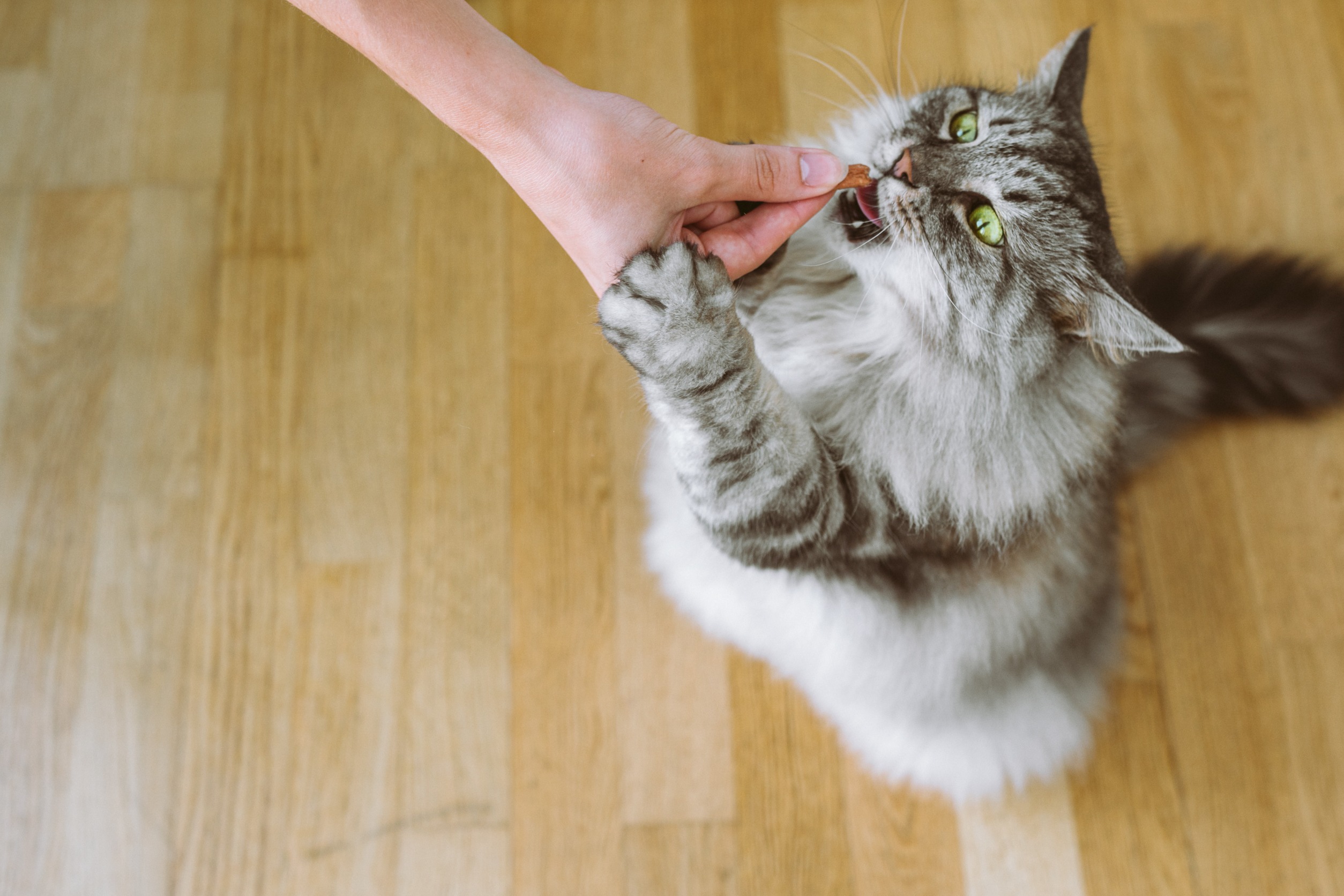
Training a cat or kitten to learn its name and do basic tricks can be a rewarding experience, but it requires patience and positive reinforcement. I know first-hand that it is indeed possible for cats to play fetch, beg, and sit because I have had numerous cats who were able to understand and perform such commands. My cats also know their names and will come (barring any feline defiance which can kick in at times) when called.

The most basic command which most people would like their pets to learn is to respond to their names and come when called by name. Here are some steps and tips which you can use to reinforce your cat’s learning.

  1. Choose a Short and Distinct Name: Select a name for your cat that is short, distinct, and easy to pronounce. Cats tend to respond better to names with one or two syllables. Use the chosen name consistently. All of my cats have two-syllable names which are easy to pronounce.
  2. Establish a Connection: Spend quality time with your cat to build a bond and trust. Petting, playing, and providing treats are all ways to create a positive association with you. In fact, I would say treats are essential when getting a cat or dog to learn its name, as it serves as positive reinforcement.
  3. Use Positive Reinforcement: Cats respond well to positive reinforcement, such as treats, praise, and petting. Reward your cat when it responds to its name or successfully completes a trick.
  4. Start with Name Recognition: To teach your cat its name, use a calm and friendly tone. Say the cat’s name while making eye contact. When the cat responds, reward it with a treat or affection. Repeat this regularly.
  5. Be Patient: Cats may take time to recognize their name and respond. Don’t get discouraged if they don’t respond immediately. Be patient and consistent in your efforts.
  6. Teach Basic Tricks: When it comes to teaching tricks, start with simple ones like “sit” or “come.” Use treats and positive reinforcement to guide your cat into the desired behavior.
  7. Use Clicker Training: Clicker training can be effective for cats. Associate the sound of a clicker with treats, and use it to mark desired behaviors. Click when the cat responds to its name or performs a trick, followed by a treat.
  8. Keep Training Sessions Short: Cats have shorter attention spans than dogs. Keep training sessions brief, around 5-10 minutes at a time. Multiple short sessions throughout the day can be more effective than one long session. My training sessions with my cats are very brief, about 3 to 5 minutes, and I truly believe that the brevity is what keeps my cats engaged.
  9. Be Consistent: Consistency is key in cat training. Use the same command words and reward system every time. Avoid confusing your cat with different words or signals for the same behavior. I personally always use “sit” and “beg” when training Koji, my 2-1/2-year-old cat.
  10. Stay Positive and Patient: Cats can be independent, so don’t scold or punish them if they don’t respond immediately. Always use positive reinforcement to encourage desired behaviors.
  11. Adjust to Your Cat’s Personality: Every cat is unique, so be flexible in your training approach. Some cats may respond better to treats, while others may prefer play as a reward.
  12. Practice Regularly: Regular practice and reinforcement are essential for your cat to retain what it has learned.

Remember that not all cats will learn tricks, and some may be more responsive than others. The key is to be patient, use positive reinforcement, and focus on building a strong bond with your cat. Training should be a fun and enjoyable experience for both you and your feline companion.

Wisteria Strong

© virtosmedia, 123RF Free Images

Wisteria is a beautiful vining plant which fascinates me, mostly because my surname means “among the wisteria”. However, I never knew how hardy wisteria was until very recently, so it holds even more symbolism for me now. The blossoms on a wisteria vine are absolutely gorgeous, but it turns out that the Chinese wisteria (Wisteria sinensis) and Japanese wisteria (Wisteria floribunda) are invasive when planted in gardens and forests in the United States. Evidently, the root system of a wisteria plant can extend up to one mile, which means that wisteria vines in yards across a neighborhood are most likely from a single specimen.

Here is a great video explanation of what non-native wisteria plants do in U.S. soil:

Spring Island Trust

If you live in the United States and are considering planting wisteria, you might want to consider American wisteria (Wisteria frutescens), because it is far less aggressive than its Chinese or Japanese counterparts. Interestingly enough, the type of wisteria which is most commonly planted in American gardens is the Japanese version, and the wisteria plant which adorns the security gate where I live is the Japanese variety. That seems fitting for me, considering the meaning of my last name and the fact that it is a Japanese name!

New Rug Runners For Our Stairs

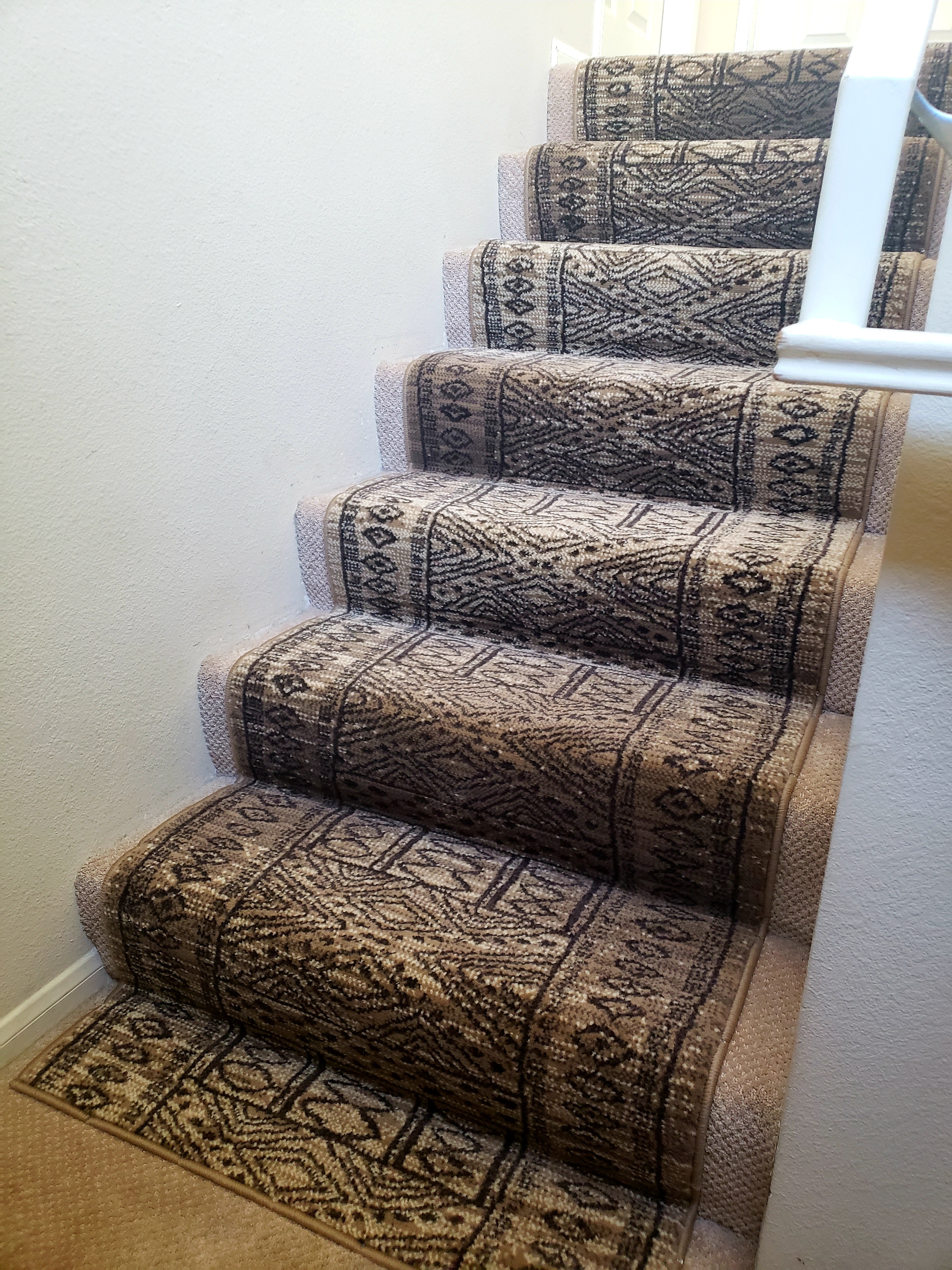
There are two flights of stairs covered in Berber carpet in our place, and because one of my cats enjoys scratching Berber carpet, I purchased rug runners for the stairs shortly after we had moved in so that the carpet would be protected. Since each set of stairs has two L-turn stair landings, I had to purchase three separate rug runners for each set of stairs, but I had found some reasonably priced versions on Amazon. However, five years later, the rug runners were looking pretty shabby, partially because the scratch happy cat had switched to scratching the runners (never mind that he has had access to numerous scratching posts throughout the house), and partially because of wear and tear from foot traffic. The runners had definitely gotten to the point where they were a bit of an embarrassment, but since I remembered spending a small chunk of change on the existing runners, I wasn’t too eager to plunk down more money to get replacements.

However, I found myself anxious to shift the energy in my home after one of my cats and my mom died, so I went back onto Amazon to reorder the same runners. Unfortunately, the sellers I had purchased from before were no longer selling rug runners, and none of the other runners I found on Amazon were customizable to the dimensions which I needed. That spurred me to investigate other sites which specialized in rug runners, one of which actually had fair pricing, especially when compared to a couple of other sites which were prohibitively expensive. I placed my order at the end of July and was thrilled when the runners arrived within four business days.

The uninstallation of the old rug runners was exhausting and took about two and half times longer than the installation of the new rug runners, but once the old ones were removed and replaced by the new ones, the place was transformed into a much more welcoming home. I even decided to place patterned runners in one stairway, and though I was initially very nervous about how they would look, I absolutely love them. The quality of the new runners is far superior to the old ones, with a nice, springy feel under the feet. If you are in the market for rug runners of any kind (kitchen, stairs, hallways), I would definitely recommend runrug.com,

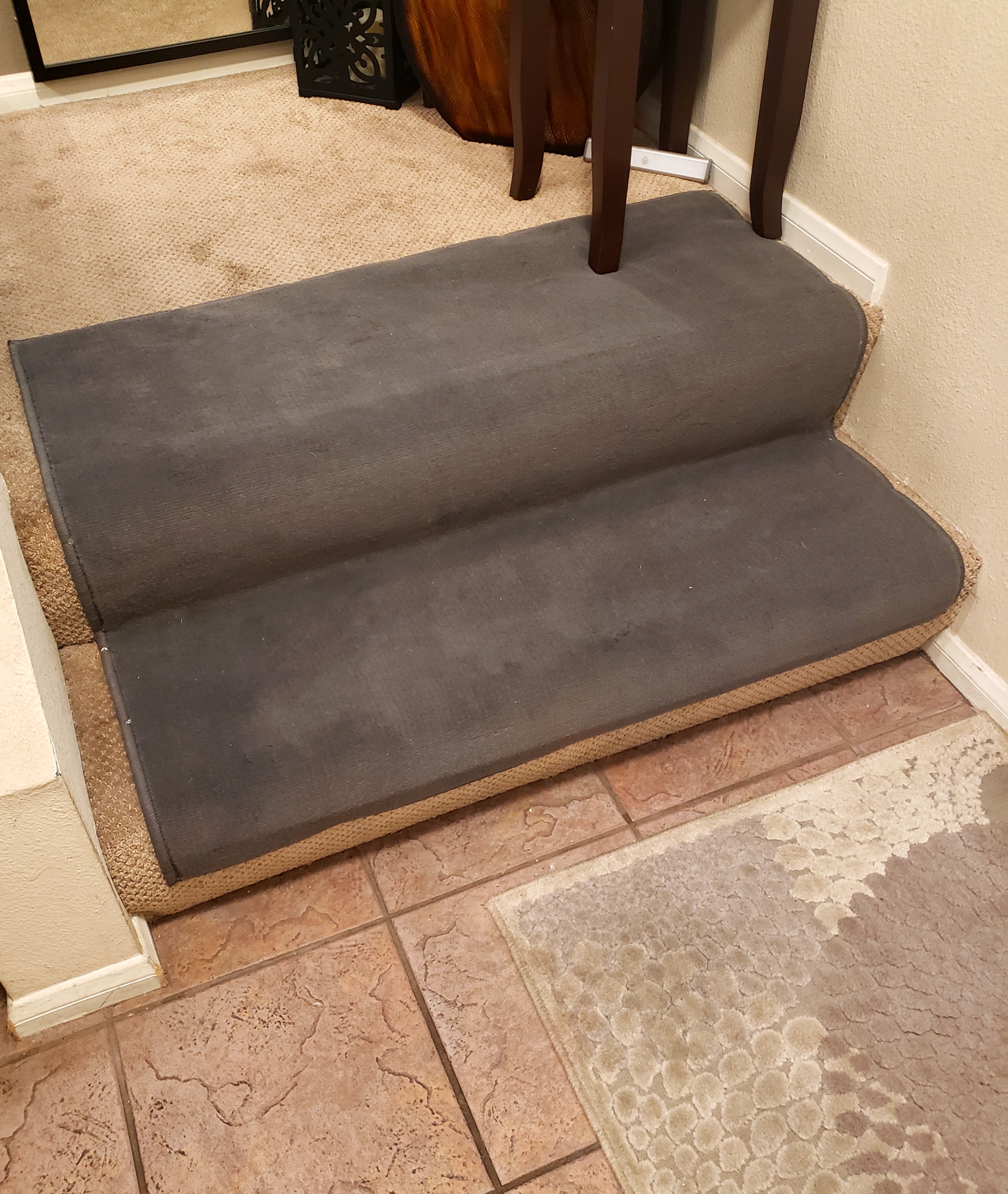
This is the first runner for the first set of stairs…

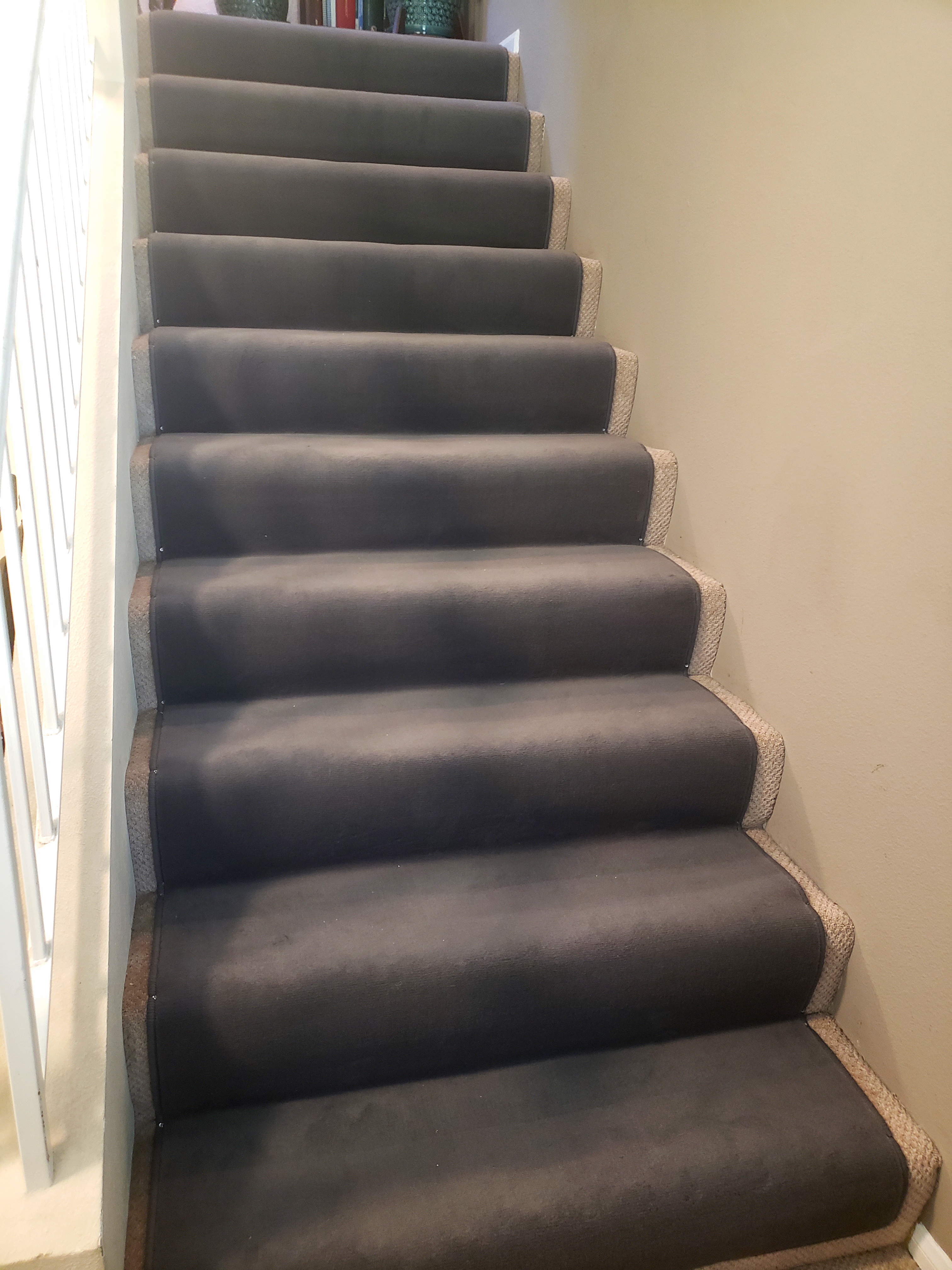
This is the main stretch of runner for the first flight of stairs

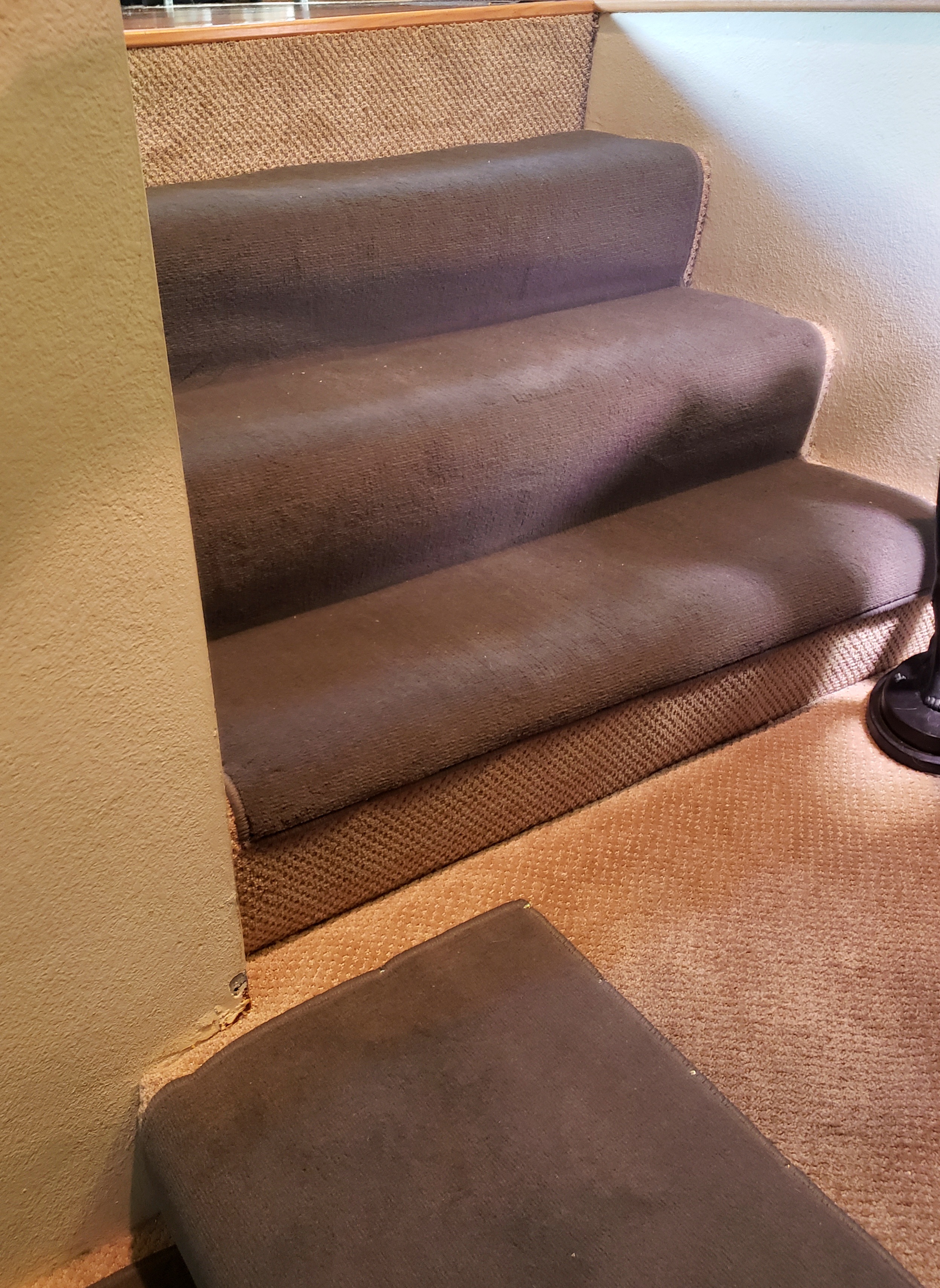
The third runner for the first flight of stairs

Our new Afrikans print taupe runners for the second flight of stairs

Second runner…

The final runner for the second flight of stairs

I hope that these new rug runners last for a very long time!

One Thousand Cranes

Copyright: olegdudko

Last year right around Christmas, I taught my dear friend Karla how to make origami cranes, and though she struggled at first, she began to get the hang of making them. She thought they were pretty neat, and asked if they were ever made for a specific purpose, so I told her about the tradition of making one thousand cranes and stringing them up to hang for a number of different occasions, including making a wish for an ill person’s recovery, the birth of a child, wedding blessings, or to grant good luck within a home. Senbazuru (a thousand cranes) is the Japanese way to make a wish and bless it so that it might come true.

Emma Taggert offers an explanation of how the origami crane emerged in Japanese culture:

“The tradition of the Japanese orizuru (ori– “folded,” tsuru “crane”), or paper crane, began in feudal Japan (1185–1603 CE), when people gifted each other the paper figures as symbols of honor and loyalty. However, it wasn’t until the 16th century that the art of the origami crane was officially recorded. Hiden Senbazuru Orikata (“Secret to Folding One-thousand Cranes”), published in Japan in 1797, is the first known book on origami. It features the earliest known instructions on how to make origami cranes, along with countless examples of different kinds.”

Since I grew up making origami cranes, I can quite literally make them with my eyes closed, but I understand that for someone who is unfamiliar with origami, making that first crane can be a challenge. Here is a video tutorial for those of you who want to learn how to make one:

For those of you who already know how to make origami cranes, you might want to challenge yourself with renzuru, a form of origami in which multiple forms are made from a single piece of paper:

Getting back to my friend Karla, she amazed me in July when she gifted me with a thousand cranes for my birthday. I wasted no time in gettting a dowel and hooks for the cranes so that I could display them in my living room. Once they were hung, I realize I had chosen a great spot because during the day, the cranes catch the sunlight, and in the evening, the uplights which I have behind my sofa impart a lovely glow on them.

Little Spoons

Kazu, the best little spoon ever…

On May 12, 2023, I lost Kazu, my 14-year old European Burmese who was truly the most incredible cat I have ever had. She had countless adorable habits, including hopping instead of walking downstairs, performing somersaults on the stairs on a daily basis, and lying in a human’s lap on her back with all four limbs perched in mid-air, purring so fiercely that her limbs would move in rhythm with the rumble. One of my favorite things about Kazu was the fact that she would sleep next to me every night, throughout the night, and her purr motor would start up as soon as she saw my eyes open in the morning. There were also times when Kazu would be the big spoon, putting her cute little paws on my back and nestling in my hair as I slept on my side turned away from her.

Every night, Kazu would bound up the stairs to our bedroom, hop onto the bed, wait for me to settle in under the covers and lift them for her, then she would get into position so that her body would be under the covers and her head would be either on my shoulder, arm, or on the pillow next to me, with her body snuggled up right next to mine. It’s no surprise that I haven’t been able to sleep very well since she passed. What’s even more remarkable is that I had three cats in succession from 1988 through 2023 who were my bed buddies, and all of them were my “little spoons”.

The first little spoon I had was Pebbles, a tortie who was full of tortie sass, had a loud purr similar to Kazu’s which could be heard from an adjacent room, and who would sleep next to me through the night every night. She was in my life from 1988 until 2000, when kidney disease took her from me. Before Pebbles died, I got a blue silver patched spotted tabby and white Scottish Fold kitten in November 2000 and named her Sophie. Little did I know that Sophie would soon take over as my little spoon, curling up next to me, often in the crook of my arm, and sleep throughout the night that way.

My Scottish Fold Sophie…

Sophie developed polycystic kidney disease at the age of 9, in 2009, which was when I got Kazu. When Sophie died in late 2009, Kazu had not yet developed any consistent bed habits, but before long, she began sleeping next to me in bed, and became my third little spoon. Anyone who is lucky enough to have a cat who sleeps snuggled up next to them throughout the night is blessed indeed, and I had three cats do that over the span of 35 years. I certainly hope to experience that again in the future.