Orchid Cactus Love

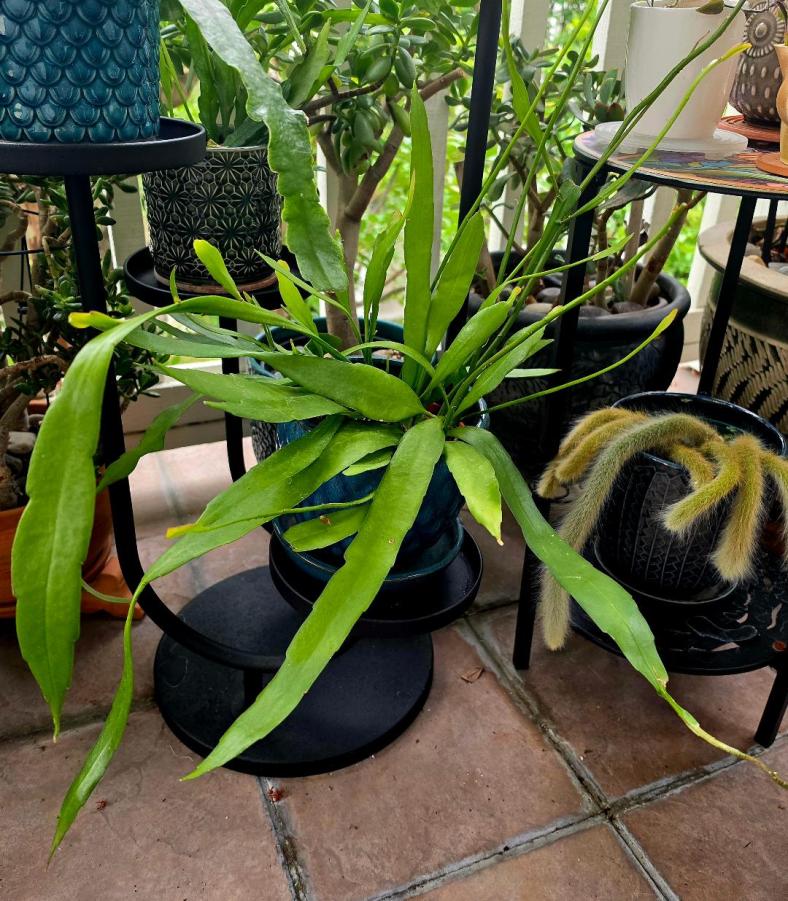
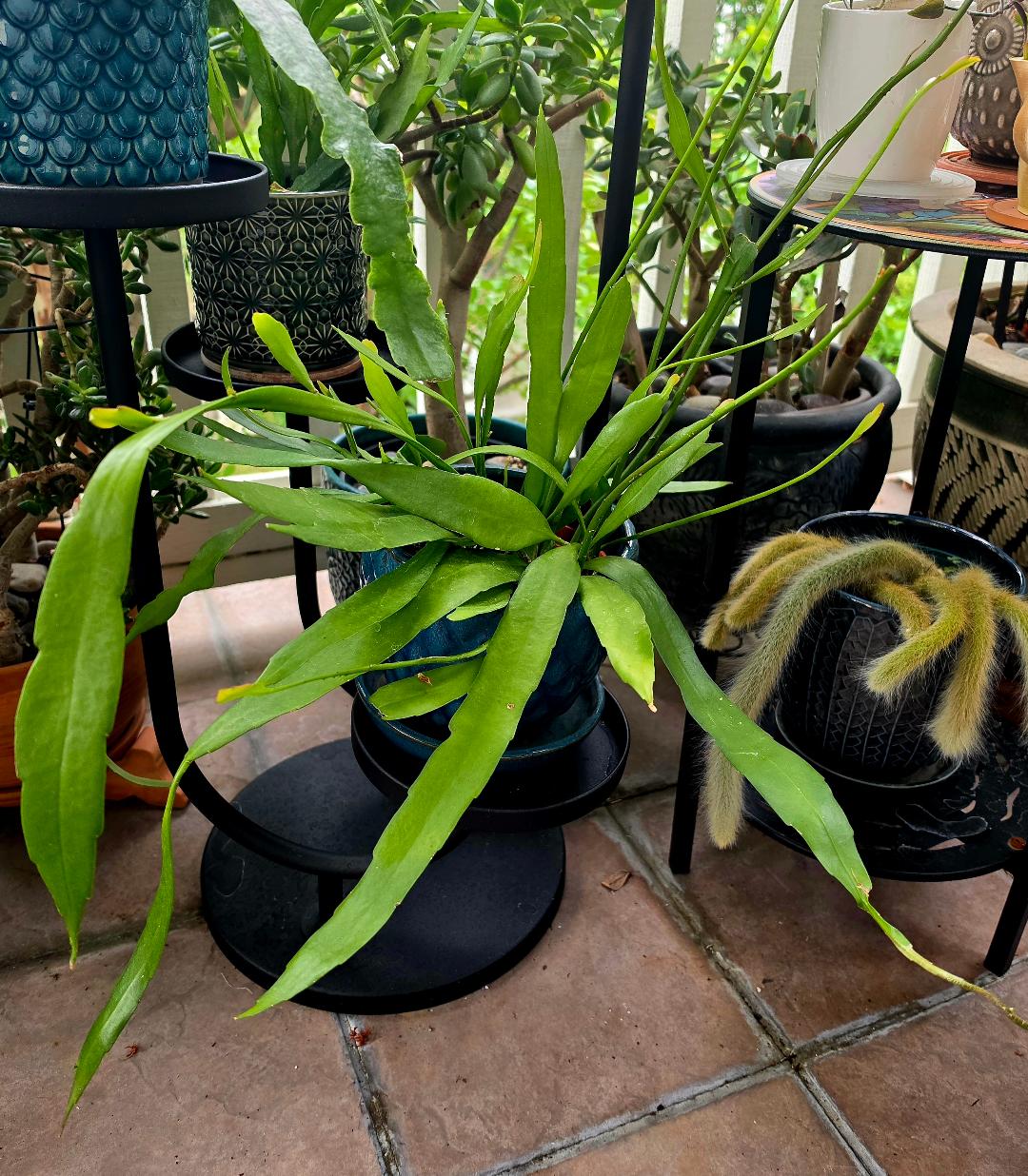
Epiphyllum pumilum

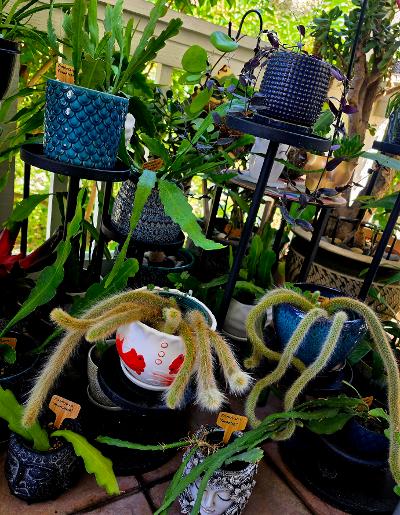
Earlier this year, I was lured into the world of Epiphyllum, also known as Orchid Cacti, and I quickly became a huge fan. It all started with an Epiphyllum ackermannii cutting I got as a freebie along with a plant order from EpiPlants on Etsy. I now have 16 different cultivars in my collection, and I look forward to the time when they eventually start blooming.

Epiphyllum — commonly called “orchid cacti” — are tropical forest cacti known for their dramatic flowers and flattened, leaf-like stems. Unlike desert cacti, they evolved in humid jungles of Central and South America, where many species grow attached to tree branches rather than rooted in dry ground.

What Orchid Cacti Look Like

Orchid cacti usually have:

  • Long, flattened green stems called cladodes that resemble thick leaves
  • Arching or trailing growth habits
  • Smooth or scalloped stem edges depending on species
  • Very small or nearly invisible spines
  • Epiphytic growth habits (many naturally grow on trees)

The stems can hang several feet long, making them popular in hanging baskets. Some species have deeply lobed stems, while hybrids may have broad paddle-like growth.

Unlike the stereotypical desert cactus, orchid cacti look lush, tropical, and almost vine-like.

What the Blooms Look Like

The flowers are the main attraction.

Orchid cactus blooms are often:

  • Huge — commonly 4–10 inches across
  • Highly fragrant in many species
  • Funnel-shaped or starburst-shaped
  • Extremely colorful

Colors include:

  • White
  • Pink
  • Red
  • Orange
  • Yellow
  • Purple
  • Bi-colors and striped hybrids

Some species bloom only at night and are pollinated by moths or bats. Others bloom during the day.

One famous relative is Epiphyllum oxypetalum, often called the “Queen of the Night,” whose giant white flowers open for a single night and release a powerful sweet fragrance.

Many modern hybrids produce flowers so ornate they resemble orchids, which is where the common name “orchid cactus” comes from.

How Many Varieties Exist?

There are two ways to answer this:

True Species

Botanists recognize roughly 15–20 accepted wild species in the genus Epiphyllum, though classifications shift as taxonomy changes.

Examples include:

  • Epiphyllum oxypetalum
  • Epiphyllum anguliger
  • Epiphyllum guatemalense
  • Epiphyllum crenatum

Hybrids and Cultivars

This is where the numbers explode.

There are:

  • Thousands of registered hybrids
  • Decades of breeding by collectors and cactus societies
  • Endless flower color combinations and forms

Hybrid orchid cacti are especially popular because breeders selected for:

  • Larger blooms
  • More vivid colors
  • Repeat blooming
  • Daytime flowering
  • Compact growth habits

Some collectors maintain hundreds of named cultivars.

Care Needs

Orchid cacti are easier than many people expect once you understand they are jungle cacti, not desert cacti.

Light

They prefer:

  • Bright indirect light
  • Morning sun
  • Filtered light

Too much harsh afternoon sun can scorch stems.

A bright east-facing window or shaded patio is ideal.

Water

They need more water than desert cacti.

General rule:

  • Water when the top inch of mix dries slightly
  • Keep evenly moist during active growth
  • Reduce watering somewhat in winter

Avoid:

  • Bone-dry soil for long periods
  • Constant soggy conditions

Humidity

They appreciate moderate humidity because of their rainforest origins.

Ideal conditions:

  • 40–60% humidityDity or higher
  • Good airflow

Dry indoor air may reduce blooming.

Soil

Use a loose, airy mix with excellent drainage.

Good mixes often contain:

  • Orchid bark
  • Perlite
  • Coco coir or peat moss
  • Pumice or perlite
  • Small amounts of potting soil

Heavy cactus desert mixes are often too dry and mineral-heavy.

Temperature

Best range:

  • 55–80°F (13–27°C)

Many varieties benefit from:

  • Cooler nighttime temperatures in fall
  • Slight winter rest periods to encourage flowering

Most are not frost tolerant.

Fertilizer

Feed lightly during spring and summer.

A balanced or bloom fertilizer works well:

  • Monthly or biweekly at diluted strength

Too much nitrogen may produce stems but fewer flowers.

Blooming Tips

To encourage flowers:

  1. Give bright indirect light
  2. Avoid overpotting
  3. Provide slightly cooler nights in fall
  4. Reduce watering modestly in winter
  5. Let plants mature — some need a few years before blooming heavily

Once mature, healthy plants can produce dozens of blooms in a season.

Popular Types

Epiphyllum anguliger

Known for zigzag stems that resemble fish skeletons.

Epiphyllum oxypetalum

Large colorful hybrid flowers.

Disocactus ackermannii

Brilliant red flowers and trailing stems.

Epiphyllum oxypetalum

Night-blooming fragrant white flowers.

Why Collectors Love Them

Orchid cacti attract collectors because:

  • Flowers can be spectacularly large
  • Some blooms are intensely fragrant
  • Hybrids vary enormously
  • Plants are easy to propagate from cuttings
  • Mature hanging specimens become dramatic showpieces

A blooming orchid cactus can look almost unreal — huge tropical flowers emerging from simple green stems.

The African Milk Tree

Euphorbia trigona, also known as the African Milk Tree, is a striking succulent often mistaken for a cactus, though it actually belongs to the spurge family (Euphorbiaceae). It’s popular as a houseplant because of its sculptural shape and relatively easy care.


🌍 Origins

Euphorbia trigona is native to central and western Africa, particularly regions like Cameroon. In its natural habitat, it grows in warm, semi-arid environments with plenty of sunlight. It has long been cultivated both locally and globally, so its exact wild origin range is a bit blurred by human propagation.


🌿 Appearance

This plant has a very distinctive look:

  • Growth form: Upright, columnar stems that branch upward, giving it a candelabra-like shape
  • Stems: Triangular (hence trigona), with ridges lined by small paired spines
  • Leaves: Small, oval leaves grow along the ridges; they’re usually green but can be reddish in some varieties
  • Color varieties:
    • Standard green
    • “Rubra” or “Royal Red” form with reddish stems and leaves

Although it resembles a cactus, it differs in structure and produces a milky white sap (latex), which is typical of spurges and can be irritating or toxic if handled improperly.


📏 How Tall Can It Get?

Height depends heavily on where it’s grown:

  • Indoors: Typically reaches 4–6 feet (1.2–1.8 m), though with time and good conditions it can grow taller
  • Outdoors (warm climates): Can reach 10–15 feet (3–4.5 m) or more, forming a large shrub-like structure

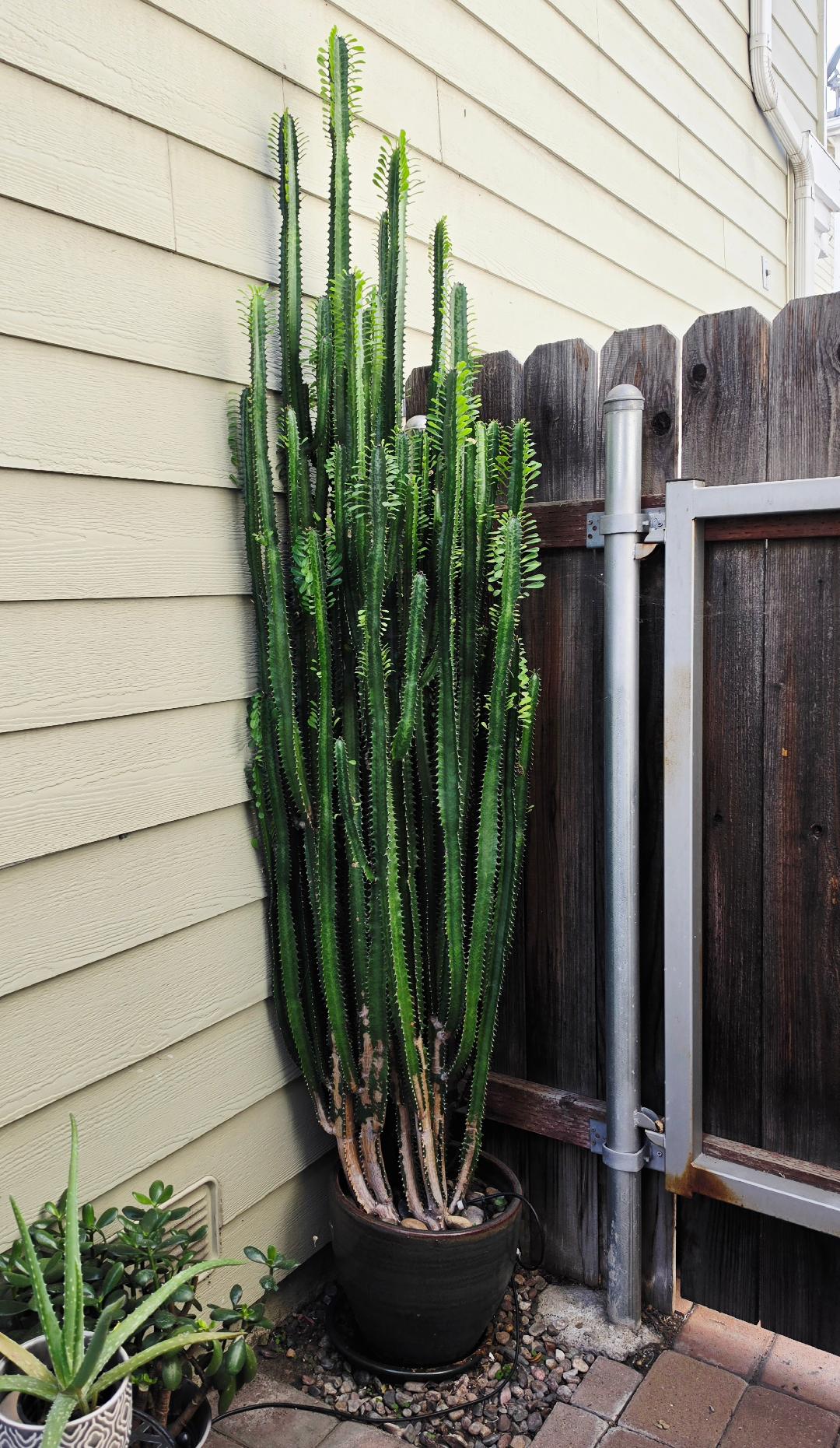
It grows relatively fast compared to many succulents, especially with bright light and consistent care. When I bought my Euphorbia trigona in 2021, it was about 18 inches tall. One spring, it shot up about 2 feet, which I never expected. About a year and a half ago, a close friend and I decided to move it from my second-floor balcony to the side yard on the first floor. My reasoning was that it was almost 6 feet tall, and would be almost impossible to move from the balcony if it got much larger. As you can see in the photo, it is now 7-1/2 feet tall!

Easy Care Rat Tail Cactus

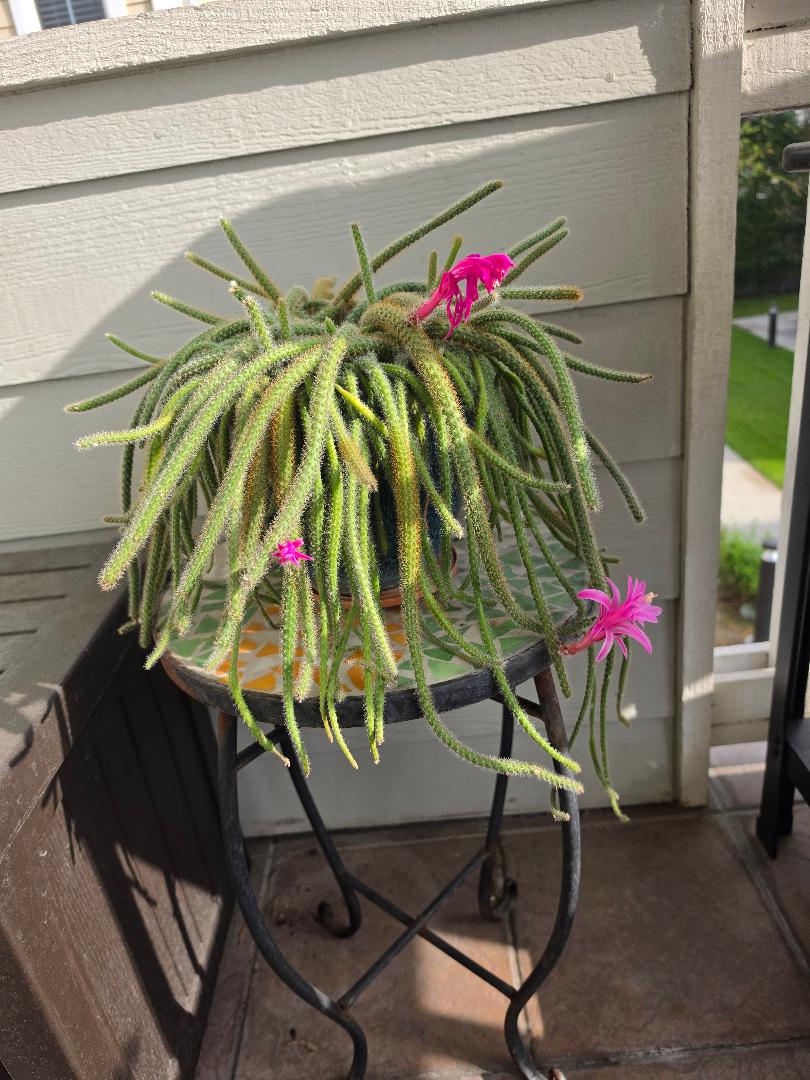
The first rat tail cactus I ever bought. This has been on my balcony for 6 years and finally bloomed this year.

The rat tail cactus—scientifically known as Aporocactus flagelliformis—is a striking, easygoing cactus that stands out because it doesn’t look like the typical upright desert plant. It’s actually a trailing, almost vine-like cactus that’s popular as a hanging plant. I have had two specimens for a number of years, and one in particular has been quite full and happy. When they both decided to bloom recently, I became a big fan of them and added two more to my balcony collection.


🌵 Appearance

Rat tail cactus has long, slender stems that can grow several feet in length. These stems:

  • Are cylindrical and about ½–1 inch thick
  • Covered in fine, soft-looking spines (not as intimidating as many cacti)
  • Usually a medium to bright green color

As the plant matures, the stems spill downward, giving it that “rat tail” look—hence the name. It’s often grown in hanging baskets so the stems can cascade freely.


🌱 Growth Habit

Unlike many desert cacti, this one is naturally epiphytic or lithophytic, meaning it can grow:

  • On rocks
  • In crevices
  • Or even on trees in its native habitat (mainly Mexico)

Instead of growing upright, it:

  • Trails and drapes over containers
  • Produces lots of branching stems over time
  • Can become quite full and dramatic with age

It’s fast-growing compared to many cacti, especially during the warmer months.


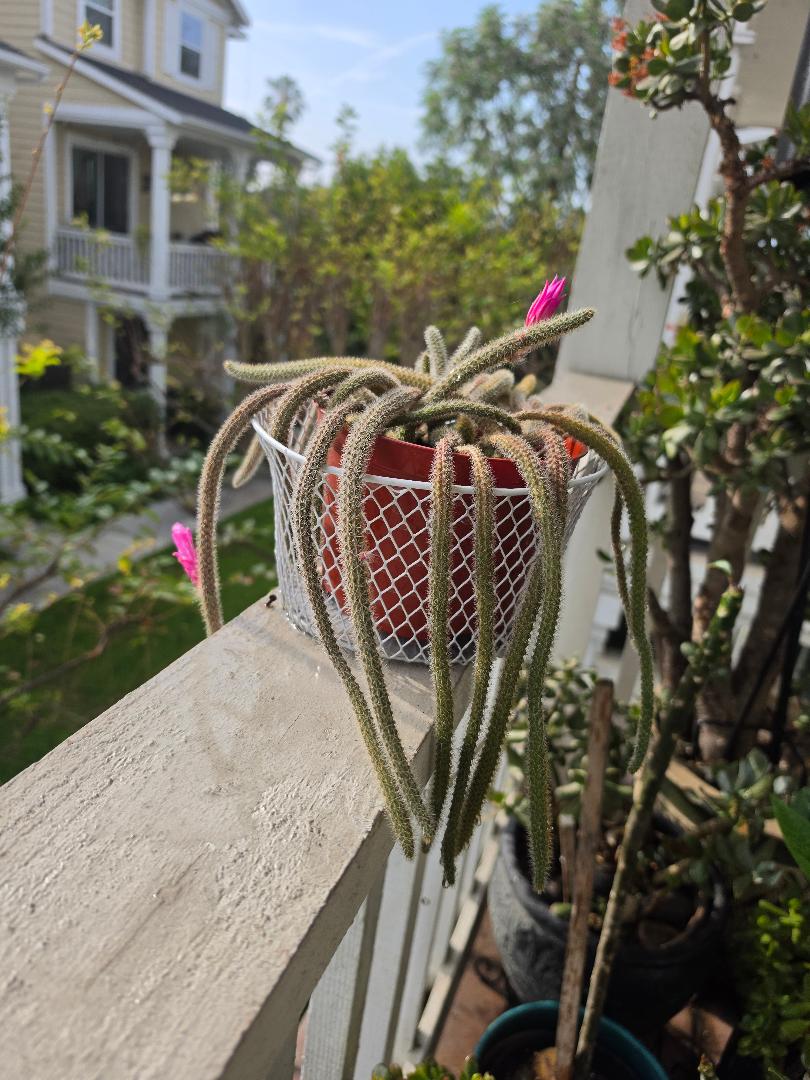
This is the second rat tail cactus, in bloom

🌸 Blooms

When the rat tail cactus blooms, it really steals the show.

  • Flowers are bright pink to reddish-magenta
  • About 2–3 inches long
  • Tubular in shape, with layered petals that flare outward
  • Often appear along the sides of mature stems

Blooming typically happens in spring to early summer. A healthy, mature plant can produce many flowers at once, creating a vibrant cascade of color against the green stems. The blooms don’t last forever individually, but the plant may produce them in succession.


☀️ Care Guide

Light

  • Prefers bright, indirect light
  • Can tolerate some direct sun, especially morning sun
  • Too much harsh afternoon sun can scorch the stems

Water

  • Water when the top inch or two of soil dries out
  • During growing season (spring/summer): water regularly but don’t let it sit in water
  • In winter: reduce watering significantly

Overwatering is the most common mistake—this cactus still needs good drainage.

Soil

  • Use a well-draining cactus or succulent mix
  • Adding perlite or sand improves drainage

Temperature

  • Thrives in warm conditions (65–80°F / 18–27°C)
  • Can tolerate slightly cooler temps in winter, but protect from frost

Humidity

  • Unlike desert cacti, it appreciates moderate humidity
  • Good airflow is still important

Fertilizer

  • Feed with a diluted cactus fertilizer during spring and summer (about once a month)
  • Avoid feeding in fall/winter

Potting & Placement

  • Best grown in hanging baskets to show off trailing stems
  • Repot only when necessary—slightly root-bound is fine

🌿 Bonus Tips

  • To encourage blooming, give it a cooler, drier rest period in winter
  • You can propagate it easily from stem cuttings
  • If stems get too long or messy, they can be trimmed without harming the plant

Overall, the rat tail cactus is a great choice if you want something low-maintenance but visually dramatic—especially when those vivid pink flowers show up.

Creativity Burst

Ever since last October, my brain has been happily buzzing with ideas on how to express myself more in my home space. I’ve been in full-on maker mode—hands busy, ideas clicking, with that satisfying rhythm of “oh, I can fix this” and “wait… what if I tried this?” It makes sense to me, since crafts and repairs hit two different creative muscles: one playful and expressive, the other practical and problem-solving. When both are firing, I feel capable and curious at the same time, which is kind of a power combo.

What’s cool is that this kind of creative flow often feeds on itself. Finishing a repair makes me more confident, which makes me bolder with crafts, which makes me want to try something slightly weirder or more ambitious next. It’s like momentum I can feel in my hands. Of note is the situation I ran into in early December while putting Christmas decorations at my front door. There was an illuminated penguin with a top hat and scarf which I planned to juxtapose next to my penguin in a Santa hat, but I had waited an entire year after purchasing it in late december 2024 to display it. Instead of inspecting the components to ensure that everything would fit, I mistakenly assumed that there would be no issues, and I placed it on the shelf to use for Christmas 2025.

When I opened the box and attempted to assemble the penguin, I noticed that the construction was way off, and that it would be impossible to put it together unless I devised a creative solution. For several days, I honestly thought I would have to toss the decoration in the trash, but I had a flash of insight while putting up other decorations. Instead of fretting over the fact that the connecting poles were far too long for the height of the penguin, I aligned the poles alongside each other, used duct tape to keep them at the proper length, then assembled the penguin. Since the poles are inside the body of the penguin, and not visible, the duct tape was not an issue. Problem solved, and in a creative way!

My other holiday-themed creative triumph was my Nightmare Before Christmas–themed tree? The tree offered a perfect blend of spooky, nostalgic, and whimsical, while honoring one of my favorite films. It was a great way to repurpose a small tree that had previously been decorated in a very traditional fashion. I got rid of my woodland creature ornaments that used to adorn the tree, and came up with a theme that felt completely congruent with what I was passionate about. Jack Skellington would absolutely approve.

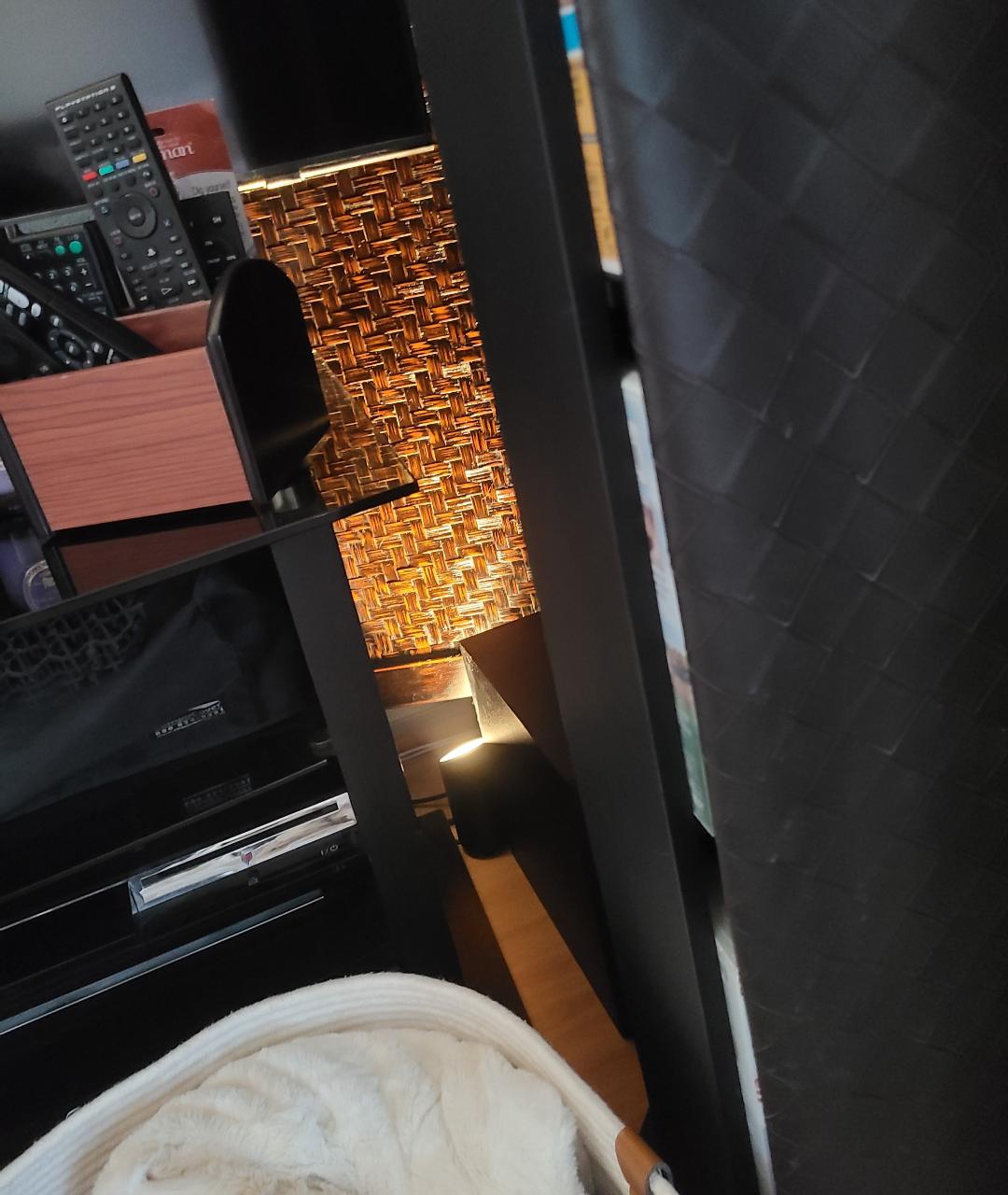
A more recent problem to solve was to create ambient lighting in my living room which would complement the existing ambient lighting. I ended up placing up lights on the floor by the entertainment center which are dimmable, creating even more of a relaxing vibe. They are subtle, but they carry the kind of impact and mood I was seeking.

Hanging With A Couple Of Favorite Candle Scents

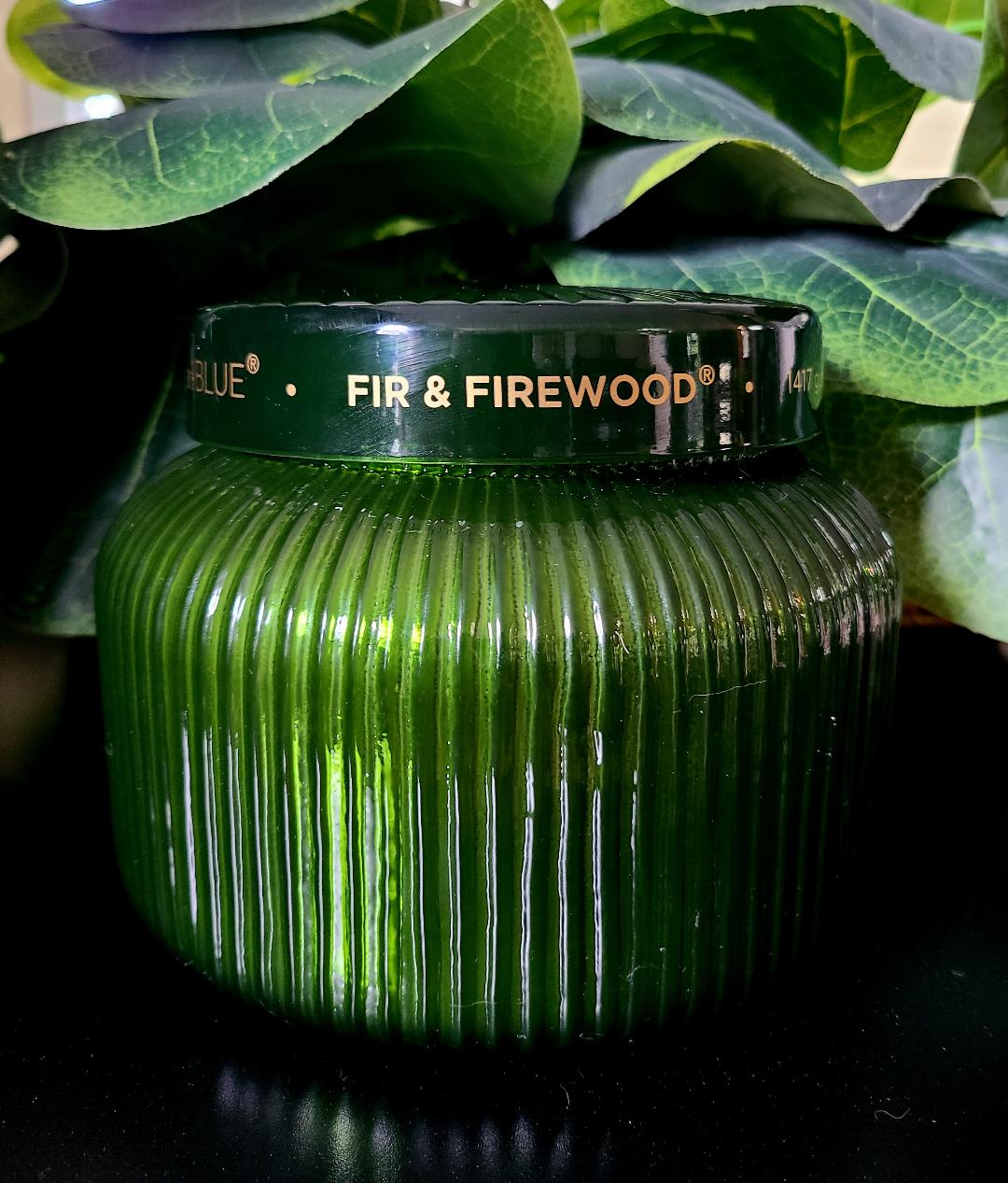
Fir & Firewood by Capri Blue is the ultimate Christmas tree scent!

As a self-proclaimed scented candle fanatic, I have definitely selected some fragrances which are favorites. Two of my favorites are actually promoted and sold as holiday candles, but I use them year-round because they don’t scream Christmas like some aromatic varieties do. The two limited-edition holiday candles with which I can honestly say I am obsessed are Nest’s Blue Cypress & Snow, and Fir & Firewood by Capri Blue.

Blue Cypress & Snow is described as: “Create the aroma of a snow-covered mountain retreat in winter with NEST New York’s candle collection, featuring notes of crisp blue cypress, juniper berry, and hints of smoked vanilla bean.” What does it smell like? Fresh woods, nestled in cozy, warm vanilla. I don’t even like the smell of vanilla, but this combination is absolutely beautiful. I think it’s a bit heavy for the middle of summer, but it absolutely works any other time of the year. Although Nest only sells this one during the holiday season, there are other stores which sell this for a good portion of the year.

Fir & Firewood is described in this way: “Fruity, green aroma of apple, clove, fir, pine needle, white birch, cedar, vetiver, and musk.” The fruit and clove mellow out the sharpness of the pine, birch and cedar, resulting in the ultimate Christmas tree scent. It’s definitely festive, but the scent profile works for anyone who likes forest type, woody aromas. This one is hard to find, but worth the effort to dig up.

New Holiday Decorations

Last year, I took my Halloween and Christmas decorations to the next level, all because I was inspired by the talented residents in my city who decorated their homes. Every year, the city of Burbank has a Halloween decorated house contest, and because there are many Burbank residents who work in the film and TV industry, the artistry and creativity exhibited are significant. For whatever reason, I was swept up in the festive energy of Halloween last October, and I made close to a dozen excursions to various neighborhoods in Burbank to see all the decorations.

During prior years, all I did in terms of decorating my place for Halloween was to put up wooden plaques of Jack Skellington and Sally at my front door, display three plastic skeletons (cat, Dachshund dog, and a rat) on the railing around my second-floor balcony, and string up orange and purple lights on the balcony. Last year, I added a 6-foot-tall Jack Skellington, a matching Sally, and a matching Zero, all three of which hung near the front door entrance. My place really stood out because I was the only resident in my community who put up any Halloween decorations, but my friends and I really enjoyed seeing those decorations. This year, I will be adding another element which should be a lot of fun to have as part of the display.

My Halloween decorations on Halloween 2025

Then as Christmas approached last year, I was inspired to continue the Nightmare Before Christmas story theme by adding an animatronic Jack Skellington (dressed as Sandy Claws) at my front door. I also switched the decorations on a 4.5-foot tree which I always put in my den area so that the Nightmare Before Christmas theme pervaded the tree. I also created a spiral at the tip of the tree to mimic the shape of Spiral Hill. The results were truly fantastic!

My front door display for Christmas 2025

I ended up with so many Nightmare Before Christmas ornaments and decorations for the 4.5-foot tree that it ended up being a bit overloaded, so this year, the decorations will adorn a 6-foot pencil tree. The 4.5-foot tree will undergo yet another decorating facelift, and I am truly excited for what I plan to create when I put that tree up in late November of this year. I know it sounds like overkill to have THREE Christmas trees (I have a 7.5-foot cashmere tree as the main tree) in the house this year, but I am having fun with all of it. Thank goodness I have enough space in my garage to store all the items!

This was a great launching point for the Nightmare Before Christmas theme inside the house!

Online Games As Stress Relievers

Online games can be a lot of fun, and are often a great way to relieve stress for many people. Whether it’s getting lost in a fantasy world, or solving puzzles at your own pace, online games offer a kind of escape that’s both engaging and satisfying. One of the biggest appeals is the chance to step away from real-life pressures for a while. When you’re focused on gameplay—strategizing, reacting quickly, or just exploring—you’re giving your mind a break from whatever might be stressing you out. That kind of mental shift can be incredibly refreshing.

There’s also a real sense of accomplishment in progressing through a game, leveling up, or unlocking new content. That feeling of achievement, even in a virtual world, can be a confidence booster and help you feel a bit more in control—especially when real life feels overwhelming. It’s also fun to play online games if there’s a bit of downtime during a workday (provided you can clock out and play games on your own time). I recently got into the habit of using lulls in my telemedicine work schedule by playing some fun games which I found online.

I have always liked Mahjong, so I was happy to find a Chinese New Year Mahjong. Here’s what it looks like:

https://www.mortgagecalculator.org/money-games/chinese-new-year-mahjong/

I also found a unique and fun game which reminded me of a teenage dream I had, to own a sushi bar. The game is a simulation game in which you serve sushi as the orders come in, collect money, and also order food supplies when you run low. Instead of opening up an actual sushi bar, I can play this game and indulge in my sushi bar ownership fantasy.

https://www.mortgagecalculator.org/money-games/sushi-bar/

I could actually imagine a younger person playing the sushi bar game and learning the cadence of running a restaurant. It turns out that the website on which I found both of these games has a plethora of fun online games of all kinds.

Scented Candle Love

A new favorite, Bergamot Tangerine from APOTHEKE

Luxury scented candles have a special way of enhancing a space that goes beyond just fragrance. They offer an affordable touch of indulgence—unlike many other luxury items, a well-made candle can be had without breaking the bank, yet it delivers a surprisingly rich sensory experience. As someone who enjoys scented candles from brands such as Voluspa, Archipelago Botanicals, APOTHEKE, and Nest, I know firsthand how affordable they are, as well as how much joy they bring me.

When lit, scented candles create an immediate shift in ambience. The flickering flame casts a soft, warm light that’s both calming and flattering, making any room feel more intimate and inviting. The scent adds another layer—evoking emotions, memories, or simply providing a gentle background aroma that makes a space feel cared for and curated. Whether it’s a woodsy blend, burst of fruit, or a complex and inviting floral, the right fragrance can transform a mundane evening into a soothing ritual. I light candles on a daily basis, and base my candle selection on what kind of mood I am in, as well as what kind of weather we are experiencing. For example, today was a warm, sunny day, so I opted for a refreshing grapefruit candle, and since it was in a smaller vessel, I opted to place it on my candle warmer instead of lighting it. Later tonight, after it gets dark, I will light a candle which fits my mood, settle onto the sofa in the living room, and enjoy the beautiful glow and inviting fragrance of the lit candle.

There’s also a practical bonus: by using candles for light, especially in the evening, you can reduce reliance on harsh electric lighting. This not only contributes to a more relaxing atmosphere but also supports energy conservation. It’s a small but meaningful gesture toward sustainability—proof that luxury and eco-consciousness don’t have to be at odds.

Indoor Plants Are Good For You

Cactus Plant Tree Pot Nature Environmental Conservation Concept

rawpixel Image ID53431489 123rf.com

As an avid plant lover, I have enjoyed the many benefits of being surrounded by beautiful greenery in my home. I honestly believe that having indoor houseplants offers a multitude of benefits. Here’s a closer look at why incorporating greenery into your home is a great idea:

Health Benefits

  1. Improved Air Quality – Many houseplants, such as spider plants and snake plants, help remove toxins like formaldehyde and benzene from the air, creating a cleaner living environment. I have several snake plants (Sansevieria genus) in my home, and appreciate the fact that they clean the air while looking very attractive and interesting.
  2. Increased Oxygen Levels – Plants release oxygen during photosynthesis, which can improve air circulation and overall respiratory health.
  3. Humidity Regulation – Plants release moisture through transpiration, which can help maintain healthy humidity levels, reducing issues like dry skin and irritated sinuses. I also help my plants out by running two humidifiers in my den and kitchen to optimize plant functions.
  4. Reduced Allergens – Some plants, like peace lilies, can trap dust and allergens, helping those with sensitivities breathe easier.
  5. Stress Reduction & Lower Blood Pressure – Studies have shown that being around greenery can help lower stress levels and even contribute to reduced blood pressure. When I am in my home, I truly feel like I am in a garden paradise, and I feel instantly calm.

Decor Benefits

  1. Aesthetic Appeal – Houseplants add natural beauty to any room, complementing different interior design styles. I make sure to stage my plants in such a way that they make sense in my interior living space, without sacrificing their ambient light needs.
  2. Versatility in Design – Whether you want a bold statement piece like a fiddle-leaf fig or a subtle accent like a small succulent, there’s a plant to match every space.
  3. Enhanced Space Perception – Large plants can fill empty corners, creating a fuller and more inviting atmosphere. If I lived in a larger home, I would definitely have tall plants strategically placed in empty corners.
  4. Seasonal Adaptability – Unlike furniture or decor that can feel outdated, plants offer a timeless appeal and can be rearranged easily for a fresh look.
  5. Brings Nature Indoors – For those in urban settings, houseplants help create a connection to nature, bringing an element of the outdoors inside.

The desk sentinels around my workspace

Mood Benefits

  1. Boosted Mental Well-Being – Studies suggest that caring for plants can reduce anxiety and depression, providing a sense of accomplishment and responsibility. I know that I have a responsibility to keep my plants as healthy as possible, and I make an effort to address their needs on a weekly basis.
  2. Increased Productivity & Focus – Plants in workspaces have been shown to enhance concentration and creativity, making them great additions to home offices. There are plants all around my desk space, and I absolutely love them.
  3. Better Sleep – Certain plants, like lavender and jasmine, have calming properties that promote relaxation and better sleep. I only wish I could keep such plants alive in my home! Instead, I use scented candles to impart a calming mood.
  4. Mood Elevation – Simply looking at greenery can evoke feelings of happiness and tranquility, making plants a natural mood booster.
  5. Encourages Mindfulness – Watering, pruning, and tending to plants can be a meditative and mindful practice, helping people slow down and enjoy the present moment. Despite the fact that my weekly plant watering is a bit of a chore, I find myself getting into a zone which is meditative and beneficial.

Final Thoughts

Houseplants do much more than just decorate a space—they contribute to better air quality, reduce stress, and create a soothing ambiance. Whether you’re looking for a productivity boost, improved well-being, or a stylish home upgrade, adding indoor plants is a simple yet impactful way to enhance your living environment.