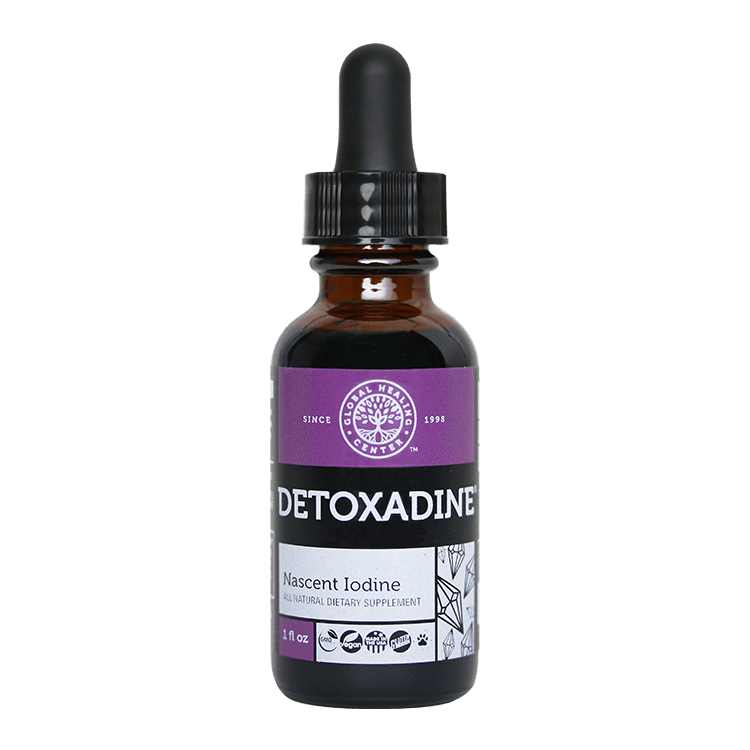
The Importance Of Iodine

detoxadine-magento_1

There is a rather insidious mineral deficiency which happens to run rampant in our society, and which negatively impacts the function of an endocrine gland which gets a lot of attention: the thyroid. The mineral I am talking about is iodine, and chances are that you are deficient in it.

The thyroid gland cannot synthesize thyroid hormones without iodine, so if your iodine stores are negligible, you have been doing your thyroid gland a major disservice. Add a stressful lifestyle to the mix, and you pretty much have locked in significant issues with thyroid function.

You might argue that you use sea salt, and since the sea contains most of the earth’s iodine, doesn’t that count? The problem is that most of the iodine is lost during the crystallization process. And forget about Morton’s Iodized Salt. The amount of iodine in that product is so small that it wouldn’t even begin to address a deficiency.

If you’re a health “nut” and have banned gluten-containing foods from your diet, that means that breads which may offer a decent source of iodine are no longer options for you. Those of you who are exercise fanatics (and yes, I am one of those people for sure) excrete quite a bit of iodine through your sweat, and if that iodine isn’t somehow replaced, you are going through each day in a state of severe iodine depletion. Another significant factor in the development of iodine deficiency (which, by the way, affects about 75% of the population) is the fact that people with cardiovascular issues are advised to limit their intake of salt. If you are a fitness person, especially if you compete, you probably avoid salt like the plague, which is not a good thing for your iodine stores or your thyroid function.

Dr. David Brownstein, who wrote a brilliant study called Iodine – Why You Need It And Why You Can’t Live Without It, claims that optimal health is not possible if someone has an iodine deficiency. Over time, the suffering thyroid gland can impact heart health, and can be implicated in the progression of certain types of cancer.

Symptoms of iodine deficiency include fatigue, dry skin, brittle hair, constipation, or depression. If you have a few stubborn pounds that you can never lose despite every intervention, or if you have water retention issues, low iodine levels may be the culprit.

Whatever you do, though, don’t pay attention to the RDA guidelines, because they are too tiny to make any difference in your iodine stores. The best dosage I recommend is 6.25 milligrams daily for several weeks, then taper off gradually (every other day for a week or two, then every two days, then stop). Beware of any bowel overactivity or acne breakouts, as those can be indicative of iodine intolerance. If you have any major medical issues, seek the advice of your physician before embarking on an iodine replacement regimen.

If you don’t want to take supplements, you can eat kelp snacks or seafood. Another important thing you can do to maximize the availability of iodine stores in your body is to avoid consumption of soy products, which block iodine absorption.

“Do You Still Compete?”

First Place Masters Bikini 35+ B Class, Team Universe, July 2013

First Place Masters Bikini 35+ B Class, Team Universe, July 2013

Whenever I hear that question now, I have mixed feelings, which range from a sense of longing for the stage, to complete relief that I have not stepped onto a bodybuilding stage for close to two years now. My short answer to the question, “Do you still compete?” is “Probably not.”

Though I competed in four Pro Bikini events, I was struggling so much with metabolic damage and perimenopause that I often think it wasn’t the best idea to jump onto the Pro stage only 4 months after I won my IFBB Pro Card. That sort of strategy might work for a twenty-something competitor who is at the top of the heap, but it didn’t work for my 47-year old body which had been beaten down physically, emotionally, and mentally. I honestly needed a break, but I pushed through, and as a result had ho-hum placings.

It has taken over three years for my body to return to a level of leanness which I feel comfortable with. I know you might assume that I was in a massive spiral with my weight and body fat, but it wasn’t THAT bad, at least not compared with many other competitors who spiral. Nevertheless, I spent over two years with excess fluff that I was not accustomed to at all, and I couldn’t stand how I looked or felt.

Here’s the breakdown of my stats throughout the years:

From age 21 through 43: Between 104-109 lbs., 11-13% body fat
2010 – Age 44: 112-113 lbs., 12% body fat
2011 – Age 45: 114 lbs., 12% body fat
2012 – Age 46: 115 lbs., 12% body fat
2013 – Age 47: FIRST HALF OF YEAR: 117 lbs., 11% body fat SECOND HALF OF YEAR: 119-126 lbs., 13-18% body fat
2014 – Age 48: 121-125 lbs., 14-18% body fat
2015 – Age 49: 119-123 lbs., 12-15% body fat
2016 – (soon to be 50): 115-119 lbs., 11-13% body fat

It has been a veritable see-saw for me over the years. I also firmly believe that I would not have gone through menopause as early as I have if it had not been for all the metabolic insults I made to my poor body as a result of competing. Since 2013, I have investigated every possible cause for the water retention issues which rather suddenly hit me. This year I have FINALLY been able to rid myself of the excess fluid around my midsection, but somehow that was at the cost of the fullness in my glutes which I had worked so tirelessly to achieve during the years in which I competed.

If you ask me what my plans are for competing, don’t be surprised if I evade the question. I realize with each passing day that competing is no longer something which I rely on to define who I am. I have paid my dues and proven my worth, and though I completely understand why people have a drive to compete, I am no longer chomping at the bit to throw on a ridiculously expensive, blingy bikini and stripper heels and put myself at the mercy of a panel of judges.

A Bit Of Sun Exposure Is Vital For Optimal Health

I am copying and pasting a portion of a fascinating article I stumbled upon which echoes my sentiments regarding sun exposure. I will preface this by stating that I am NOT advocating tobacco usage, nor am I advocating excessive sun exposure. However, I strongly believe that a few short minutes of sunlight, perhaps while drinking your morning coffee, can be a great way to ensure that you get vitamin D exposure. Once you have finished your coffee, you can slather on sunscreen and go about your day.

You can see the original full post by clicking on the link below.

http://www.medscape.com/viewarticle/860805?src=WNL_trdalrt_160331_MSCPEDIT&uac=97344MN&jobid=1044157&faf=1

Avoiding Sun as Dangerous as Smoking
Marcia Frellick
March 23, 2016

Nonsmokers who stayed out of the sun had a life expectancy similar to smokers who soaked up the most rays, according to researchers who studied nearly 30,000 Swedish women over 20 years.

This indicates that avoiding the sun “is a risk factor for death of a similar magnitude as smoking,” write the authors of the article, published March 21 in the Journal of Internal Medicine. Compared with those with the highest sun exposure, life expectancy for those who avoided sun dropped by 0.6 to 2.1 years.

Pelle Lindqvist, MD, of Karolinska University Hospital in Huddinge, Sweden, and colleagues found that women who seek out the sun were generally at lower risk for cardiovascular disease (CVD) and noncancer/non-CVD diseases such as diabetes, multiple sclerosis, and pulmonary diseases, than those who avoided sun exposure.


Age and Smoking Habits

The researchers studied sun exposure as a risk factor for all-cause mortality for 29,518 women with no history of malignancy in a prospective 20-year follow-up of the Melanoma in Southern Sweden cohort.

The women were recruited from 1990 to 1992 when they were 25 to 64 years old. Detailed information was available at baseline on sun-exposure habits and potential confounders such as marital status, education level, smoking, alcohol consumption, and number of births.

When smoking was factored in, even smokers at approximately 60 years of age with the most active sun-exposure habits had a 2-year longer life expectancy during the study period compared with smokers who avoided sun exposure, the researchers note.

The authors do, however, acknowledge some major limitations. Among them, it was impossible to differentiate between active sun-exposure habits and a healthy lifestyle, and they did not have access to exercise data.


Role of Vitamin D Still in Question

The results add to the longstanding debate on the role of vitamin D in health and the amount of it people need, but this study doesn’t resolve the question. Whether the positive effect of sun exposure demonstrated in this observational study is mediated by vitamin D, another mechanism related to ultraviolet radiation, or by unmeasured bias cannot be determined. Therefore, additional research is warranted. From Irish studies we know that vitamin D deficiency makes melanomas more malignant," Dr Lindqvist said.

Melanomas of [those not exposed] to the sun had a worse prognosis.

J Intern Med. Published online March 16, 2016. Article

It Isn’t Just About Fitness: How Fitness Goals Impact Your Entire Life

My latest article for Sports Nutrition Supplement Guide is on the impact that fitness goals can have on every aspect of your life. You can see the original post via the link below, or read the article here as well.

FitnessGoals_310x250

http://sportsnutritionsupplementguide.com/inspiration-motivation/train-perform/item/1585-it-isn-t-just-about-fitness-how-fitness-goals-impact-your-entire-life

You may already be immersed in a fitness plan which enhances your physical strength and flexibility, improves performance, and keeps your physique in tip-top shape. But being physically fit confers a multitude of mental benefits which you might not be aware of. As a matter of fact, the link between physical health and mental health is so strong that people who brush off regular exercise as a time-consuming task are depriving themselves of optimal health and well-being.

Simply by engaging in 30 minutes of moderate intensity exercise 3 to 4 days per week, you can help manage or even prevent mild depression and anxiety through the release of endorphins in the brain. In addition, regular exercise increases energy levels, enabling you to power through a busy day more efficiently. Individuals who exercise regularly also tend to enjoy more restful sleep.

Those of you who hit the gym or engage in other types of physical activity several days per week may also have noticed that simply by being in an exercise environment, your worries and negative thoughts have a tendency to melt away, lending a lot of validity to the phrase “iron therapy”. The sense of community which exists within gym settings or other events (such as 5K races, mud runs, rock climbing events, and other activities) can also be a very effective means of eradicating any feelings of loneliness or isolation.

People who struggle with depression are more likely to be sedentary, and levels of GABA, serotonin, dopamine, and norepinephrine tend to be much lower than in people who work out regularly. Conversely, levels of stress hormones, such as cortisol, tend to be higher in sedentary individuals who suffer from chronic depression and anxiety. A study by the University of California San Francisco determined that women who exercised for 45 minutes over a 3-day period showed fewer signs of cellular aging compared to their inactive counterparts. Other studies have demonstrated that as little as three hours of regular exercise each week can reduce the symptoms of mild to moderate depression as effectively as pharmaceutical antidepressants.

Regular physical activity also benefits cognitive function. Researchers have discovered noticeable physical differences between the brains of people who engage in regular exercise when compared to inactive people. Several studies have found that the hippocampi in fit individuals is much larger. Why is this important? Because the hippocampus is largely responsible for spatial memory, and it is also one of the first regions in the brain to be affected by Alzheimer’s related damage. Exercise also boosts levels of growth factors in the brain which are responsible for higher cognitive functions such as concentration, attention, memory and learning.

Lastly, regular exercise boosts self-esteem and improves body image, contributing to a greater sense of well-being and confidence. Think of how exciting it is when you reach a training goal, such as increased strength or flexibility, weight loss, or a positive change in body composition.

In summary, when you train your body through regular exercise, you also boost brain health and create a greater sense of overall well-being.

Taking Youth For Granted – Part 2

young-woman-feels-bad-about-eating-junk-food-smaller

Though there are plenty of young people who are fitness-conscious and practice healthy eating habits, there are also many who tempt fate by eating poorly, avoiding exercise and physcial activity, and who party every weekend. When I am at fitness events, I tend to see the fit people, but as a doctor, I see the individuals who don’t know how to take care of their bodies. As an example, I remember seeing one patient who, at the age of 20, was disgusted with herself, and who begged me to give her some advice on how to get in shape quickly and easily. She was about 20 pounds overweight, and it was obvious that she didn’t exercise at all. Her skin was dull and peppered with acne, and her eyes were bloodshot.

I was in the midst of giving the patient general recommendations on eating healthy and getting regular exercise, when she interrupted me. “Ummm, excuse me doc, but I’m not gonna stop eating at Burger King! It’s my daily stop for dinner, and it’s right by my work, so I can just pick it up and eat it in the car before I get home.” I was so stunned that I had to clarify the frequency of her visits with her to make sure I heard her right. Yes, she would visit the Burger King drive-thru every single night after she finished work, and would wolf down a burger in the car because she was always famished from not eating all day. Then she would go home and eat chips while sitting in front of the television. When I told her how unhealthy her eating habits were, she stated, “I don’t see what the big deal is anyway. I mean, I hate vegetables and all that healthy crap other people eat. Besides, I’m young, so it doesn’t even matter!”

That patient wasn’t the only one I have seen who refused to eat right and exercise, but she was particularly stubborn and set in her ways. She walked into that office not wanting me to truly help her, but instead wanted me to give her a prescription for a diet pill so that she could slim down for bikini season. I shook my head and told her that I don’t believe in them, and that I would not give her a prescription, whereupon she hopped off the examination table and said, “Whatever. I thought you were supposed to help people with weight loss shit, but I guess not. See ya.”

When I see young people eating all kinds of crap on a consistent basis, it saddens me, because I know that poor eating habits will have consequences on their health. Nine times out of ten, those same people will hit the clubs on the weekends and go on drinking binges. Some of them don’t even wait until the weekend to get their party on. I can guarantee that people who adopt atrocious habits like these will show signs of age much faster, and will put themselves at a much greater risk for developing diabetes, high cholesterol, high blood pressure, and cancer. Though they may think that their youthfulness protects them, they usually will get a wicked surprise down the line when disease processes begin to rear their ugly heads.

If you want to optimize your health for the long term, make sure to consume healthy food options the majority of the time, limit alcohol consumption, don’t smoke, and get plenty of regular exercise. Those measures can serve as the best insurance policy for wellness as you get older.

So Happy To Bupsessed With Yup Brands!

I ADORE this company! Yup Brands makes the VERY BEST PROTEIN BARS, HANDS DOWN!!! I am honored to be featured as one of their Bupsessed Athletes, because I have truly been obsessed with B-Up Bars and B-Jammin’ Bars since September of 2014! Yup Brands dares to make their bars different and more nutritionally sound by using a higher grade of prebiotic vegetable fiber, and only uses natural ingredients and sweeteners. I love the fact that you can eat their bars and enjoy the real flavor of the ingredients, as opposed to the obvious chemical taste that many high protein bars have. The bars are moist and chewy, and absolutely delicious!

Please click on the links below to read my feature, as well as the features on the other nine amazing athletes! This is a dynamic, diverse, motivated group of people, and I am so happy to keep company with such an incredible team!

Stacey Naito

https://yupbrands.com/bupssessed/

As always, if you want to try these amazing bars, you can go to https://yupbrands.com/shop/ to order and have them shipped to you! Shipping is FREE and the prices are great! Though ALL the flavors are delicious, my personal favorites are the peanut butter varieties because I am a peanut butter fanatic.

FitLife Magazine: Ladies First – Dr. Stacey Naito

DSC_7848

I am honored and blessed to be featured in the Ladies First section of the March 30, 2016 edition of FITLife Magazine! Big thanks to Kevin Myles for a beautifully written article, Terry Goodlad for his fantastic photography and endless jokes, Ana Tigre for her input on wardrobe and for bringing the dogs, and Elaine Goodlad for her awesome makeup artistry. I am grateful to you all for making all of this possible. You’re wonderful!

Please also be sure to check out the other sections in this great online men’s fitness publication!

To read the feature, please click on the link below:

Ladies First – Dr. Stacey Naito

Yes You Are Shrinking

PJ-BC783_HEALTH_G_20110919201613

Have you ever noticed that people tend to shrink as they get older? This phenomenon is pretty much unavoidable, but at least we can take steps to minimize the amount of height loss over time.

On a personal note, I hit 5 feet, 5-1/2 inches at my tallest when I was 17, and remained there until I reached the age of 40. Then I noticed a loss of 1/4 inch, putting me at 5 feet, 5-1/4 inches. By the time I began competing in NPC bodybuilding events, I was at 5 feet, 5 inches. Now, at the age of 49, I stand at 5 feet, 4-1/2 inches. Though I will never be as short as my 4 foot 8 inch Japanese grandmother was, I am definitely losing height as I get older.

Numerous research studies have demonstrated that the process of shrinking stature begins as early as our 30’s, with men losing about an inch between the ages of 30 and 70, and women losing twice that amount. The shrinkage continues into our 70’s and 80’s too. There are a number of reasons why we lose height over time:

1. Cartilage which cushions the joints begins to compress and wear down, and in weight-bearing joints like the spine, hips, knees and ankles, results in a loss of stature.
2. The ratio of bone formation versus bone absorption decreases, and the bones become more weak. In women, the loss of estrogen after menopause further decreases the rate of bone formation.
3. Over time, muscle mass gradually decreases, a process known as sarcopenia. This results in a decrease in postural strength and stability.

How can we minimize the rate of shrinkage in height as we age? Here are some guidelines to follow:

– Perform weight-bearing exercise at least three days per week.
– Consume foods rich in calcium and vitamin D.
– Sit up straight!
– Quit smoking.
– Avoid excessive intake of alcohol and caffeine.
– Don’t starve yourself or practice perpetual dieting.

When you visit your primary care provider for your annual checkup, make sure that your height is measured. If you avoid regular checkups, get into the habit of checking your height once a year, either on your birthday or at the beginning of the year so that you have a standard time of year to measure it. According to numerous studies, a loss of 1 to 2 inches within a year correlates with a higher risk of hip and non-vertebral fractures, and should be investigated by a physician.

Six Common Misconceptions About Bodybuilding

arnold-schwarzenegger-bodybuilding-photo-bodybuilding-1329451810

In an effort to shed some light on what the sport of bodybuilding is like, I am devoting this blog post to clarifying the most common misconceptions which I hear from people.

Misconception #1: You have to train for many hours every single day to get big. I know very few people who have the time to work out for several hours per day on a daily basis. In addition, if someone lifts heavy for many hours, and does it every single day, that person is overtraining. There are numerous problems with overtraining: 1. gains diminish because the body doesn’t have time to repair itself, 2. injuries tend to occur, and 3. energy levels plummet. If you train with intensity, you should be able to get a GREAT workout which stimulates muscle hypertrophy in as little as 20 minutes.

Misconception #2: Bodybuilders are all meatheads. I know that there are people who assume that bodybuilders are a bunch of angry, dim-witted people. My experience has revealed that such an assumption couldn’t be further from the truth. Many of the best and biggest bodybuilders have careers in non-fitness fields like law, medicine, engineering, and law enforcement, and are considered to be leaders in the community. In addition, many are very well-educated, very friendly and approachable, and have big hearts. So before you assume that a pile of muscle equates with a mean and stupid motherf*&$er, try getting to know a bodybuilder.

Misconception #3: Bodybuilders have zero body flexibility. If you have ever gone to a bodybuilding event and watched bodybuilders, women’s physique competitors, or fitness competitors perform their routines, you will often get to see some of the best athleticism and flexibility around. I have seen male bodybuilders easily perform splits onstage, which is something I haven’t been able to do since my gymnastics days when I was a child! As long as weightlifting is performed slowly and with a complete range of motion, flexibility should not diminish at all. If weight training was so detrimental to flexibility, you wouldn’t see athletes from other sports round out their training by lifting weights. As always, a good stretching regimen can keep muscles and tendons supple.

Misconception #4: If you stop weight training, you will get fat. The only thing that happens when someone stops weightlifting is that the muscles will atrophy and exhibit a soft appearance, similar to a deflated balloon. So it really isn’t fair to pin an increase in storage fat on lack of weight training. Food intake is what tends to fatten up a former bodybuilder who has hung up the weights, because the strict meal plan also falls by the wayside, contributing to an increase in storage fat.

Misconception #5: In order to get big, bodybuilders have to take steroids. This is by far the most controversial misconception. Are there bodybuilders who take steroids? I am sure there are. Do they all take steroids? Absolutely not. As a matter of fact, there are plenty of people in the bodybuilding world who will staunchly defend the gear-free lifestyle. Haters want to hang onto the ridiculous notion that in order to grow appreciable size, there must be some illicit secret to it all. Perhaps if they stopped flapping their gums and hit the weight hard at the gym, they might harvest some muscle of their own.

Misconception #6: Women who train with weights will become very big and muscular. As a woman who lifts pretty heavy and does it up to six days per week, I speak from experience when I say that this is a big, fat lie. I still have curves and look feminine, and my muscles aren’t bursting out of my clothing like a she-Hulk. I have said this many times before, and I will say it again: lifting heavy weights will NOT make a woman overly muscular!