Which Is More Effective For Weight Loss: Diet or Exercise?

healthy diet cartoons, healthy diet cartoon, healthy diet picture, healthy diet pictures, healthy diet image, healthy diet images, healthy diet illustration, healthy diet illustrations

As a physician and fitness professional I regularly evaluate people who want to lose weight and have often been asked whether diet or exercise is more effective in helping them to reach their goals.  If I had to choose which type of weight loss strategy was more important, I would say that about 80 percent depends on diet.  In fact, research has shown that the majority of weight loss programs which focused on dietary changes produced 2-3 times greater weight loss than programs focused on exercise.  However, long term management of weight loss can be optimized by a consistent exercise program. 

The fact is that most people are prone to consuming foods which contain large amounts of fat, hidden sugar and salt, and preservatives.  Quite often the portions consumed at one sitting are so large that the body ends up in storage mode which can lead to weight gain.  By becoming aware of the value of nutrient-dense foods and re-patterning one’s eating habits so that such foods form the foundation of a daily meal plan, long-term weight loss and maintenance of a healthy weight can be accomplished.  However, the media pushes “quick fixes” by promoting severe caloric restriction and plans which are nutritionally unbalanced, thus creating a state of malnutrition.  For this reason I discourage fad diets as they almost invariably cause rebound weight gain to occur.  There are also different types of pills which by various mechanisms can assist in weight loss.  However, a number of such products can have deleterious adverse effects and should be taken with caution, if at all.  I do make an exception with thermogenics, which, if used properly, can serve as an effective aid in weight loss. 

But what about exercise?  It is true that exercise can often stimulate hunger, but it also boosts metabolism, has a positive effect on brain function, and builds muscle.  There is also some evidence that intense exercise may lower levels of ghrelin (an appetite stimulant) while raising levels of peptide YY (which suppresses appetite).  In other words, if you plan to incorporate exercise into a weight loss regimen (and I highly suggest that you do), make sure to engage in workouts which are intense and challenging.  One caveat:  the aforementioned satiating effect on hunger is short-lived, so don’t be surprised when your body begins to crave food in an effort to replenish depleted energy stores.  Before you begin to think that exercise is a bad idea when trying to lose weight, consider this: apparently, frequent exercise restores sensitivity to brain neurons that control satiety, thus placing you more in tune with your hunger signals. 

Over the long term, the combination of smaller, more frequent meals, nutrient-rich foods and regular exercise can act as an insurance policy of sorts which will protect your weight loss or weight maintenance efforts.

New York Pro…In New Jersey?

15nypro-winners

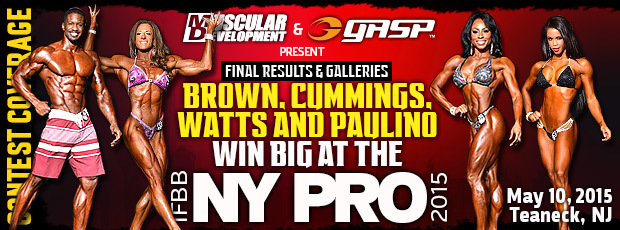
This year’s New York Pro was held on a Sunday, which is rather unusual since bodybuilding events characteristically take place on a Friday or Saturday. Another odd feature about the date selected for the New York Pro was that it coincided with Mother’s Day. I can’t imagine trying to tell my mother that I couldn’t come out to see her on Mother’s Day because I had to compete on that day! At any rate, there was a great turnout for this event:

11 Men’s Bodybuilding competitors
11 Men’s 212 competitors
44 Men’s Physique competitors
32 Women’s Physique competitors
34 Figure competitors
22 Bikini competitors

I find it odd that the New York Pro was moved to Teaneck, New Jersey this year. I have nothing whatsoever against Teaneck, because I won my Pro Card there, but it makes no sense to keep calling this event the New York Pro if it no longer takes place in New York.

Regardless of the name and location of this highly respected bodybuilding event, some very worthy competitors won titles and Olympia qualifications for 2015:

Men’s Bodybuilding: Juan Morel
Men’s 212: Guy Cisterino, Jr.
Men’s Physique: George Brown
Women’s Physique: Michelle Cummings
Figure: Latorya Watts
Bikini: India Paulino

http://www.flexonline.com/ifbb/2015-new-york-pro-results-are?t=2

Clean Eating or Eating Disorder?

Muscle-Building-Dietfood-and-exercies

Most people are familiar with anorexia and bulimia, but there is a lesser known eating disorder which has high prevalence in the world of competitive bodybuilding.  Though it is not classified as an official eating disorder, orthorexia meets the criteria of one:  obsession, social isolation, and emotional lability.

Orthorexia is an obsessive-compulsive disorder which involves an obsession with healthy eating.  The orthorexic will go to great lengths to avoid foods which contain substances he determines to be unhealthy, such as fats, preservatives, processed foods, etc.  For an orthorexic individual, the focus is on the quality of food, which is in stark contrast to the anorexic’s focus on quantity.  Frequently this disorder may begin as a normal diet or an effort to eat in a healthier fashion, but after some time is taken to the extreme.  In the quest for pure, clean foods, the sufferer becomes obsessed and self-imposed food restrictions become a primary focus.

The distinction between normal individuals and orthorexics is that the health conscious person will practice moderation and won’t wallow in guilt if they indulge in a food which may be deficient in healthy nutrients.  In contrast, the orthorexic individual will obsess about the quality of food and will feel extremely guilty after straying from a self-imposed rigid diet.

Physical Signs and Symptoms of Orthorexia:

  • Because orthorexics limit themselves to foods they deem healthy, they may appear emaciated or malnourished

Behavioral Signs and Symptoms of Orthorexia:

  • Social isolation
  • A tendency to eat alone
  • Aversion to certain foods which have been deemed dangerous or disgusting
  • Criticism of people who don’t engage in healthy eating
  • Experience extreme pleasure in eating properly
  • Feel guilty when they deviate from a rigid diet
  • Strong desire to eat forbidden foods when under stress
  • Has difficulty eating foods prepared in a restaurant or by another person

Medical Signs and Symptoms of Orthorexia:

  • Malnutrition
  • Hypotension
  • Weakness
  • Calcium deficieny
  • Anemia in those who avoid animal protein
  • Decreased gastric motility
  • Abdominal bloating
  • Constipation

An essential element in contest preparation for competitive bodybuilding, physique, fitness, figure and bikini divisions is rigid meal planning.  As a result of this, competitors often dance along, and sometimes cross, the fine line that separates clean eating from a psychopathological relationship with food.  When taken to the extreme, sufferers may experience medical signs of malnutrition similar to anorexia.  While it is common for a competitor to experience feelings of guilt when a specific contest prep meal plan is not adhered to, warning flags should go up when a competitor becomes so obsessed with such transgressions that compensatory behaviors are adopted, such as excessive cardio sessions, laxative usage or starvation.   If such behaviors are commonplace for an individual, behavioral intervention will become necessary in order to restore one’s emotional and physical well-being.

Since prepping for competitions places excessive pressure on an individual and underscores the pursuit of “perfection” in the sport, orthorexic behavior may be so irresistible that it is rationalized as a necessary component of one’s prep.  This in and of itself makes orthorexia particularly insidious and dangerous.

Eating Disorders – An Overview

160042-164442

Modern society has continually sent a clear message that a slender physique is the most attractive and desirable.  This has not only driven the success of the diet industry as people have scrambled to attain the ideal body, but has also served as the catalyst for numerous eating disorders such as anorexia and bulimia.  These disorders are often encountered in the world of competitive sports and bodybuilding as competitors develop a warped perspective on their relationship with food.  The nature of competition draws driven, obsessive personality types who by fixating on performance goals often will develop an excessive desire to maintain what they describe as clean eating.  If an athlete fails to obtain the ideal leanness which a sport requires, the reaction is often manifested in chronic undereating in a desperate effort to drop fat.  The greatest irony is that many athletes and competitors who are regarded as having the most desirable physiques are beset with poor body image and low self-esteem.

Another relatively common scenario is for a competitor to measure his or her self-worth by how rigidly he or she adheres to a strict meal regimen.  Some individuals will have a strong desire to engage in emotional eating, indulging in what they deem forbidden foods, only to wallow in excessive guilt and self-doubt as a result.  Eating disorders in general will cause an individual to feel tremendous anxiety when in social environments where food is served, so these situations are usually avoided.

It is important not only to recognize the warning signs of an eating disorder, but to also understand how it can undermine one’s fitness goals.  Furthermore, these disorders are extremely deleterious to one’s health and psychological well-being.

BULIMIA:

Bulimia is characterized by compulsive episodes of excessive food consumption followed by purging behaviors such as laxatives, diuretics, excessive training or self-induced vomiting in an effort to compensate for the irregular behavior.  The most common trigger for such binges is the excessive calorie restriction which is seen with dieting or at times with contest prep.  The body responds to starvation by producing powerful cravings which may be irresistible.  However, once the binge has occurred, the individual usually feels a sense of failure since the diet was not strictly adhered to, often causing more binge eating to occur.  A period of purging follows soon afterwards, but the most common purging methods fail to rid the body of all the calories consumed.  On average, laxatives rid the body of 10% of the calories eaten, while vomiting will eliminate 50% or fewer of the calories.

Physical Signs and Symptoms of Bulimia:

  • Normal weight or slightly over ideal weight.
  • Frequent weight fluctuations.
  • Discolored teeth, tooth decay and mouth sores.
  • Calluses or scars on knuckles.
  • Puffy cheeks.
  • Smell of vomit.

Behavioral Signs and Symptoms of Bulimia:

  • Covert food consumption – Bulimics will engage in binges alone
  • Inability to stop eating until abdominal pain and distension set in
  • A pattern of overeating followed by fasting
  • Makes frequent trips to restroom immediately after eating
  • Using laxatives, diuretics or enemas after a binge
  • Excessive high intensity exercise following a binge

Medical Signs and Symptoms of Bulimia:

  • Chronic constipation
  • Abdominal pain
  • Dehydration
  • Lethargy
  • Swelling of hands and feet
  • Chronic sore throat or hoarseness
  • Broken blood vessels in eyes
  • Weakness or dizziness
  • Acid reflux or ulcer.
  • Loss of menstrual periods in women


ANOREXIA:

The hallmark of anorexia is excessive food restriction coupled with a severe, irrational fear of weight gain.  These individuals have distorted body images which cause them to feel that they are overweight despite the fact that the majority of sufferers are underweight.  Anorexia sufferers are usually high achievers who harbor perfectionist tendencies which may lean towards or even reside within obsessive compulsive disorder.  However, these individuals feel socially isolated and are overcome with a sense of failure and a loss of control over their own lives.  Ironically, the anorexic behavior of forced starvation which gives one a sense of control eventually takes over and the individual is unable to interrupt the pattern.

Physical Signs and Symptoms of Anorexia:

  • Loss of a considerable amount of weight in a relatively short period of time
  • Wears baggy clothes to hide weight loss
  • Appears emaciated or gaunt
  • Cold hands and feet
  • General hypothermia
  • Dry skin
  • Loss of muscle mass
  • Constipation
  • Hair loss
  • Lanugo (fine, downy hair) on face or back
  • Brittle nails
  • Yellow or grayish appearance to the skin

Behavioral Signs and Symptoms of Anorexia:

  • Complains of being fat despite being dangerously thin
  • Obsessed with nutritional information of food, especially calories and grams of fat
  • Will only eat certain foods
  • Refuses to eat in public or will only eat a small morsel of food
  • Exercises obsessively and becomes very upset if something interrupts plans to exercise
  • Usually avoids fatty foods, fried foods, animal products, bread
  • Often become vegetarians
  • Constantly counts calories in foods eaten
  • Either weighs oneself constantly or avoids being weighed at all costs
  • Eats in private
  • Inability to concentrate
  • Irritability
  • Appears anxious
  • Depression
  • Socially withdrawn
  • Never stops moving or refuses to sit down
  • Obsessive avoidance of food

Medical Signs and Symptoms of Anorexia:

  • Headaches
  • Fainting
  • Dizziness
  • Lethargy
  • Insomnia
  • Lowered blood pressure
  • Lowered heart rate with weak pulse
  • Heart palpitations
  • Hypoglycemia
  • Shortness of breath
  • Loss of menstrual periods
  • Decreased white blood cell count

You Know You Are A Die-Hard Competitor When…

292570_402146109815831_628597727_n
• You eat most of your meals out of plastic containers
• You avoid restaurants because it is too tough to find clean choices
• You will only travel somewhere if there is a gym nearby
• You think vascularity and sweat are sexy
• You gaze longingly at forbidden foods
• You know what a protein bomb is!
• The smell of tanning solution is very familiar to you
• If you are a lady, you know what it means to use a cup in the restroom
• You have a love-hate relationship with asparagus, fish, and/or chicken
• You walk around your house in clear heels and practice posing when showtime approaches
• You know what two-a-days are
• You are accustomed to using dark sheets and towels post-tan

Competitors, can you think of any others you would like to share here?

These Otomix Leggings Look Great!

Otomix3 2nd page sexy leggings reg 24 now 16.88 style L333 black

These leggings are reversible, so you can wear them with the zipper in the front or in the back. They are incredibly comfortable and can be worn for workouts, but I love wearing these with a cute top and boots for a night out! They fit so well and look fantastic.

Regular price is $24 but they are on sale now for $16.88.

Style L333 Black

Call Otomix at 1-800-597-5425 FREE to order.

otomix4 2nd page sexy leggings reg 24 now 16.88 style L333 black

Use Social Media To Blow Up Your Brand

social media logos
Those of you in the world of fitness and bodybuilding who have aspirations of becoming the next big fitness sensation have chosen an amazing industry, but it is saturated and the competition is fierce. These days, the most successful fitness people have built social media followings which help to get them on the map and generate interest in what they have to offer. The individuals who really stand out are the ones who know their target audience’s interests and needs, and accommodate them by posting relevant material which continues to lure their followers back to their profiles.

It doesn’t really matter how buff, attractive, or photogenic you are if you don’t have an understanding of how to appeal to your audience. It is no surprise that the pool of beautiful, fit people who are scrambling for stardom is considerably large, which makes it vital for fitness people to establish something unique and marketable if they want to rise to the top of the heap. This is where branding comes in. What IS your brand? What is your message? Do you know your target audience?

You can look at trends from social media to see who is following you and target the largest group. Then you need to determine what it is about you that grabs that target audience, whether it is your age, your gender, a specific training style, a distinctive look, a great product, etc. Once you have done that, you can use hashtags on social media to describe your unique qualities and to spark the interest of your target audience. If you have a certain key phrase you use all the time, USE IT! It is astonishing how effective using a key phrase can be in promoting your personality.

There are so many social media platforms now (Twitter, Facebook, Instagram, Pinterest, LinkedIn, Flickr, Vimeo, YouTube, etc.) that you have countless opportunities to build your fan base and also build your brand. Be sure to also tag your friends and industry people who are in your corner and believe in what you have to offer. There’s nothing like having a cheering section of friends who can help spread the word and grow your social media tree.

Make sure you have a website which is updated regularly, and direct your followers to that website whenever possible. Though having a slick website is a nice bonus, it is more important to have SOMETHING for followers to go to, even if it is a free site like Wix or WordPress. Many people will just shy away from fitness personalities who do not have a site established. There are several website template sites which are decent and which provide all the basics you need. Once you have established your brand, you can always upgrade to a more complex or detailed site.

On another note, I am always surprised by how many people want to establish a foothold in the fitness industry, but do not have business cards. I cannot tell you how unprofessional you look when you are trying to network, only to tell interested parties that you do not have a business card to hand to them. Business cards are pretty inexpensive these days, and in some cases free (Vistaprint.com is one site which offers free cards), so GET ON IT!

Progress Pictures Of One Of My Clients

I had recently gotten an email from this client, lamenting what she felt was a lack of progress after ten months. Since she has a significant medical issue, I have been extremely cautious with her nutrition and supplements. Thankfully, she has had no issues with weight training, so I have been more aggressive with her lifting regimen. Upon receiving her email, I pulled up her baseline images from last summer, and WOW. I am very impressed by her progress and so proud of her! The images on the left are from mid-June of last year, and the ones on the right are from April of this year.

6.15.14 front ML 4.24.15 front ML

6.15.14 back ML 4.24.15 back ML