NEW PRODUCT: Click Active All-In-One Coffee And Protein Drink Mix Video Review

I posted this yesterday, but want to make sure you folks really see this campaign, so I am posting it again today…

Please watch my video review of a new and delicious product from Click called Active All-In-One Coffee and Protein Drink Mix. It delivers 25 grams of protein per 2 scoop serving, with only 0.5 gram of fat and 7 grams of carbohydrate. It also has 5.4 grams of BCAA’s, 4.5 grams of glutamine, and is absolutely delicious! I love the fact that I can satisfy a mocha craving while also getting a healthy serving of protein in my system. This will be a great post-workout product to put on ice for the summertime (blended with ice, anyone?), and it will keep me away from those expensive and nutrient-poor coffee drinks from those fancy coffee establishments.

Please click on the special link below to order this amazing and delicious product!

http://click-espresso-protein-drink.myshopify.com?rfsn=538179.f922f8

Taking Youth For Granted – Part 1

stupid

There’s a saying I used to hear quite frequently when I was a teenager, which was, “Youth is wasted on the young.” What’s funny is that I can’t remember who used to say it, but I heard it enough times that it seeded in my brain as part of my belief system as I got older. The feeling of being invincible, and the illusion that time is limitless, can fool youngsters into thinking that all the opportunities which they are flooded with will always be there. They may be too busy having fun and partying to build a foundation for the future. Though I had enough common sense to keep myself out of trouble most of the time when I was younger, I had moments when I would do something foolish or rash, and in those moments, I would jeopardize my own chances of success. However, despite the times I stumbled, I was able to accomplish more than the average young adult, so perhaps youth wasn’t completely wasted on someone like me.

I have come across some very disciplined young adults who were able to explore and develop their talents without trudging into the muck of ambivalence and laziness. They were obviously encouraged by parents and educators to formulate dreams and pursue related goals. These impressive overachievers definitely didn’t waste their youth, but have transformed their vibrant energy, passion, and creativity into lofty achievements. They also have shown a tendency to create a real impact on others through their ingenuity, their compassion, and their drive, and by doing so, have become leaders who will leave a true legacy.

There’s an odd and delicate balance which young people are challenged to figure out. Though they are encouraged to grab life by the horns and go for it, they are also expected to have the sense to pace themselves and stick to the straight and narrow course during a time when distractions and temptations abound. It’s no mystery why some twenty-somethings may find themselves in a situation in which they have to repair their finances, become centered, and undo all the damage which playing or partying too much can create. I know I wouldn’t want to be a youngster again, and I certainly wouldn’t want to experience my youth in this day and age.

The best advice I can give to someone who is young is to BUILD FOR THE FUTURE. Sure, it can be fun to party on the weekends and hobnob with the movers and shakers in the social media world, but make sure you are working towards goals which enable you to grow as a person, which ensure financial stability for the future, and which give you a platform on which you can impact the world. Make sure that you are doing things that your parents can be proud of, and which your future children won’t be embarrassed by. Everything you do has some sort of impact, even if that impact is only on yourself.

The Language Of Medicine

stethoscope

I often forget that my brain was heavily bombarded with tens of thousands of medical terms, because I have no use for about 95% of those words in my daily life. But there is a vast ocean of multisyllabic words swirling around in the depths of my memory which would make any logophile giddy with delight. Back when I was in grade school, I had already cultivated a strange fascination for long coils of letters, a fascination which became an advantage as I was able to spell difficult words with ease, and could edit my friends’ term papers fluidly.

Once I reached my college years, I immersed myself in the world of complex vocabulary by concentrating on the sciences. I thought the terminology used in chemistry, comparative anatomy, physiology, and microbiology was absolutely beautiful, and enjoyed learning it all. Even now, when I alight upon a scientific passage or book (a recent favorite was The Disappearing Spoon by Sam Kean), I almost get giddy with anticipation of what I am about to read. Though I appreciate the world of medical nomenclature and can pronounce the tongue-twisting jumbles of letters, I no longer have the same passion for them I once had.

I know that one of the reasons why I no longer adore words like cholelithiasis (gallstones) is because of my deep immersion in medical language for so long. I became tired of having to memorize massive amounts of information, and I realize there are esoteric medical terms taking up valuable real estate in my brain, terms which I will likely never use because they delve into subspecialties like hematologic oncology or cardiothoracic surgery, neither of which I discuss at length. I still remember most of the mnemonics which are a necessary part of the memorization process and am thankful for their existence. But there are only a few which stuck, the ones which have utility in my current practice of medicine, such as OOOTTAFAGVAH, SEXLAB, and “Some Lovers Try Positions That They Can’t Handle” (I will leave these undefined for those of you who like puzzles).

In some ways I guess I could say that I am bilingual, since medical speak is a completely different entity from regular, everyday speech. When my medical hat is on, I shift in to medical language effortlessly, and occasionally find it challenging to replace descriptive medical vocabulary with layperson terms. Usually the blank stare from a patient or friend is enough to jar me from my speech patterns and find more general words to describe a physiological process, a disease, or a treatment course. I suppose the science nerd in me will remain very much intact as a result of the vocabulary floating around in my noggin!

What Do You Want To See On My Blog?

Noel Denim

Hey everyone! I wanted to check in with you to see what you would like to see on my blog. Since I have been posting every single day, it can be a real challenge to come up with content to post. For that reason, I am not as prone to write lengthy posts.

I have also decided to change my posting frequency to three days per week from now on. I will post every Tuesday, Thursday and Saturday or Sunday.

Here is a list of topics which I typically cover:

Preventative health
Optimal health
Brain health
Medical conditions
Anti-aging
Nutrition
Healthy recipes
Supplements
Weightlifting
Exercise
Fitness
Bodybuilding
Sports
Cosmetic Dermatology
Skincare
Makeup
Personal grooming
Empowerment
Modeling
Branding
Fashion
Bodybuilding contests and prep
Music
Pets
Relationships
Travel
Comedy
Entertainment

I welcome suggestions from you! Please reply to this post and let me know how I can best accommodate your interests.

Thanks so much for following my blog!

Learn a Foreign Tongue To Protect Your Brain

o-KID-LEARNING-LANGUAGE-facebook-806x393

Please read my original post at:

http://xactmind.com/xc/articles/learn-a-foreign-tongue-to-protect-your-brain/

By: Dr. Stacey Naito – Physician and IFBB Pro

Bilingual Brains

Numerous research studies have revealed that people who speak two or more languages possess greater skill in multitasking and paying attention than those who only speak one language. In addition, a 2013 study discovered that individuals who spoke two languages developed the signs of dementia more than four years later than people who only spoke one language, which strongly suggests that being bilingual may help to delay the onset of dementia.

Never Too Late

Scientists have determined that the earlier one learns a second language, the greater the protective benefits against dementia, but it is never too late to learn a foreign tongue, even if you only learn a bit of the language. Be ready for a challenge, though, because most aspects of learning a foreign language later in life will be more difficult.

One clear benefit which older individuals have over youngsters when learning a foreign language is that they have much larger vocabularies which are often as large as those of native speakers. However, the challenges which exist for older people learning a foreign tongue are numerous. First of all, phonemes, or sounds, of a language are very easily picked up by children, but are much more difficult for adults to learn. Secondly, adults automatically hear a foreign language through the filter of their native language, which is not the case in toddlers. As a result, the older learner may have issues with pronunciation.

A toddler’s brain has about fifty percent more neuron connections than an adult brain. The extra connections are a safeguard against potential early trauma, but are also critical for early language acquisition. After a child reaches six years of age, adaptability declines as a result of the brain’s need to acquire other skills during development. This adaptability, also known as neuroplasticity, continues to plummet throughout the years, making it more difficult to obtain new language skills.

Several studies have suggested that learning a foreign language later in life can delay age-related cognitive decline, as well as delay the onset of dementia. In addition, the mental challenge of learning a new language during later years improves executive function, which is important for mental flexibility.

Life Is Never Boring

10353289_10202786714921210_2569317334354210816_o

Any time I hear someone complain about how predictable, steady and boring life is, I chuckle, because I have never been able to make that statement about my own life. This doesn’t mean that my life is unstable, but that I have always had so much going on that there hasn’t been time for boredom to set in. I truly am CONSTANTLY doing something, and I have a habit of packing a lot into each day. I understand that some people are stuck in boring jobs, so I am thankful that I love being a physician, and love the environments in which I work. I am fortunate to be involved in pursuits which I am passionate about, and which give me an incredible sense of fulfillment. Whether I am doctoring, writing articles, modeling, doing booth work, creating nutrition and workout regimens, or working on business strategies or branding, so much is going on inside my head that I couldn’t possibly get bored.

I will admit that aspects of my regular daily routine could be seen by others as a bit dull, since I head to the gym around the same time, and I usually spend weeknights writing. However, I typically cram so much stuff in between those activities that I spend the entire day rushing around, trying to get it ALL done. The overachiever in me can’t seem to let go of the notion that the best days are the ones in which all the important items on the to do list are checked off. Even on the weekends, I spend the majority of my time trying to catch up on articles and plans which I wasn’t able to get to during the week.

Another feature of my life is that I wear so many hats that I have to constantly shift gears. Though it puts a lot of pressure on me, I prefer to have a lot of variety in my day, talking about medicine, fitness, skincare, nutrition, and business. My nerves can get pretty frazzled from the endless list of things to do, but I know I wouldn’t be able to deal with sitting around all day with nothing to do. I think partially because I have chosen a number of very interesting fields to pursue, and partially because I seem to attract a lot of movement and energy, circumstances also seem to keep me on my toes, and also keep boredom at bay. About 25 years ago, I remember someone telling me that I moved at a high “burn rate”, that my spirit had a lot of karmic energy which would attract lots of activity and movement. Despite its mystical tone, the statement struck me, and I can honestly say that it fits the cadence of my entire life.

If you find that you are bored with your life, it’s time to examine what might be holding you in a rut. Maybe you watch a lot of television. If so, turn off the television and read a good book. If it has been months or even years since you exercised, join a gym and commit to a regular workout schedule. Go out with friends. If you have pockets of time in which you are looking for things to do, try exploring your city or town by visiting other neighborhood stores, parks and restaurants. Cultivate a new hobby. Volunteer.

You can turn a boring life into a fulfilling, fun, exciting one by doing new things. Have fun!

Uncompromised

Breaking stereotypes!

Breaking stereotypes!

I am always being challenged to pick one career that defines me, and it drives me nuts. When people find out that I am a medical doctor, they struggle with the stereotype of what they expect doctors to be like, in other words, very conservative in dress and demeanor, and without any flavor or personality. Well, I’ve got news for you. I will NEVER be a typical doctor. And please don’t doubt my credentials or schooling. I am NOT a nurse (not that there is anything wrong with this highly respected profession), I am a fully licensed and board certified physician.

A huge project came my way recently, and I was selected for it, only to have the decision-maker flip out over my fitness and modeling images and reverse the decision. I was stunned and dejected, but after reflecting on the whole incident, I began to get angry. Part of the problem was that the decision-maker was a complete hypocrite, pretending to be squeaky clean, but who openly praised one of the dirtiest human beings to ever alight on the entertainment scene. To coin an analogy, at the root of this was a case of the bride being upstaged by another lady wearing white. Mind you, I never intentionally wore white, but hey, my doctor’s coat is white.

I am every bit as much about fitness as I am about medicine, and I shouldn’t have to choose one over the other. I am damned proud of what I have accomplished in fitness, especially because I took things to the next level in my forties, not when I was a young whipper-snapper. If people are confused by the sampler plate philosophy by which I live, too bad. Yes, I am a board certified physician AND a degreed fitness professional, IFBB Pro, certified nutrition coach, writer, sponsored athlete and contest prep coach. I know it’s unusual, but why is that so hard for people to grasp? I mean, here I am, doing all of that, sending a message to the world that no one should have to be one-dimensional and boring.
1538624_10202090935769442_1829315007_n
I don’t hide from myself. I am honest. I have sass, and I speak my mind. I am proud of what I have achieved in my life, and I will NOT hide parts of myself which some overly judgmental people may have a problem with. I am NOT going to apologize for having a sense of humor, for using cuss words here and there (though I don’t use them while seeing patients). I am not going to paint a false picture of who I am. If you don’t like what I am doing, no worries. Move on.

If you find that you are compromising your own vision, dreams, or goals, perhaps you need to re-examine why you are allowing that to occur. If you subscribe to the no limits philosophy, then you would never even consider pulling the reins back. I will always encourage driven people to go for whatever they want, and if it doesn’t fit in with the conventions of one of their chosen careers or hobbies, even better. Break stereotypes and show people what you are made of! Don’t hide all the facets which make you who you are!

R.I.P. Dr. Oliver Sacks

Oliver Sacks

Dr. Oliver Sacks, eminent neurologist and brilliant author who explored strange neurological aberrations in books such as “The Man Who Mistook His Wife for a Hat,” died on August 30th at his home in Manhattan at the age of 82.

I was stunned when I read his post on Facebook in February which revealed that he had terminal liver cancer. The original source of the cancer was a melanoma in his eye which had been treated nine years ago.

Dr. Sacks was not only a highly respected neurologist and researcher, he was a prolific and incredibly gifted writer. More than a million copies of his books are in print in the United States, though the book he was most well known for was “Awakenings,” which was made into a movie starring Robin Williams. He was so popular that he received about 10,000 letters a year. Regarding the plethora of letters he received, he stated, “I invariably reply to people under 10, over 90 or in prison.”

I first met Dr. Sacks in 1986 during a book reading of “The Man Who Mistook His Wife For A Hat.” Though I had known for years that I wanted to become a physician, and that I had a specific passion for neurology, my meeting with Dr. Sacks re-ignited that passion. I devoured that book, and from that point on was a devoted fan, not only of his writing, but of him as a clinician and humanitarian. I have every book which Dr. Sacks wrote and thoroughly enjoyed reading them (I have yet to read “Hallucinations” and “On The Move” which were his most recent tomes). I was thrilled when Dr. Sacks had a book signing for “Oaxaca Journal” in 2002, and I made sure to attend that signing, speak with him, and have him sign my copy. I was a physician by then, and in the middle of residency training. Though I had ended up in family practice rather than neurology, my fascination for neurological cases was very much intact, and my admiration for Dr. Sacks only increased over the years.

In tribute to one of my medical idols, I am posting an essay which Dr. Sacks wrote in February of this year for the New York Times.

Original post can be found at:
http://www.nytimes.com/2015/02/19/opinion/oliver-sacks-on-learning-he-has-terminal-cancer.html

A MONTH ago, I felt that I was in good health, even robust health. At 81, I still swim a mile a day. But my luck has run out — a few weeks ago I learned that I have multiple metastases in the liver. Nine years ago it was discovered that I had a rare tumor of the eye, an ocular melanoma. The radiation and lasering to remove the tumor ultimately left me blind in that eye. But though ocular melanomas metastasize in perhaps 50 percent of cases, given the particulars of my own case, the likelihood was much smaller. I am among the unlucky ones.

I feel grateful that I have been granted nine years of good health and productivity since the original diagnosis, but now I am face to face with dying. The cancer occupies a third of my liver, and though its advance may be slowed, this particular sort of cancer cannot be halted.

It is up to me now to choose how to live out the months that remain to me. I have to live in the richest, deepest, most productive way I can. In this I am encouraged by the words of one of my favorite philosophers, David Hume, who, upon learning that he was mortally ill at age 65, wrote a short autobiography in a single day in April of 1776. He titled it “My Own Life.”

“I now reckon upon a speedy dissolution,” he wrote. “I have suffered very little pain from my disorder; and what is more strange, have, notwithstanding the great decline of my person, never suffered a moment’s abatement of my spirits. I possess the same ardour as ever in study, and the same gaiety in company.”

I have been lucky enough to live past 80, and the 15 years allotted to me beyond Hume’s three score and five have been equally rich in work and love. In that time, I have published five books and completed an autobiography (rather longer than Hume’s few pages) to be published this spring; I have several other books nearly finished.

Hume continued, “I am … a man of mild dispositions, of command of temper, of an open, social, and cheerful humour, capable of attachment, but little susceptible of enmity, and of great moderation in all my passions.”

Here I depart from Hume. While I have enjoyed loving relationships and friendships and have no real enmities, I cannot say (nor would anyone who knows me say) that I am a man of mild dispositions. On the contrary, I am a man of vehement disposition, with violent enthusiasms, and extreme immoderation in all my passions.

And yet, one line from Hume’s essay strikes me as especially true: “It is difficult,” he wrote, “to be more detached from life than I am at present.”

Over the last few days, I have been able to see my life as from a great altitude, as a sort of landscape, and with a deepening sense of the connection of all its parts. This does not mean I am finished with life.

On the contrary, I feel intensely alive, and I want and hope in the time that remains to deepen my friendships, to say farewell to those I love, to write more, to travel if I have the strength, to achieve new levels of understanding and insight.

This will involve audacity, clarity and plain speaking; trying to straighten my accounts with the world. But there will be time, too, for some fun (and even some silliness, as well).

I feel a sudden clear focus and perspective. There is no time for anything inessential. I must focus on myself, my work and my friends. I shall no longer look at “NewsHour” every night. I shall no longer pay any attention to politics or arguments about global warming.

This is not indifference but detachment — I still care deeply about the Middle East, about global warming, about growing inequality, but these are no longer my business; they belong to the future. I rejoice when I meet gifted young people — even the one who biopsied and diagnosed my metastases. I feel the future is in good hands.

I have been increasingly conscious, for the last 10 years or so, of deaths among my contemporaries. My generation is on the way out, and each death I have felt as an abruption, a tearing away of part of myself. There will be no one like us when we are gone, but then there is no one like anyone else, ever. When people die, they cannot be replaced. They leave holes that cannot be filled, for it is the fate — the genetic and neural fate — of every human being to be a unique individual, to find his own path, to live his own life, to die his own death.

I cannot pretend I am without fear. But my predominant feeling is one of gratitude. I have loved and been loved; I have been given much and I have given something in return; I have read and traveled and thought and written. I have had an intercourse with the world, the special intercourse of writers and readers.

Above all, I have been a sentient being, a thinking animal, on this beautiful planet, and that in itself has been an enormous privilege and adventure.

Correction: February 26, 2015
Because of an editing error, Oliver Sacks’s Op-Ed essay last Thursday misstated the proportion of cases in which the rare eye cancer he has — ocular melanoma — metastasizes. It is around 50 percent, not 2 percent, or “only in very rare cases.” When Dr. Sacks wrote, “I am among the unlucky 2 percent,” he was referring to the particulars of his case. (The likelihood of the cancer’s metastasizing is based on factors like the size and molecular features of the tumor, the patient’s age and the amount of time since the original diagnosis.)

Will You Ever See Your Abs?

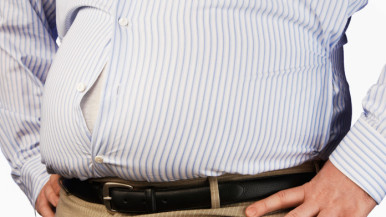
real fat man

One of the most common questions I get from people is how to lose belly fat and get defined abs. Since a tight midsection is one of the most enviable and desirable body attributes, I am never surprised by these inquiries. I have noticed that there is a relatively common misconception that defined abs come solely from exercise, which is definitely not the case. While a certain amount of development in the abdominal muscles must be present for the washboard appearance which many people covet, an individual’s food choices often interfere with the quest for six-pack abs.

If you really want to see abdominal definition, you need to eliminate the following foods from your diet:

SUGAR
Processed foods (including crackers, luncheon meats, cheese, chips, breads)
Foods high in saturated fat (red meat, fast foods)
Salad dressing
Alcohol

Though it may be difficult at first to eliminate the foods listed, you will notice over time that your palate will adjust and that food cravings will subside. That’s because processed foods and sugar set up a vicious cycle in which you crave more bad foods when you consume them. Cut them out of your meal plan, and your cravings will subside. Another benefit of avoiding these foods is that you will avoid the rapid spikes in blood sugar and insulin which they trigger. Why is this important? Because sharp spikes in insulin release promote increased fat deposition in the midsection.

If your abdominal muscles haven’t seen a sit-up in years, you should also incorporate abdominal exercises into your regimen. Here are my three favorite abdominal exercises which work for everyone, from beginners to advanced athletes:

bicycle crunches
Katie-Bicycle-Crunches
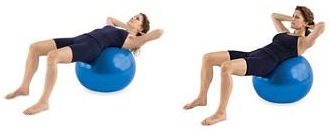
ball crunches
basic-crunches-on-stability-ball
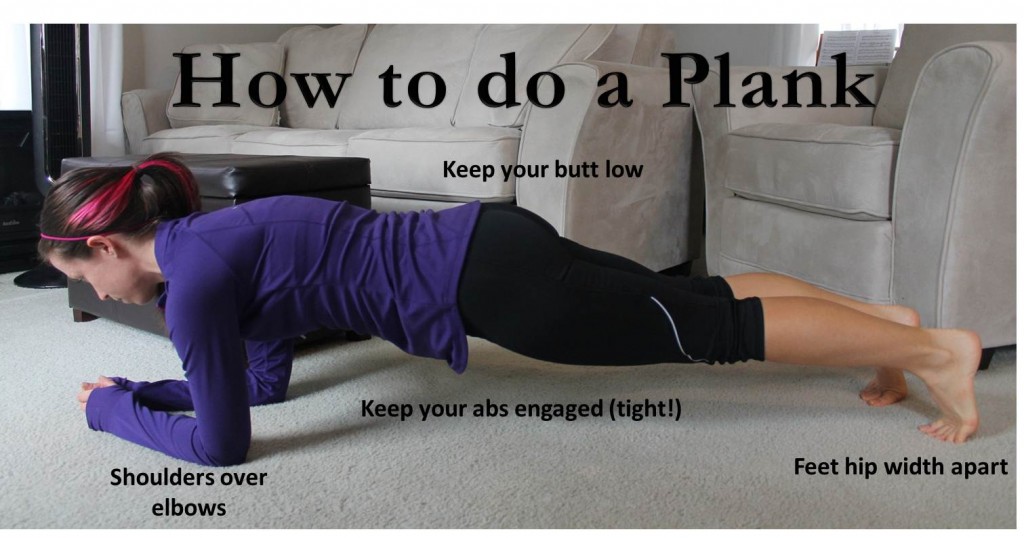
planks
Plank-1024x538

If you are consistent with making healthy food choices and getting regular exercise, chances are good that you will see a toned tummy if you are already at a normal weight. If you are overweight, the healthier food choices will help you to slim down and get rid of belly fat, putting you on course for a tighter midsection.