R.I.P. Dr. Oliver Sacks

Oliver Sacks

Dr. Oliver Sacks, eminent neurologist and brilliant author who explored strange neurological aberrations in books such as “The Man Who Mistook His Wife for a Hat,” died on August 30th at his home in Manhattan at the age of 82.

I was stunned when I read his post on Facebook in February which revealed that he had terminal liver cancer. The original source of the cancer was a melanoma in his eye which had been treated nine years ago.

Dr. Sacks was not only a highly respected neurologist and researcher, he was a prolific and incredibly gifted writer. More than a million copies of his books are in print in the United States, though the book he was most well known for was “Awakenings,” which was made into a movie starring Robin Williams. He was so popular that he received about 10,000 letters a year. Regarding the plethora of letters he received, he stated, “I invariably reply to people under 10, over 90 or in prison.”

I first met Dr. Sacks in 1986 during a book reading of “The Man Who Mistook His Wife For A Hat.” Though I had known for years that I wanted to become a physician, and that I had a specific passion for neurology, my meeting with Dr. Sacks re-ignited that passion. I devoured that book, and from that point on was a devoted fan, not only of his writing, but of him as a clinician and humanitarian. I have every book which Dr. Sacks wrote and thoroughly enjoyed reading them (I have yet to read “Hallucinations” and “On The Move” which were his most recent tomes). I was thrilled when Dr. Sacks had a book signing for “Oaxaca Journal” in 2002, and I made sure to attend that signing, speak with him, and have him sign my copy. I was a physician by then, and in the middle of residency training. Though I had ended up in family practice rather than neurology, my fascination for neurological cases was very much intact, and my admiration for Dr. Sacks only increased over the years.

In tribute to one of my medical idols, I am posting an essay which Dr. Sacks wrote in February of this year for the New York Times.

Original post can be found at:
http://www.nytimes.com/2015/02/19/opinion/oliver-sacks-on-learning-he-has-terminal-cancer.html

A MONTH ago, I felt that I was in good health, even robust health. At 81, I still swim a mile a day. But my luck has run out — a few weeks ago I learned that I have multiple metastases in the liver. Nine years ago it was discovered that I had a rare tumor of the eye, an ocular melanoma. The radiation and lasering to remove the tumor ultimately left me blind in that eye. But though ocular melanomas metastasize in perhaps 50 percent of cases, given the particulars of my own case, the likelihood was much smaller. I am among the unlucky ones.

I feel grateful that I have been granted nine years of good health and productivity since the original diagnosis, but now I am face to face with dying. The cancer occupies a third of my liver, and though its advance may be slowed, this particular sort of cancer cannot be halted.

It is up to me now to choose how to live out the months that remain to me. I have to live in the richest, deepest, most productive way I can. In this I am encouraged by the words of one of my favorite philosophers, David Hume, who, upon learning that he was mortally ill at age 65, wrote a short autobiography in a single day in April of 1776. He titled it “My Own Life.”

“I now reckon upon a speedy dissolution,” he wrote. “I have suffered very little pain from my disorder; and what is more strange, have, notwithstanding the great decline of my person, never suffered a moment’s abatement of my spirits. I possess the same ardour as ever in study, and the same gaiety in company.”

I have been lucky enough to live past 80, and the 15 years allotted to me beyond Hume’s three score and five have been equally rich in work and love. In that time, I have published five books and completed an autobiography (rather longer than Hume’s few pages) to be published this spring; I have several other books nearly finished.

Hume continued, “I am … a man of mild dispositions, of command of temper, of an open, social, and cheerful humour, capable of attachment, but little susceptible of enmity, and of great moderation in all my passions.”

Here I depart from Hume. While I have enjoyed loving relationships and friendships and have no real enmities, I cannot say (nor would anyone who knows me say) that I am a man of mild dispositions. On the contrary, I am a man of vehement disposition, with violent enthusiasms, and extreme immoderation in all my passions.

And yet, one line from Hume’s essay strikes me as especially true: “It is difficult,” he wrote, “to be more detached from life than I am at present.”

Over the last few days, I have been able to see my life as from a great altitude, as a sort of landscape, and with a deepening sense of the connection of all its parts. This does not mean I am finished with life.

On the contrary, I feel intensely alive, and I want and hope in the time that remains to deepen my friendships, to say farewell to those I love, to write more, to travel if I have the strength, to achieve new levels of understanding and insight.

This will involve audacity, clarity and plain speaking; trying to straighten my accounts with the world. But there will be time, too, for some fun (and even some silliness, as well).

I feel a sudden clear focus and perspective. There is no time for anything inessential. I must focus on myself, my work and my friends. I shall no longer look at “NewsHour” every night. I shall no longer pay any attention to politics or arguments about global warming.

This is not indifference but detachment — I still care deeply about the Middle East, about global warming, about growing inequality, but these are no longer my business; they belong to the future. I rejoice when I meet gifted young people — even the one who biopsied and diagnosed my metastases. I feel the future is in good hands.

I have been increasingly conscious, for the last 10 years or so, of deaths among my contemporaries. My generation is on the way out, and each death I have felt as an abruption, a tearing away of part of myself. There will be no one like us when we are gone, but then there is no one like anyone else, ever. When people die, they cannot be replaced. They leave holes that cannot be filled, for it is the fate — the genetic and neural fate — of every human being to be a unique individual, to find his own path, to live his own life, to die his own death.

I cannot pretend I am without fear. But my predominant feeling is one of gratitude. I have loved and been loved; I have been given much and I have given something in return; I have read and traveled and thought and written. I have had an intercourse with the world, the special intercourse of writers and readers.

Above all, I have been a sentient being, a thinking animal, on this beautiful planet, and that in itself has been an enormous privilege and adventure.

Correction: February 26, 2015
Because of an editing error, Oliver Sacks’s Op-Ed essay last Thursday misstated the proportion of cases in which the rare eye cancer he has — ocular melanoma — metastasizes. It is around 50 percent, not 2 percent, or “only in very rare cases.” When Dr. Sacks wrote, “I am among the unlucky 2 percent,” he was referring to the particulars of his case. (The likelihood of the cancer’s metastasizing is based on factors like the size and molecular features of the tumor, the patient’s age and the amount of time since the original diagnosis.)

Will You Ever See Your Abs?

real fat man

One of the most common questions I get from people is how to lose belly fat and get defined abs. Since a tight midsection is one of the most enviable and desirable body attributes, I am never surprised by these inquiries. I have noticed that there is a relatively common misconception that defined abs come solely from exercise, which is definitely not the case. While a certain amount of development in the abdominal muscles must be present for the washboard appearance which many people covet, an individual’s food choices often interfere with the quest for six-pack abs.

If you really want to see abdominal definition, you need to eliminate the following foods from your diet:

SUGAR
Processed foods (including crackers, luncheon meats, cheese, chips, breads)
Foods high in saturated fat (red meat, fast foods)
Salad dressing
Alcohol

Though it may be difficult at first to eliminate the foods listed, you will notice over time that your palate will adjust and that food cravings will subside. That’s because processed foods and sugar set up a vicious cycle in which you crave more bad foods when you consume them. Cut them out of your meal plan, and your cravings will subside. Another benefit of avoiding these foods is that you will avoid the rapid spikes in blood sugar and insulin which they trigger. Why is this important? Because sharp spikes in insulin release promote increased fat deposition in the midsection.

If your abdominal muscles haven’t seen a sit-up in years, you should also incorporate abdominal exercises into your regimen. Here are my three favorite abdominal exercises which work for everyone, from beginners to advanced athletes:

bicycle crunches
Katie-Bicycle-Crunches
ball crunches
basic-crunches-on-stability-ball
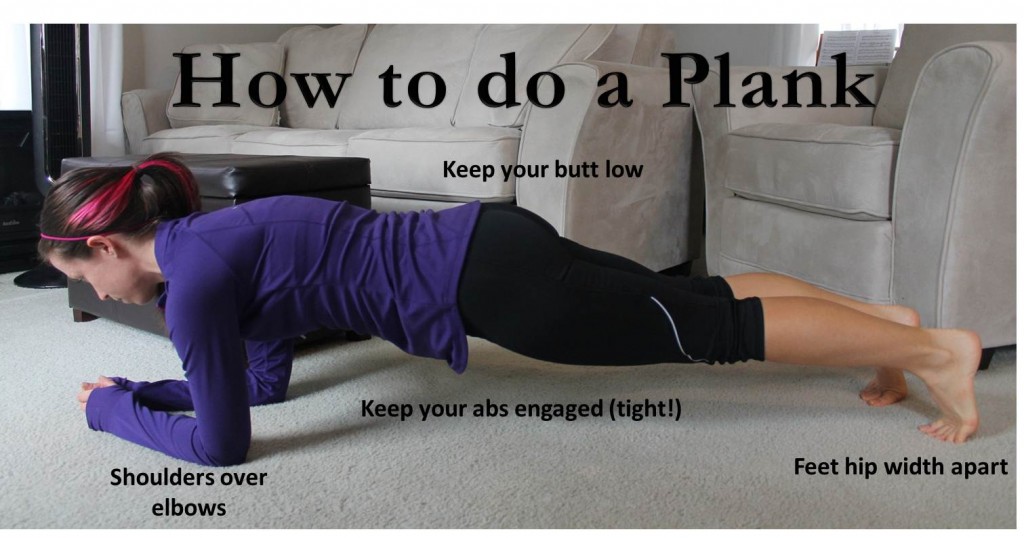
planks
Plank-1024x538

If you are consistent with making healthy food choices and getting regular exercise, chances are good that you will see a toned tummy if you are already at a normal weight. If you are overweight, the healthier food choices will help you to slim down and get rid of belly fat, putting you on course for a tighter midsection.

Time Zones, Reasonable Hours And The People Who Ignore Them

World TimeZones (analog)

I appreciate being able to meet people from other parts of the United States and the globe because they broaden my perspective and remind me that the world is much larger than what I am aware of as I navigate through a typical day in Southern California. As a result of my travels, I communicate relatively regularly with people who live in time zones that are 3 to 19 hours ahead of me. Whenever I attempt to communicate with them, I try to remain acutely aware of what time it is for them in their corner of the world. That is why I become very irritated when I get text messages and messages on Facebook Messenger in the middle of the night from people who are on the other side of the globe and think it’s a good time to initiate a chat with me. Some people are so clueless that when I respond to a message stating that I am trying to sleep, they KEEP MESSAGING me, causing my phone to clang repeatedly like a bell. I realize that I can (and DO) turn off my ringer, turn off my phone or ignore the messages, but there are two reasons why I respond to such communication attempts:

1. If I don’t respond immediately, I must deal with and endless stream of lengthy messages the next morning, scolding me for not responding.
2. I feel strongly compelled to inform the person that it’s late and that I must put an abrupt end to the conversation stream.

To be honest, I know that I test people when I tell them that it is late and that I am going back to sleep. The way to pass my test is to register a quick apology and allow me to rest, but some individuals seem to lack the sense to drop the conversation. One person who was an acquaintance I knew through Facebook contacted me last night past midnight and kept sending messages and images which woke me up repeatedly, so I told him to please stop. Instead of stopping, he explained to me that it was 12 noon where he was. Okay, that’s fine, but why did he keep messaging me, trying to engage me in a conversation I wanted no part of? I told him to please stop sending messages so that I could go back to sleep. His reaction was to KEEP MESSAGING ME. I have been in situations where I had miscalculated the time zone where a friend was, but as soon as I realized my mistake, I sent a quick apology and then stopped communicating with them. Unfortunately, this guy didn’t have the sense to realize how much of a pest he was, so my reward for his persistence was to block him.
doctorisout
I deal with people who think that because I am in the public eye and a physician, I must be on call 24/7. Not so, ESPECIALLY if someone pressures me to take care of their needs immediately when I have no professional responsibility toward them. The sense of entitlement some people have just blows me away! So-called “quick questions” become long, drawn-out consultation requests, and when I don’t have answers, some individuals cop an attitude after I have taken time out of my busy day to be cordial and helpful. It’s enough for me to consider telling everyone that they must submit questions to me during normal business hours, otherwise leave me alone. I must draw a line in the sand because I tend to sacrifice a great deal of my time and resources to help others, and run myself into the ground as a result.

My Education Never Stops

medical_education_-_steth_with_book
For those of you who think that physicians are done with educational pursuits once they complete the rigors of medical school and residency, think again. We must complete continuing medical education credits (aka CME’s) for the length of our medical careers. This means that we must attend conferences and seminars, take online courses, complete quizzes in medical journals and take recertification exams to retain our board certification. Such CME’s aren’t cheap either. The average cost of each credit hour is $25, so when you multiply that by the 150 hours required in each three year cycle for board certified physicians like me, $3,750 has flown out of your wallet, and that doesn’t take into account the association dues for the governing sites which offer the most desirable and relevant CME credits.

Today I decided to chisel away at my ongoing requirements and took two online CME courses. The first was on diabetic foot ulcers and was quite graphic and disgusting, but since I am required to know how to treat this condition, I tolerated the images which flashed on the computer screen. I then took a course on gastrointestinal disorders which was far less graphic but yielded valuable information which was a great review for me. At the end of my two hour review, I received two CME credit hours which will be counted toward the 150 total hours I will need to accumulate by the end of 2015. I wish I could do most of my CME credits online, but there are limits on online coursework. What that basically means is that I am forced to participate in live courses, which means that I must figure out what courses my schedule will accommodate. In addition, live courses are significantly more expensive. I was investigating medical conferences yesterday and discovered that one major conference would set me back by $1,400 just for the registration alone! Since I cannot afford that conference, I must get creative and find other options which aren’t nearly as expensive.

I research CME opportunities every few months for the most respected and accessible opportunities, so I feel confident that I will find cost-effective ways of fortifying my medical knowledge while fulfilling my CME credits before the end of the current cycle. Since I also recently obtained an NAFC Nutrition Coach Certification, I will need to keep up on CEC’s for that as well. Oh, the learning never ends!

Education Is VERY Expensive!

My mother struggled to send me to excellent schools because she wanted me to have the best education possible. I know that she borrowed money from her family to send me through my senior year of high school, which back in those days was pretty expensive at around $4,200. Had she opted to pull me from the school I had been at from fourth grade on and put me in public school during my senior year, I probably would have been really screwed up from the shift, so I am very grateful to her for what she did.

It has been 31 years since I graduated from high school. I figured the cost of an education at my alma mater had risen, but when I checked out the school website to see what tuition was these days, I got the shock of my life. Here is the current tuition schedule, not including books and other fees, for the 2014-2015 school year:

TUITION 2014-2015
Elementary School (K-6) $27,690
Secondary School (7-12) $32,690

How does anyone begin to afford such an expensive education?

For those of you who are curious about my alma mater, you can click on the link here:

http://www.campbellhall.org/index.aspx

Spelling Champ

Far Side SpellingI have been a excellent speller since early childhood, when I exhibited an intuitive sense of word structure. I still remember shocking my teachers during my very brief time in kindergarten (I was advanced to first grade at the age of five after a few weeks in kindergarten) by spelling the word SCISSORS correctly. Apparently my ability to spell this word was rare for my age, and from that point on, I earned the label of great speller. In the fourth grade, at the age of eight, I decided to learn the longest word in the Webster’s Unabridged Dictionary, and I remember it to this day. It is a 45 letter word which is synonymous with a coal miner’s lung disease. Here is the word I memorized:

PNEUMONOULTRAMICROSCOPICSILICOVOLCANOCONIOSIS

I was honestly fascinated with words and loved spelling them and investigating sentence structure as well. This continued throughout grade school, and by sixth grade, I was the kid to beat in the spelling contests my homeroom teacher Mrs. Mackenzie would conduct. The fact that I was unbeatable sparked a great deal of competitive energy in my classmates who wanted nothing more than to make me topple from my spelling perch. At the end of the school year, Mrs. Mackenzie hosted the grand finale spelling bee, which, instead of featuring candy as the grand prize, boasted a gold toned medal hanging from a red ribbon. The instant I saw the medal, a fire was lit inside me and I was determined to take the big title. On the big day, one student after another was defeated by words that proved too challenging for them to spell properly, and I stood there unfazed while they dropped out of the competition. Finally, it wound down to two of us: Martha Phelps and I stood across from each other, glaring daggers at each other. I could feel her anger seething from her, and could tell that she was out to destroy me. She was given a word, puffed out her chest, and began to spell it. F, A, C, E, I, OUS!

WRONG.

I almost jumped out of my skin, I was so excited. Mrs. Mackenzie turned to me. The word was mine to spell. F, A, C, E, T, I, O, U, S. Yes, I emphasized that T, rubbing it in like a smoker would rub out a cigarette on the sidewalk. It was like slow motion after that, when Mrs. Mackenzie turned to the table behind her, grabbed the medal, and handed it to me. A roar erupted as the students who had been standing around watching cheered for me.
gold-medal
Martha was not nearly as pleased as the others were for my victory, and made her displeasure known by punching me in the gut after we had walked from the auditorium back to the classrooms. What a sore loser and a snotty little bitch.

My classmates mentioned my talent when they scribbled in my yearbook at the end of the year. Two girls who were exceptionally poor spellers wrote “spelling medle” and “spelling metal”, which gave me a chuckle. It was a very memorable year for me and I took great pride in achieving an academic pinnacle so early in life. I think it would be fair say my hunger for competing began with spelling bees.

Skip ahead to high school, during which time I served as a living spell-check for my best friend Diane. Diane would call, and after I would say “Hello?”, I would hear a word being uttered, after which I was expected to spell it. Then I would hear, “Thanks” and the conversation would usually come to a quick end. Sometimes Diane would tell me that she had looked up the word, but her spelling was so off the mark that she couldn’t locate the word she was trying to spell. This free best friend service was something I was always happy to do, and because I made myself so readily available with my knack for spelling, this amusing little ritual continued throughout college and beyond.
spell-check-from-any-windows-application
To this day I am still asked by a number of good friends how to spell certain words, and I always oblige without any hesitation. It’s almost automatic for me, when a person asks me how to spell a word, to launch immediately into the spelling, as if I was in Mrs. Mackenzie’s class, standing at my desk, spelling until I was the only student standing. It’s how my brain is programmed and is better than an electronic spelling app!