Success As Measured By Social Media

Kim Kardashian nude selfie

While I am grateful for the boost in exposure and the public following I have built as a result of social media, I believe that for many people, social media channels are arbitrary and false measures of success. I will never believe that someone who builds a huge following on Instagram with a gallery of scantily clad selfies has anything to offer the world except spank-bank material. I also want no part of popularity contests which simply look at the number of followers in determining the value of an athlete, and I am bothered by the idea that my knowledge carries less power than the number of bikini images I have shot over the years. I see that several fitness personalities have built their names almost exclusively on sexy selfies, and truly wonder where they will be after people get tired of just seeing hot pics and no intellectual substance to fall back upon. I honestly think that unless they begin working on their intellectual legacy, no one will remember or care about them in ten years.

Another thing which social media platforms do is that they provide a lottery chance for just about anyone to get his or her 15 minutes of fame. It can be hard to predict what might pass the tipping point and go viral, but when it does, an overnight sensation is often created. The usual prerequisite of talent has been washed away by a jaded, overstimulated society which simply wants to see something different, weird, trashy or disturbing. At the risk of completely offending a certain prominent family, I will boldly state that I think it is entirely unfair that the Kardashian family has basked in the fruits of notoriety and increased wealth simply because they were willing to showcase their affluent, dysfunctional, entitled family dynamics for the world to see. As a strange bonus, the world has been subjected to a full-figured, sexually liberated, narcissistic big sister who derives great joy from slathering her ovoid form with Crisco and posting selfies that scream “It’s all about me”, and certainly not in a way which inspires others. What is so mind-blowing is that this family is globally famous, despite the fact that they fall into the “talentless hack” category.

Even as I write this post, I hope to get a lot of views and likes, and wouldn’t mind if it went viral. However, because this post reveals coherent thoughts rather than what kind of underwear I have on right now, I know that it has less of a chance of sparking interest and reactions in a society which is still very visual and dumbed down by the sexual overtones which drive advertising.

What Do You Bring To The Table? Know Your Worth

10696218_702764209815623_4560006572888614525_n (1)
Original post can be found at

http://www.rxmuscle.com/blogs/the-business-fitness-modeling-and-showbiz/11909-what-do-you-bring-to-the-table-know-your-worth.html

Last month I wrote an article in which I discussed different levels of athlete sponsorship and the tendency of some sports supplement and fitness related companies to use athletes as unpaid salespeople under the guise of being sponsored. This month I am flipping to the other side and discussing athlete value, i.e., what the athlete SHOULD be bringing to the table in terms of marketability, knowledge, and salesmanship when approached for a sponsorship. Both the company and the athlete should have something to offer the other party so that the relationship is a healthy symbiosis which promotes both parties. Essentially, when an athlete and a company work together, they should be working as a TEAM so that everyone can benefit from the union, but this doesn’t always occur.

In some cases, athletes will work tirelessly to promote a brand for little or no compensation, while in others, supplement and fitness related companies put their energies into an athlete, believing that the athlete will enhance the brand, only to have an athlete take advantage and become extremely lazy and neglect his/her end of the deal. While there are athletes out there who have tremendous value and who have built laudable reputations through inspiring articles, e-books, and client transformations, there are countless more who have an exaggerated sense of self-entitlement and who believe that simply because they graced the stage once or twice, they deserve to have everything handed to them for free.

If you are new to competing or to the fitness world in general, you need to be aware that it takes time to build your own brand and to find your place in the industry. Perhaps the best thing you can do at this point is to assess your value and what you truly bring to the table. Companies which are looking for brand ambassadors want someone with a following and a unique presence or message which is congruent with their brand philosophy, so if you aren’t there yet, you had better start working on building your own value.

Let’s start with physical appearance. Those who are successful in the bodybuilding and fitness industry have great physiques which they continue to improve upon over time. Individuals who maintain a relatively consistent weight and conditioning level throughout the year tend to fare best as well since they are close to shoot/contest ready almost all the time. Some of the top signed sponsored athletes are also some of the best looking people on the planet! I’m not saying that you have to have movie star good looks to land sponsorships, but it certainly doesn’t hurt. This is when you need to be VERY realistic about yourself and what you bring into the mix. You should be blessed with good looks or a distinctive, appealing look, or at the very least be photogenic if you expect to land a sponsorship with one of the bigger supplement companies.

Perhaps you are just average looking, or have a face only a mother could love, but you ooze sex appeal and charisma. If you are blessed enough to have such an energetic pull on people, this could work in your favor during booth appearances and videos, and increase interest in the brand you are representing. You are also far more likely to get picked up by a company if you have an enthusiastic and positive attitude. In keeping with this, you should only work with companies which sell products you truly believe in and like, because your enthusiasm for the products will come through naturally as you promote them.

Another valuable trait which increases an athlete’s value is integrity. People who do well in the fitness and bodybuilding industry and who have longevity within it tend to be truthful, sincere, and have strong values. You must have a strong backbone to survive in this highly saturated and fickle industry, and that only comes with knowing who you are and honoring your personal beliefs. If you sell out and take shortcuts, you run the risk of having a very short-lived career.

One of the most powerful ways to connect with your core audience is to show your human side and share stories which allow your followers to relate to you. It doesn’t matter if you show your own body transformations or those of your clients, as long as followers can see a before photo which they can relate to and an after photo which inspires them to take action. Such inspiration becomes even more powerful when you offer to help followers to reach their fitness and wellness goals. People begin to believe in YOU, and that can give you the leverage you need to promote a product line for a brand you represent.

If you have experience and education in fitness, nutrition, business, advertising, medicine, physical therapy, massage, or any other field which may be relatable to your journey in fitness and to the people who follow you, it’s a good idea to fortify such knowledge by becoming an authority. You can do this by creating videos, blog posts and books which showcase your knowledge. This can make you especially valuable to supplement and fitness companies which are considering bringing you on board because you can offer your knowledge as part of the deal which you negotiate with them.

Many companies assess the popularity and reach of an athlete through social media numbers, a tactic which can edge many athletes out of the running for top sponsorship spots if numbers are all they care about. Some athletes have purchased followers or promoted their profiles by paying for them, which has worked in their favor when securing sponsorships, but I don’t recommend this route since many of those paid followers won’t buy products which the athlete promotes. Then there are athletes who desperately want to work in the industry and obtain sponsorships, but have built their following solely on sexy half-naked photos of themselves. These athletes (mostly women) have resorted to using their social media channels solely as a means to post scantily clad selfies which ostensibly generate a ton of likes from the opposite sex. Every athlete who lowers his/her standards to this point where the only value generated is from smutty photos is sure to find that there is no legacy to speak of as time goes on and looks fade.

Even if you build your value and show consistently that you have a strong work ethic, you must continue to meet your end of the bargain. Sometimes companies will give you product as a trial run to see what you will do with respect to adding value to the brand. Some athletes will ramp up slowly, while others will jump right in with social media posts and will do all they can to promote a product. I have also seen some athletes start out as strong cheerleaders for a product, only to fizzle out because they lack self-discipline and consistency. Of course this can also occur on the company’s end, so it behooves both the athlete and the company to check in with each other regularly to make sure that everyone is happy.

Are You A Sponsored Athlete Or An Unpaid Salesperson?

Original post can be found here:

http://www.rxmuscle.com/blogs/the-business-fitness-modeling-and-showbiz/11790-are-you-a-sponsored-athlete-or-an-unpaid-salesperson.html

Are you an athlete
Most sports supplement companies and other fitness related companies aggressively promote their products through athletes who can sing the praises of their benefits. Who could be better at describing the efficacy of a product and how it enhances training or recovery than an athlete who not only already uses those types of products, but someone who has a following and who can convince new customers to purchase from the company which they represent?

Here’s where things get problematic. The pool of bodybuilding and fitness athletes is pretty massive, and the waters are teeming with athletes who are anxious to get their so-called “big break”. As a result of this, savvy marketing teams from fitness related companies often sweep up these individuals because they are enthusiastic and can propel a brand’s exposure. All the company needs to do is to offer some free product to the athlete and provide instructions on how to use social media to get the word out that these products exist. Then the athletes post images of themselves holding or using products, and add affiliate codes so that any orders which are generated through that athlete’s post are credited to the athlete. This can be a great way for an athlete to make some extra money while competing or chasing down fitness related gigs and projects.

It is important to bear in mind that such athletes really aren’t sponsored, but are instead unpaid salespeople who provide free advertising and generate sales via social media posts which direct followers to product websites. Yes, they get commissions if they have affiliate codes, but such commissions are nothing to write home about unless someone is really blowing the roof off in sales. This is in stark contrast to a true athlete sponsorship, in which an athlete is paid to represent the brand as a brand ambassador. The sponsored athlete is chosen for his or her physique, performance history and awards, facial good looks, charisma, enthusiasm, and often the size of his or her social media following. Usually a sponsored athlete signs a contract which stipulates that he or she will receive a certain amount of free product, and in most cases will also receive financial compensation which is either paid via a monthly salary or via a contest stipend. Though the athlete usually agrees to a set requirement or recommendation to provide social media posts for the company at regular intervals, the company pays the athlete for his or her trouble. Personal appearances and events are also part of the sponsored athlete agreement and clearly described in the written contract. The sponsored athlete is compensated for use of his or her likeness on advertising materials as well.

Obviously it is a far better deal to become an official sponsored athlete for a company. Otherwise, you are just providing free advertising and cheap labor in exchange for products which are sold at a significant markup from what they are manufactured at. If you post a selfie with product that somehow goes viral, the company will certainly love the boost, but I doubt you will ever see any type of compensation if you aren’t a sponsored athlete, which means you provided your likeness for free. The truth of the matter is that there are only a handful of athlete sponsorships to go around, with a massive surplus of athletes vying for those spots. The athletes who end up getting sponsorships stand out from the crowd in some way, or fit a brand’s look and philosophy so well that it makes sense to bring them on board to represent a brand. The rest of the athletes must navigate through all the companies out there to try to find an arrangement which benefits them in some way. Sometimes it is easy to sell a product, usually because the athlete enjoys using it so much that he or she doesn’t mind providing free advertising or labor.

Sometimes a supplement company will launch a contest which is based on social media posts. One company, which shall remain unnamed, launched a huge campaign this year that was patterned on this idea, and decided to award 5 of the entrants $10,000. Sure, that sounds like a good chunk of change, but if there were 8,000 entrants, then 7,995 walked away with nothing. At the end of the campaign, the company got tons of free advertising and all those hashtags they requested for “tracking” purposes also propelled their brand in a huge way. To be honest, this is a brilliant marketing tactic, but not the best move for the majority of athletes who participated. I have also seen companies launch contests in which entrants must purchase a product, then post on social media with hashtags to enter the contest. This is another form of free advertising for the company, a great way to generate sales, a brilliant means for them to boost exposure, and yet another way for athletes to be suckered into doing free advertising. I don’t see much harm in taking part in such a contest if you truly love a product and want to proclaim it, but just remember that it works wonders as an advertising tool for the company without any benefit for you.

One thing I will never advocate is purchasing products, even at a steep discount, while also representing a brand as one of its “sponsored” athletes. If you are asked to pay for a product while also providing free advertising on social media channels, run quickly in the other direction! Basically you are dealing with a company which doesn’t value you enough as an athlete to provide compensation for your advertising efforts. This isn’t the same as purchasing a product, finding out you like it, THEN posting something on social media which lets people know how much you like it. I know of several athletes who had done this, which sparked the attention of the company which manufactured the product, eventually leading to a sponsorship deal. But do not, I repeat, DO NOT PAY for products as a way to get false sponsorship for a company.

It isn’t a bad thing to work as an unpaid salesperson in the fitness industry as long as you know your place and value. Once your following builds, the smart thing to do is to leverage your visibility into getting an athlete sponsorship. The main thing is to make sure that you don’t get taken advantage of in the process.

The Protein Bar Battle

I am VERY picky about the protein bars I eat or recommend to others, so when I say that I dig Quest Bars AND B-Up Bars, that is saying a lot. Both brands are gluten free, soy free, very low in carbs, high in fiber, and offer 20 grams of protein per bar. I still remember when Quest had just started out, and had two flavors: Vanilla Almond Crunch and Peanut Butter Supreme, or as I had remembered them, the blue wrapper and the green wrapper. I loved the enthusiasm which Shannon Yorton Penna had in creating the bars and had a hunch the company would grow fast. Quest now has 16 flavors and has expanded to pasta, chips and clothing. Way to go Quest!

It was inevitable that a company would eventually throw down the gauntlet with a distinctive bar of their own. B-Up Bar is a new company with three awesome flavors and is taking off like a rocket, not only because they have great products, but also because the people in the company are friendly, professional and driven just like Shannon and the incredible team at Quest. I truly love both companies and eat both brands of bars, so I thought it would be interesting to look at the features of each brand of bar and also offer my feedback on them.

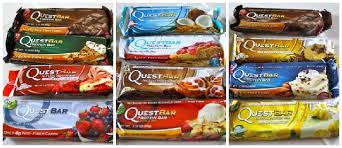
With Quest, there are TONS of flavors now (16) to satisfy all kinds of palates. They are free of sugar, gluten, and soy, and offer 20 grams of prebiotic fiber, so net carbs are very low. Quest Bars have 20 grams of protein and are sweetened either with sucralose OR stevia and erythritol. Here is the current list of flavors which are available:
Quest Bars flavors
Vanilla Almond Crunch
Peanut Butter Supreme
Chocolate Peanut Butter
Apple Pie
Cinnamon Roll
Chocolate Brownie
Strawberry Cheesecake
Mixed Berry
Coconut Cashew
Lemon Cream Pie
Peanut Butter & Jelly
Banana Nut Muffin
Chocolate Chip Cookie Dough
Double Chocolate Chunk
White Chocolate Raspberry
Cookies & Cream

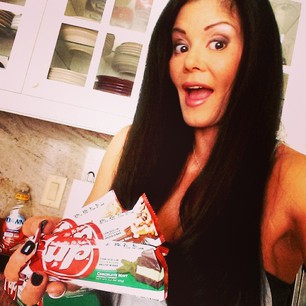
Me with BUp Bars
Like Quest, B-Up Bars are free of sugar, gluten, and soy, and offer 20 grams of prebiotic fiber, so net carbs are very low. B-Up Bars also offer 20 grams of protein, but they are sweetened with stevia, xylitol and monk fruit extract, all of which are natural sweeteners. B-Up Bars currently come in three flavors, but there will be more delicious flavors added to the group very soon. Here are the flavors:

Chocolate Mint
Sugar Cookie
Cinnamon Roll

I absolutely love the flavor of the majority of Quest Bars (the only one I am not crazy about is the Mixed Berry), and I definitely have my favorites (Peanut Butter & Jelly, Banana Nut Muffin, Chocolate Chip Cookie Dough). My favorite flavors remind me so much of the food items they are named for that I am always tricked into believing that I am indulging in the actual food item. One thing I have noticed, though, is that over the span of a couple of months, these bars tend to harden up a lot, to the point where you can’t even bite into them without risk of chipping a tooth. This can be remedied by zapping the bar (WITHOUT the foil wrapper) in the microwave for a few seconds.

In contrast to the Quest Bars, B-Up Bars are chewier. I love the texture of the Sugar Cookie flavor because it seems softer and fluffier than the other two flavors. My favorite B-Up Bar flavor is Chocolate Mint because the mint flavor is pleasant but not overpowering, and the chocolate chunks break up the soft texture of the bar nicely. It seems that I digest B-Up Bars slightly better than the Quest Bars, but this isn’t enough for me to stop eating Quest Bars!

I noticed one other odd thing after spending a few weeks eating mostly B-Up Bars. When I went back to the sucralose-sweetened Quest Bars, I detected an aftertaste which I didn’t really like, so I guess my palate had adjusted to the natural sweeteners found in B-Up Bars. To be honest, I prefer the sweeteners found in B-Up Bars slightly more because they are more palatable. When I tried a stevia and erythritol sweetened Quest Bar after this discovery, I didn’t pick up any aftertaste.

In conclusion, I love both brands of bars and would recommend them both to friends, family, fans, clients and patients.

http://www.questnutrition.com/protein-bars/

http://www.bupbar.com/

Don’t Bully Your Coach

personal-training-clientBefore I dive into this topic, I want to make sure that everyone understands that this is meant to be general, and is not directed at anyone in particular. But because I have had numerous conversations with other coaches and trainers recently who have described behavior in their clients which I find unacceptable, I thought this was a good topic to cover in my blog.

First of all, when you hire a coach or trainer, you are hiring that person for his or her knowledge, education and experience. When you challenge fee schedules that are in place, and expect the coach to give you bargain basement pricing just because you are short on funds, or because you don’t see why you should pay that much for someone else’s time, it is insulting to the coach. In addition, coaches and trainers are trying to run businesses and have expenses which need to be covered. I recently saw a quote on Instagram which I loved: “If you think a professional is expensive, wait until you hire an amateur.” Please keep this in mind when you are selecting a coach, and have respect for what they offer.

If a coach is designing a customized plan for you, do not expect the plan to be ready within minutes. It takes time to create a customized plan for a client, so please be patient. Once you get your plan, please do not ask incessant questions, especially if they are presented in the middle of the night. Since I am a physician, I understand what it means to be on call all the time, but I will not put up with a 2 am text asking me whether it’s okay to substitute swing lunges with seated leg curls!

Another sure way to aggravate your coach is to be non-compliant, whiny, and intent on changing every aspect of a well designed plan. Why even hire a professional to help you if you are dead set on being a person who uses the word CAN’T all the time? If you trust, admire and respect your coach, then let your coach work his or her magic and help you to reach your goals. Otherwise, you are wasting both your time and energy and those of your coach. Allow your coach to guide you and be your motivator, and speak up if you are faltering in your efforts or if your self-confidence is flagging. Let your coach be truly that: a coach.

My Nutrition Coach Certification

NAFC-Logo-05
Despite the fact that I am a fully licensed and board-certified physician, and also hold a Bachelor’s Degree in Exercise Science, I realize that some people get hung up on specific certifications. My education covered nutrition in exhausting detail, which is why I am able to customize meal plans for clients and patients based on a myriad of factors. However, I also obtained a Nutrition Coach certification from NAFC to fortify the credentials I already had.

For those of you who are curious about the course, here are some details:

NAFC’s Nutrition Coach Foundations delivers scientifically-based nutrition education so health and fitness professionals can better serve their clients.

Develop the skills, knowledge and abilities to successfully work with clients seeking goal-based nutritional guidance.
Gain an occupational advantage with enhanced education and a credential to differentiate you from your competition!

NAFC’s Certified Health & Fitness Coaching course blends sound basic science with the latest in nutritional science along with proven coaching skills to help you successfully guide your clients toward better health, better performance, and a better body!

In Section I of this course, you’ll get a strong introduction to the basic sciences; in Section II you’ll become immersed in the field of nutritional science; in Section III you’ll learn about the art & science of being an effective coach; and finally in Section IV you’ll go through a step-by-step set of instructions on how to implement nutritional coaching competently & profitably (including over 30 pages of questionnaires and assessment tools to use with your clients).

No other nutrition certification puts all of these components together. No other nutrition certification was written by a physician with over 35 years of experience in the areas of nutrition, fitness, personal training, anti-aging medicine, and performance enhancement.

The National Association for Fitness Certification was established in 1992 to provide scientifically-based, standards-focused education and training for Group Fitness Instructors, Personal Trainers, and Wellness Consultants. The NAFC’s combination of demanding standards, practical application of scientific principles, and affordable program pricing have defined it as the most rapidly-expanding certifying organization in the industry today.

The NAFC was established by a forward-thinking group of fitness professionals, representing expertise in fields including Exercise Physiology, Adaptive Physical Education, Medicine and Nursing, and Professional Coaching. Their desire was to enhance current fitness certification standards by providing access to convenient and comprehensive – yet practical and affordable – education and skills.

The NAFC follows guidelines established by the American College of Sports Medicine, emphasizing practical information with respect to a comprehensive knowledge base.

I Will Be At The Muscle And Performance Booth At Olympia This Week!

Muscle & Performance

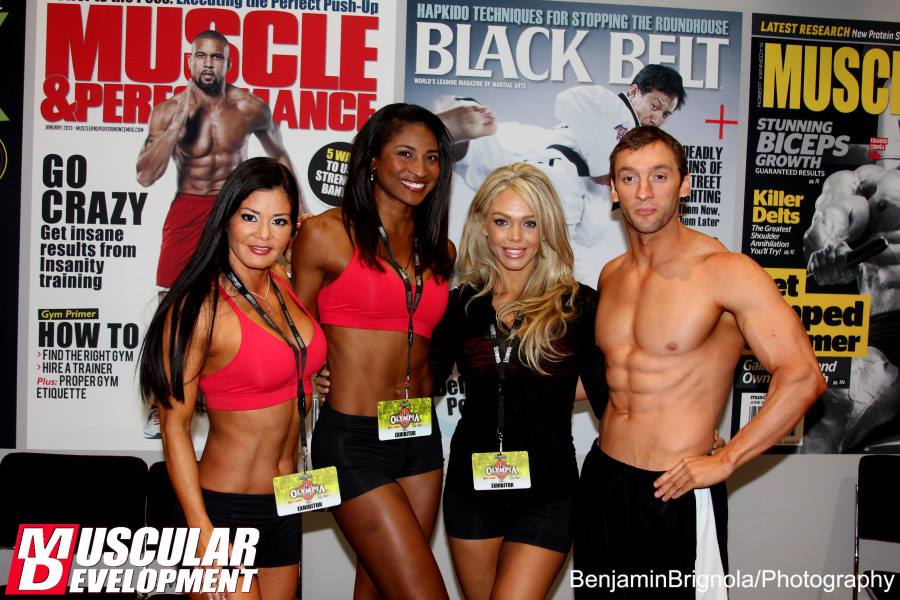
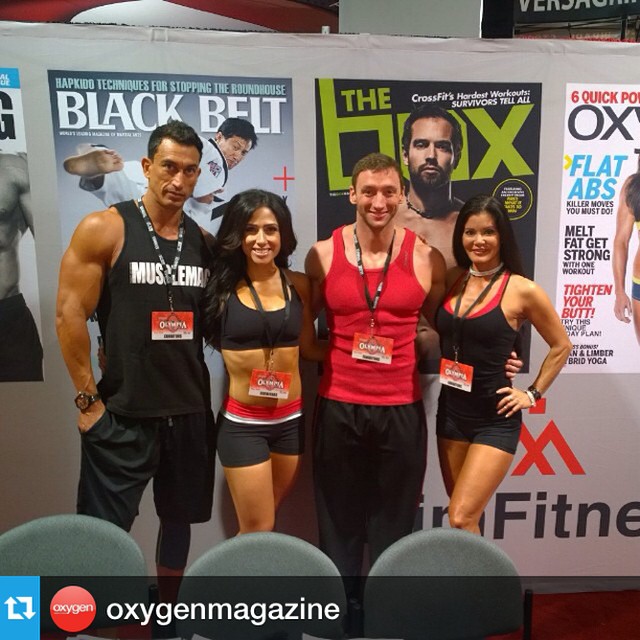
Come to the 50th Anniversary of Olympia! I will be at the Olympia Expo on Friday, September 19th, and Saturday, September 20th, working at the AIM Publications booth, which features magazines like Muscle & Performance, Oxygen, MuscleMag, and Black Belt. Be sure to stop by to say hello, and get some free magazines!

2014-OLYMPIA

Here we are at the AIM booth from the Arnold Sports Festival earlier this year:

793845_621258061299572_6095940993017910437_o

And from last year’s Olympia:

Olympia 2013

It’s MY Image And MY Branding

I have been struggling to assemble various elements of my personal branding on my own, but this task has proven to be extremely challenging. One of the first things I worked on was a logo, but after seven months, I still have nothing to show for it. Part of the problem is that I only have ideas of what I want to convey, and I have to rely on the creative vision of a logo designer to interpret my ideas in a way that is cohesive with my brand. This project has dragged on and on, and I am now beginning to doubt whether I will have a logo before the end of the year. There are countless other things on my to-do list, such as compiling an email list, revamping my three websites, designing a newsletter template, etc. I don’t have the expertise, nor do I have the time to do all of these things on my own. So I have been sitting on these projects as well.

Another thing I was hoping to get into place was a public relations person to help me with my image and to increase my exposure. Here’s where I ran into another wall. I had a meeting recently with a very competent and talented PR person but as we continued to discuss my goals and my vision, I realized that there was a disconnect. This person went through my images online and explained why certain images fell outside the realm of certain goals I was trying to achieve. While I understood that some images were less conservative than what a typical physician would take, I also felt attacked and restrained. Part of what I love about being who I am right now is the fact that I AM atypical, that I am defying the odds, and that I am challenging stereotypes.
black tassel beach logo only 2
One thing this person told me was that I needed to consider what a certain television show producer would think of me if he saw how I portray myself on the internet. With all due respect, I don’t live my life for others, and I will NOT conform for the sake of being invited on someone else’s TV show. I have enjoyed my personal freedoms and feel that as long as I honor the boundaries of common decency, I am NOT going to start doing photo shoots in business suits. That is simply NOT me and I would be miserable if I was FORCED to do that. I will never be the kind of person who will fit in a neat little conservative box. Try doing that to me and I will rebel.

In an era where the more outlandish and crazy someone is on television, the more popular they are, why is it that I am expected to remain on the straight and narrow path, with the reins pulled tight against my expression and my personality? I honestly don’t want to EVER sell out and become what a TV network or what middle America expects me to be. Perhaps Dr. Oz’s popularity stems somewhat from his conservative vibe, but I can tell you that when it comes to image, I will never be a predictable female version of that guy. No way. Don’t expect me to wear scrubs on a national TV show or dress in conservative garb just to appease the viewers. I am an IFBB Bikini Pro and very proud of it. So what if I model swimwear and fitness apparel? So what if I like to look sexy? Since when is that a crime?

My plan is to keep doing what I am doing, remain true to myself, maintain my integrity and keep moving closer to my ultimate goals.