
Just in case you didn’t know, it’s World Emoji Day! Go wild and express yourself with emojis all day, and also use the hashtag #WorldEmojiDay when on Twitter or Instagram.

If you don’t believe this is true, visit http://worldemojiday.com/
Just in case you didn’t know, it’s World Emoji Day! Go wild and express yourself with emojis all day, and also use the hashtag #WorldEmojiDay when on Twitter or Instagram.
If you don’t believe this is true, visit http://worldemojiday.com/
This is a repost of a recent article on MSN Money which showcased 13 newcomer women who made it onto the list of the richest self-made women in the United States. The original article can be found by clicking the link here, but I have also copied and pasted the body of the article so you can read about these extraordinary women here.
13 newcomers named richest self-made women in US
Forbes’ second annual definitive tally of America’s wealthiest, most successful self-made women includes 60 trailblazers – 10 more than last year – who have crashed ceilings through invention and innovation. These women, who are worth a combined $53 billion, have created some of the nation’s best known brands, such as Gap, Spanx, Proactiv and Vera Bradley. A number of them have also helped build some of the most successful companies in tech, including Facebook, eBay and Google, while still others got rich entertaining millions through their music, books or TV shows.
These women have achieved unparalleled success through invention and innovation to create their own fortunes. ABC Supply’s Diane Hendricks (No. 1) tops the list with a net worth of $4.9 billion, followed by Oprah Winfrey (No. 2), worth $3.1 billion. The Gap’s Doris Fisher and Founder & CEO of Epic Systems, Judy Faulkner, are tied for No. 3, both worth $2.4 billion. Elizabeth Holmes, Founder & CEO, Theranos, who was No. 1 on the list in 2015, misses the cut this year due to recent investigations involving Theranos and information indicating that the company’s revenues are less than originally projected.
With sold out arenas, billion-dollar companies and best-selling books under their belts, 13 newcomers joined the ranks of America’s Richest Self-Made Women in 2016. Big names (Celine, Barbra, Taylor) and big brands (Nasty Gal, Vera Bradley, Douglas Elliman) define the group who cracked this year’s $250 million cutoff, and together have a combined net worth of $5.65 billion.
GAIL MILLER
Net worth: $1.6 billion
Rank: 11
How she did it: The only newcomer who is also a billionaire, most of Miller’s wealth stems from basketball team the Utah Jazz. She purchased it with her late husband in 1986 for $22 million. It’s now worth $875 million.
CAROLYN RAFAELIAN
Net worth: $700 million
Rank: 22
How she did it: The Alex and Ani founder launched her Rhode Island-based bangle-maker in 2004. In 12 years, she’s grown revenues to an estimated $500 million and operates 65 stores around the country.
CELENE DION
Net worth: $380 million
Rank: 37
How she did it: Dion has sold over 220 million albums in her career, but the bulk of her net worth ($260 million) comes from the Las Vegas residency she began in 2003.
BARBRA STREISAND
Net worth: $370 million
Rank: 38
How she did it: Happy days are here again! With a career full of hits and accolades spanning sixty years, Streisand has had a No. 1 album every single decade she’s been in showbiz and is the best-selling female musician of all time.
JESSICA ALBA
Net worth: $340 million
Rank: 42
How she did it: Alba launched The Honest Company in 2012. Just three years later, she was featured on the cover of Forbes’ Self-Made Women’s issue with a $200 million estimated net worth from her stake in the nontoxic-household-goods-startup. The actress-turned-entrepreneur did not make the $250 million net worth cutoff for the list in 2015, but secured her spot on this year’s list when her 20% stake in the company shot up last August after raising $100 million at a $1.7 billion valuation.
NANCY ZIMMERMAN
Net worth: $320 million
Rank: 46
How she did it: Launching her career buying currency options on the floor of the Chicago Mercantile Exchange, Zimmerman later made her way to Goldman Sachs to run their interest rate options group. She left Goldman to co-found Boston-based Bracebridge Capital in 1994. It’s grown to $10 billion in assets under managements and is now the largest in the world run by a woman.
DANIELLE STEEL
Net worth: $310 million
Rank: 48
How she did it: Steel joined fellow romance novelist Nora Roberts on the list this year proving sex, and lust, really does sell. She’s written 129 books and sold more than 650 million copies in her career.
PATRICIA MILLER and BARBARA BRADLEY BAEKGAARD
Net worth: $300 million (Miller); $270 million (Baekgaard)
Rank: 49 (Miller); 54 (Baekgaard)
How they did it: Queens of quilted prints, Miller and Baekgaard founded Vera Bradley in 1982, sewing bags in Baekgaard’s basement and selling their first ones in gift shops. There are now 139 company stores and with products sold in another 2,700 retailers around the country. Vera Bradley IPO’ed six years ago and has a $590 million market cap.
SOPHIA AMORUSO
Net worth: $280 million
Rank: 53
How she did it: The original #GirlBoss, at 22 Amoruso started her online retailer Nasty Gal. Ten years later her company is raking in $300 million in sales, Forbes estimates. She also released her memoir “GirlBoss” in 2014 and it became a bestseller. Amoruso has since expanded the #GirlBoss brand to radio and TV.
DOROTHY HERMAN
Net worth: $270 million
Rank: 54
How she did it: Overcoming a tragic adolescence, Herman got her start as a real estate broker for Merrill Lynch on Long Island. By 2003, she’d bought New York City brokerage Douglas Elliman. It’s now the country’s fourth-largest brokerage firm and the largest in New York City.
TONI KO
Net worth: $260 million
Rank: 57
How she did it: In 1999 Ko started NYX Cosmetics aiming to sell department-store quality makeup at drugstore prices. The company did $4 million in sales in the first year alone. She sold to L’Oreal in 2014 for $500 million and has since moved on to launch a new sunglasses line in early 2016.
TAYLOR SWIFT
Net worth: $250 million
Rank: 60
How she did it: Coming in at the last spot on this year’s list, Swift’s earnings shot up with her transition from country music starlet to worldwide pop star, raking in the most from last year’s 1989 tour that earned $250 million.
In case you want to know how these women made it to list, read on for the methodology employed…
Methodology: Members of the 2016 list needed a minimum of $250 million in net worth to make the cut. To compile net worths, Forbes valued private companies by speaking with an array of outside experts and conservatively comparing the companies with public competitors. In cases in which women started businesses with, and still share with, their husbands, Forbes assigned them half of that combined wealth.
Forbes calculated the stakes in public companies using stock prices from May 13. For entertainers, they based estimates on net lifetime earnings. Real estate, art and other assets were also factored in where applicable. To be eligible for this list, women had to have substantially made their own fortunes and be U.S. citizens or longtime residents. Forbes attempted to vet these numbers with all list entrants.

By: Dr. Stacey Naito – Physician and IFBB Pro
Even if your genetics put you at risk for developing dementia, there are numerous lifestyle and behavior adjustments which you can make in order to protect brain function and fight dementia. The five keys listed below are proven to improve brain health and keep your mind vital and sharp for decades.
1. MOVE YOUR BODY
Scientific research has proven that overall physical health is closely linked to brain health. Regular exercise aids in the maintenance of a healthy weight range, normal cholesterol levels, while also optimizing blood flow throughout the body and the brain and supporting the growth of new brain cells.
The benefits of physical health stem not only from regular exercise, but also from other good health practices. Support your brain’s health by doing the following:
• Exercise at least 30 minutes daily to relieve stress.
• Make sure to get between seven to eight hours of sleep each night.
• Refrain from using tobacco.
• See your doctor regularly.
• Maintain a healthy weight.
2. YOU ARE WHAT YOU EAT
Research studies indicate that diets which are low in saturated fats and cholesterol, and rich in polyunsaturated omega-3 fatty acids and nutrients like lutein and vitamin E, may have a protective effect on brain cells and overall brain health.
Brain-healthy dietary changes:
• Opt for healthy fats which are found in olive oil and fatty fish like salmon. Avoid saturated and trans fats.
• Consume a diet which incorporates milk, eggs, vegetable oils, nuts, whole grains, and dark leafy greens like spinach, all of which are rich in vitamin E. Vitamin E is an important nutrient which supports brain health. If you can’t get vitamin E from foods, you can take it in supplement form.
• Eat plenty of fresh fruits and vegetables, aiming for nine fist-sized servings each day. Select colorful fruits like cranberries, blueberries and tomatoes which are packed with powerful anti-inflammatory compounds known as polyphenols. Keep the skin on fruits and vegetables to maximize their nutritional benefits.
• Add lutein. Lutein is a potent antioxidant which is critical for eye and brain health. Foods which are rich in lutein include spinach, kale, turnip greens, collard greens, egg yolks, corn, and peas. You can also take lutein in supplement form.
3. EXERCISE YOUR BRAIN
Extensive research has proven that the brain continues to learn new skills and information throughout life, and benefits from frequent intellectual stimulation. Make sure to pursue new activities, education and games to challenge your mind. Read books to elevate your knowledge base.
How to stimulate your brain:
• Engage in regular sessions of a mental activity you enjoy, such as reading, word games such as crossword puzzles, or learning a foreign language.
• Get into a daily habit of learning a new word or fact.
• Master a new skill or subject each year.
• Manage stress and balance your energy by meditating. Meditation may help to reduce stress and body inflammation by soothing the vagus nerve, an important nerve which controls the body’s immune response.
4. NURTURE RELATIONSHIPS
Though we know that relationships with family and friends are key factors in a person’s happiness, regular social interaction promotes the formation of new brain cells and aids in brain repair. One study revealed that men and women who had the most social interaction had less than half the rate of memory loss as those who were the least socially involved. By visiting friends and family and being involved in community activities, you will protect brain health.
Social brain boosters:
• Spend time with your family and friends regularly, and make them a priority.
• Volunteer for an organization which surrounds a cause which you are passionate about.
• Work for as long as you can, and for as long as you feel motivated to do so.
• Join clubs and become involved in religious or spiritual activities which resonate with you.
5. BALANCE YOUR NEUROTRANSMITTERS
Brain function relies on important molecules known as neurotransmitters. Neurotransmitter levels affect mood, behavior, cognitive function, social function, digestion, sleep, weight regulation, and many other processes.
The problem with current society is that the vast majority of people have overly stimulated sympathetic nervous systems, which over time can drain the body of serotonin. The excitatory part of the nervous system dominates once the inhibitory neurotransmitters are depleted, resulting in anxiety and an inability to “wind down”. Eventually, even the excitatory neurotransmitters such as serotonin, epinephrine, norepinephrine and GABA are also depleted, and severe depression or chronic fatigue usually develop.
Conventional drugs cannot replenish these neurotransmitters, and in fact, tend to cause depletion of the neurotransmitters. This is the reason why some depression medications do not work on some individuals. The good news is that supplementation with amino acids can help to replenish deficient neurotransmitters.
How To Nourish Neurotransmitters:
• Eat a healthy diet. Neurotransmitter imbalance is aggravated by poor diet. Diets high in protein supply the brain with the amino acids it needs to replenish neurotransmitter levels.
• Consume branched chain amino acids to ensure a rich supply of neurotransmitter precursors.
REFERENCES
Neurotransmitter Assessment Brings Light to Management of Psychiatric Problems
Monday, 15 August 2005 00:59By Erik L. Goldman | Editor in Chief – Vol. 6, No. 3. Fall, 2005
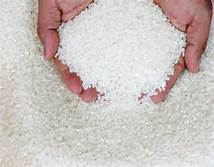
Anyone who grew up in a household which was managed on a shoestring budget can relate to the concept of adding an inexpensive, bulky carbohydrate to meals to increase their volume. My entire childhood was punctuated by the ubiquitous presence of glutinous Japanese sticky rice. In fact, the only times I did not consume white rice with dinner were when my mom decided to heat up Stouffer’s Macaroni and Cheese, Stouffer’s Lasagna, or pot pies (Swanson and Banquet were the two brands she bought…she ended up purhcasing whatever was on sale). When we had the mac and cheese or the lasagna, we would split the dinner, and she would serve frozen veggies on the side.
All of our other meals featured a mound of white rice which occupied the majority of the plate’s surface. If we had broiled hot dogs, there was rice. Scrambled eggs and rice. Broiled chicken and rice. Vienna sausage and rice. Pan fried SPAM and rice. The occasional steak or lamb chop treat and rice. Sukiyaki (one of only two dishes my mother knew how to cook) and rice. Meatloaf (the other dish my mom could make from scratch) and rice. I even had Campbell’s soup with rice, and was so accustomed to eating soup with rice, that I was always thrown off when I would go to a classmate’s house and encounter soup being served as a precursor to the main course, not the actual main course, and sans rice.
Despite the fact that I was raised in a very low income household, and ate processed foods almost constantly, I was a very happy child and never felt that I was being deprived. I was more astonished and disgusted by the ultra wealthy children I went to school with, because I thought they lived in a false world, one which was based almost exclusively on possessions and financial wealth. A number of my classmates were pretentious, unpleasant brats who were so brainwashed with a sense of entitlement that they probably got kicked around by life when they had to navigate through it on their own.
White rice was such an important part of my life that once I moved out of my mom’s as an adult, I quickly got a rice cooker. I was so unhappy with the small Hitachi cooker I got, that I almost ran cartwheels when someone gifted me with an 8-cup National cooker (that cooker is still with me, almost 30 years later). For those of you who are Japanese, you can probably relate to that need to have a National, Tiger, or Zojirushi cooker! The nicest Zojirushi rice cookers are quite fancy now, as you can see here:

And yes, I still covet a Zojirushi rice cooker!
Now that I am very carb conscious, I avoid white rice on most days, but there are carb spike days in which I allow myself to indulge in jasmine white rice. Why? Because white rice is one of my main comfort foods. It ties me to my Japanese heritage, and it reminds me of my humble upbringing.
Here is a great shot by Vino Darius Calloway, taken on June 24th, 2016 on the Bonneville Salt Flats…I am SO blessed to be able to shoot with great photographers who also happen to be wonderful people!


Oh, to be a woman. We are blessed with goddess energy and are also capable of being strong and muscular while holding onto our femininity. But with our female distinction we also have hormonal fluctuations which can wreak havoc on our health and our moods. It can be a tricky thing to keep estrogen and progesterone levels balanced consistently, especially for those of us who compete. Estrogen imbalance can also bring about early menopause, premenstrual symptoms, menstrual irregularities, and skin issues.
Women who practice a healthy diet, regular exercise, adequate sleep and stress management have the best chance of keeping their hormones in balance throughout their cycles. Overly processed foods, especially refined sugars, should be avoided. Strength training is also an excellent way of regulating estrogen levels in the body. However, I realize that the majority of you who are reading this are already on board with clean eating and weight training, but may still struggle with mood swings, food cravings, menstrual irregularities, and menstrual cramps.
Here are some tips on how to combat mood swings and food cravings which may emerge each month. These supplements will not affect contest prep, and may actually equip you with the best chance of staying on track even during THAT time of the month.
MOOD SWINGS: I am a big fan of the B vitamins because they are proven to reduce stress and anxiety. In fact, I make sure that all of my patients who suffer from depression and anxiety take a B-complex supplement to regulate their mood. It is also a good idea to take magnesium glycinate to restore the magnesium that is depleted during times of stress. Start with 250 milligrams daily, then increase to three times daily with meals. If you get drowsy or have frequent bowel movements, decrease your dose down to once or twice per day.
FOOD CRAVINGS: One of the reasons why women tend to crave chocolate around that special time of the month is because they are often deficient in magnesium, which is found in high amounts in chocolate. For this reason, I suggest taking magnesium glycinate(as stated before) to normalize magnesium levels in the body. Dosage parameters are the same, but if you prefer, you can take magnesium for two weeks at a time, starting a week before your period and ending a week after you get your period.
Another great supplement to take for food cravings is alpha lipoic acid. Take 100 milligrams three times daily. If you really get slugged with strong food cravings before flow visits, add chromium picolinate (200 micrograms three times daily) and vanadyl sulfate (10 milligrams three times daily) to your regimen.
I shot this video back in February, right after the Super Bowl. Now that my birthday is a week away, I thought it was the perfect time to share this video in which I share my thoughts about getting older.


Every single year I watch nationally qualified competitors duke it out onstage in hopes of finally making it through the bottleneck and achieving Pro status. Some competitors get smacked down repeatedly, yet keep hitting the national circuit for so long that they must compete against new blood, further limiting their chances. There are times when I shake my head in wonder over the outcome of a national or Pro event when individuals who clearly should have been in first callouts were neglected. I know that feeling all too well because it has happened to me a number of times. Every year the national level events get bigger, which results in even more pressure and more competition to get through that level and into the big wide world of Pro status. When a competitor finally gets pushed out of the bottle and glides into Pro waters, he or she will bask in it, enjoying the victory, but the majority of Pro competitors soon discover that becoming a Pro doesn’t mean that life will become any easier. If anything, it becomes more difficult, because the bar is set much higher.
Those of us who compete live in a bubble. In fact, I will go as far as to say that when we escape the bottle, we end up in a fishbowl instead of open water. Please don’t interpret this to mean that I lack appreciation for being a Pro, because it is indeed a great honor. But the world at large is a vast ocean which bodybuilding leagues really don’t connect to, similar to the artificial environment which a bowl provides for a pet fish. Bodybuilding is its own world, and though I may love it, I also know that it won’t make me a superstar. Even the biggest bodybuilding legends (except for Arnold) don’t have the full global recognition which they deserve, because bodybuilding is such a niche industry. The only bodybuilders who are household names are the ones who became thespians.
I will admit that when I finally got my Pro Card (after 14 Pro qualifiers), I was relieved and ecstatic because I had finally reached a goal I had set for myself. However, I also fully realize that it wasn’t entirely up to me when or if I would ever get that card, so I always tried my best not to berate myself when I fell short of that Pro card goal. A number of competitors who have been on the national circuit for a very long time have built up a tremendous following on social media channels and have so much power and influence, yet they sell themselves short because they focus on the Pro Card chase as a singular goal. These are precious gems whose shine is only dulled by the disappointment they experience when the sport of bodybuilding edges them out of the winners’ circle.
If you have been competing for a very long time and are getting weary from slipping in national placings or just missing that Pro card too many times, it’s time to take a good look at where your passion truly lies. If your true passion lies directly in the experience of stepping onstage, then by all means continue. However, if you are broke, exhausted, sore and dejected, and you have a true passion beyond the stage for inspiring others to reach fitness goals, then why not BREAK the bottle and swim into the wide ocean? If you build a name, a brand, and a following, you can establish a presence in the real world which will enable you to impact others in the truest sense. In addition, you might stand to make some decent money from nurturing your passion for fitness. Honestly, how much money have you made from competing? Just saying.

If you’re like most people these days, you barely have a moment to catch your breath as you power through your day. You may be powering through meetings, working feverishly on projects, taking your kids to their activities, making dinner, etcetera, without pausing to wonder WHY you are doing all of those things. You just DO them, because you’re supposed to, right? You probably also tend to expect everything to run smoothly, which of course may topple over at any given time.
The thing is, if you never stop to wonder why those little glitches occur, you may be missing an important message. Sometimes things just line up in the oddest ways, and what you might think is a disaster is actually a wonderful opportunity to start fresh. Wonderful, magical, serendipitous things are always occurring, and if we pay attention a bit and slow our roll just a bit, we can begin to appreciate how amazing and frequent those moments are. Like a chain reaction, one small event can cause a cascade which opens many doors, changes your focus and direction so that you explore something you might never have thought to explore before, and enables you to grow as a person.
Pause for a moment, pay attention, and observe.

