Ohhh My Hip…Ohhh My Leg…

itbandanatomy_thumb

Though I don’t really mention this to people, I deal with almost constant body pain. The bizarre thing is that most of my chronic pain issues are located on the right side of my body. I wake up almost every night from intense pain in my right shoulder whenever I roll onto my right side. The pain in my shoulder is the result of a rotator cuff tear which I sustained in April of 2013 and an acromio-clavicular joint dislocation which occurred in December of 2014.

Then there is my right hip which goes into spasm almost daily, and sends a wicked pain along my tensor fascia lata, iliotibial band and peroneus longus (aka lateral thigh and leg) which at times literally takes my breath away. Fun stuff. I power through the pain, especially when a heavy leg day looms ahead, but this chronic pain has me near tears on some days. I am beginning to wonder if I have tensor fascia lata (TFL) syndrome.

My right tensor fascia lata muscle is always tight and inflamed, as is my right gluteus maximus. When my hip spasms, both of these muscles seize up as well. As a result of this ongoing issue, I often dig my knuckles right into my hip to address trigger points and to get some relief, and I also must get deep tissue massages on a regular basis to keep the spasms in check somewhat. I am actually known at the places where I get massages for being the fitness lady who needs at least 90 minute massages to address my musculoskeletal issues!

I recently stumbled upon a great post, written by by Stephen O’Dwyer, CNMT, which I am pasting here:

How the Tensor Fascia Lata (TFL) Causes Hip Pain

This muscle causes pain in two primary ways:

1) Once the TFL has been tight and ischemic for some period of time (it’s different for each individual), it can develop myofascial trigger points.

Trigger points can then refer pain to other parts of the hip, the groin, the buttocks and even down the leg.

2) When the TFL becomes chronically contracted it can exert a mechanical strain on other muscles by distorting joint movement.

For example the gluteals or the piriformis muscle often suffer from an unnatural “pull” from an excessively tight TFL.

Pain, then, might be felt in one or more of the following areas…

• Deep in the hip joint

• Into the groin

• Wrapping around the outer hip

• Deep in the gluteal muscles

• The sacroiliac joint

• Traveling down the leg

What Causes Tensor Fascia Lata (TFL) Dysfunction?

I have been considering for a long time how the TFL becomes excessively tight and locked up (aka dysfunctional) and have concluded that there are two chief reasons…

1) Weakness in the rectus femoris muscle.

The rectus femoris, the top quadriceps muscle along the front of your thigh, is your secondary hip flexor (after the psoas and iliacus which are your primary hip flexors).

And the rectus femoris muscle so often becomes weak as a result of the second reason for TFL dysfunction…

2) Excessive tightness and shortening of the psoas and iliacus.

This is a common occurrence in many of us who sit for long hours at a desk and/or commuting in our cars. The primary hip flexors, the psoas and iliacus, are put into a shortened position when we’re sitting. This can cause them to adapt to the shortened position.

Chronic shortening of the primary hip flexors, the psoas and iliacus, can causes the secondary hip flexor, the rectus femoris, to atrophy.

I believe this occurs, in part, because short hip flexors will abbreviate your stride thus reducing a full and natural leg swing.

In runners who are heel strikers this problem can be even more exaggerated. The quadriceps, and especially the rectus femoris, are severely underused.

In the reaching stride characteristic of heel strikers, the leg extends and straightens at the knee as the foot hits the ground. This leg movement disables the quadriceps muscles.

An aside for runners: underuse of the quadriceps can be rectified using the “barefoot running technique.” This technique does not require one to actually run in bare feet but rather to…

1) Adopt the upright, “running on hot coals” running method

2) To use a running shoe without the beefed up heels of conventional running shoes which don’t allow your foot to go through its full range of motion.

I recommend the Merrell’s Pace Glove for Women or Merrell’s Trail Glove for Men (the shoe I run in).

How to Treat Tensor Fascia Lata (TFL) Dysfunction

There are three strategies that alleviate excessive tightness in the tensor fascia lata:

1) Direct manual therapy treatment of the tensor fascia lata
I find that putting a client in a side-lying position with a pillow between their knees (and one to support their head and neck) is optimal.

Then direct manual pressure applied at different angles will help to locate the greatest “liveliness” in the muscle (I like to use this word instead of “pain”).

Gentle but detailed work will produce the best, most lasting results.

2) Maintaining flexibility in the entire hip

Stretching of the hip flexors and the entire hip and leg.

See Hip Stretches for excellent video support.

3) Strengthening the quadriceps
I’m not a fan of seated leg extensions on a weight machine to accomplish this.

Much more effective are single leg squats. If squats are not possible due to pain, then sitting against a wall is an excellent strategy.

Your knees should be at a 90 degree or right angle. Otherwise it’s not stable for your knees.

I love this article because it discusses a very common scenario which I see in my patients and which I am also personally experiencing. I definitely have a weak rectus femoris, partially due to the overactivity and spasm of the psoas and iliacus. Over the years I have had osteopathic manipulation to treat the psoas issue, but it keeps flaring back up. The weird thing is that I don’t necessarily sit for extended periods of time, yet my hip flexors are always tight. So if you have hip pain which never seems to resolve, you should check out the site where I found this article:

http://www.lower-back-pain-answers.com/tensor-fascia-lata.html#axzz3eaeKtVlT

I also highly recommend the stretches demonstrated on this link: http://www.lower-back-pain-answers.com/hip-stretches.html#axzz3eaeKtVlT

If you truly suffer from chronic, daily hip pain, then you can carve out a few minutes each day to perform these exercises. I have been so miserable from the pain in my hip that I am going to start doing these stretches every day. I will post a follow-up after doing these stretches consistently to provide personal feedback on the efficacy of these stretches, but the theory behind these stretches is so solid that I am sure they will make a big positive difference in my hip issues.


Will You Ever See Your Abs?

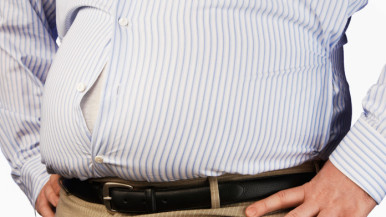
real fat man

One of the most common questions I get from people is how to lose belly fat and get defined abs. Since a tight midsection is one of the most enviable and desirable body attributes, I am never surprised by these inquiries. I have noticed that there is a relatively common misconception that defined abs come solely from exercise, which is definitely not the case. While a certain amount of development in the abdominal muscles must be present for the washboard appearance which many people covet, an individual’s food choices often interfere with the quest for six-pack abs.

If you really want to see abdominal definition, you need to eliminate the following foods from your diet:

SUGAR
Processed foods (including crackers, luncheon meats, cheese, chips, breads)
Foods high in saturated fat (red meat, fast foods)
Salad dressing
Alcohol

Though it may be difficult at first to eliminate the foods listed, you will notice over time that your palate will adjust and that food cravings will subside. That’s because processed foods and sugar set up a vicious cycle in which you crave more bad foods when you consume them. Cut them out of your meal plan, and your cravings will subside. Another benefit of avoiding these foods is that you will avoid the rapid spikes in blood sugar and insulin which they trigger. Why is this important? Because sharp spikes in insulin release promote increased fat deposition in the midsection.

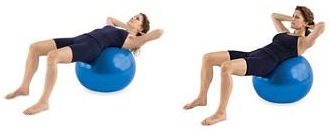
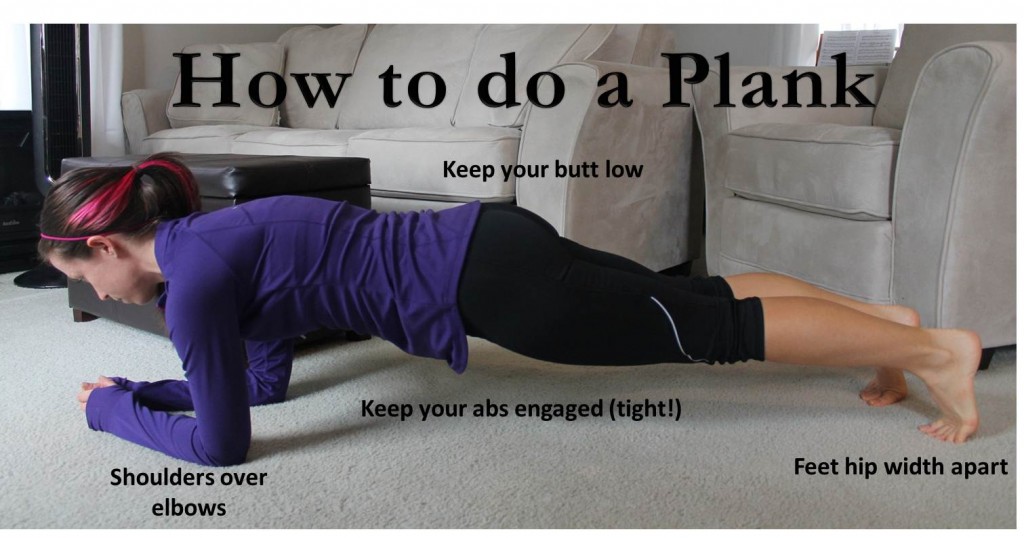
If your abdominal muscles haven’t seen a sit-up in years, you should also incorporate abdominal exercises into your regimen. Here are my three favorite abdominal exercises which work for everyone, from beginners to advanced athletes:

bicycle crunches
Katie-Bicycle-Crunches
ball crunches
basic-crunches-on-stability-ball
planks
Plank-1024x538

If you are consistent with making healthy food choices and getting regular exercise, chances are good that you will see a toned tummy if you are already at a normal weight. If you are overweight, the healthier food choices will help you to slim down and get rid of belly fat, putting you on course for a tighter midsection.

Dimples

3Q2A4477+copy-2283638480-O - Copy
I have dimples which have been etched into my face since infancy. I am so grateful that they haven’t disappeared over the years, and appreciate the character they add to my face, but they were definitely deeper when I was younger and had fuller cheeks.

Whenever I see dimples on someone’s face, I consider them blessed because dimples are considered a marker of youth. You might be wondering why some people have dimples, while others don’t. There are a couple of theories which are used to explain the dimple phenomenon. One theory states that splits in the underlying muscle create dimples in the soft tissue, while another theory states that the zygomaticus major muscle in people with dimples is shorter than normal, which pulls on the skin when they smile and forms the characteristic indentation known as a dimple. Whatever the explanation, this little defect is quite sought after, prompting some people to undergo surgery to have dimples made. Though I don’t know anyone who has had such a surgery, evidently there are people who will go under the knife to have dimples created for them by a surgeon.

how-to-get-dimples-naturally-without-surgery

Dimples are definitely CUTE. They tend to soften a face and make it more attractive. They are more prominent when someone smiles, so they are naturally associated with happy energy. Some Asian cultures even consider dimples a sign of good luck!

Competition Strong Trainer Directory

Stacey-Naito-4
Are you looking for a trainer to help you get into the best shape of your life? Please check out the NEW Competition Strong Trainer Directory, which has trainers in various locations across the U.S., Bermuda and Barbados. I am honored to be listed as one of the trainers in this directory, and am excited to watch this directory grow as more trainers and coaches are added.

Please click on this link to see my bio on this great site, and be sure to check out the other fantastic trainers listed too!

http://competitionstrong.com/trainer/stacey-naito-ca/

Too Much Cardio: The Skinny-Fat Trap

I love reposting this article because it discusses a common phenomenon among people who think that excessive amounts of cardio will give them dream bodies. Read on!

This blog post is dedicated to all of you who think that by doing massive amounts of cardio with no weight training, you will somehow keep yourself trim and tight. People who are of normal weight but who lack curvy, tight muscle because they do not lift weights often develop a palpable frustration. When I hear someone complain about feeling flabby despite doing tons of cardio at the gym, I want to SCREAM, “PICK UP A WEIGHT!!!”, because I know that this is a key component which is missing in their regimens. For those who don’t like weights, use resistance bands or the resistance of your own body weight and do SOMETHING that will challenge your muscles and create those microtears that lead to the development of new muscle.

I have actually seen some of the regulars at the gym I have frequented for many years descend into that skinny-fat trap because all they do is climb onto treadmills, bikes and elliptical trainers, perform boring steady-state cardio, then drive home without ever lifting a weight. Over time, they look more and more deflated as the aging process slowly but surely shifts their lean mass to body fat ratio in an unfavorable direction. Who wants to be mushy? If you don’t want that, it is time to stop wasting your time in the gym and become smarter about your training. You need nice, full, curvy, sexy muscles under skin to lift sagging areas such as the buttocks, chest, arms, and belly.

For those of you who are still timid about lifting weights, or who perhaps don’t know a thing about such activity, hire a trainer. Once you start to get used to challenging your muscles, it is important to establish a routine in which you are lifting regularly. If free weights (dumbbells and barbells, kettlebells and medicine balls) intimidate you, just use the machines that are scattered around the gym until you feel comfortable enough to venture into free weights.

I know that there are many of you who are concerned about looking overly muscular or about gaining pounds instead of losing them, so let’s address those concerns. If you think that by embarking on a weightlifting regimen, you will suddenly grow ridiculous amounts of muscle that would rival Popeye, think again. What you will develop is better muscle tone which will pull your skin tighter and give you a lifted, tighter, more toned appearance. You will actually end up looking more compact as a result of building a modest amount of muscle. If your concern is based more on the fear of seeing the number on the scale increase, relax. It is more important to monitor your progress by how your clothing fits. If you are accustomed to living in a skinny-fat body, you should notice over time that your pants clothing will fit differently, probably looser in the waistband. You should notice that your shorts and pants fit differently and that your butt line is higher than it was before you began training.
Squats versus none

If you are slender but flabby, it is time to switch up your thinking and embrace the idea of building muscle through lifting weights or performing exercises with your body weight as resistance. Of course if you want to like a deflated balloon, keep doing massive amounts of cardio and no weights. It’s your decision!

Banish PMS Article For Oxygen Magazine Online

banish-pms

Please check out original post here: http://www.oxygenmag.com/article/banish-pms-10130

Here are 9 ways to deal with moodiness, soreness, bloating and cravings when it’s that time of the month.

Go with the flow? Easier said than done. Your monthly visitor is not only inconvenient, but it’s also frequently preceded by annoying symptoms like irritability, fatigue, pelvic cramps, acne and bloating to name a few. While not every woman gets PMS, most women get at least one symptom a month.

Fortunately, there are numerous measures you can take to alleviate the symptoms of PMS. Exercising regularly, breathing and relaxation techniques, avoiding alcohol, sugar, salt and caffeine, and consuming small, frequent meals to stabilize blood sugar are all effective methods for easing discomfort, but there are numerous over-the-counter supplements that have demonstrated effectiveness in managing the most common symptoms.

Magnesium
Magnesium levels fluctuate during a woman’s cycle. The higher the estrogen or progesterone, the lower the magnesium, which in turn brings on PMS symptoms. That’s why supplementing with magnesium is a good idea. It has a calming effect, and it also reduces the swelling, breast tenderness and. A well-tolerated dosage is 400 milligrams before bedtime. Women who have more severe mood swings from PMS might prefer a more bioavailable form of magnesium called magnesium glycinate. This form also decreases the hot flashes, which some menopausal women experience.

Dose: Recommended dosage is 250 milligrams one to three times daily, and should be taken with food.

Calcium
Studies have found that women who take calcium supplements, experience less severe PMS symptoms than those who don’t. Calcium supplementation can reduce fatigue, depression, mood swings, tension and anxiety, bloating and breast tenderness, and cramping and generalized aches and pains.

Dose: Take 400 milligrams three times daily.

Vitamin B6
Women who experience mood swings right before their periods tend to benefit greatly from taking vitamin B6. It’s also effective for symptoms of menopause, morning sickness, depression, acne and bladder inflammation.

Dose: Take between 50 to 600 milligrams per day in two to three divided doses.

Vitamin E
Vitamin E reduces the production of prostaglandins, which are responsible for cramps and breast tenderness.

Dose: Take 400 international units daily.

Chromium Picolinate
Chromium picolinate affects insulin, glucose and serotonin in ways that can decrease sugar and balance mood and appetite.

Dose: A dose of 200 micrograms three times daily is optimal.

Alpha Lipoic Acid
Alpha lipoic acid, or ALA for short, is effective in regulating blood glucose, optimizing carbohydrate consumption and reducing sugar cravings.

Dose: Effective dose ranges are between 100 to 200 milligrams, taken two to three times daily.

Vanadyl Sulfate
This supplement has an insulin-like effect on the body and has been shown to regulate blood sugar levels, which makes it adept at curbing those wicked sugar cravings.

Dose: Take 10 milligrams three times daily.

B-Complex
B-complex formulations consist of the following: B complex capsule contains the following vitamins: folic acid, thiamine (B1), riboflavin (B2), niacin (B3), panthothenic acid (B5), pyridoxine (B6), cyanocobalamin (B12) and biotin. This complex supports memory, improves mood, decreases anxiety and combats the effects of stress. It also boosts metabolism, thus increasing energy. I have encountered remarkable responses to B-complex in people who have suffered from depression and who did not respond to prescription antidepressants.

Dose: I recommend 100 mg per day.

Gamma-Linoleic Acid
Gamma-Linoleic Acid is an omega-6 fatty acid, which are considered essential fatty acids, meaning, they are necessary for human health, but the body can’t make them. They play an important role in brain function as well as normal growth and development. They help stimulate skin and hair growth, maintain bone health, regulate metabolism and maintain the reproductive system. GLA helps fight inflammation which is why it’s effective in treating the symptoms of PMS, such as menstrual cramps and breast tenderness, especially when taken in tandem with magnesium and vitamin B6.

Dose: Take 500 to 1,000 milligrams per day.

Foam Rollers

JFT-20-0617 EVA High Density Foam Rollers_main
If you have not used a foam roller to massage tight muscles before, you might want to explore their ability to release muscle tension. When you use a foam roller, your body weight provides the pressure which releases tension in tight muscles on the back, legs and other body regions. These clever rollers can also be used during exercise to increase balance. There is a wide selection of rigidity, size, and shape available in foam rollers today, each designed for different tasks or body regions. Some foam rollers even have ridges which are excellent for trigger points or particularly hypertonic tissues.

If you are primarily interested in using a foam roller for releasing tension knots in your muscles, you probably should opt for a greater degree of firmness. However, if you are the type of person who doesn’t enjoy deep pressure when getting massages, you might want to opt for a softer roller. The more basic types of foam rollers are usually color coded according to firmness, with the following designations:

WHITE – The softest
BLUE or GREEN – Moderate density
BLACK – The firmest

If you are truly new to foam rolling, you might want to start with a white one, then switch up to a greater degree of firmness later. However, if you are like me and need a good amount of pressure to release muscle tension, the other colors will confer greater firmness and also will be more sturdy and durable. You should also select a firmer roller if you plan to use it often, and if you plan to lie on it frequently during exercise.

As for shape, you may choose a half-dome roller so that the roller will not roll out from under you, or you may choose a full-dome roller if you really want to manipulate tense tissues by rolling on it while using the weight of your body. If you plan to take a roller with you to the gym, pilates or yoga classes, you can purchase a roller which is shorter in length, perhaps 12 or 24 inches as opposed to the full 36 inch length which is most commonly seen.