I’m a Protein Craver

The craving for animal protein is something that can be deeply ingrained in many people’s diets, driven by both biological and cultural factors. For some individuals, animal protein—like meat, eggs, or dairy—can feel like an essential part of their meals, not just for its taste, but for its nutrient density and the sense of satiety it provides. I know that I have always been drawn towards savory foods, and I love the texture and flavor of many animal proteins, including fish, poultry, beef, bison, and eggs. I also appreciate the fact that such protein sources are high quality and serve my body well.

Animal protein contains all the essential amino acids, which are the building blocks of our body’s tissues, muscles, and enzymes. For those who are active or looking to maintain muscle mass, animal protein is often seen as the most complete and efficient source of these nutrients. The body naturally craves what it needs, so if it’s lacking in certain amino acids or other nutrients, people may feel a stronger desire to seek out these foods.

Culturally, animal protein has been a central part of diets across the world for thousands of years. Meat is often associated with strength, energy, and vitality, which can contribute to the desire to include it in daily meals. For some, it’s more than just a nutritional need—it’s a source of comfort and a way to connect with family traditions or social rituals around food.

For others, the craving may stem from the body’s ability to digest and metabolize animal protein more effectively than some plant-based sources. This can create a sense of satisfaction and fullness that plant-based proteins sometimes don’t replicate, leading to the craving for that specific texture and nutritional profile. It honestly seems like my body craves protein due to an enhanced ability to digest animal protein. I have had friends watch in amazement as I grab a piece of chicken to gnaw on as opposed to potato chips or sweet treats. I’d rather consume thin beef jerky than a few tortilla chips. I have also been known to polish off more than a pound of steak in one sitting, without any weight gain or digestive issues from it.

Moreover, hormonal influences can also play a role. Levels of hunger-regulating hormones, like ghrelin, can fluctuate based on dietary patterns. People who consume more animal protein may experience a more regulated appetite, while those switching to plant-based diets might struggle to feel as satisfied after meals, leading to cravings for more substantial, protein-rich foods.

At the same time, these cravings can be influenced by personal habits, psychological factors, and even advertising or food culture that reinforces the idea that meat is an essential part of a balanced meal. Whether for health, cultural, or psychological reasons, craving animal protein is a common experience, and it speaks to the body’s complex relationship with food.

People who consistently crave animal protein often have specific personality traits and values that align with their dietary preferences. These traits can influence their food choices, their relationship with nutrition, and their overall approach to health and well-being. While it’s important to note that everyone is unique, certain patterns can often be observed among those who prioritize and crave animal protein.

Image: 123rf.com alex9500 60897623

Focus on Physical Health and Performance

A common trait among protein cravers is a strong focus on physical health, fitness, or performance. People who engage in regular physical activity, particularly weightlifting, high-intensity workouts, or endurance sports, often have heightened protein needs for muscle repair, recovery, and energy. Since I weight train 5 to 6 days per week, this may have a lot to do with my preference for protein over carbs or fat.

These individuals tend to prioritize foods that support their goals—lean meats, fish, eggs, and dairy are all favored for their high bioavailability and efficient nutrient profile. For them, protein isn’t just a dietary choice but a performance necessity. This often results in a high level of awareness and commitment to sourcing the best possible food to meet their health and fitness goals.

Strong Belief in Quality Nutrition

Protein cravers, particularly those who are dedicated to maintaining a high standard of health, often exhibit a strong commitment to high-quality foods. This is seen in their preference for organic, grass-fed, free-range, or sustainably sourced animal proteins. They often value the ethical and environmental considerations behind their food choices, and many are more likely to pay a premium for higher-quality, responsibly produced protein sources.

These individuals are likely to avoid highly processed meats and focus instead on whole, nutrient-dense foods. For example, grass-fed beef is seen as a cleaner, healthier choice compared to conventionally raised meat, offering higher levels of omega-3 fatty acids and other nutrients. People who crave animal protein may not just look at it as a nutritional necessity, but as an investment in their long-term health and well-being.

This is absolutely true for me, as I make a conscious effort to obtain animal protein from whole, unprocessed sources. Given the choice between a hot dog and a burger patty, I’ll always go with the burger patty. I also make sure to consume fish that is wild caught, and avoid farm-raised options whenever possible.

Protein cravers often have a pragmatic approach to food—they see it primarily as fuel and are often more focused on function rather than pleasure when it comes to their diet. For them, the focus is on how the food serves the body’s needs and helps them maintain energy levels, muscle mass, and overall physical health. This practical mindset extends to their food choices: animal proteins offer a reliable, efficient, and balanced source of essential amino acids and nutrients. These individuals may not be swayed by trendy diets or fleeting food movements but instead tend to seek out food that provides solid, scientifically-backed nutritional benefits.

Conclusion

For those who consistently crave animal protein, it is often more than just a passing desire—it’s a reflection of a holistic approach to nutrition, health, and well-being. Their cravings are deeply intertwined with their physical needs, personal values, and broader life philosophies. Whether motivated by fitness goals, a commitment to high-quality food, cultural connections, or a scientific approach to nutrition, these individuals tend to prioritize what they see as the best sources of protein to maintain balance and achieve optimal performance.

How to Reach or Maintain a Healthy Weight in Your Senior Years

Photo by Pixabay

Check out this wonderful and informative article by Camille Johnson of Bereaver.com.

When we get older, maintaining a healthy weight can be a struggle. Our metabolism slows down, and it becomes more difficult to get enough exercise. Still, it’s important to maintain a healthy weight. Critical aspects of your overall wellness, including your blood pressure, cholesterol, and risk for diabetes can be affected, so staying a healthy weight can help you live longer. These tips courtesy of StaceyNaito.com will help you achieve your target for good health.

Get moving

One of the most important ways of losing or maintaining weight is exercise. Start slowly by walking around the block, learning tai chi, or trying a water aerobics class. If you’ve not been particularly active recently, talk to your doctor about finding a safe way to start an exercise routine. An occupational or physical therapist can help you determine your abilities, especially if you’ve suffered an illness or injury in the past. These resources are great starting points for seniors who want to adopt an exercise routine.

  • Look for ways to incorporate movement into your daily tasks.
  • Set a timer to remind you to stand up and move around a bit every hour.
  • Use the buddy system. Find a friend to walk or exercise with, for fun and accountability.
  • Mayo Clinic suggests parking farther away from the store, and enjoy the walk. Take the stairs when you can.
  • Seniors who are considering an assisted living situation should look for facilities that offer amenities like walking trails, gyms, and group fitness sessions. 

Watch what you eat

Be mindful of what you eat each day, in terms of ingredients and calorie count. Stick to whole foods as much as possible, and read food labels for processed products you buy. Avoid fatty meats, instead opting for fish, lean chicken, pork, or beef cuts. Protein is especially important for your diet, because it helps build up the calcium in your bones, so be sure you’re getting enough.  Having some protein with every meal and snack will keep you fuller for longer, which prevents you from overindulging on empty calories.

  • Greek yogurt is a great choice for a snack or part of a meal.  One serving has 17-18 grams of protein. 
  • Try ancient grains, such as teff, kamut, or quinoa.  These grains are healthy as they tend to be higher in protein, vitamins, and other nutrients, and are often lower in gluten..
  • Add some green peas to your salad, soup, or main dish.  They pack 8 grams of protein per cup, and bring other nutrients, as well as fiber to your diet.
  • Hummus is a tasty high protein dip for veggies. People trying to lose weight can enjoy it in moderation, and for those who need to gain weight, eating it more frequently is a great choice.

Get Hydrated

It’s important to stay hydrated no matter your age or fitness level, but as a senior citizen, you probably aren’t getting as much water as you need, especially if you’re active. Keeping a bottle of water with you can help you remember to sip throughout the day, and you can also add more water-dense foods to your diet to keep your bones, muscles, joints, and skin healthy.

  • Have a glass of water at certain times each day. In addition to helping you stay hydrated, it can also help prevent you from eating too much.
  • Remember that hot weather and high altitudes both increase your risk of dehydration, so increase your water intake when these conditions are affecting you.
  • Cleveland Clinic notes health issues that involve fever, vomiting, or diarrhea increase your need for water.
  • Ensure you’re drinking at least two liters of water every day.

Remember that your body is the only one you have, and you have to take care of it at every age. The more love you show your body by feeding and hydrating it well, and exercising, the more chances you’ll have for a longer, more comfortable life.

Dr. Stacey Naito of StaceyNaito.com offers customized meal plans, exercise regimens, and natural hormone balance to people who don’t want to compete but just want to lose weight, gain weight, or get toned. Contact Dr. Naito today to learn more! 

Saving Money While Living a Healthy Lifestyle

Image via Pexels

Karen Weeks does it again with another excellent article, this time tackling the subject of saving money while staying on track with healthy foods. Please be sure to check her out at Elderwellness.net

It’s important to think about how we can manage our spending and save money on healthy food and lifestyle as well. There are many ways we can cut down on the cost of eating healthy, from switching to a more affordable brand of canned food to making more nutritious meals at home.

Eat at Home

There’s no question that eating at home is a more affordable option than eating out. The convenience of being able to prepare and store a large portion of your food at home is one big benefit. 

You’re also likely to find a cheaper price on ingredients. You’ll also have more control over what you’re eating. Not only can you choose exactly what you want to eat, but you can also control portion sizes and food quality. 

Make Meal Prep a Priority

Many people think of meal planning as a way to save money. It is, but it’s also a lifestyle change that helps you save money on healthy food and lifestyle. Meal planning is a great way to cut down on the cost of healthy food

Plan Meals in Advance

Planning your meals in advance is a great way to reduce the cost of healthy food. It allows you to make certain meals at a certain time of the week that cost less. Planning in advance also helps you create healthy habits by making healthy eating a routine

Enjoy Lower Health Insurance Premiums

Health insurance premiums have risen significantly over the last decade. As people become more aware of the value of a healthy lifestyle, they are looking for ways to improve their health and lower their premiums

Healthy lifestyle habits, including eating a healthy diet and getting regular physical activity, can make a huge difference in your health. By leading a healthy lifestyle, you can help reduce your chances of developing health conditions, such as heart disease and cancer.

Take Advantage of Employee Wellness Programs

Healthy lifestyle habits can help you lower your healthcare costs and take advantage of employee wellness programs. Some companies offer wellness programs that encourage employees to adopt healthy habits, such as eating a healthy diet and getting regular exercise. 

How to Monetize Your Healthy Lifestyle

Healthy lifestyle habits can help you lower your healthcare costs and take advantage of employee wellness programs. In addition to the benefits of a healthy lifestyle, you can also monetize your healthy lifestyle. 

Start a Health Blog

Healthy lifestyle habits can help you monetize your healthy lifestyle. Many people are interested in healthy lifestyle blogs. This is especially true of younger people who are looking for ways to improve their health. 

If you have decided to start a health blog, you can monetize it quickly and easily. All you have to do is create a free WordPress website, add a blog feed, and start blogging. You can also monetize your health blog with an affiliate program. 

Open a Store Selling Sports Gear

Healthy lifestyle habits can help you monetize your healthy lifestyle and take advantage of employee wellness programs. If you are interested in starting a business that sells sports gear, healthy lifestyle habits can help you monetize your healthy lifestyle and make a profit.

In starting your own business, be sure to use a logo maker to create an attractive and attention-grabbing branded logo for your products. Creating an eye-catching logo for your brand is simple if you take advantage of a free logo design tool. The right tool offers great templates that you can then customize to make sure it beautifully represents your brand.

Your Family’s Guide to Hassle-Free Healthy Eating

Photo Credit: Pixabay

By Karen Weeks

Please check out

Elderwellness.net and contact her via karen@elderwellness.net

These days, we’re surrounded by sodas, ice cream, and fast food restaurants. Those things can be fun and convenient. However, it’s also good to get into the habit of eating healthy foods, especially if you’re a budding entrepreneur and dealing with the potential for burnout of managing your business and employees. So if you want to help your kids and yourself eat better and feel better, here are some tips from Dr. Stacey Naito to help.

What Is Healthy, Whole Food?

You may be wondering what “healthy” really means when it comes to your family’s food choices. Most health professionals agree that the healthiest foods contain adequate micronutrients and are unprocessed. A better way to think about this is to aim to choose whole foods or natural foods that have not been processed.

For example, chicken breast, spinach, quinoa, yams, and nuts are all whole foods because they have not been processed. On the other hand, cereal, white bread and french fries are not whole foods. Try to incorporate more whole foods into your family’s diet and try to get more gut-healthy probiotics from surprising sources like garlic and onions in order to boost your family’s digestive and mental health, as well as their immune system. Also, make sure to fuel your family for the day with a nutritious breakfast.

Why Eat Whole Foods?

By eating foods that are high in vitamins, minerals, fiber and healthy fats, your family will be getting the energy they need to survive and thrive. By avoiding processed food that is high in sodium, sugar, trans fat, and saturated fats, your family will also be protecting themselves from the dangers of obesity, heart disease, and even tooth decay. In addition to the physical ramifications of a poor diet, eating highly processed foods can impact your family’s mental health and make them feel more stressed, depressed and anxious. 

In essence, what we eat affects brain function, biochemical pathways and even the size of certain areas of the brain that regulate mood and emotion. Foods high in unhealthy fats and sugars are also highly addictive; the more we eat, the more we want. If you want your family to be healthy (both physically and mentally), you can counteract these effects by encouraging a diet that is rich in whole foods. 

In addition to health benefits, eating foods in their natural or whole state cuts down on the environmental impact of plastic food packaging. When you eat a banana, there is no waste. The peel decomposes, leaving no trace behind. Adversely, the plastic bag carrying banana chips adds to the problem of packaging waste pollution.

How Can Families Get Started? 

One of the easiest ways to ensure your family is getting enough healthy whole foods is to prepare food at home. Get your entire family involved in cooking – not only is there an abundance of fresh fruits and vegetables in season, but you likely also have more time to spend preparing meals. Plus, kids who cook tend to eat healthier as adults. 

Another way to ease your family into healthier habits is to add veggies to your favorite comfort foods. Avoid trying to trick your children into eating veggies and take the time to explain to your children why having zucchini with macaroni or spinach on pizza is good for them. Smoothies can also be an easy way to get kids into eating more fruits and veggies. Blend up bananas with leafy greens or even pineapple with cabbage. 

If you plan on taking a road trip, you have an extra chance to get your kids to eat healthy. Instead of stopping for fast food, try bringing some healthy snack options, like dried fruit, popcorn or low-sugar cereals. 

Finally, be patient as your kids pick up new healthy food habits. You may need to serve veggies alongside old favorites for a while, and don’t get discouraged if your loved ones go after the occasional indulgence. The process may be gradual but eventually, your entire family will begin to see the benefits of eating those healthy foods. 

Dr. Stacey Naito is a board-certified family practice physician, artist, and fitness model. Check out her blog for fitness and wellness tips, inspirational stories, and product reviews. 

Review of Guy Gone Keto

Guy Gone Keto by Thom King is an excellent book and a must read for anyone who is seriously considering adopting the keto lifestyle. Whether you are interested in losing weight or just want to optimize your daily food intake, the keto lifestyle is a viable option, and Thom definitely breaks down the science behind keto into easily understood terms. Thom is the founder and CEO of Steviva Brands, and is well-versed in natural foods and has an extensive background in food science and “bio-hacking”, so he knows what he’s talking about.

I was able to read this book in one sitting on a weekend afternoon and found it amusing and well-written. I love how Thom adds his personal experiences to really underscore the fact that a keto lifestyle can transform your body and your life if you commit to it. He also includes a whole collection of keto recipes so that you can infuse variety into your new keto regimen. He includes recommendations on what supplements to purchase so you aren’t in the dark about what to get.

Thom King also has an expansive line of Guy Gone Keto products, including MCT Oil, Steak Sauce, BBQ Sauce, Ketchup, Teriyaki Sauce, Thai Chili Sauce, and KetoseSweet+. You can check out the line here:

https://shop.guygoneketo.com/

You Truly ARE What You Eat (Updated Post)

you-are-what-you-eatIt’s no secret that fast foods are unhealthy and artery-clogging, but there are impostors which sit on grocery shelves and have people believe they are healthy due to phrases like “Low Fat”, “Good for you”, “Fit ____”, and the list goes on. I encourage my patients to read EVERY label on food containers while perusing the grocery store shelves and aisles and to become aware of preservatives, sugar, hydrogenated oils, artificial flavors and artificial colorings.

A good general rule to follow is if there are more than five ingredients on a food label, or if there are a bunch of big terms which seem alien and strange to you, chances are that the item has questionable nutritional value and should be avoided. Over the last few years I have developed such an aversion to packaged foods that as soon as I see a food item in a bag, box or can, I tend to avoid it.

An interesting thing begins happening to people when they completely eliminate sugars and processed foods from their diets. They experience increased energy, clearer skin, fewer aches and pains, and lower body fat. If someone has been eating clean for a while and decides to have a sinful treat like pizza, a fast food burger, chips, cake or cookies, he or she will notice a detrimental effect on energy, aches and pains may return, and stubborn pockets of body fat will become more noticeable. I have seen this in myself and cannot stand it. What always occurs with me after I have had a couple of glasses of wine, a piece of cake, or greasy foods is that my digestion is completely thrown off whack and I feel sluggish and achy. In other words, these heavier foods make me feel heavy and tired, while clean, light, fresh foods make me feel energized.

I know some of you are thinking, “Wow, that would be so hard to stay away from processed food all the time!”, but in actuality, it isn’t difficult at all. The first thing you need to do is to clear out your pantry and refrigerator of any processed foods, thus wiping the slate clean. What do you replace those items with? You replace them with wholesome foods, fill up your crisper with fresh, organic vegetables and fruits, and favor single ingredients over packages which have ingredient lists which look like essays. Some of you might complain that you are so busy that it would be a waste to buy fresh fruits and vegetables because they would just rot. For you folks, I recommend purchasing frozen (NOT canned) produce which you can easily thaw out and cook whenever you need to.

And if you think it’s tough to cook clean meals, it really isn’t. A chicken breast can easily be marinated in simple marinades while you are at work (a favorite of mine has Bragg’s Amino Acids, apple cider vinegar, and sesame oil…yummy!), then placed in your broiler to cook. Add some steamed vegetables, and maybe a small serving of quinoa, and you have a healthy, nutritious meal which is a snap to make!

I understand that it can be challenging to find the time to eat whole foods each day, but I am telling you that it is well worth it if you intend to take control of poor eating habits and possibly even reverse disease processes in your body. Give it a try…you will probably love it.

YouTube Review Of Spry Sugarfree Gum

Many people who know me well know that I won’t touch any products which contain aspartame, and I am also not a huge fan of sucralose. It is such a relief to know that great natural products like Spry Sugarfree Gum are available to consumers. Spry is sweetened with xylitol and is all natural, plus the flavors are very tasty and long-lasting. You can watch my unbiased review of Spry Gum here:

How To Shop For Healthy Foods

From Sports Nutrition Supplement Guide Article I wrote which was posted on their site.

From Sports Nutrition Supplement Guide Article I wrote which was posted on their site.

Grocery stores in the U.S. can be nutritional traps for uneducated shoppers, because processed foods are placed prominently in the center aisles, while nutrient-dense whole foods are pushed to the periphery. It’s a smart marketing ploy, since many shoppers are easily lured by the colorful and appealing packaging which processed foods feature. There’s even a whole science devoted to the psychology behind food labeling! Because of this, I always advise patients and clients to do the majority of their shopping around the perimeter of a grocery store, even in places like Whole Foods, in order to maximize chances of making the healthiest food choices.

Think about it. If a food item can be stored in a box, bag or can at room temperature, it means that it probably has preservatives which keep it from spoiling. Start reading ingredient labels and you might be shocked at what you find. If ingredient labels are excessively long or have long names which you can’t pronounce, you probably should steer clear. Remember that the least processed foods will be assimilated by your body the most readily.
Grocery store junk

Supermarkets and grocery stores are designed to lure you in like a rat in a maze, but instead of getting a reward at the end of the maze, you might be signing up for health issues if you are distracted by all the colorful advertising found on the most popular food items. Keep in mind that these stores are designed to tempt shoppers to make impulse purchases. Such impulse buys can be especially tempting if you are ravenous with hunger when you shop.

Here are some guidelines which will help you to make healthy food choices when perusing a grocery store.

1. Shop around the perimeter of the store – Most processed foods are found in the aisles of a grocery store, while whole foods like fresh produce and meats are found around the perimeter.

2. Read food labels – Be aware of hidden sugar, sodium, artificial flavors and colors, and preservatives.

3. Keep purchases of packaged foods to a minimum – Beware of foods which are packaged in boxes, bags, or cans, as these foods tend to be filled with preservatives.

4. Prepare a shopping list and stick to it – Making a list will ensure that you do not forget any necessary items and will also help prevent impulse purchases if you adhere strictly to the items which are on your list.

5. Eat a meal before you shop – If you shop for groceries when you are satiated, you will be less likely to make impulsive purchases or buy more than what you need.

6. Fill your cart with fruits, vegetables, whole grains, lean meat, fish, poultry, nuts and beans.

7. Try a new fruit or vegetable each week – This will add variety to your meal plan.

8. Spend the most time during your shopping trip in the produce section.

9. When choosing whole grain cereals, aim for at least 4 grams of fiber per serving– Make sure the sugar content is minimal.

10. Choose lean cuts of meat – Good beef cuts are round, top sirloin and tenderloin. When buying poultry, purchase the skinless variety.

11. If you can’t purchase fresh fruit, choose frozen fruits and vegetables over the canned variety.

12. Avoid food items that contain more than five ingredients, artificial ingredients, or ingredients you can’t pronounce.

13. Be careful when choosing bread – Many refined breads are dark from added molasses, caramel or other coloring. Look for breads which contain 100% whole wheat or other grain as their first ingredient. Try to avoid enriched wheat flour as it is actually made with processed white flour. Make sure the bread you select has at least 2 grams of fiber per slice.

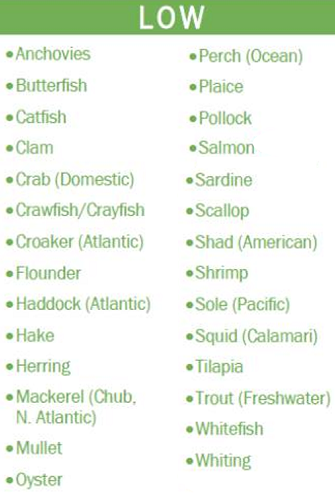
14. Select fish which is high in omega-3 fatty acids – Best selections are salmon, rainbow trout, lake trout, and tuna. (Below is a list of seafood lowest in Mercury)
low mercury foods
15. Choose strong-flavor chesses – Sharp cheddar, feta and Parmesan have strong flavors which means you will need to use less to flavor your foods.

16. Purchase Greek yogurt – Greek yogurt is thicker and creamier than other varieties, and the protein content is much higher. My favorite is Fage Total 0-Percent Greek Yogurt.

17. If you must buy frozen entrees, make sure they contain less than 400 calories, 4 grams of saturated fat, and 600 milligrams of sodium, with at least 14 grams of protein and 2 grams of carbohydrate.

18. Add vegetables and/or cooked brown rice or quinoa to your frozen entrée to increase the size and nutrition level of the meal.

19. Add fresh or frozen fruit to cooked oatmeal to provide sweetness without added sugar.

20. Eat oatmeal – Make sure to buy regular oatmeal, not the instant variety.

Here’s to happy and healthy shopping!

Healthy Grocery Shopping

Regular grocery stores in the United States are notorious for putting processed foods in alluring packages and displaying them prominently on grocery shelves. If you are in the habit of reading ingredient labels like I am, you probably know that the most processed foods are located along the aisles in the center of the store, while whole foods are found at the perimeter. As a result of this, I advise patients and clients to do the majority of their shopping around the perimeter in order to maximize the chances of making the healthiest food choices.

Grocery store junkThink about it. If a food item can be stored in a box, bag or can at room temperature, it means that it probably has preservatives which keep it from spoiling. Start reading ingredient labels and you might be shocked at what you find. If ingredient labels are excessively long or have long names which you can’t pronounce, you probably should steer clear. Remember that the least processed foods will be assimilated by your body the most readily.

Grocery stores are designed to lure you in like a rat in a maze, but instead of getting a reward at the end of the maze, you might be signing up for health issues if you are distracted by all the colorful advertising found on the most popular food items. You are far better off avoiding the maze and selecting fresh meats, produce, nuts and whole grains. Happy shopping!