Traveling Is Hard For Fitness People

flex gym
Ever since I began competing in 2009, I have become a high maintenance traveler. It’s almost impossible to avoid becoming high maintenance when things like finding a gym and locating clean food are foremost in one’s mind. I’m not saying that it’s not possible to stay on track with workouts and food while traveling, but foraging for certain “fitness” resources becomes an essential part of prepping for a trip in a fitness person’s life.

I honestly believe that it is always possible to create intense workouts in any location by performing plyometrics, calisthenics, climbing stairs, running on the beach, etc. However, I also know that those of us who love lifting weights go through iron withdrawals when a gym is not available during travels. My first question when a trip is being booked is, “Where is the closest gym, and how is it equipped?”, rather than what sights there are to check out. No hotel room routine or outdoor workout will ever feel as good to me as weightlifting.

Road trips are the easiest since a car can be loaded up with meals and water, but I am always concerned about whether there is a refrigerator in the hotel room at my destination. Though I am resourceful and can put my food on ice, food spoilage is almost inevitable after a couple of days. Packing food when traveling by plane is much trickier since certain food items either travel poorly or are not allowed by TSA. If you need to bring a lot of food and decide to check in your food bag, be prepared for the possibility of lost luggage. My food bag was lost for 24 hours on one trip when I was traveling to a national contest, all because the airline had cancelled a flight, yet had neglected to reroute my food after they booked me on a replacement flight! I also had to spend the night in a freezing cold airport terminal during that trip, so by the time I got to my final destination, I was exhausted and frustrated. When I discovered that my food had been lost, I literally began crying. Eventually my bag was found and delivered to me, but 7 pounds of chicken and beef were on the verge of spoiling by the time the bag was back in my possession.
OLYMPUS DIGITAL CAMERA
Traveling abroad holds even more challenges for the fitness person, since many countries don’t offer clean meal prep services. Even if a local market is located, how will food be prepped if your hotel room lacks a kitchen? I am currently facing this challenge as I prepare for a trip to Hungary. I will make sure to pack a bunch of whey protein, Quest bars and nuts to at least ensure that I meet my body’s daily protein needs. I have also looked into purchasing prepped meals and having them shipped to the hotel on the day of my arrival. Thank goodness I will be staying in a room with a kitchenette when I travel to Sydney, and can cook up a bunch of fish and chicken once I arrive there.

I know that those of you who are not involved in the fitness industry must be reading this and thinking that I am nuts, while those of you in fitness will be able to relate to what I have been saying in this article. The thing is, I don’t want my body to rebel from radically different eating habits or food choices, so I will uphold my high maintenance perspective and do everything in my power to eat clean. Most countries tend to consume whole foods and aren’t in the habit of eating copious amounts of fast foods, a fact which I am thankful for. I look forward to consuming the local produce and trying new foods while staying clean.

The Mind Of A Competitor

Oh, to be a competitor in the world of bodybuilding. It is empowering, exhilarating, inspiring, stressful, challenging and at times heartbreaking. A fascinating psychology exists in this world which can best be described by listing some of the quirks competitors have.

Ripped versus “Fat”:

First of all, competitors develop a bizarre love-hate relationship with their bodies in which they marvel at their bodies when they are lean and muscular and in contest shape, but will curse their bodies when they are the slightest bit mushy or fluffy. Competitors live in a world in which the bar is set VERY high. Competitors will see themselves as fat when others see an amazing body and will say so. Competitors will always believe that the more ripped and lean they are, the better they are. While this is a necessary component of contest prep, it plays games with a person’s self-esteem because it is a constant battle to reach or remain at the pinnacle of leanness and muscularity.

2012 North American
Overtraining:

Some competitors will overtrain in an effort to get their bodies dialed in, without considering the inevitable damage they are doing to their bodies. Yes, we are warriors, and yes, it can be a great thing to push through, but with too much training, the law of diminishing returns kicks in. I completely relate to the principle of training constantly for a big contest because I have done it many times. I have endured double training and double cardio sessions which at times had me in the gym for five hours at a time. I have sustained injuries in my foot, ankle, knee, shoulder and forearm and continued my training because a big event was looming around the corner. Was it smart to train through injuries? No, but at the time I couldn’t imagine slowing down or stopping just because of a silly injury. This is the very thing I now scold clients about. No contest is worth hurting yourself!

“A judge told me I suck!”

Another thing that competitors have a habit of doing is worrying about what judges say and taking criticism hard. Competitors need to remember that bodybuilding, to a considerable degree, is a subjective sport, and if you are going to allow a judge to rip you apart and kill your spirit, then you probably shouldn’t be competing at all. The word of one judge is exactly that. Now if you speak to a bunch of judges and people in the sport who know what the ideal for the division you compete in is, and they all tell you the same thing, then you can probably assume that what they are all telling you is constructive criticism which you can then use as a reference when you make adjustments to your training program. That way, you will address certain weaknesses without throwing in the towel.

Money drain:

Bodybuilding is a VERY expensive sport. When you tally up the cost of food, supplements, coaching, competition apparel, spray tanning, accessories, hair styling and makeup application, travel expenses, and entry fees, the financial load can be immense. Competitors will often go broke, scraping up whatever money they have to make the dream of competing happen. This is not a poor man’s sport! That is why I tell competitors to establish a budget and be judicious about which events they want to do and what they can afford to do. I also advise competitors to seek out sponsors to help out with the enormous costs of competing. It is not unusual to see competitors forgo other hobbies and vacations in an effort to gather enough funds to support their competing habit.

Food Porn:

As a competitor who used to dream about food, I completely understand the fantasizing which occurs in competitors when on a contest prep meal plan. Contest prep meals are usually bland as a result of how clean they are, and some meal plans are so restrictive that one may eat only two food items throughout the day, such as chicken and asparagus. It’s only human nature to rebel against this type of meal plan after a while, because it is quite a chore to adhere to it every single day with no treats and no cheats. It is a normal occurrence for competitors to discuss what foods they plan to eat post-contest. What’s also interesting is that some competitors will become so rigid and so fearful of backlash from their coaches that they will only have a quasi-cheat meal post contest, then return to the same rigid eating plan they were on before. Other competitors may go off the deep end, eating everything in sight for days or weeks, only to deal with considerable rebound.

Conclusion:

Those of us who compete are indeed a strange breed. We are disciplined, driven and focused. I am fine with our quirks and accept them as part of the sport.

Oil and Water: Why Crossfit Is Detrimental For Bodybuilders

I will boldly state right now that I cannot stand Crossfit, and will be delighted when its novelty wears off. There are substantial reasons for my argument against the principles of Crossfit, especially when it comes to speaking to NPC and IFBB competitors who believe that Crossfit will enhance their efforts to get into contest shape. Not only will Crossfit widen your waistline as a result of the constant heavy lifting, it will also cause cortisol spikes which make your body hold onto belly fat for dear life.

Here are the nine fundamental exercises which Crossfit is built upon:

Air Squat
Front Squat
Overhead Squat
Shoulder Press
Push Press
Push Jerk
Deadlift
Sumo Deadlift High Pull
Medicine Ball Clean

I can only imagine how many lumbar disc herniations have occurred in weekend athletes as a result of performing most of these movements, not to mention the rotator cuff strains and tears from the stress on the shoulders. I also find it pretty annoying that Crossfit renamed the free squat or bodyweight squat in an effort to be catchy and original. What’s more, I see no point in getting a client to perform 200 or 300 “air” squats in a row, not unless your objective is to drive your client to complete exhaustion and overtraining. Based on what I have witnessed with the design of Crossfit regimens, exhaustion and overtraining is the inevitable outcome.

Crossfit routines also incorporate other exercises such as pullups and pushups. What bothers me is that these movements are performed in a high rep range, to the tune of 100 or more. Then the client may be pushed to do tire flips or some of the asinine Olympic lifts that Crossfit holds so dear to its faddish foundation. I am NOT impressed with the super high intensity workouts that define Crossfit. They tax the central nervous system to an excessive degree. Crossfit fanatics may love the feeling of being pushed to the limit, but this sport is downright DANGEROUS. When the body is fatigued to the extent that it is in a Crossfit routine, the risk for muscle breakdown and frank rhabdomyolysis is considerable. No physical discipline is worth the risk of landing in the hospital.

I understand that Crossfit offers a great social environment and a feeling of camaraderie, but at what price? Every single person I know who is a fan of Crossfit has been injured while doing it. The suggested Crossfit regimen of 3 days on, 1 day off is too rigorous when you consider the fact that Olympic lifts are part of the core of Crossfit training. The body simply cannot repair itself in enough time. To fatigue a Crossfit client by having him/her do a WOD (workout of the day for those of you not familiar with Crossfit) and then stack on deadlifts for reps or 5 foot high box jumps is insane. Benefits drop dramatically when the body is completely depleted like that. The Crossfit mentality of deplete and endure is pure bullshit. Bodybuilders, in contrast, train hard and heavy, and yes, they often train to depletion or failure, but they certainly aren’t going to attempt 100 pullups after destroying a traditional back workout. They understand the law of diminishing returns all too well.

Proponents of Crossfit often state that the training is functional and enhances the day to day activities which people perform. When was the last time you had to do a clean and jerk while on the job? Unless you work as a firefighter, stock room clerk or some other physically demanding work role, I seriously doubt that you are performing movements which mimic what happens while in a Crossfit box. Besides, if you’re injured as a result of Crossfit (or should I say WHEN), you can’t possibly perform any challenging physical movement which strains your injured body part.

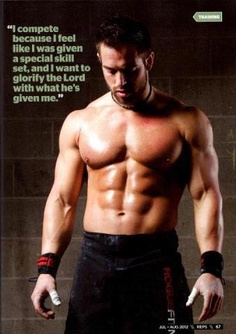
Rich Froning World Champion Crossfit Athlete

Rich Froning World Champion Crossfit Athlete


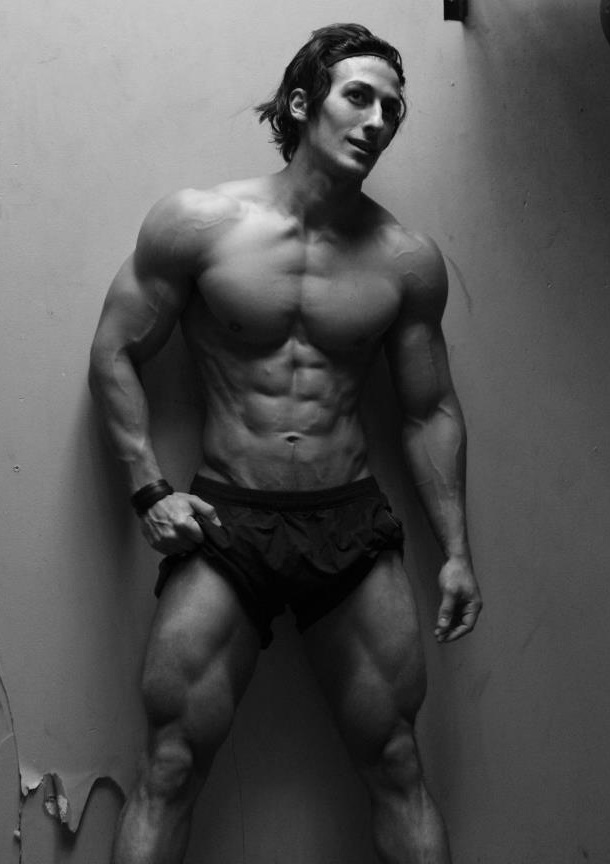
Sadik Hadzovic IFBB Men's Physique Pro

Sadik Hadzovic IFBB Men’s Physique Pro


For those of you who compete in the NPC or IFBB (or INBA, WBFF, etc.), don’t expect to be able to incorporate Crossfit into your contest prep training and sculpt your physique in the manner required for bodybuilding. I actually had a client who begged me repeatedly to let her do Crossfit two days a week despite my recommendation that she abandon it and focus on traditional weight lifting. I finally acquiesced, and allowed her to incorporate Crossfit as part of her training. As I had predicted, she sustained an injury, her waist widened from all the heavy complex movements which made her midsection boxy, and she became soft as a result of the cortisol spikes which the high intensity Crossfit training created. After 3 weeks of seeing all her efforts from pre-Crossfit training unravel, I asked her to reconsider her decision to engage in Crossfit. As soon as she stopped doing Crossfit, her waist began to nip in, and her body began to tighten up again. Amen for old school weightlifting!

If it sounds like I am saying you will have to decide between doing Crossfit and competing in any of the bodybuilding divisions, I am. You simply cannot create the nipped in waist and beautiful taper that defines every single bodybuilding division. If you do Crossfit, you will create a strong body (plus some injuries), but you will also widen your silhouette and carry a layer of fat as a result of all that cortisol you will release from constant high intensity training. Look at a typical Crossfit athlete. Shoulders are broad, quads and hams are thick, and the abdominal region is thick and boxy. That is what happens when compound Olympic lifts are performed on a regular basis. If that is your aesthetic ideal, by all means knock yourself out with Crossfit, but you will be destroyed on a bodybuilding stage.

On the subject of Olympic lifts, even powerlifters have the sense not to rep out on these movements. Yet Crossfitters, blinded by the so-called warrior mentality that leads them to do stupid things that invite injury, will rep out on movements which recruit a tremendous amount of muscle fibers and hence tax the central nervous system. I am willing to bet that the Crossfit nation contends with adrenal burnout, permanent muscle damage, and repetitive tendon and ligament ruptures on a relatively consistent basis, and that such negative aspects will eventually cause the demise of this fad sport.

I will always staunchly defend the focus and the principles behind bodybuilding. I know that NPC and IFBB competitors are true warriors and know how to push through grueling training. I also strongly believe that for the most part, most competitors are smart enough not to overtrain or invite injury by performing movements which are biomechanically unsound. The world of bodybuilding not only rewards strength, but it also recognizes the aesthetic ideal which all bodybuilders aspire to achieve, regardless of division. Bodybuilding is not about flipping a massive tire across a gym, it’s about sculpting and defining muscle.

(Please also check out sportsuppguide.com for a posting of this article there.)