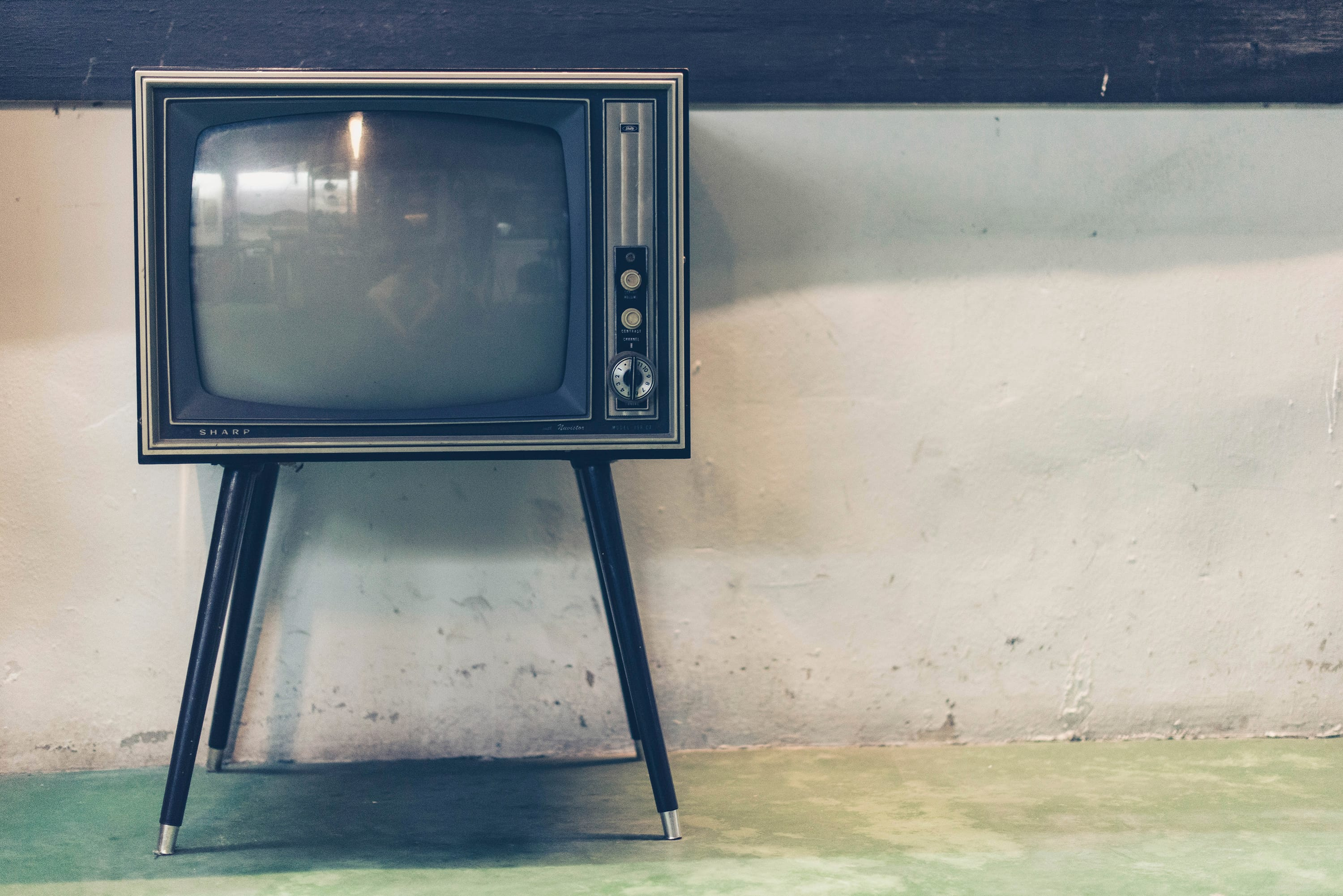
Television in the 1970s and 1980s was a very different experience from watching television today. There were far fewer channels, no streaming services, no DVRs, and no way to simply search for a program and watch it whenever you wanted. Watching television was often something the whole family planned around.
Television programming back in the day
In the 1970s and 1980s, most Americans received television through a handful of broadcast networks, particularly ABC, CBS, and NBC, with PBS providing educational and cultural programming. Later, FOX joined the major networks in 1986. Cable television also expanded dramatically during the 1980s.
Programming was organized around a schedule. There were morning shows, daytime game shows and soap operas, afternoon children’s programs, evening news, and prime-time programs. Prime time was especially important because networks competed for the largest possible audience.
People commonly talked about “Must See TV” before that phrase became associated with NBC in the 1980s and 1990s. If a favorite program came on at 8:00 p.m. on Thursday, for example, you had to be sitting in front of the television at 8:00 p.m. on Thursday.
There was also a strong sense of appointment television. Families might say, “Don’t forget, The Muppet Show is on tonight,” or “We’re watching Dallas.” Missing the episode could mean missing it permanently.
TV Guide
TV Guide was extremely important because it told people what was going to be on television and when. Today we can look at a program guide on the television or search the internet in seconds. Back then, viewers often bought or subscribed to the weekly magazine.
TV Guide contained the listings for programs by day and time, along with articles about television stars and upcoming programs. People would look through the listings and mark the programs they wanted to watch.
In many households, the TV Guide might sit on the coffee table next to the television. It was essentially the search engine and program guide of its time.
TV Times
On the West Coast, another familiar publication was TV Times, which was particularly associated with the Los Angeles television market. For people in Southern California, it was a useful way to see the local television schedule.
TV Times was especially relevant because television schedules could vary by market. What aired at a particular time in Los Angeles wasn’t necessarily identical to what viewers in New York or Chicago were watching.
Sitcoms
Sitcoms were a huge part of television during the 1970s, 1980s, and into the 1990s.
The 1970s produced shows such as All in the Family, The Jeffersons, Good Times, The Mary Tyler Moore Show, MASH*, Sanford and Son, The Brady Bunch, and One Day at a Time. Many sitcoms weren’t simply jokes from beginning to end; they also dealt with subjects such as racism, poverty, family problems, relationships, politics, and changing social attitudes.
The 1980s brought another generation of enormously popular sitcoms, including The Cosby Show, Family Ties, Cheers, Growing Pains, The Golden Girls, Night Court, Who’s the Boss?, and Roseanne.
By the 1990s, shows such as Seinfeld, Friends, The Fresh Prince of Bel-Air, Home Improvement, and Frasier became major television events.
One interesting thing about sitcoms was that the audience often had to wait an entire week for the next episode. There was no “next episode” button. If you really liked a show, you remembered the day and time it came on.
Commercials were part of the experience
Commercials were much more noticeable because viewers couldn’t simply fast-forward through them. A typical half-hour sitcom had commercial breaks throughout the program.
Some commercials became almost as memorable as the television programs themselves. Companies such as Coca-Cola, Pepsi, McDonald’s, Burger King, Kellogg’s, General Mills, Chevrolet, Ford, and many others created advertising campaigns that became part of popular culture.
Commercial jingles could get stuck in people’s heads. Children knew the commercials for their favorite cereals and toys, and commercials during Saturday-morning cartoons were especially important because they were aimed directly at young viewers.
The 1980s and 1990s also saw increasingly elaborate commercials for new technology, automobiles, fast food, toys, and consumer electronics.
How blockbuster films were aired on television
Going to the movie theater was one way to see a blockbuster, but eventually the movie would make its way to television.
The arrival of a major movie on television could be a big event. Networks would advertise the movie heavily beforehand, sometimes for days or weeks. A popular movie might receive a special presentation with a prominent introduction and additional commercial promotion.
There was something special about knowing that a major theatrical film was going to be shown on television that night. The family might plan the evening around it.
Movies could also be edited for television, particularly for language, violence, sexual content, and running time. The film might also be interrupted by commercials.
You had one shot to watch your show
This is probably one of the biggest differences between television then and television now.
If The A-Team came on at 8:00 p.m. and you weren’t home, you missed it.
There generally wasn’t a convenient way to watch it later. You couldn’t go online, open an app, or find the episode on demand.
This created a different relationship with television. People actually arranged their lives around television schedules. Someone might rush home from work, finish dinner early, or tell a friend, “I can’t go out tonight—my show is on.”
If you missed a particularly important episode, you might have to wait for a rerun. And sometimes you didn’t even know when that rerun would happen.
VHS changed everything
Then came the VCR and VHS tapes, and television viewing began to change dramatically.
A VCR allowed people to record a television program and watch it later. Suddenly, you didn’t necessarily have to be home when your favorite program aired.
You could put a blank VHS tape into the machine, program the VCR, and record a show. Later, you could rewind the tape and watch it.
Of course, programming a VCR wasn’t always easy. Many people remember struggling with the clock, recording times, and the infamous blinking 12:00 on the VCR display.
VHS also allowed people to build their own personal movie collections. Instead of waiting for a movie to appear on television, you could rent a movie from a video store and watch it at home. Blockbuster Video became one of the defining businesses of this era.
The VCR therefore represented a major transition: television was beginning to move from “watch it when the network broadcasts it” toward “watch it when you want.”
The biggest difference
The biggest difference between television then and television today is control.
In the 1970s, you watched what the networks decided to broadcast, when they decided to broadcast it. TV Guide or TV Times told you what was coming on. Commercials were part of the experience. If you missed something, you hoped for a rerun.
VHS gave viewers their first real taste of control. You could record a program, pause it, rewind it, and watch it later.
Today, streaming has taken that idea much further. We can watch thousands of programs whenever we want, pause them, skip commercials, watch entire seasons in a weekend, and even watch on a phone.
For people who grew up with television in the 1970s and 1980s, that makes the old experience seem almost unimaginable: you didn’t watch television whenever you wanted—you watched television when television was on.

 dr. stacey naito's blog