The True Mirror

What is a True Mirror? It’s a non-image-reversing mirror, nestled in a box frame, which enables you to see yourself as others see you. The issue with the True Mirror is that it can be quite jarring to finally see oneself as everyone else sees them. John Walter, the founder of the brand True Mirror, states in an email to Alix Tunell from RealSelf News:

“For many people, especially image-conscious people, the perception of asymmetry is overwhelming. It’s unfortunate, because it’s exaggerated—because things are on the opposite side [from what you’re used to seeing], they get doubled in your own perception.”

This was certainly the case for me the first time I looked into the True Mirror, and I was so rattled by my facial asymmetry that I refused to gaze into the contraption for several days. I understand now that my brain is still exaggerating subtle differences when I look into the True Mirror, and that I can gain comfort by looking into a standard reversing mirror. I also understand that the True Mirror is best appreciated when your face is animated, because you will then see the true reflection of your energy. It’s a complete trip and something I would recommend to anyone.
Mirror Images

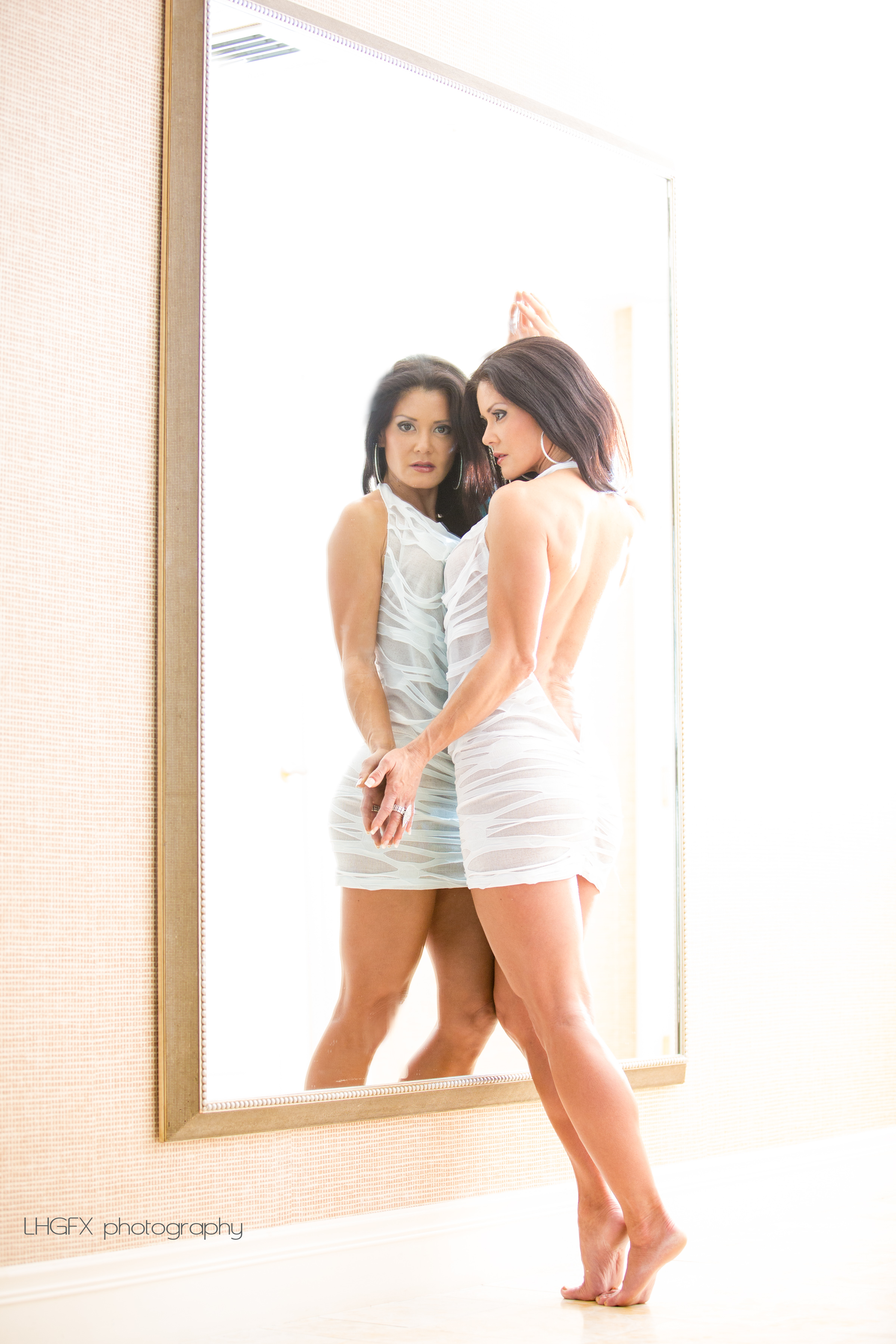
You might not have thought much about this, but your perception of your own face is different than what other people see. The most frequent view we have of ourselves is in a mirror, which is a flipped version of how we really look. However, since the image we see is inverted, we often feel more comfortable with how we look in a mirror, as opposed to photographs. We also have the option of looking at selfies, which are even worse, since they distort our features due to the wide-angle design of the camera lens.

The closest representation of how others see us is via photographs, but depending on the lens type used, even photos can present distortions which don’t accurately represent our faces. We may think the camera is capturing us exactly how others perceive us, but those lenses often make some features more prominent than others, and thus quite different from how we really look. Another big factor which comes into play with looking in a mirror or at a photograph is that both are two-dimensional images, so we can never truly appreciate our own faces as the dynamic, three-dimensional countenances which others see.

There is a concept called the True Mirror which enables us to regard our own faces exactly as others do. For a great TED lecture on face recognition which discusses the True Mirror, check out this link: