Tag transformation
Are You A Skin Picker?
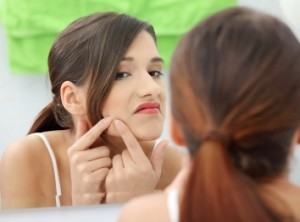 I know that many of you may find it irresistible to pick and squeeze acne blemishes and scabs which pop up on your skin. However, there are individuals who take this compulsion to an extreme and create abrasions and divots in their skin even when there is no blemish in sight. These people suffer from a form of obsessive-compulsive disorder known as dermatillomania or skin picking disorder.
The characteristics which separate a dermatillomania sufferer from a relatively “normal” tendency to pick are:
• Repetitive picking at the skin
• Picking which is severe enough to cause tissue damage
• Social distress
People who suffer from skin picking disorder also commonly have depression and/or anxiety and low self-esteem. Common areas which sufferers tend to pick at are the face, scalp, cuticules, arms, forearms, back, hands and feet. Most of the time people will pick with their fingernails, but may also use their teeth, tweezers or scissors. This tendency may be triggered by boredom, stress, or anger, and is often such an absent-minded activity that people may not even be aware that they are picking. The picking behavior often provides relief from tension, but what frequently follows is guilt and feelings of shame. The most extreme cases are best treated with psychotherapy and medication, while milder cases can often be successfully treated with behavior modification.
I frequently see patients who have neurotic excoriations (areas of irritated, abraded skin) and areas of brown hyperpigmentation (from older spots which have been picked) which are dead giveaways to skin picking disorder. The typical patient I see is anxious and perceives any real or fabricated skin imperfection is distorted in significance. The sufferer may experience satisfaction after picking at the skin, but a vicious cycle sets in by which the open sores are constantly picked at, making them far worse and decreasing the likelihood that they will heal without some permanent scarring.
Here are a few suggestions for mild skin pickers to practice in order to break the cycle of picking.
1. Avoid spending excessive amounts of time looking in the mirror for areas to pick.
2. Remember that the zone of infection is an inverted triangle spanning across the eyes and down to the area below the mouth.
3. ANY area of the skin that is picked at can develop infection.
4. Keep fingernails short to make it more difficult to use your nails as a picking tool.
5. Avoid using tweezers to pick at skin.
6. When you get an acne blemish, DO NOT pick at it or attempt to extract it. Instead, apply ice to the blemish, use hydrocortisone cream, or apply old fashioned toothpaste (Crest original formula is perfect) to the blemish.
7. Remember that an acne blemish is far better than an abrasion, scab that doesn’t heal from constant picking, brown hyperpigmentation, or a permanent sunken scar.
I am saddened by the people who come in for cosmetic dermatology treatments who exhibit the signs of skin picking disorder. The most common patient is female, between late teens to early 40’s, and has a palpable anxious energy. Though I can always spot a patient with the disorder by the telltale excoriations, the patient’s embarrassment is heightened when the cover-up makeup comes off and I can see hyperpigmentation from areas that were picked at previously. I cannot tell you how many attractive women have come into my office who have essentially ruined their skin by picking at it. No blemish is worth picking at, especially when permanent scarring can result.
A Great Overall Abdominal Exercise – Woodchop
 One of the most effective abdominal exercises is the woodchop. The woodchop movement is excellent for recruiting the obliques and has always been one of my favorite abdominal moves. This exercise can be performed with a dumbbell, medicine ball, kettlebell or cable pulley and can also be performed in reverse. For ease of explanation, I will describe the regular woodchop movement here, but if you are interested in performing reverse woodchop, your starting position will be at the floor or a low pulley.
– Your starting position will be standing with feet wider than shoulder width apart and toes pointed outwards slightly.
– Holding the weight (or high cable pulley handle) with both hands, rotate your body downwards towards the opposite knee in a diagonal arc. When doing this, your arms will be straight but without locking the elbows. Also, you will be rotating through your torso, keeping arms straight during the movement.
– Return to start.
I recommend 3 to 5 sets of 12 to 15 repetitions.
Why I MUST Go To The Gym
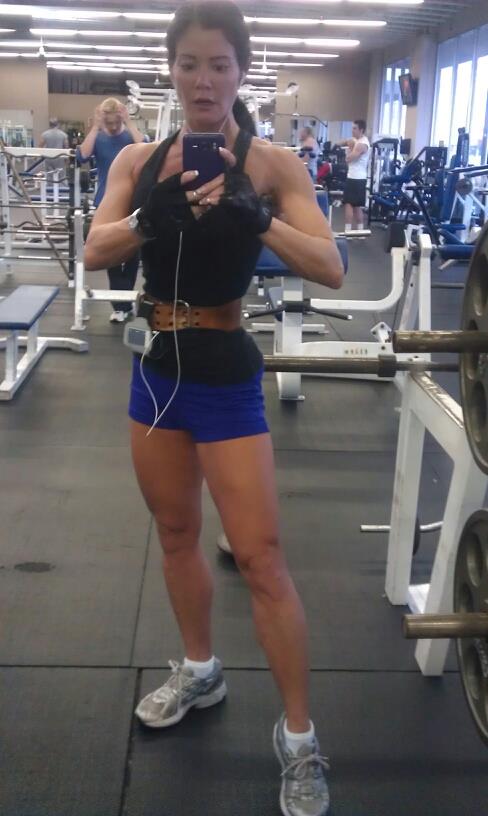 I move at a frenetic pace every single day, switching gears constantly and trying to pack as much as I can into each day. My determination, organization and just plain stubbornness usually ensure that every single item on my to-do list gets done, and that certainly includes my intense workout regimen. I work out six days per week, usually twice per day, and find it downright challenging to fit it all in while also attending to my career, family, and personal responsibilities. So why not just abandon the crazy gym schedule? Not a chance!
When I go to the gym, I have a perfect opportunity to recharge my body. I push myself to train harder and heavier with each day, and I love getting to that point where I may question whether I have the energy or strength to complete the entire routine (I always do though). The time I spend in the gym is my personal time, ME time, and allows me to take care of myself without worrying about anyone or anything else in my life during that small pocket of time. It’s like putting the oxygen mask on myself to ensure that I will be able to help others. My daily workouts keep me on a consistent schedule and provide structure to my day.
Another wonderful benefit of training as hard as I do is that I get to beat the aging process. I can honestly say that I am in better shape now than ever before. One of the joke statements I often make is that I am aging like a fine wine. What amazes and inspires me is the fact that there are a number of people in the fitness industry who are doing the very same thing. The population may be aging, but the newer crop of people over 40 who have embraced clean eating and resistance training looks better than ever and enjoys better vitality and health than the over 40 crowd from previous decades. It can be quite a guessing game to accurately determine someone’s age by looks alone these days!
Check Out #9 in The Bump To Rump Video Series: Side Single Leg Press
NPC and IFBB Women’s Divisions

Fitness, Bikini, Bodybuilding, Womens Physique
Women’s bodybuilding increased in popularity over the years, but several other women’s divisions have been established which embrace different ideals in terms of the female physique. You can see from the image at the top of this post how different degrees of muscularity come into play within different divisions.
I will go into more detail about the other divisions in separate posts, but here is a brief synopsis:
Fitness: This division is characterized by an athletic, well-muscled but not overly muscular body. In this division, women perform routines in which they show their strength, agility and flexibility.
Figure: This division is similar to fitness, but there is no choreographed routine performed onstage. Athletic frames with appreciable shoulder and back development with slender hips are the ideal.
Bikini: This division, established in 2009, rewards a very lean but much softer look than what is seen in other divisions. Muscle striations are a big no-no in this division.
Women’s Physique: This is the newest division added to the NPC and IFBB, established in 2011. Competitors in this division are more muscular than figure or fitness competitors, but do not possess the same degree of muscularity or conditioning seen in women’s bodybuilding.
NPC And IFBB Men’s Physique Division
 When the NPC established the Men’s Physique Division for male competitors in its bodybuilding events back in 2011, it fueled an impressive interest in competing among men who were in great shape but not big enough to compete in the bodybuilding division. Suddenly a division popped up which did not demand the extreme muscularity that characterizes Men’s Bodybuilding. But what are judges looking for in the Men’s Physique Division? They want to see men who are fit and who display great shape, muscularity, conditioning and symmetry. Overall proportion trumps massive muscle bellies here, but keep in mind that Men’s Physique competitors have a decent level of muscularity.
Men’s Physique competitors are split up into different classes on the basis of height instead of weight. Local and regional events will usually have an Open division (all ages), Masters 35+, and at times a Masters 45+ division. At the national level, only a couple of contests feature a Masters Division, forcing many older competitors to compete against those much younger in the Open Divisions. IFBB Men’s Physique Pros compete in one class regardless of height or age.
Attire for Men’s Physique competitors consists of board shorts which sadly cover the majority of the quadriceps and the hamstrings. Competitors compete barefoot.
During judging, each competitor is expected to walk to the center of the stage individually and perform front and back poses for the judges. Once each competitor has had a chance to hit his poses, judges will call out competitors to the center of the stage for comparisons.
 dr. stacey naito's blog