Could You Be Undernourished?

Bodybuilder-FoodOriginally written for and published by sportsnutritionsupplementguide.com

If you are a fitness fanatic or competitor, you may assume that you are adequately nourished because you practice clean eating. However, that might not necessarily be the case. Shockingly, many people who are in the fitness world suffer from under-nutrition as a result of consuming limited types and amounts of foods in an effort to reach a super lean state. Think about it: if you are limiting caloric intake during a contest prep phase, have eliminated foods which become demonized during prep such as fruits and peanut butter, and aren’t supplementing your body with the nutrients it needs, then you are probably undernourished. Such nutrient deficits can have a serious negative impact on your health if practiced for an extended period of time.

Under-nutrition is a nutrient or energy deficiency, while malnutrition can represent either a deficiency or an excess of nutrients. Some individuals (especially women) in the fitness world continually follow meal plans which are unbalanced and extremely low in calories and are thus chronically undernourished. Such a state of deficit can be amplified if certain medical conditions such as leaky gut are present, because whatever nutrients are supplied to the body might not be absorbed properly.

Mild cases of under-nutrition are often symptom-free, while more severe cases are usually symptomatic. Some deficiencies can cause permanent damage to the body, for example, blindness with severe vitamin A deficiency. Typical symptoms of under-nutrition vary based on the specific deficiency, but can include:

Joint and bone pain
Ringing in the ears
Difficulty breathing
Poor night vision
Sores at the corners of the mouth
Muscle weakness
Impaired immunity
Fatigue
Delayed wound healing
Dry skin and hair
Bleeding gums
Skin rashes
Easy bruising
Digestive problems
Dizziness
Irregular or halted menstrual periods
Depression

It can be difficult to determine whether a symptom is reflective of a nutrient deficiency or some other cause, but if your diet is restrictive, there’s a decent chance that a nutrient deficiency is to blame. The following nutrients are being highlighted here because they are most likely to be lacking in a fitness person’s diet.

Vitamin D3: The majority of the U.S. population is deficient in this vitamin, which is not only important for bone health but also reduces the risk of heart disease, type 2 diabetes, and many types of cancer. Here’s the challenge: very few foods contain vitamin D3 (egg yolks, fatty fish like salmon), and the skin only makes vitamin D3 in response to exposure to sunlight. Common symptoms of vitamin D3 deficiency are muscle aches and joint pain, both of which could mistakenly be brushed off by bodybuilders as the consequence of heavy lifts at the gym. If you want to supplement with vitamin D3, take 5,000 mg per day.

Calcium: Have you ever gotten a mad craving, especially in the middle of contest prep, for fatty foods or soda? Both cravings can be a sign of calcium deficiency. Calcium is essential for formation of healthy bone tissue and plays a vital role in nerve impulse conduction. Because the typical fitness meal plan excludes dairy sources, a calcium deficiency can sneak up on fitness people. Take 500 milligrams twice daily.

Iodine: This element is essential for the production of thyroid hormones. Main dietary sources of iodine include table salt, eggs, seafood, and dairy products. However, table salt is avoided by most fitness people, as are dairy products, increasing the risk of developing an iodine deficiency. Ironically, though sea salt provides many of the minerals which are missing in table salt (such as magnesium and potassium), it also potentially creates iodine deficiency since it is not fortified with iodine.

It may be difficult to tell if an iodine deficiency exists in the early stages because symptoms don’t surface until the thyroid gland reacts to the lower iodine levels. By that time, the symptoms of hypothyroidism have usually kicked in, such as fatigue, constipation, dry skin, depression and weight gain. The good news is that iodine supplements are available. Iodine deficiency can also be remedied by consuming seafood, kelp and meat products.

Magnesium: Have you ever noticed that your cravings for chocolate are intensified as you get closer to a contest date, or right before you ladies hit “that time of the month”? Chocolate cravings are a common signal that the body is deficient in magnesium. Deficiencies of this important mineral are quite common among regular folk and bodybuilders. Magnesium is important for hundreds of bodily functions, has a calming effect, and keeps the digestive tract moving optimally. It also has a protective effect against high blood pressure. If you prefer to supplement magnesium with a tablet, take 400 mg at night. If you prefer food sources of magnesium, almonds are an excellent source, providing 80 milligrams per ounce. Spinach, legumes, seeds, unrefined whole grains, and cashews are also good sources of magnesium.

Potassium: Lack of this mineral can wreak havoc on contest prep since it is excreted during the diuresis phase of most contest prep regimens. Potassium is present in every cell of the body, is essential for energy production, guards against high blood pressure, and maintains fluid balance. Daily needs range about 5,000 milligrams daily, and can be obtained from fit-friendly foods like spinach, sweet potatoes and broccoli, but during final week prep, the loss of potassium during the water-shedding phase must be compensated for in order to avoid cramping, weakness, tingling, numbness, nausea, vomiting or palpitations. Severe potassium deficiency can be life threatening and must be corrected quickly.

Zinc: Some women have intense food cravings right before their periods which can be a sign of zinc deficiency. Zinc plays a vital role in cell division, DNA synthesis, immune system function, and protein synthesis. A deficiency of zinc can result in hair loss, skin rashes, frequent colds and other infections, insomnia, loss of taste or smell and decreased libido. If you prefer to obtain zinc from food sources, turn to red meat, wheat, oats, eggs, nuts, peas, and leafy green vegetables. Otherwise, a 50 milligram daily supplement will suffice for most individuals.
Goldilocks

IFBB-pro_FitX-2014-FitXproBikini-468 The Story of Goldilocks and the Three Bears (copied from DLTK’s Crafts for Kids)

Once upon a time, there was a little girl named Goldilocks. She went for a walk in the forest. Pretty soon, she came upon a house. She knocked and, when no one answered, she walked right in.

At the table in the kitchen, there were three bowls of porridge. Goldilocks was hungry. She tasted the porridge from the first bowl.

“This porridge is too hot!” she exclaimed.

So, she tasted the porridge from the second bowl.

“This porridge is too cold,” she said

So, she tasted the last bowl of porridge.

“Ahhh, this porridge is just right,” she said happily and she ate it all up.

After she’d eaten the three bears’ breakfasts she decided she was feeling a little tired. So, she walked into the living room where she saw three chairs. Goldilocks sat in the first chair to rest her feet.

“This chair is too big!” she exclaimed.

So she sat in the second chair.

“This chair is too big, too!” she whined.

So she tried the last and smallest chair.

“Ahhh, this chair is just right,” she sighed. But just as she settled down into the chair to rest, it broke into pieces!

Goldilocks was very tired by this time, so she went upstairs to the bedroom. She lay down in the first bed, but it was too hard. Then she lay in the second bed, but it was too soft. Then she lay down in the third bed and it was just right. Goldilocks fell asleep.

As she was sleeping, the three bears came home.

“Someone’s been eating my porridge,” growled the Papa bear.

“Someone’s been eating my porridge,” said the Mama bear.

“Someone’s been eating my porridge and they ate it all up!” cried the Baby bear.

“Someone’s been sitting in my chair,” growled the Papa bear.

“Someone’s been sitting in my chair,” said the Mama bear.

“Someone’s been sitting in my chair and they’ve broken it all to pieces,” cried the Baby bear.

They decided to look around some more and when they got upstairs to the bedroom, Papa bear growled, “Someone’s been sleeping in my bed,”

“Someone’s been sleeping in my bed, too” said the Mama bear

“Someone’s been sleeping in my bed and she’s still there!” exclaimed Baby bear.

Just then, Goldilocks woke up and saw the three bears. She screamed, “Help!” And she jumped up and ran out of the room. Goldilocks ran down the stairs, opened the door, and ran away into the forest. And she never returned to the home of the three bears.
Mr_Olympia_2014_Bikini_2
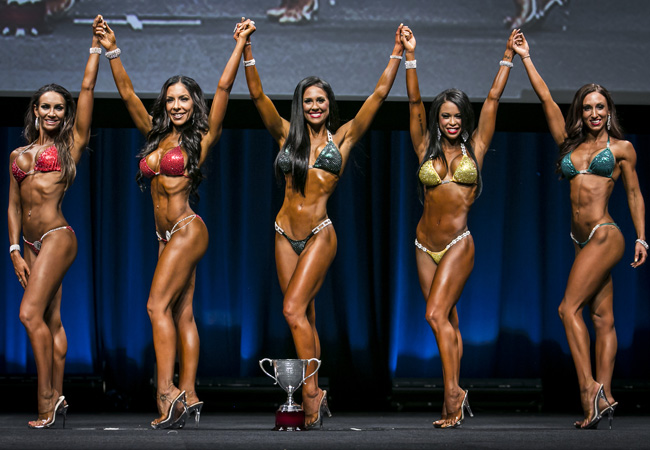
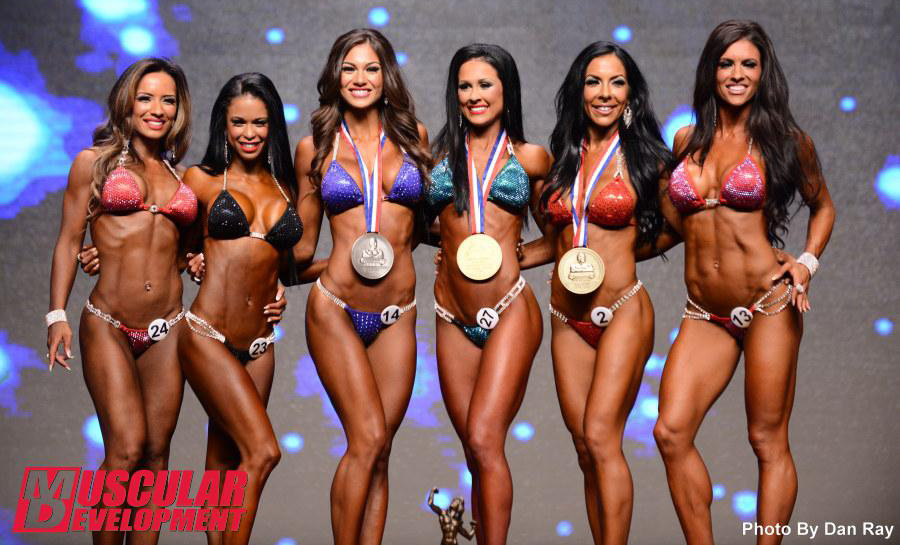
Those of you who have competed in NPC and IFBB bodybuilding events would probably use adjectives such as exhilarating, empowering, fun, nerve-racking, and perhaps terrifying to describe the experience of being onstage. No one in their right mind would sign up for such an experience if there wasn’t some sort of intrinsic reward or benefit to standing onstage and being compared to others down to the last fine details that are only discernible to the trained eye. However, there are instances in which a competitor may feel torn due to hearing one critique from one judge which is then contradicted by another critique from a different judge. Though there are standards within each bodybuilding division which are meant to establish guidelines for the perfect physique, judges are only human and they also have personal preferences or ideals which may color their evaluation of an athlete onstage.

The Goldilocks story is a study in extremes: temperature, size and degree of softness. In stark contrast, NPC and IFBB judges usually don’t have to deal with extremes unless they are judging novice divisions which can have a lot of variability in size, balance and degree of conditioning. Judges deal with porridge which is just about the right temperature, chairs which are just about the right size, and mattresses which have the right degree of firmness, so they have their work cut out for them. Not only must judges scrutinize every detail on competitors, they must do it rather quickly, which is where the human element comes in. I am quite sure that if two competitors with the exact same physiques were to stand in front of a judge, both with the same degree of facial attractiveness, posing skill, sparkle in the eyes, and personality, something as minor as hair color or suit color might be the one variable which tips the scales in one competitor’s favor. By no means am I suggesting that judging is heavily subjective, but unless robots are conducting the evaluations, there may be some degree of subjectivity, especially when a situation such as a tie-breaker must be decided.

I have observed heated discussions at the judges’ table on a couple of occasions which I am sure were due to differences of opinion over which competitor brought the absolute best package onstage. Sometimes it can be a “six of one, half a dozen of the other” predicament in which one competitor might be slightly lacking in the glutes, whereas another competitor might be weak in the hamstring area. If all other variables are equal, do the judges flip a coin to decide who gets the higher rank? What if several judges on the panel prefer a softer physique, while several others prefer a more compact, conditioned silhouette? I certainly don’t envy the judges for what they must deal with when assessing the competitors lined up in front of them!

The Importance Of Digestive Enzymes

Originally published on mensphysique.com on Wednesday, 06 February 2013

http://www.rxmuscle.com/blogs/the-lab-supplement-school/7476-the-importance-of-digestive-enzymes.html
Digestive Enzymes
Digestive Enzymes are amazing protein molecules which speed up chemical reactions in the body involved in everything from digestion to breathing, cell growth and molecular transportation. The reason why digestive enzymes have been developed and marketed is that many people eat such horrible foods in their diets that they need assistance in processing those foods. In addition, enzyme production drops as we get older compromising our optimal body function. Processed foods are notorious for challenging the digestive tract because enzymes which are found naturally in foods are destroyed when they are processed. Even cooked foods rely on the body’s digestive enzymes, and since there is a shrinking pool of enzymes as we get older, digestive problems may arise.

The main digestive enzymes are protease (digests protein), lipase (digests fat) and amylase (digests carbohydrates). It is believed that if insufficient enzyme levels are available to digest foods, toxins and undigested substances can linger in the body and precipitate illness. Other enzymes are available to aid in processing milk products and beans and are widely marketed.

There is no conclusive evidence to support a beneficial effect per se when general digestive enzyme supplements are taken, but enough benefit from them seems to be present that they maintain their popularity. I can tell you from personal experience that I notice a pronounced difference in my ability to digest foods, particularly proteins, when I take a combination digestive enzyme supplement which has protease, lipase and amylase. Beware if you have diabetes and are taking medication for it, or if you take blood thinners, as digestive enzymes can interfere with such medications.

In conclusion, if you notice that you experience digestive upset, you might want to try digestive enzymes for a few weeks to see if your digestive issues improve or resolve. Take one tablet with three of your meals. One of my favorites is MRM Digest-All because it has a comprehensive formulation of digestive enzymes.

Pushing Away Fears And Slaying The Dragon

389009
There is no question that I am a chronic overachiever and a very stubborn and determined woman. As a result of these personality traits, I have been able to accomplish every large goal I have set in front of me. However, the process of making my dreams come to fruition has, on occasion, been peppered by self-doubt and procrastination. I know that I have a definite fear of failure and of being average, both of which are traits commonly found in the fitness and bodybuilding industry, and that is part of the reason why I find the industry completely irresistible. However (and this is also quite common in the industry), I have also suffered from a fear of success, and know all too well that such a fear can be even more crippling than any other fear.

If I were to dissect my journey to an IFBB Pro Card through a filter of fear of success, I can see that although I never really wavered from chasing that goal, certain thoughts floated through my head at times which threatened to derail me from my focus. The most prominent aspect of my fear of success was the concern that I might not deserve to become a Pro. It seems strange now, especially since I have been a Pro for almost two years, but I definitely remember thinking that maybe I didn’t have what it took to be a Pro, especially when first place national finishes were stacking up for me without the final reward of IFBB Professional Status. I remember hoping and wishing that the next national contest would be “the one” that would make me a Pro, but in the back of my mind, there was always that kernel of doubt that I didn’t deserve such a reward, and that somehow, I couldn’t deliver what the IFBB expected in their Pros.

Thankfully, everything changed in April of 2013, when my mindset shifted dramatically. Instead of thinking that I wanted a Pro Card and how I wished it would happen, I decided that I ALREADY WAS A PRO and began to embody the attitude that Pros had. Interestingly enough, my attitude change also coincided with the best physique of my life. I trained like a complete machine, never once allowing myself to get rattled or distracted by anything that threatened to sabotage my belief in myself. I was no longer afraid of success. From April until July of 2013, I kept using the hashtag “alreadyPro” to keep myself on track, and it worked like a charm, because on July 6, 2013, I reached my goal and became an IFBB Pro.

In the back of my mind, I was afraid of how things would change once I reached my big goal, and of how I might change as a result of the new status. Reflecting on that now, I fully realize how ridiculous that concern was, because I am still the same person, just with four awesome letters after my name. I had a similar concern when I was in medical school and concerned about how I would change as a person when I finally became a doctor. Though I know that the advanced degree made me somewhat more reserved, I still retained the sarcastic sense of humor I always had and was still just Stacey. I am no better than anyone else because of what I have accomplished, nor has the core of who I am changed in any way. I have been given more opportunities since achieving success in the world of bodybuilding and fitness, and the climate of my daily life has shifted, but all of it has been extremely positive.
knight fighting dragon
On another note, I remember one aspect of my fear of success with the Pro Card hunt which had been a minor concern during my journey, but which became more compelling AFTER I had reached my goal. The day that I won my Pro Card was one of the most incredible days of my life, and I found myself floating on a cloud in a state of wonder, disbelief, elation and relief for a couple of weeks after that event. Then suddenly, I was struck with the realization that since I had slain the beast and finally succeeded in getting that Pro Card, I no longer had a goal to chase. The sword had to be placed in the scabbard and put away. Once that realization set in, I went into a funk for months, and my body followed suit by retaining water and exhibiting signs of metabolic damage. Instead of feeling victorious, I was depressed because I didn’t know what to chase after anymore. I was able to move on by setting new goals, and surprised myself by changing the game plan and focusing on non-contest related pursuits. This shift in goals has created a whole new set of fears and challenges, but my past successes have strengthened my belief in my abilities, and I now feel confident that I will accomplish every one of my new goals.