Check out my review of GRABBZ Lifting Gloves here:
Tag training
Anti-Inflammatory Meds and Muscle Growth
NOTE: This was originally written for Oxygen Mag digital version.

Copyright: staras / 123RF Stock Photo
There has been a heated debate over many years within the bodybuilding community about whether anti-inflammatory medications like ibuprofen (Advil, Motrin) and naproxen sodium hinder muscle growth. These medications inhibit the synthesis of prostaglandins, which also play a role in muscle synthesis. All it took was one clinical study published in the Journal of Clinical Endocrinology and Metabolism to put bodybuilders into a panic about reduced protein synthesis, and it didn’t matter that such results were found in laboratory rats. While there is some evidence to suggest that the anabolic signal is shut off when anti-inflammatories circulate in the bloodstream, nothing is absolutely conclusive, and what might be seen in the rat model might not necessarily be the case for humans.
While I will never advocate chronic use of painkillers and anti-inflammatory agents, I think they definitely serve a purpose when acute injury is present. When I find myself in the middle of disputes with bodybuilders who INSIST that a few days on such medications will completely destroy all their efforts in the gym, I simply shake my head in frustration. If you are injured and your lifting is adversely affected by the injury, whether it be a muscle strain, a ligament tear, or a minor disc herniation, you need to be aware that training through that injury, especially when it deranges your form and causes other body parts to compensate for the injury, will end up really messing you up over time. I honestly think that a minimal decrease in muscle mass over the course of a few days is preferable to the imbalance and asymmetry which usually occur when a bodybuilder foolishly pushes through heavy workouts despite an injury which has a domino effect on the body.
Common sense, and medical expertise, dictate that the inflammation must be removed from the area, most commonly through short term administration of anti-inflammatory agents, ice, and rest. Trust me, if you follow a regimen like this, you won’t lose all the muscle you have built over the years. Be sure to take these medications with food, and if you have any history of gastric ulcers. bleeding disorders, or kidney dysfunction, avoid taking them.
Remember that I am talking about DAYS, not weeks or months. This is one time when eating constantly has its benefits, since bodybuilders and fitness people can pretty easily fit in their medication administration with one of their meals. I know it’s difficult to back off from training, but if you truly want to HEAL, you must give the injured area time to repair itself. If you insist on continuing to train through the injury, especially, without any medications or other interventions on board, you can count on the injury either lingering or worsening over time.
L-Carnitine Tartrate For Athletic Performance

I am personally a big fan of l-carnitine supplementation. This amino acid compound, consisting of lysine and methionine, can be found in a couple of different forms. This article discusses L-carnitine tartrate, which is the form known to benefit athletic performance and recovery.
There are a couple of important points to consider when supplementing with carnitine. First of all, insulin must be present in the body for carnitine to enter muscle. One way of taking carnitine is to ingest carnitine with carbs so that there is an insulin release, but another effective option is to ingest carnitine with omega-3 fatty acids. Omega-3 fatty acids optimize cell membrane health, thus making cells more sensitive to insulin. Carnitine serves as a delivery system for fatty acids, so if carnitine levels are high, more fatty acids will be shuttled into cells to be utilized for energy.
Conversely, when carnitine levels are low, fewer fatty acids are moved into the cells and are instead stored as fat. Supplementation with carnitine before intense exercise, especially cardio, will switch the focus on burning fat rather than utilizing glycogen stores, resulting in longer sessions before glycogen stores are depleted. In addition, the presence of carnitine inhibits production of lactic acid, so recovery from intense exercise is more rapid.
Carnitine is not only an excellent performance supplement, it also serves as an excellent means of addressing metabolic syndrome. Metabolic syndrome, characterized by diabetes, atherosclerosis and high cholesterol, can be countered by carnitine’s ability to induce fat loss, prevent atherosclerosis and minimize the development of diabetes. After several months of carnitine supplementation, carnitine levels reach a level at which energy production and performance are enhanced. For this reason, it is best to consider carnitine an essential supplement in your daily regimen rather than as something taken only periodically.
Take 500 to 2,000 milligrams of l-carnitine tartrate daily, along with omega-3 fatty acids, for best results.
Keep That Body Running Smoothly

I’m willing to bet that most of you who are reading this article keep up to date with scheduled maintenance on your vehicles so that they will run as smoothly as possible. I also know that many of you insist on using a certain brand or grade of gasoline to optimize your car’s performance. Do you take care of your body in the same way, putting healthy, nutritious food into your gullet every day? Do you exercise regularly? If the answer to either or both of those questions is no, then you are neglecting your body’s needs for optimal function, fitness and health. Over time, such bad habits have a cumulative effect and can manifest in countless diseases and dysfunctions, including potential killers like hypertension, heart disease, diabetes and cancer.
Just as additives in gasoline can hinder the performance of a car, processed foods will interfere with optimal body functions, and your body must deal with breaking down, eliminating, or storing the chemicals found in packaged meats and other junk foods. The preservatives and artificial colors and flavors which are added to packaged foods trigger production of free radicals in the body. Free radicals are unstable molecules which damage the cells of the body and contribute to the development of cancer, atherosclerosis, and aging in general. In contrast, foods which are rich in antioxidants offset this harmful cascade. If your meals regularly consist of fresh vegetables, fresh fruit, nuts, beans and lean meats, you will be filling your body with clean fuel, providing nutrients which will optimize your health.
Another important component of optimal daily body maintenance is regular exercise. If you can commit to a consistent exercise schedule (and you CAN), you will reap a myriad of benefits, including improved circulation, better cardiac output, improved muscle tone, better concentration, and more energy. Your body is an amazing machine, and just like any machine, will begin to malfunction if it is mishandled or neglected. Regular exercise can be compared to running the engine in your car regularly to keep the pistons and gears running smoothly.
What Are You Waiting For?
Copyright: tommaso79 / 123RF Stock Photo
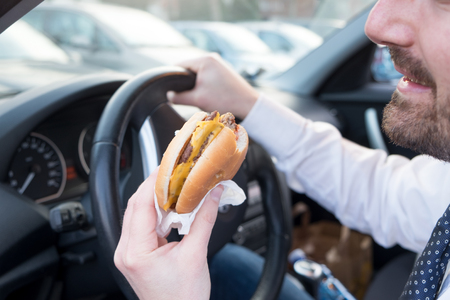
While working at a recent bodybuilding event, I had a very interesting conversation with one of the attendees. He was a 42 year old man who revealed to me that he had a couple of health concerns, and who very clearly stated that he wanted to be healthy for his sons (one son was about 10, and the other was about 13). He had a habit of eating fast food daily, and he never exercised because he figured that he was at a normal weight and didn’t need to work out.
He told me that he was so busy with work and with taking the boys to all their practice sessions that there was no time right now to train or to clean up his eating habits. He went on to say that he figured he would wait until the boys were older before he got into an exercise program and cleaned up his diet.
I very nicely told him to make every effort to fit in 10 or 15 minutes of intense plyometric or calisthenics work each day, between work and carting the boys around for their soccer and baseball practice sessions, but deep inside I was incredibly frustrated. I even told him that if he indeed waited a few years until the boys were older, major disease processes like diabetes or high blood pressure could emerge and put him in a dangerous health situation. However, I could tell that my words fell on deaf ears, and that this man would not take any steps towards a healthier lifestyle.
I honestly and truly believe that when it comes to anything in life, where there’s a will, there’s a way. If someone truly wants to positively impact his or her health, then steps can be taken immediately to develop a consistent regimen. There have been plenty of people who have made excuses and lived in denial, who were suddenly stricken by stroke or heart attack. Once a major event like that occurs, assuming someone survives it, there’s a big wake-up call and the person is forced to make the changes he or she didn’t want to make years ago.
Why wait?
No Olympia For Me This Year

Fun times from Olympia 2011 with Anca and Farinaz
For the past seven years, I have attended Olympia every year and have always enjoyed the whole experience. This year, however, I will not be attending since the main sports supplement company I work with, SWAT Fuel, will not have a presence there this time around. What is strange for me is that I am not bothered by the fact that I won’t be rubbing elbows with the fitness and bodybuilding icons I have come to know over the years. In some sense I am actually relieved that I will get a break this year, since I have been traveling more this year and could use a staycation.
For those of you who are wondering what event I will be at next, please come by and say hi at the Ferrigno Legacy on November 18th and 19th. I will be at the Flexpo, handing out samples of SWAT Fuel’s 9mm+P, which is a combination preworkout/endurance/thermogenic formula unlike anything else on the market!
For more information and tickets to the Ferrigno Legacy, please visit: https://www.ferrignolegacy.com/
Jerry Frederick Of Ironman Magazine Fame

While at Joe Wheatley’s Muscle Beach event on Labor Day, I had the pleasant surprise of seeing Jerry Frederick, whom I hadn’t seen in several years. He was sitting under the main canopy, with his ever-present breakaway reading glasses around his neck. I was just tickled to see him. For those of you in the bodybuilding world, you know that this man had worked for Ironman Magazine as one of their staff photographers for several decades. He has always had a strong passion for the world of competitive bodybuilding, and has gone out of his way to create content with athletes such as myself to use for features within the publication.
Jerry and I chatted for several minutes, and he was full of smiles and that sweet, gentle demeanor which makes him so loveable. I was saddened to hear that he has a neuromuscular disorder which could be Parkinson’s but which hasn’t been definitively diagnosed yet. Hopefully Jerry will be placed on a treatment plan which halts the progression of the disorder.
Weight Training Won’t Make You Big, Ladies!
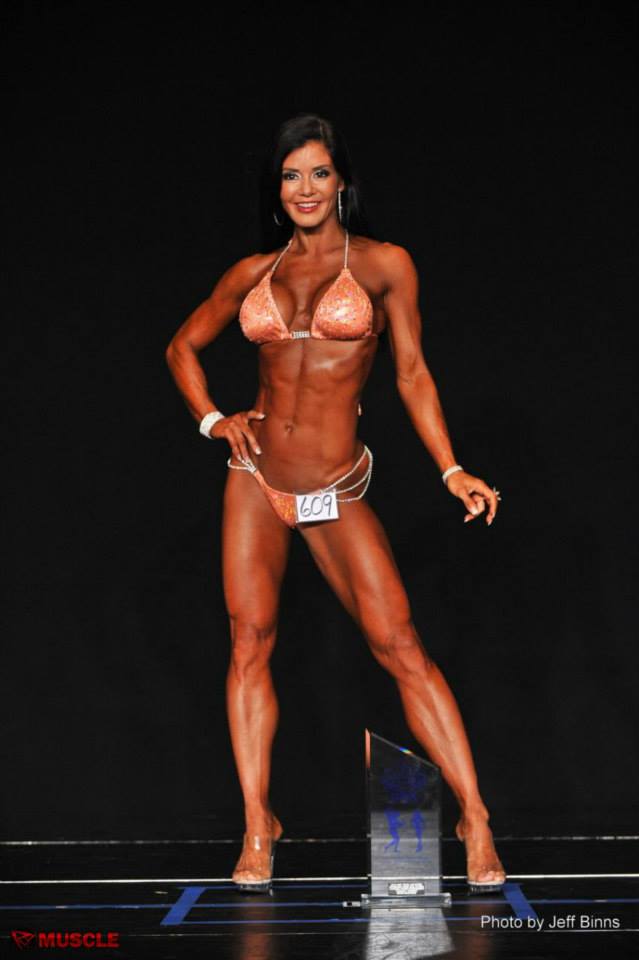
This was taken the day I won my IFBB Pro Card. I was training 4-5 hours a day at the gym, lifting heavy. I never got bigger than this, nor did I want to.
It still boggles my mind how many women are afraid to lift weights for fear that they will become huge and look like big, hulking men. How wrong they are! I will tell you right now that the answer to the question which serves as the title of this feature is, completely, unequivocally, NO. I often speak with female clients and patients of all ages who lament the fact that they cannot get the sculpted, lean bodies they covet, despite working out regularly. The problem stems from a couple of things:
1. They do not feed their bodies properly.
2. They do not lift weights, or if they do, they do not practice a lifting regimen that would bring about the physical changes they want.
I see ladies at the gym who will jump on a cardio machine for 20 to 30 minutes of easy cardio, then, if they had an indulgent night of eating or partying, they may extend their cardio sessions for a longer period of time at the same intensity. Before or after this, they may hit a few sets of uninspired exercises with light weights. These women barely break a sweat, yet they expect their bodies to transform. I’ve got news for you: that type of workout will ensure that you remain at the same level of fitness, and over time, you will see what little conditioning you may have plummet despite all your consistency.
It is a gross misconception that by lifting light weights and taking it easy at the gym, they will avoid getting bulky and will tone their muscles. Women are built differently than men, and simply do not have the testosterone levels necessary to build significant, bulky muscle mass. You need to challenge your body and create the muscle microtears necessary to build shapely, lean muscle. That means you need to lift heavier weights and break a sweat!
There are a multitude of benefits to lifting heavier weights, which I detail below.
CURVY, LEAN MUSCLE:
When you lift heavier weights, you will be rewarded with better muscle definition. Lifting very light weights will never challenge the muscles, so the muscles will never grow. I know I have scared some ladies, but think about a woman who has great muscle tone, but is still lean and feminine. A woman like that lifts weights that are heavy enough to spark muscle growth. If you follow suit, you will end up lean and more defined without being bulky.
GREATER OVERALL STRENGTH:
By lifting heavier weights, you will become stronger, and everyday activities will become easier to perform. You will also gain more structural stability from the greater muscle density which can protect your back and your joints.
IMPROVED BALANCE, COORDINATION AND POSTURE:
By improving muscle tone through weight training, you will enjoy better balance, greater overall coordination, and better posture.
IMPROVED BONE DENSITY:
Resistance training improves bone density by stressing the bones, thus triggering bone growth. This confers a protective effect against development of osteoporosis, especially in petite women.
HIGHER METABOLISM:
When you work out with heavier weights, you create tears in the muscles worked. When you do this, you expend a greater number of calories in order to repair those microtears.
LOWER BODY FAT:
Your body fat stores, particularly in the midsection, will be better utilized when you perform weight training with heavier weights.
PREVENTION OF MAJOR DISEASES:
Challenging weight training with heavier weights will reduce your risk of high blood pressure and heart disease. It will also lower LDL cholesterol while raising HDL cholesterol. In addition, your risk of diabetes and breast cancer will drop significantly.
BETTER IMMUNE SYSTEM FUNCTION:
Moderate exercise reduces stress, and by doing so, enables your body to produce more white blood cells to combat infection. In addition, the shift in attention from the troubles of the day while you are weight training will reduce the stress which can suppress your immune system.
GREATER WELL-BEING:
Vigorous resistance training boosts endorphin (natural opiates produced in the brain) levels, which create a sense of well-being. It will also stave off depression and produce a more restful sleep.
REDUCED PMS SYMPTOMS:
As stated previously, weight training is a terrific mood elevator and regulator. It also has a positive impact on hormone levels, increasing blood levels of estrogen, growth hormone, and testosterone. This counteracts the drop in estrogen and rise in progesterone which occurs right around the time before menstruation.
How To Be As Prepared As You Can Be for Your Big Run
Those of you who enjoy running should definitely read this article!
I am delighted to share the following article which was written by Jason Lewis. Jason Lewis is passionate about helping seniors stay healthy and injury-free. He created StrongWell.org to share his tips on senior fitness.

Mike Tyson once said “everyone has a plan until they get punched in mouth.” For those about to compete in a major race, the logic still applies. Everyone has a plan for their run until they come face to face with some of the harsh realities of race running. It can be hard, and you may face what feels like insurmountable obstacles. But if you prepare yourself properly, you can make sure you have the best chance possible to beat whatever punch – metaphorically speaking of course – comes your way. Here are some tips.
Know how to properly hydrate
If there’s one thing that any runner must know, it’s proper hydration. Dehydration lowers your blood volume and when you have lower blood volume your heart has to work extra hard to get blood (oxygen) to your muscles. Long story short, you can’t run your best when dehydrated. So, drink as much water as you can before, during, and after your runs?
Not exactly. Overconsumption can be an issue. For the most part, you should drink when you’re thirsty – no more, no less. Don’t overcomplicate things. Here’s a good resource on how to properly hydrate for certain types of runs.
One big question is whether water is good enough, or should you hydrate with sports drinks. Both are true, actually. Water is fine, but there are some benefits to Gatorade. Sports drinks contain carbs (in the form of sugars) and electrolytes (which you lose when you sweat) – two things your body needs when participating in demanding physical activity.
Find a routine and stick to it
You should develop a routine surrounding your runs and keep it the same through training and through race day. Eat the same thing before, during, and after runs. Wear the same shoes and clothing. Get the same amount of sleep the night before. Listen to the same music. This routine, if you keep to it, will help your body and mind stay strong through the tough stretches.
Know how to treat common running injuries
Running puts a good amount of stress on your body – whether it’s trail running, city running, or even practicing in a gym or on a treadmill. If you run a lot, you’re going to get hurt at some point. There’s no getting around it. It’s vital that you know how to deal with sprains, scrapes, blisters, and more. The shorthand guide is to always ice a sprain, stretch a cramp, pressure a wound, and leave a blister intact. For more on this, check here.
Know why you’re running
Sure, you’re running for the exercise and the feelings of personal accomplishment. The runner’s high isn’t an unwelcome byproduct. But in the end, running is about a mentality – even a spirituality for some. Focus on how running gives you a mental boost and makes you a stronger person: push yourself to achieve goals you never thought possible; give yourself a chance to find a stronger you through self-discovery; heal from a broken past; overcome seemingly impossible obstacles. As Jim Friedrich says in the article The Spirituality of Running, “What we do with our bodies manifests and expresses inner states, the sacred ground of our being. But bodily practices can also induce inner states.”
Whether you’re running for fun, a charity 5K, or a marathon – the principles of proper running preparation are pretty much the same. If you know how to hydrate, deal with inevitable injuries, and stick to what you know works, you will have a good chance at succeeding in whatever you do. “Success” is whatever you want it to be – only you can decide your own criteria.
Photo Credit: Pixabay.com
 dr. stacey naito's blog