Tag training
YouTube Review: Iconic Cookies
Understanding Delayed Onset Muscle Soreness
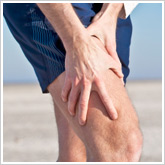 Have you ever adopted a new workout regimen, then ended up kicking your ass so hard that you became discouraged from the pain you experienced after your workouts? If so, you were probably taken by surprise when delayed onset muscle soreness (DOMS) set in. What often occurs is that people adopting new exercise regimens may become quickly discouraged, usually because they don’t understand why they are so sore, and will back off from exercising without ever getting a chance to maintain consistency. However, DOMS may be a beneficial signal that your workouts are challenging enough to make a difference.
DOMS typically develops between 24 to 72 hours after physical activity, and is considered a relatively normal and common result of activity that challenges muscle tissue. One popular but flawed theory is that the microscopic tears which occur in the muscle fibers after exercise, coupled with the release of lactic acid and protons, are responsible for the muscle soreness which characterizes DOMS. Mizumura and Taguchi determined in an important study that neurotrophic factors are produced by muscle fibers and satellite cells, and are critical for the development of DOMS symptoms. They also determined that damage to muscle fibers was not a necessary component of DOMS, further suggesting that a neurological cascade is what results in the post-exercise soreness.
For the most part, the aches and pains which characterize DOMS are assumed to be a sign that your muscles are adapting to the activity which caused them to develop in the first place. Rather than shying away from physical activity in the long term, the general recommendation is to take it easy for a few days, while still exercising, until the pain subsides. However, those of us who are gym rats and fitness freaks will tend to adopt the “Suck it up, buttercup!” mentality, powering through workouts as best we can while our bodies scream out in general agony.
So what can you do if you have DOMS and you want to lessen the severity and duration of the soreness? The truth is, not much. However, here are some suggestions which you might want to try. Keep in mind that none of these suggestions is proven to ameliorate DOMS, but none will worsen the symptoms either.
• consumption of plenty of water both during and after exercise
• consumption of a protein-rich meal after exercise
• glutamine
• cherry juice
• vitamin D supplementation
• compression garments
• Epsom salts
• application of heat
One thing to bear in mind is that if you are consistently working out at the same intensity, your muscles will become familiar with that intensity, essentially adapting to it. This phenomenon is called the repeated bout effect (RBE), and basically means that you will most likely notice a drop-off in DOMS episodes. If you suddenly increase the intensity or duration of your workouts, the chance of developing DOMS will return.
Obviously if you believe you have a specific injury, and not DOMS, then get it evaluated and rest up.
REFERENCES
Mizumura K, Taguchi T. Delayed onset muscle soreness: Involvement of neurotrophic factors. J Physiol Sci. 2016 Jan;66(1):43-52.
Blessed Bodywear Squat Pants Review
Please check out my YouTube review of Squat Pants by Blessed Bodywear! I LOVE these pants, and honestly do wear them every single day!
To order, go to http://www.blessedbodywear.com
Use my code NAITO to get free shipping on your order!
Looking For Fitness, Wellness, and Life Inspiration?
If you are looking for that fire which will encourage you to reach out towards your fitness, wellness and life goals, then be sure to tune into the motivating, inspiring podcasts at https://micro.fit/ where the motto is, “For big results, think small”. That’s right…small changes in your lifestyle can create dramatic results in your life!
I am honored to be one of the featured podcasters for this wonderful app! My podcast runs on Fridays, so be sure to check it out each week for new topics and fresh perspectives on life balance, goal setting, motivation and fulfillment.
Click on this link to access the podcast page directly:
How I Stay In Shape These Days

Image shot by Tim Sevard in October of this year.
Since many people have been asking me about how I have been keeping in shape these days, I decided to devote a blog post to the subject. Though I am retired from competing, and am no longer bodybuilding stage-ready, I model frequently, and I also hold myself to very high standards when it comes to body conditioning. The most important factor in staying lean year round is FOOD, so I make sure to eat clean about 95% of the time. I consume about 100 to 120 grams of protein daily, all from whole foods rather than protein powders, and I drink plenty of water throughout the day. I limit my consumption of sugar and avoid processed foods.
Supplements are also an important part of my daily life. Most of the supplements I take have been in my daily regimen for many years, and I rarely miss a day’s dose. They are what I rely on to keep my body healthy at the cellular level. My goal is to maintain my health without ingesting prescription medications. In fact, the only prescription substance in my regimen is bioidentical progesterone cream.
I continue to challenge my body with frequent exercise, and still rely mostly on weight training for the bulk of my exercise. However, I incorporated aerial classes into my regular routine a couple of years ago for an extra challenge. At one point, I had been taking aerial classes 3 to 4 days per week, but my body was screaming out in agony. After a visit with my orthopedist, we discovered that I had arthritis in both elbows and my neck, and numerous issues in my shoulders, so I decided to back off from the intense aerial schedule I was following. These days, I only take a lyra class once every couple of weeks.
I have also been attending kundalini yoga classes on average of one day per week, and I love the unique physical, mental, and spiritual challenges which they present. Though kundalini yoga is a highly meditative form of yoga, the movements (called kriyas) are INTENSE, and I must often take breaks during these movements. I highly recommend this form of yoga for anyone who wants an intensely spiritual experience.
As for weight training, I train an average of six days per week when I am in town. I have adjusted my weight training to support aerial arts movements like straddle mounts, single knee hangs, pullovers and splits, and work my posterior chain (back, glutes, hams) more vigorously than my anterior chain. I usually follow a split consisting of three leg days and three upper body days which are further split (eg, back/arms, delts, chest/abs). I have also been changing the exercises, rep ranges, and lifting styles on a weekly basis to keep myself challenged. It’s definitely worked, because I am getting delayed onset muscle soreness from almost every workout.
Hot Logic Mini Review…These Make GREAT Holiday Gifts!
Here’s another review of the Hot Logic Mini, which is an ingenious product! It comes in six great colors, and can be plugged into any electrical source. You can even use this while traveling in your car!
Go to http://www.hotlogicmini.com to order, and make sure to enter my discount code STACEYNAITO for 20% off your order!
Switch Up Your Gym Routine!

Are you bored with going to the gym and doing the same old thing? If so, it’s time to switch things up! Simply by changing the repetition range, lifting technique or body part split, you can infuse your workouts with something new and exciting. If you really want to ramp up your routine, add plyometrics or calisthenics, or perform supersets or giant sets.
If you don’t exactly know how to make the changes I am suggesting, I have broken down different exercise elements so that you can easily make changes to your workout routine which will keep you interested.
CHANGE REPETITION RANGE – If you have a habit of doing four sets of 15 repetitions regardless of which exercise you are doing, how about switching it up? Perhaps you can do a warmup set at the same weight which you usually eke out 15 reps, but push yourself to do 20 really good reps. Then increase the weight and do 3 sets of 8-10 reps, and perform them with intensity.
STACK REP RANGES IN PYRAMIDS – Another thing you can try is pyramids, which basically consist of gradually increasing or decreasing the rep range, while decreasing or increasing the weight lifted accordingly. You can perform ascending, descending, or ascending-descending pyramids.
Ascending Pyramids = You will gradually increase the weight used, and decrease the number of repetitions accordingly, with each set. For example, your first set may be 20 repetitions, the second 15 reps, the third 10 reps, and the fourth set 7 reps. Ascending pyramids are effective for increasing strength since you gradually increase the load on the muscle worked.
Descending Pyramids = You perform your first set at a heavy weight, eking out about 6 to 8 solid reps. Subsequent sets will consist of gradually decreasing the weight used, and increasing the number of repetitions accordingly. For example, the second set may consist of 10 reps, the third 15 reps, and the fourth set 20 reps or to complete failure. Descending pyramids are effective for increasing muscle girth since the gradual drop in weight enables you to perform sets to failure.
Ascending-Descending Pyramids = With this pyramid approach, you gradually increase the weight used, and decrease the number of repetitions accordingly, with the first few sets, then DECREASE the weight used and increase the number of reps to finish out the routine. Because of this, I recommend performing odd numbers of sets. For example, your first set may be 20 repetitions, the second 15 reps, the third 8 reps, the fourth set 15 reps, and a fifth and final set can consist of 20-25 reps.
CHANGE THE NUMBER OF SETS PERFORMED – If you are in a rut because you always perform four sets of every exercise, challenge yourself and do 5 or 6 sets. A great way to shake out the cobwebs in your routine is to go for volume, perhaps performing 8 to 10 sets of each exercise to really work your muscles to exhaustion.
CHANGE YOUR LIFTING TECHNIQUE – Many people tend to perform exercises rather rapidly every time they train, so they don’t really focus on what they are doing. There are a couple of ways in which you can challenge yourself and break through plateaus if you have this tendency. One method is to perform negatives, which basically means that after you lift the weight in the concentric phase (in a bicep curl, this would be the phase in which you curl the weight toward your shoulder), you slowly return the dumbbell to the starting position for a count of 5 or 6 seconds. Another great method is rest-pause, in which you perform a repetition at a normal rate, pause briefly, then go to your next repetition forcefully. When using rest-pause technique, slightly increase the weight used to really challenge yourself.
CHANGE YOUR BODY PART SPLIT – If you always train legs on Tuesdays and chest on Fridays, perhaps you might want to switch things up. If you aren’t seeing enough desirable changes in your lower half, add another leg day and focus on the areas which you would like to improve. If you always train your entire body every time you hit the gym, start splitting up body parts so that you devote more time to getting maximum recruitment in the muscles you train.
ADD PLYOMETRICS OR CALISTHENICS – Adding ballistic movements like plyometrics or calisthenics can serve as the catalyst for rapid body transformation. Just be careful if you have hip, knee, or ankle issues. Try adding moves like jumping jacks, jump squats, mountain climbers, burpees, and X-jumps.
PERFORM SUPERSETS OR GIANT SETS – Try stacking two or more exercises together without resting in between exercises to increase muscle fiber recruitment. You can either stack weighted exercises, or perform a combination of weighted moves and plyometrics.
Examples are:
Leg press machine/jump squats
Incline bench chest presses/pushups/dumbbell pullovers
How To Be As Prepared As You Can Be for Your Big Run
I am posting this a second time with links embedded in the article. What a great contribution by Jason Lewis!
– Written by Jason Lewis

Mike Tyson once said, “everyone has a plan until they get punched in the mouth.” For those about to compete in a major race, the logic still applies. Everyone has a plan for their run until they come face to face with some of the harsh realities of the race running. It can be hard, and you may face what feels like insurmountable obstacles. But if you prepare yourself properly, you can make sure you have the best chance possible to beat whatever punch – metaphorically speaking of course – comes your way. Here are some tips.
Know how to properly hydrate
If there’s one thing that any runner must know, it’s proper hydration. Dehydration lowers your blood volume and when you have lower blood volume your heart has to work extra hard to get blood (oxygen) to your muscles. Long story short, you can’t run your best when dehydrated. So, drink as much water as you can before, during, and after your runs?
Not exactly. Overconsumption can be an issue. For the most part, you should drink when you’re thirsty – no more, no less. Don’t overcomplicate things. Here’s a good resource on how to properly hydrate for certain types of runs.
One big question is whether water is good enough, or should you hydrate with sports drinks. Both are true, actually. Water is fine, but there are some benefits to Gatorade. Sports drinks contain carbs (in the form of sugars) and electrolytes (which you lose when you sweat) – two things your body needs when participating in demanding physical activity.
Find a routine and stick to it
You should develop a routine surrounding your runs and keep it the same through training and through race day. Eat the same thing before, during, and after runs. Wear the same shoes and clothing. Get the same amount of sleep the night before. Listen to the same music. This routine, if you keep to it, will help your body and mind stay strong through the tough stretches.
Know how to treat common running injuries
Running puts a good amount of stress on your body – whether it’s trail running, city running, or even practicing in a gym or on a treadmill. If you run a lot, you’re going to get hurt at some point. There’s no getting around it. It’s vital that you know how to deal with sprains, scrapes, blisters, and more. The shorthand guide is to always ice a sprain, stretch a cramp, pressure a wound, and leave a blister intact. For more on this, check here.
Know why you’re running
Sure, you’re running for the exercise and the feelings of personal accomplishment. The runner’s high isn’t an unwelcome byproduct. But in the end, running is about a mentality – even a spirituality for some. Focus on how running gives you a mental boost and makes you a stronger person: push your self to achieve goals you never thought possible; give yourself a chance to find a stronger you through self-discovery; heal from a broken past; overcome seemingly impossible obstacles. As Jim Friedrich says in the article The Spirituality of Running, “What we do with our bodies manifests and expresses inner states, the sacred ground of our being. But bodily practices can also induce inner states.”
Whether you’re running for fun, a charity 5K or a marathon – the principles of proper running preparation are pretty much the same. If you know how to hydrate, deal with inevitable injuries, and stick to what you know works, you will have a good chance at succeeding in whatever you do. “Success” is whatever you want it to be – only you can decide your own criteria.
Photo Credit: Pixabay.com
ABOUT THE AUTHOR
Jason Lewis is passionate about helping seniors stay healthy and injury-free. He created StrongWell.org to share his tips on senior fitness.
The Challenges Of Traveling: How to Eat Clean and Train While On The Road

Copyright: vladstar / 123RF Stock Photo
It can be extremely challenging to adhere to regular training and healthy eating habits while traveling. As if that wasn’t enough, the impending holiday season presents even more of a challenge because of the indulgent foods which emerge. That is why some die-hard fitness people are resistant to travel, and are almost terrified of the holidays. And while it is possible to stay on track with workouts and food while traveling, foraging for fitness resources like a gym to work out at and places which carry clean food selections can range from frustrating to impossible.
With a little determination, it is definitely possible to exercise regularly and eat clean when traveling. The guidelines listed here will give you a blueprint which you can use to manage and stay on track with your fitness goals.
WORKOUTS ON THE ROAD
A little creativity can go a long way in figuring out ways to get your daily workouts while on the road. Here are some suggestions on how to make the most of what is available to you when you are traveling.
1. Search for gyms in the area before you travel. Once you know your travel destination, you can do an online search of the area to find gyms and fitness centers. In some cases, hotels have very nice fitness centers which are fully equipped with free weights and exercise machines.
2. Try hotel room workouts. It is always possible to create intense workouts in any location by performing body weight exercises, exercises with resistance bands, and mat work. Resistance bands are lightweight and can easily be thrown into a suitcase.
3. Train outdoors. In most cases, you should be able to find a local park or school in which you can perform body weight exercises, plyometrics, calisthenics, stairclimbing, running, etc. You can use park benches or ledges for your workouts as well. Get creative, and keep up the intensity to get your body moving and the blood pumping!
FIT FOODS WHILE TRAVELING
Whether you are a seasoned competitor who is accustomed to following a strict meal plan, someone who wants to adopt healthier eating habits, or battling excess body weight, you may find it very difficult to pass up regular restaurant meals, fast foods, and holiday treats while on the road. The holidays can be especially brutal, since evil culinary temptations abound and threaten to sabotage any efforts at maintaining clean eating habits.
If you aren’t on prep, you can still indulge in small amounts of rich foods which are not considered clean as long as your other foods are healthy and clean. This means that your abs don’t have to hibernate during the holidays. However, if you compete and have competitions coming up, you can’t exactly throw caution to the wind and consume whatever you want. You will need to keep a tight rein on what you consume while traveling, a feat which is challenging, but which can be done.
Here are some tips to keep you in line with clean eating while traveling.
1. Invest in a great food cooler bag. A food cooler bag will enable you to enjoy your trip without having to worry about what you will eat throughout the day.
2. Make sure your meal plan is balanced. Don’t use traveling or the holidays as an excuse to rationalize bad food choices! Eat enough protein each day to keep you feeling full and fed so that hunger pangs are kept at bay, and drink plenty of water.
3. Prep your meals in advance. If you prep your own meals, you will have total control over ingredients, cooking method and portion sizes. Once you have prepared your food, store single serving sizes in individual containers or bags which are easy to pack. Freeze the food you will eat during your trip, and refrigerate the food which you will eat on the day you travel to your destination.
4. Ask the hotel for a refrigerator in your room. In most cases, hotels can supply a refrigerator upon request.
5. Consider a meal prep service. Meal prep services can be a blessing because they take the hassle of having to prep food out of the equation, and they can deliver directly to your destination.
6. Pack emergency fit foods. Non-perishable foods like protein powder, protein bars and nuts can be easily packed into your luggage and will ensure that you have backup food.
7. Consider staying in a room with a kitchenette. You can visit a local market, purchase fresh food, and prepare it in your hotel room.
8. Explore local produce and clean food selections in the area. Most countries tend to consume whole foods, so as long as you avoid sauces, you can often find clean dishes to eat.
9. Consume a small amount of lean protein right before you have a carb cheat. This will slow down digestion so that the carbs aren’t stored as readily.
10. Drink at least eight ounces of water before you indulge in a decadent treat. This will help to fill you up so you consume less food afterward.
11. Eat smaller, more frequent meals. If you have a holiday feast to attend, make sure to eat every 2-1/2 to 3 hours beforehand to ensure that you won’t be ravenous come party time.
12. Don’t cave in to peer pressure. Sometimes family and friends can sabotage clean meal plans by convincing others to eat forbidden foods. If you find yourself in such a situation, you need to ask yourself if it is worth unraveling your healthy eating habits in order to appease a relative or buddy.
 dr. stacey naito's blog