The Funhouse Mirror Effect Part 2: The Women’s Mirror

h-MIRROR-UNDERWEAR-960x540

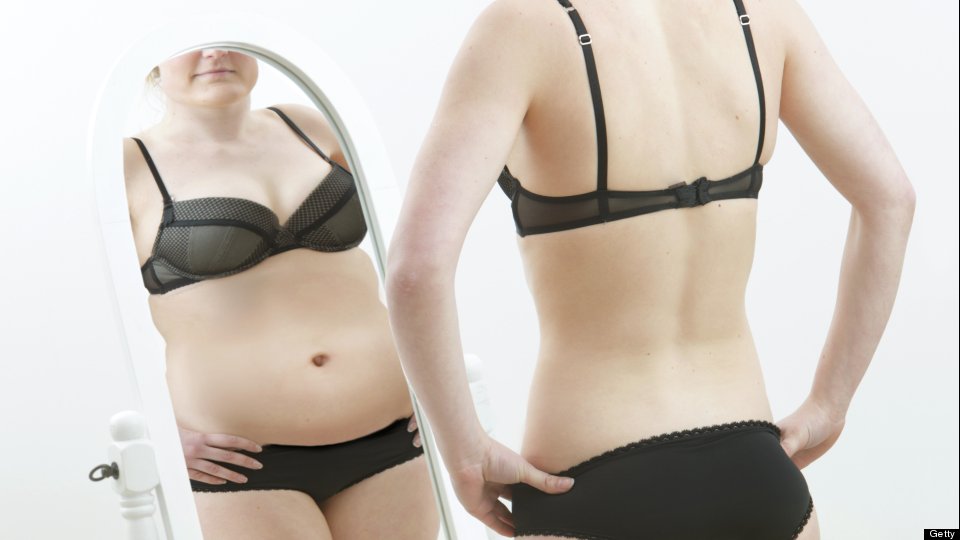
It almost seems to be an inherent part of a woman’s nature to be self-effacing, so much so that women often downplay or neglect their beauty and talents. In fact, I am willing to bet that if you placed an average looking man and an average looking woman in front of a mirror and asked them to assess their physical appearance, the man would concentrate on his assets, while the woman would immediately zone in on her imperfections and problem areas. Though the natural human tendency is to practice self-enhancement, in which we rank our abilities or physical attractiveness as higher than it actually is, women are exposed to physical ideals which bust their confidence and often plant a seed of self-loathing. How can an average woman feel good about herself when she sees rail thin models in fashion magazines who are excessively Photoshopped? Consider this: the average high fashion model has these body statistics:

Fashion Editorial Model
FEMALE: Usually 5’8” – 6’0” (175 cm) in height. Tall, thin build, narrow hips, smaller bust, and usually young. Ages start at fourteen up to early twenties.
Weight: 113 – 128 lbs.
Bust: 32” – 34”, cup A, B, sometimes C
Waist: 26” maximum
Hips: 35 1/2” maximum

Thank goodness the tide is turning in favor of a healthy, realistic view of women’s bodies. Women are beginning to understand that fashion magazines depict a view of the female form which is so far removed from reality that it isn’t reasonable to compare themselves to it. I love this passage from an article I read on this subject:

Perhaps we’re finally starting to realize that so much of what we see on TV, in the movies and in magazines is actually fake. A few women’s blogs — particularly Jezebel — have become sort of watchdogs for Photoshop fakery in women’s magazines. Most recently, the blog attained an untouched photo of Jennifer Aniston, posting the untouched picture next to the airbrushed photo of the actress that appeared in an Australian magazine.
“I think those are great because they really remind people that what they’re seeing in the magazines isn’t reality,” says David Frederick, a psychology researcher at the University of California, Los Angeles, who co-authored the survey along with researcher Kim Elsesser and professor Janet Lever of California State University, Los Angeles. “You’re taking someone who’s already considered really attractive, and then you’re saying, ‘She’s not enough; we have to do more to her.’ So you’re literally creating an impossible ideal. Even the perfect women aren’t perfect.”

I think it will take a while before we women are completely healed from the skewed perception of ideal female beauty which countless magazines, Barbie dolls, and fashion billboard ads have imprinted on us. It is that skewed view which contributes to the flaw-finding gaze which many women adopt when regarding themselves in the mirror and which makes that reflective surface act more like a funhouse fat mirror.

The Funhouse Mirror Effect Part 1: The Men’s Mirror

break-the-blocks-1

Have you ever seen the cartoon in which a man is looking at himself in a mirror, and instead of seeing his beer belly, balding head and weak jaw, his reflection is that of an Adonis, with a chiseled jaw, washboard abs and a full head of glorious hair? I have encountered quite a few men (especially at the gym) who seem to have a reverse dysmorphia which has them thoroughly convinced that they are America’s Next Top Male Model. While I am all for a certain level of self-confidence no matter how closely a man resembles Golem from Lord of the Rings, I will never understand the boastful behavior and posturing that some less evolved representatives of the male human foolishly choose to display.

I am not suggesting that men don’t have insecurities, because I know they harbor doubts and feelings of inadequacy just like women do. But there is a stark difference between the male tendency to puff out his chest and confidently display his feathers (even if the display looks more like the Charlie Brown Christmas Tree), and the female tendency to amplify any imperfection. Lately I have seen far too many men walking or jogging on the sidewalk who clearly have no business being out in public sans shirt, but they seem completely oblivious to the negative effect their gelatinous bellies and hairy shoulders and back have on passerby. Part of me says bravo on the lack of concern over other people’s opinions, but the rest of me is desperately trying to keep my last meal down.

It appears that men’s inflated self-perception is more honest and congruent with what psychologists refer to as “self-enhancement”, in which people essentially give themselves the benefit of the doubt, exaggerating more desirable personality traits and skills, and considering themselves more physically attractive than they actually are. Of course we would all love to be above average, and thus nudge or enhance our views of ourselves. Believe it, and you can achieve it, I suppose, but it actually works. Most women will be more drawn to an average looking man who exudes confidence over a handsome fella who is self-effacing. Not that I have ever seen a great looking guy who lacked self-confidence, mind you, but confidence is very attractive for both genders.

Paleo Meal Plans For Women – The Fat Loss Cure?

Original post can be found at:

http://sportsnutritionsupplementguide.com/eating-plans/paleo/item/1413-paleo-meal-plans-for-women-the-fat-loss-cure#.VGqZY_nF-K0
paleo
Apparently the cave dwellers of the Stone Age knew a thing or two about nutrition, because modern nutrition experts have developed a new craze with the Paleo diet, purporting a myriad of health benefits such as fat loss and a boost in energy. However, though some individuals have reported increased energy while on a Paleo plan, many others have reported a slump in energy levels. For this reason, I want to remind readers that it is essential to determine what works for YOUR body. Paleo may work wonders for you, or it may be a turn in the wrong direction too.

For those of you who are unclear on what defines a Paleo meal diet, let’s look at what food items are allowed on this meal plan: meat, poultry, seafood, eggs, vegetables, fruit, nuts, and seeds. Foods which are banned from Paleo plans are: grains, legumes, refined sugar, artificial sweeteners, processed foods, dairy. Here is a more detailed breakdown of the Paleo philosophy:

About one-quarter to one-third of the calories you ingest daily will come from protein sources, all of which are from animal sources.
Carbohydrate sources consist of vegetables and fruits and comprise about 40% of your daily caloric intake.
Fat intake is relatively high, consisting of monounsaturated and polyunsaturated fats and Omega-3 fatty acids.
Paleo plans are low in sodium and high in potassium due to the whole food sources which are allowed.
Benefits of Paleo
Some people may notice a marked improvement in digestion after implementing a Paleo meal plan, which can be explained in part by the large amounts of fiber delivered with this dietary approach. Those who are gluten sensitive or intolerant usually notice a pronounced improvement in gut health after going the Paleo route, since irritating and inflammatory grains are eliminated from the diet.

Since blood glucose levels remain relatively stable due to the low glycemic index of foods ingested in Paleo plans, people may notice mood stabilization, a decrease in food cravings, and better focus and concentration. Another benefit which Paleo diets can confer is weight loss. I have heard of people suddenly dropping those last five or ten pounds rather quickly after following a Paleo plan, so Paleo can be a godsend for those who are at their wit’s end about trying to lose weight.

Negative Aspects of Paleo
If you’re passionate about remaining a vegetarian, you can forget about going Paleo, since it relies heavily on animal protein sources. With so much meat in the plan, some individuals cannot tolerate the high amounts of protein. Others cannot tolerate the sudden massive intake of dietary fat, and develop increased gut permeability, which is ironic since many people who switch to Paleo plans are trying to find a way to heal a leaky gut. Digestive upset which surfaces while on a Paleo diet may also be a result of consuming the excessive supplements which are required to ensure optimal nutrition while on a Paleo plan.

Paleo plans do not guarantee relief from food intolerance either, since foods considered Paleo safe, such as beef or walnuts, can trigger massive inflammation in the gut. The solution is to either get a food tolerance test from your physician’s office, or eliminate foods one by one until your symptoms disappear. However, the problem with food elimination while on a Paleo plan is that you are already quite restricted on the foods which you are allowed to eat. Another problem with the limited number of foods allowed on Paleo plans is that macro and micro nutrients are often inadequate. Some women simply cannot consume the massive amounts of protein which are required on the plan, and caloric needs are often not met because the caloric densities of the staple foods on a Paleo plan are rather low. In addition, the body’s daily requirements for vitamins and minerals is often not fully met, making it necessary to take many supplements to compensate for the nutrient deficit.

I have also noticed that a fair percentage of women (and men too, for that matter) do not function well on extremely low carbohydrate diets. These women would fare better on a Paleo plan which allowed some root vegetables such as potatoes for starchy carbs, or on a non-Paleo plan which incorporated grains.

The Verdict
After all is said and done, the Paleo approach is restrictive, and in my humble opinion, not sustainable for the long term. As one who has followed restrictive non-Paleo contest prep plans, I can honestly say I had more variety with some of them than what I have seen with Paleo plans. I believe that a Paleo diet can be an excellent short-term way to jump start weight loss, especially for someone whose weight loss efforts have stalled.

Are You A Sponsored Athlete Or An Unpaid Salesperson?

Original post can be found here:

http://www.rxmuscle.com/blogs/the-business-fitness-modeling-and-showbiz/11790-are-you-a-sponsored-athlete-or-an-unpaid-salesperson.html

Are you an athlete
Most sports supplement companies and other fitness related companies aggressively promote their products through athletes who can sing the praises of their benefits. Who could be better at describing the efficacy of a product and how it enhances training or recovery than an athlete who not only already uses those types of products, but someone who has a following and who can convince new customers to purchase from the company which they represent?

Here’s where things get problematic. The pool of bodybuilding and fitness athletes is pretty massive, and the waters are teeming with athletes who are anxious to get their so-called “big break”. As a result of this, savvy marketing teams from fitness related companies often sweep up these individuals because they are enthusiastic and can propel a brand’s exposure. All the company needs to do is to offer some free product to the athlete and provide instructions on how to use social media to get the word out that these products exist. Then the athletes post images of themselves holding or using products, and add affiliate codes so that any orders which are generated through that athlete’s post are credited to the athlete. This can be a great way for an athlete to make some extra money while competing or chasing down fitness related gigs and projects.

It is important to bear in mind that such athletes really aren’t sponsored, but are instead unpaid salespeople who provide free advertising and generate sales via social media posts which direct followers to product websites. Yes, they get commissions if they have affiliate codes, but such commissions are nothing to write home about unless someone is really blowing the roof off in sales. This is in stark contrast to a true athlete sponsorship, in which an athlete is paid to represent the brand as a brand ambassador. The sponsored athlete is chosen for his or her physique, performance history and awards, facial good looks, charisma, enthusiasm, and often the size of his or her social media following. Usually a sponsored athlete signs a contract which stipulates that he or she will receive a certain amount of free product, and in most cases will also receive financial compensation which is either paid via a monthly salary or via a contest stipend. Though the athlete usually agrees to a set requirement or recommendation to provide social media posts for the company at regular intervals, the company pays the athlete for his or her trouble. Personal appearances and events are also part of the sponsored athlete agreement and clearly described in the written contract. The sponsored athlete is compensated for use of his or her likeness on advertising materials as well.

Obviously it is a far better deal to become an official sponsored athlete for a company. Otherwise, you are just providing free advertising and cheap labor in exchange for products which are sold at a significant markup from what they are manufactured at. If you post a selfie with product that somehow goes viral, the company will certainly love the boost, but I doubt you will ever see any type of compensation if you aren’t a sponsored athlete, which means you provided your likeness for free. The truth of the matter is that there are only a handful of athlete sponsorships to go around, with a massive surplus of athletes vying for those spots. The athletes who end up getting sponsorships stand out from the crowd in some way, or fit a brand’s look and philosophy so well that it makes sense to bring them on board to represent a brand. The rest of the athletes must navigate through all the companies out there to try to find an arrangement which benefits them in some way. Sometimes it is easy to sell a product, usually because the athlete enjoys using it so much that he or she doesn’t mind providing free advertising or labor.

Sometimes a supplement company will launch a contest which is based on social media posts. One company, which shall remain unnamed, launched a huge campaign this year that was patterned on this idea, and decided to award 5 of the entrants $10,000. Sure, that sounds like a good chunk of change, but if there were 8,000 entrants, then 7,995 walked away with nothing. At the end of the campaign, the company got tons of free advertising and all those hashtags they requested for “tracking” purposes also propelled their brand in a huge way. To be honest, this is a brilliant marketing tactic, but not the best move for the majority of athletes who participated. I have also seen companies launch contests in which entrants must purchase a product, then post on social media with hashtags to enter the contest. This is another form of free advertising for the company, a great way to generate sales, a brilliant means for them to boost exposure, and yet another way for athletes to be suckered into doing free advertising. I don’t see much harm in taking part in such a contest if you truly love a product and want to proclaim it, but just remember that it works wonders as an advertising tool for the company without any benefit for you.

One thing I will never advocate is purchasing products, even at a steep discount, while also representing a brand as one of its “sponsored” athletes. If you are asked to pay for a product while also providing free advertising on social media channels, run quickly in the other direction! Basically you are dealing with a company which doesn’t value you enough as an athlete to provide compensation for your advertising efforts. This isn’t the same as purchasing a product, finding out you like it, THEN posting something on social media which lets people know how much you like it. I know of several athletes who had done this, which sparked the attention of the company which manufactured the product, eventually leading to a sponsorship deal. But do not, I repeat, DO NOT PAY for products as a way to get false sponsorship for a company.

It isn’t a bad thing to work as an unpaid salesperson in the fitness industry as long as you know your place and value. Once your following builds, the smart thing to do is to leverage your visibility into getting an athlete sponsorship. The main thing is to make sure that you don’t get taken advantage of in the process.
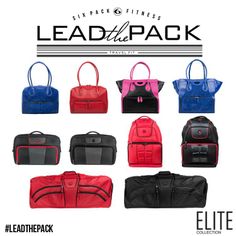
Check Out The Six Pack Fitness Bag Collection!

6 Pack LogoThis collection is growing next year too, with a whole line of luggage! Please make sure to enter my discount code DRNAITO1014 If you order within the next day, and code DRNAITO1114 if ordering after that. You will receive 15% off your order.

I have used other brands of meal bags, and I honestly love Six Pack bags the best. This company has come a long way, and now they not only have Meal Management Bags, they also have Backpacks, Duffels, Briefcases, Women’s Bags and Accessories to help you keep everything in perfect order. They are top quality, fuctional and stylish. Get one!

http://www.sixpackbags.com

6 pack  Elite
6 pack Expert

What a great meal bag option for the fashionable gal!

What a great meal bag option for the fashionable gal!

Packing Fit Foods For Travel

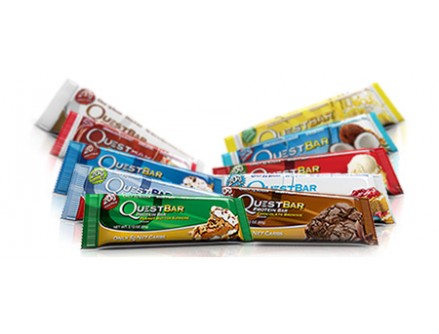
It can be extremely challenging to maintain healthy eating habits while traveling abroad, especially in countries which have not embraced the concept of clean eating. An additional challenge which I encounter when I travel abroad is that it can be extremely difficult to consume the quantity of protein which I am accustomed to on a daily basis (150 to 200 grams per day). If I didn’t have access to wonderful products like P28 Bread, B-Up Bars, Quest Bars, Training Table Sports Meals and Kris Gethin’s Nutrition By Design Meal Cups to pack, I wouldn’t meet my macronutrient needs solely by eating at restaurants. I will continue to pack these convenient meal options when I go to Germany and England next year.

Both the Training Table Sports Meals and the Kris Gethin Meal Cups are whole food sources and pack a ton of protein (27 to 34 grams). The only drawback is that Training Table meals should be heated up in a microwave, and the Gethin meals require boiling hot water to rehydrate the ingredients. For this reason, I always make sure to pack P28 Bread and bars, since they don’t require any preparation. I can easily pack a box or two of bars (and yes, I ONLY eat B-Up and Quest) in my checked bag and also add a bag of P28 Flatbread. I pack the Gethin meals inside a rigid box so that the containers don’t get crushed, but everything else travels well without additional padding.

The only issue I ever run into is when I return to the States and have to go through customs. If I have any food left, the customs officials treat me like I am a drug lord or criminal! The food items which raised the most suspicious eye were the Gethin meals, which surprised me since they are dry. However, I will not allow the U.S. Customs officials to rain on my parade. I will continue to pack Gethin meals because they are so convenient and lightweight. Another great thing about Gethin meals, Training Table and B-Up Bars is that they won’t spoil during my travels.

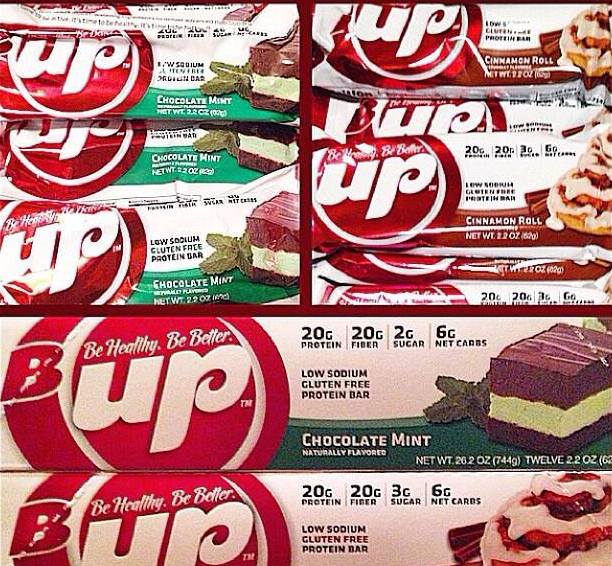
Here are images of the products I have mentioned here. The only company I have not worked with is Kris Gethin Nutrition By Design, but my opinions of these products are completely honest and unbiased. All of these products are fantastic!

flatbreadbanner_copy

B UP bar collage

Quest Bars

Training Table

Kris Gethin meal

My Education Never Stops

medical_education_-_steth_with_book
For those of you who think that physicians are done with educational pursuits once they complete the rigors of medical school and residency, think again. We must complete continuing medical education credits (aka CME’s) for the length of our medical careers. This means that we must attend conferences and seminars, take online courses, complete quizzes in medical journals and take recertification exams to retain our board certification. Such CME’s aren’t cheap either. The average cost of each credit hour is $25, so when you multiply that by the 150 hours required in each three year cycle for board certified physicians like me, $3,750 has flown out of your wallet, and that doesn’t take into account the association dues for the governing sites which offer the most desirable and relevant CME credits.

Today I decided to chisel away at my ongoing requirements and took two online CME courses. The first was on diabetic foot ulcers and was quite graphic and disgusting, but since I am required to know how to treat this condition, I tolerated the images which flashed on the computer screen. I then took a course on gastrointestinal disorders which was far less graphic but yielded valuable information which was a great review for me. At the end of my two hour review, I received two CME credit hours which will be counted toward the 150 total hours I will need to accumulate by the end of 2015. I wish I could do most of my CME credits online, but there are limits on online coursework. What that basically means is that I am forced to participate in live courses, which means that I must figure out what courses my schedule will accommodate. In addition, live courses are significantly more expensive. I was investigating medical conferences yesterday and discovered that one major conference would set me back by $1,400 just for the registration alone! Since I cannot afford that conference, I must get creative and find other options which aren’t nearly as expensive.

I research CME opportunities every few months for the most respected and accessible opportunities, so I feel confident that I will find cost-effective ways of fortifying my medical knowledge while fulfilling my CME credits before the end of the current cycle. Since I also recently obtained an NAFC Nutrition Coach Certification, I will need to keep up on CEC’s for that as well. Oh, the learning never ends!

Don’t Bully Your Coach

personal-training-clientBefore I dive into this topic, I want to make sure that everyone understands that this is meant to be general, and is not directed at anyone in particular. But because I have had numerous conversations with other coaches and trainers recently who have described behavior in their clients which I find unacceptable, I thought this was a good topic to cover in my blog.

First of all, when you hire a coach or trainer, you are hiring that person for his or her knowledge, education and experience. When you challenge fee schedules that are in place, and expect the coach to give you bargain basement pricing just because you are short on funds, or because you don’t see why you should pay that much for someone else’s time, it is insulting to the coach. In addition, coaches and trainers are trying to run businesses and have expenses which need to be covered. I recently saw a quote on Instagram which I loved: “If you think a professional is expensive, wait until you hire an amateur.” Please keep this in mind when you are selecting a coach, and have respect for what they offer.

If a coach is designing a customized plan for you, do not expect the plan to be ready within minutes. It takes time to create a customized plan for a client, so please be patient. Once you get your plan, please do not ask incessant questions, especially if they are presented in the middle of the night. Since I am a physician, I understand what it means to be on call all the time, but I will not put up with a 2 am text asking me whether it’s okay to substitute swing lunges with seated leg curls!

Another sure way to aggravate your coach is to be non-compliant, whiny, and intent on changing every aspect of a well designed plan. Why even hire a professional to help you if you are dead set on being a person who uses the word CAN’T all the time? If you trust, admire and respect your coach, then let your coach work his or her magic and help you to reach your goals. Otherwise, you are wasting both your time and energy and those of your coach. Allow your coach to guide you and be your motivator, and speak up if you are faltering in your efforts or if your self-confidence is flagging. Let your coach be truly that: a coach.