Are You A Sponsored Athlete Or An Unpaid Salesperson?

Originally published on mensphysique.com on Wednesday, 12 November 2014

This was the most popular article I ever wrote for the site, getting over 2,700 likes.
SponsorshipSlide
http://www.rxmuscle.com/blogs/the-business-fitness-modeling-and-showbiz/11790-are-you-a-sponsored-athlete-or-an-unpaid-salesperson.html

Most sports supplement companies and other fitness related companies aggressively promote their products through athletes who can sing the praises of their benefits. Who could be better at describing the efficacy of a product and how it enhances training or recovery than an athlete who not only already uses those types of products, but someone who has a following and who can convince new customers to purchase from the company which they represent?

Here’s where things get problematic. The pool of bodybuilding and fitness athletes is pretty massive, and the waters are teeming with athletes who are anxious to get their so-called “big break”. As a result of this, savvy marketing teams from fitness related companies often sweep up these individuals because they are enthusiastic and can propel a brand’s exposure. All the company needs to do is to offer some free product to the athlete and provide instructions on how to use social media to get the word out that these products exist. Then the athletes post images of themselves holding or using products, and add affiliate codes so that any orders which are generated through that athlete’s post are credited to the athlete. This can be a great way for an athlete to make some extra money while competing or chasing down fitness related gigs and projects.

It is important to bear in mind that such athletes really aren’t sponsored, but are instead unpaid salespeople who provide free advertising and generate sales via social media posts which direct followers to product websites. Yes, they get commissions if they have affiliate codes, but such commissions are nothing to write home about unless someone is really blowing the roof off in sales. This is in stark contrast to a true athlete sponsorship, in which an athlete is paid to represent the brand as a brand ambassador.

The sponsored athlete is chosen for his or her physique, performance history and awards, facial good looks, charisma, enthusiasm, and often the size of his or her social media following. Usually a sponsored athlete signs a contract which stipulates that he or she will receive a certain amount of free product, and in most cases will also receive financial compensation which is either paid via a monthly salary or via a contest stipend. Though the athlete usually agrees to a set requirement or recommendation to provide social media posts for the company at regular intervals, the company pays the athlete for his or her trouble. Personal appearances and events are also part of the sponsored athlete agreement and clearly described in the written contract. The sponsored athlete is compensated for use of his or her likeness on advertising materials as well.

Obviously it is a far better deal to become an official sponsored athlete for a company. Otherwise, you are just providing free advertising and cheap labor in exchange for products which are sold at a significant markup from what they are manufactured at. If you post a selfie with product that somehow goes viral, the company will certainly love the boost, but I doubt you will ever see any type of compensation if you aren’t a sponsored athlete, which means you provided your likeness for free.

The truth of the matter is that there are only a handful of athlete sponsorships to go around, with a massive surplus of athletes vying for those spots. The athletes who end up getting sponsorships stand out from the crowd in some way, or fit a brand’s look and philosophy so well that it makes sense to bring them on board to represent a brand. The rest of the athletes must navigate through all the companies out there to try to find an arrangement which benefits them in some way. Sometimes it is easy to sell a product, usually because the athlete enjoys using it so much that he or she doesn’t mind providing free advertising or labor.

Sometimes a supplement company will launch a contest which is based on social media posts. One company, which shall remain unnamed, launched a huge campaign this year that was patterned on this idea, and decided to award 5 of the entrants $10,000. Sure, that sounds like a good chunk of change, but if there were 8,000 entrants, then 7,995 walked away with nothing. At the end of the campaign, the company got tons of free advertising and all those hashtags they requested for “tracking” purposes also propelled their brand in a huge way. To be honest, this is a brilliant marketing tactic, but not the best move for the majority of athletes who participated.

I have also seen companies launch contests in which entrants must purchase a product, then post on social media with hashtags to enter the contest. This is another form of free advertising for the company, a great way to generate sales, a brilliant means for them to boost exposure, and yet another way for athletes to be suckered into doing free advertising. I don’t see much harm in taking part in such a contest if you truly love a product and want to proclaim it, but just remember that it works wonders as an advertising tool for the company without any benefit for you.

One thing I will never advocate is purchasing products, even at a steep discount, while also representing a brand as one of its “sponsored” athletes. If you are asked to pay for a product while also providing free advertising on social media channels, run quickly in the other direction! Basically you are dealing with a company which doesn’t value you enough as an athlete to provide compensation for your advertising efforts. This isn’t the same as purchasing a product, finding out you like it, THEN posting something on social media which lets people know how much you like it. I know of several athletes who had done this, which sparked the attention of the company which manufactured the product, eventually leading to a sponsorship deal. But do not, I repeat, DO NOT PAY for products as a way to get false sponsorship for a company.

It isn’t a bad thing to work as an unpaid salesperson in the fitness industry as long as you know your place and value. Once your following builds, the smart thing to do is to leverage your visibility into getting an athlete sponsorship. The main thing is to make sure that you don’t get taken advantage of in the process.
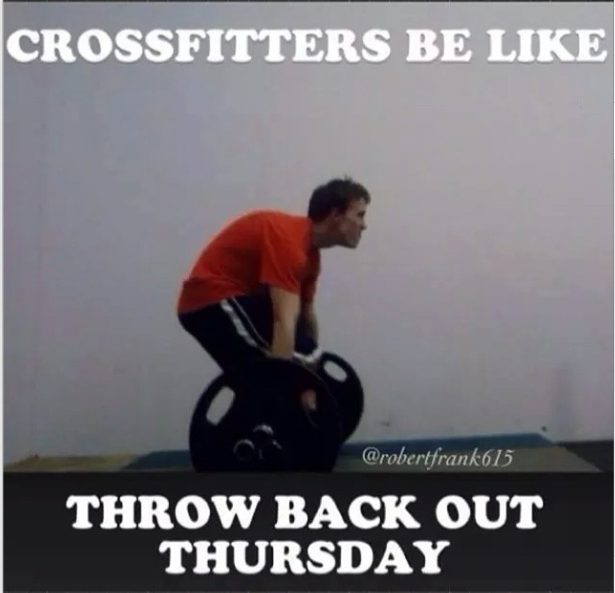

Of Crossfit Boxes And Boxy Midsections

Originally published on mensphysique.com on Monday, 04 August 2014

http://www.rxmuscle.com/blogs/the-training-room-workouts-and-tips/11345-of-crossfit-boxes-and-boxy-midsections.html
crossfit
Have I pissed off any Crossfit devotees already with the title of this article? I hope so. I challenge any Crossfit fanatic to continue with Crossfit training while being able to grace a bodybuilding stage with the tiny waist, full lats, and rounded delts which are sought after in every single bodybuilding division. When an athletic pursuit is characterized with moves like overhead squats, push presses, push jerks, sumo deadlift high pulls, medicine ball cleans, and tire flips, developing a boxy midsection is unavoidable. I find it ironic that Crossfit gyms are referred to as boxes since the term box is rather suggestive of the body shape which develops under that discipline.

Whether you have been doing Crossfit and now want to cross over into the world of competitive bodybuilding while still training with Crossfit, or you have been competing in the bodybuilding world and are entertaining the idea of incorporating Crossfit training into your contest prep efforts, let’s just say you can’t have both. Simply put, you cannot sculpt your physique in the manner required for bodybuilding when you are a Crossfit devotee. Not only will Crossfit training widen your waistline, the intensity of Crossfit will cause excessive cortisol spikes which makes your body stubbornly cling to belly fat and derail your efforts to become super lean for the stage.

Crossfit training develops endurance and sacrifices the aesthetic lines which are sought after in bodybuilding. We who compete know that a small, nipped in waist and a wide v-taper is the ideal no matter what the division. But when you see a typical Crossfit athlete, you will see broad shoulders without the shaping or the beautiful round caps that are seen in bodybuilding. A Crossfit athlete’s quads and hams will be thick, and the back and chest muscular but compact. Most notably, the abdominal region on Crossfit athletes is always thick and boxy. This is due to the compound Olympic lifts which are regularly performed in Crossfit. You simply cannot attain the tiny waist and beautiful lines that are worshipped in the bodybuilding world when you engage in Crossfit.

I actually had a client who begged me repeatedly to let her do Crossfit two days a week despite my recommendation that she abandon it and focus on traditional weight lifting. I finally acquiesced, and allowed her to incorporate Crossfit as part of her training. As I had predicted, she sustained an injury, her waist widened from all the heavy complex movements which made her midsection boxy, and she became soft as a result of the cortisol spikes which the high intensity Crossfit training created. After three weeks of seeing all her efforts from pre-Crossfit training unravel, I asked her to reconsider her decision to engage in Crossfit. As soon as she stopped doing Crossfit, her waist began to nip in, and her body began to tighten up again.

Bodybuilding is steeped in honoring an aesthetic ideal, sculpting and defining muscle, while also celebrating muscular strength. Crossfitters may brag that they have more endurance than bodybuilders, which may be true to an extent, but I personally would rather have the lines of an IFBB Bikini Pro than to trade that all in for the wide, tank like physique of a Crossfit athlete. If the idea of muscle sculpture is what drew you into bodybuilding, celebrate that instead of being lured into Crossfit.

Arnold Sports Festival 2015

BannerAd-web

For the first time ever, I am actually going to attend the Arnold Classic and Bikini International Finals at the Battelle Grand in Columbus, Ohio on Saturday, March 7, 2015. I am so excited to be able to watch these prestigious competitions from the audience!

This year will be the second year in which I will NOT be working a booth but instead will visit the Expo as a spectator, so it will be a very different Arnold experience for me this time around. I actually prefer to work a booth, but it will still be nice to see friends and fans, network, and have the freedom to come and go. Another big change this year is that it will be the first year that I will be staying at a hotel which is immediately adjacent to the Columbus Convention Center, which means I can keep exposure to the bitter cold and snow to a minimum!

For those of you who are unable to attend the Arnold Classic, tune into the live webcast on Bodybuilding.com. Simply go to the Bodybuilding.com website and click on the link!

2015_Arnold-Sports-Festival-Website-Ad_300x300

One Step Forward Two Steps Back: Fighting Muscle Loss As You Age

Originally published on mensphysique.com on Monday, 07 April 2014
fit at older age
http://www.rxmuscle.com/blogs/the-news-the-newest-in-mp/10590-one-step-forward-two-steps-back-fighting-muscle-loss-as-you-age.html

The sad truth about getting older is that it becomes more and more difficult to hold onto the plentiful lean muscle mass and low body fat we tend to take for granted during our younger years. An inevitable consequence of growing older is the increasing struggle to maintain lean muscle mass as the years pass. Even if you have been blessed with a genetic propensity for the optimal balance of lean tissue and body fat, be prepared to work harder over time to keep what you have. This also means that master’s competitors usually have to train harder to build muscle mass, and are also more sensitive to dietary fluctuations and digressions than their younger counterparts.

The good news is that there are steps which can be taken to combat the unfavorable shift in body composition which makes its appearance after one’s mid-thirties. Perhaps the MOST important intervention which the vast majority of you are already practicing is weight training. You can continue to challenge yourself and lift heavy, but you might want to consider adding glucosamine and turmeric to your supplement regimen to protect the joints and minimize inflammation. Another adaptation in the weight room which older athletes respond especially well to is unilateral training. Unilateral movements improve balance and coordination and make it possible to correct strength imbalances.

Another way to naturally boost the body’s ability to combat aging which you are most likely already practicing is to consume adequate protein. When protein is consumed, a steady stream of glucose is released via glucagon without spiking insulin levels in the body. Conversely, a diet low in protein but high in carbohydrates results in high levels of insulin, which over the course of time can result in widespread inflammation, diabetes, and obesity. Surprisingly, the protein needs of people from middle age on (40’s and over) increase as a result of diminished protein synthesis in the aging body. Protein intake must be increased in order to offset the deficiency.

If you are already weight lifting regularly and taking in sufficient protein, you may want to consider boosting your intake of glutamine and branched-chain amino acids, particularly leucine. These building blocks help to optimize the body’s ability to utilize dietary protein to build new muscle and repair damaged muscle fibers.

Though animal sources of protein are excellent options for people of any age, whey protein in particular is a remarkable protein source in older people. It is highly absorbable, contains all 18 amino acids, immunoglobulins and lactoferrin, and all the building blocks for a powerful antioxidant called glutathione. Glutathione deficiency is linked to Alzheimer’s disease, cardiovascular disease, arthritis, asthma and cancer, and because of this, it is considered a key substance in combating the process of aging. Natural glutathione production in the body declines with age, but with whey protein on board, the amino acids necessary for glutathione production are supplied to the body and optimal levels can be attained as a result.

Though athletes and competitors are aware of the health and muscle building benefits of whey protein, I am astonished by how it is not utilized nearly enough by the average person. All too often I see patients who regularly skip meals and eat fast foods and other processed foods, and who assume that whey protein is only for athletes. If you are an average person who wants to change poor eating habits and optimize cellular function, then you need to boost protein intake and add whey as one of your protein sources. You are doing yourself a disservice if you insist on eating junk carbs like simple sugars and processed foods, skipping meals, and consuming insufficient protein, especially if you are over the age of 35 and trying to fend off disease and aging.

If you are proactive and consistent about taking the necessary steps to battle age-related muscle loss, you will reap the benefits of better health and vitality and will rival those half your age with a muscular physique to be envied.

Selecting The Right Suit Cut For Your Body

Originally published on RxGirl on Wednesday, 04 December 2013

http://www.rxmuscle.com/rx-girl-articles/9788-selecting-the-right-suit-cut-for-your-body.html
Figure Suit, Suits You Swimwear
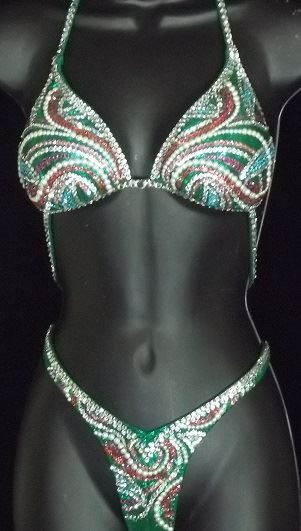
Competition suit designs can vary widely depending on the suit designer, fabric type, body measurements and proportions of the competitor. Though you may be tempted to go the cheaper route and either borrow or rent a suit or purchase an off the rack suit that is not made to fit your particular body, I always recommend having a suit custom made which is cut to your measurements. Trust me, it makes a huge difference when you wear a suit that compliments your body!

Here are some basic guidelines which work for any division in which you compete.

Narrow chest: If you have a naturally narrow chest, make sure the triangle cups are spaced farther apart to give the illusion of a wider chest. You can use a crystal center connector, but make sure it is not too bulky so that the eye goes to the triangle cups and not to the center of the suit top. If you have a crystal pattern on your suit, you should select a pattern which draws the eye up and out, perhaps with lighter colored crystals on the lateral portions of the cups.

Wide chest: If your chest is extremely wide, make sure to select triangle cups which are wide enough to cover your entire breast area. If your breasts are augmented and they sit very far apart, you might want to consider a molded cup which will push your implants towards the midline and create a bit of cleavage.

Large implants: Some competitors have extremely large implants which can be distracting onstage. Your best bet is to select a full coverage top which encases your breasts completely, allowing for no side boob or under boob.

Sagging breasts: Though I am not a big fan of molded cups, sagging breasts will require some support, so molded cups are the best option in this case. Once again, if you have a lot of breast tissue, you need to make sure that your breasts are mostly covered by the suit material and are well supported by the molded cups. It looks very sloppy when a competitor with sagging breasts wears a flimsy triangle top which does not support her. Sagging breast tissue can hang over the ribcage and often obscure any serratus anterior development. Support your girls!

Small breasts: I know that many women feel rather self-conscious if they are very small-chested and usually opt to wear padded suit tops. If you are a small B to a C cup, you can purchase silicone triangle push-up pads which work beautifully in the pockets of a competition suit top. Just make sure that your suit maker puts pockets in the triangles so that you can insert the pads easily. If you are an A or AA cup or completely flat-chested, you might want to have a suit cup design which is fully padded. If you go with this option, make sure that the cups sit properly, neither too far apart nor too close together, since fully padded suit tops can easily look fake if this is not taken into consideration.

Long torso: If you have a long torso, chances are that your leg line is shorter in proportion to your torso. If this is the case, have the suit bottoms cut very high so that they sit at your waistline (unless you are a Bikini competitor, in which case you should have the bottoms sit just above your hip bones). This will give the illusion of a shorter torso and longer legs.

Short torso: If your torso is short, chances are that your legs are either of normal length or quite long. A suit bottom which sits low on the hips, below the hip bones, will create illusion of a longer torso, as will a steeper V-cut in the center of the bottoms. Bikini competitors can select a lower scooped rise in the bottoms to lengthen the torso line.
Wide trunk: If you have a very wide midsection, avoid horizontal cuts on the front of the suit bottoms and opt instead for a V-cut. The sides of the suit bottoms should sit very high to further create the illusion of a nipped-in waist.

998805_665046383515546_812080141_n
C-section scars or saggy abdominal skin: If you have a C-section scar or saggy abdominal skin, choose a slightly higher rise in the suit bottoms to tuck the scar or skin in. Once you add suit adhesive at the contest, you should feel secure in the suit.

Long legs: Choose a suit bottom which sits low on the hips, below the hip bones, in order to create illusion of a longer torso and more proportionate legs.

Short legs: If you have a shorter leg line, have the suit bottoms cut very high so that they sit at your waistline (unless you are a Bikini competitor, in which case you should have the bottoms sit just above your hip bones). This will give the illusion of a shorter torso and longer legs.

Flat glutes: Some competitors have flatter glutes which can be lifted by a suit. Basically, the suit should be cut so that it holds and lifts up most of the glute area. This is usually done with the strategic placement of elastic in the bottoms so that the garment hoists everything up instead of just lying on top of the area.

Narrow hips: If you have narrow hips, you will need to select a suit bottom with a more horizontal cut which will give the illusion of a wider hip line. For a typical V-cut suit bottom, a flatter or wider cut can still be accomplished without losing the standard suit design. For the Bikini Division, you can select a suit bottom which is completely horizontal. If your hips are excessively narrow, you should opt for fabric at the hips instead of crystal or string connectors. However, many ladies who have slightly narrow hips look fantastic with crystal connectors at the sides.

Wide hips: Wider hips are best camouflaged by an exaggerated V-cut and sides which sit about an inch above the hip bones.
When you order a custom suit, make sure to send all your measurements to the suit maker along with photos to help him or her determine the most flattering cut for your body. Make sure to also bring up any body issues or concerns in advance so that they can be factored into the design of the suit.

What To Do After You Have Slayed The Dragon

Originally published on mensphysique.com on Saturday, 08 February 2014

http://www.rxmuscle.com/blogs/the-life-inspiration-and-dedication/10154-what-to-do-after-you-have-slayed-the-dragon.html
Pro Card (2)
The enticing waters of the competition world can truly rule a competitor’s life, especially when a national qualification is won at local and regional shows and the national stage beckons. In fact, most of you probably already have your national contest strategy in place and are prepared to hit contest after contest to maximize your chances of getting a Pro Card.

Every year competitors continually squirm through that national level bottleneck in an effort to go Pro, accommodating and prioritizing the NPC national contest schedule and scheduling work and vacations around it. Believe me, I can relate. The national contest lineup was so etched in my brain over the last few years that I would maneuver my work schedule and everything else around it, year after year.

A profound shift seems to occur for many competitors as they pass into the Pro ranks. When I went Pro in July of 2013 at Team Universe, everything in my life took a radical shift. I am sure many of you who are IFBB Pros understand what I am talking about. Suddenly you are cast into a wide ocean, with more contests, more opportunities, and more ventures. It can be downright confusing, overwhelming and a bit depressing once you realize that the battle you waged to slay that dragon is now over, and that unless you wish to slay a bigger dragon by earning a spot on the Olympia stage, you might not know what to do now.

Probably the best advice I can give to new IFBB Pros is to enjoy the moment and float on the cloud for a while, then be prepared to roll up your sleeves and get to work. I honestly believe that becoming a Pro actually means you have to work harder to reinvent yourself and make your mark in the world. You are in an elite group, surrounded by many driven and incredibly talented people. How will YOU stand out?

Maybe competing is still very much in your blood and you want to collect wins and points, or you want to remain relevant in the competition world. That’s fine, but just make sure to look at the bigger picture. The people who didn’t give you a second glance when you were an amateur might suddenly be fussing over you, but don’t let the attention get to your head. You need to leverage your Pro status and your unique talents and position yourself in such a way that you truly make an impact on your followers and potentially build business and a name for yourself. Think beyond the stage, push your brand and your message, and you may indeed become one of those Pros who really stands out.

Get out there, PRO!

How To Choose Your Next Show

Originally published on RxGirl on Saturday, 03 August 2013

http://www.rxmuscle.com/rx-girl-articles/8937-how-to-choose-your-next-show.html
JB5_1413_XCIUITKCXU
If you compete then you know that prepping for a contest keeps you focused on a singular goal. But what happens when that show is over and your placings compel you to shift your strategy? Financial considerations, geographical logistics and time needed to improve on your physique are variables which can come into play. This is true regardless of whether you are an Amateur competitor or a Pro.

Whatever you do, refrain from jeopardizing your financial security or your job security and only do those shows which you can truly afford. If you need to work on building muscle, leaning out, or improving balance or symmetry, you need to be realistic and give yourself enough time to make those changes before you hit the stage again. If you know that you have weak points with your presentation (posing, competition color, suit selection, makeup, hair), make sure that you correct these issues so that you bring a noticeably improved package to the stage.

If you are competing locally and have yet to qualify at the national level,I always advise selecting a national qualifier for your next show. If you are near the bottom of the barrel, choose an event which is at least 12 weeks out so that you have enough time to make improvements. If you are nationally qualified but have never stepped on the national stage before, you might want to compete in a local or regional event in a metropolitan area so that you get more of a feel for how a large scale show is organized. It is important to bear in mind that national level events have stiff competition, so make sure you practice your posing and get everything lined up in time for the national stage.
NPC Team U teaser
Master’s level competitors always face a bit of a disadvantage because of their age, so I always advise them to confine their national appearances to pro qualifiers which feature Master’s divisions. Keep in mind that a Pro Card is a Pro Card, regardless of whether you get it as an open or a master’s competitor. I also advise master’s competitors to enter as many divisions as possible to increase their chances.

For Pros, it might be a good idea to consider Pro events in different parts of the country so that you are seen by different IFBB judging panels. This also enables you to increase your exposure and fan base. If you or your sponsors can handle the expense of international contests, you may consider traveling out of the country. If you are chasing after an Olympia qualification, you could stack shows so that you increase your chances of getting into the top five and getting points.

Whatever level you compete at, remember to have fun and enjoy the journey!

Fit For Stage: There Is A Difference

Originally published on mensphysique.com on Wednesday, 20 November 2013

http://www.rxmuscle.com/blogs/the-life-inspiration-and-dedication/9699-fit-for-stage-there-is-a-difference.html

We all know that the general population is pretty resistant to the idea of packing on the massive amounts of muscle which are seen in men’s and women’s bodybuilding. This has made the men’s physique and bikini divisions incredibly enticing since these divisions are represented by a lesser degree of muscularity. However, it drives me nuts when I hear people proclaim that they are going to jump onstage and compete simply because they are reasonably fit.

I am not referring to people who have realistic expectations and who understand that there is a tremendous amount of work and prep that must go into delivering a great package onstage. I am referring to the self-assured, short-sighted individual who thinks that he or she represents the division without recognizing areas which need to be fine-tuned.

I have recently heard a number of fit individuals tell me that they feel they are ready to hit the stage without any preparation or fine-tuning since, in their minds, there is no distinction between what they have to offer and what competitors work so hard to achieve. To me this is an extremely disrespectful approach to the sport.

Those of us who compete are constantly aware of the need to achieve a personal best and take being onstage and representing our divisions very seriously. We understand that the work needs to be put in if we need to round out pec development, work on taper, or fine tune our level of conditioning. So when some newbie comes along expecting to grab a spare pair of board shorts, slap on a Mystic tan and rock the stage, I can’t help but snicker. I know that the newbie who adopts such a cocky attitude can be found dejected post-contest, shocked that his fit body didn’t take down the rest of the competition.

If you have yet to compete and have yourself convinced that you have nothing to learn about the division or the culture, you need to abandon such an attitude and instead learn some humility. There are so many outstanding representatives of the sport who are willing to guide new competitors and offer constructive criticism that you would be foolish not to avail yourself of their experience and knowledge. Make the journey one in which you LEARN and GROW.

Maintaining Focus In The Midst Of Chaos

Originally published on RxGirl on Thursday, 04 July 2013

http://www.rxmuscle.com/rx-girl-articles/8649-maintaining-focus-in-the-midst-of-chaos.html
When-you-focus-on-what-you-want-everything-else-falls-away
If there’s one thing I have learned during my life, it is that there will always be challenges to face and overcome. Such trials can be immense and carry the power to derail us from our daily routine. However, maintaining consistency in a daily routine, especially during the most difficult times, provides balance while also keeping an individual on track with contest prep or other fitness related goals. In some sense, such a structured routine can almost serve as a welcome haven when everything else is chaotic, provided it does not make excessive demands on one’s time or energy resources.

This year has been an extremely rough one for me, characterized by both my parents being hospitalized, the dissolution of a two year relationship with a man I was very much in love with, job loss, etc. I think most people would have buckled from the pressure, but I was so incredibly stubborn about staying on track that I pushed through the emotional and physical pain and became more creative about how to fit my ever increasing workout loads into the chaos that defined my life. If anything, the trials I went through made me all the more determined to get the job done with my contest prep. I put the horse blinders on and headed down the track at a full gallop. Ironically, though I have been working less in the past month, I am busier than ever and often go through my days in a bit of a fog. It is commonplace for me to forget whether I am at the gym for my third or fourth workout, or which office I was at yesterday. My attitude lately has been, “hold on tight!” which is indeed what I have been doing as I have ridden the crazy crests and troughs of each day.
Horse Blinders
I know that those of you who compete are Type A personalities, driven, committed, strong and stubborn. I also know that some of you will abandon your plans to compete in upcoming contests when life throws you a curve ball. I honestly think this is a mistake. Why forgo the pursuit of a goal (i.e., prepping for a contest and competing in it) when things get nuts? We are in a unique position to inspire and lead by example, so when we give up on achieving a competition or general fitness goal, we are sending a message that it is acceptable to adopt an off and on approach to the “can do” attitude which is common in the fitness world. I am not saying that we should be burdened by the responsibility to carry the hopes of others, but that we best serve ourselves and others when we adopt a tenacious determination to reach our goals. If you can remember why you are driven to compete and to reach your personal best, and make a decision to hold yourself to your regimen in the midst of adversity, your victories will be sweeter than ever.