Word Geek

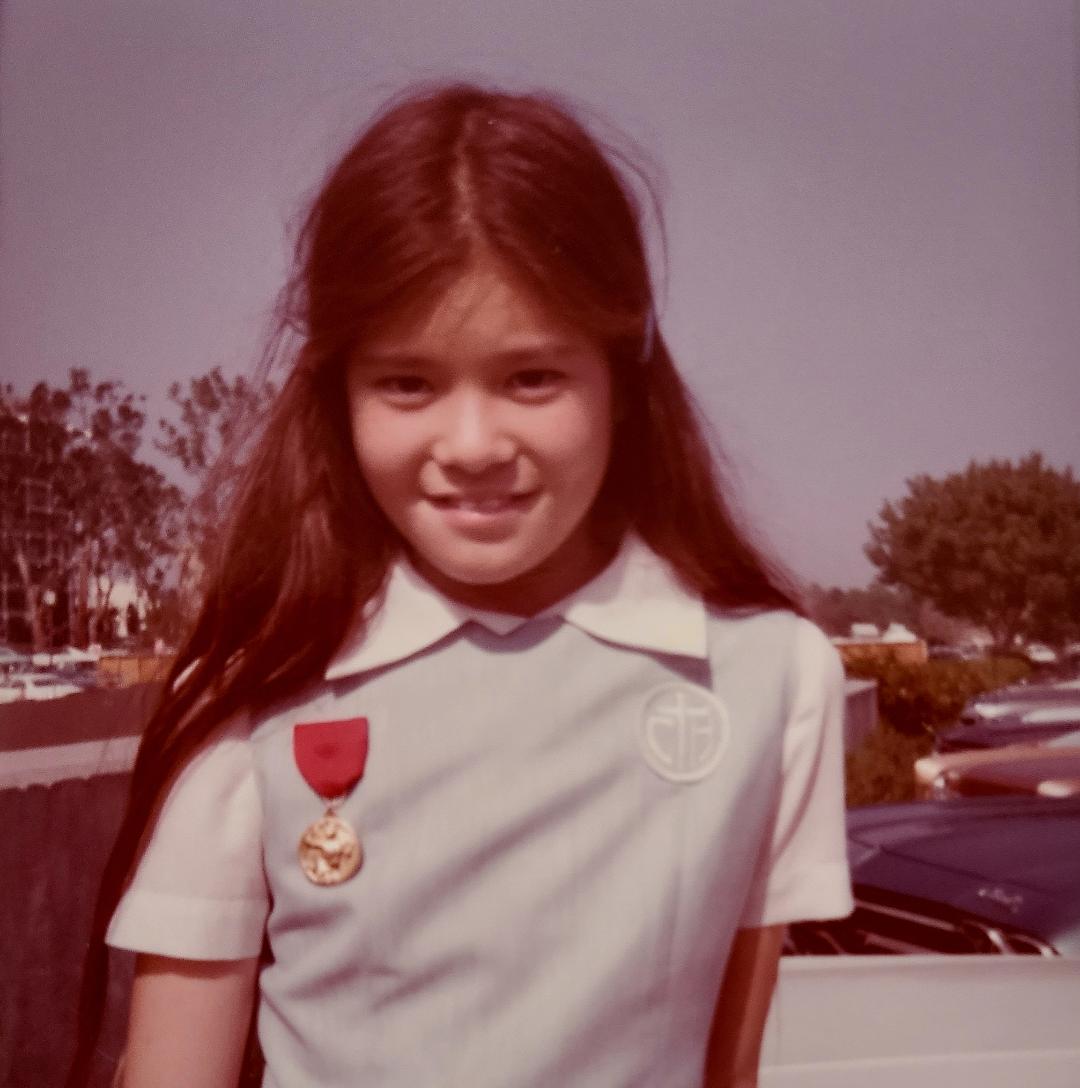
One of the best days for me in May of 1977.

As a child, I was absolutely intoxicated by words. Not just the ordinary, pedestrian ones — I mean the labyrinthine, tongue-twisting, sesquipedalian marvels that felt like verbal acrobatics. I collected them the way other kids collected trading cards.

I didn’t just know the longest word in the English language – pneumonoultramicroscopicsilicovolcanoconiosis — I reveled in it. I made sure to memorize it at the age of 8, savoring each syllable like a procession: pneu-mo-no-ul-tra-mi-cro-scop-ic-sil-i-co-vol-ca-no-co-ni-o-sis. Twenty-three letters? Please. That was merely a warm-up. This beefcake carried 45 letters, and it denoted a coal miner’s lung disease, which was even better since it also appealed to the medical nerd portion of my personality. I wanted words with gravitas, with architectural complexity.

My mom recognized early on that spelling wasn’t just a skill for me — it was a vocation. When I told my mother that there would be a major spelling bee at the end of the 6th grade year, she took it upon herself to quiz me daily in order to fortify my chances of taking home the coveted title and medal. Every afternoon she would sit across from me at the kitchen table with a list. Not pedestrian little morsels like “apple” or “chair.” No. She would lob in “chiaroscuro,” “defenestration,” “antidisestablishmentarianism.” It was our ritual — my daily lexical calisthenics in preparation for the apotheosis: the 6th-grade spelling bee.

And when that day came, I was incandescent with anticipation.

One by one, students were shot down, failing in their efforts to deliver impeccably spelled words, until there were only two of us left: Martha Phelps and me. Martha Phelps was supremely confident, practically effervescent with self-assurance. Then she was given the word facetious. I remember thinking how deliciously ironic it was, because it contains all five vowels in order. She began: F-A-C-E-I-O-U-S… and stopped. Smug. Triumphant.

Except.

Except there was no t.

Mrs. Mackenzie — stately, unflappable — adjusted her glasses and said, without saying a word, turned to face me.

Mrs. Mackenzie repeated the word: facetious.

The room shifted. Martha’s smile curdled.

Oh, I had been waiting for this.

F-A-C-E-T-I-O-U-S.

Each letter placed with surgical precision. The t nestled perfectly where it belonged — the quiet hero of the word.

And just like that, victory. Not by accident. Not by guesswork. By devotion. By daily drills at the kitchen table. By loving words enough to memorize even the absurdly magnificent ones.

I didn’t just win with facetious. I won because I understood that words have bones and ligaments and hidden symmetries. And I adored every single one of them.

Ten Words You Need To Stop Misspelling

https://theoatmeal.com/comics/misspelling

https://theoatmeal.com/

Check out Matthew Inman’s amusing blog post which covers ten words he believes people should stop misspelling. I must say that I agree wholeheartedly with Matt regarding the issue of misspelled words. For those who are interested, you can even purchase a poster of the blog post, which could serve as a not-so-subtle reminder to those afflicted with spelling and grammar faults to pay attention.

Spelling Champ

Far Side SpellingI have been a excellent speller since early childhood, when I exhibited an intuitive sense of word structure. I still remember shocking my teachers during my very brief time in kindergarten (I was advanced to first grade at the age of five after a few weeks in kindergarten) by spelling the word SCISSORS correctly. Apparently my ability to spell this word was rare for my age, and from that point on, I earned the label of great speller. In the fourth grade, at the age of eight, I decided to learn the longest word in the Webster’s Unabridged Dictionary, and I remember it to this day. It is a 45 letter word which is synonymous with a coal miner’s lung disease. Here is the word I memorized:

PNEUMONOULTRAMICROSCOPICSILICOVOLCANOCONIOSIS

I was honestly fascinated with words and loved spelling them and investigating sentence structure as well. This continued throughout grade school, and by sixth grade, I was the kid to beat in the spelling contests my homeroom teacher Mrs. Mackenzie would conduct. The fact that I was unbeatable sparked a great deal of competitive energy in my classmates who wanted nothing more than to make me topple from my spelling perch. At the end of the school year, Mrs. Mackenzie hosted the grand finale spelling bee, which, instead of featuring candy as the grand prize, boasted a gold toned medal hanging from a red ribbon. The instant I saw the medal, a fire was lit inside me and I was determined to take the big title. On the big day, one student after another was defeated by words that proved too challenging for them to spell properly, and I stood there unfazed while they dropped out of the competition. Finally, it wound down to two of us: Martha Phelps and I stood across from each other, glaring daggers at each other. I could feel her anger seething from her, and could tell that she was out to destroy me. She was given a word, puffed out her chest, and began to spell it. F, A, C, E, I, OUS!

WRONG.

I almost jumped out of my skin, I was so excited. Mrs. Mackenzie turned to me. The word was mine to spell. F, A, C, E, T, I, O, U, S. Yes, I emphasized that T, rubbing it in like a smoker would rub out a cigarette on the sidewalk. It was like slow motion after that, when Mrs. Mackenzie turned to the table behind her, grabbed the medal, and handed it to me. A roar erupted as the students who had been standing around watching cheered for me.
gold-medal
Martha was not nearly as pleased as the others were for my victory, and made her displeasure known by punching me in the gut after we had walked from the auditorium back to the classrooms. What a sore loser and a snotty little bitch.

My classmates mentioned my talent when they scribbled in my yearbook at the end of the year. Two girls who were exceptionally poor spellers wrote “spelling medle” and “spelling metal”, which gave me a chuckle. It was a very memorable year for me and I took great pride in achieving an academic pinnacle so early in life. I think it would be fair say my hunger for competing began with spelling bees.

Skip ahead to high school, during which time I served as a living spell-check for my best friend Diane. Diane would call, and after I would say “Hello?”, I would hear a word being uttered, after which I was expected to spell it. Then I would hear, “Thanks” and the conversation would usually come to a quick end. Sometimes Diane would tell me that she had looked up the word, but her spelling was so off the mark that she couldn’t locate the word she was trying to spell. This free best friend service was something I was always happy to do, and because I made myself so readily available with my knack for spelling, this amusing little ritual continued throughout college and beyond.
spell-check-from-any-windows-application
To this day I am still asked by a number of good friends how to spell certain words, and I always oblige without any hesitation. It’s almost automatic for me, when a person asks me how to spell a word, to launch immediately into the spelling, as if I was in Mrs. Mackenzie’s class, standing at my desk, spelling until I was the only student standing. It’s how my brain is programmed and is better than an electronic spelling app!