Melatonin

Originally published on RxGirl on Thursday, 19 June 2014

http://www.rxmuscle.com/rx-girl-articles/11102-melatonin.html

Sleep-girl
Melatonin is a hormone produced by the pineal gland in the brain which regulates the wake-sleep cycle. Production is turned on later in the evening when lights are turned off for bedtime. However, there are a number of poor habits which people commonly engage in which interfere with the body’s production of melatonin, with harmful results such as impaired immune response, increased rate of cellular aging, and increasing the risk of cancer formation.

Basically, those late nights you spend watching TV or reading are interfering with optimal health. As soon as a light is turned on at night, you send a signal to your brain that it is daytime. Production of melatonin ceases and does not resume when you turn the light off either.

Shorter wavelengths (red, orange, yellow) of light are less detrimental than white or blue light and should be used in the evening. I love the salt lamp I have in my bedroom and try to use that light as my sole illumination in the bedroom as much as possible at night.

Why is it so important to preserve the body’s natural production of melatonin? Because melatonin is a potent antioxidant and excellent for reducing inflammation throughout the body, including the brain.

Implement the following guidelines to optimize the body’s production of melatonin:

1. Try to get daily bright sun exposure. Production of melatonin approximates the contrast between bright sun exposure during the day and complete darkness in the evening.
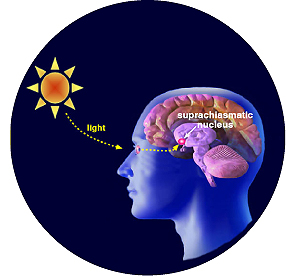
SuprachiasmaticNucleus

2. Turn off your computer and TV at least one hour before going to bed. Both computers and televisions emit blue light which interferes with the body’s normal production of melatonin.

3. Sleep without any lights on. The darker your room is while you sleep, the better chance you have of allowing your body to produce melatonin without interruption.

4. Drop the thermostat to 60 to 70 degrees.

If you think your melatonin levels are low or you have lab work demonstrating low melatonin, and you also suffer from insomnia, you might want to supplement with melatonin tablets. Beware of the dosage, and keep it at 0.5 to 3 milligrams maximum dosage each night. At higher doses, melatonin can have hypnotic effects on some individuals, and on others, a paradoxical hyperaware state may manifest.

On a personal note, I had lab work early this year which demonstrated low melatonin, but I wasn’t suffering from insomnia. A colleague insisted I supplement with 3 milligrams of melatonin per night, which resulted in anxiety and a completely sleepless night for all of the nights I took melatonin.

Another caution: If you are trying to get pregnant, you must avoid taking melatonin supplements because they interfere with fertility.
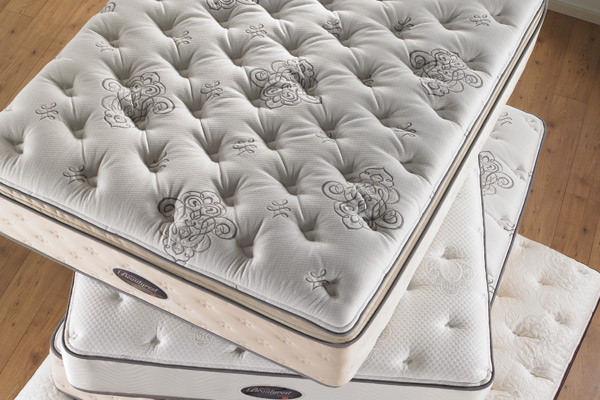
Replace That Mattress

mattress
The Better Sleep Council states that mattresses should be replaced every 5 to 7 years, and that the springs in most mattresses will lose their function in that span of time. What is interesting, though, is that other tests on mattresses which are conducted by independent companies have found that many mattresses hold up 8, 9 even 10 years after purchase. So what is the rule of thumb with mattress replacement?

The main factor in determining when to replace a mattress is sleep quality. Since we spend (or should spend) one-third of our lives sleeping, it is imperative to have a mattress which imparts comfortable sleep. So if you have a mattress which is 5 or more years old, you might want to assess whether the quality of your sleep has diminished recently, if you awaken with back pain, or if you are tossing and turning to get comfortable in bed.

My personal story is that I have been sleeping on the same mattress for almost 9 years now, and though it has a 3 inch pillowtop and used to feel like a cloud, I am noticing that I cannot find a comfortable spot on my mattress. As a result, I have decided to ring in the new year with a new mattress, provided I can scrape up the money to buy one. The other tricky thing will be to find one which I love, and which I can afford. Some mattresses go for several thousand dollars, which is far beyond what I can even hope to afford.

Keep in mind that many mattress stores have no interest financing so that you can make your purchase without paying anything for months on end. It may be time to schedule a visit with your spouse or significant other to a mattress store to find a mattress which will improve the quality of your slumber.

Melatonin Article For RxGirl.com

Original post can be found here:

http://www.rxmuscle.com/rx-girl-articles/11102-melatonin.html

Melatonin is a hormone produced by the pineal gland in the brain which regulates the wake-sleep cycle. Production is turned on later in the evening when lights are turned off for bedtime. However, there are a number of poor habits which people commonly engage in which interfere with the body’s production of melatonin, with harmful results such as impaired immune response, increased rate of cellular aging, and increasing the risk of cancer formation. Basically, those late nights you spend watching T.V. or reading are interfering with optimal health. As soon as a light is turned on at night, you send a signal to your brain that is daytime, and production of melatonin ceases, and does not resume when you turn the light off either.
Shorter wavelengths (red, orange, yellow) of light are less detrimental than white or blue light and should be used in the evening. I love the salt lamp I have in my bedroom and try to use that light as my sole illumination in the bedroom as much as possible at night. Why is it so important to preserve the body’s natural production of melatonin? Because melatonin is a potent antioxidant and excellent for reducing inflammation throughout the body, including the brain.

Implement the following guidelines to optimize the body’s production of melatonin:

SuprachiasmaticNucleus1. Try to get daily bright sun exposure. Production of melatonin approximates the contrast between bright sun exposure during the day and complete darkness in the evening.

2. Turn off your computer and T.V. at least one hour before going to bed. Both computers and T.V.’s emit blue light which interferes with the body’s normal production of melatonin.

3. Sleep without any lights on. The darker your room is while you sleep, the better chance you have of allowing your body to produce melatonin without interruption.

4. Drop the thermostat to 60 to 70 degrees.

If you think your melatonin levels are low or you have labwork demonstrating low melatonin, and you also suffer from insomnia, you might want to supplement with melatonin tablets. Beware of the dosage, and keep it at 0.5 to 3 milligrams maximum dosage each night. At higher doses, melatonin can have hypnotic effects on some individuals, and on others, a paradoxical hyperaware state may manifest. On a personal note, I had labwork early this year which demonstrated low melatonin, but I wasn’t suffering from insomnia. A colleague insisted I supplement with 3 milligrams of melatonin per night, which resulted in anxiety and a completely sleepless night for all of the nights I took melatonin. Another caution is if you are trying to get pregnant, you must avoid taking melatonin supplements, because they interfere with fertility.