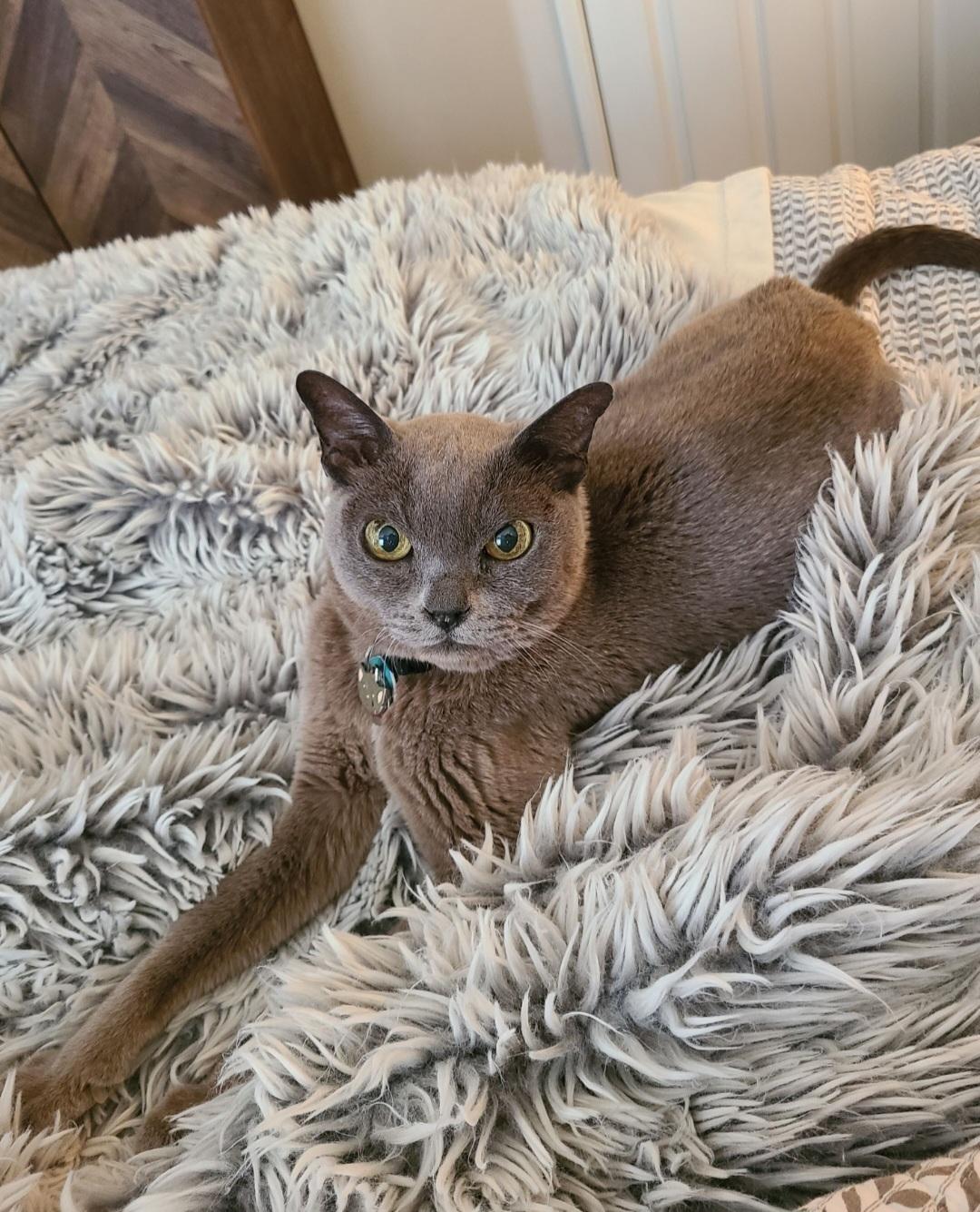
Tenshi, my 17-year-old boy
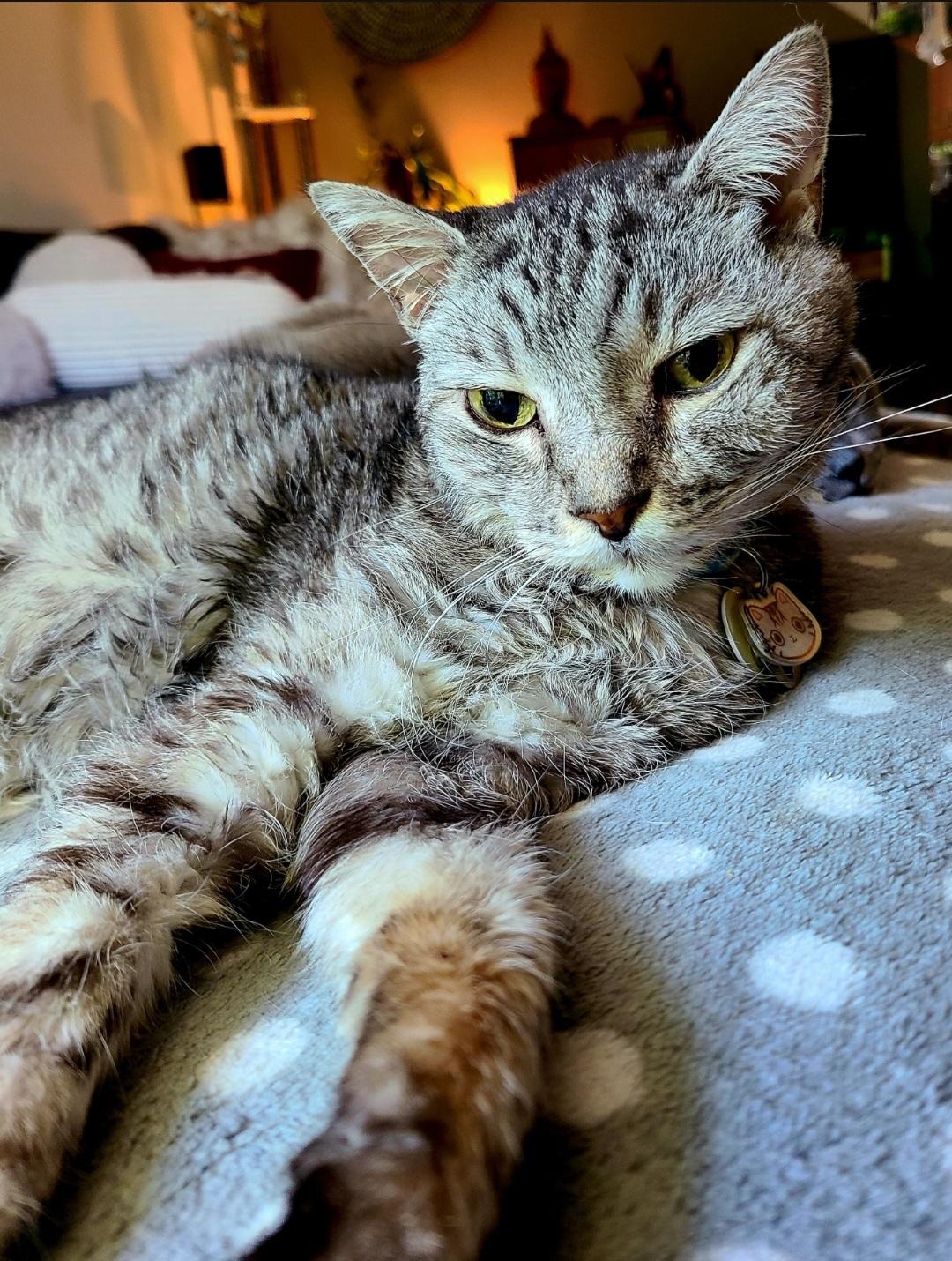
Shima, my 17-year-old girl
Back in April 2009, when I brought a 4-month-old male blue Burmese and a 3-week-old feral female silver spotted tabby into my home, I never thought that they both would still be around seventeen years later. It is a wonderful blessing, but having cats reach 17 years old is both beautiful and complicated. Over the past 17 years, I watched them grow up, and I have experienced so much joy from having them at my side through entire chapters of my life. Caring for them now is like looking after elderly family members. The routine, the vigilance, and the emotional weight are all different than when they were young.
The shift from “pet care” to “medical care”
Once cats reach their mid-teens, life often revolves around management:
- special diets
- supplements
- medications
- watching appetite, mobility, hydration, and litter box habits
Life with my two super-senior cats is a bit like running a tiny home clinic. I watch both Tenshi and Shima like a hawk, and monitor everything so that I can detect small changes quickly—how long they sleep, how they walk, whether they hesitate before jumping, how much they eat. When Tenshi developed arthritis throughout his body, and Shima developed a tendinopathy in her shoulder, I set up heated blanket in the living room to establish luxury retirement housing for them.
Every morning, I make sure to turn on that blanket, and they graciously spend the majority of the day staying nice and warm on it, boosting circulation and reducing stiffness. I also love the fact that they’re resting in a central room near me, rather than isolating themselves. Their propensity for being where the humans are is a positive behavior, both socially and emotionally.
I can’t help but worry when I see my super-senior cats’ frail little bodies, even though they are both pretty alert and active. Age-related muscle loss (sarcopenia) is very common in senior cats, who often lose muscle mass even when they’re cared for well. What matters more than weight alone is:
- Are they eating consistently?
- Are they grooming?
- Do they respond to you?
- Do they still show interest in toys or attention?
Both Tenshi and Shima could stand to eat more, but their appetites are consistent, and they are still very socially responsive. Tenshi still plays when I bring out toys, which is honestly one of the best indicators of quality of life. Play behavior means curiosity and engagement are still there. It surprises me when Tenshi leaps into the air to catch a toy, and I always praise him when he does.
The emotional side
One of the hardest parts of having elderly cats is the constant background awareness that time is finite. When they’re young, you assume there are years ahead. When they’re 17, every small health issue feels heavier. In fact, I lost one of my cats at the age of 14 when she suddenly became ill. She only made it through 5 days before she was gone. Because of the tenuous health status of elderly cats, I make sure to spend as much time as I can with Tenshi and Shima every single day.
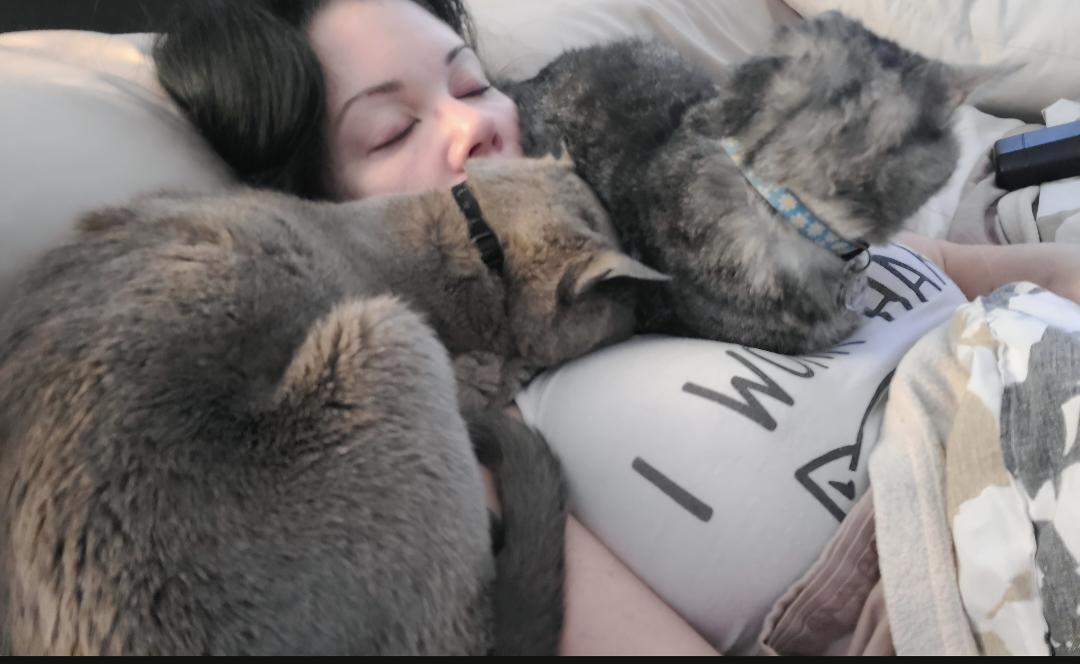
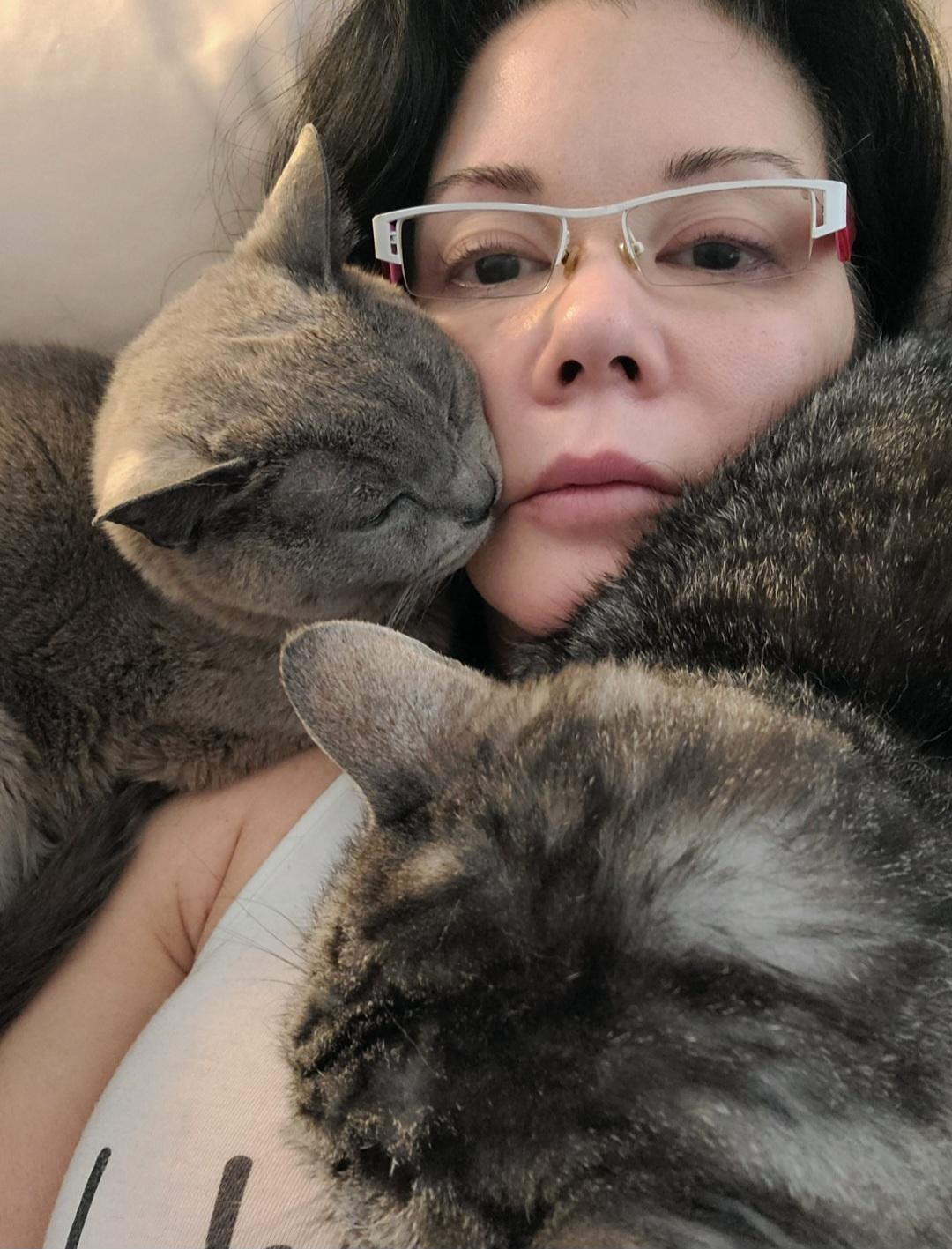
Tenshi in particular seems to sense the need to seek maximum contact, almost like he wants to be touching me as much as possible while he sleeps. Over the past year, Tenshi has developed an adorable habit of wrapping himself around my neck like a scarf at night, and he is usually in the same spot when I awaken the next morning. This relatively new habit is such a classic “this human is mine” behavior, and I absolutely cherish it. I also understand that Tenshi also runs a lot colder because of lower body fat and slower metabolism, so being tucked against my neck is cozy and warm. He has even chosen to do this when the heated blanket is still powered on in the living room.
There are even some late nights and mornings when both Tenshi and Shima will pile up onto my chest and neck to cuddle. You can see how that looks here:
When a cat lies on your chest, a few things are happening at once:
Trust — the chest is a vulnerable place for both of you, so it’s a sign they feel completely secure.
Warmth and comfort — your body heat is like a living heated blanket.
Familiar scent and heartbeat — cats often find the rhythm of breathing and heartbeat calming.
When you live with very old cats, the care gets more involved, but the small moments feel bigger. A cat curling up on your chest, a little burst of play, the way they follow you with their eyes across the room—those things start to carry a lot of emotional weight. And honestly, having a 17-year-old cat sleeping around your neck like a scarf is incredibly tender. Frail or not, that’s a cat who clearly still feels very attached to his person. I’m truly honored to be Tenshi’s and Shima’s human.
 dr. stacey naito's blog